
Villa ai Castelli Romani by STUDIOTAMAT: A Modernist Revival Among Italy’s Timeless Hills
Villa ai Castelli Romani by STUDIOTAMAT revives a 1960s villa, merging Italian modernism, craftsmanship, and natural harmony.


Nestled within the rolling countryside of Grottaferrata, near Rome, Villa ai Castelli Romani by STUDIOTAMAT breathes new life into a 1960s residence perched on the historic hills of the Castelli Romani. Once a modest modernist home inspired by Frank Lloyd Wright’s Usonian ideals, the villa has now been transformed into an elegant retreat—one that harmoniously merges Italian craftsmanship, natural material beauty, and contemporary living.

Through this sensitive renovation, STUDIOTAMAT combines heritage and modernity, restoring the villa’s essence while creating an adaptable family home that honors both past and present.
A Dialogue Between Landscape and Architecture
Built originally as a vacation refuge for a globetrotting couple, the villa’s design was deeply influenced by mid-century modernist principles, emphasizing simplicity, openness, and an intimate dialogue with nature. STUDIOTAMAT’s reinvention respects this heritage, preserving the original structure’s straight lines and organic layout while reinterpreting spaces to suit a modern family’s lifestyle.
The project sits gracefully between Grottaferrata and Frascati, surrounded by the lush woodlands and vineyards of the Lazio region. Its proximity to Rome allows for a delicate balance: a home immersed in nature yet connected to urban life. Now, it shelters Daniele, a senior executive, and Sara, a managing director, and their three daughters—Fiamma, Sole, and Celeste—offering tranquility and function in equal measure.
Preserving Identity, Reworking Space
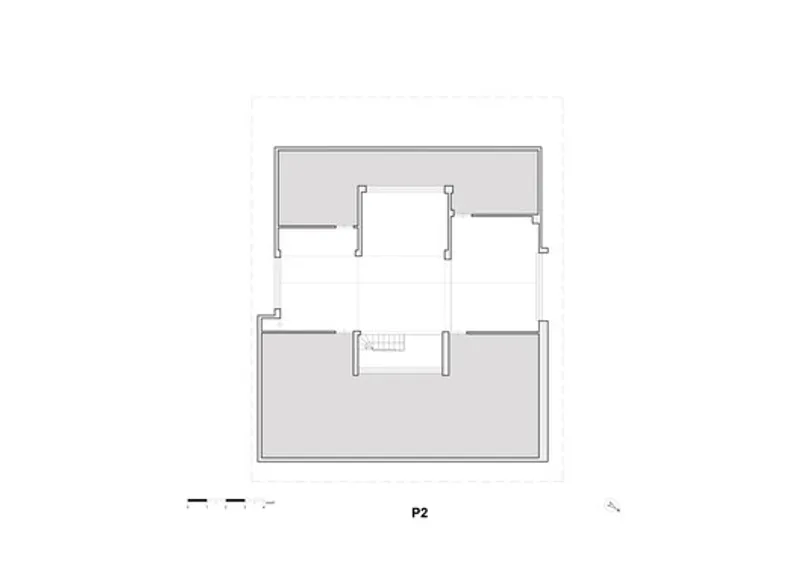
STUDIOTAMAT sought to maintain the home’s architectural authenticity while unlocking spatial flow and natural light. Most interior partitions and corridors were removed, allowing spaces to breathe and blend organically. The design team introduced new openings that emphasize transparency and continuity between indoors and outdoors.
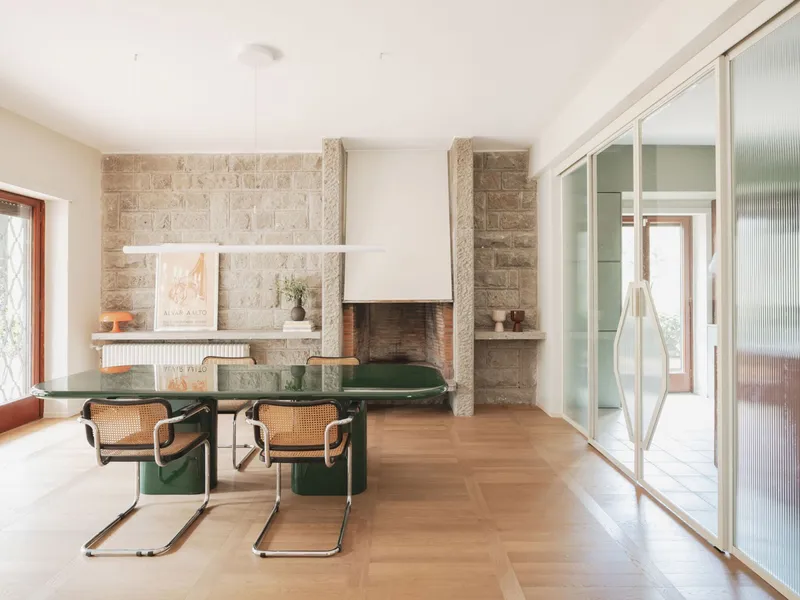

Original materials—stone walls, exposed brick, timber beams, and concrete—were carefully restored and paired with refined new finishes. The renovation celebrates these juxtapositions of textures, revealing a layered story of time, craft, and adaptation.
Custom furnishings further echo the house’s 1960s spirit. The architects drew inspiration from existing rhomboid motifs found in the villa’s vintage ironwork, reinterpreting them in contemporary details such as window frames and interior carpentry. This unique motif, as co-founder Matteo Soddu explains, became “a way to reestablish a dialogue between what the villa once was and what it could become.”

An Entrance Framed by Craftsmanship
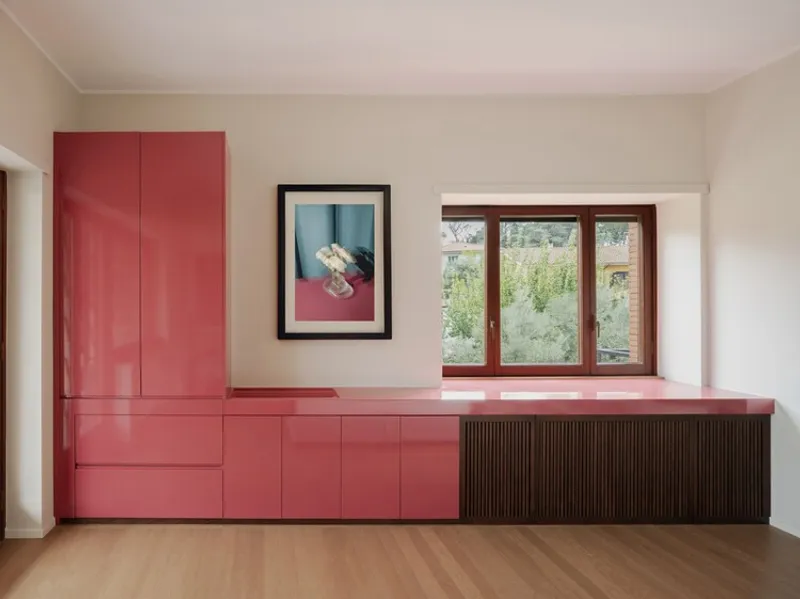
Upon entering, attention to detail immediately sets the tone. A custom wardrobe upholstered in L’Opificio’s Viceversa Monet fabric, framed by delicate Tanganika walnut trim, exemplifies STUDIOTAMAT’s tailored approach. The original beechwood door and window frames were restored to preserve the building’s historical DNA.
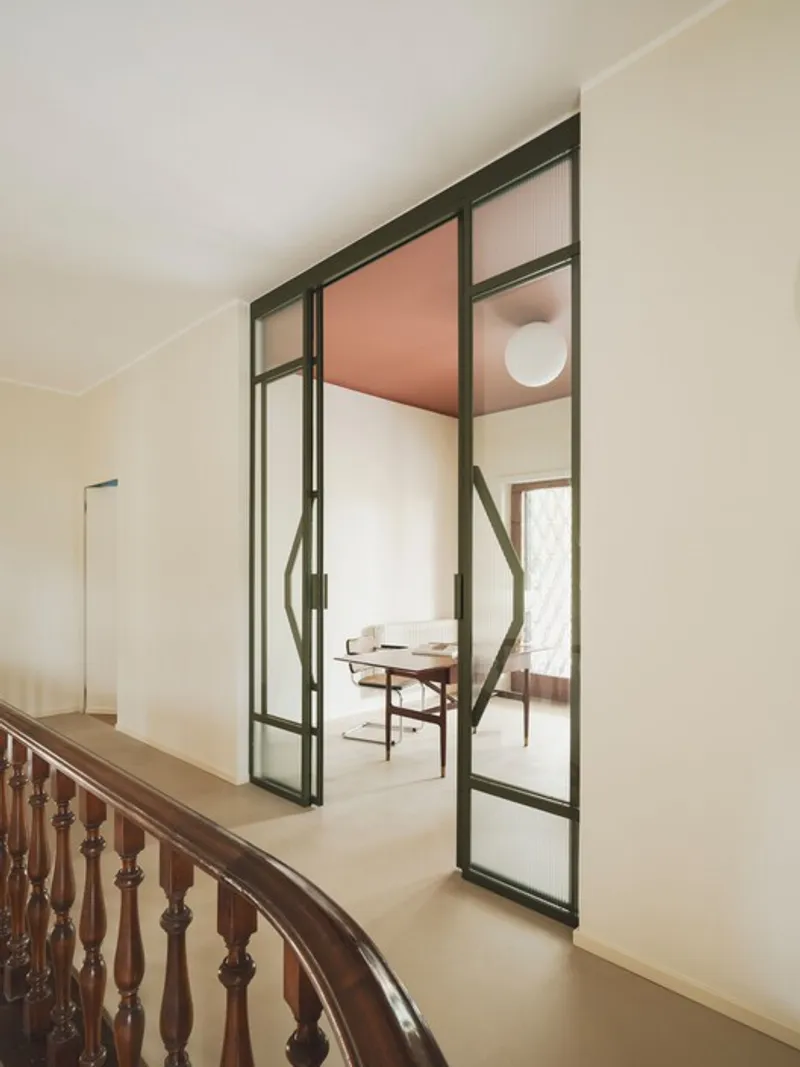
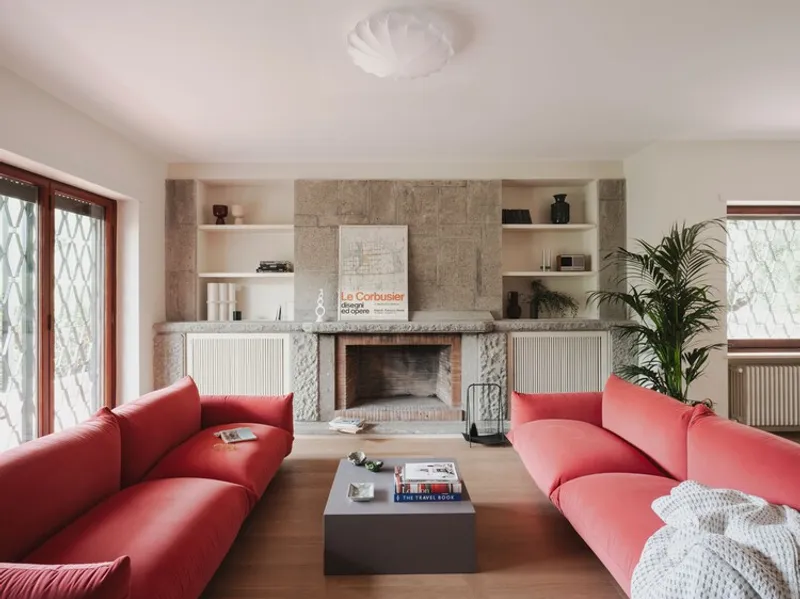
Material honesty continues within: stone fireplaces, integrated seamlessly into the wall structure, combine heritage and warmth. The designers create zones for both convivial gatherings and quiet retreat—spaces that shift effortlessly between openness and intimacy.
Ground Floor: A Modern Hospitality Core
The villa’s elliptical staircase—one of its original centerpieces—anchors the geometric composition of the ground floor. Visible from the entrance, the staircase organizes public and private zones, acting as both a sculptural element and spatial mediator.
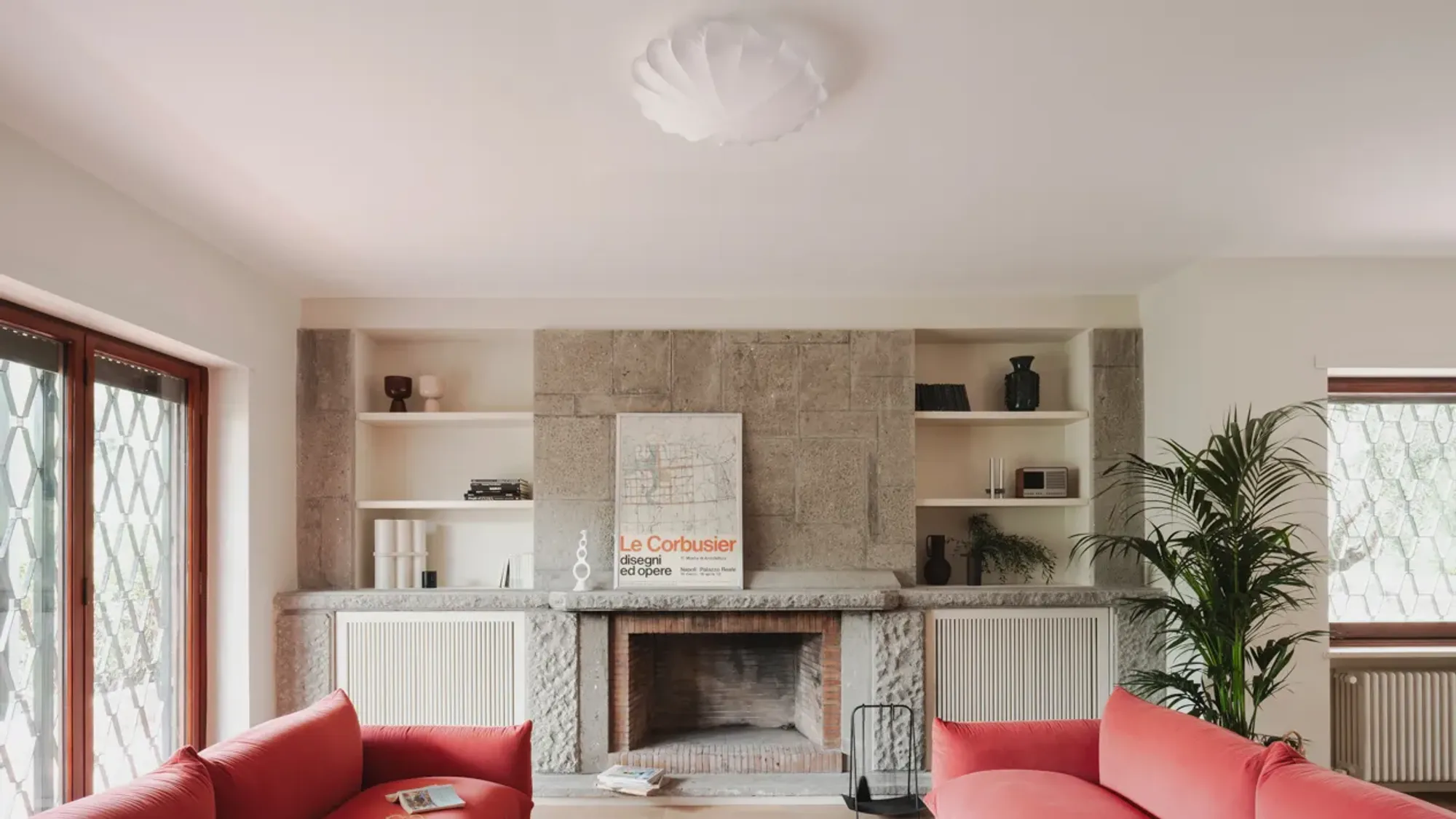
To the east, the living room unfolds around a monolithic stone wall hosting an integrated fireplace, accompanied by sculptural sofas and soft natural tones. A guest bathroom, clad from floor to ceiling in Colony wallpaper depicting lush tropical botanicals, contains a Devon & Devon sink reminiscent of 1930s Art Deco.
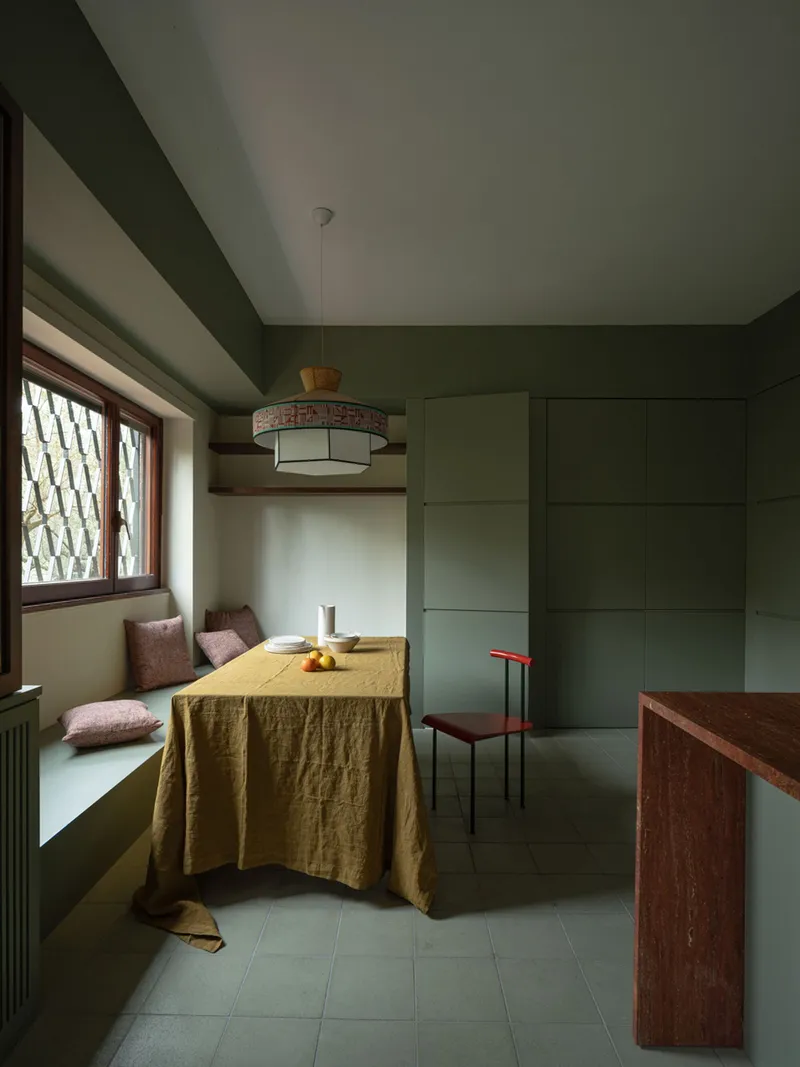
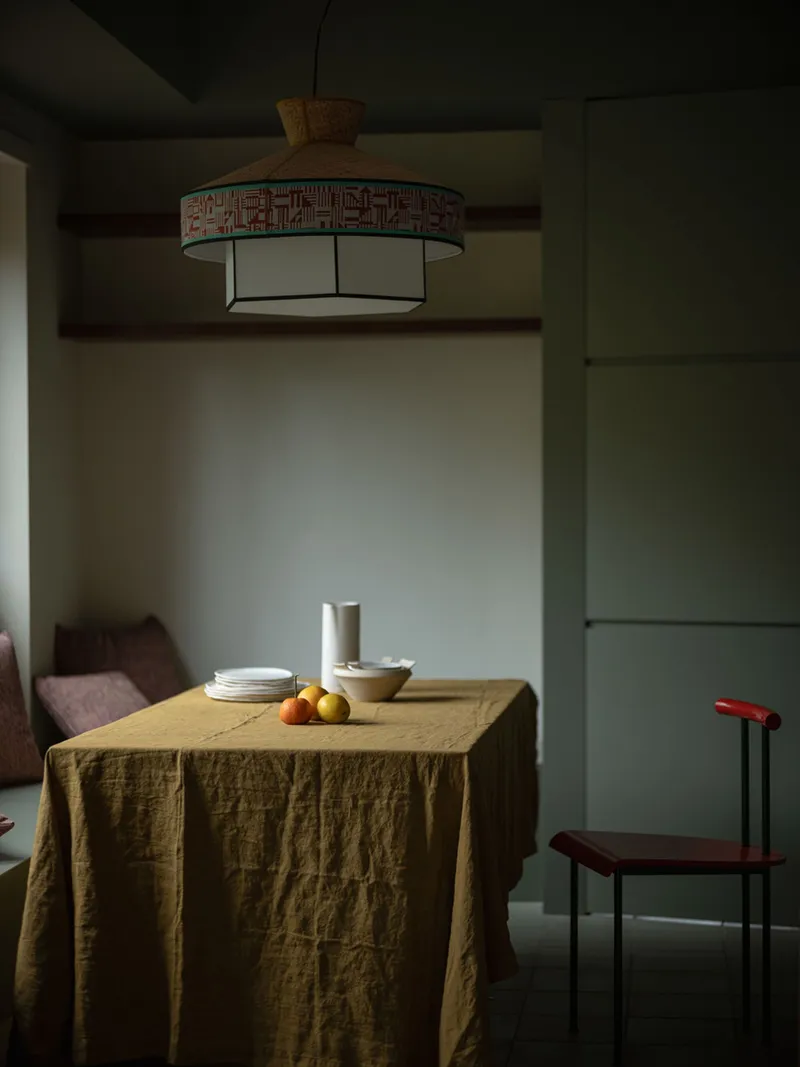
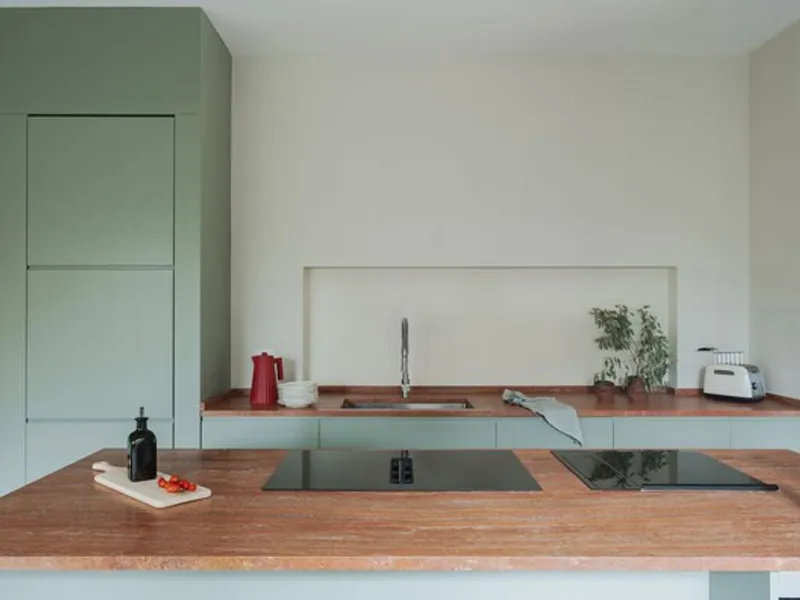
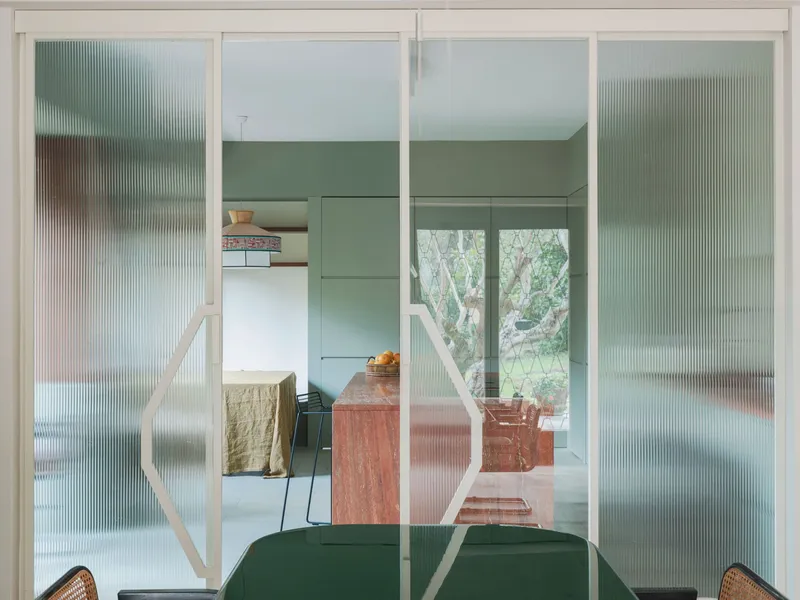
To the west lies the home’s American-style kitchen, a bold reinterpretation of domestic tradition. Here, a Persian Red Travertine island commands the space, equipped with teppanyaki plates, an induction cooktop, and concealed storage. A window-side bench creates an intimate breakfast niche, while sliding panels hide appliances and connect the kitchen discreetly to service areas. A glass and powder-coated metal partition gently separates the kitchen from the dining room, balancing openness with acoustic comfort.
Vintage Meets Contemporary
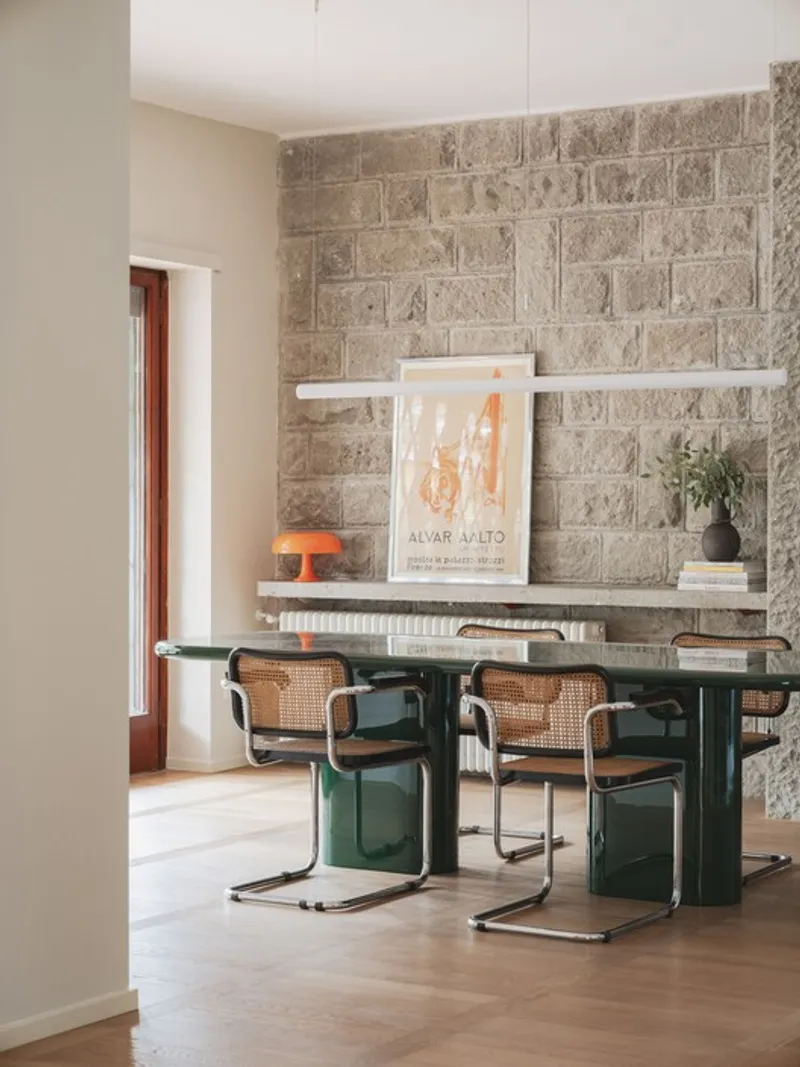
Every room in Villa ai Castelli Romani exemplifies STUDIOTAMAT’s ability to blend iconic design pieces with custom craftsmanship. In the living room, 1970s Marenco sofas by Arflex pair with a Rammendi pouf by Punto Zero, while the dining room features Cesca chairs by Knoll, designed by Marcel Breuer, alongside a BIG Collection dining table with a high-gloss lacquer that subtly reflects the light.
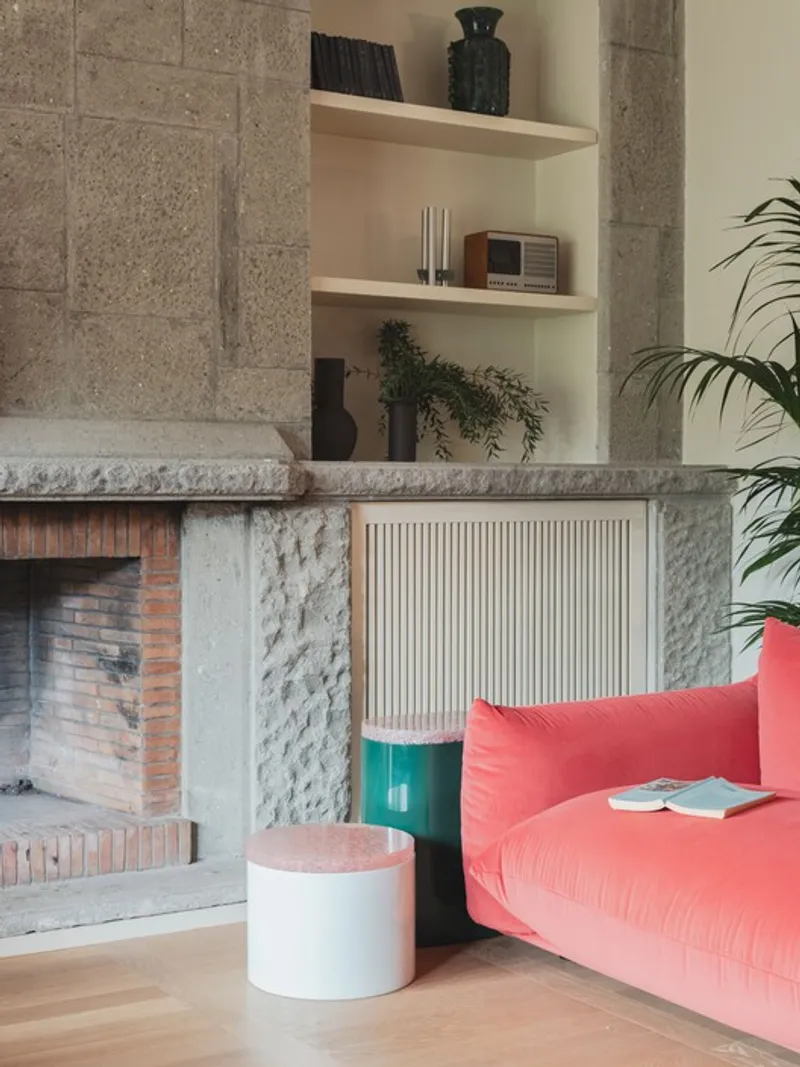
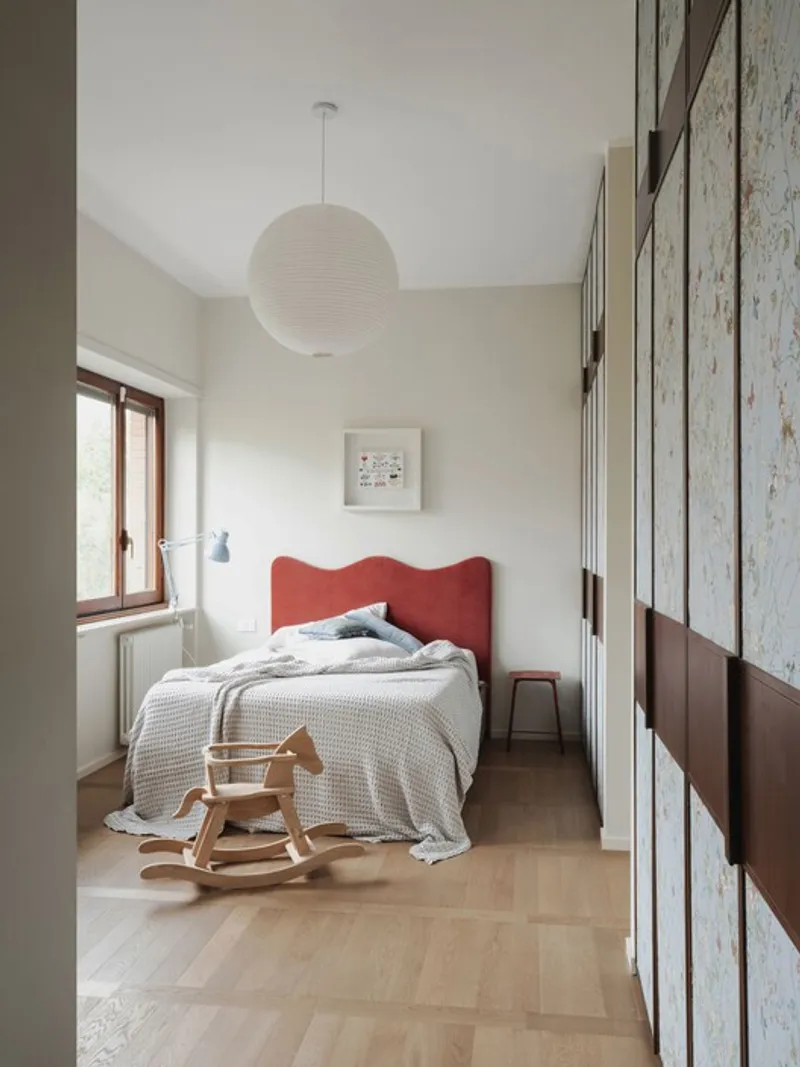
The color palette is timeless yet dynamic: neutral tones grounded by rich wood, stone, and splashes of red, saffron, and terracotta. Each selection balances comfort, artistry, and authenticity, reflecting the personalities of those who inhabit the villa.
Upper Levels: Light, Intimacy, and Character
Ascending the oak-paneled staircase, the first floor becomes a space of comfort and family connection. The bedrooms are joined by oak parquet floors laid in a “sister” pattern, unified by a continuous cream resin pathway that softly diffuses natural light.
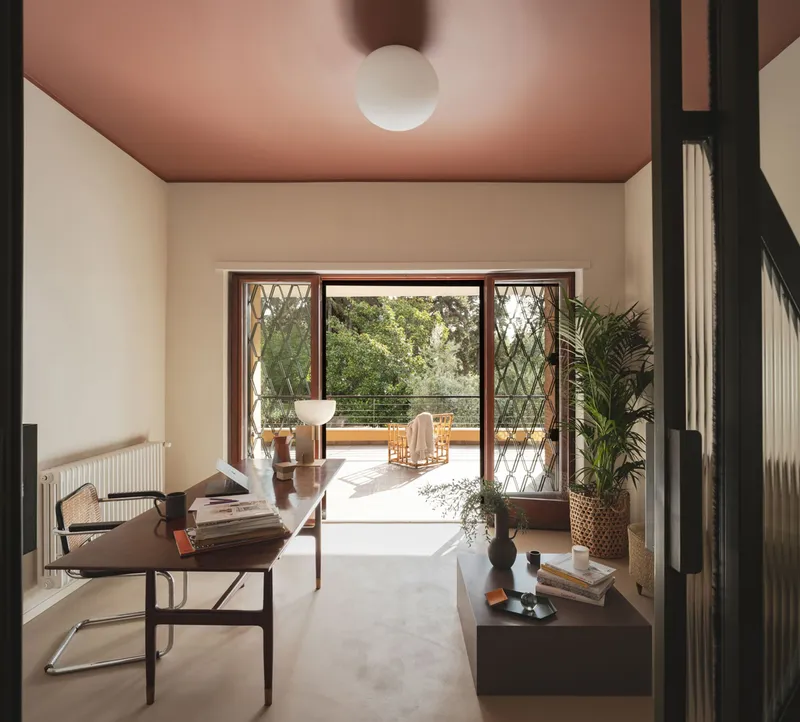
At the heart of this level lies Sara’s study—a luminous retreat enclosed by a custom glass wall. The view opens toward the terrace, where morning sunlight filters through, accentuated by a Tuscan Red ceiling from Little Greene.
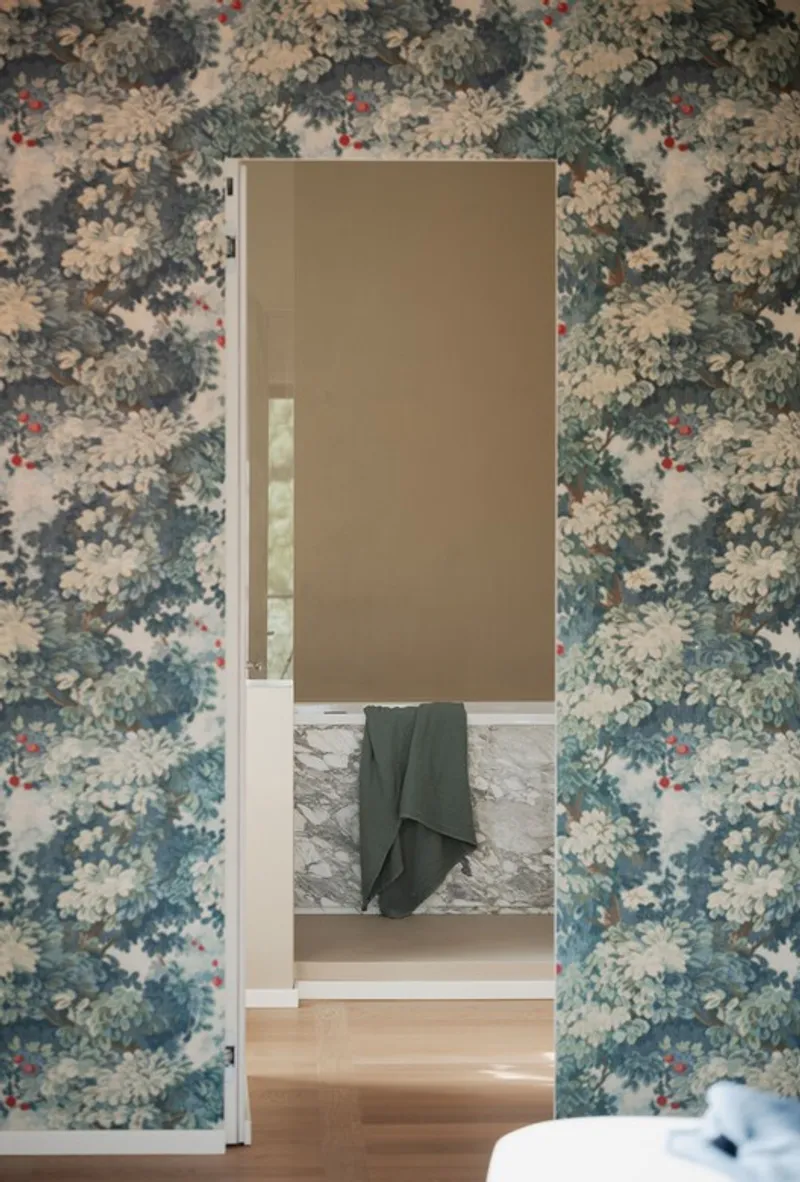
The master suite continues the project’s ethos of sensitivity and restraint, blending luxury with texture. A wall finished in Colony wallpaper conceals the entrance to the en suite, where an Arabescato marble sink, freestanding bathtub, and neutral palette create an atmosphere of calm indulgence.


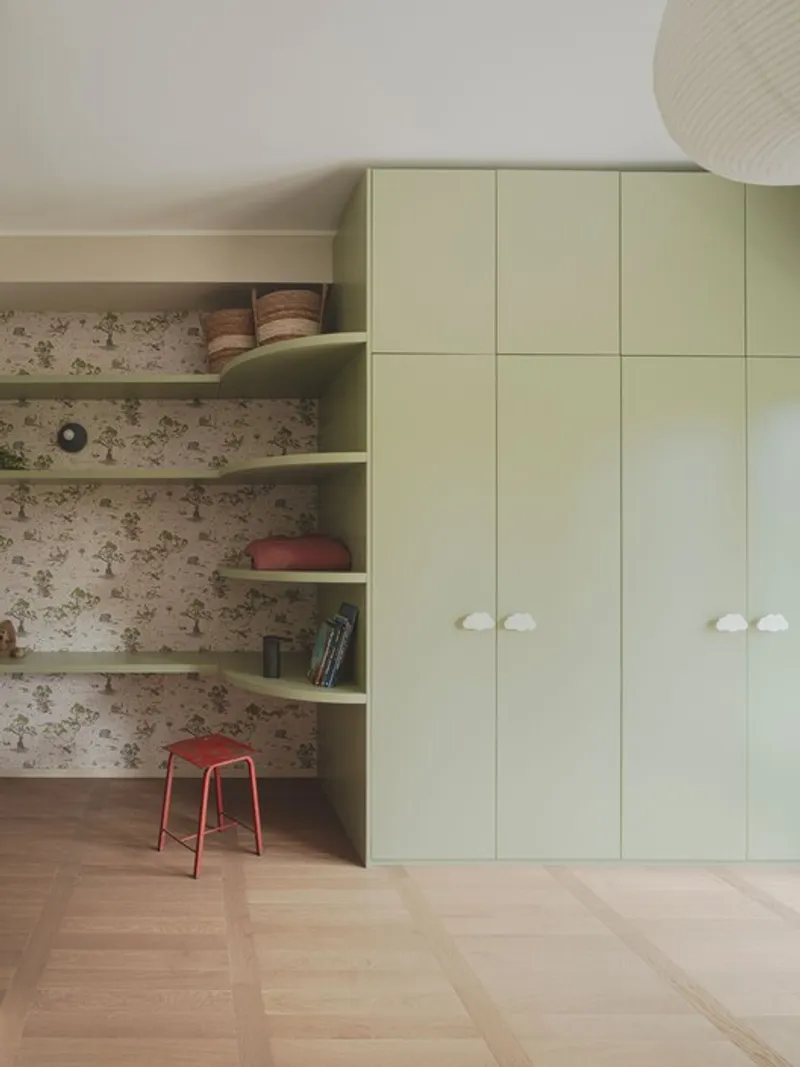
Each daughter’s bedroom represents personality and playfulness, featuring vivid Disney Home wallpapers, velvet-upholstered furniture by L’Opificio, and adaptive design elements built to grow with them. Between these rooms lies a shared vanity clad in blue galvanized iron and Fornace Brioni’s Tivoli tiles by Cristina Celestino, fostering a sense of individuality within unity.
The Loft and a View Toward Rome
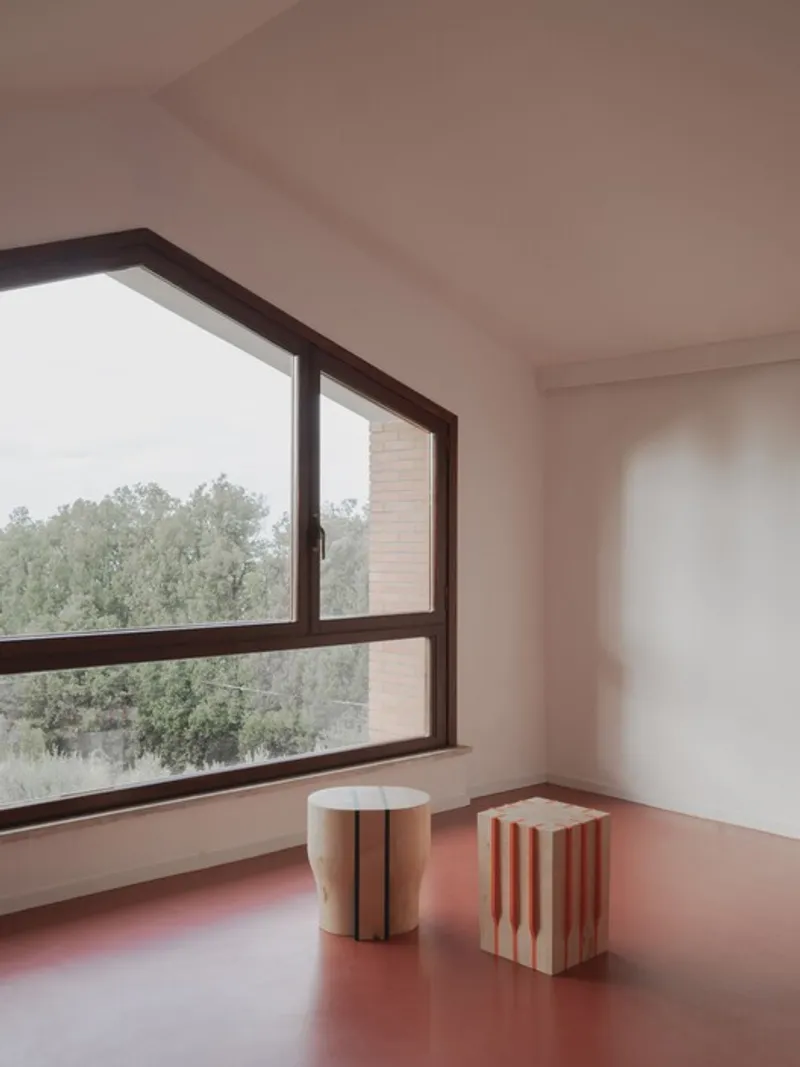
On the top floor, a lofted family lounge offers a serene escape. Here, the family can gather for films, games, or quiet evenings overlooking the panoramic skyline of Rome. Terracotta-hued rubber flooring by Artigo enhances warmth and acoustic comfort, while low lighting and deep textures promote leisure and intimacy.
This final space epitomizes the villa’s poetic duality—stimulation and repose, rooted in Italian design tradition yet attuned to the rituals of modern living.
A Revival of Timeless Modernism
Through careful preservation and thoughtful reinvention, STUDIOTAMAT accomplishes a design that feels both vintage and visionary. Villa ai Castelli Romani is more than a home—it is a manifesto on renewal, where mid-century ethos meets modern functionality, and material tactility meets human history.

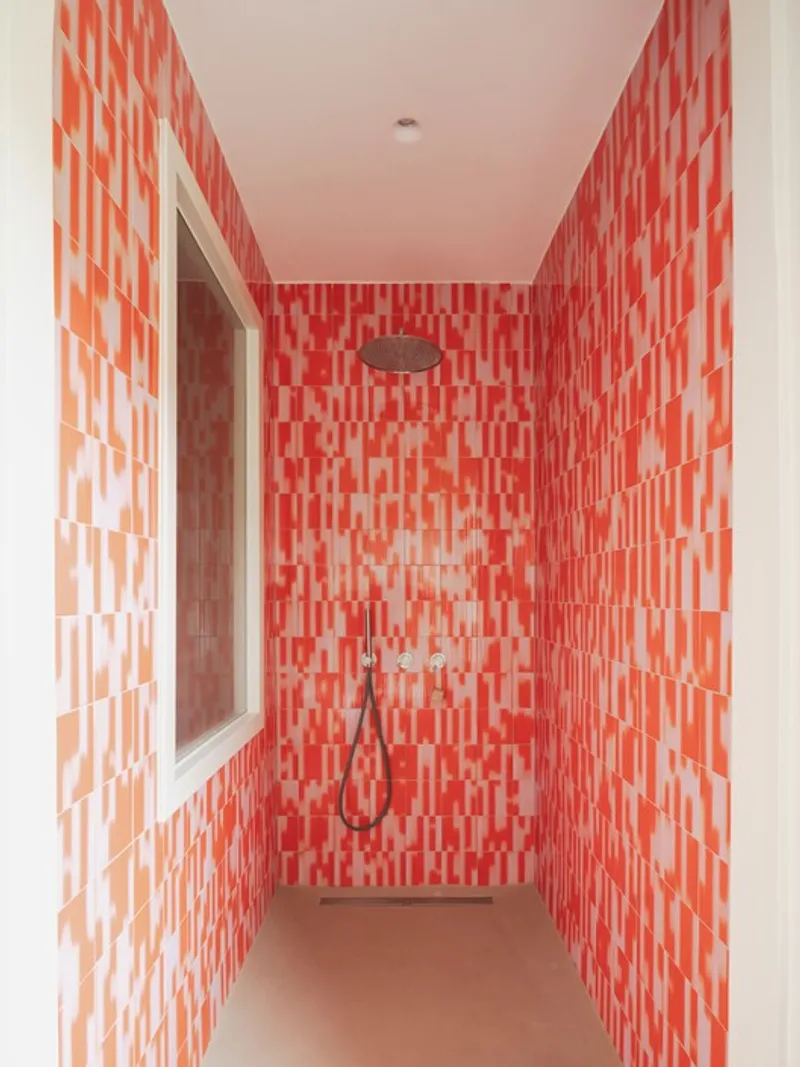
By weaving together heritage, light, and craftsmanship, the architects cultivate a design language that redefines domestic comfort. Each detail—whether a custom walnut joint or a restored fireplace—functions as part of a coherent narrative: one that honors the past while embracing everyday life in its most luminous present.


All the photographs are works of Peter Molloy




Popular Articles
Popular articles from the community


Conexión: Biophilic Design Reimagines High-Rise Living in Hong Kong
Conexión reimagines high-rise living in Hong Kong through biophilic design, green facades, shared spaces, daylight, water and nature within.

The Earth Pod: 3D Printed Homes for Resilient Refugee Communities
The Earth Pod reimagines refugee housing through 3D printed homes made from clay, combining resilience, self-sufficiency, and rapid shelter.

Co-Life: Senior Housing Design That Reconnects Older Adults With the City
Co-Life reimagines senior housing design through healing gardens, shared streets, workshops, and a sustainable community across generations.

Riyadh For All: Intergenerational Urban Design for Active Aging in Rabat
Riyadh For All reimagines urban design in Rabat with intergenerational co-living, adaptive courtyards, and Moroccan cultural exchange today.


Similar Reads
You might also enjoy these articles


Hodi-Mandai Geram
Project Function: Preservation and revitalization of the Intangible heritage and socio-spatial identity of the Hodi by Housing, Cultural Memory Center, Sacred Grove, landscape, local tourism economy


Olio Towers: A Mid-Rise for Performers That Fuses Housing, Rehearsal, and Stage
Located blocks from Houston's Theater District, this modular tower stacks living units around a central performance atrium.

Oasis: Modular Green Housing Carved into Dhaka's Urban Fabric
A shortlisted Plugin Housing entry reclaims unauthorized settlements in Dhaka with stepped concrete volumes, green roofs, and ventilation-driven design.

Black Hole: A Floating Megastructure for the Post-Physical Era
Emiliano Mazzarotto envisions a spherical, self-scaling arena where e-sports, digital hotels, and holographic stadiums replace traditional public space.


Explore Villa Vernacular Competitions
Discover active competitions in this discipline



Challenge to reimagine the Iron Throne


Photograph architecture without architects


Illustrate the lost glory of Angkor Wat - Render Challenge


Design challenge to reuse E-waste
Comments (0)
Please login or sign up to add comments
No comments yet. Be the first to comment!