
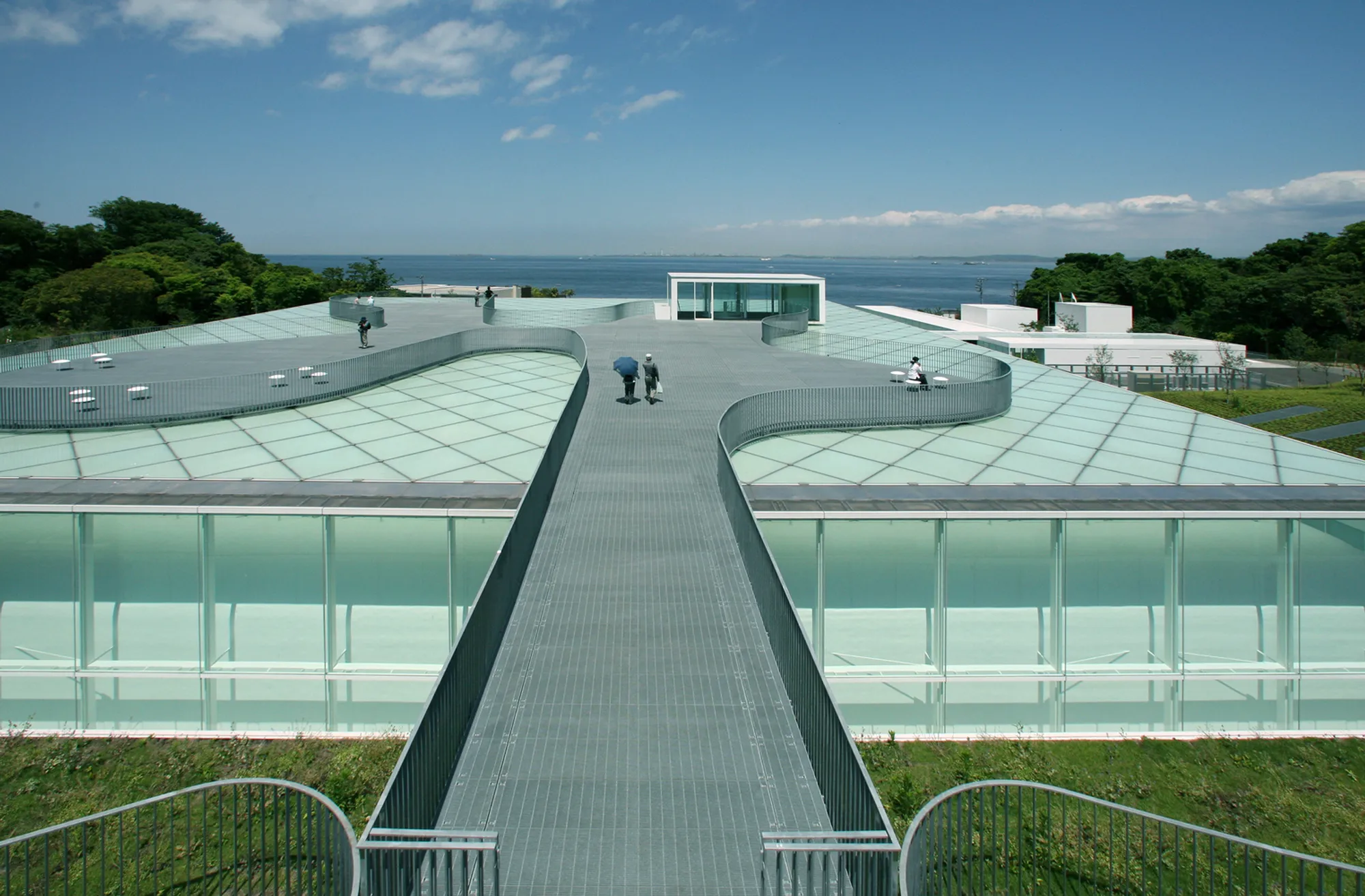
Yokosuka Museum of Art by Riken Yamamoto: A Landscape-Integrated Cultural Landmark in Yokosuka, Japan
Riken Yamamoto’s Yokosuka Museum of Art integrates coastal landscape, buried architecture, double-skin façade, and public spaces to connect art, nature, and visitors.


The Yokosuka Museum of Art, designed by acclaimed Japanese architect Riken Yamamoto, is a remarkable example of contemporary museum architecture that merges seamlessly with the natural landscape. Completed in 2006 in Yokosuka, Japan, the museum reflects a thoughtful architectural response to its coastal environment while redefining how cultural institutions interact with public space and nature.
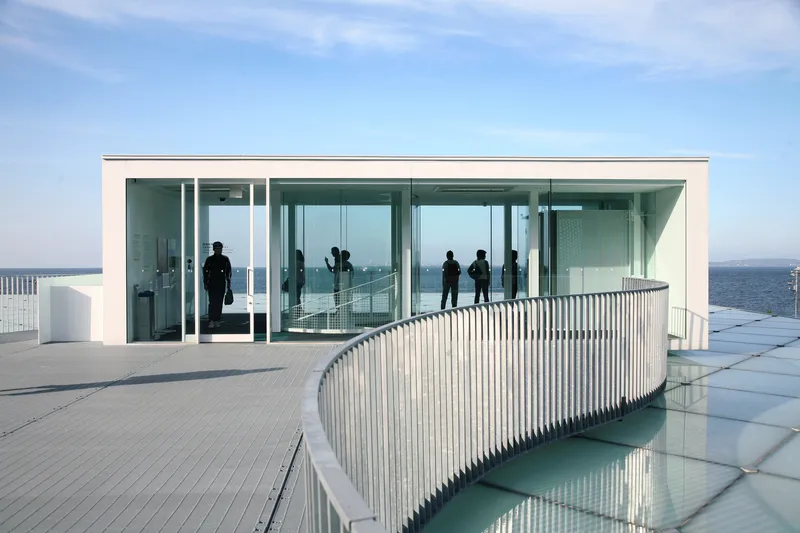
Covering an area of approximately 12,095 square meters, the museum was selected through a Quality-Based Selection process in 2002, marking one of the first times the city of Yokosuka experimented with this approach for public architecture. The project evolved over more than two years through extensive discussions with curators, planners, and community members, resulting in a museum design that balances artistic display, environmental sensitivity, and public engagement.
Today, the Yokosuka Museum of Art stands as a significant cultural destination that demonstrates how architecture, landscape, and community interaction can be integrated into a cohesive spatial experience.
Site Context and Natural Landscape Integration
One of the defining characteristics of the Yokosuka Museum of Art is its careful integration with the surrounding coastal landscape. The site is located between the sea to the north and mountainous terrain, reflecting the typical valley topography found throughout Yokosuka.
Rather than imposing a dominant structure on the landscape, Riken Yamamoto chose to embed much of the museum’s architectural volume within the ground. This strategy minimizes visual impact while allowing the building to maintain a strong connection with the natural environment.
By partially burying the museum, the design achieves several important goals. First, it preserves the natural scenery surrounding the site, allowing the landscape to remain the dominant visual element. Second, the underground configuration improves environmental stability, which is crucial for protecting artworks in a coastal climate. Finally, the design creates a quiet and contemplative atmosphere that enhances the visitor experience.
This approach demonstrates Yamamoto’s commitment to contextual architecture, where buildings respond sensitively to their environment rather than competing with it.
Spatial Organization and Nested Architectural Boxes
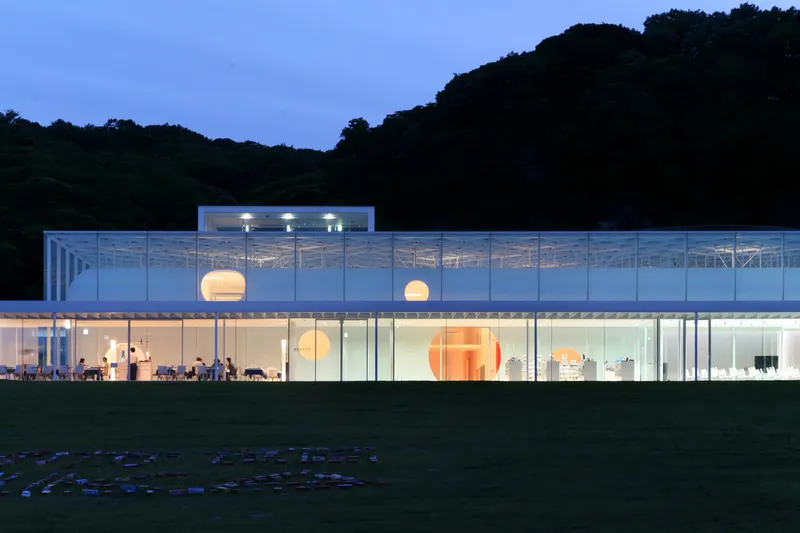
The spatial organization of the museum is based on a nested box concept, which structures the building into two primary zones. This design strategy allows the museum to accommodate both public activities and sensitive exhibition spaces while maintaining environmental control.
The outer edge of the building contains open and accessible facilities such as:
Restaurants and cafés Workshop and educational spaces Public circulation areas
These areas encourage visitors to interact with the museum beyond traditional gallery experiences, transforming the building into a vibrant cultural hub.
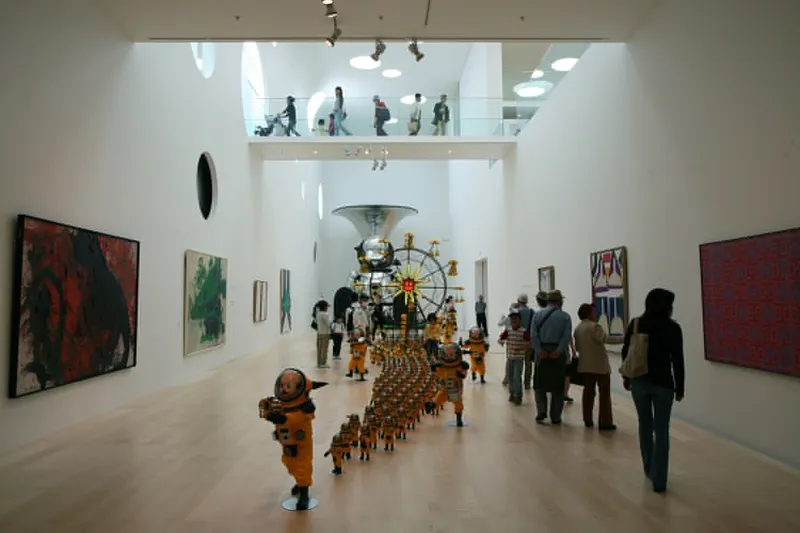
At the center of the building, more controlled spaces are dedicated to exhibition galleries and art collections. These rooms require precise environmental conditions to protect artworks from humidity, light exposure, and temperature fluctuations.
By separating public spaces from sensitive gallery zones, the architecture successfully addresses the challenges of constructing a museum near the sea, where environmental factors can pose significant risks to artwork preservation.
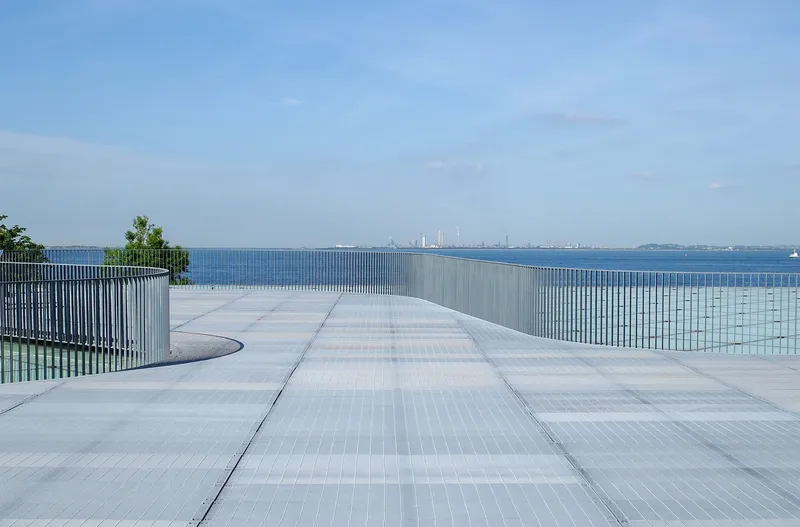
The Double-Skin Façade and Environmental Control
A key architectural feature of the Yokosuka Museum of Art is its innovative double-skin envelope system. The structure consists of:
An outer layer of glass panels An inner layer made of iron boards
This dual-layer system wraps around the areas used for exhibitions and collections, functioning as an environmental buffer that helps regulate sunlight and temperature.
The glass exterior allows natural light to penetrate the building while maintaining visual transparency with the surrounding landscape. Meanwhile, the iron interior layer controls light exposure and protects artworks from excessive sunlight.
This architectural solution not only enhances the building’s sustainability but also creates a dynamic interior environment where light, transparency, and movement become part of the museum experience.
Circulation and Visitor Experience
Walking through the Yokosuka Museum of Art is designed to be an immersive spatial journey. Visitors move along circulation paths that run within the double-skin envelope, allowing them to observe both the exhibitions and the activities happening throughout the museum.
This circulation strategy transforms the building into a living cultural environment where visitors can experience multiple layers of interaction:
Art exhibitions and installations Educational workshops and creative programs Views of the surrounding sea and mountains Interactions between visitors and museum activities
Instead of isolating art within enclosed gallery rooms, the architecture encourages a broader understanding of art as part of everyday cultural life.
Architecture That Connects Art, Community, and Nature
Riken Yamamoto’s design philosophy often focuses on social connectivity and shared spaces, and the Yokosuka Museum of Art reflects this approach clearly.
The museum is not just a building for displaying artworks; it functions as a community-oriented cultural platform where people can gather, learn, and experience creativity in an open and accessible environment.
Its integration with nature, flexible spatial organization, and public-oriented design make it a significant example of modern Japanese museum architecture that prioritizes both environmental sensitivity and social interaction.
All photographs are works of
Tomio Ohashi




Popular Articles
Popular articles from the community


Hill & Cross Opera: Sculptural Opera House Architecture Shaped by Tallinn’s Landscape and Identity
Hill & Cross Opera reimagines opera house architecture in Tallinn through its sculptural hill, civic plaza, glass wave and a luminous cross.

The Ocean Hive: Sustainable Architecture for a Self-Sufficient Civilization at Sea
The Ocean Hive imagines sustainable architecture at sea, where modular habitats, algae, wave power and ocean waste sustain a growing colony.

The Earth Pod: 3D Printed Homes for Resilient Refugee Communities
The Earth Pod reimagines refugee housing through 3D printed homes made from clay, combining resilience, self-sufficiency, and rapid shelter.

The Musturak Paradise: Senior Living Architecture for a Connected Future in Temara, Morocco
The Musturak Paradise reimagines senior living architecture in Temara via private homes, social spaces, culture, community, and shared care.

Similar Reads
You might also enjoy these articles


FAMM Arquitectura Organizes Ten Villas Around Courtyards and Jungle in Nosara, Costa Rica
El Molino pairs two elongated volumes with deep overhangs and timber louvers to build a compact coastal community five minutes from the beach.

Oscar Niemeyer's Ibirapuera Park Pavilions Define São Paulo's Cultural Identity in Concrete and Curve
A constellation of modernist volumes set within São Paulo's most important urban park, conceived for the city's 400th anniversary in 1954.
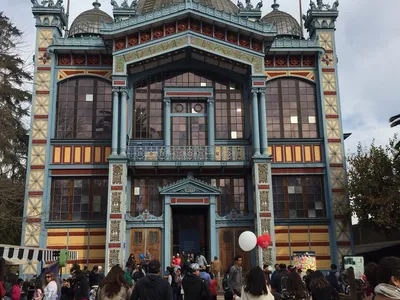
How Henri Picq's 1889 Paris Pavilion Traveled 11,000 Kilometers to Become Santiago's Artequín Museum
A prefabricated iron and glass pavilion built for the Paris Universal Exposition found a second life as a children's art museum in Chile.

Sanjay Puri Architects Wraps a Jaipur Office Tower in Capsule-Shaped Green Buffers
A nine-level climate-responsive workplace near Jaipur Airport uses stacked planter terraces and aluminium screens to fight 40°C heat.

Explore Cultural Architecture Competitions
Discover active competitions in this discipline



Challenge to reimagine the Iron Throne


Photograph architecture without architects


Illustrate the lost glory of Angkor Wat - Render Challenge


Bring back Drive In's
Comments (0)
Please login or sign up to add comments
No comments yet. Be the first to comment!