
Architecture for the Soul ? SOCIAL INFRASTRUCTURE FOR RESILIENT CITIES
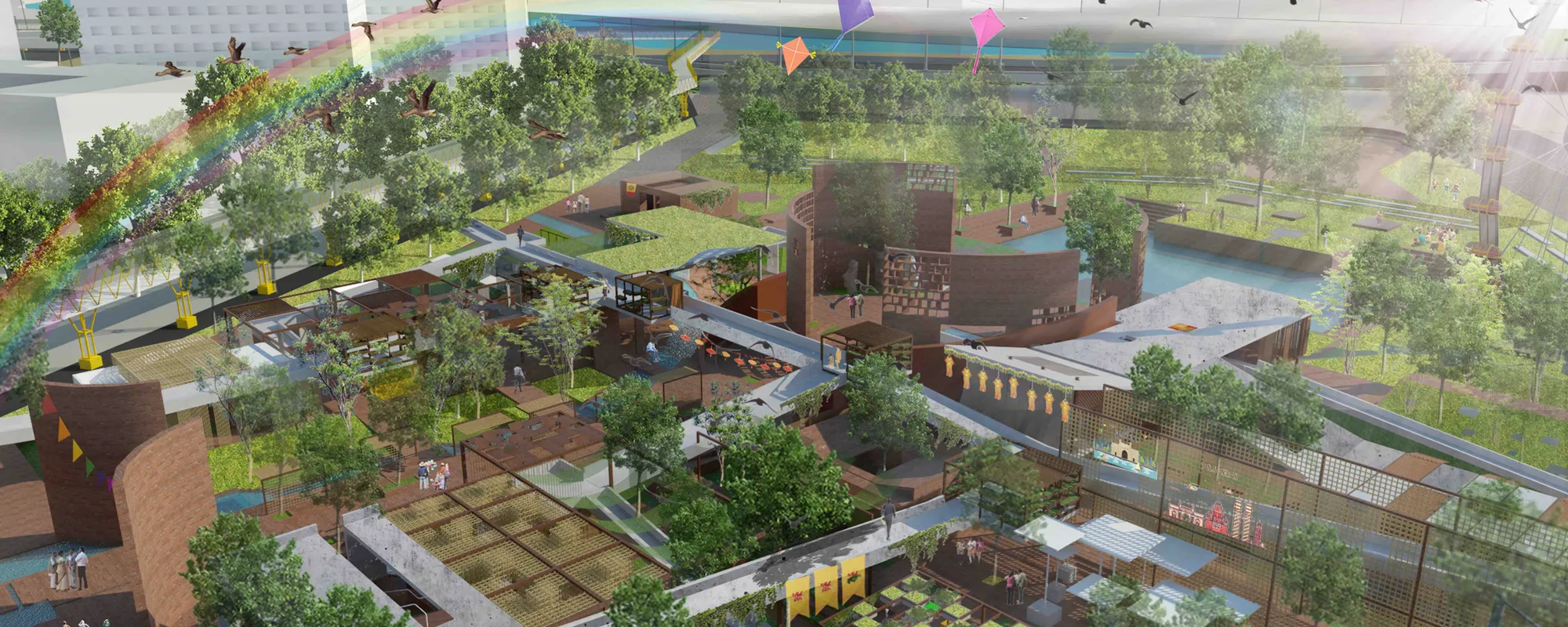
The sensual experience of a space, gives it a prominent presence in the built environment, which connects, stays and associates with us. The idea of a People?s Place has been redefined in the intervention that celebrates an architecture that is true to the place it belongs, to its people, climate and culture. Helping OUR CITIES REGAIN THEIR LOST IDENTITIES.
Project Media
Celebrating the true Essence of a Place
Board 1: ARCHITECTURAL CONCERN OF THE PROJECT Architecture shapes us. Very few people think about architecture, many feel it. Most people normally do not look at their surroundings, they breathe in them. This ambience according to me is architecture. Architecture is a tangible or a physical thing and therefore it is experienced by the intangible or the immaterial thing, like the human soul. Hence, “Architecture for the Soul”. Nowadays, buildings are being designed in one country to be built in another, regardless of climate, culture or tradition differences. Most such “international” buildings are made of “international” materials, and have an artificially controlled indoor climate. They can therefore be sited anywhere in the world, but they belong nowhere. Architecture for the soul is thus an insight into the premise that our physical environment has the ability to elicit different emotions upon us. . The sensual experience of a space, gives that spaces a prominent presence in the built environment, which connects with us, stays with us and associates with us.
Board 2: ARCHITECTURAL & CONCEPTUAL STRATEGIES TO ADDRESS THE CONCERN According to a recent survey conducted, Religious Places are considered to be the most Soulful ones. This is because all Religious Places architecturally incorporate the five elements of Nature, while respecting the human senses. Soul Theory: Based on the above analysis, a soul theory chart has been formulated. The main objective of this theory to draw conclusions and relationships between architectural soul parameters like senses, elements of nature and how if worked together can reflect human emotions. Questions were further raised as to why this soulful quality of architecture, is limited to spiritual and religious places. Why cannot all the architecture around us be Architecture for the Soul? The reason primarily being, that today, we are blindfolded by advertisement, seeking refuge in foreign developments, without even weighing the pros and cons for the same. Thus is becomes very important to create awareness about this quality of space, that architecture can offer. If a particular typology is selected, the impact that the architecture will create will be limited to a few members of the society, a certain age of people and a particular class people. Architecture for the soul isn’t just about creating architecture that proves beneficial to a certain segment of the citizens. Thus a PUBLIC PLACE has been selected for design. A reference study of a similar place in Ahmedabad called Manek Chowk has been done. How throughout the course of the day activities in this small pocket keeps changing. The entire idea of a People’s Place has been redefined, in this design intervention by using the idea of Undefining the Defined. This means that spaces in architecture, cannot be assigned particular functions, this is because, every individual will perceive the same space different, thus behave differently. It is essential to provide Option to Choose.
Board 3: SELECTED SITE The selected site for the intervention being the City of Mumbai, a research was done to understand how a People’s Place would respond in such a City, which has been investing in foreign developments, like a piece of cake. The urban condition instilled ideas about creating a breather in the city, places that be used for an infinite number of activities. Places that will be original to the city, inspired from the city. Thus, Creating Social Infrastructure for the Resilient Mumbai. A centrally located piece of land, which is an illegal dump yard today is chosen. A detailed site study was done, so as to understand the challenges that the site offered, its varied context and the miscellaneous activities that took around it. Connectivity: The Bandra Railway station is bang next to the site, the front edge of the site receives the Western Express Highway. Visibility: The site shares its Boundaries with a Sky walk and a view of the Mithi River. An open storm water drain borders three of its side. This site was originally a dumping ground, also bordered by the city sewer line. The front of the site receives the Western Express Highway. Bandra Kurla Complex, is situated at one end.
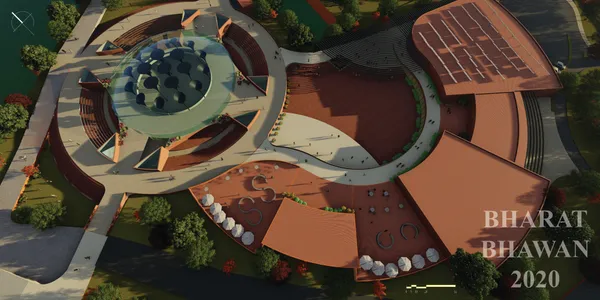
Board 4: DERIVATION OF THE PROGRAM & SCHEMATIC ZONING A programme has been formulated based on the immediate context of the Site. Providing extension places for already existing activities, creating only better infrastructure, without altering the essence of the place. Therefore, Instead of giving the site back to the city, the city gives a part of it to the site. After which a study of the already existing architectural character of the city is done, to understand the spatial configurations which will help in creating comfortable places for its people. For example, the study of Chawls, a typical housing typology with a central corridor that leads to open courtyards. This corridor also has several bridges at different levels, to strengthen the concept of community living. A basic zoning has been done, keeping in mind the climate and space planning strategies of the place. Leaving the southern end of the site for future developments, the northern end has been used for the design intervention.
Board 5: ARCHITECTURAL LANGUAGE ACHIEVED IN THE PROJECT The design acts as a Social Bridge among varied users, ranging from rag pickers to the high income group corporate employees. The already existing architectural character of the city has been inspired from to create several instances in the design. For example, Chawls in the City and the social spaces they offer, Narrow streets bubbling with activities, Chowks (Squares) provided with seats (katas) to aid conversations, Kunds (Water bodies) that foster celebration. This helps in creating an emotional connect to the place. Thus the Architectural invention will not come out as a shock to the city, but a part of the Community.
Board 6: ARCHITECTURAL LANGUAGE ACHIEVED IN THE PROJECT Climate has also been used as an important concern, proving shaded cross ventilated places owing to the climate of the city. Along with this the natural environment of the place is celebrated. Architectural elements framing natural elements like the sky, water. How these frames will keep evolving, and thus the architecture will never be constant. Its material will keep ageing on exposure to atmosphere. Place to Exhibit, Repose, Create and Discuss have been aligned along the eastern edge of the road, as they act as extension areas of already existing activities. Place to work on the western side, is almost like a spill over for the office buildings on the east. The axis has been continued at the upper levels too, such that the already existing, brutal skywalk becomes an active part of the design, creating various breathers at that level too.
Board 7: ARCHITECTURAL LANGUAGE ACHIEVED IN THE PROJECT The Place to Gather with its inverted circular walls, is the point of entry, opening up the Axis to the City. As on starts descending down through the Central Spine the eye level keeps changing, hearing the sound of water flowing, which finally opens up to the Place to Congregate and Celebrate, it feels like a discovery walk, with multiple activities and axis melting in the Spine. Even when the Activities keep on changing, the Architecture never remains static, it keeps on evolving, keeps on transforming. Celebrating along the Water edge has always been a part of the Indian Culture, therefore when one enters the Place to Celebrate, one discovers the perennial lake, which acts as the centroid of the design. Even when the water level depletes, the activity along the edge, evolves, owing to the series of steps which have been inspired from the Temple Tanks
Board 8: ARCHITECTURAL LANGUAGE ACHIEVED IN THE PROJECT “Live, Share and Grow”, a platform where the city will Live together, Share information and Grow together for a better tomorrow. The soul-nourishing architecture will give a first-hand experience to the city and its people, thereby showcasing the importance of Adaptively Associative Architecture. Creating an architecture, that incorporated all the five senses, respecting the five elements of nature, creating awareness of the qualities that a space possesses and how it directly impacts human lives. Even if the design construction, stops at the plinth phase of the project, the places will still take shape as various platforms which will keep evolving and adjusting over time. Celebrating the aging quality in architecture.
Board 9: SUSTAINABLE SYSTEMS AND CONSTRUCTION STRATEGIES Several attempts have been made, to make sure that the design needs zero maintenance and at the same time, natural systems have been designed for its working. Sprinklers have been installed in the direction of the Wind, to create a natural air conditioning system at the same time water the plants. Shaded corridors, with jali walls have been designed to provide a natural shading system during the hot months, and the walls allow free flow of wind, which is extremely important in humid regions like Bombay. A natural ecosystem has been incorporated, to clean the lake and water canals. Thus a system which houses all kinds of species.
Board 10: THE BEGINNING – STRONG SOCIAL NETWORK The Thesis Intervention does not stop here but marks a beginning. These areas of intervention can be spaces under flyovers, foot over bridges, abandoned structures, through building terraces and along water edges. Creating these social nodes, throughout cities, that will act as activity extension areas, a strong social network connecting our cities, benefiting the people of the place, as well as creating an architecture that has been inspired from the place itself, thus benefiting the place. ARCHITECTURE FOR THE SOUL = ARCHITECTURE FOR THE PEOPLE AND THE PLACE.

Project Score
Be the first to rate this project
Project Team (1)


Project Owner
PUBLISHED ON 17th February 2020




Similar Projects
Discover related projects you might like








Comments (0)
Please login or sign up to add comments
No comments yet. Be the first to comment!