133KURPIE HOUSE. The evolution of form towards the present. Architectural design in the region.The project focuses on creating a contemporary interpretation of the traditional vernacular house type originating from central Poland. As part of the design process, a unique method was developed, offering a structured framework for creative, research-driven reinterpretation of historical architectural forms with regional and cultural specificity.
044Echoes of the Earth: Preserving Bangladesh’s Agricultural Heritage: An Agricultural Discovery MuseumThe Agricultural Discovery Museum & Research Hub will serve as a center for education, inspiration, and national pride, aiming to reestablish agriculture as a vital part of Bangladesh’s identity. More than just a physical space, it represents a broader effort to celebrate the legacy, current role and future potential of the country’s agricultural traditions.
018Kreatorium - Student Library Project in WrocławThe main goal of the project was to create a modern library space primarily dedicated to students and the local community. It is intended to serve as a place for meetings, collaborative work, and study. The name of the facility, “Kreatorium,” suggests that the space is an environment that stimulates imagination and supports the generation of new ideas.
021Fortress and ComfortThe main objective of this project was to create an emergency operation center that protects people not only physically but also emotionally. The design focuses on providing a space that offers safety, comfort, and psychological relief during natural disasters.
02Safal Vivan: Where Design Meets TranquilitySafal Vivan, designed by Architect Malvi Gajjar, is a premium residential project blending modern design with sustainability. Known for its innovative approach, Malvi Gajjar’s villa & bungalow design studio creates spaces that are both functional and aesthetically appealing. The project focuses on eco-friendly features and luxurious living.
110LOOP OF PARKRISEThis project proposes a multi-level vertical parking hub as a forward-thinking response to Mirpur’s growing urban mobility demands. Accommodating a minimum of 250 cars and 5 buses within a maximum ground coverage of 50%, the design minimizes its footprint while maximizing spatial efficiency through vertical expansion.
5136WinnerSphere ArenaE-sports programs are unified under one roof to create a collective public space. A central spherical screen connects gaming, viewing, and social areas, transforming play from an individual digital act into a shared spatial experience shaped by interaction and togetherness.
013co-LoopThis project redefines e-sports as a contemporary collective ritual. A 500-seat arena forms the core, intersected by two concrete volumes housing technical and programmatic spaces. Between them, a public threshold shaped by steel ramps enables transitions between individual, social, and collective roles through spatial experience.
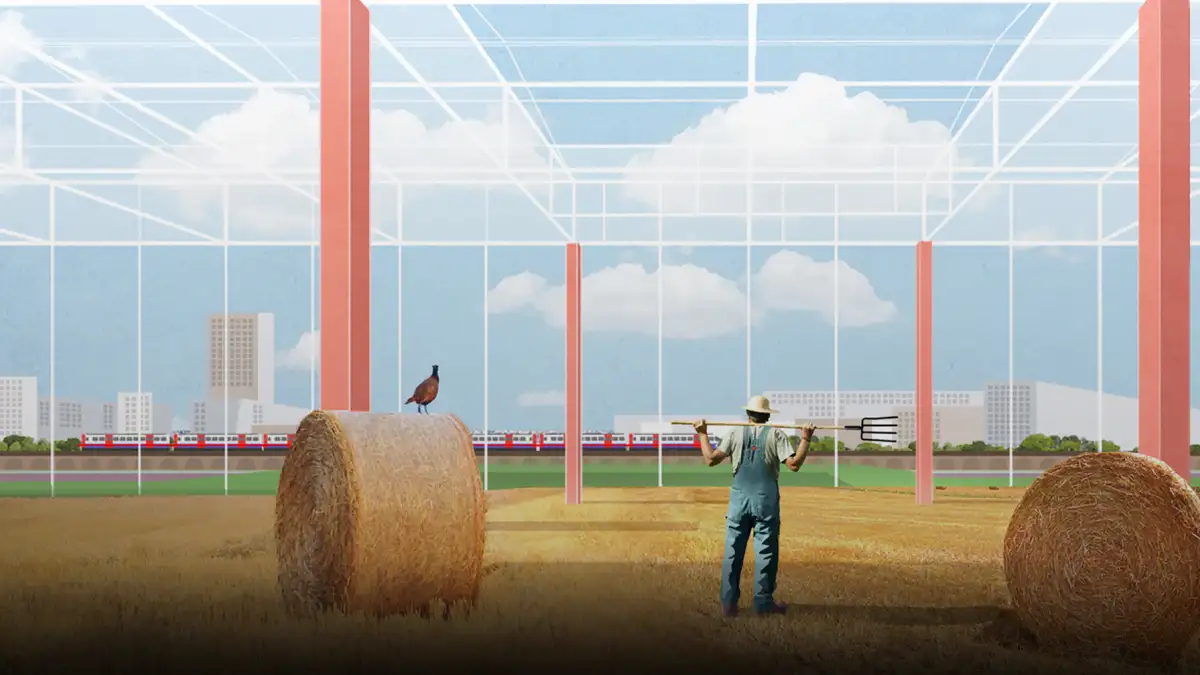
323WinnerThe " Spine "This project reimagines transportation infrastructure as a continuous living system, where movement, dwelling, and landscape merge into a single spatial experience. Rather than connecting destinations, it creates new ways of inhabiting the journey itself.
5568E-Effect : An E-Sports Arena ProposalE-Effect is a conceptual e-sports arena for Toronto that redefines the arena typology by prioritizing the spectator. A rigid digital cube is disrupted by fluid interior forms, creating an immersive, bodily experience where physical space and virtual reality merge.
213CONTINUUM This project reinterprets temporal discontinuity in esports buildings as a spatial organization problem. By integrating an arena, gaming hub, and public spaces through a continuous movement path, the design supports overlapping programs and sustained activity beyond event days.
6334People's Choice AwardKINESIA This project approaches the e-sports arena not as a structure divided by rigid boundaries, but as a continuous spatial system. The audience is not defined as passive; spectators can engage with the event from various points and in multiple ways. The architecture avoids imposed direction, allowing users to construct their own spatial experience.