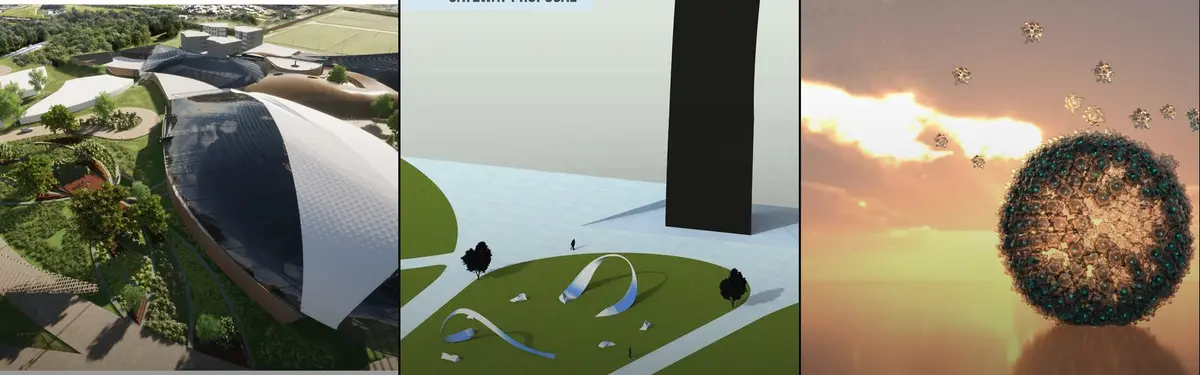

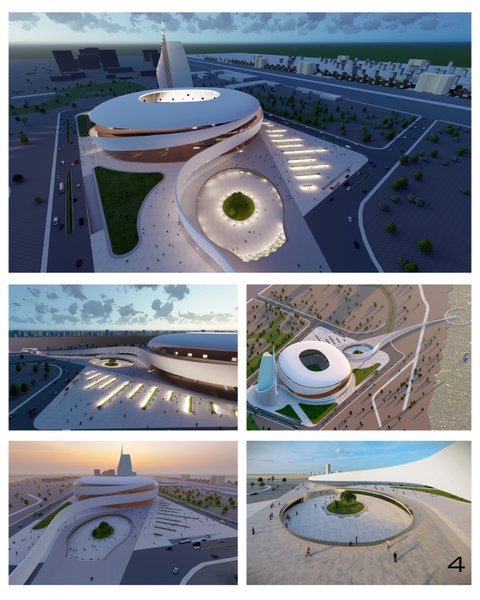
Sports Architecture
Architectural design of sports facilities, stadiums, training centers, and recreational spaces.


Sports and architecture are two elements of 21st-century living that have a widespread and profound influence on the world around us. The role of architecture in shaping buildings and society has occupied historians for centuries. Likewise, the cultural, economic and political importance of sport has been the subject of long scholarly investigation. When sport and architecture converge, then the impact of these two forms of social activity is redoubled when sport can create a new landmark project or building that will stand as a defining symbol for an entire generation or epoch.The cultural and social importance of sporting events and competitions was already particularly recognized in ancient Greece. For centuries after that indoor/outdoor sports have proven to be the best form of physical activity, recreation, mind and skill development with both individual and team-building elements. However, athletic practice experienced a new boom during the Renaissance with the re-emergence of running events and equestrian events. However, they do not take place in specific facilities but often take place in spaces serving other purposes, in large open spaces or in squares. Img 1: The most lawless horserace in the world continued for centuries at Piazza del Campo in Siena (Credits: Gettyimages)For example, the Piazza del Campo in Siena and its Palio horse race are the most important cases that are still popular to this day, while in Florence, in Piazza Santa Croce, the forerunner of modern football played in the team of 27Sports was not really identified until a few centuries later, in the second half of the 19th century, which also saw the birth of the first sports clubs and federations. Enthusiasm for new sports, football and rugby, in particular, grew rapidly in England, in towns whose populations increased dramatically as a result of urbanization from the industrial revolution. People quickly felt the need to build new architectural spaces for fitness/sports facilities that could suit fans of a particular sport or help people stay healthy in a time of increased work pressure across all groups and genders.Img 2: British Mandate Palestine circa 1938. "Jerusalem Y.M.C.A. activities. Swimming pool on boys' day (Credits: https://www.shorpy.com/node/10435)What is the role of architecture in sports?The required types of sports facilities have evolved with the advent of new sports over the years. Since each sport has its own specific requirements, the structures in which they are played must be uniquely tailored. For example, the facility where the javelin throw is performed is very different from where a basketball player plays basketball. For this reason, an architect must be familiar with each sport and its requirements. In addition, fitness/sports activities have become an important part of daily urban life. Whether it's working out in the gym or jogging around the neighbourhood, today's sport is closely associated with lifestyle, enjoyment and health. It is well known that exercise has a positive physical and psychological impact on our health. In addition, half an hour of exercise a day is also recommended by WHO. Sport connects people, promotes tolerance and respect for individuals and communities, and supports social inclusion.Over time, the architecture of different sports has evolved and is no longer represented in the form of a specialized sports facility or a gym/high school. In addition, the spatial presence of increasingly sophisticated sports facilities has diversified. Whether skateboarding, playing cobblestone, swimming, city skiing, dancing or archery, each sport is represented in a built-in form to suit it. The environment in which sports architecture is built plays an important role. What are some challenges faced while designing sports facilities/spaces for sports? Sports architecture presents many unique challenges. While traditional architecture is about building spaces for familiar typologies like housing and commercial buildings, sports facilities are larger and more complex. Planning a large structure such as a sports facility might mean working for companies or centrally-run cities, not for a single client. The scope, cost and duration of the project will be greater, and the risk will also be higher. An architect is hired not only to make sure the facility looks good, but also to make sure it's safe and functional. Img 3: Bukit Jalil National Stadium, Kuala Lumpur, MalaysiaPublic and commercial architectural projects each have unique needs. A building that can hold thousands of fans is more complex than something like a retail store designed for a few hundred people. Sports facilities are not only massive, but they require different materials and strategies in different areas. Some parts of the facility must be sturdy enough to hold heavy equipment and work vehicles, while others must be designed for professional sports activities. That being said, the responsibilities of architects and designers also extend to the layman for types related to general basic sports/fitness facilities.Due to the lack of space in large cities, a limited amount of land is available for playgrounds or public spaces. In scenarios like these, the role of an architect is very important in the creation of accurate sports facilities for all backgrounds and space requirements. Strategies like arranging sports activities in public places and making it an important meeting point of the district are being applied by urban designers and architects. Existing buildings or roofs are transformed in a unique way, and sports facilities are integrated into existing rooftops or green spaces with as much care and sensitivity as possible.Img 4: BIG’s waste to the energy power plant with skiing facility for Cophenhill residents What are the types of sports buildings or facilities? Img 5: Various building typologies in sports architecture The direction of sports architecture in the futureToday, many new sports facilities are returning to city centers as sports and mixed-use areas develop. The focus of architecture is now on attracting residents, workers, and visitors every day of the week, not just on game or game days. Projects like arenas in Detroit and Edmonton are moving towards the integration of entertainment, sports, retail and residential spaces. These projects promise and promote related development and maximise return on investment while creating vibrant, sustainable urban communities.In addition to economic sustainability, design strategies related to site and landscape can improve the existing architecture conditions for sports architecture. Factors such as transportation, materials and resources, energy and the indoor environment, can also help operators practices to reduce environmental impact while improving outcomes.Architecture CompetitionsThe role of architecture in sports facilities is very important as it can influence the performance of sports. During the design process, architects must ensure the safety of everyone who uses the facility. Because safety measures vary from sport to sport, architects must understand the sport and the potential accidents that can occur.Competitions are a great way to try out new things, make mistakes and learn from them. They're also a great opportunity for portfolio building because everything you submit gets contextualized based on where it ranks against everyone else's work. And perhaps most importantly, they give you extra insight into what the judges see in your submitted work as well as how they don't see it - which is yet another fantastic way to improve your designs in unexpected ways!Img 5: (RE) ENVISIONING - Competition entry for The Digital Colosseum’In today's progressive world, sports facilities are the point of admiration for many because of their design beauty. Architecture competitions thus give varied opportunities and challenges to both professionals and students to help them work on existing issues today. A few sports architecture competitions that were held recently were: Staydium, The Grid, Clubhouse, The Digital Colosseum, Tokyo Dojo, Reboot, Staydium 2.0, and many more.Explore more competition projects in Sports Architecture: UNI Design CompetitionsUNI is a global network of architects and designers who are solving some of the most challenging problems around the globe. UNI brings together the world's largest pool of design challenges that are curated by the finest architecture academicians and professionals globally. With over 200,000+ registered members, UNI brings academia and the professional spheres of architecture together through a unique knowledge-sharing web platform. Since 2017, UNI has hosted more than 200+ architecture competitions for various idea level to realization level briefs. In the past, UNI has helped 50+ organizations, universities, and government bodies to use our platform to generate architecture and design solutions through competitions. Discover other competitions: https://uni.xyz/competitions