
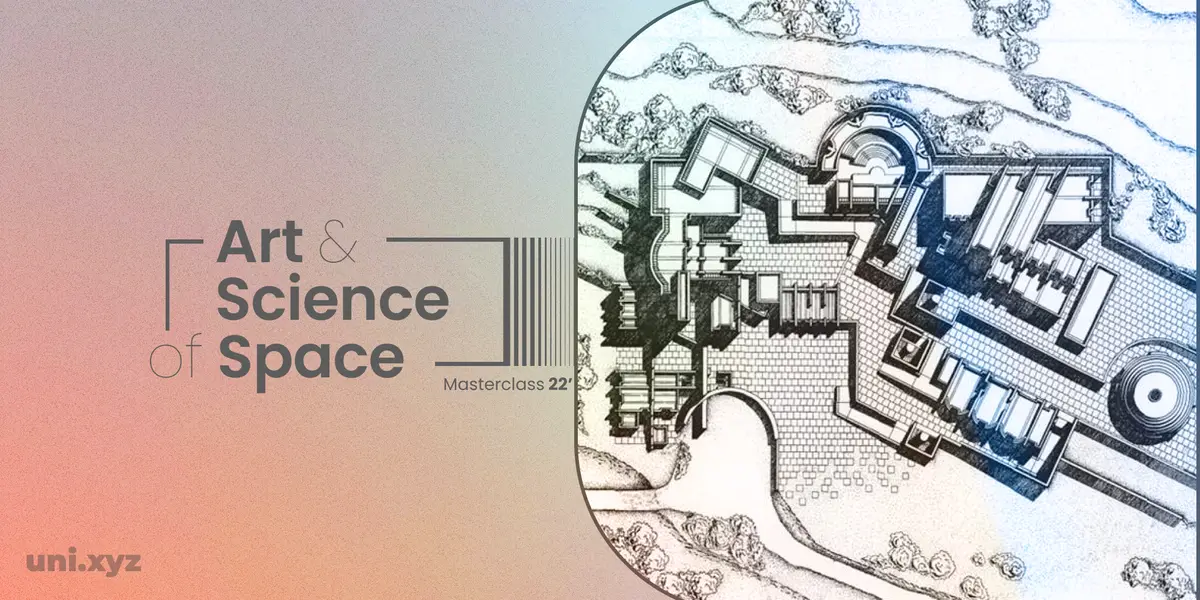
Art & Science of Space Masterclass (AASOS)
A 3-Step System to design Urban Spaces
The 3-Step Formula
The FREE TRAINING (Webinar) is divided into three parts. In this webinar, we are focused on ABE (Architecture by Elements). We will soon launch the other two parts of the method IAD and PA.
The 3-step formula:
1- Analysys-Design Interaction (ADI) to understand the dynamics of transformation of places in their diachronic and synchronic dimensions
2- Architecture by Elements (ABE) methodology to use the elements of architectural languages starting from their archetypes.
3- Performing Architecture (PA) methodology blending Imagination with Memory. It provides bespoke tools to inform architectural design, human geography, urban planning, site-specific theatre.
1. [ Analysis-Design Interaction ADI ]
Description:
Interaction Analysis-Design is the methodology that we apply to space, to identify new sequences of meaning, new material, and immaterial configurations in a critical relationship with history and memory.
The design activity is here considered as an act of use or re-use of the place and its components; some are present at the moment of the activity, others are no longer visible, but still conditioning the actual state of the place. The Course utilizes a new methodology that, analyzing and revealing the Models of Use/Re-use of the territory, identifies its ‘Form of Transformations’, informing both urban and architectural design.
2. [ Architecture By Elements ABE ]
Description:
The purpose of ABE is to activate not only an emotional relationship with history but also to investigate in depth the ancient-modern relationship to rediscover Values and anchor contemporary research in architecture to a past that must be perceived as alive and vital.
The Values express themselves as linguistic principles and forward as specific spatial organized structures: shapes. These shapes become tools to establish an architectural syntax, the most difficult aspect to be defined during the architectural configuration process.
Architecture for Elements methodology extracts the DNA of the architecture from the analytical study of the logics within the architectures of the past and present time; these elementary constituent principles will develop models that could generate new organisms that adapt and belong to the context. Our method is similar to the syntactic relationships between the elements of the language; It can develop several languages, always syntactically coherent, all of them able to generate other possible design solutions, on which the designer can then choose between possible alternatives, as a further elaboration of shapes.
3. [ Performing Architecture PA ]
Description:
The latest development of urban planning worldwide considers community engagement as the new core of the planning process, in all stages of design. Architects need new skills and knowledge to interact with both the site and inhabitants for public involvement in design and planning processes.
Performing Architecture realizes competencies in Spatial Practice, in the intersection between architecture and scenography, using site-specific performance to research, understand, and reveal the complex relationship between ourselves and our physical environment, in order to develop a true Participatory Design (co-design).
Performing Architecture, in fact, works with the complex overlay of historical and contemporary fragments embedded in a given site, including the stories, memories of the people that lived there. Place-Making is the final goal: creating environments that are responsive and appropriate to their inhabitants' and users' cultural, emotional, spiritual, and practical needs.
Architecture by Elements (ABE) Webinar
Similar Competitions
Discover competitions you might be interested in


A Global Graduation Competition for Architecture, Urban Design & Interior Design


Aesthetic Design Ideas for a Better World · Student Category
