
Beacon 2019
Rethinking Public spaces through light
Overview
Consequences of constant connection
Today as a society, we are more than ever connected to the world. What’s even true is that the more hyper-connected we get as a society, we are constantly getting more disconnected. Thanks to all the enticing mobile apps and high-speed internet connections - we have almost bypassed the need of going out of our homes. And at the other end of the spectrum lies worse, people needing rehabs these days to get away from their devices.
Smartphones and all of the internet are battling for our attention today. In this battle of attention, what gets left behind are our real-world interactions with real humans. This might look manageable for us - but the next generation is more susceptible to these devices and their lucrative offerings. This leads to less physical activity and less cognitive skill-building, which in a way aggravates the problem.
The less social we get, the more we give in to these pseudo interactions that will take over all the remaining of our wake time. The less social we get, the less sociable we become.
Deemed to lose?
Our devices are getting better each passing day - but what about our neighbourhoods and cities? Are all the Black Mirror episodes we see today - is that kind of reality not so far away? As a designer what can we do to fight back against this onslaught of digital media against our human to human connections?
What a Campfire meant?
One of the oldest elements that brought people together was a small campfire at the end of a day - where stories, ideas & experiences were exchanged. It didn’t matter what people did during the day, these small pockets of interactions during the night helped people create values, cultures & civilizations.
Through time, cities have scaled impossibly large; there are not many rooms of dialogue. The nightlife in urban areas works quite contrary to these past times in comparison. As cities grow more and more unsafe, nightlives have been officially labelled as the places where accidents happen or where the cities are least friendly.
As the battle here is of captivating our visual senses, can we use the same to bring our people together?
Challenge: Lighting Design
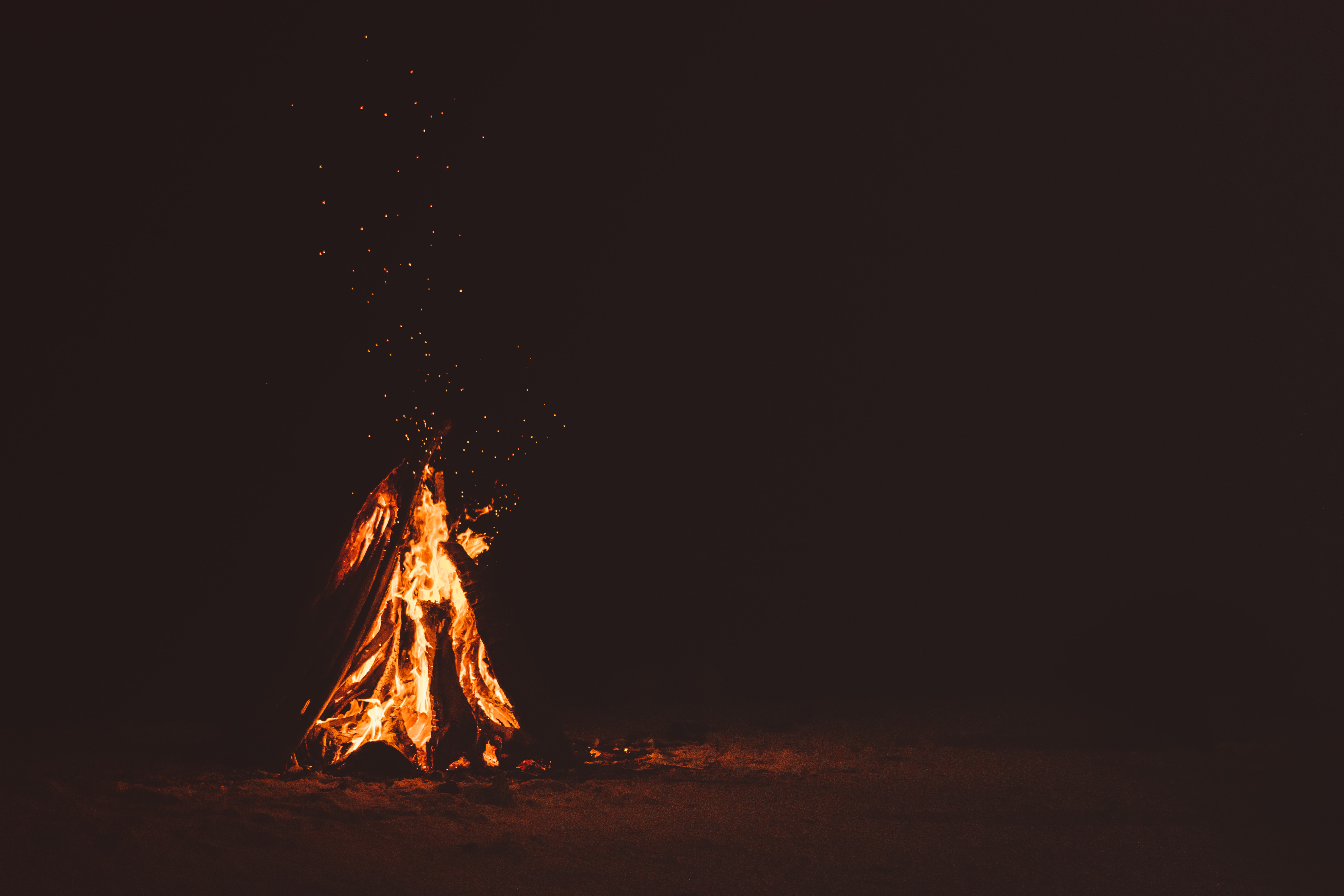
The design brief is to re-interpret a campfire at an urban level that has the ability to bring people together through a fresher experience of public space at night. The design questions for this challenge are as follows:
- How can our public spaces fight back, with more vibrant experiences in the night?
- Can there be new pockets of dialogue in a public place whether inactive/active?
- Can there be new safer forms of nightlife where people can exchange experiences/engage in performances?
- Can light be used creatively to extract newer forms of experiences through these public spaces?
- Can there be public spaces - that have the ability to host a new nightlife at a town or a city level?
- Can these ideas add value to the space they inhabit?
Participants have to exclusively use light as a medium to solve/create/portray experiences. They can use architecture partly - but the existing place shall not be overwritten by built forms. There are two ways you can solve this challenge - A. Retrofit or B. Re-create
Paths
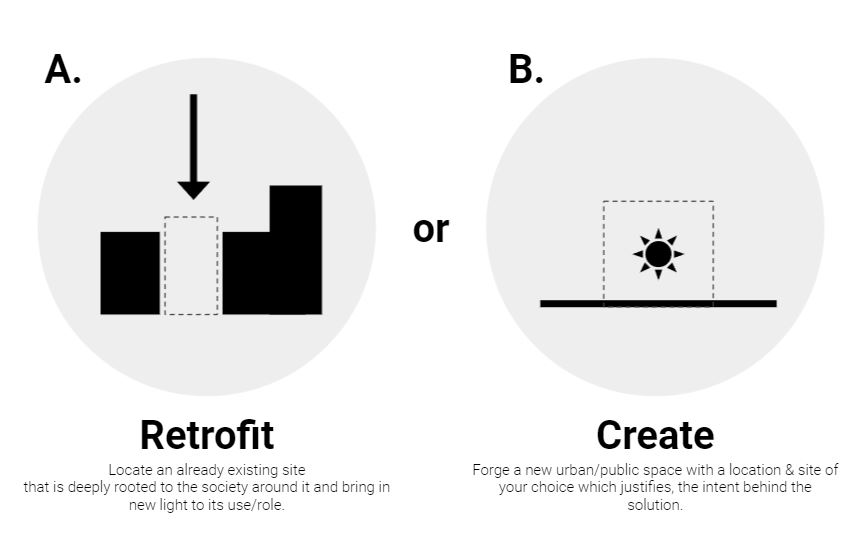
Use the technology of today and tomorrow to produce meaningful public spaces with recreation at their core. Keeping light as a primary driver, use walls, positive/negative spaces, voids, volumes to create your urban campfire.
Site Guidelines
The design brief is to re-interpret a campfire at an urban level that has the ability to bring people together through a fresher experience of public space at night. The design questions for this challenge are as follows:
- Area: The site area should be between 4000 - 8000 sqm. If the site area is larger than this, then the combined area of intervention should be between this range.
- Accessibility: The site should be accessible from various parts of the city/town through various modes of transit and pedestrian modes as well.
- Usage: The site use should be predominantly public or open to public activity at night. Even if there are certain parts of private spaces, it’s permitted.
- Built/Unbuilt: The site can have built and unbuilt structures. You can customize the paving, landscaping or finishes of certain key areas but the idea is to use lighting as a medium.
- Civil regulations: You will have to follow the city guidelines there are if/any applicable to the site. You can highlight these in your 1. Documentation phase.


