
RISE, RESIST, REMEMBER
Design for protest
Temporary Settlement Design for Occupation
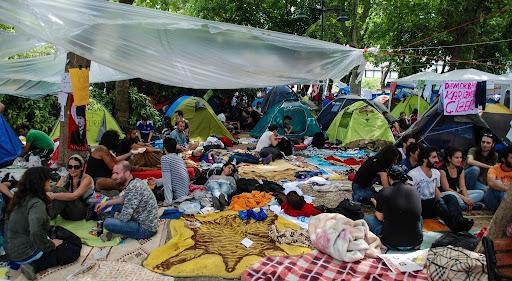 Fig: 1 - The sit-ins at Taksim Gezi Park in Turkey. (Credits: Ian Usher: Flickr)
Won’t ‘settle’ for less
“Disobedience is the true foundation of liberty. The obedient must be slaves.”
When the citizens have wanted to be desperately heard, to put across their voices, opinions, and needs, means of civil disobedience and non-cooperation have often been adopted. Groups of people gather and occupy a public place for varying durations, anywhere from a few hours, to days and months. Our public spaces serve as sites for open expression.
In that case, how can we reclaim our public spaces to act differently during and after a protest? What kind of measures can be useful to its inhabitants and how can they protect the city and its people? What facilities can citizens be provided with, in events like protests?
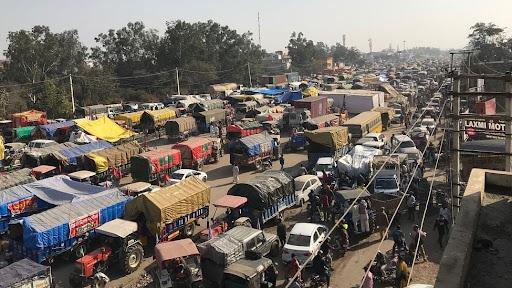 Fig: 2 - The Farmers' Protest occupation sites along Singhu Border near Delhi, India. (Credit: nationalheraldindia.com)
Brief
The challenge is to design/carve a neighborhood-level intervention that is conducive for holding a long-term protest for an imagined cause with provisions for occupying/camping and other attendant needs.
Select an area within your city of residence or choice anywhere in the world that according to you may be conducive for holding a long-term protest. Design useful and safe temporary shelters to protect and facilitate for the citizens, while minimizing disturbances to the functioning of the city and the non-participants. Protests can bring unpredictable situations and events, therefore the design may be equipped for flexibility accordingly.
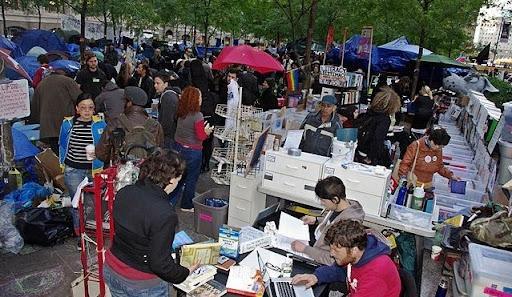 Fig: 3 - 'Occupy Wall Street' protests camp at Zuccotti Park in New York. (Credit: David Shankbone, wikimedia.org)
Design pointers
The facility design is to be preferably modular, therefore scalable and flexible. Envision a system that can be conveniently multiplied to serve a minimum occupancy of 10,000 people.
Following are some pointers to bear in mind for the temporary settlement:
- Design a makeshift temporary collapsible facility for a limited-term stay/residence for a maximum period of 1 year by protesters at the borders of the city along the road edges stretching (½ km maximum on both sides) without occupying public plazas, parks, or private open spaces in the center or the periphery.
- Make static or mobile single, double, four-seater stable/collapsible resting/sleeping enclosures/capsules/sacks/hammocks with basic privacy, comfort, safety, weather protection, etc. built out of lightweight membrane and rigid structural materials.
- Employ construction systems of transport-friendly prefab variety, easy to assemble, erect, dismantle, and repack. The system should be expandable or incremental in nature. Assure minimum interference with the on-ground activities of movement etc., the proposed facility should be mostly off-ground with minimum possible footprint.
- You may use anti-gravity, floating/levitating or any other AI-driven high-technology driven solutions.
- Provide attendant facilities such as basic washrooms, medical emergencies, etc. dovetailed with the matching principles of flexibility, incrementality, ease of maintenance based on extremely cutting-edge sustainable practices.
- Use dependable, portable, renewable sources of energy to power the facility without dependence on municipal or official sources (off-grid).
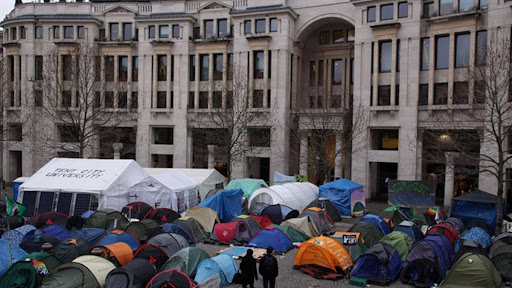 Fig: 4 - Camps outside St. Paul's Cathedral, as a part of the 'Occupy London' movement. (Credits- mirror.co.uk)
Similar Competitions
Discover competitions you might be interested in


Design challenge to reuse E-waste

Challenge to design locus for the upliftment of human rights


A Global Graduation Competition for Architecture, Urban Design & Interior Design
