
Faith 2.0
Challenge to design a secular place for faith
Overview
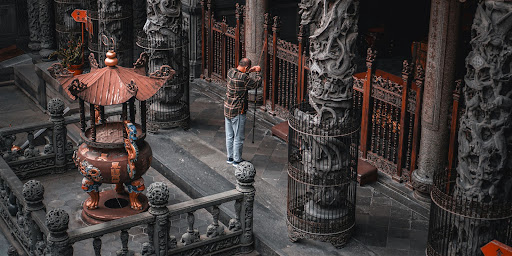 Fig: 1 -Religious buildings across the globe have influenced entire sects (Credits- Lisandro)
PREMISE
Religion and its existence has been dated centuries back, it has played a pivotal role in our evolution and development across centuries. The ancient years are evident in how religion has been as inherent to humanity as food, water and shelter have been.
History marks various incidents and buildings that are solely created for religious purposes. The majority of architectural marvels that one finds anywhere across the world are religious buildings. The types of religions might vary, but the grandiosity and architectural character have been retained through time. Through observations across periods of history mark the existence of religion as a major driving force of the ancient societal structure.
Different regions around the world have experienced wars, calamities, and other major incidents which in turn influenced people's lives.
But it was always the religious buildings and the faith towards them that were found to be constant worldwide.
What makes these spaces timeless?
 Fig: 2 -Time has given religion new meanings (Credits-Sinitta Leune)
FAITH
Time has changed, and so have the people and their concepts regarding life and faith. Today, we are stepping into a modern age that is led by technological and scientific advancements. Change in perceptions, understanding, and overall worldview of people has completely transformed the way we now look at religions.
Through globalization, today we're closer to each other than we have ever been. The connection has been developed across countries, sharing of cultures, ethnicities, and traditions are encouraged. Paving the way to an open and secular faith, that is surpassing across religions and cultures.
Today, faith has become more about the personal connection, and personal belief than a religious sentiment of society. Bringing peace, this concept of secular faith is encouraged all around the world.
H3: Being with the change, how can architecture aid and facilitate a space that supports a secular worship place?
 Fig: 3 - How can architecture help provide a space for this new generation with a new faith? (Credits-Zac Dorant)
BRIEF OF THE COMPETITION
Faith is one of the most major binding elements that even though it has transformed through time, has remained an integral part of humanity, being one of the only parts that unite us all.
Designing a space for the faith that is secular provides not just an opportunity for a better futuristic design for the people, but also helps in challenging the concepts, stigmas, and perceptions held towards faith spaces across the world.
Aim of this competition is to design a space of faith that will act as a sanctuary of faith for every individual around the globe, a space that supports a secular society of the future.
This challenge is an opportunity to rewrite some inherent architectural spaces through innovative and creative ideas that hold the capacity to inculcate the whole world's faith under one roof. Use of varied scales, materials, geometry one can create a homogenous space.
OBJECTIVES
Concept: How does this design justify secularism?
Scale: What is the scale of the design? And what does it represent?
Character: How efficiently is the design able to justify architectural character?
Inclusion: Is the design able to inculcate the design in unison?
SITE
Since this competition promotes a secular space. And the close connection of context and religion is observed across countries. There is no specific site provided for this competition, the site area for this competition is to consider the following:
A flat square site with an 8,000 sq.m site area is to be imagined for the design of this competition. No context, country, or region is to be connected with this site area. It will function as an individual plot.
PROGRAMMATIC OUTLINE
The programmatic outline is intended for a capacity of 50 people. This number is recommended for this challenge. The space ideas are as follows:
Singular open/closed space: 70%
Open/landscape areas: 10%
Storage areas: 10%
Ancillary spaces: 10%
Other additional spaces can be added by the participants as per their design needs.

