
HAL 2100
Challenge to visualize a data center of the future
Overview
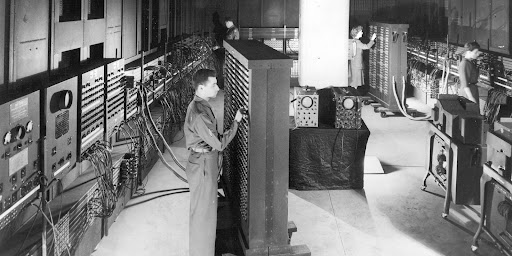 Fig: 1 – Shit of ENIAC-very first data center (Credits-Historic computer images)
PREMISE
With improvements in technology, IT innovations are taking the world to the next stage. In recent years, the ever-escalating data requirements and Internet of Things (IoT)cloud adoption due to change in working has contributed to a shift from traditional data enterprises to centralized data centers. A data centre is a physical structure that companies/organisations use to house their IT operations, critical applications and data.
Data centres have their roots in the huge computer rooms of the 1940s. Early computer systems were complex to handle and maintain, hence special design guidelines and requirements were devised for them.
Although with users deploying computers everywhere, there was no need for operational requirements. But IT operations grew in complexity, and the need for it became evident. Simultaneously, the availability of inexpensive networking equipment and structured cabling allowed hierarchical design in networking and put the servers in dedicated rooms inside the company itself. Since then the term, "data center" has been used for designing rooms for computer operations.
 Fig: 2 – Aerial view of Rio Grande delta which has gone dry due to lithium mining for batteries. The dryness has caused instability in water levels and is unsafe for biodiversity in the river originating from the amazon. (Credits- MATJAŽ KRIVIC/INSTITUTE)
CHALLENGE
As client servers and the internet started playing an important role in the early 2000s, data centres have become crucial for growing businesses. Today cloud providers are switching to independent data centres in recent years and large enterprises are following suit.
However, while we are focused on reducing emissions from aviation and automotive, it’s the communications industry that is in the direction of generating more carbon emissions than all other sectors. The reliance on data centers is thus expected to grow as the freedom of the internet improves across the world.
Prediction states that the energy consumption of data centres is set to account for 14 per cent by 2040, of the world’s total carbon emissions. These predictions are shaping into reality as the evolution and energy usage of data centres are expected to take a new turn with the pandemic pushing people to work on the cloud more than ever before. Moreover, climate change also continues to melt ice caps at an alarming rate.
Is it possible to sustain these energy-devouring data centres whilst trying to save the planet? Can we take this opportunity to start visualizing a sustainable future?
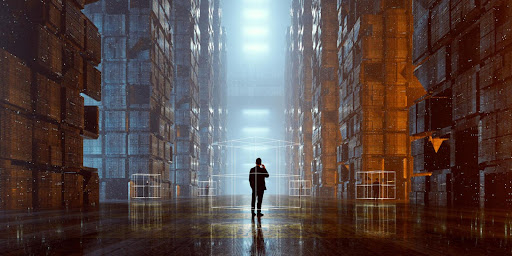 Fig: 3 – Future of data centres and what it means for us and the planet? (Credits-Gremlin/Getty Images)
Brief of the competition
Today, almost everything we do online generates some data and it has to be stored somewhere. As the data is skyrocketing, data centres are under strain. Extraordinary power capacity for operations and cooling, communication latency and the need for physical space are some challenges data centres over the world are facing. For these challenges, data centre leaders are coming up with creative and unconventional solutions.
How can we as designers and architects provide alternative models to this typology? Can we start offering possibilities and solutions for the future of data?
The challenge is to envision data centres set in the year 2100. Produce realistic visions of how the centre would look and function (interior/exterior)
The participants can use one of these three elements according to your research and understanding of the impacts and working of data centres to conceive their visualization- Land, Water and Sky.
OBJECTIVES
- Research: Research and investigate the needs, design and functioning of a data centre to
- Technical: Try to express through design/engineering how the centre would be sustainable in your chosen realm.
- Evolution: How will the operational spaces inside and outside look like based on the advancement of technology?
- Expression: The graphics should effectively communicate their intent and landscape to the viewer.
Use any mediums, video, images, drawings, sketches, models, or paintings - and communicate your design. Any of the techniques mentioned in the brief may be utilised to achieve the desired outcome. The more creative the method, the better.
COMPOSITIONAL OUTLINE
The usage of photographs, stylised/ credited or otherwise, directly is strictly not allowed.
The use of lassoed graphics lifted from an existing image is limited to one-third of the total graphic.
Similar Competitions
Discover competitions you might be interested in


Render competition to represent the city as a machine

Challenge to imagine architecture inspired by fiction

Challenge to illustrate the ruins of Petra

Challenge to visualize slums of 2080