
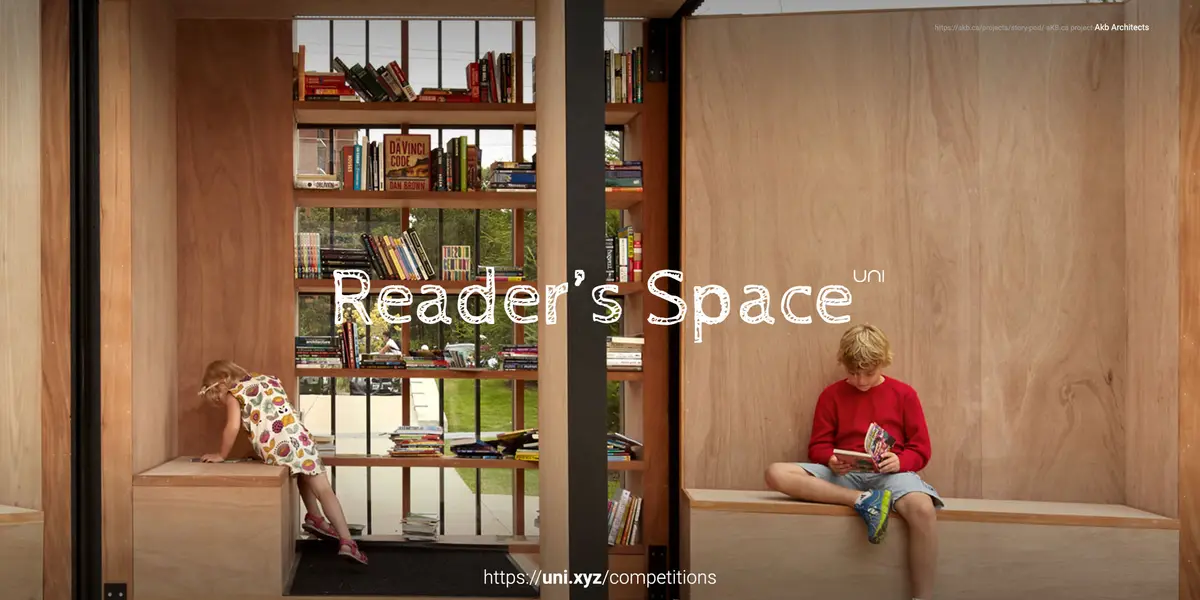
Reader's Space
Contest to design a pavilion for readers
Overview
 Fig: 1 - Reading is replaced by social trends/digital means etc (Credits-Andrea Piacquadio)
OUR PERCEPTION TOWARDS BOOKS AND READING
Books are an integral part of our evolution. Shaping both the individuals and also the societies as a whole, their role and contribution can be found across centuries of human development. The purpose of books has evolved and changed considerably across generations, but their importance and necessity have remained unchanged. Today, we can observe a great decline in the culture of reading, as our educational and knowledge base is now affected or dominated by technology/social trends and change.
Changing trends have transitioned our way of thinking and perception held towards books and reading, this transition has caused the libraries to lose their old value as digitisation shifted people's focus from these reading spaces. This sudden transition is causing the reading culture to come to a hard stop.
How can the change caused due to digital transition be addressed effectively?
 Fig: 2 - Rethinking existing reading spaces in today’s context is urgent (Credits-Hayden Golden)
REVIVING OUR IMAGEABILITY TOWARDS READING SPACES
Our perception and the imagibility towards reading spaces need to evolve. Can we address and reimagine spaces by evolving their design and response to the changing trends of their users?
The spaces of reading need to be extended into a fine network of formal and informal reading spaces that can spread across the city, where these spaces evolve and express themselves through open libraries, reading festivals, on-the-go reading areas and other public reading spaces. The presence of these reading spaces in different forms, locations, use and scales; makes them more accessible and preferred by the people, as no two people prefer the same way of reading.
If we aim to revive and keep this culture of reading constantly evolving; spaces to address and acknowledge the change in today's world are essential.
What architectural solution can help in addressing the change in reading trends?
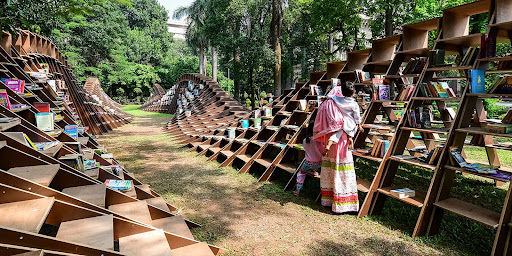 Fig: 3 - Reading pavilion-An idea (Credits- CSMVS Public Pavillion, Mumbai-NUDES)
DESIGN TO REVOLUTIONIZE READING IN PUBLIC SPACES
How can the design change the perception held towards ‘Reading areas’ completely?
What innovation in the design of these spaces will help these spaces evolve with time?
Can the rethinking of the concept of readers space pioneer a new revolutionized design?
Brief: The architecture competition brief calls for a design of a public reading pavilion that provides a redefined space for reading.
Space should aim to have a breakthrough past the boundaries and perceptions that were held regarding reading spaces.
The aim of the competition is to come up with unique design solutions to create a way for the new age reading space that is not only aesthetically pleasant and spatially innovative but can adjust to the ever-changing needs of the people.
OBJECTIVES
Innovative: The design should be inclusive of the changing needs of the users.
Evolutionary: The design should be able to evolve with changing times.
Universal: This module should be able to get replicated anywhere across the world.
Participants are free to assume their user group and contexts for this design. They are urged to be creative and open to the interpretation of reading spaces taking into account the evolving trends and technologies.
AREA PROGRAMME
The programmatic outline is intended for a batch capacity of 100 people. This is recommended for this challenge.
The space ideas are as follows:
- Sitting/reading spaces: 70%
- Public gathering/engagement spaces: 20%
- Services and ancillary spaces: 10%
Other additional spaces can be added by the participants as per their design needs.
SCALE
The design created should be built in order to accommodate 100 people with a maximum height restriction of 20m.
The participants are free to interpret other dimensions within the given height restrictions. The cost of construction of this design is to be optimised as it has to be applicable in different cities and countries.
Similar Competitions
Discover competitions you might be interested in


Challenge to design an open learning module for the elderly

Challenge to design a portable music platform

Challenge to design a portable theatre