Public Space and Urban Design Competitions: The City Belongs to Everyone (Updated April 2026)
This is the UNI editorial home for public space and urban design — the discipline of shaping squares, plazas, parks, streets, waterfronts, playgrounds, transit plazas, and the full civic realm of cities. It is the tradition of Jane Jacobs, William H. Whyte, Jan Gehl, Kevin Lynch, and Frederick Law Olmsted. It is where the contemporary conversation about the 15-minute city, superblocks, tactical urbanism, and climate-adapted public space is happening. And it is where architecture confronts the oldest political question in cities: who does the city belong to?
Public space is the most democratic part of architecture. It is also one of the most contested — between cars and pedestrians, between private commerce and civic commons, between the global North's plaza canon and the informal traditions of the global South. The briefs in this UNI section ask entrants to design for all of it.
What Is Public Space and Urban Design?
Public space and urban design is the discipline of designing the shared, accessible, civic parts of cities — the places that belong to everyone, or aspire to. It operates at a scale between individual buildings and entire urban plans, and it draws on multiple disciplines:
- Urban design: the spatial organization of blocks, streets, and public realm at the scale of districts and neighborhoods.
- Landscape architecture: parks, gardens, ecological infrastructure, and the designed natural environment of cities.
- Transportation and mobility design: streets, cycle networks, transit plazas, pedestrian corridors.
- Civic architecture: the buildings that anchor public space — libraries, town halls, community centres, museums.
- Placemaking: the community-centred practice of activating public space through programming, furniture, and small interventions.
- Public art: temporary and permanent art installations as placemaking infrastructure.
- Community engagement: the political work of involving residents in the design of their own civic spaces.
Unlike commercial or residential architecture, public space design has to answer to a different client — not a corporation or a homeowner, but the public. That makes it both the most accessible design discipline (open to anyone, serving everyone) and the most contested (who decides what the public wants, and who pays for it).
Why Public Space Matters: Democracy, Health, Belonging, and Climate
The case for public space is usually framed aesthetically — great squares are beautiful, parks are pleasant, waterfronts photograph well. The actual case is much larger. Public space matters because it carries the weight of four civilizational functions at once:
- Democratic infrastructure. Free assembly, protest, civic life, and political expression all require physical space. A city without public squares is a city without democracy — Tahrir, Tiananmen, the Place de la République, Zuccotti Park, Gezi Park. Every political moment of the last 20 years happened in a public space.
- Public health. Walkable, green, shaded, accessible public space is directly correlated with physical activity, lower obesity, reduced cardiovascular disease, and better mental health. The 15-minute city is as much a public health argument as it is an urban design one.
- Social belonging and the third place. Ray Oldenburg's "third place" — the social environment between home and work — is almost always a public or semi-public space. Cities without third places produce lonely citizens. Architects of public space are architects of belonging.
- Climate resilience. Urban heat islands kill. Stormwater floods kill. Public space is the primary infrastructure for urban cooling, shade, rainwater absorption, biodiversity, and climate adaptation. The Seoul Cheonggyecheon stream restoration (2005) produced measurable cooling of 3-6°C along the corridor — a public-space climate intervention with real measurable impact.
The Canon: Five Thinkers Who Defined Contemporary Public Space
Every serious public space designer should know these five figures and the arguments they introduced. Their books are the foundation of the field:
- Jane Jacobs — The Death and Life of Great American Cities (1961). Jacobs's demolition of mid-century urban renewal orthodoxy invented the contemporary case for mixed-use streets, eyes on the street, the sidewalk ballet, and density as a virtue. Every subsequent argument for walkable cities descends from Jacobs. Required reading.
- William H. Whyte — The Social Life of Small Urban Spaces (1980). Whyte spent years filming public plazas in New York to figure out why some worked and others were deserted. His findings — movable chairs, visual access from the street, sunlight, food carts — transformed Bryant Park from a drug-dealing zone into one of New York's best plazas. The empirical foundation of contemporary placemaking.
- Jan Gehl — Life Between Buildings (1971) and Cities for People (2010). Gehl is the most influential public space thinker of the last 50 years. His framework of "life between buildings" reframed public space from the leftover spaces between architecture to the primary subject of design. Gehl Architects (his firm) has influenced cities from Copenhagen to New York to Melbourne.
- Kevin Lynch — The Image of the City (1960). Lynch introduced the five elements through which people mentally organize urban space: paths, edges, districts, nodes, landmarks. Any strong public space entry should be able to explain its project through Lynch's framework.
- Frederick Law Olmsted — Central Park (1858) and the Emerald Necklace (Boston). Olmsted invented the American public park tradition. His argument — that every democratic city needs large, accessible green space as a right of citizens — remains the foundational defense of public parks.
A sixth name belongs on this list as an honorary member: Aldo van Eyck, the Dutch architect whose 700+ post-war Amsterdam playgrounds made children's play a central concern of public space design. If Jacobs and Gehl are the prose, van Eyck is the poetry.
A Brief History of Public Space: From Agora to 15-Minute City
Public space has a deeper history than any other architectural typology. The most thoughtful contemporary entries draw from this lineage:
- The Athenian Agora (5th century BCE): the birth of the public square as the site of democracy, trade, philosophy, and civic life. Socrates taught here. Every subsequent plaza is an attempt to recreate some version of it.
- The Roman Forum (from the 7th century BCE): the civic heart of Rome — law, commerce, religion, and political speech layered onto a single urban space.
- Medieval market squares (from the 10th century): the Place du Tertre in Paris, the Piazza del Campo in Siena, the medieval squares of Bruges and Krakow. Public space as the organizing centre of European town life.
- Piazza San Marco, Venice (9th-16th century, continuously developed): the greatest public square in Europe. Napoleon called it "the drawing room of Europe." Every architect should walk it at least once.
- Plaza Mayor, Madrid (1619) and Place des Vosges, Paris (1612): the birth of the formal rectangular plaza in the age of absolutism — royal power expressed through urban geometry.
- Olmsted's Central Park (1858): the invention of the large democratic park as a civic right.
- Haussmann's Paris boulevards (1853-1870): the modern tree-lined boulevard as public infrastructure and social theatre.
- 20th century suburban erasure: the systematic destruction of public space by postwar suburbanization, the car, and zoning. The ground Jacobs, Whyte, and Gehl are fighting on.
- The High Line (James Corner / Field Operations, 2009): the adaptive reuse of a disused elevated railway into linear public park. Spawned a global wave of similar projects and redefined what post-industrial public space could be.
- Cheonggyecheon, Seoul (2005): an elevated expressway demolished to restore a buried urban stream, producing a 6km linear public space and measurable urban cooling. One of the most consequential public space projects of the 21st century.
- Barcelona Superilla / Superblocks (ongoing since 2016): 9-block clusters with interior streets closed to through-traffic, reclaiming streets as public space.
- Paris 15-minute city (Anne Hidalgo, 2020 onwards): the most ambitious contemporary political commitment to redesigning a major city around walkable public space proximity.
Contemporary Movements Reshaping the Public Realm
The 15-Minute City
The term was coined by Carlos Moreno, a Colombian-French urbanist, in 2016. The idea: every resident should be able to reach six essential daily functions — work, housing, food, health, education, and leisure — within a 15-minute walk or bike ride from home. It is a framework for walkability, public space proximity, and mixed-use density. Paris adopted it as official policy under mayor Anne Hidalgo in 2020, and versions are now being implemented in Melbourne, Portland, Milan, Bogota, Shanghai, and dozens of others. It has also become the target of conspiracy theories — a small but vocal backlash that ironically demonstrates how politically consequential good public space design is.
Tactical Urbanism
The framework of "lighter, quicker, cheaper" interventions in public space — parklets, pop-up plazas, painted crosswalks, temporary cycling lanes, community furniture. Systematized by Mike Lydon and the Street Plans Collaborative. Bogota's Ciclovia (weekly car-free Sundays), New York's Times Square pedestrianization under Janette Sadik-Khan, Park(ing) Day, and the Better Block movement are canonical examples. Tactical urbanism is the method for testing public space changes before committing to permanent construction.
Placemaking
The community-centred practice of activating public space through programming, furniture, and small interventions. Formalized by Fred Kent and Project for Public Spaces (founded 1975). PPS's "Four Qualities of Great Places" framework — accessibility, comfort & image, uses & activities, sociability — is the most useful single checklist in the discipline. Their "Power of 10+" theory argues that a great public space should have at least 10 things to do in it.
Superblocks (Barcelona Superilla Model)
A planning unit of 9 contiguous blocks where interior streets are closed to through-traffic or reduced to 10-20 km/h. The result: a large car-free interior reclaimed as public space while perimeter streets still carry vehicle traffic. Barcelona's Superilla program under Ada Colau's administration is the most ambitious contemporary example. The model is being adapted for Buenos Aires, Medellin, Los Angeles, and multiple European cities.
Woonerf and Shared Streets
The Dutch concept of the woonerf (literally "living yard") — streets designed as shared zones where cars, bikes, and pedestrians coexist at walking pace, without separated footpaths. Cars are legal but must behave as guests. The contemporary "shared street" movement globally descends directly from woonerf thinking.
Car-Free City Movements
From Pontevedra (Spain) and Ghent (Belgium) to Paris, Oslo, and Amsterdam, a growing cohort of European cities are systematically removing cars from their centres. The public space impact is transformative — reclaiming streets, squares, and waterfronts as pedestrian infrastructure. One of the most significant live shifts in contemporary urbanism.
Types of Public Space Projects
Plazas and Urban Squares
From the Athenian agora to Piazza San Marco to contemporary civic squares. The most formal public space typology, shaped by proportion, edge activation, microclimate, and program.
Parks at Every Scale
Neighbourhood pocket parks, district parks, and metropolitan-scale parks. Olmsted's democratic legacy. Contemporary references include the High Line (James Corner / Field Operations, 2009), Freshkills Park (Field Operations, ongoing), Brooklyn Bridge Park (Michael Van Valkenburgh), Park Superkilen in Copenhagen (BIG, Topotek1, Superflex — a deliberately multicultural public space), and The Vessel at Hudson Yards (Heatherwick Studio — contested but instructive).
Streets and Streetscapes
Complete streets, pedestrian-priority corridors, woonerfs, cycling infrastructure, street furniture, and wayfinding. The most under-designed public space typology, and the most impactful when done well.
Waterfronts and Riverfront Revitalization
Cheonggyecheon in Seoul remains the most dramatic contemporary example. Other references include Hamburg's HafenCity, Copenhagen's harbor baths, and countless adaptive reuse projects converting industrial waterfronts into public space.
Transit Plazas and Mobility Hubs
Bus shelters, metro stations, transit interchanges, and mobility hubs designed as civic public space, not just functional infrastructure. Moscow's metro stations remain the most ambitious historical example.
Informal and Indigenous Public Space
Markets, courtyards, gathering grounds, traditional community spaces — public space traditions outside the Euro-American plaza canon. Post-colonial urban design is increasingly centring these traditions. Global South informal public spaces are some of the most resilient and socially rich public environments in the world, and they deserve more attention than Western competition platforms typically give them.
Open Briefs in This Section Right Now
The competitions currently curated in the public space and urban design section on UNI:
- Wild Scrutiny — Design challenge fostering public involvement in wildlife research
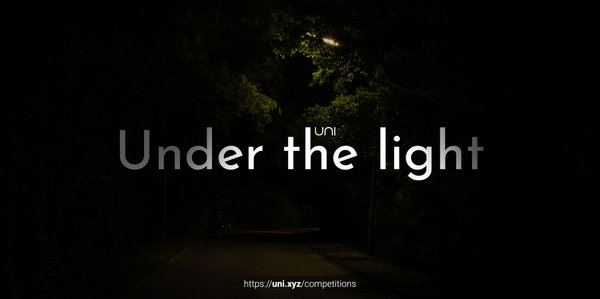
- Under the light — Challenge to design spaces under public lighting
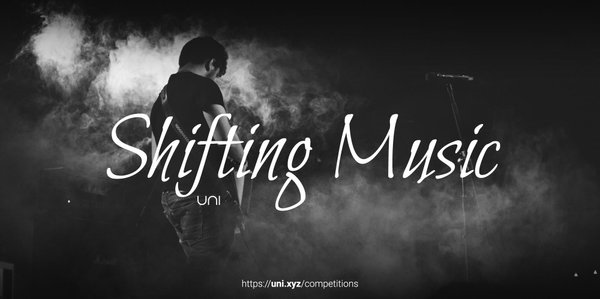
- Shifting Music — Challenge to design a portable music platform
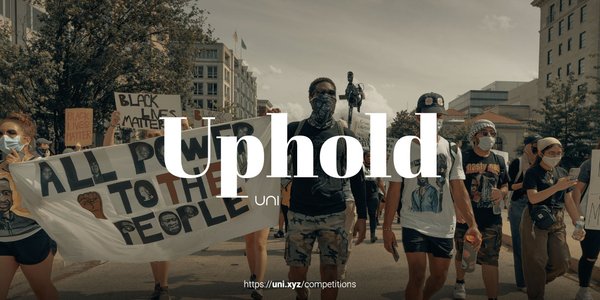
- Uphold — Challenge to design locus for the upliftment of human rights
- Minimal — Photograph living through a minimalistic lens
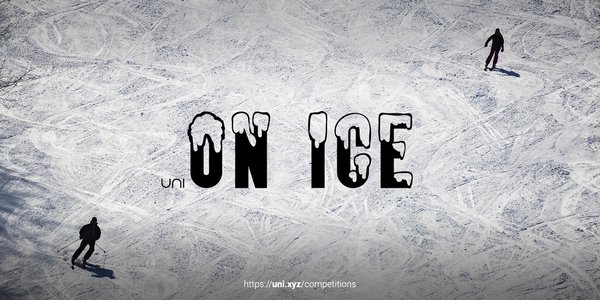
- On Ice — Challenge to design an outdoor ice-rink and park
For more public space and urban design briefs, browse all ongoing competitions.
Climate-Adapted Public Space: Designing for the Warming City
The climate crisis has made public space design a frontline discipline. Heat islands are killing people in Phoenix, Delhi, Mumbai, and Seville. Stormwater flooding is overwhelming drainage in cities worldwide. The public realm is where climate adaptation happens physically. Contemporary climate-adapted public space includes:
- Shade and cooling infrastructure: tree canopies, shade sails, pergolas, water features, reflective surfaces. Phoenix and Seville are actively retrofitting streets and plazas for shade.
- Stormwater management: rain gardens, bioswales, permeable paving, and green roofs integrated into public space design as amenity rather than utility.
- Urban tree canopies: large-scale tree planting programs as both public space improvement and climate adaptation.
- Biodiversity corridors: native plantings, pollinator-friendly landscapes, and wildlife corridors running through urban public space.
- Cooling water features: fountains, misters, reflecting pools, and water play areas as heat refuges.
- Passive cooling design: orientation, ventilation, and material selection to reduce heat retention in hard surfaces.
- Heat refuge infrastructure: cooling centres, shaded waiting spaces, and air-conditioned public rooms for extreme heat events.
Children and Public Space: The Aldo van Eyck Tradition
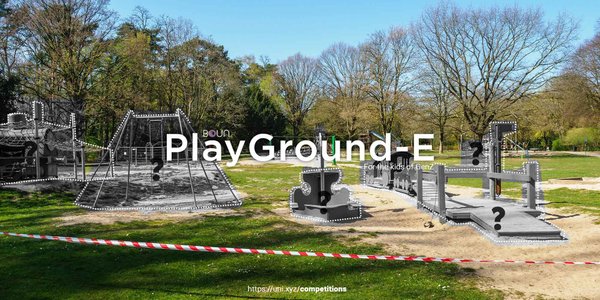
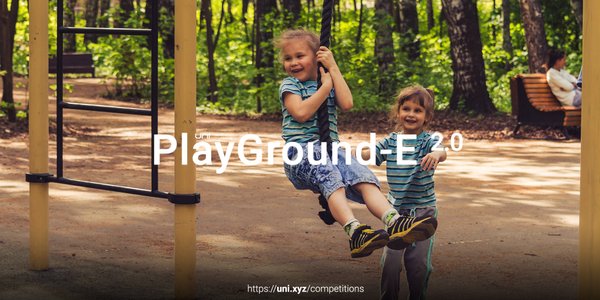
Between 1947 and 1978, the Dutch architect Aldo van Eyck designed more than 700 playgrounds in post-war Amsterdam — interventions in bomb sites, leftover lots, and neglected corners, turning them into modest but deeply loved children's public space. His philosophy: "A city without children is not a city." Van Eyck's playgrounds are among the most important public space work of the 20th century, and they remind contemporary designers that public space must serve every user, not just adult pedestrians.
Contemporary playground and children's public space design continues this tradition — from the Superkilen playgrounds in Copenhagen to community-designed play spaces in London, Berlin, Mumbai, and Nairobi. Great urban designers take children seriously.
How to Prepare a Strong Public Space Competition Entry
- Site analysis first, form second. Public space projects succeed or fail based on how well they read their site — the light, wind, sound, pedestrian flow, and climate conditions of the actual place. Start with observation, not a sketch.
- Cite the canon honestly. Reference Jacobs, Whyte, Gehl, Lynch, or Olmsted if your thinking draws from them. Juries reward intellectual grounding.
- Use Whyte's empirical test. Does your project pass the Whyte criteria: movable furniture, visual access from the street, sunlight, food or drink nearby, space for informal social activity? If not, rethink.
- Design for the body at eye level. Gehl insists that public space is experienced by people at 5 km/h walking pace, not from a bird's-eye master plan. Your drawings and renders should include eye-level perspectives.
- Engage the climate question. Shade, stormwater, biodiversity, and heat mitigation are no longer optional. Every contemporary public space brief should engage them.
- Show community engagement. If your project has been developed with community input, show it. If it's speculative, at least imagine whose voice would shape it.
- Don't forget children, elders, and people with disabilities. Public space that only serves able-bodied adults fails. Design inclusively.
- Include a section through the space. Urban designers sometimes forget sections. Good public space reads in both plan and section — show both.
- Study the contemporary canon. High Line, Cheonggyecheon, Superkilen, Superilla — these are the projects juries will compare your work against. Know them.
April 2026 Platform Snapshot
- 6 open briefs currently curated in the public space and urban design section
- 57 competitions currently open across all themes on the platform
- 767 total competitions hosted on UNI since 2017
- 7189 total entries submitted across all competitions
- 895 jurors have evaluated work on the platform
- 260K+ architects and designers in the global UNI community
- 68 disciplines including urban design, landscape architecture, transportation planning, and civic architecture
Frequently Asked Questions About Public Space and Urban Design
What is a public space design competition?
A public space design competition is an open call for architects, landscape architects, urban designers, and allied disciplines to propose design solutions for squares, plazas, parks, streets, waterfronts, and other shared civic spaces. Most public space competitions on UNI are open to students and professionals alike, with no national or institutional membership requirements.
What is placemaking in urban design?
Placemaking is a community-centred approach to designing public spaces that prioritizes social life, human scale, and local identity over purely aesthetic or infrastructural goals. It was formalized by Project for Public Spaces (founded 1975 by Fred Kent) and draws on the work of Jane Jacobs, William Whyte, and Jan Gehl. The core framework is PPS's "Four Qualities of Great Places": accessibility, comfort & image, uses & activities, and sociability.
What is the 15-minute city?
The 15-minute city is an urban planning framework introduced by Carlos Moreno in 2016 in which all essential daily functions — work, housing, food, health, education, and leisure — are reachable within a 15-minute walk or bike ride from home. It demands dense, walkable public space networks and has become official policy in Paris, Milan, Melbourne, Portland, and dozens of other cities worldwide.
What is tactical urbanism?
Tactical urbanism is the practice of short-term, low-cost, often community-driven interventions in public space — parklets, pop-up plazas, painted crosswalks, temporary cycle lanes, and street furniture experiments. Systematized by Mike Lydon and the Street Plans Collaborative, the framework is "lighter, quicker, cheaper" — test ideas in physical form before committing to permanent construction.
What is a superblock in urban planning?
A superblock is a planning unit of several contiguous city blocks (typically 9) where interior streets are closed to through-traffic or restricted to 10-20 km/h, freeing the interior for pedestrian public space. Barcelona's Superilla program is the leading contemporary example. The model is being adapted for cities worldwide as a way to reclaim street space without wholesale urban redesign.
What makes a public space successful?
Per William Whyte's empirical research and Project for Public Spaces' synthesis: a successful public space has movable seating, visual access from surrounding streets, sunlight, food and drink nearby, varied activities, and reasons for people to linger. Whyte's Bryant Park revival in New York demonstrated the framework: adding all of these transformed a derelict plaza into one of the most loved public spaces in Manhattan.
Who was Jane Jacobs and why does her work matter?
Jane Jacobs (1916-2006) was a Canadian-American urbanist whose book The Death and Life of Great American Cities (1961) demolished the orthodoxy of mid-20th century urban renewal and made the case for mixed-use streets, sidewalk life, density, and small-scale urban fabric. Her argument — that great cities emerge from the "sidewalk ballet" of small interactions, not from master plans — shaped every subsequent public space movement. Required reading for any urban designer.
Who is Jan Gehl and why is he influential?
Jan Gehl is a Danish architect and urban designer whose 1971 book Life Between Buildings reframed public space from the leftover space between buildings to the primary subject of urban design. His firm, Gehl Architects, has transformed cities from Copenhagen to New York, Melbourne, Moscow, and São Paulo. His framework of human-scale design, eye-level experience, and walkability is the most influential contemporary approach to public space.
How do I enter a public space or urban design competition on UNI?
Browse current public space briefs in this section or across all ongoing competitions, register for the competition you want to enter, and submit before the deadline. Most public space competitions on UNI are open to students and professionals. A UNI Membership gives you unlimited entries across every urban design and public space brief on the platform.
What disciplines work in public space design?
Public space design is inherently interdisciplinary. Urban designers, landscape architects, architects, transportation planners, civil engineers, public artists, community organizers, ecologists, and social scientists all contribute. Great public space projects are rarely solo efforts — they emerge from teams that span several of these disciplines.
Recommended Reading for Public Space and Urban Designers
Start your library with: Jane Jacobs The Death and Life of Great American Cities; William H. Whyte The Social Life of Small Urban Spaces and City: Rediscovering the Center; Jan Gehl Life Between Buildings and Cities for People; Kevin Lynch The Image of the City; Christopher Alexander A Pattern Language; Richard Sennett The Uses of Disorder; Carlos Moreno The 15-Minute City; Mike Lydon Tactical Urbanism; Project for Public Spaces' online resources; and The High Line monograph by Field Operations and Diller Scofidio + Renfro.
Explore More on UNI
Beyond public space and urban design, browse all ongoing competitions, see what's trending, preview upcoming launches, or study the past competitions archive. Related sections include temporary and modular architecture (for pavilions and tactical urbanism), workspace and office design, retail and commercial architecture, and free architecture competitions. Want unlimited access to every brief on the platform? Explore UNI Membership.