
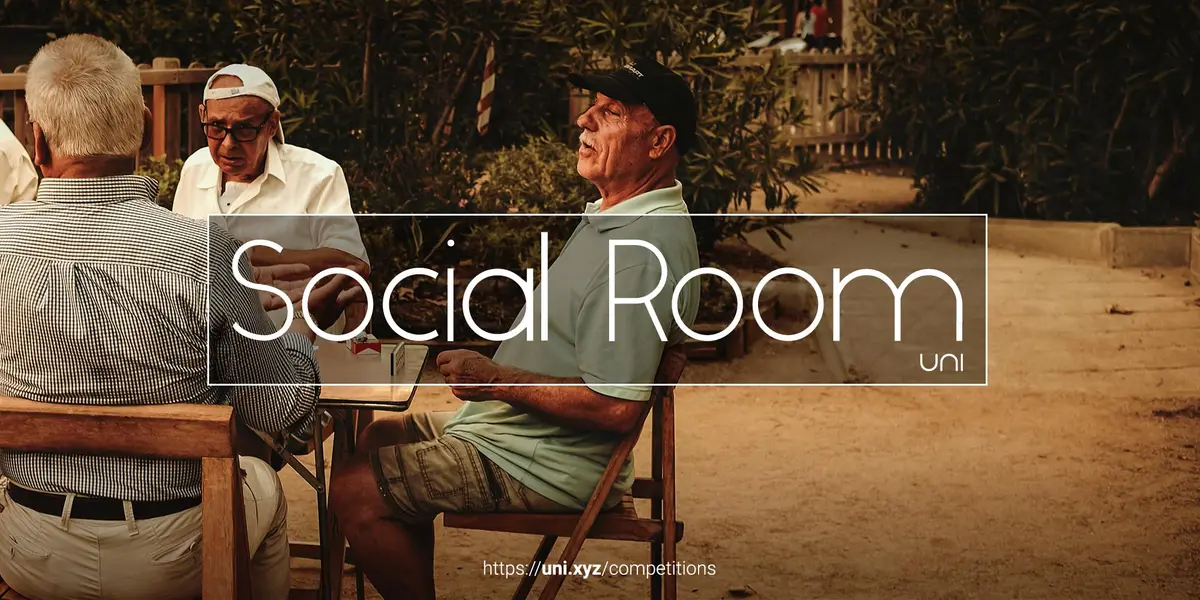
Social Room
Challenge to design a social space for the elderly
Overview
 Fig: 1 - Life Span has increased due to medical technology (Credits-Danie Franco)
PREMISE
The advent of an ageing population has been anticipated for a long time. The year 2030 is expected to sign a major shift, where it is expected that 1 in 5 residents will be above 65. The year 2030 is going to mark a challenging period in how everyone is going to be facing the old age population challenges.
With increased technological and scientific innovation the overall life span has increased.
Creating not just a scope for us to serve these elder people better but is also putting a lot of responsibility on us for treating us well. The change in trends in today's nuclear families has caused a large percentage of the elder population to suffer from isolation.
Senior isolation is now becoming an issue and its negative implications are key concerns for society.
Creating a fundamental question as to how we are going to handle this changing paradigm of isolation in the elderly efficiently?
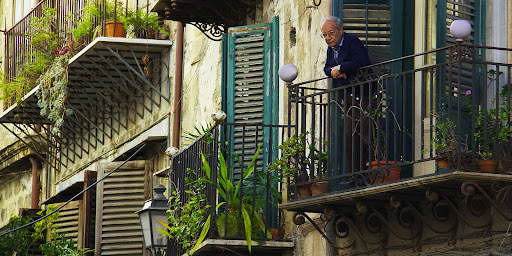 Fig: 2 - Due to their old age there is a disconnect from social life (Credits-Mihaly Koles)
SOCIAL DISCONNECT
The majority of the time senior citizens spend in a day are inside homes, sometimes due to their medical needs or health issues. Due to this, there is a direct disconnection from social life.
The lack of social connection often increases the effect of isolation, which causes adverse effects on mental wellbeing. Thus, engagement with similar age groups people is needed. Interaction with the community happens only through the spaces that bring about interaction and connection.
By establishing connections through programs and activities can we create an interactive overlap bringing about engagement and connection?
Today, the spaces designed for senior citizens often limit these people in terms of connection with the outside world. Spatial designs for the elderly need to step ahead of their limitations by exploring the scope available for an interactive social space.
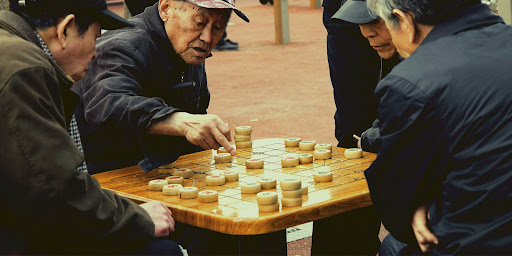 Fig: 3 - What kind of social space can you design for the elderly? (Credits-Woody Yan)
BRIEF OF THE COMPETITION
The modern-day lack of such facilities and design thinking brings us to a question as to how one can tackle this issue of loneliness and disconnection through physical intervention? What interventions can bring about the engagement of people, children with these elders? How can creative thinking help reduce this issue of isolation while catering to old age?
Brief: The architecture competition brief calls for a design of a social space for the elderly, which brings about a connection between society and the elderly through interactive space design.
The challenge seeks to provide an opportunity to design not only for social interaction but also for participants to understand the most basic needs for the elderly population that will be turning over 60 in the future.
The challenge is created in which the space provides an interactive platform. A platform that expands the scope for these people to get provided with engagement.
OBJECTIVES
Accessibility: How efficiently is the design allowing the elderly for movement and living ease?
Recreational spaces: To create spaces that can facilitate interaction and group activities.
Connect age groups: Providing spaces that are functionally for multiple age groups.
Empathy: Understanding and implementing needs of elderly, ranging from anthropometric to emotional needs.
SITE
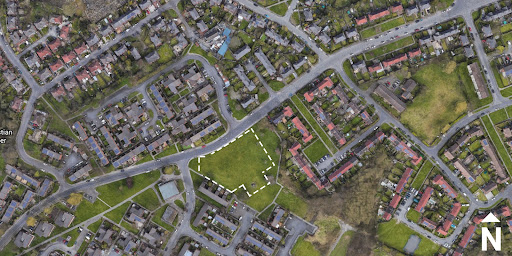
Manchester, UK
The site for this challenge is located in the United Kingdom. It has been known for its variety of terrains and contoured landscapes. The UK has been known for its rich cultural and architectural heritage. The variety of landscapes provides a variety of landscape vistas.
The site is located in the densely populated areas of Manchester, UK. Situated in a populated region, it offers connections with the neighbourhood. This site provides all the essential and emergency services at a reachable distance, thus providing easy access.
- Coordinates: 53°31'39.3"N 2°12'22.4"W
- Area: 4049 sqm
- Height limit: 6m
- FAR (Floor Area Ratio): 1
- Ground Coverage: 30%
Ground Coverage refers to the ratio of maximum allowed solid/permanent footprint on the site to balance the built and unbuilt spaces. You can utilize the other 30% of the site for any temporary intervention/recreation.
PROGRAMMATIC OUTLINE
The programmatic outline is intended for 50 elders. The space ideas are as follows:
- Lobby/ reception areas: 10%
- Living/residential stay areas: 30%
- Common recreational spaces: 15%
- Community gardening areas: 15%
- Flexible interaction areas: 10%
- Ancillary and service spaces: 20%
Other additional spaces can be added by the participants as per their design needs.
Similar Competitions
Discover competitions you might be interested in


Design challenge to reuse E-waste

Illustrate the lost glory of Angkor Wat - Render Challenge

Photograph architecture without architects

Challenge to reimagine the Iron Throne