
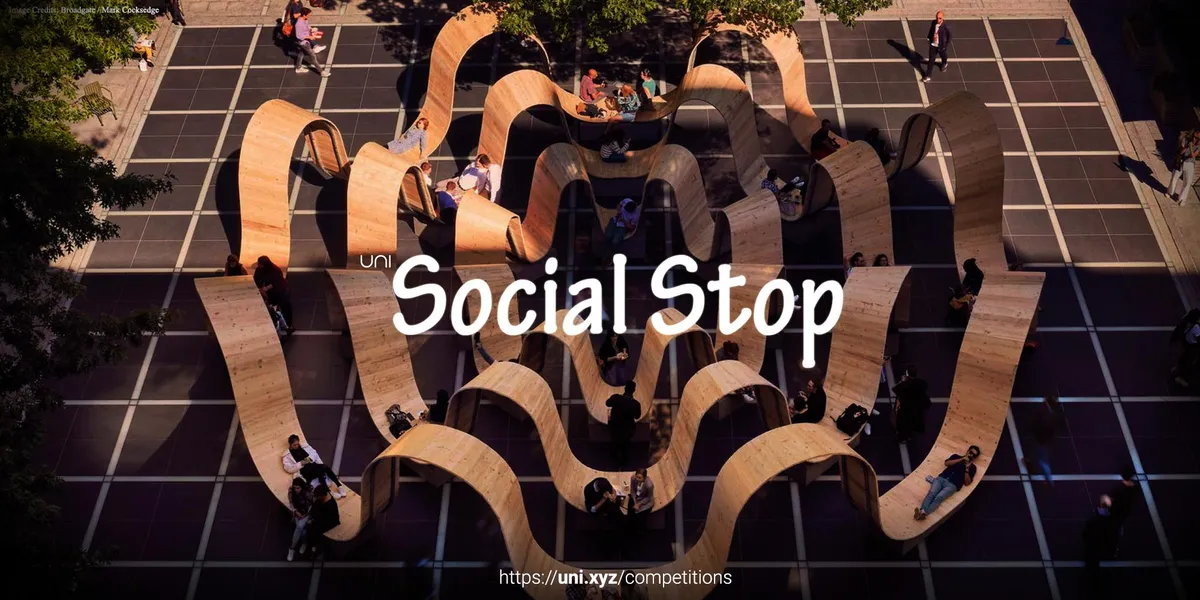
Social Stop
Challenge to design a play installation
Overview
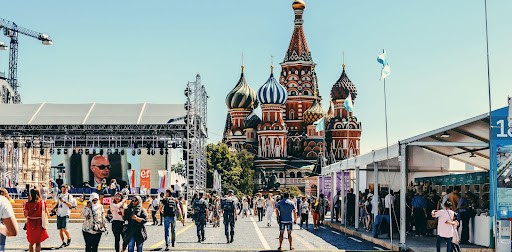 Fig: 1 - A city has many types of public spaces such as parks, gardens, historic sites, plazas and so on.
LOST ENGAGEMENT OF PUBLIC PLAYGROUNDS
The concept of public playgrounds was mainly focused on children engaging and developing socially. The play areas were designed in a way that not only encouraged kids to mingle but also gave space for adults to have their time and meet other people. While this concept of social spaces and engaging in activities to get to know each other has been a well-known concept, it has very rarely been used to benefit people on a large scale. These activities are concentrated on facilities and closed or semi-open spaces such as arcades and public parks that are dedicated to such activities.
But with the fast-paced world where people barely get time to rest or spend with their close ones, it would be a wonder to find time to engage in such social activities. What if there was a way to allow people to mingle and engage in these games and activities on their go?
What if these games were installed in public spaces in an ergonomic and minimally disruptive manner that people could access in the time they switch places between work and rest?
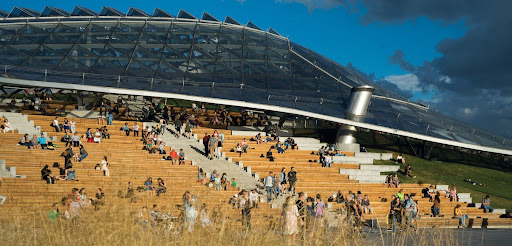 Fig: 2 - Public spaces are meant to provide a respite from the busy lifestyle of people in urban cities.
SOCIAL GAMES IN PUBLIC SPACES
While meaningful interactions can happen in various ways depending on the person’s preference, creating such social game-stops should be based on a general consensus of what the people of a certain community are inclined towards and what would suit the context.
To look at the way a certain community reacts to certain social conditions and creating games that can improve their response to these situations would be an effective way of reducing public stress leading to a productive community.
Studies regarding how social games can affect each generational range of population and what kind of stimulus evokes what kind of reaction has been going on. They have given positive results in terms of the success of these experiments as they are found to flourish in urban localities.
Taking into account the nature and engagement of public spaces for local residents of all ages- can we provide a public installation that can help reinvigorate the interest of people in cities with mundane lifestyles?
Through creative thinking can we predict the lengths of interactions and design for maximum efficiency?
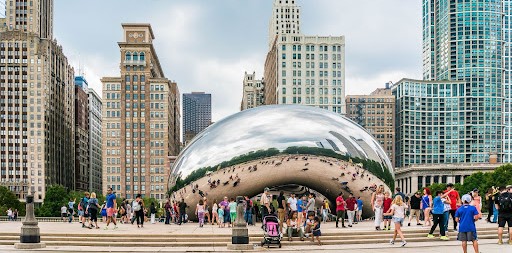 Fig: 3 - Installations in public spaces are used to draw the attention of people to particular events or topics.
THE SOCIAL DESIGN
H3: Brief: Design a public installation that acts as an interactive game and involves people passing by, acting as a socializing factor.
The installation must be context relevant, conforming to the local population and innovative at the same time. These games must be designed to be modular and built on a small scale that can be installed in a minimal space, similar to a public telephone booth or any other small kiosk. The material and colour theme used in such projects are also to be looked into as they play a major role in affecting people’s moods.
The view of the installation from the street is key to its success. The game must be able to capture the interest of the audience and generate curiosity.
Understanding various effects that an intervention like this would have on a community and creating such installations would help bring more positive changes into society. The installation must be accessible to all types of users with comfort and convenience of use.
OBJECTIVES
Ideation - The design inspiration has to be justified in terms of its connection with the city and the people.
Engage - The installation must be able to attract pedestrians to take leisure or interact in a safe public space.
Harmony - The design must establish harmony or connection with the surroundings while having outstanding features.
Multi-functional - The space and the installation must be flexible for multiple uses such as leisure, rest stop, interaction, or recreation purposes.
SITE
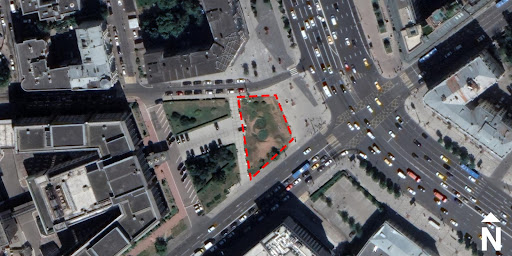
Russia is a global superpower with an advanced economic and technological standing. The living standards in the nation are high with a good education, healthcare and income system. The site for this project is located in Moscow, Russia. Moscow is a huge metropolitan area overwhelmed with skyscrapers, businesses and tourist landmarks. The large surface area is also covered with 40% greenery making for pleasant public spaces.
The site is located at a junction that connects to the Garden Ring Road in the Khamovniki District. It is characterised by upscale establishments and heritage landmarks attracting visitors to the area. It is within close proximity to a lot of offices and workplaces with considerable footfall during the day, making it an ideal experimental site.
Site Area - 1071 sq.m
Maximum Height Restriction - 5 metres
Ground Coverage - 20%
Maximum FAR: 0.6
Setbacks (as per CAD plan)
Coordinates - Moscow, Garden Ring Road
Similar Competitions
Discover competitions you might be interested in


Challenge to design an open learning module for the elderly

Challenge to design a portable music platform

Challenge to design a portable theatre