
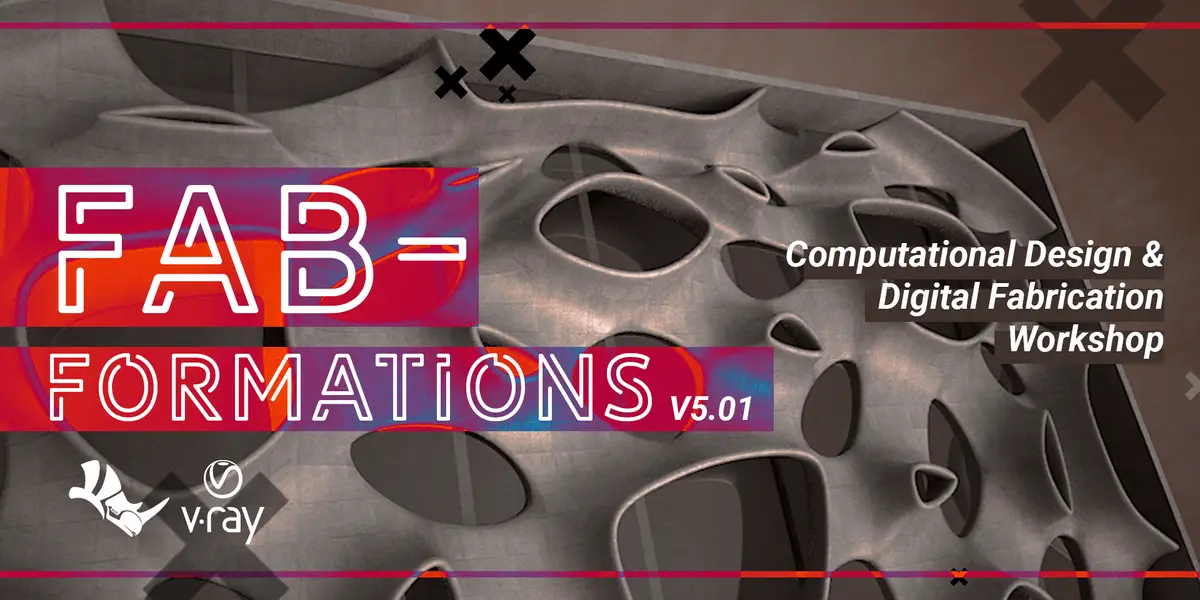
Fab formations
Algorithms and parametric design in architecture
OVERVIEW
Pavillion
In the world of design, there’s an ongoing debate of whether architecture, at its essence, is considered art. To some, the answer to this question is simple, as many of us view anything involving self-expression as art. For others, they recognize that architects themselves, while in charge of a project’s inception and aesthetic, aren’t the ones who actually control the form of the built environment. But whatever our views, the wise words of Winston Churchill seem to stand the test of time: “We shape our buildings; thereafter they shape us.”
Pavilion is an intersection of artistic liberty blending with architecture that gives its designer a very flexible medium to leverage 3D spaces to express their ideas. Despite the variations in scale and their temporal existence, they have an exceptional quality to be an architectural example that is understood by a massive range of audiences with ease.
Pavilion 2050 is a challenge focussed on creating an architectural marvel that speaks for a more sustainable built environment for our coming generations.
Parametric Pavillion
The challenge here is to design an architecture pavilion that speaks for a more sustainable built habitat of the future. The exercise leans towards a more exploratory design exercise of finding forms that evolve from exciting design concepts that we always envision, however find barriers in exhibiting them In this challenge we are looking for: Adept software use, Design and Presentation skills, Conceptual and analytical thinking.
The challenge does not look for highly technical constructional solutions or very intensive architectural concepts/technical drawings. You can use any software or tools you may for the Presentation of the sheets, But use Rhinoceros 5. for 3D modelling strictly.
Are you interested in gaining Parametric competency to push your design skills to the next level?
Are you ready to learn a very exciting and powerful tool that will take your ideas and concepts to a whole new realm?
The two-day introductory workshop to parametric design with digital fabrication in the field of Design integrated within the algorithmic modelling. It will allow you to investigate new formal solutions optimized for the architecture and design. It will also include a lecture and presentations on the subject of complexity in our design methodology and how to incorporate it as a design tool. The recent development of sophisticated computational design tools has instigated new ways of integrating computation in the design process; both within architecture and engineering disciplines.
The new set of digital tools has infiltrated a bottom-up system to open the design space towards a high level of complexity. The integration of these tools allowed the architect to generate and control complex information derived from a manifold of sources. Consequently, a more complex architectural order emerged as a reflection of sophisticated adaptive structures. The workshop will explore algorithmic strategies and the main techniques of form finding using the basic and intermediate level tools in Rhinoceros. The techniques will be applied at different scales, from architecture (surface modeling) to product level design. The model will further explore the fabrication methodologies in architecture and design.
Classrooms will be conducted at SPARRO Studio, New Delhi
Course description
The two-day introductory workshop to parametric design with digital fabrication in the field of Design integrated within the algorithmic modelling. It will allow to investigation new formal solutions optimized for the architecture and design. It will also include a lecture and presentations on the subject of complexity in our design methodology and how to incorporate it as a design tool. The recent development of sophisticated computational design tools has instigated new ways of integrating computation in the design process; both within architecture and engineering disciplines.
The new set of digital tools has infiltrated a bottom-up system to open the design space towards a high level of complexity. The integration of these tools allowed the architect to generate and control complex information derived from a manifold of sources. Consequently, a more complex architectural order emerged as a reflection of sophisticated adaptive structures.
The workshop will explore algorithmic strategies and the main techniques of form-finding using the basic and intermediate level tools in Rhinoceros. The techniques will be applied at different scales, from architecture (surface modelling) to product level design. The model will further explore the fabrication methodologies in architecture and design.
Similar Competitions
Discover competitions you might be interested in


Challenge to design an open learning module for the elderly

Challenge to design a portable music platform

Challenge to design a portable theatre


From Logic to Configurators
