
Starry Night
Competition for designing public spaces for stargazers
Overview
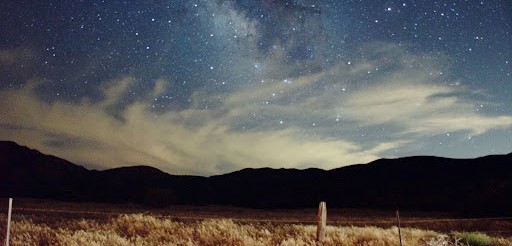 Fig: 1 - Night sky is clearly visible from places with less pollution.
THE NIGHT SKY HUES
Throughout history, humans have been dreaming under the night sky and extracting meaning, philosophy, poetry and art.
As Vincent Van Gigh famously said, “For my part, I know nothing with any certainty, but the sight of the stars makes me dream.” The kaleidoscopic hues of the night sky, the brilliant twinkle of the speckled stars and planets in various stages of their celestial life, the plethora of imagined constellations are all part of one of the most brilliant displays of nature.
The night sky has the ability to both comfort and disturbs our human minds. It is a startling glimpse into our part in the universe as we stare up at it from our little blue planet.
Unfortunately, today this glittery natural display is increasingly obscure owing to our very own overbearing interference in the world around us. As a result, stargazers seek out sparsely populated spaces where human interference is at a minimum.
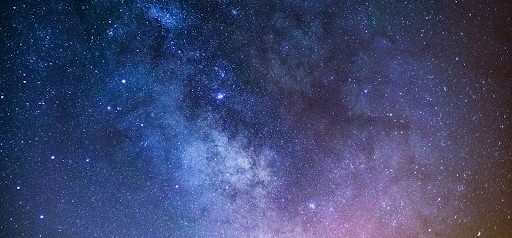 Fig: 2 - Stargazing is not just a timely event and it can be done under clear sky conditions at all nights.
LOOKING UP AT THE STARS
Despite stargazing being such an ancient and once ubiquitous part of human lives, today one must make significant efforts and travel distances to enjoy the natural phenomenon.
Today, stargazing is often located in remote rural spaces or even in the wild where it is linked to activities such as trekking or camping.
This link to specific remote geography, combined with the typical expense of quality stargazing equipment, means that the act of stargazing is increasingly exclusive to individuals with adequate means in the city’s population.
Yet, dreaming under the night sky should ideally not be exclusive and the beauty of the celestial display should be easy to access for individuals across physical and economical strata.
Can we design public spaces that welcome stargazers and host equipment that may be otherwise expensive, to once again allow more of us to dream of looking up at the night sky?
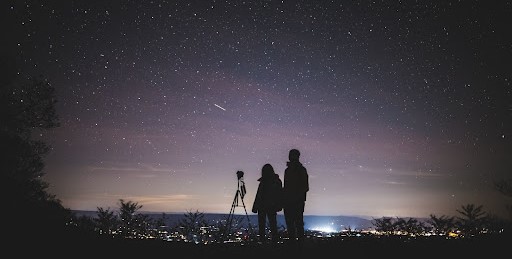 Fig: 3 - Stargazing has the potential to promote public gatherings and community events.
CELESTIAL DISPLAY FROM A SHARED SPACE
Brief: The architecture competition brief calls for a design of a pavilion for stargazers in a sparsely populated area where both professional, and novice stargazers can come together to enjoy the night sky.
The aim of the competition is to come up with a unique design for a pavilion that will become a cultural and leisure reference point, drawing in and allowing individuals to witness the celestial display from a shared space.
The design should be able to integrate its stargazing theme into its architecture and be flexible enough to adapt to and promote a variety of activities related to laymen’s astronomy on a moderate scale.
The designed outcome should have an immersive architectural quality that allows and inspires people to reflect on the tangible and intangible components of the natural phenomenon of the night sky. The space should let people be one with nature and absorb the celestial landscape, despite being in an artificial volume that will not encroach on its natural setting.
OBJECTIVES
Form: How does the designed form integrate with the theme of the challenge and display your novel take on the design?
Function: The design outcome must primarily function as a valuable public space for stargazers with different knowledge sets and capabilities.
Modularity: How does the design allow itself to be changed and modified to allow for various public activities related to stargazing?
Anonymous: How does the design offer a valuable and attractive public space that does not encroach or interfere with the natural environment despite hosting humans.
SITE
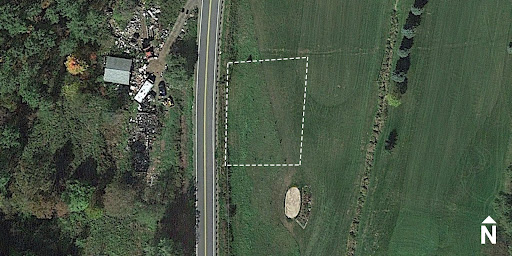
The site for this project is located in Cherry Springs State Park, Pennsylvania, United States. The park is well known to astronomers and draws stargazers both locally and from around the world to its two annual star parties.
Apart from stargazing the park offers forest trails for hiking and snowmobiling and facilities for camping and picnics. The park boasts between 60 to 85 nights of ideal conditions for observing celestial objects. The pavilion should be able to host between 20-30 stargazers within the space.
- Site Area: 1,124 sq.m
- Height Restriction: 6 meters
- Coordinates: 41°43'42.0"N 77°56'19.7"W
Similar Competitions
Discover competitions you might be interested in


Design challenge to reuse E-waste

Challenge to design locus for the upliftment of human rights