
Switching Prisons
Rethink correctional facilities of tomorrow.
OVERVIEW
Results for the competition
Winner
A Botanical Exchange
Cyber Crime is without a place and criminals are without an identity. This rehabilitative prison seeks to reconnect criminals with a sense of physical space, self, and community through a focus on tangible work like farming, gardening, and craftsmanship.
Runner ups
1. COMMUNIVERSITY
NBRS Architecture submits an evolution to how prisons and incarceration are traditionally thought of. Our concept is called: COMMUNIVERSITY A reformative facility that uses educational principles to advance participants as well as provide social education by maintaining a heavy focus on community and interpersonal engagement.
2. BEHIND THE WALLS: A canopy for repentance
The project rethinks the actual model of prison and offers an alternative to the punitive aspect.

Img 1: A connected world on the web - A concept
Premise
The definition of crime is culturally subjective. This subjectivity used to help us define law and punishment in a more rational manner in the past. Today, this subjectivity placed against pacing time and increasing globalization is not easy to rationalize anymore.
We see this in many walks of life where assets like gold which used to be the driving force of an economy. Where trade and even countries were valued based on how much gold reserves they had in the past. In today’s context, trade depends on technology and the currency here is information. The millions of gigabytes of data that flow over the internet fuel the economy today. Where stealing gold is deemed a crime and is identified by everyone as a crime. But when it comes to information, all the applications, internet service providers, devices like Alexa and corporations are running on this data.
If someone gets access to this information and they misuse it (For eg. sell someone’s private images online), does that become a criminal offence? If yes, then how big is it?

Img 2: The mask of anonymity in a prison - A concept
Anonymity
People who never committed crimes before are tempted when they learn how easy it is to fake someone’s identification by stealing passwords or fraud with someone on the web by impersonation, without ever having to confront a victim face-to-face. And that’s why we see this news of data leaks and ransomware hacks that take over personal data very often these days. Many of these crimes go unreported or even do not pass the qualification of being a crime. In fact, their evasion from these crimes in the form of bail is cheaper than the prior forms of crime.
Law hence reframes itself from time to time, and in spite of this consistent reframing (Eg. GDPR) it still has to be on its toes to keep up with the evolving forms of crime. The problem is further exacerbated with our worlds erasing the lines between digital x physical contexts and finding more overlaps between each other. This leaves us more vulnerable and makes committing crimes more tempting.
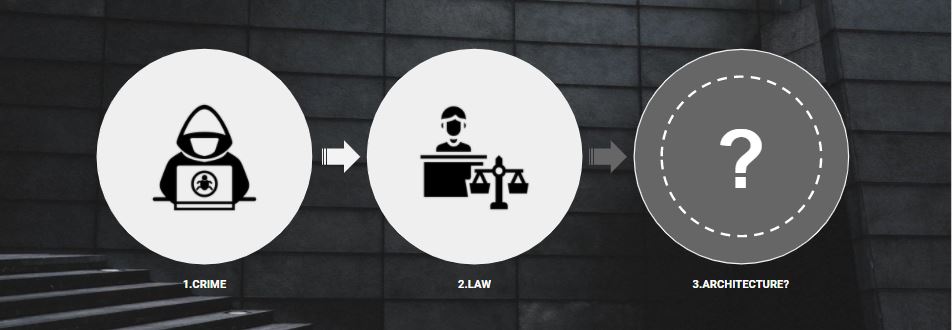
Img 3: The chain of lag, Crime in prison- Law and Architecture
Issue:
The Lag
In a world of ever-growing dimensions of crime, the law is pushing back in finding patterns and new ways to track/identify/persuade/reduce crime. However, what is not keeping up is the infrastructure to punish/rehabilitate/imprison such criminals.
The prison which exist today are designed for containing criminals who are disrupting society in the physical realm. These involve identifiable offences that happen like murder, theft, robbery, vandalism, etc. that involve a perpetrator to use bare hands and can be seen. But what about criminals who are disrupting our societies of tomorrow which are based on the web? Are prison of today cannot being used for them?
The prison which actually exist today are built on various factors like cost, operational efficiency, staff, antiquated surveillance systems, crime rate and mostly by the kind of punitive thought they are based on.
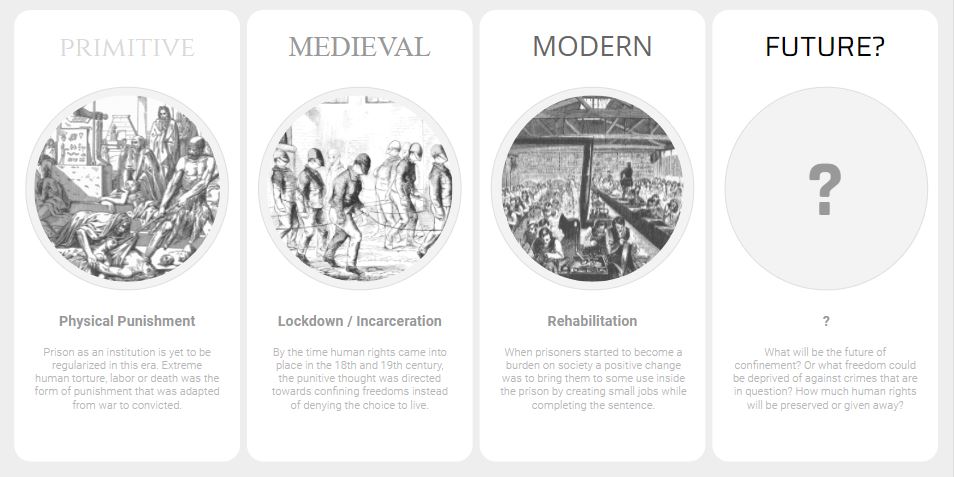
Img 4: History of punishment and prison in chronology
Evolution of Punishment
The formal definition of punishment can be stated as: “The conscious infliction of pain in retort to the wrong done by a perpetrator”. In primitive times the punishment used to be of severe nature, as the prime focus of such infliction was to either cause deterrence amongst the like-minded individual or to wash off the sins of the wrongdoer. The punishment also took form based on religious norms and beliefs.
As our societies progressed, the punishments became more rationalized and focal points of punishments moved from retribution/deterrence/incapacitation to rehabilitation/restoration. Punishment as an institution is so deep-rooted in the history of civilization that it is difficult to trace its origin and to imagine a functional society without it. This is where an institution like prison started to take shape.
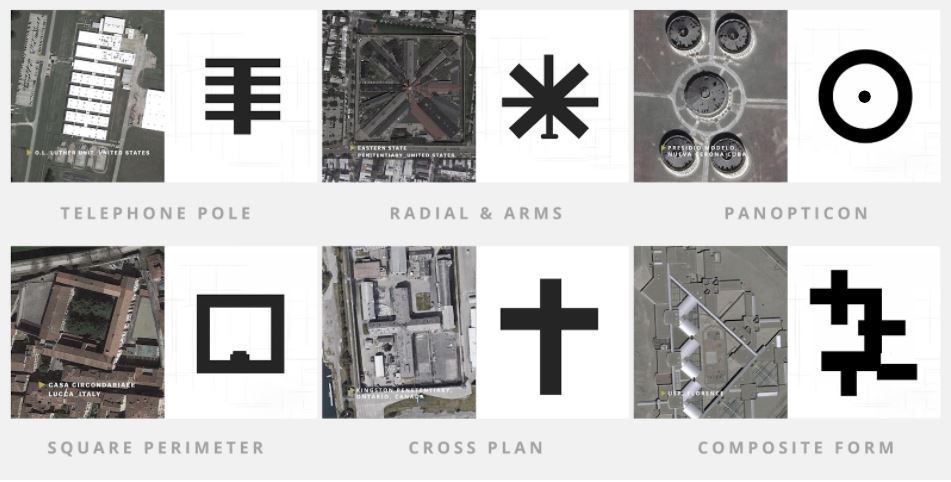
Img 5: The types of prison in plan view - Credits Vox
Prison
Our prisons have evolved from a similar notion of punishment. The design priority is maximum security at a minimum number of deployed men, negotiated against the burden on taxes. Prisons are public institutions that are fed by society and looked down upon unlike positive public institutions hospital, bank or a school which visibly contributes to the society. With our rapidly growing cities, almost every urban setting requires/contains a prison at a small or large scale. The architecture hence is a result of optimization and bare minimum infrastructure, with assumed users as perpetrators like murders or psychopaths.
Crime in the growing world of web today is committed by conscious adults as well as kids who just learned some tech and are lured by making some easy money or just for thrill. Are these prison are ready for people like us who are not in here because of violent crimes?
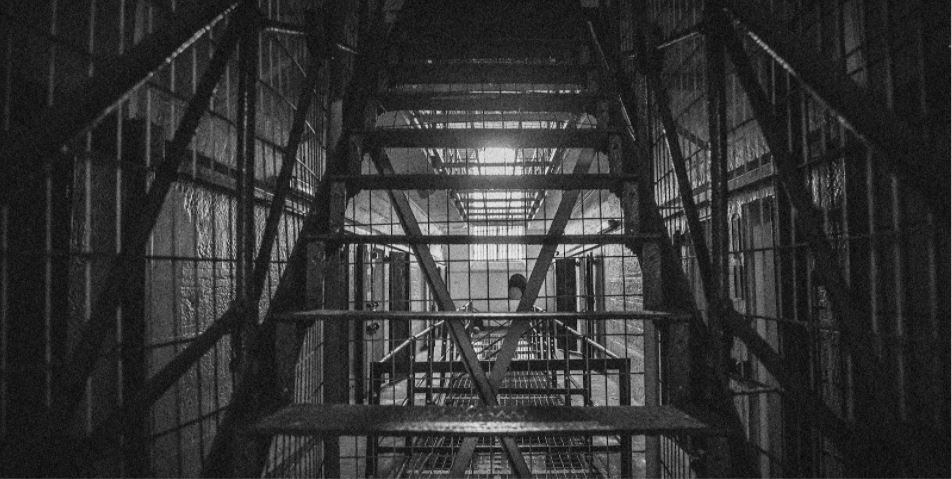
Img 6: Old Parramatta Jail, Australia - Credits: Delecee Coo
Do prison designs really deserve good planning?
or Alternatively, do prisoners deserve the dignity of good design?
Prisoners are usually seen as expendables and deserve no better than what current prisons offer says a general perception. However, our human rights laws insist that prison conditions should not be an additional punishment to a prisoner. The prison sentence is the sanction: it holds an individual accountable for their actions and protects society. It deprives someone of their liberty and impacts on certain other rights, such as freedom of movement, which are the inevitable consequences of imprisonment, but people in prison retain their human rights and fundamental freedoms..
Brief and Objectives
Brief: Design a model prison building for 500 perpetrators, who are sentenced for serving crimes that are non-physical/cyber/online in nature in the context of the present and coming future.
Like the previous models of the prison discussed earlier, the answer has to be replicable considering the vast amount of population moving into cities and the increasing crimes relating to the internet. The prison may or may not be leaning toward humane prison design ideas, but participants may justify the kind of architectural decisions they took to foster a better prison design. Participants may use technology-oriented surveillance solutions - however, perpetrators being aware of exploiting its vulnerabilities can be complemented with analog security features as well.
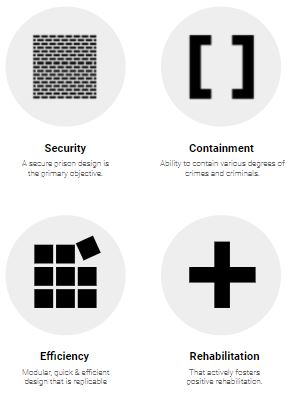
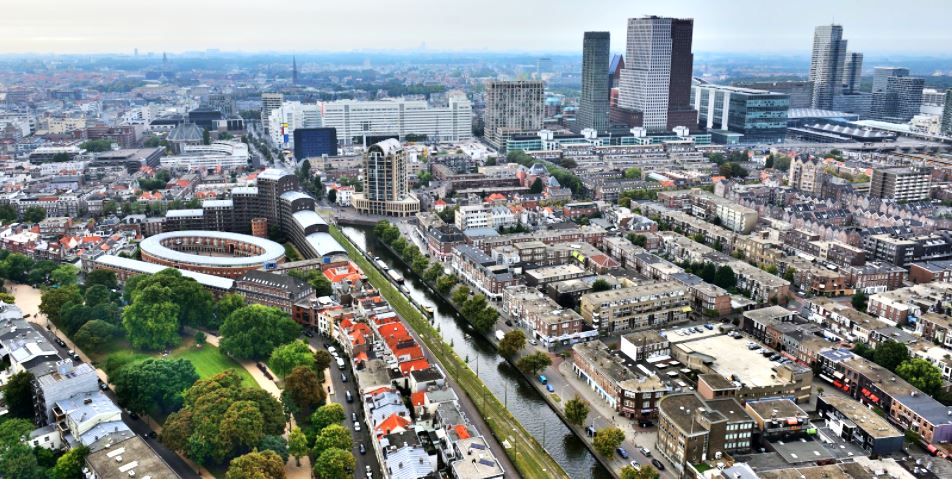
The following objectives for prison design can be a point of beginning to conceive this prison design challenge:
Img 7: Aerial view of The Hagu
The Hague (/heɪɡ/; Dutch: Den Haag [dɛn ˈɦaːx] )
Quoted from their official website: The Hague is known as the international city of peace and justice. People come to The Hague from all over the world to work together on solutions to global problems. With the Peace Palace at the center of it all, The Hague is truly the international city of peace and justice.
The Hague is not only home to the International Court of Justice and International Criminal Court, but organizations like Hague Security Delta which is a network of businesses, governments and knowledge institutions that work together on innovative security solutions and knowledge development. In this network, security issues are discussed and knowledge is shared on cybersecurity, national and urban security, protection of critical infrastructures, and forensics.
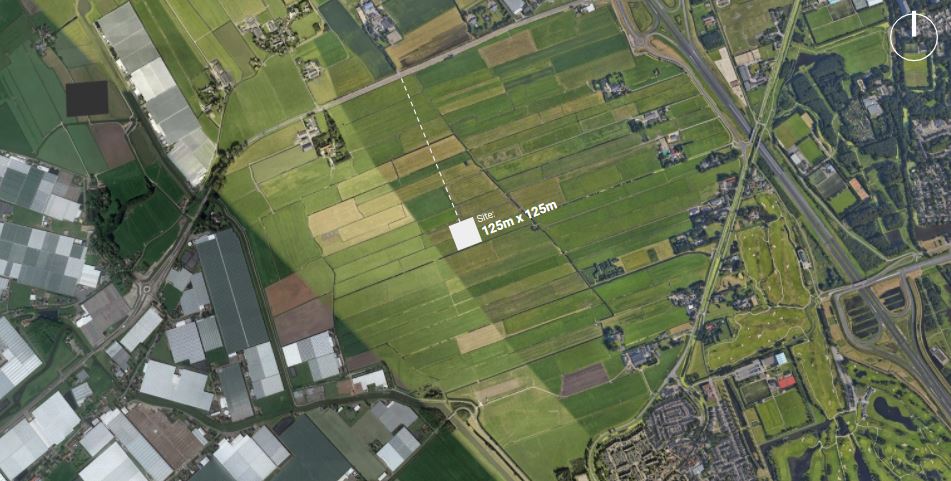
Img 8: Aerial view of site - Credits - Googl
Site Plan
The placelessness of crime in web/digital/cyberspace fits very well with the futuristic definition of The Hague as an international city. The site chosen sits on the outskirts of Hague, southwards to the city center. The site is devoid of any buildings or other deterrents that will foster a much universal model prison which is applicable to fit around the world. As the design is considered as a replicable model, participants can create a prison design that is free from the model site first and then place it here.
- Area: 15625 sqm
- Location: 51.989877, 4.305808
- Ground coverage: 40%
- Setbacks and heights are kept free.
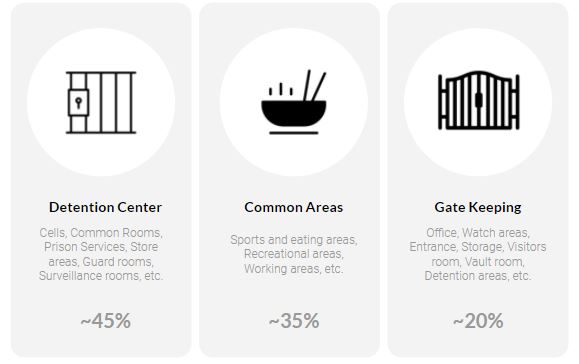
Programme Outline
The area programme is indicative and ratios/activities can be modified.
Judging Criteria
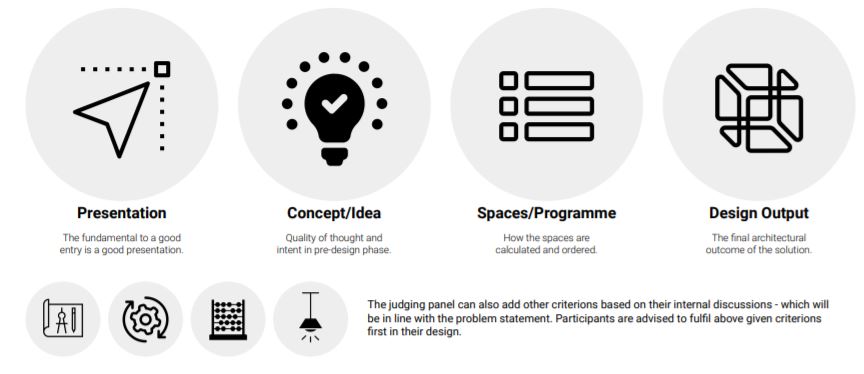
The entries will be judged by an international jury of the competition on the following criterions:
Similar Competitions
Discover competitions you might be interested in




Design challenge to reuse E-waste




Imagining parliament for an unified world.


Illustrate the lost glory of Angkor Wat - Render Challenge


Photograph architecture without architects

