
Pha Hún School by 1+1>2 Architects: A Model of Sustainable Mountain School Architecture in Vietnam
Pha Hún School redefines sustainable mountain architecture by blending local materials, community labor, and nature-sensitive design for rural education.

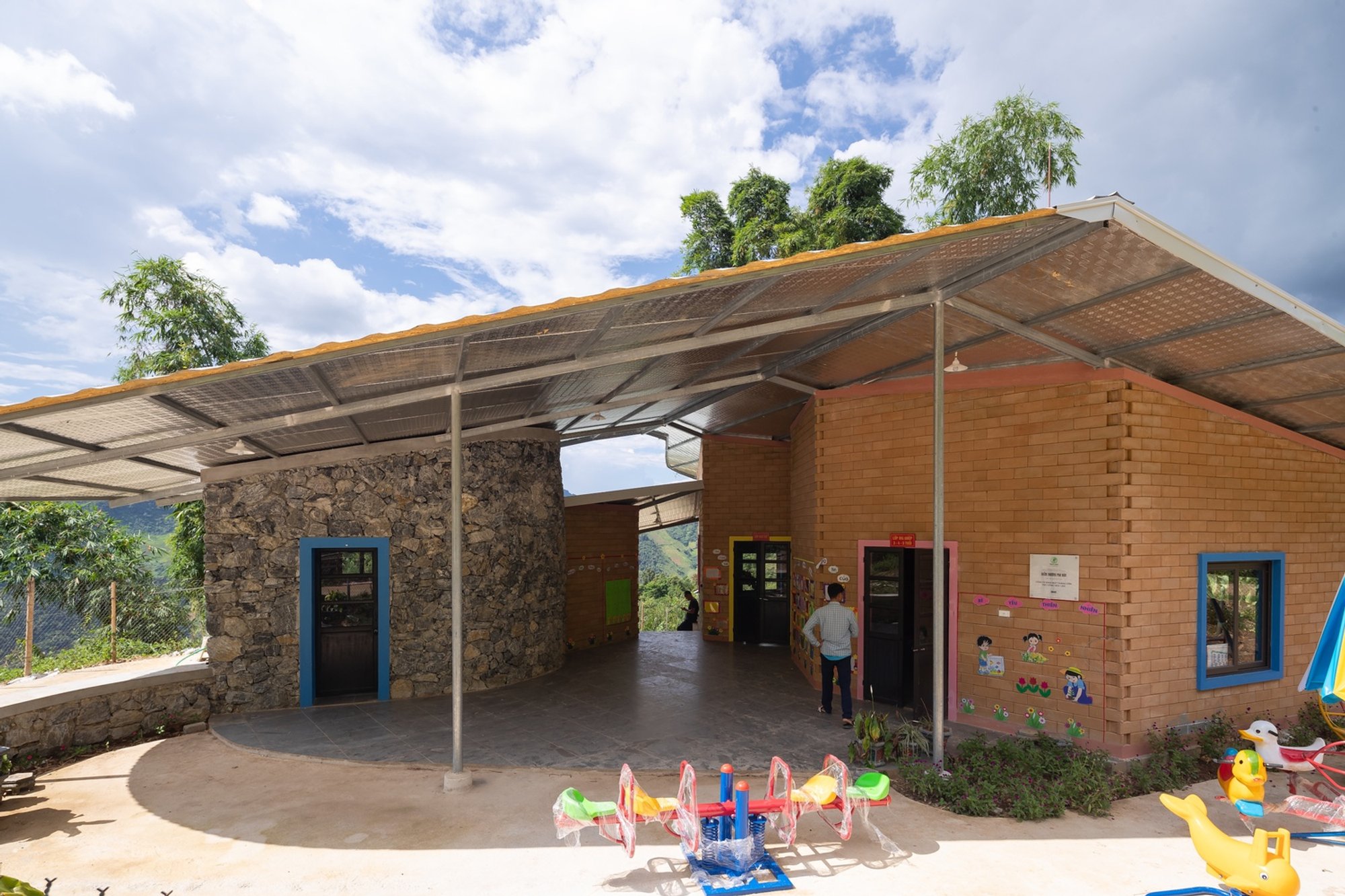
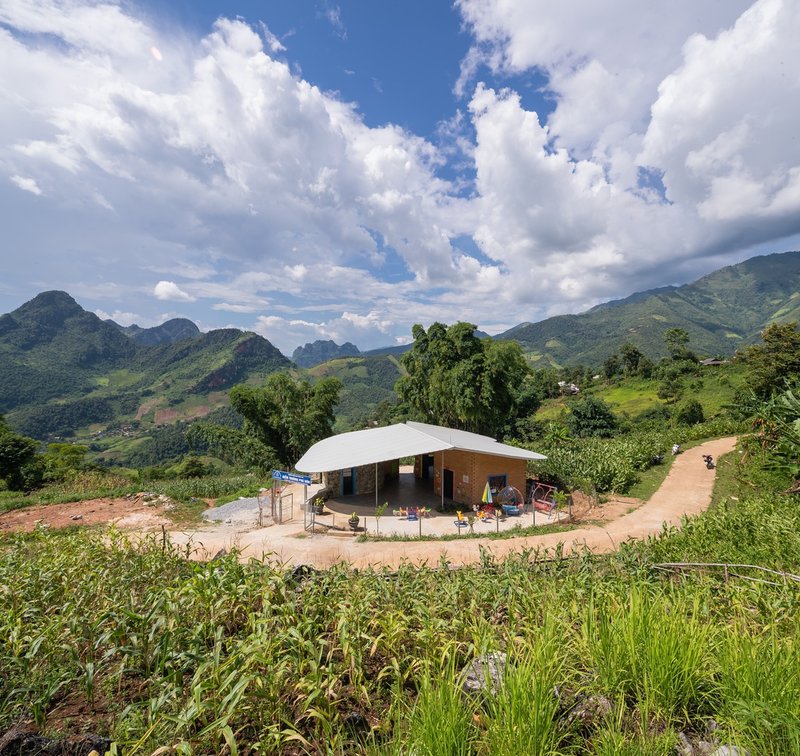
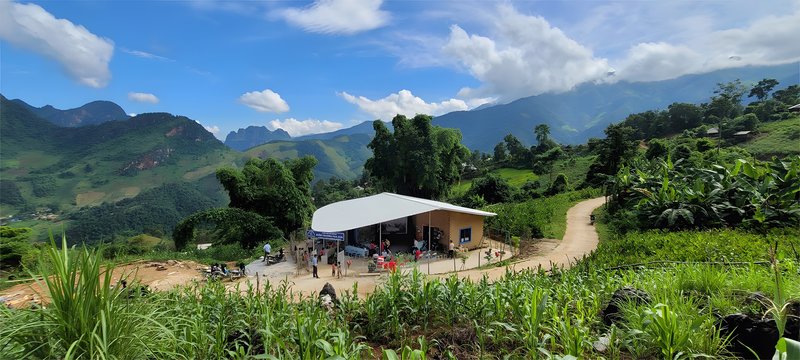
Pha Hún School, designed by 1+1>2 Architects, is a remarkable example of sustainable mountain school architecture that transforms harsh topography and limited resources into a beacon of educational hope for the remote H'Mông community of Dien Bien, Vietnam. Completed in 2022, the 300 m² preschool rises like a “bamboo blossom” in the mountainous landscape, blending architectural sensitivity with social responsibility.
From Makeshift to Meaningful: Responding to a Community's Educational Needs
For generations, children in the village of Pha Hún studied in makeshift wooden huts—unsafe, temporary, and wholly inadequate for their educational needs. This project, funded by Trúc Lâm Handmade, transforms that long-deferred dream into a meaningful reality. The new preschool not only meets structural and functional standards but also uplifts community spirit by embodying resilience, creativity, and environmental respect.
Architecture Shaped by Nature and Culture
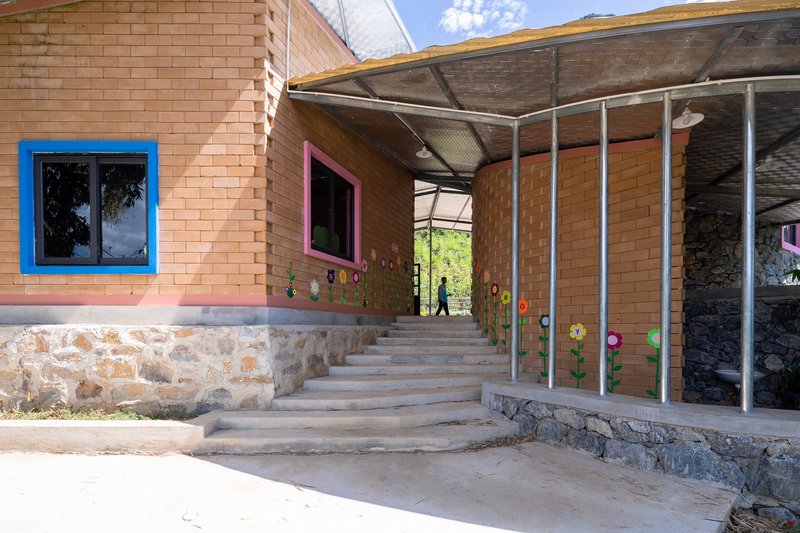
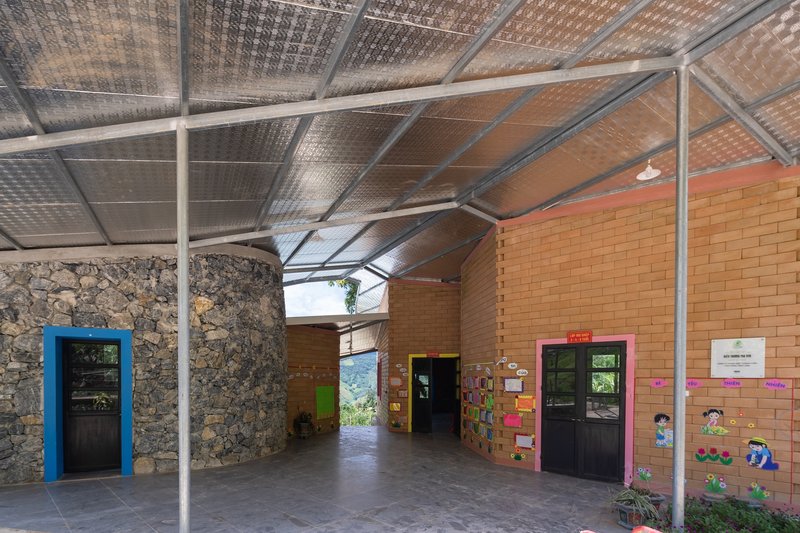
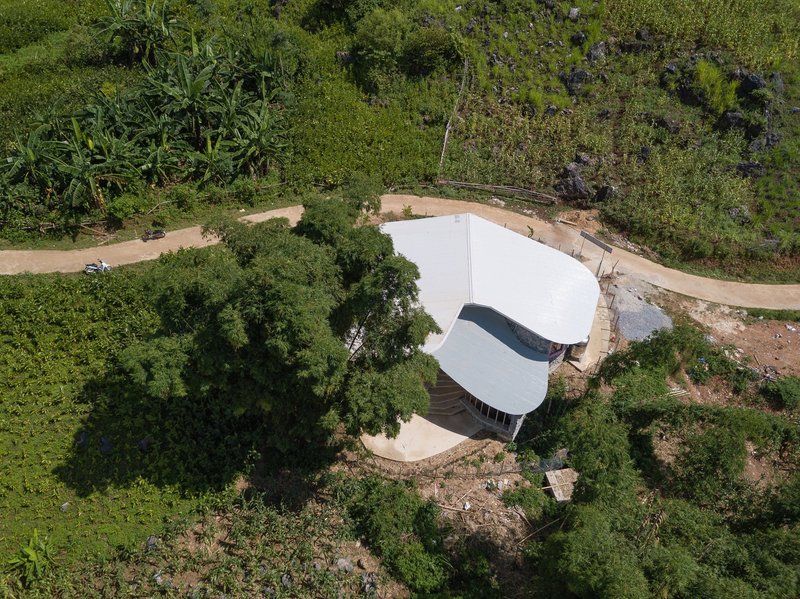
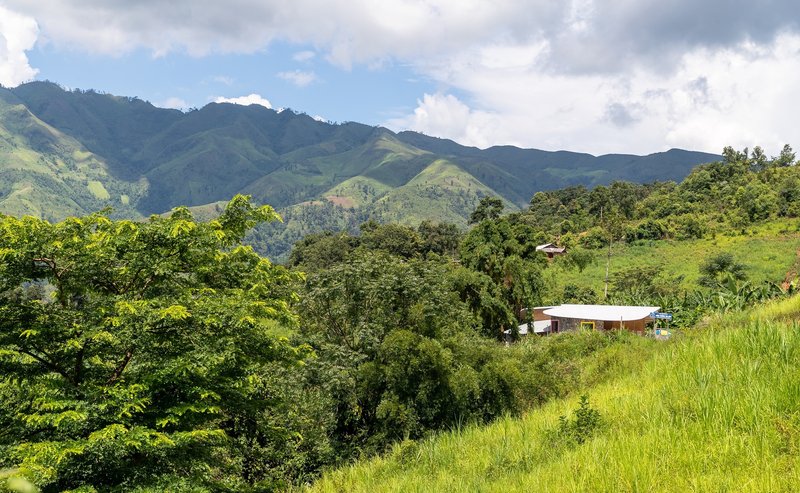
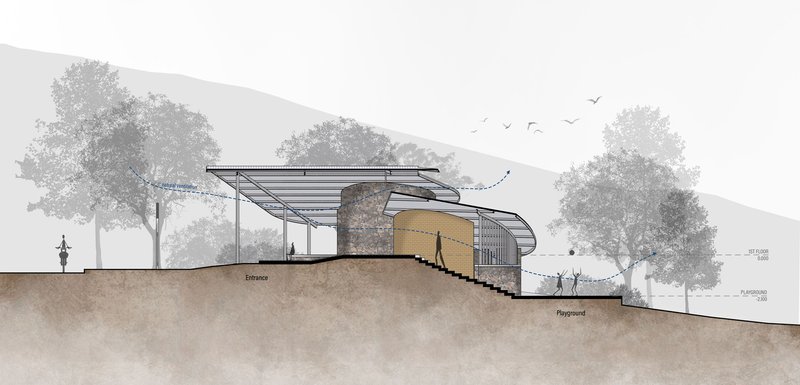
The school's design gracefully follows the contours of its mountainous site. Instead of altering the landscape through excavation or leveling, the architects embraced the natural terrain, using flowing architectural forms that adapt to elevation changes. Large boulders and native bamboo groves were preserved in place, framing the building within a natural context that reinforces local identity.
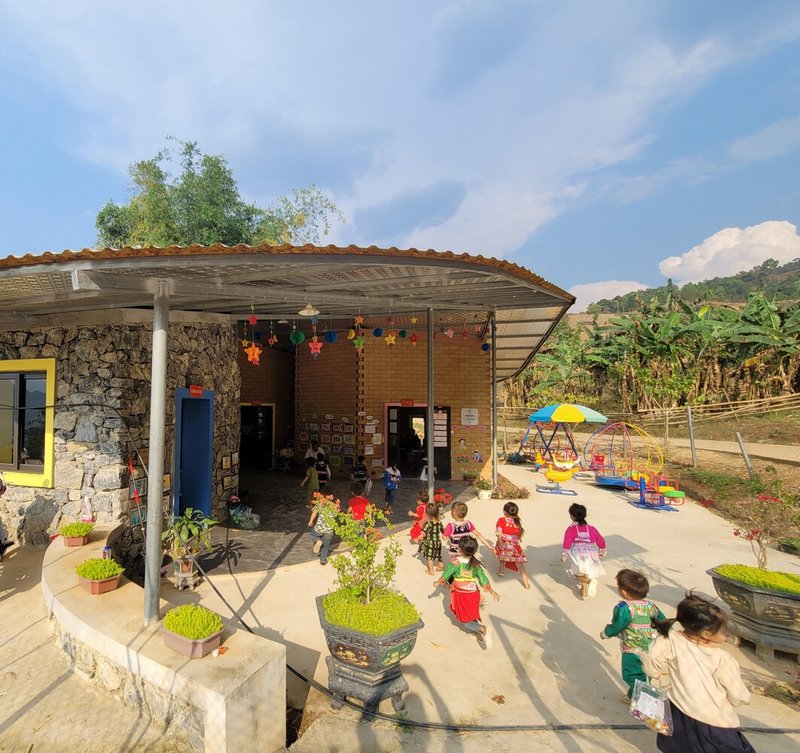
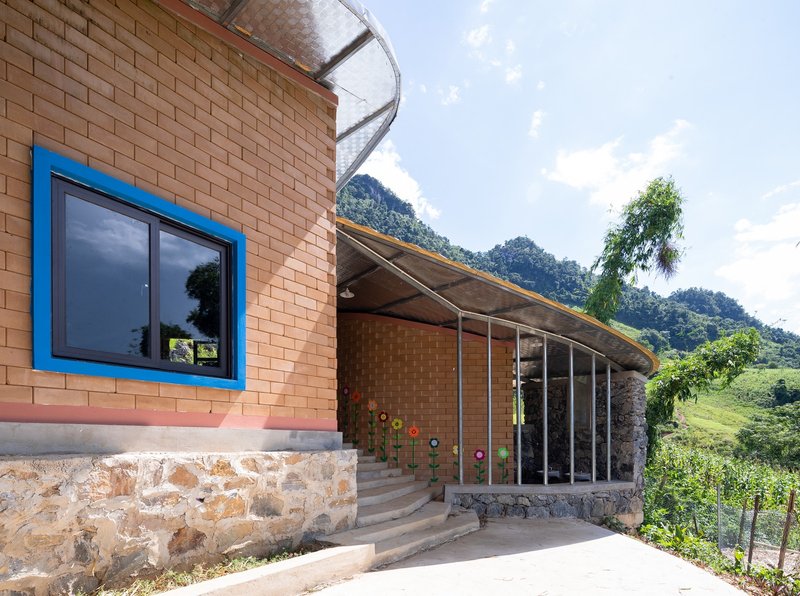
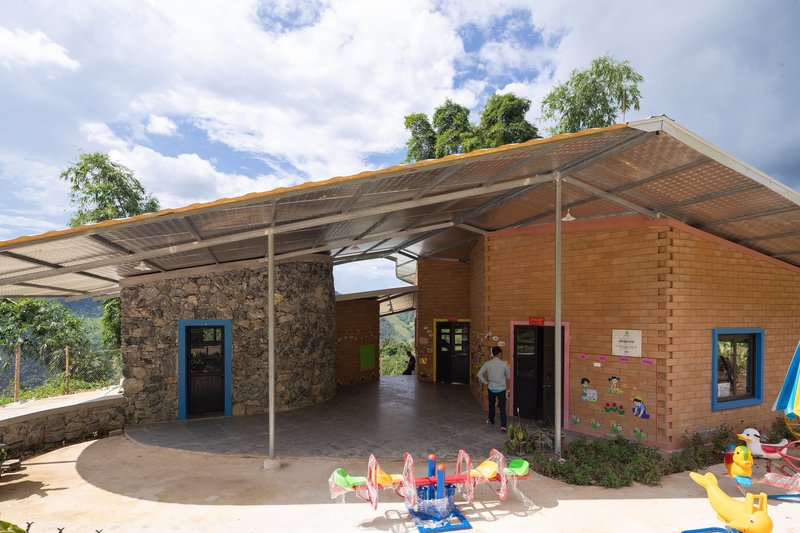
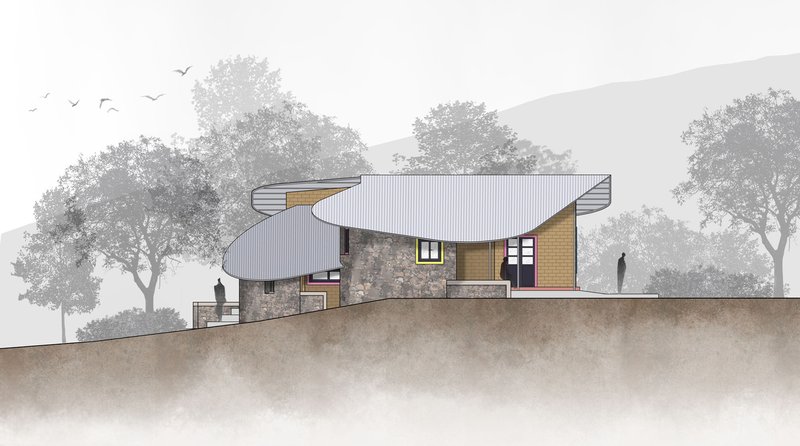
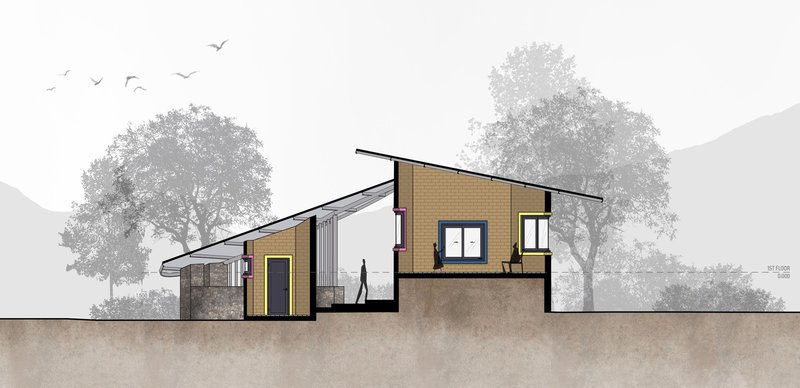
A double-layer roof floats softly above the structure, enhancing passive ventilation and daylighting while protecting the interior from harsh weather. The white roof contrasts delicately with the forested backdrop, symbolizing the blooming of education in a previously underserved area.
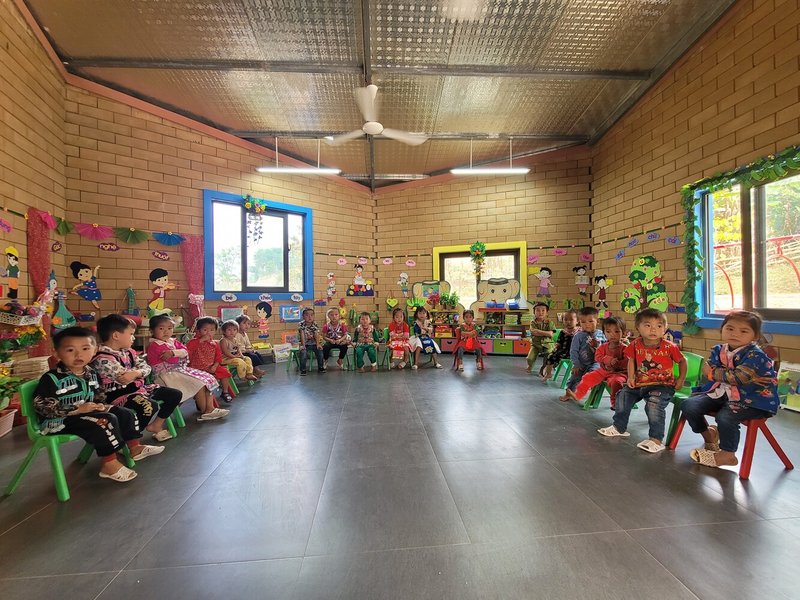
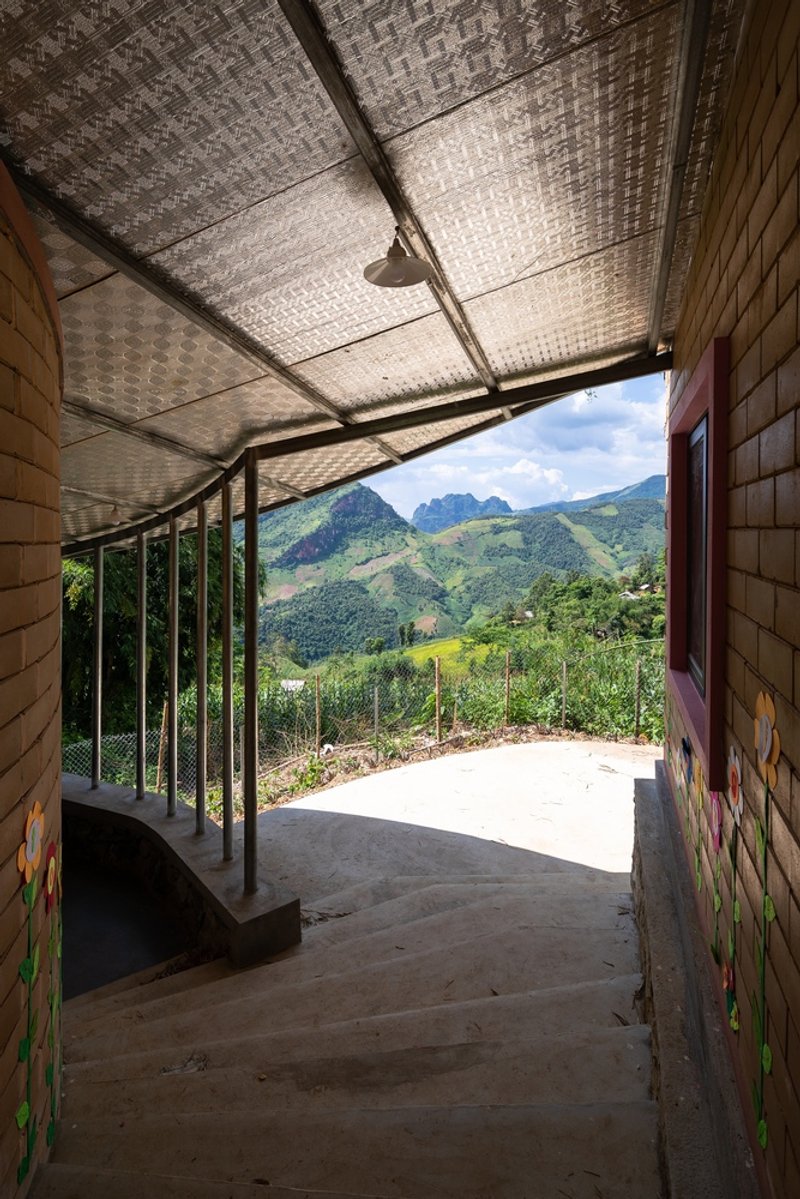
Local Materials for Thermal Comfort and Sustainability
The building is constructed using locally sourced materials such as adobe bricks and mountain stone, reducing both the environmental impact and transportation costs. These materials provide natural thermal insulation, ensuring that the interior remains warm in winter and cool in summer without mechanical systems.
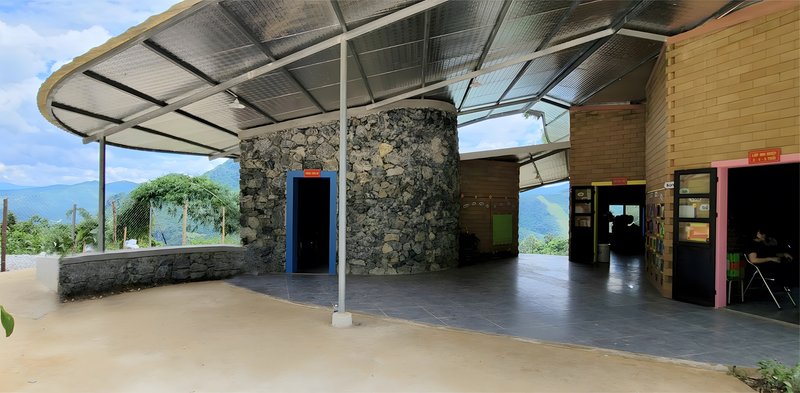
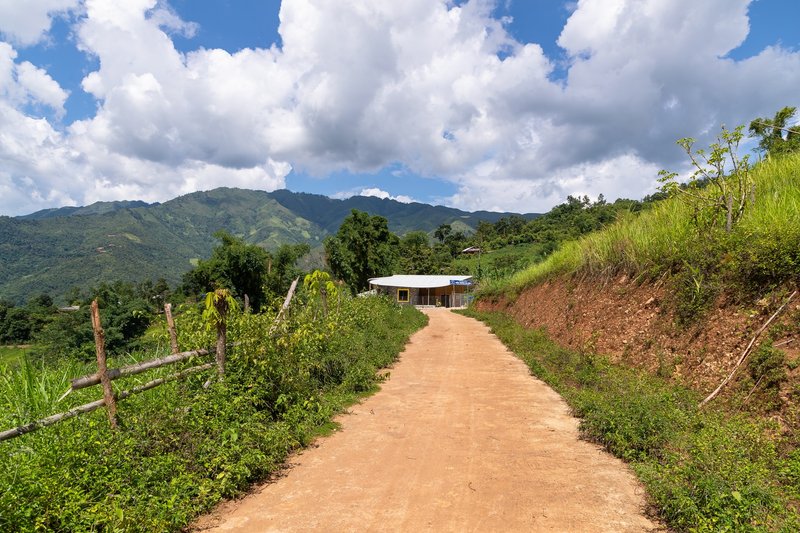
The use of earth-based construction techniques not only reflects vernacular wisdom but also promotes durability and simplicity. This low-tech, high-efficiency approach aligns with the principles of sustainable architecture and responds effectively to the challenges of building in remote, mountainous regions.
Community-Driven Construction and Cultural Integration
One of the most important aspects of the project is its community engagement. Local labor was involved throughout the building process, fostering a strong sense of ownership among the villagers. This participatory model reinforces the idea that schools are not just places for education—they are centers of community development and empowerment.
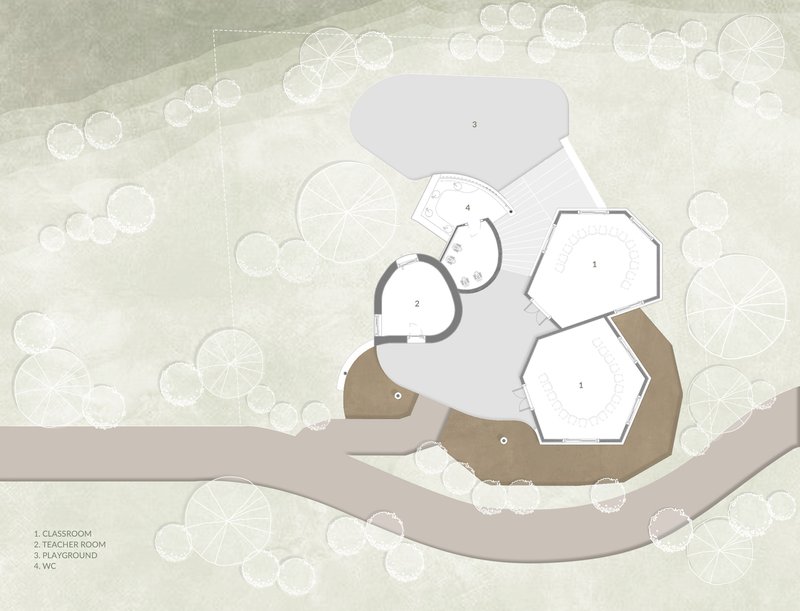
Bamboo fencing surrounding the school serves as a natural windbreak and symbolic reference to the region’s agricultural lifestyle. The result is a space that feels rooted in place, designed not just for children but by and with the community that will use it.
A New Paradigm in Sustainable Mountain School Architecture
Pha Hún School exemplifies how thoughtful design can uplift marginalized communities through architecture that respects both place and people. It is a humble yet powerful statement of how sustainable mountain school architecture can blend environmental sensitivity, cultural context, and educational necessity.
Rather than imposing an alien structure onto the land, 1+1>2 Architects have created a nurturing space where children can grow, explore, and learn—surrounded by the materials, landscapes, and values of their own culture. It is not just a school but a symbol of inclusive development and architectural dignity.




Popular Articles
Popular articles from the community

An Miên Lumière Cafe by xưởng xép, Ho Chi Minh City, Vietnam
An industrial-inspired café where layered steel and warm light create a dynamic, immersive environment shaped by reflection, depth, and perception.
Inverted Architecture Installation by Studio Link-Arc: Exploring the Intersection of Architecture and Living Organisms
Inverted Architecture Installation by Studio Link-Arc blends mycelium, sustainability, inverted design, ecological cycles, and urban adaptive architecture in Shenzhen.
On the Brooks House by Monsoon Collective – A Contemporary Kerala Home Rooted in Tradition
Kerala home blending tradition and modernity with water-inspired design, brick architecture, courtyard planning, and sustainable rainwater harvesting strategies.
Treehouse Apartment: A Warm Timber Interior Blending Craft, Play, and Contemporary Living
Warm timber apartment with integrated treehouse, combining natural materials, craftsmanship, and playful design to create a flexible, family-oriented living environment.

Similar Reads
You might also enjoy these articles

Top 15 Architecture Competitions to Enter in 2026
From student-friendly idea competitions to prestigious international awards, here are the best architecture competitions open for entries in 2026. Updated regularly.

DIY & Engineering in Computational Design : Enter the BeeGraphy Design Awards
Showcase Your Creativity with Computational Design and Open Source Projects
Innovative Design Solutions: Award-Winning Projects from Recent Architecture Competitions
Exploring award-winning architectural projects shaping the future of design, sustainability, and community.

Explore Architecture Competitions
Discover active competitions in this discipline




The International Standard for Design Portfolios


The Global Benchmark for Architecture Dissertation Awards


The Global Benchmark for Graduation Excellence


Challenge to reimagine the Iron Throne
Comments (0)
Please login or sign up to add comments
No comments yet. Be the first to comment!