
Reimagining Urban Space: A Visionary Approach to Multipurpose Stadium Architecture
A visionary model of multipurpose stadium architecture combining sports, shopping, and civic life into a single urban landmark.

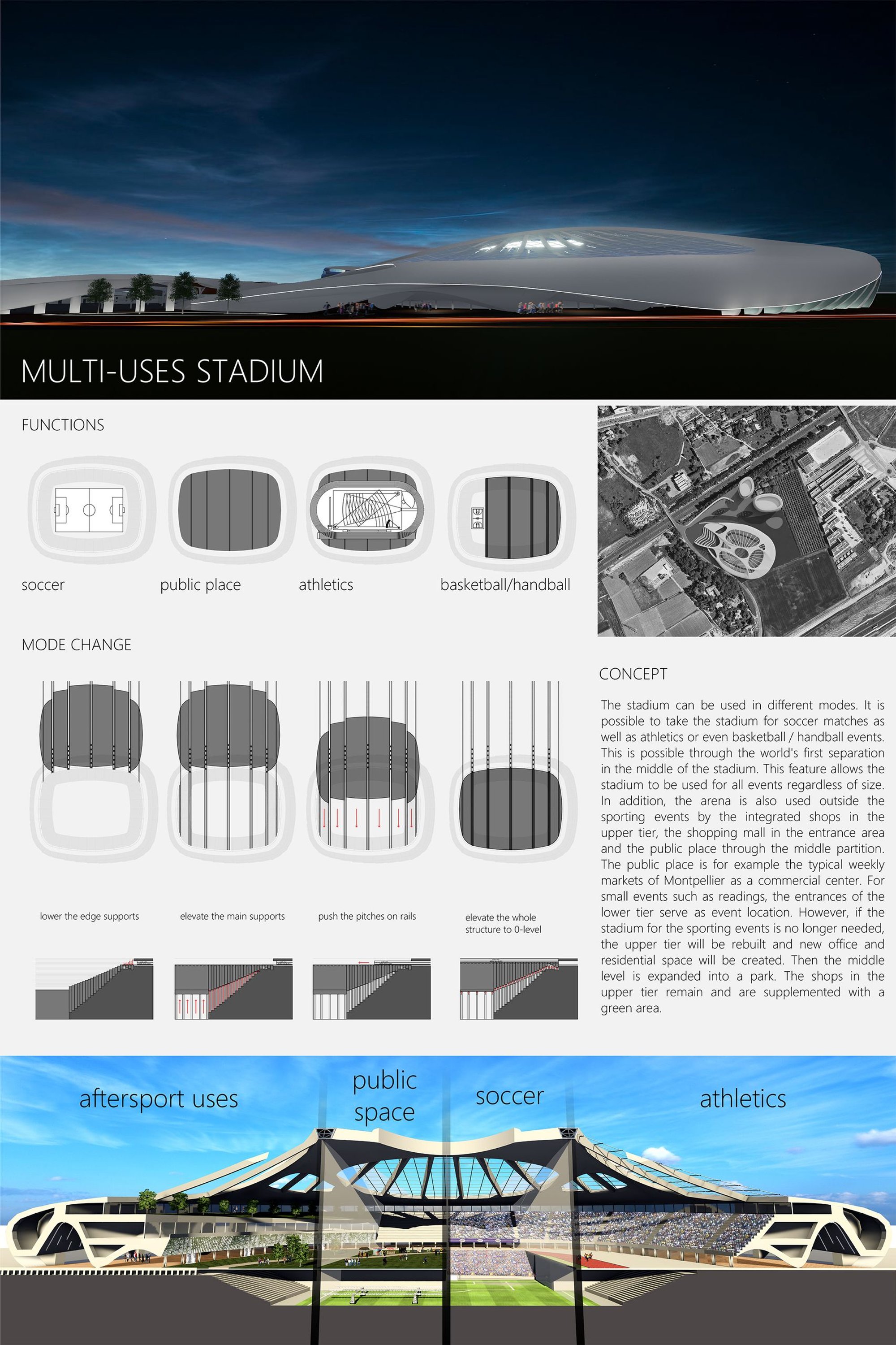
In an era where urban land is increasingly scarce and community expectations for public space are growing, architecture is stepping up with inventive solutions. One such bold proposition is a multi-uses stadium architecture concept by Benedikt Schambeck that merges the needs of a sports arena with those of urban life, creating an adaptable complex for sports, events, commerce, and living.
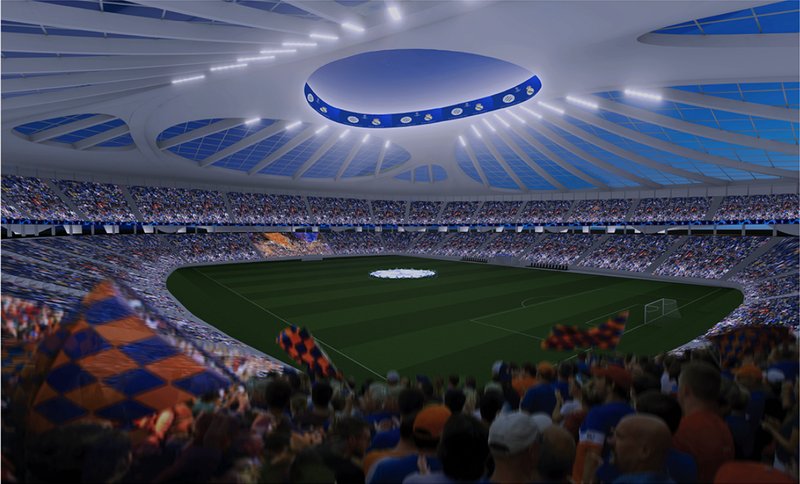
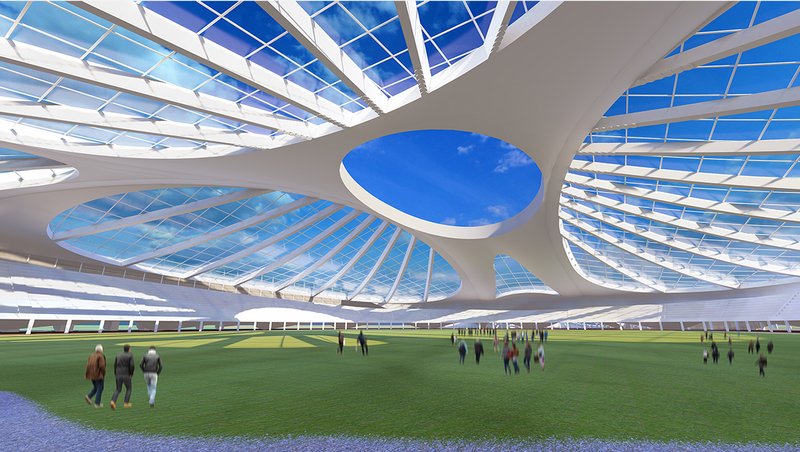
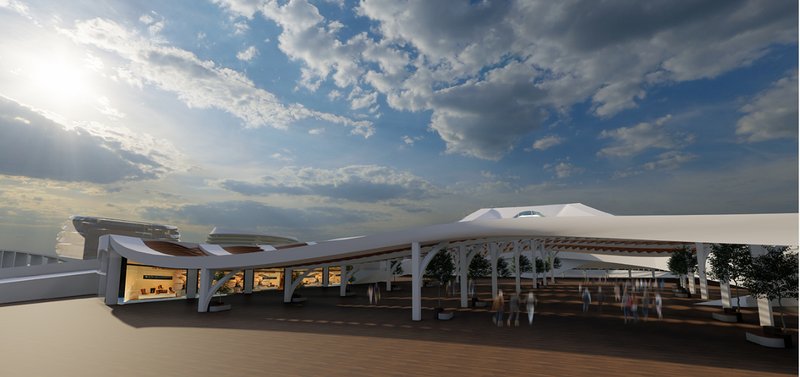
At first glance, the design resembles a futuristic stadium, complete with a massive circular roof canopy that lets daylight flood in while offering weather protection. Yet, it is more than a traditional arena. This is a civic hub—a hybrid infrastructure that blurs the boundaries between entertainment, commerce, and daily urban life.
A Stadium That Adapts to Every Event
Unlike conventional stadiums built for a single sport, this visionary design introduces the world’s first central separation mechanism, allowing it to transform and accommodate multiple sports—ranging from soccer to basketball, athletics to handball. This flexibility is key to extending the utility of large sports venues beyond their typical limited seasonal use.
The architectural layout includes retractable or movable elements that reconfigure the spatial design based on event needs. The playing field can shift size and orientation, and spectator seating adjusts dynamically. In this way, the stadium becomes a modular container for diverse public gatherings.
Beyond Sports: A Self-Sufficient Urban Complex
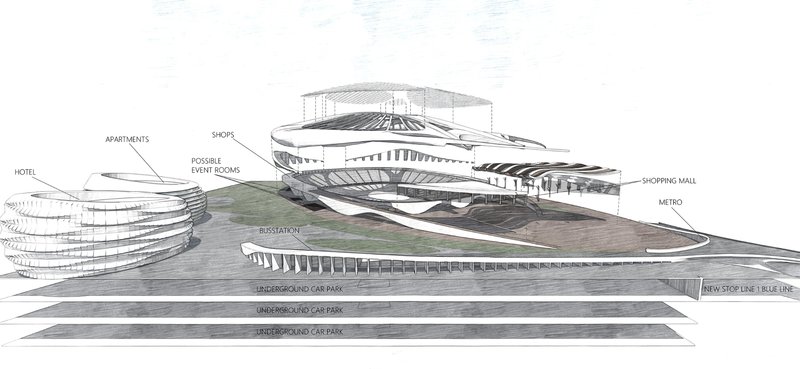
More than just a stadium, the proposal includes integrated mixed-use development. It houses:
- A shopping mall directly accessible from the main event spaces
- Dedicated event halls that can serve as conference venues, concerts, or exhibitions
- Hotels and apartments forming a connected hospitality and residential ecosystem
- Shops and public amenities tied into metro and bus networks
- A multi-level underground parking system designed to ease surface congestion
This integration supports a continuous flow of activity, making the site a 24/7 destination rather than a venue used sporadically.
Designing for the Human Scale
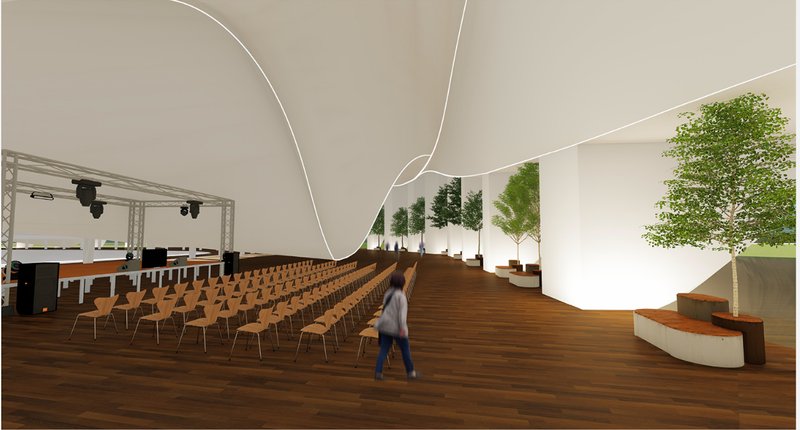
The interiors prioritize human experience. The event rooms are warm and inviting, combining wood textures, open space, and natural greenery. These design choices break the cold, impersonal feel often associated with large-scale arenas, replacing it with warmth and community engagement.
Public plazas, sky-lit circulation paths, and pedestrian-friendly design foster walkability and encourage civic participation. This urban placemaking philosophy transforms the stadium from a destination into a living part of the city.
A Case for Sustainable Stadium Design
Multipurpose stadium architecture is inherently more sustainable than single-use structures. By hosting a wider variety of events and incorporating residential and commercial infrastructure, the project significantly improves land-use efficiency. Moreover, consolidated transport access through metro integration and car park layering supports reduced vehicular emissions.
Architecture as Infrastructure for Life
Benedikt Schambeck’s multi-use stadium stands as a prime example of how architectural design can respond to diverse contemporary needs while maximizing space, functionality, and aesthetic impact. By merging urban infrastructure with public life and adaptable event hosting, this stadium becomes not just a structure—but a model for future urban growth.
In embracing multipurpose stadium architecture, cities can foster more connected, sustainable, and vibrant communities for decades to come.



Popular Articles
Popular articles from the community


Inverted Architecture Installation by Studio Link-Arc: Exploring the Intersection of Architecture and Living Organisms
Inverted Architecture Installation by Studio Link-Arc blends mycelium, sustainability, inverted design, ecological cycles, and urban adaptive architecture in Shenzhen.
Fifth NRE Jazz Club – De Bever Architecten: Eindhoven’s Revitalized Cultural Hub
Historic gas factory transformed into Fifth NRE Jazz Club blending modern sustainability, jazz culture, dining, and heritage architecture seamlessly.

Free Architecture Competitions You Can Enter Right Now
No entry fees, real prizes. Here are the best free architecture competitions open for submissions in 2026.

Similar Reads
You might also enjoy these articles


The Ken Roberts Memorial Delineation Competition (Krob)
As the most senior architectural drawing competition currently in operation anywhere in the world, it draws hundreds of entries each year, awarding the very best submissions in a series of medium-based categories.

Waterfront Redevelopment and Urban Revitalization in Mumbai: Forging a New Dawn for Darukhana
A transformative waterfront redevelopment project reimagining Darukhana’s shipbreaking heritage into an inclusive urban future.
OUT-OF-MAP: A Call for Postcards on Feminist Narratives of Public Space
Rhizoma Design and Research Lab invites artists, designers, architects, researchers, and students to reflect on how feminist perspectives can reshape public space. Selected works will be exhibited in Barcelona, October 2026. Submissions open until 15 April 2026.

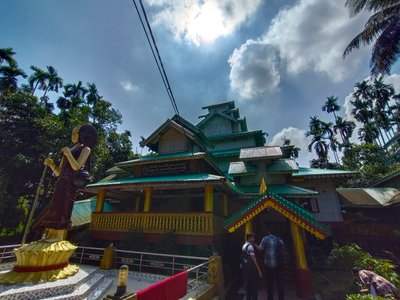
Documentation Work on Buddhist Wooden Temple
Architectural syncretism and cultural hybridity: A comparative study of the Buddhist temples in Chattogram Hill tracks

Explore Architecture Competitions
Discover active competitions in this discipline




The International Standard for Design Portfolios


The Global Benchmark for Architecture Dissertation Awards


The Global Benchmark for Graduation Excellence


Challenge to reimagine the Iron Throne
Comments (0)
Please login or sign up to add comments
No comments yet. Be the first to comment!