
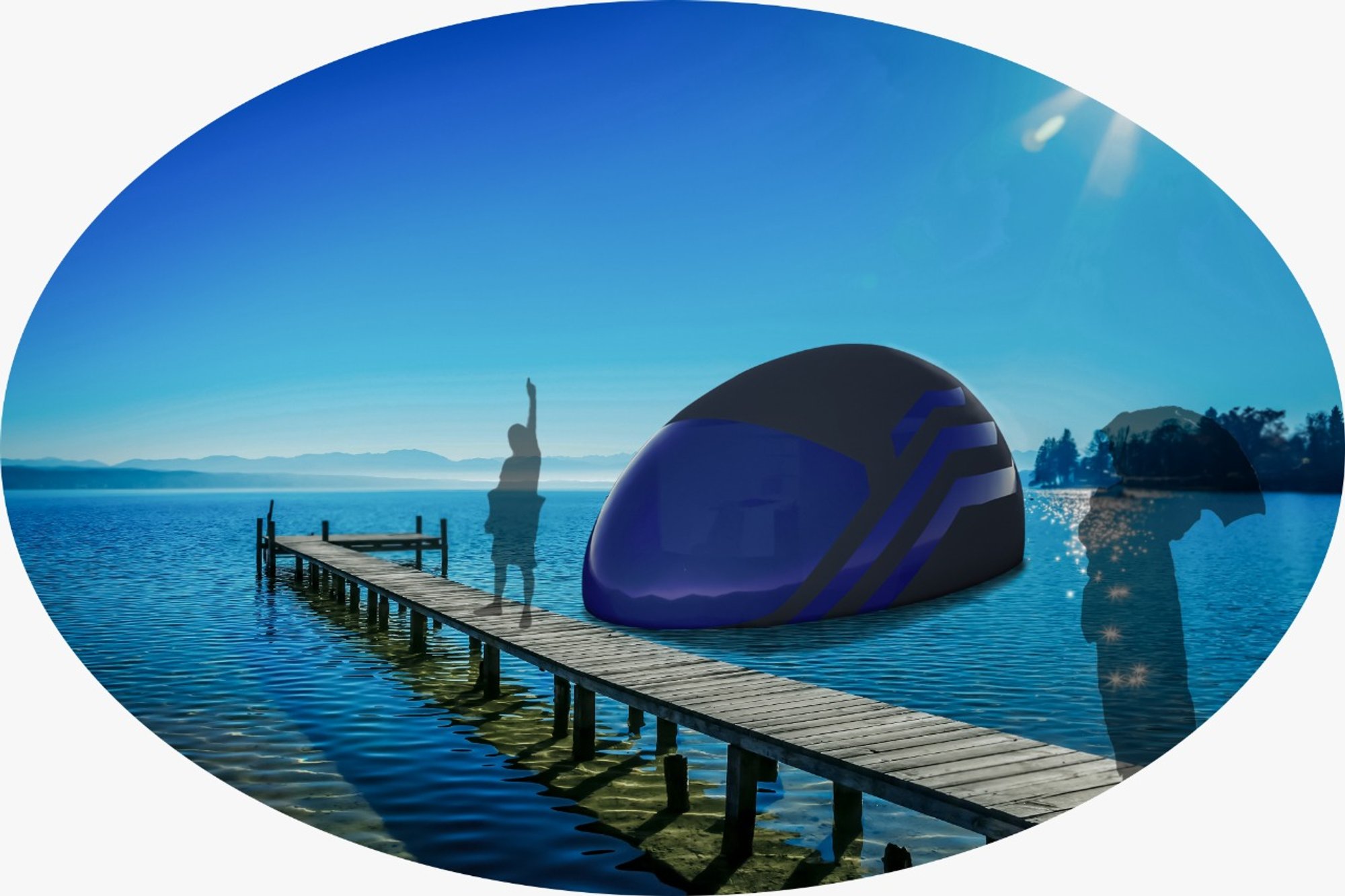
SEA NOMAD VEHICLE
“To preserve the last of an ancient nomad culture!”

The nomad tribe that we have quoted in the description is the last of its kind and on the verge of extinction…they are located near Indonesia and are known by the name ‘Bajau’.They are so intertwined with water that they are born in it, live in it, and die in it.
Traditional Bajau cosmology – a combination of animism and Islam – reveals a complex relationship with the ocean, which for them is a multifarious and living entity. They believe there are spirits in currents and tides, in coral reefs and mangroves.
They live with their joint family in a boat of “5 meters in length and 1.5 meters in width”. Their children at the age of 7 are trained to hunt in deep water. Over the generation, their bodies have adapted to it and people of this tribe have a larger spleen that makes them stay underwater for 13 minutes with a single breath. Isn’t that a gem of human evolution!
But sadly there has been a rapid decrease in number with people shifting to the land for living which has left this culture in the penultimate state of disappearance.
Our Client is such a charming man who has spent the majority of his life on land and but felt responsible for his culture after learning about his heritage.
With that said he decided to spend the rest of his life as a sea nomad in order to protect the culture that has been followed by his lineage until he with his enthusiastic family who too were ready to turn themselves into the water nomads.
So we thought how a modernized version of a sea nomad boat would look like because our client who has spent most of his time on land and is used to the luxuries would not be able to survive the harsh storms and etc. that would come with the sea.
This induced the idea of creating a safely protected capsule that would work on the mechanism of a submarine.
Based on the requirement we decided to go with a twin deck capsule with the double hull which would give us two floors one above and the other below covered with a thin weather hull and strong pressure hull.
Initially, we took a square base which gave an undesired shape that caused a lot of traction then we changed it into a rectangular base of “5 meters into 2 meters” inspired by the tribe’s boats, with a maximum height at the rear end [both above and below] rather than at midpoint which gave us more dynamic and capsule kind of look that traveled through the water easier.
Now coming to the area division the upper floor is given for almost all purposes that include navigation room, kitchen platform, and crockery, sitting space, bookshelf, and washroom. There is a metal tight lid that leads into the engine room.
The lower floor is exclusively for sleeping and storage under which the void space created is used to store batteries which can be accessed by opening the lid near the trunk. These batteries are connected to the thruster through electric cables.
On the upper floor, there is sufficient circulation space of 2 and ½ feet in width. The ladder hole that connects the upper and lower floor also leads us to the pressurized lid that opens to the outside which will be the exit and entry into the SNV.
The two decks in the capsule are heavy anti-corrosive metal plates that are strongly welded to the pressure hull and because of being welded to the hull, they can withstand any kind of load.
Though the hull is made of high-strength alloyed steel the exterior is covered with acoustic rubber tiles which are used in military submarines to induce the characteristic of sound insulation in them and also there has been the usage of reinforced fiberglass in the exterior to have a clear view of the happenings from the navigation dock and safety at the same time.
In the interiors of the upper floor, There has been extensive usage of “wooden polymer composite sheet” for navigation dock rising that contains CPU with related wires, kitchen and crockery, and partitions for space as an alternative to wood as it is termite-proof, fireproof and waterproof.
Whereas the lower floor has metal flooring just like the upper floor but is covered with cushion entirely with a huge wooden trunk for storage of clothes and other items at the extreme end.
In the future, as we all know earth consists of 70% water and 30 % land with the increase in population and scarcity of land to live we will reconsider the option of using the seas/oceans as a niche as we thrive for existence.
For now, it might be a concept to protect a lost culture but in the future, it is an initial prototype solution to forever thriving humanity.


Popular Articles
Popular articles from the community

On the Brooks House by Monsoon Collective – A Contemporary Kerala Home Rooted in Tradition
Kerala home blending tradition and modernity with water-inspired design, brick architecture, courtyard planning, and sustainable rainwater harvesting strategies.


The Ken Roberts Memorial Delineation Competition (Krob)
As the most senior architectural drawing competition currently in operation anywhere in the world, it draws hundreds of entries each year, awarding the very best submissions in a series of medium-based categories.
Atelier Macri Concept Store Interior Design by CASE-REAL
Atelier Macri store features a "ko" counter, walnut wood details, cork displays, blending retail, gallery, and seamless customer experiences.
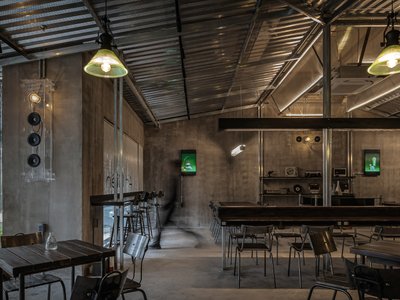
An Miên Lumière Cafe by xưởng xép, Ho Chi Minh City, Vietnam
An industrial-inspired café where layered steel and warm light create a dynamic, immersive environment shaped by reflection, depth, and perception.

Similar Reads
You might also enjoy these articles

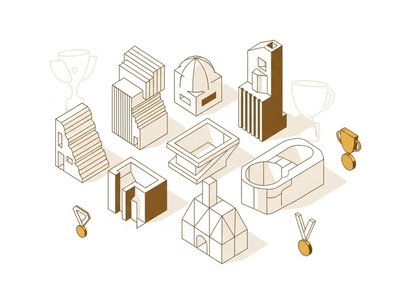
Top 15 Architecture Competitions to Enter in 2026
From student-friendly idea competitions to prestigious international awards, here are the best architecture competitions open for entries in 2026. Updated regularly.
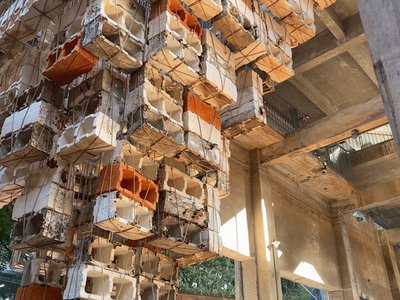
Inverted Architecture Installation by Studio Link-Arc: Exploring the Intersection of Architecture and Living Organisms
Inverted Architecture Installation by Studio Link-Arc blends mycelium, sustainability, inverted design, ecological cycles, and urban adaptive architecture in Shenzhen.
Walnut House in Ehden: A Contextual Architecture Extension Rooted in Landscape and Heritage
Walnut House integrates hillside architecture, terraces, and passive design, blending heritage, landscape, and contemporary living through contextual, sustainable design strategies.
On the Brooks House by Monsoon Collective – A Contemporary Kerala Home Rooted in Tradition
Kerala home blending tradition and modernity with water-inspired design, brick architecture, courtyard planning, and sustainable rainwater harvesting strategies.


Explore Transportation Competitions
Discover active competitions in this discipline




The Global Benchmark for Architecture Dissertation Awards


The Global Benchmark for Graduation Excellence

Challenge to design a shop stop sunk in the city
Comments (0)
Please login or sign up to add comments
No comments yet. Be the first to comment!