
Walnut House in Ehden: A Contextual Architecture Extension Rooted in Landscape and Heritage
Walnut House integrates hillside architecture, terraces, and passive design, blending heritage, landscape, and contemporary living through contextual, sustainable design strategies.


Located in the historic village of Ehden, Walnut House by platau is a carefully designed residential extension that responds to its natural slope, cultural context, and architectural heritage. This 150 m² project, completed in 2018, exemplifies contextual architecture, adaptive residential design, and sustainable hillside construction.
Site Context and Architectural Strategy
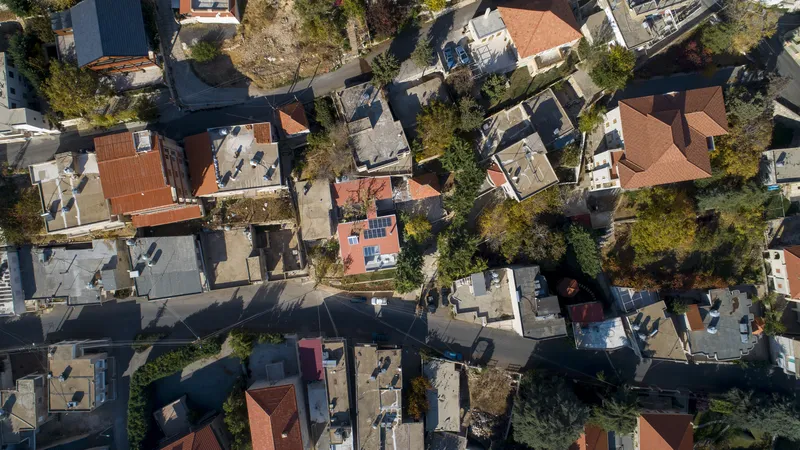
Set within a terrain defined by winding stairs, canals, and dense walnut trees, the project preserves the vernacular urban morphology of Ehden. Positioned midway along a historic stairway connecting two roads, the house integrates seamlessly into its surroundings, maintaining access routes and spatial continuity.
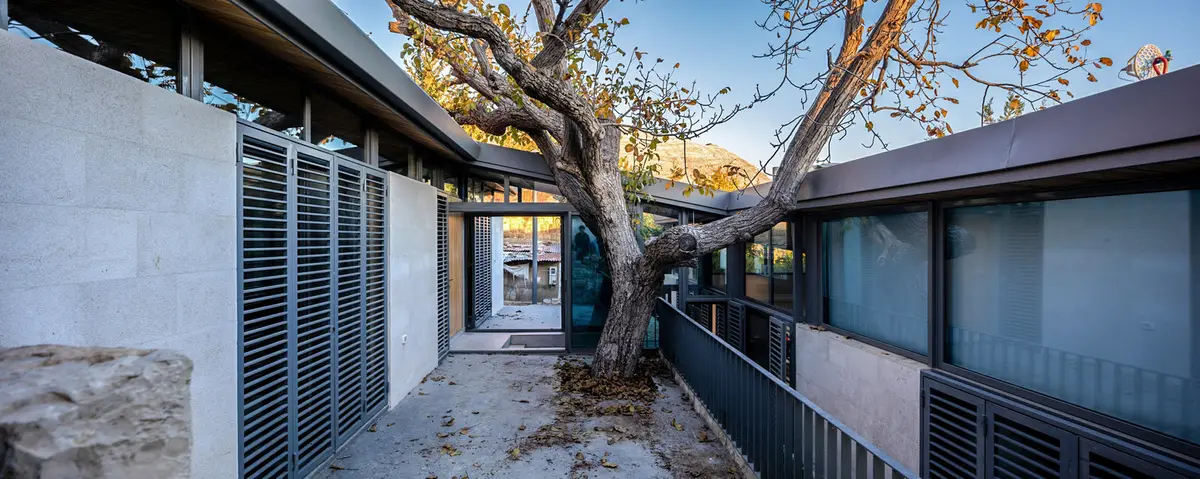
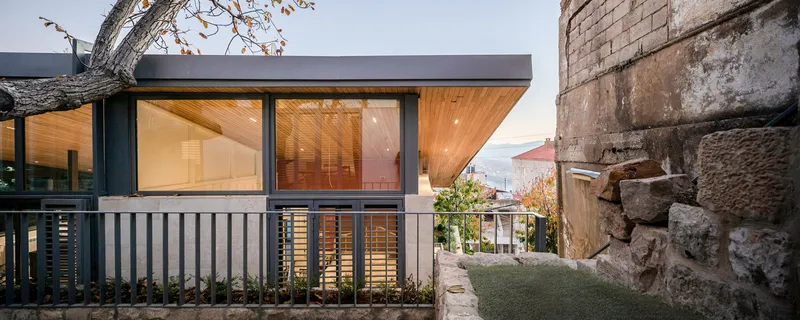
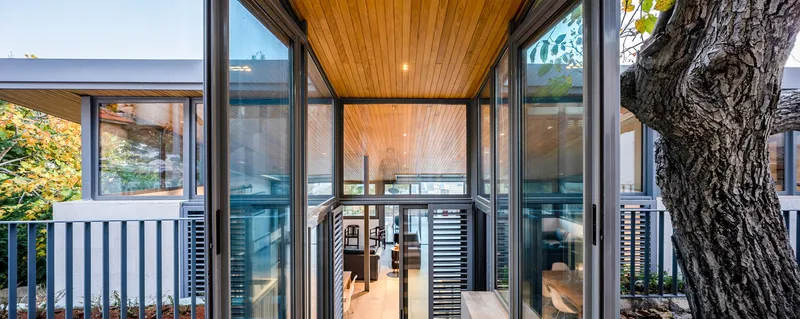
A mature walnut tree becomes the central organizing element, acting as a natural anchor that connects the existing stone structures with the new architectural intervention. This sensitive integration highlights key principles of landscape-responsive architecture and heritage preservation.
Spatial Design and Concept Development
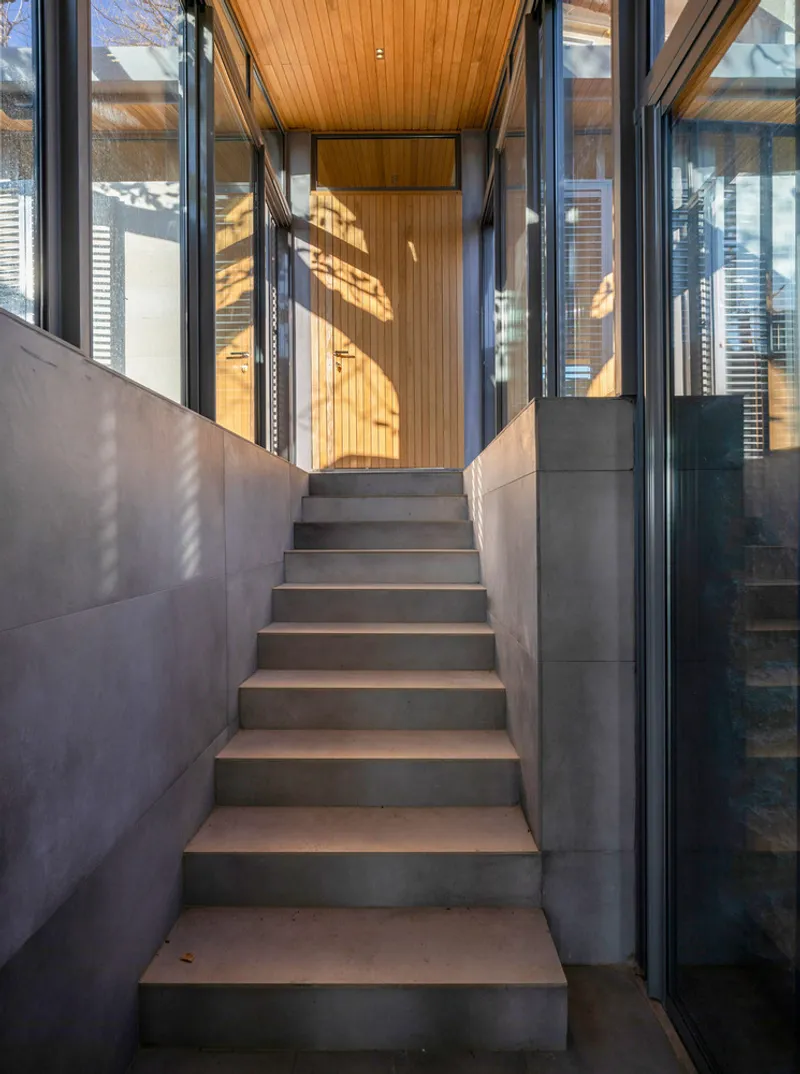
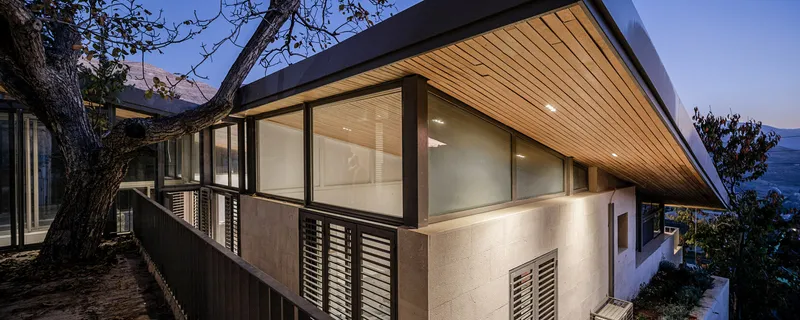
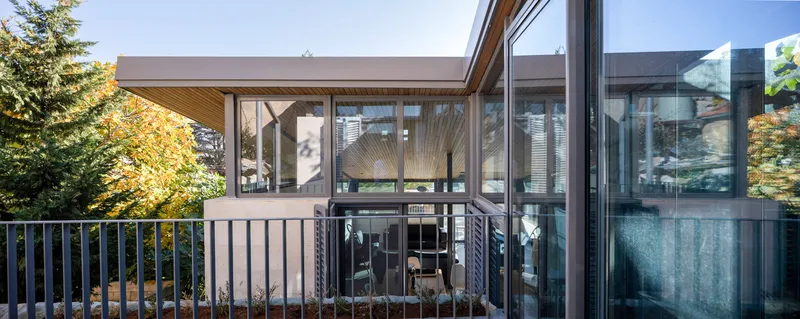
The extension is conceived as a series of cascading levels that follow the natural slope of the site. A defining feature is the floating sloped roof, which unifies the old and new volumes while creating layered spaces beneath it.
This architectural gesture establishes a dynamic spatial hierarchy, forming courtyards, terraces, and transitional zones that enhance both visual and functional connectivity. The roof opens around the walnut tree, generating a central courtyard that acts as a climatic and social core of the house.
Indoor-Outdoor Connectivity and Living Experience
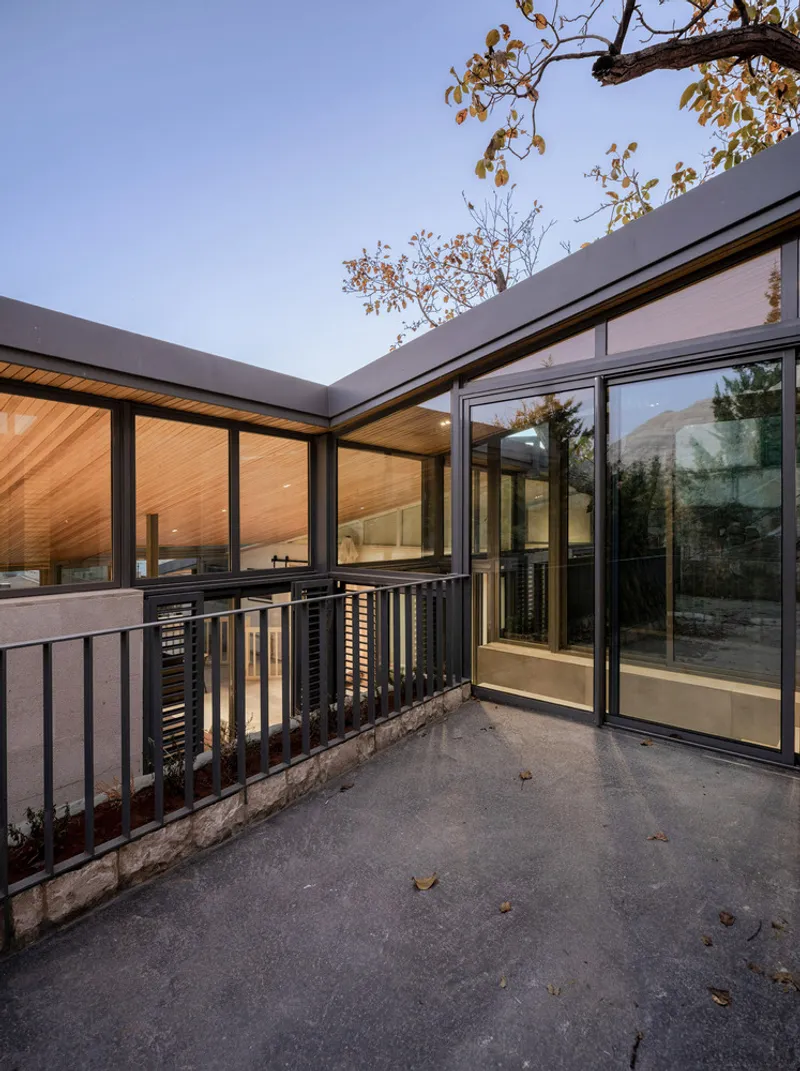
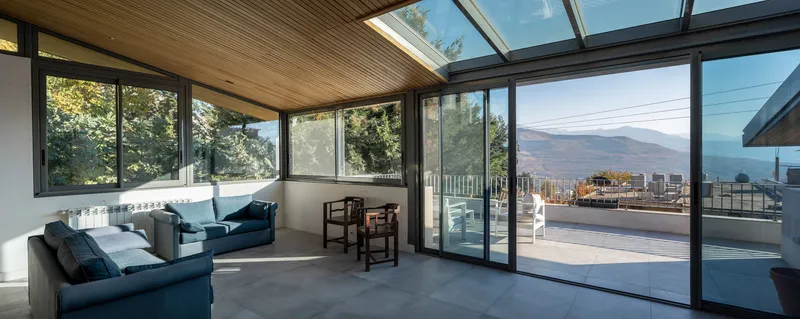
Walnut House emphasizes indoor-outdoor living, a key trend in contemporary residential architecture. Open-air terraces extend southward, framing panoramic views while enhancing spatial fluidity.
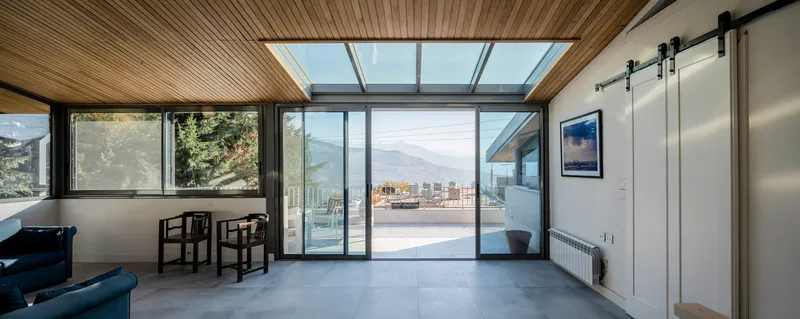
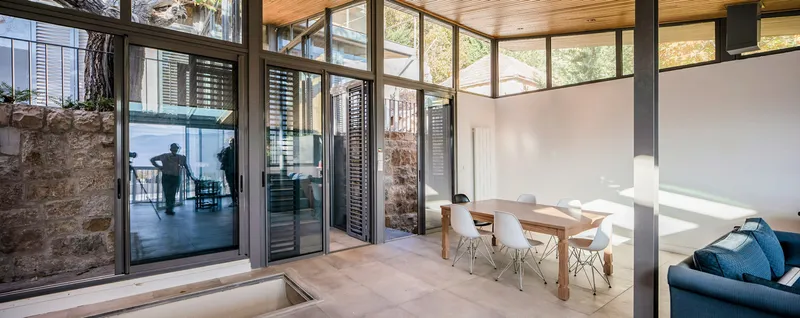
Large glazed facades on the east, west, and north sides dissolve boundaries between interior and exterior, fostering a strong relationship with nature. This approach aligns with biophilic design principles, promoting natural light, ventilation, and occupant well-being.
Environmental Design and Passive Strategies
The sloped roof is not only a formal element but also a passive environmental regulator. Its orientation minimizes solar heat gain by shading interiors from harsh southern sunlight, while strategically placed openings allow controlled daylight penetration.
The stepped massing, combined with courtyards and terraces, facilitates cross ventilation, ensuring thermal comfort across both levels. These strategies reflect sustainable architecture practices tailored to the Mediterranean climate.
Materiality and Construction Approach
Material selection reinforces the building’s connection to its context. The lower volume is clad in local white stone, creating a monolithic base that blends with the surrounding village palette.
In contrast, the roof is constructed using red brick, while interiors feature wooden ceiling strips that provide warmth and continuity. Internal glazed partitions subtly separate structural elements, enhancing spatial clarity and light distribution.
Conclusion: A Dialogue Between Nature, Heritage, and Modern Living
Walnut House integrates hillside architecture, terraces, and passive design, blending heritage, landscape, and contemporary living through contextual, sustainable design strategies.Walnut House stands as a compelling example of modern residential extension design that respects historical context while introducing contemporary spatial innovation. Through its integration of landscape, climate responsiveness, and material authenticity, the project demonstrates how architecture can mediate between past and present, nature and habitation.
All photographs are works of
Wissam Chaaya


Popular Articles
Popular articles from the community


David Macias Steps a Doorless Stone and Plaster House Down a Tropical Colombian Hillside
In the humid hills of Colombia, Threshold House replaces the front door with an open void and terraces its 850 m² down the slope instead of fighting it.

GROUP A Strips a 1969 Rotterdam Harbor Headquarters to Its Frame and Wraps It in Timber Louvers
In Rotterdam's M4H harbor district, Ferro Offices reuses a 1969 frame, adds one timber storey and reaches BREEAM-NL Outstanding.

longwave studio Reorganizes a 112 m² Tainan Apartment Around the Daily Routines of a Family and Two Cats
In Tainan, Taiwan, birch plywood, rust-red furniture and a freestanding plaster wall link arrival, storage, work and family life in one apartment.

Cube Design Draws an Ecological Corridor Between Two Shenzhen Hills with the Nankai Building
Beside Shenzhen's container docks, the Nankai Building pairs stacked balconies with a climbing green screen to connect two hillsides across its height.

Similar Reads
You might also enjoy these articles

Gil Mello Arquitetura Tilts a Single Roof Toward the Waterfalls on a Plateau Above Aiuruoca, Brazil
In Aiuruoca, Minas Gerais, a 200 m² house of local labor and reclaimed poles pairs a low valley veranda with a tall mountain one.

U.GA Architects Wraps an Oval Rooftop Pool in Curved Board-Formed Concrete on Busan's Jeollidan-gil
In Busan's Jeonpo-dong, a 454 m² mixed-use block stacks a neighborhood facility, guest rooms and an oval rooftop pool inside spiraling concrete walls.

Felipe Hess Arquitetos Turns a Blind Stone Wall to the Street and Opens a Brazilian House onto a Courtyard and Canal
A canal-front house in Brazil hides behind painted stone and planting, then opens to an olive-tree courtyard, a reed-ceilinged porch and a curving pool.
David Macias Steps a Doorless Stone and Plaster House Down a Tropical Colombian Hillside
In the humid hills of Colombia, Threshold House replaces the front door with an open void and terraces its 850 m² down the slope instead of fighting it.

Explore Architecture Competitions
Discover active competitions in this discipline

Challenge to reimagine the Iron Throne

Photograph architecture without architects

Illustrate the lost glory of Angkor Wat - Render Challenge

Design challenge to reuse E-waste
Comments (0)
Please login or sign up to add comments
No comments yet. Be the first to comment!