SOCIAL_PATCH: A Sustainable Urban Architecture Prototype for Makoko’s Vertical Future
Reimagining Makoko through sustainable urban architecture—where vertical density meets cultural continuity and water resilience.


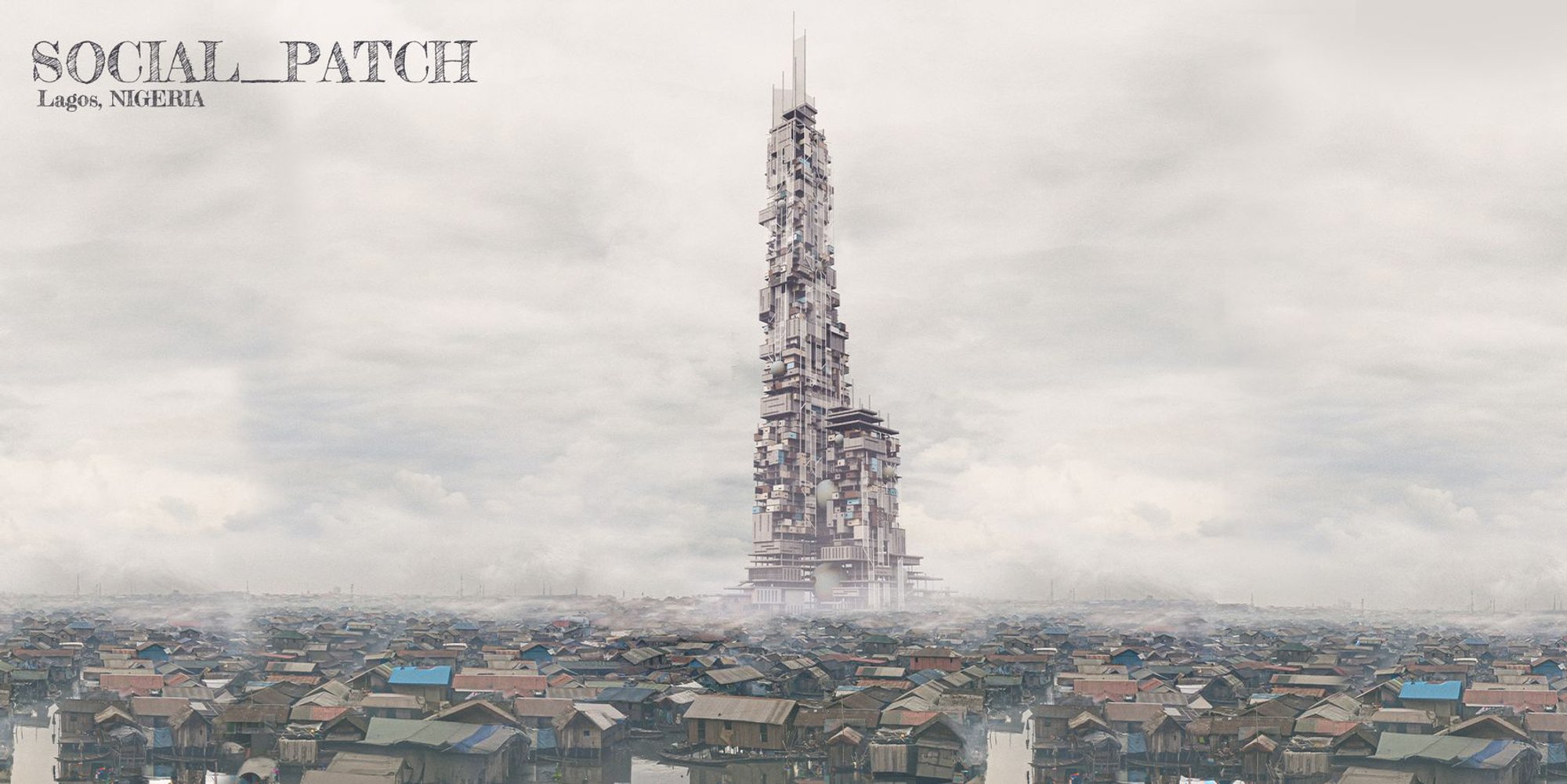
Makoko, Lagos – one of Nigeria’s most densely populated urban communities – represents both a challenge and an opportunity in sustainable urban architecture. With a population nearing 25 million, Lagos is not only Nigeria’s economic and commercial epicenter, but also a city built on complex layers of cultural identity and informal development. In this context, Makoko, a floating slum settlement, becomes a critical site for reimagining urban futures.
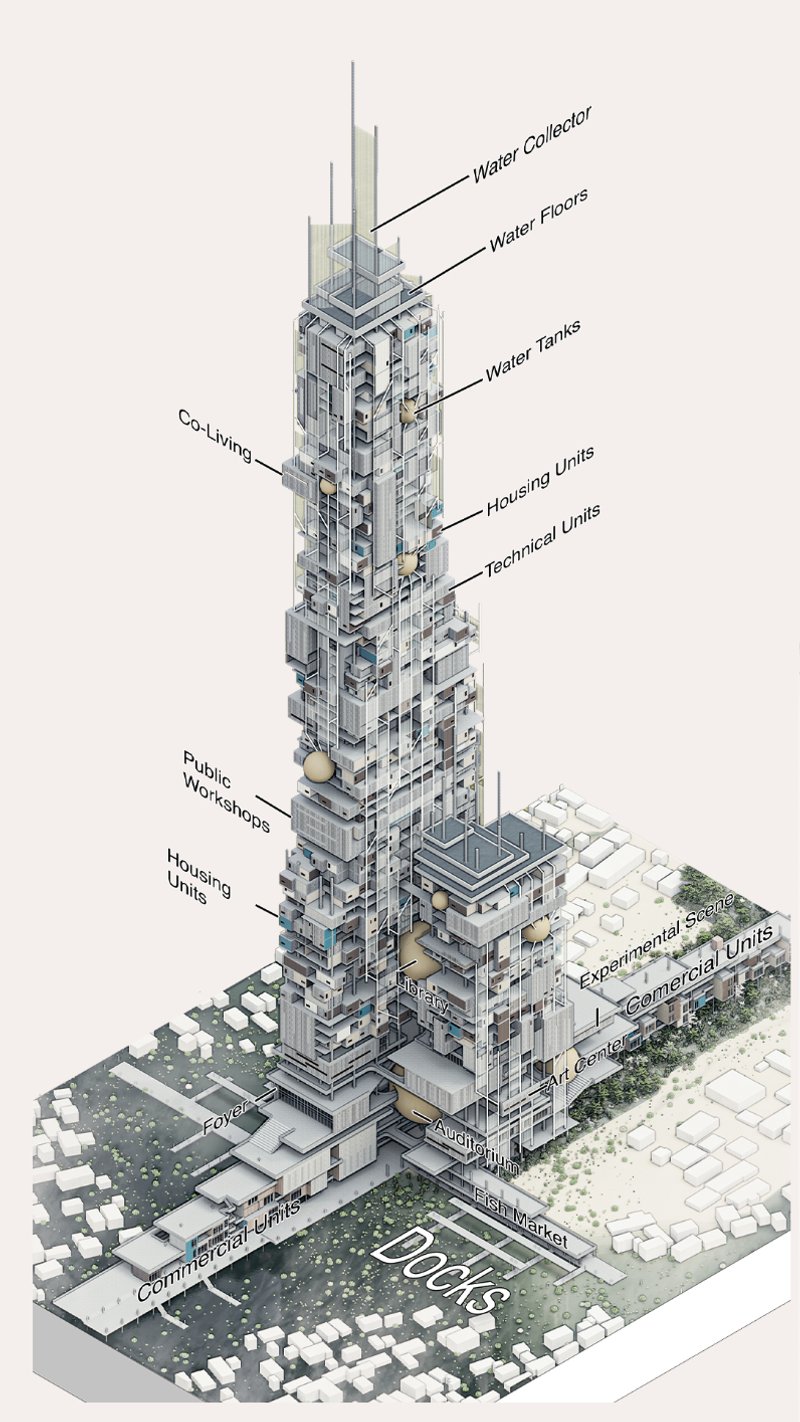
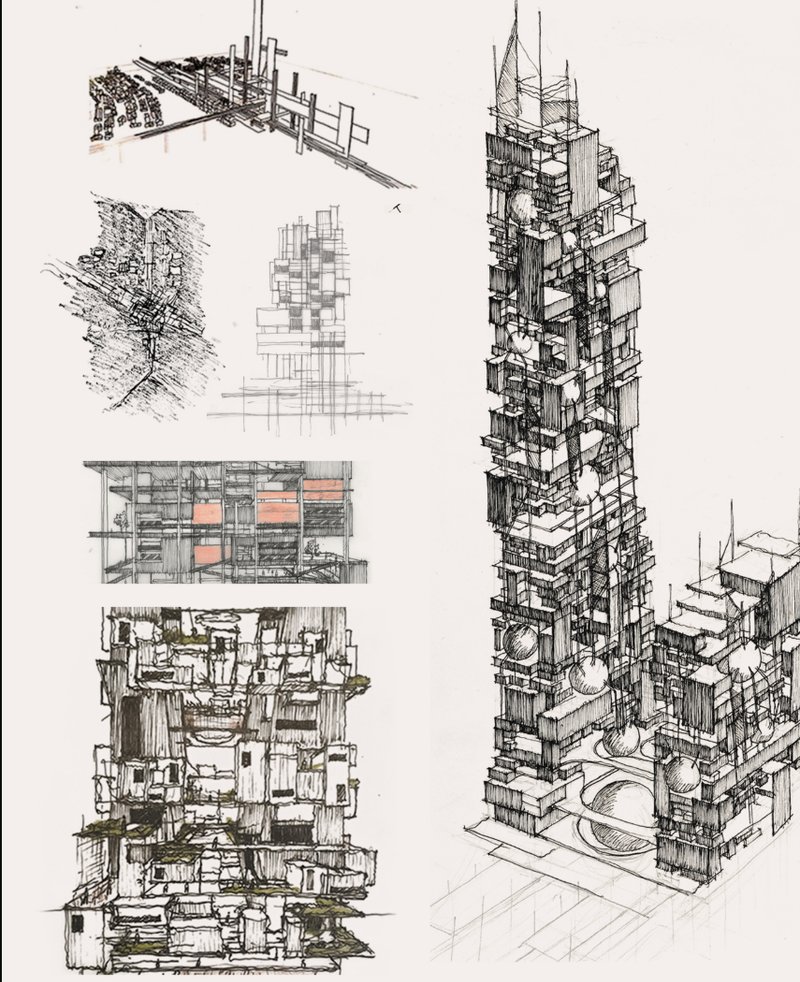
This project, titled SOCIAL_PATCH, envisions a vertical urban village that integrates community life into a high-rise structure. The intention is to counter the segregation caused by typical skyscrapers by fostering a vertical community that replicates and supports daily life without disrupting it. Centered on principles of social, cultural, and environmental sustainability, the design proposes a mixed-use vertical campus with public spaces, educational units, water harvesting systems, and workshops.
Water Infrastructure and Contextual Relevance
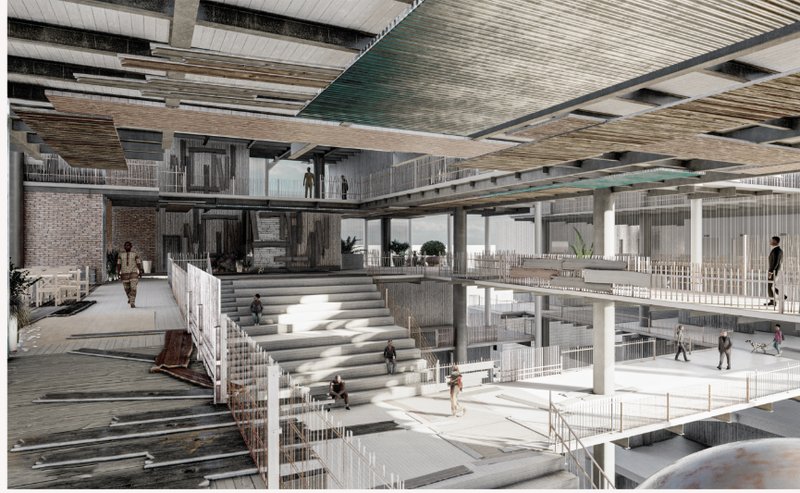
Lagos's topography and Makoko’s waterscape significantly influence its infrastructure planning. Over 40% of Lagos State is covered by wetlands, and much of the land lies less than 15 meters above sea level. Water pollution and inadequate access to clean water have severely impacted the community. In response, the skyscraper incorporates fog-harvesting mesh technology that can collect up to 15 liters of water per square meter daily. These vertical collectors are integrated into the façade, providing water security while shading public spaces.
Urban and Site-Level Strategies
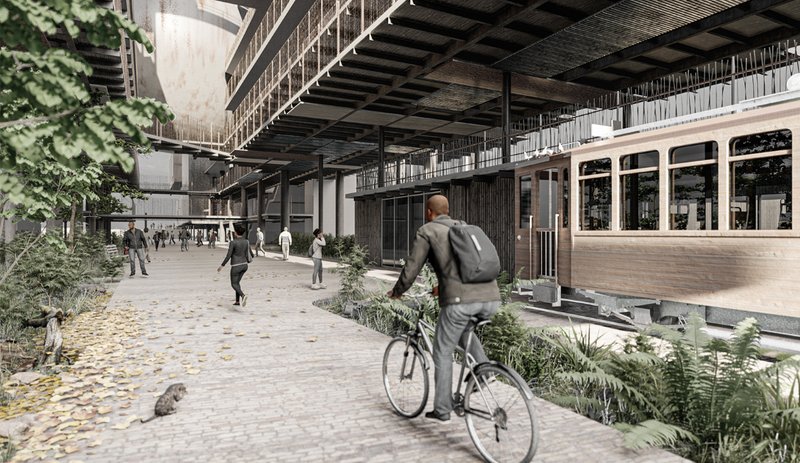
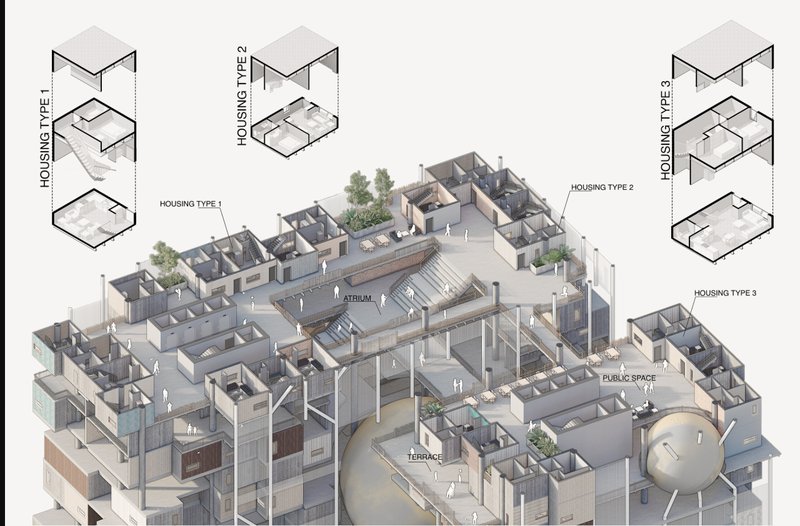
At the urban scale, the proposal includes an elevated light rail system reconnecting Makoko with Lagos Island. The site itself embraces its informal roots, building on existing craft techniques, materials like wood, recycled plastic, and metals to ensure construction compatibility with local skills. The architectural mass is composed of clustered modular units, reflecting Makoko’s dynamic spatial patterns. Public terraces, green voids, and flexible living platforms promote participatory building methods and self-determined expansion over time.
Cultural Continuity and Expansion Plan
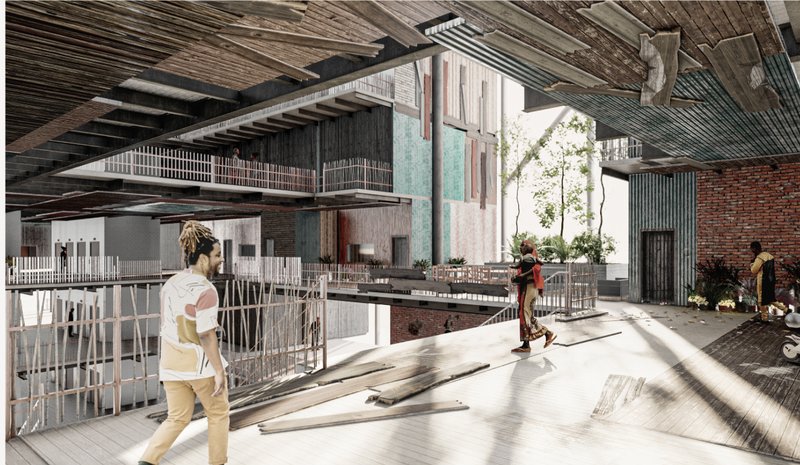
Rather than imposing a monolithic high-rise, SOCIAL_PATCH acts as a scaffold for communal life. People are encouraged to shape their spaces within the structure, allowing cultural practices to flourish vertically. Spaces like communal kitchens, timber workshops, education centers, and water collection nodes form the social infrastructure of this skyscraper.
As time progresses, the structure is designed to evolve – both at the individual and city scale. The building serves as a replicable prototype for future vertical expansions in informal settlements, offering a scalable approach to resilient urban planning.
Material and Construction Approach
Makoko’s architecture is heavily reliant on wood and lightweight construction due to its watery terrain. This project proposes reusing elements like discarded metal sheeting and recycled plastics for façade and water systems. Such choices not only reduce construction costs but also embrace circular building strategies.
SOCIAL_PATCH is not just a skyscraper. It is a vision for a new typology of sustainable urban architecture—one that respects the organic life of informal settlements while addressing critical urban challenges such as water scarcity, lack of infrastructure, and community disconnection.
Project by: Kutlu Bal, Umut Aslan, Emre Özcan Editor's Choice Entry of: CityScraper Competition