
The Pomelo Amphawa Café by Looklen Architects: A Circular Landmark in Nature
Circular concrete café by Looklen Architects integrates with nature, offering river views, shaded spaces, and all-day public engagement.

Blending Architecture with Landscape
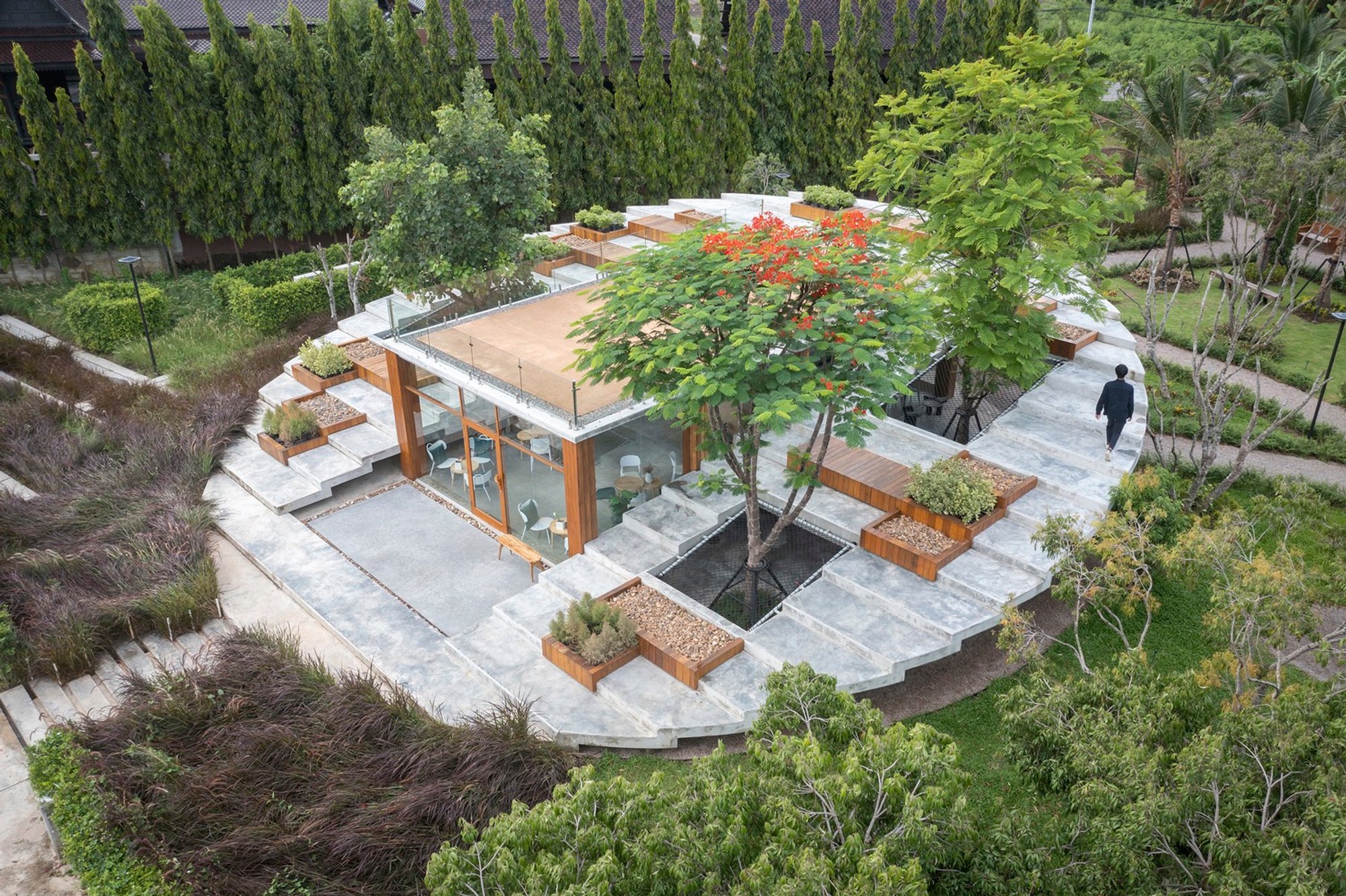
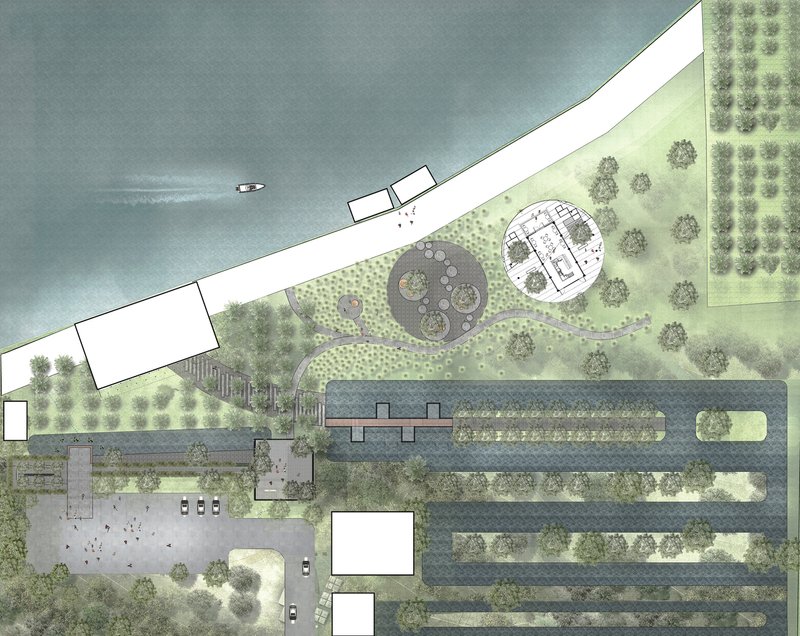
Nestled within a lychee orchard along the Mekong River in Amphawa, Thailand, The Pomelo Amphawa Café is a striking example of hospitality architecture that harmonizes seamlessly with its natural surroundings. Designed by Looklen Architects, this 630 m² café forms part of a larger masterplan comprising five buildings carefully integrated into the agricultural and green context of the site.
Orientation and Climate Responsiveness
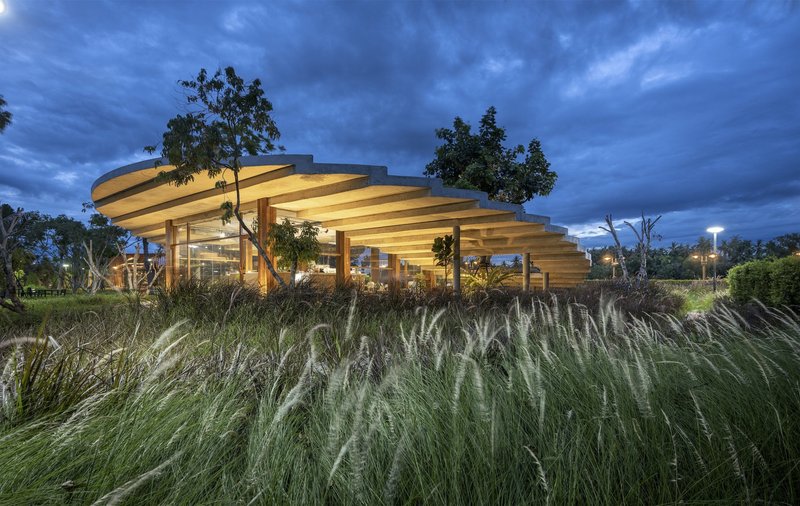
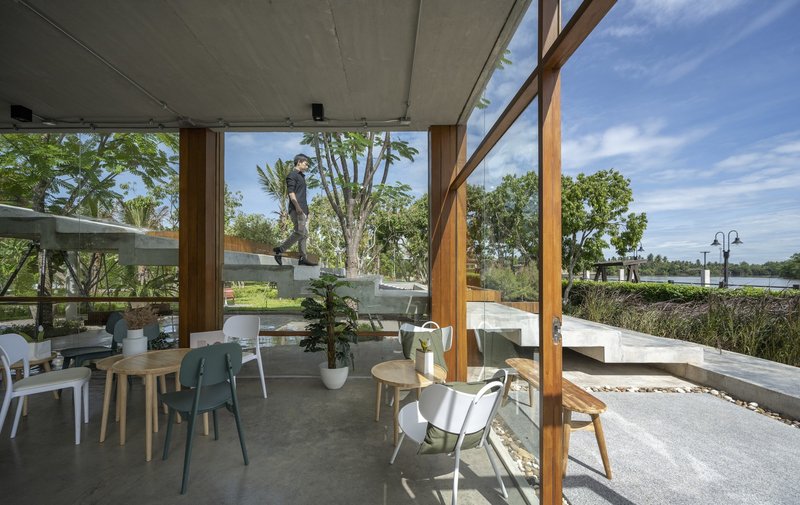
Strategically oriented to the north, the café takes full advantage of the river view while minimizing exposure to the intense tropical sunlight. This passive solar strategy ensures a naturally cooler interior and an inviting outdoor atmosphere for guests.
A Dialogue Between Forms
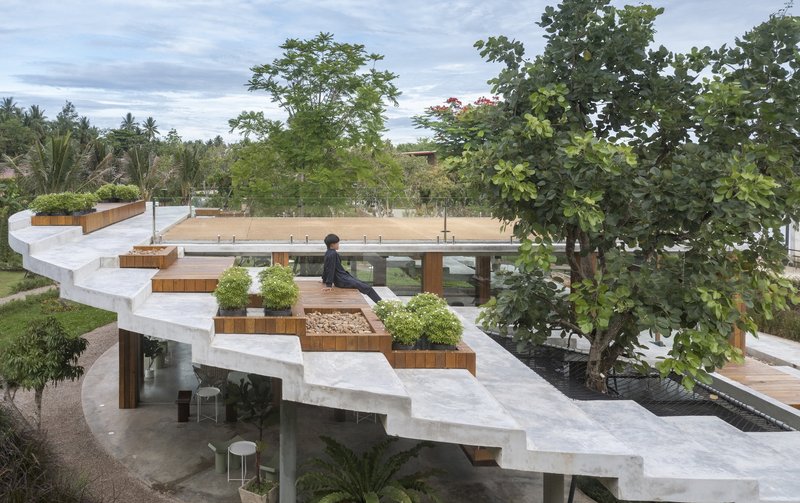
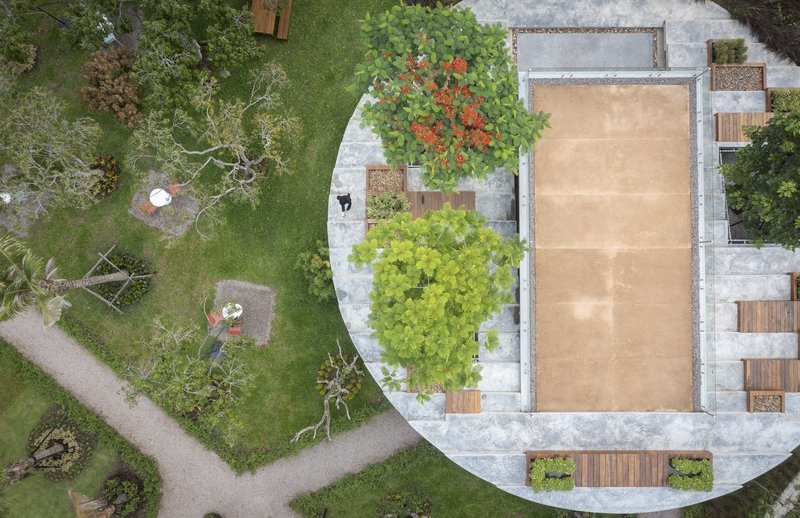
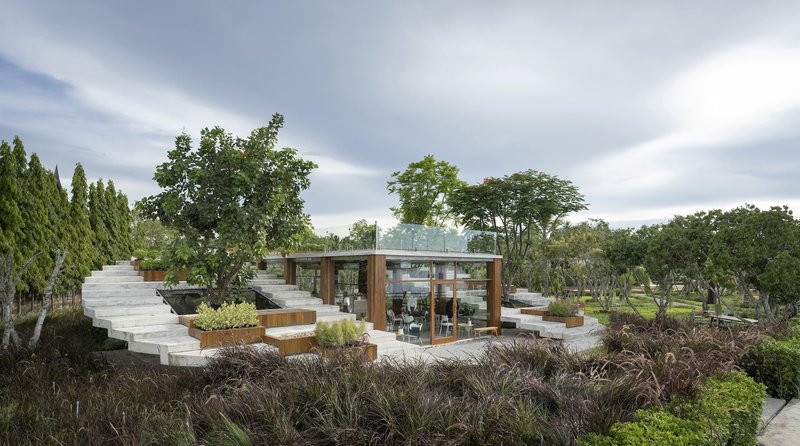
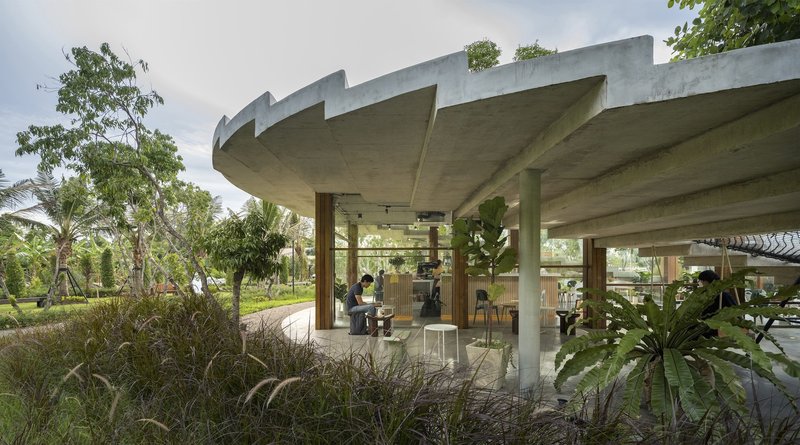
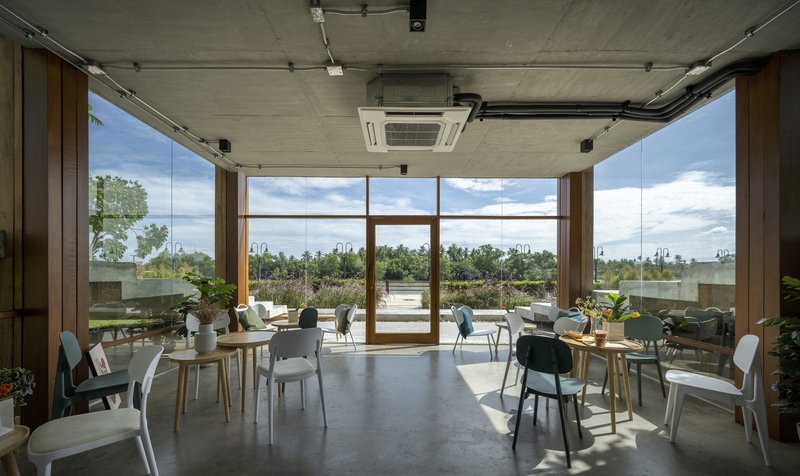
The design explores the juxtaposition of geometric forms. A rectangular glass-enclosed café core is enveloped by a bold, circular concrete amphitheater. This 360-degree open design has no defined front or back, allowing visitors to approach it from any direction, fostering an organic flow with the surrounding garden and riverbank.
Materiality and Thai Vernacular Inspiration
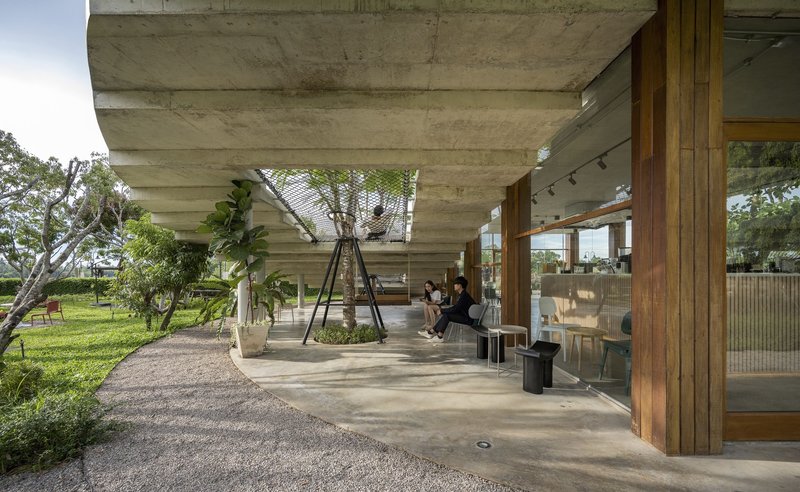
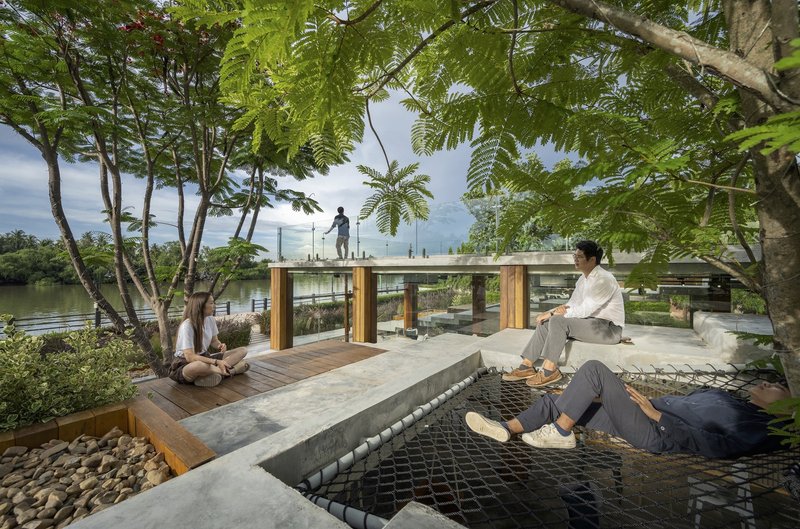
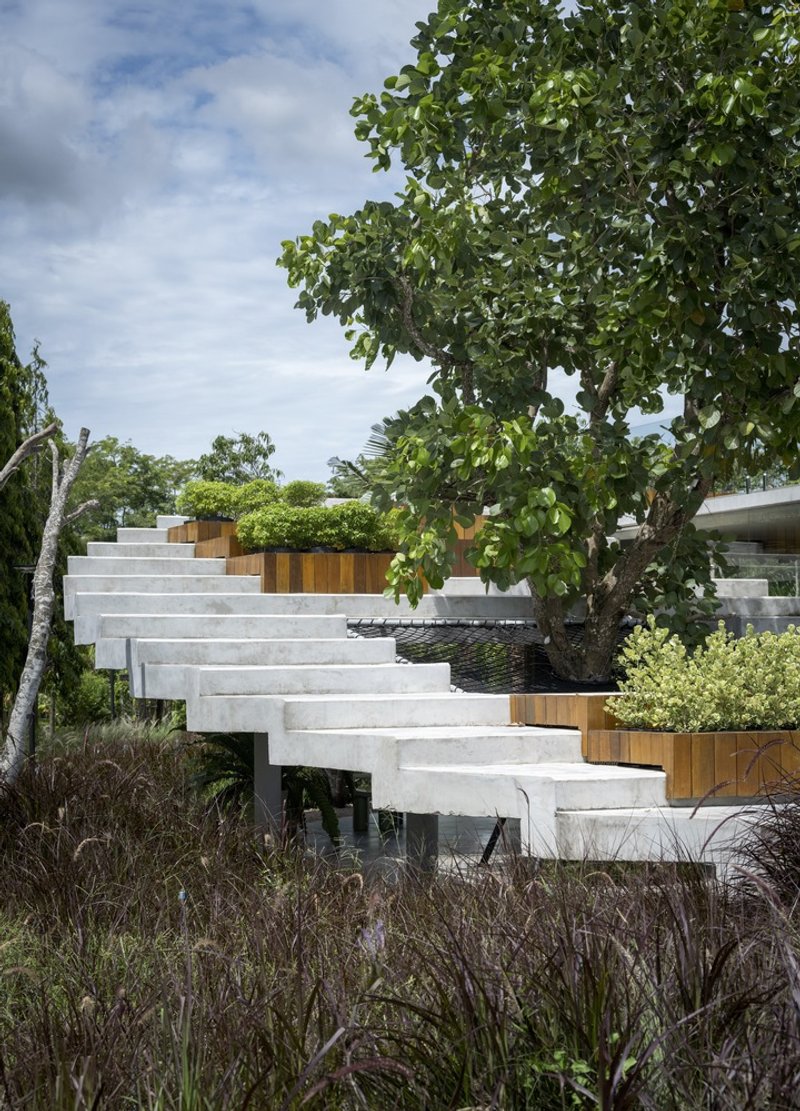
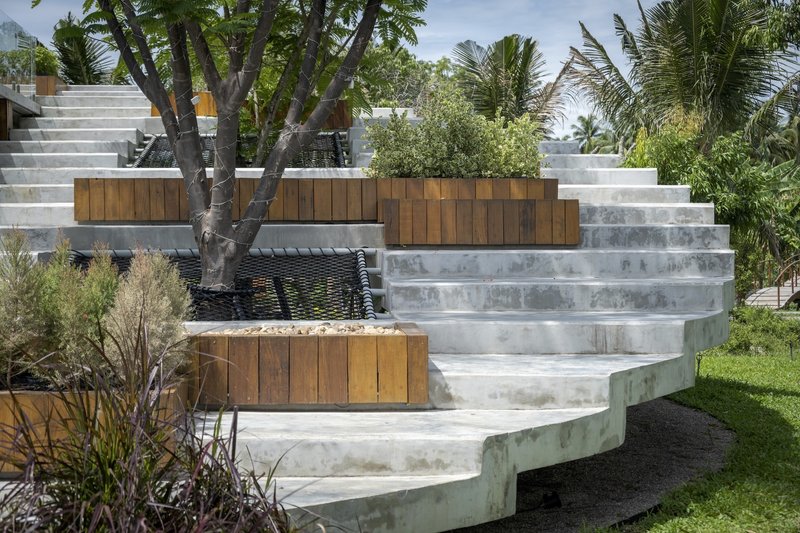
The dominant use of raw concrete defines the structure’s sculptural identity. The curves and stepped contours of the amphitheater offer walkable surfaces that encourage movement and interaction. Beneath the raised structure, the architects reinterpret the traditional "Tāithun" space—a shaded, semi-open area beneath Thai houses. This area serves as a protected zone for daytime activities, offering relief from the tropical heat.
A Café Designed for All-Day Activity
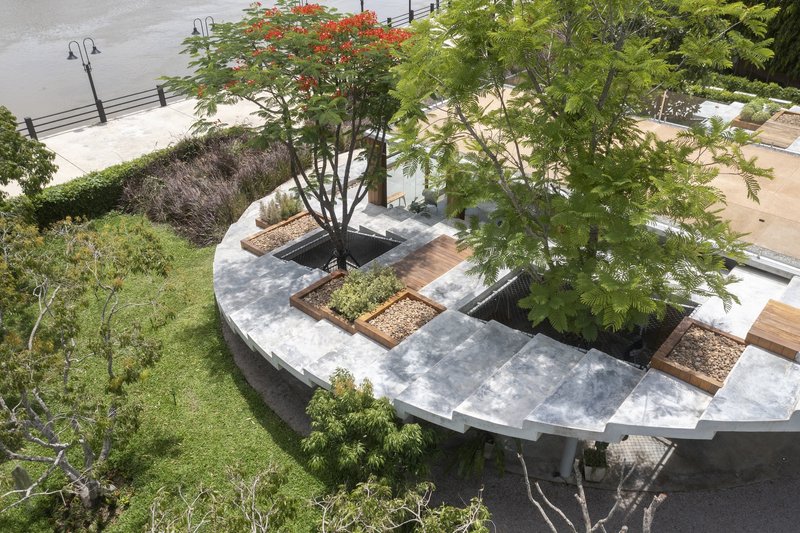
Daylight filters through strategically placed skylights that embrace existing trees, allowing filtered light into the shaded Tāithun below. As day turns into night, the amphitheater’s rooftop transforms into a venue for community gatherings, performances, or river-facing public events—extending the building’s use beyond daytime.
Diverse Seating for Varied Experiences
The café accommodates a mix of seating arrangements tailored to different guest needs. Indoors, traditional café tables and high bar seating provide a cozy environment for families and groups. Outdoors, suspended net seating and benches under the shade of mature trees offer a relaxing, immersive experience—blending leisure with landscape.
An Iconic Riverfront Destination
More than just a coffee shop, The Pomelo Amphawa Café is a landscape-integrated architectural icon. It exemplifies how thoughtful form, material, and orientation can foster meaningful human interaction while celebrating nature. Its circular form and multifunctional design create a welcoming hub for both locals and tourists along the Mekong.
All Photographs are works of Rungkit Charoenwat



Popular Articles
Popular articles from the community




The Ken Roberts Memorial Delineation Competition (Krob)
As the most senior architectural drawing competition currently in operation anywhere in the world, it draws hundreds of entries each year, awarding the very best submissions in a series of medium-based categories.

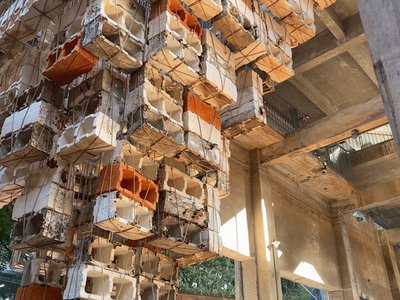
Inverted Architecture Installation by Studio Link-Arc: Exploring the Intersection of Architecture and Living Organisms
Inverted Architecture Installation by Studio Link-Arc blends mycelium, sustainability, inverted design, ecological cycles, and urban adaptive architecture in Shenzhen.
Atelier Macri Concept Store Interior Design by CASE-REAL
Atelier Macri store features a "ko" counter, walnut wood details, cork displays, blending retail, gallery, and seamless customer experiences.

Similar Reads
You might also enjoy these articles
The Ken Roberts Memorial Delineation Competition (Krob)
As the most senior architectural drawing competition currently in operation anywhere in the world, it draws hundreds of entries each year, awarding the very best submissions in a series of medium-based categories.

Waterfront Redevelopment and Urban Revitalization in Mumbai: Forging a New Dawn for Darukhana
A transformative waterfront redevelopment project reimagining Darukhana’s shipbreaking heritage into an inclusive urban future.
OUT-OF-MAP: A Call for Postcards on Feminist Narratives of Public Space
Rhizoma Design and Research Lab invites artists, designers, architects, researchers, and students to reflect on how feminist perspectives can reshape public space. Selected works will be exhibited in Barcelona, October 2026. Submissions open until 15 April 2026.

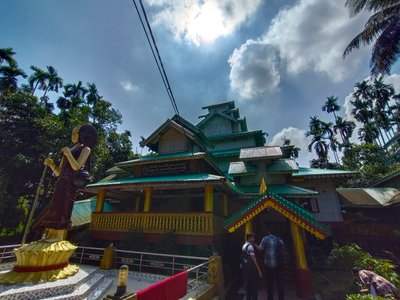
Documentation Work on Buddhist Wooden Temple
Architectural syncretism and cultural hybridity: A comparative study of the Buddhist temples in Chattogram Hill tracks


Explore Architecture Competitions
Discover active competitions in this discipline




The International Standard for Design Portfolios


The Global Benchmark for Architecture Dissertation Awards


The Global Benchmark for Graduation Excellence


Challenge to reimagine the Iron Throne
Comments (0)
Please login or sign up to add comments
No comments yet. Be the first to comment!