
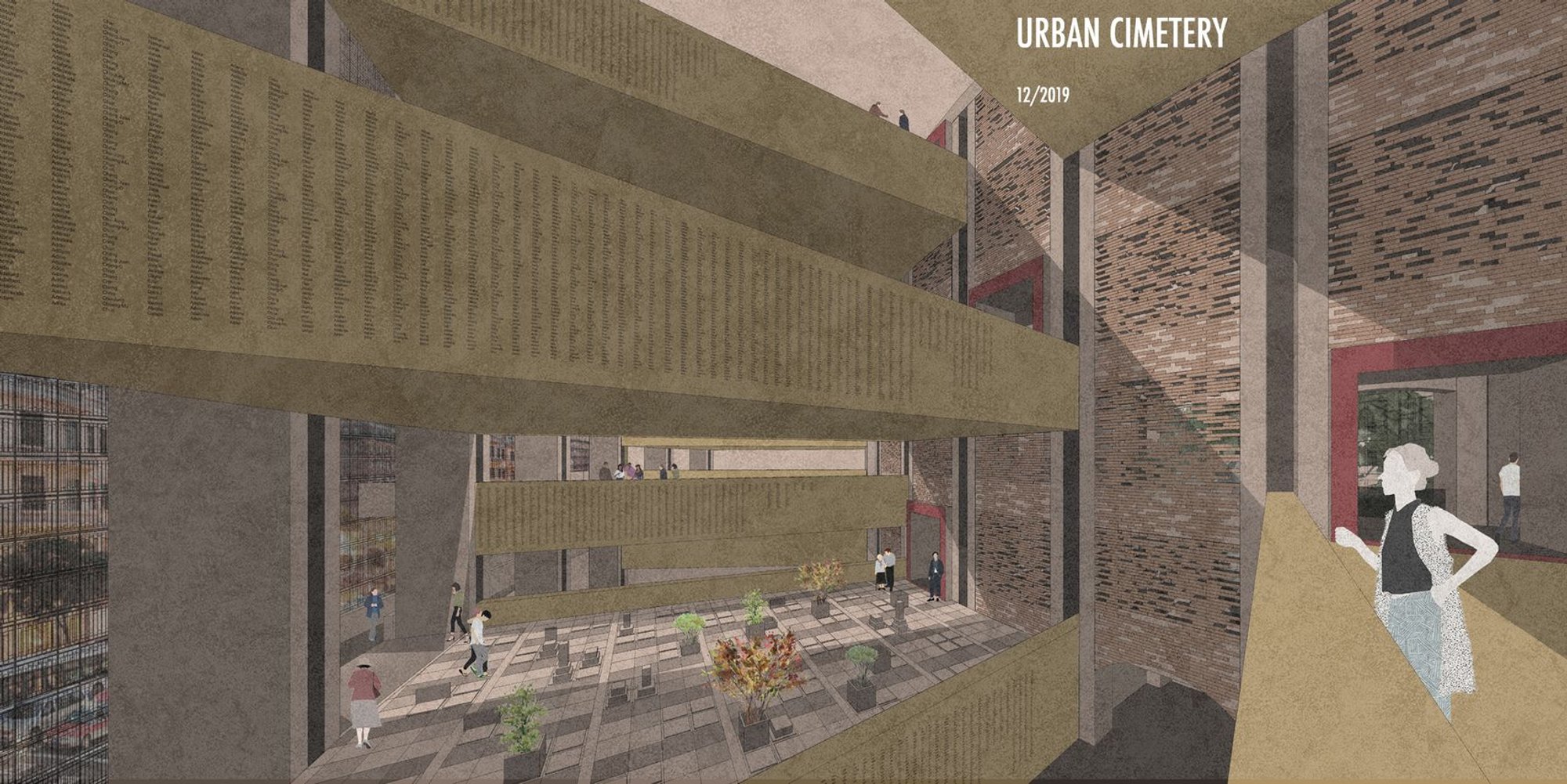
Urban Cemetery: A Vertical Sanctuary for Memory and Modernity
Reimagining cemeteries as vertical sanctuaries of remembrance and renewal in modern urban architecture.

Project by Annabelle Iszatt
In the face of growing urban density and evolving cultural values, the concept of a cemetery is being radically redefined. This project Urban Cemetery presents an innovative vertical cemetery design, embracing the constraints of the modern city while honoring timeless traditions of remembrance and ritual.
Faith in the Future of Death Rituals
As death remains an immutable truth of human existence, architecture must evolve to accommodate not just function, but meaning. The project envisions the cemetery as a permanent landmark of memory, offering individuals a spiritual anchor in an ever-changing urban environment. It is a space not tied to any single religious belief, but one that respects and accommodates diverse traditions.
Design Ideology: An Introverted Oasis
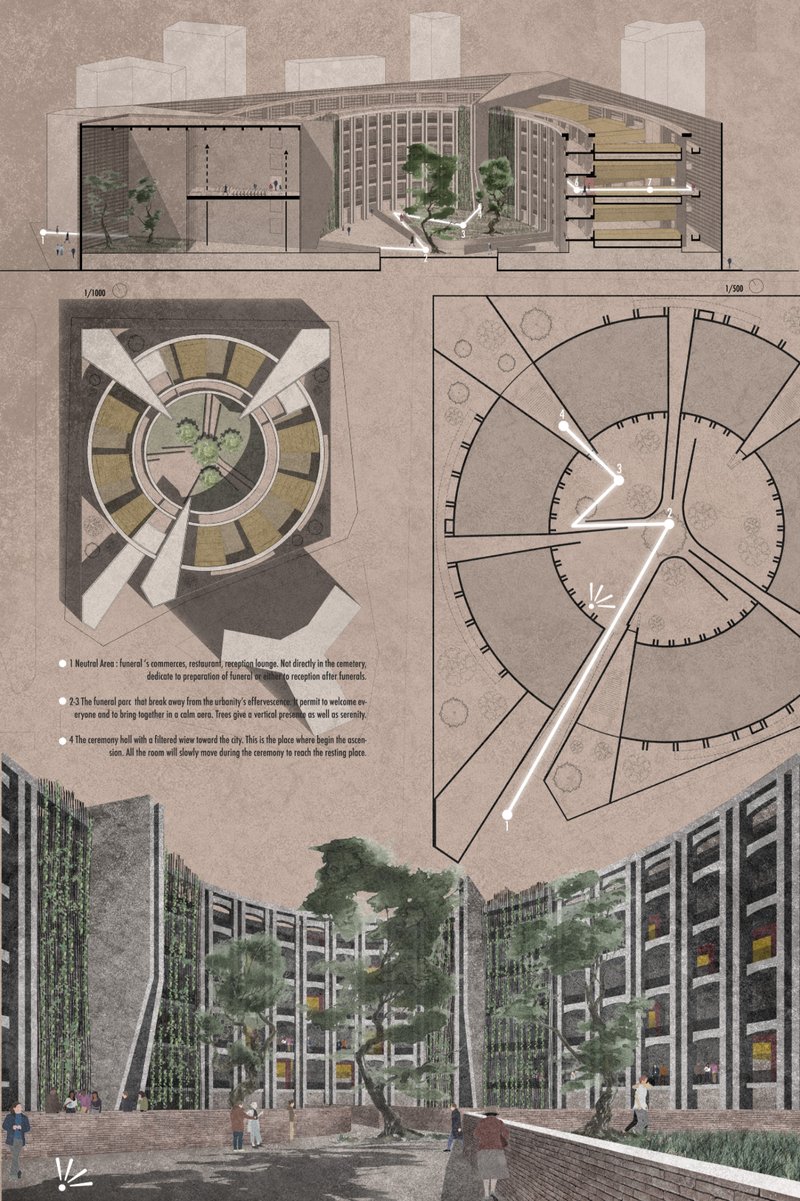
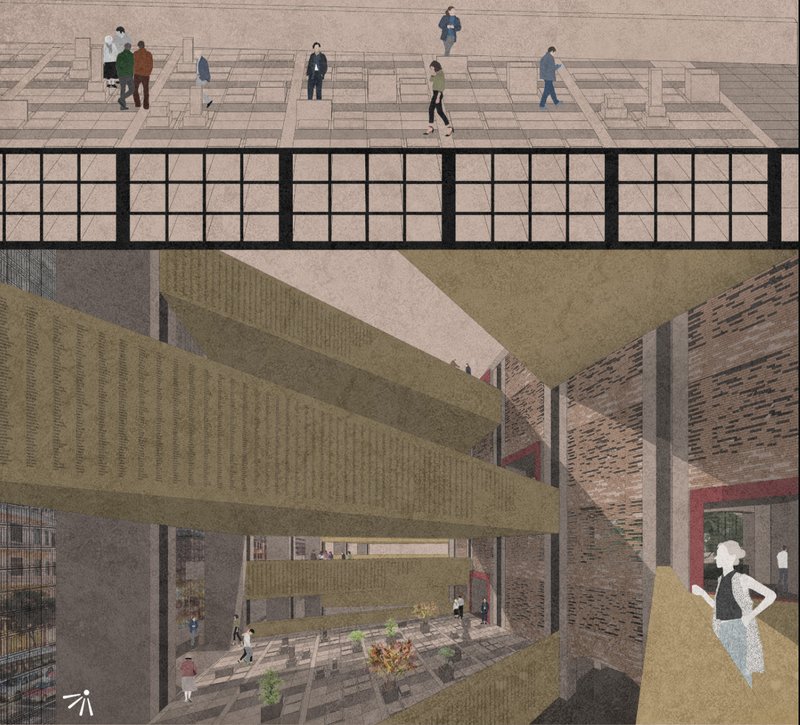
Responding to the noise and pressure of urban surroundings, the design adopts an introverted form that creates a peaceful refuge. While the exterior reflects the city, the interior transforms into a sacred park, layered with dual atmospheres of silence and serenity. Time is central to this experience—each architectural sequence symbolically marks the passage of life to death.
The form avoids hierarchy in favor of fluid continuity: beginning, end, and transition coexist in circular geometry. This spatial neutrality enables all who enter to experience the journey of memory without doctrinal imposition.
Sustainable Burial Practices
The cemetery is based on a three-stage model of remembrance: the funeral, mourning, and eventual release. Cremation or burial can be chosen, and a symbolic monument remains to preserve the identity and memory of the deceased.
This strategy ensures spatial efficiency while offering lasting dignity. Names are engraved on communal memorials rather than consuming space indefinitely, allowing for renewal and reuse without erasing history.
Vertical Growth as a Spatial Solution
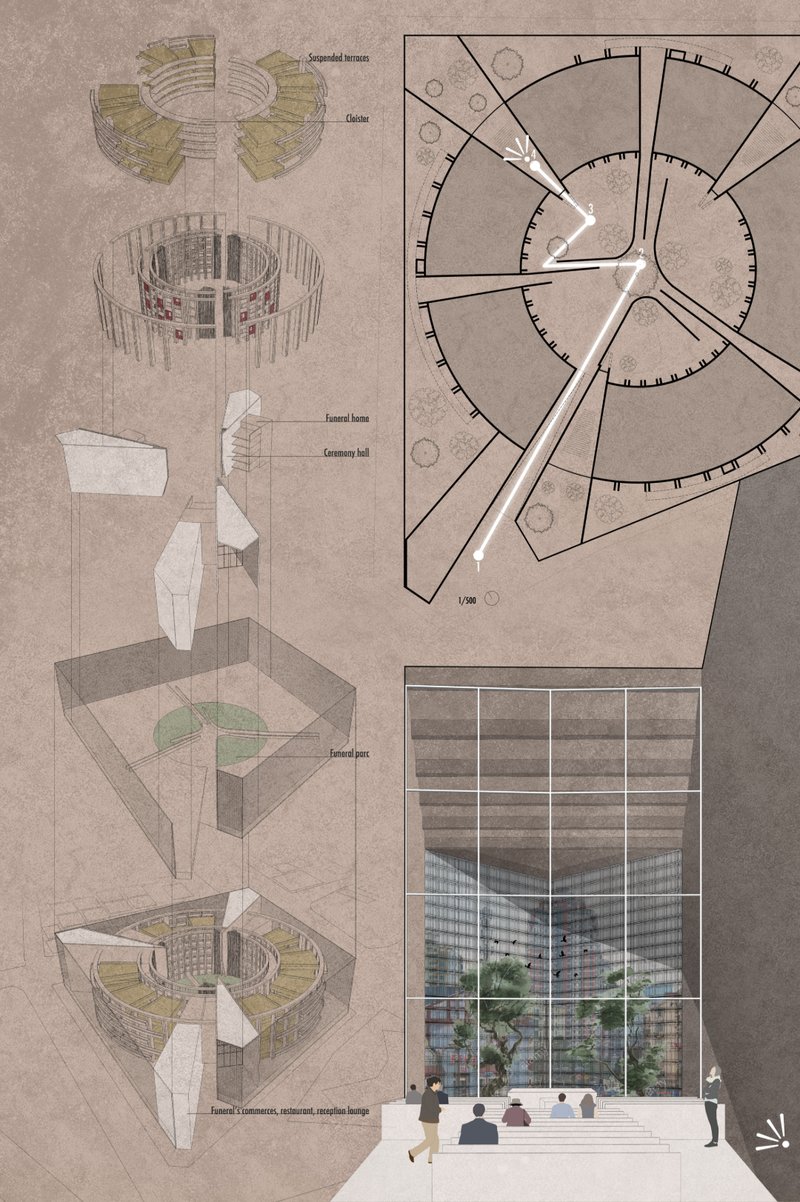
Urban sprawl and expanding mortality rates threaten to overrun traditional cemeteries. Here, vertical cemetery design emerges as a sustainable architectural response. Instead of expanding horizontally, the cemetery ascends—a tower of remembrance that fosters adaptability and emotional progression.
This vertical approach doesn’t just stack graves; it reimagines funerary space as a spiritual ascension. Rituals are choreographed into the ascent, moving visitors through layers of memory, grief, and peace.
Inclusivity Through Ritual Flexibility
Central to the concept are "hanging terraces"—modular spaces where families can choose personalized memorials: from cremation niches to traditional burials, plantations, or monuments. Each family honors their own beliefs, and no faith is excluded.
The terraces become a living tapestry of global traditions, harmonizing a shared human experience of loss and love.
Spatial Symbolism and Visitor Experience
Drawing from cloister architecture, the design integrates a strong axis and ambulatory layout to evoke spiritual connection and urban dialogue. Visitors navigate an emotional journey through ceremonial halls, quiet gardens, and filtered views of the city.
The suspended terraces allow for both intimate reflection and communal gathering. Geometry becomes narrative; spatial elevation becomes symbolic ascension.
Redefining the Cemetery Model
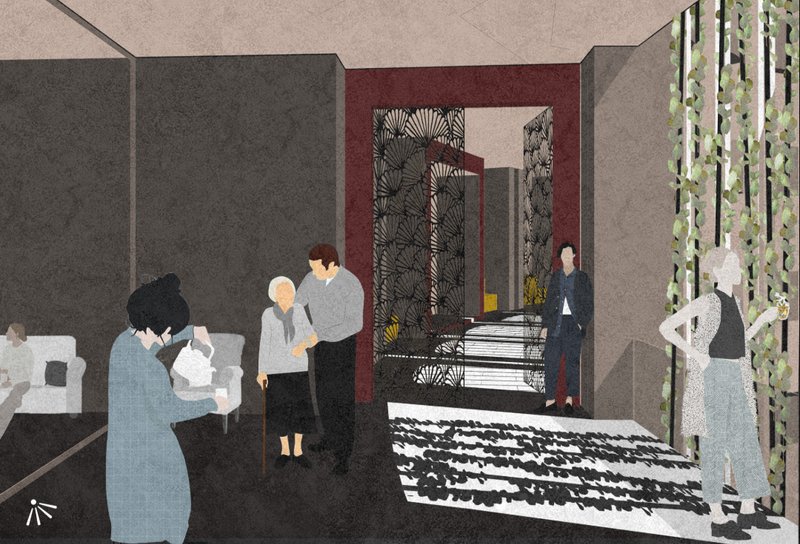
The project questions the disconnection between cities and cemeteries. Traditionally pushed to the outskirts, the cemetery here is reintegrated into urban life. Through transparency, layering, and vertical symbolism, it reclaims visibility and importance.
By referencing cloisters and sacred geometry, the design bridges ancient forms with future needs. It offers a space that speaks not through religion, but through architecture itself.
Hierarchy of Experience
Two distinct paths organize movement: one ceremonial, one public. This distinction ensures that mourning rituals are protected while still opening the space to contemplation and community.




Popular Articles
Popular articles from the community

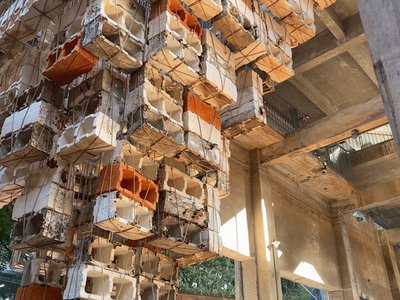
Inverted Architecture Installation by Studio Link-Arc: Exploring the Intersection of Architecture and Living Organisms
Inverted Architecture Installation by Studio Link-Arc blends mycelium, sustainability, inverted design, ecological cycles, and urban adaptive architecture in Shenzhen.
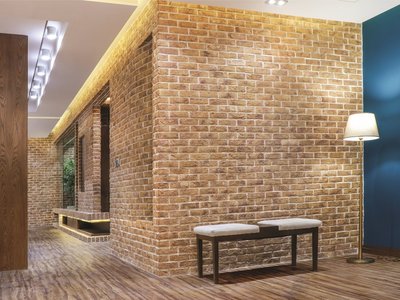
A Contemporary Take on Iranian Residential Architecture
A modern interior design in Mashhad that reinterprets brick, light, and spatial flow to create a warm, contemporary residential architecture.
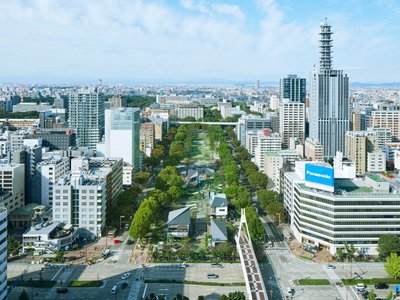
On the Brooks House by Monsoon Collective – A Contemporary Kerala Home Rooted in Tradition
Kerala home blending tradition and modernity with water-inspired design, brick architecture, courtyard planning, and sustainable rainwater harvesting strategies.


The Ken Roberts Memorial Delineation Competition (Krob)
As the most senior architectural drawing competition currently in operation anywhere in the world, it draws hundreds of entries each year, awarding the very best submissions in a series of medium-based categories.
Similar Reads
You might also enjoy these articles
The Ken Roberts Memorial Delineation Competition (Krob)
As the most senior architectural drawing competition currently in operation anywhere in the world, it draws hundreds of entries each year, awarding the very best submissions in a series of medium-based categories.


Waterfront Redevelopment and Urban Revitalization in Mumbai: Forging a New Dawn for Darukhana
A transformative waterfront redevelopment project reimagining Darukhana’s shipbreaking heritage into an inclusive urban future.

OUT-OF-MAP: A Call for Postcards on Feminist Narratives of Public Space
Rhizoma Design and Research Lab invites artists, designers, architects, researchers, and students to reflect on how feminist perspectives can reshape public space. Selected works will be exhibited in Barcelona, October 2026. Submissions open until 15 April 2026.


Documentation Work on Buddhist Wooden Temple
Architectural syncretism and cultural hybridity: A comparative study of the Buddhist temples in Chattogram Hill tracks




Comments (0)
Please login or sign up to add comments
No comments yet. Be the first to comment!