
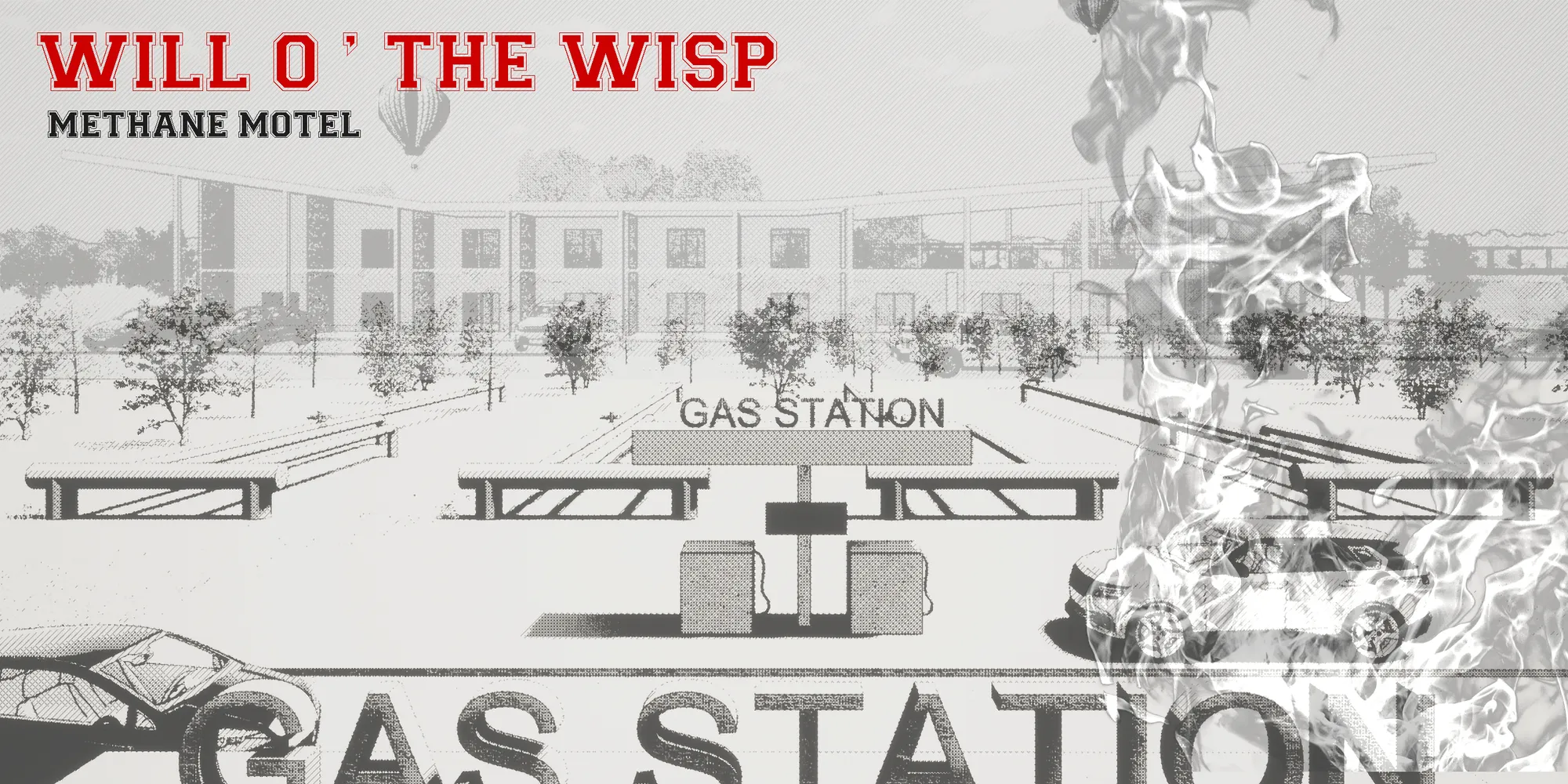
WILL O ’ THE WISP
Methane Motel

As an ecosystem rich in natural forces, the swamp offers a lot. The surface of the small, stagnant waters is rich in plant and animal life. Exposed to intense heat, decomposing plant and animal species turn into a gaseous state. In this way, the so-called natural gas is formed. How exactly is this gas formed, where does it come from in the swamps and what people can do with it? These are some of the questions that served as the start of the research.
First come the creation. The surface of marshes is initially porous vegetation that rots to form a crust that prevents oxygen from reaching the organic material trapped below. That is the condition that allows anaerobic digestion and fermentation of any plant or animal matter, which then produces methane. Methane is the primary gas that makes up the product colloquially known as "marsh gas". The project is based on the "extraction" of methane from the swamp, and its widespread use. On the economic side, driving on methane is very profitable. The message is: the installation of a cheaper and eco-friendly drive, instead of standard fuels. Methane is still an alternative type of transport fuel, and why not bring it to the top of the list. The price of this fuel is getting cheaper and cheaper. That's why visitors to the swamp can take a ride, learn about the power of this ecosystem and pick up their swamp fuel. An interesting phenomenon related to methane is its release on the surface of the swamp. In contact with water, a blue flame, known as will o' the wisp, appears. The phenomenon is known in English folk belief by a variety of names, including jack-o'-lantern, friar's lantern, hinkypunk and is said to mislead travellers by resembling a flickering lamp or lantern. In literature, will-o'-the-wisp metaphorically refers to a hope or goal that leads one on, but is impossible to reach. The idea is that visitors, by getting to know the swamp, can try the experiments of igniting water, air..
The second part of the research refers to the location of the site along the road itself. Birmingham road is not a major road, but it is part of the network of important roads that connect Birmingham and Tamworth. England has a special tradition when it comes to inns (motels). Based on the preliminary research, the project of the visitor center is formed through combining two directions. The first, methane, has already been explained in the text above. The other direction is the design of rest area, motel, for accidental and intentional visitors and passers-by. A motel is a transit or requested stop for travelers, where they can enjoy nature. The situation plan speaks best about the structure of the project. Opposite each other stand a motel and a facility that is a methane storage center and laboratory. The rooms of the motel are designed as the same units. From the center of the motel visitors step onto the first floor that is a restaurant and a rest area. From this part of the object, visitors are taken into the heart of the swamp by a trail.
The center of the project setting is pool, which serves as a manifesto of the concept of the visitor center – fire, water, rest, natural forces.. Passers by can stop and fill their tanks in the Gas Station next to the motel which is fueld by the methane collected from the swamp. The fact that we live in a material world today brings the project, in addition to spreading awareness, to the invitation of people to visit nature through the offer of what nature create and shares with us.


Popular Articles
Popular articles from the community


The Ocean Hive: Sustainable Architecture for a Self-Sufficient Civilization at Sea
The Ocean Hive imagines sustainable architecture at sea, where modular habitats, algae, wave power and ocean waste sustain a growing colony.

Riyadh For All: Intergenerational Urban Design for Active Aging in Rabat
Riyadh For All reimagines urban design in Rabat with intergenerational co-living, adaptive courtyards, and Moroccan cultural exchange today.

Co-life: Sustainable Architecture for Age-Friendly Community Living
Co-life reimagines sustainable architecture for seniors through courtyards, rammed earth, shared gardens, and spaces designed for belonging.

Conexión: Biophilic Design Reimagines High-Rise Living in Hong Kong
Conexión reimagines high-rise living in Hong Kong through biophilic design, green facades, shared spaces, daylight, water and nature within.


Similar Reads
You might also enjoy these articles
The Rhythm of Seasons
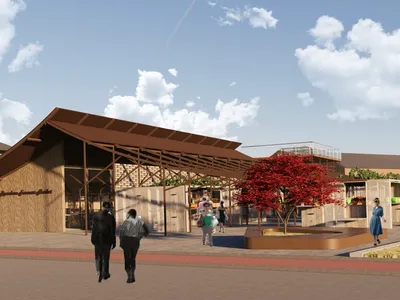
A Farmers' Market Connecting Nature and the City


More Than a Building-Designing a Living System
More Than a Building-Designing a Living System
Base Beyond
DESERT COMPOUND ARID: TOURISM OF ABSENCE AND ABUNDANCE

Explore Ooze Architects Competitions
Discover active competitions in this discipline




Challenge to reimagine the Iron Throne


Photograph architecture without architects


Illustrate the lost glory of Angkor Wat - Render Challenge


Design challenge to reuse E-waste
Comments (0)
Please login or sign up to add comments
No comments yet. Be the first to comment!