

3+2+1 Villa By K-Thengono Design Studio: Innovative Bali Retreat for Digital Nomads
3+2+1 Villa in Bali by K-Thengono Design Studio offers modular, flexible, sustainable tropical living for digital nomads with luxury and privacy.


Located in the vibrant heart of Canggu, Bali, the 3+2+1 Villa by K-Thengono Design Studio is a post-pandemic hospitality project designed specifically for digital nomads and modern travelers seeking flexibility, privacy, and serene living. Completed in 2024, this 353 m² villa exemplifies adaptive luxury and thoughtful architectural design that balances privacy, connectivity, and immersion in the tropical environment.
The villa was conceived as a modular rental property, featuring three self-contained units that can operate independently or combine into a single cohesive compound. This adaptability ensures guests experience tailored accommodation for families, groups, or solo travelers while maintaining a sense of community when desired.
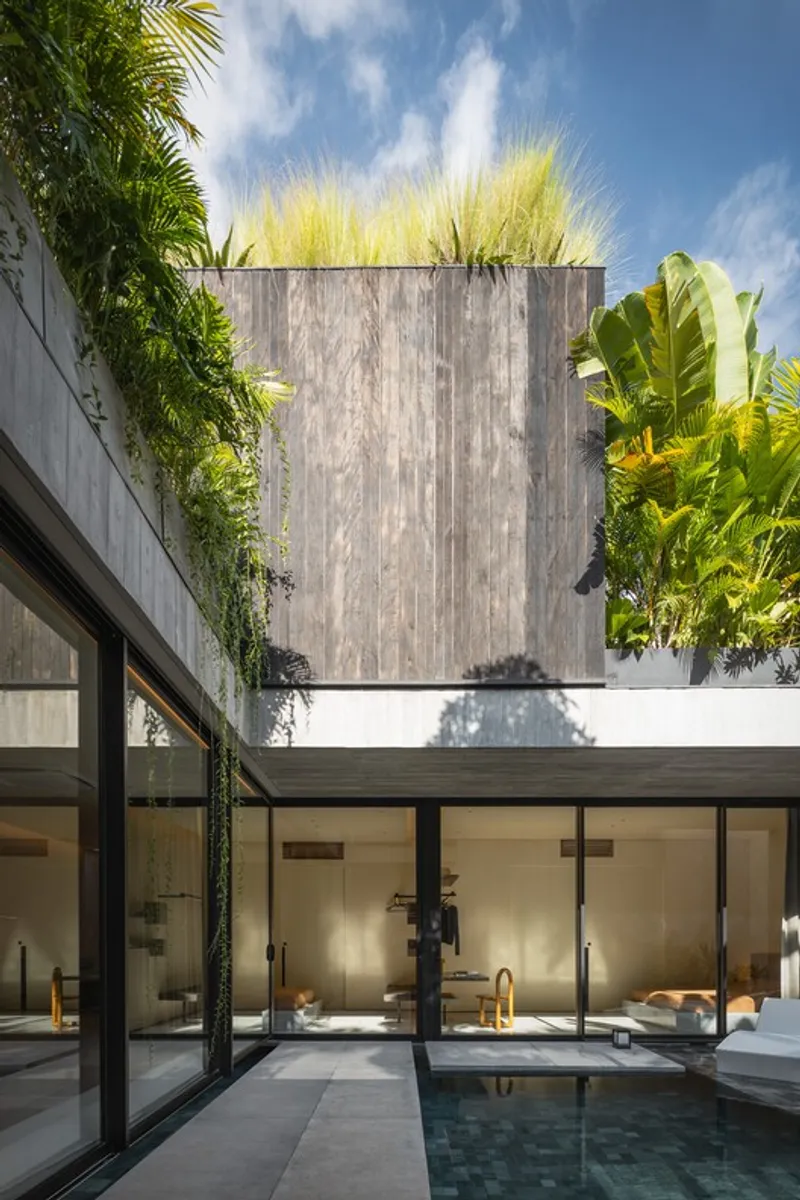
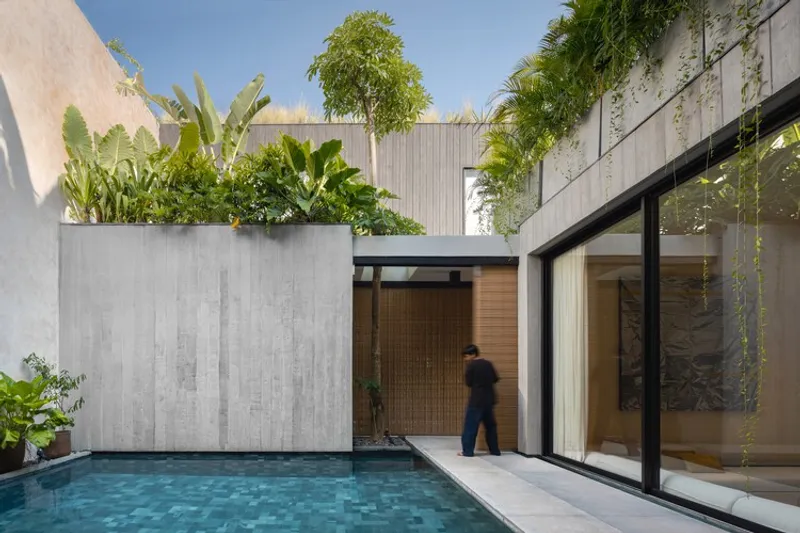
Set on a compact 391 m² plot bordered by dense residential development and intermittently dry rice fields, the villa responds to challenges of privacy, orientation, and spatial efficiency. By turning the visual focus inward, the architects created a secluded, tranquil environment insulated from surrounding development, offering guests a calm retreat without sacrificing connectivity to Bali’s dynamic culture.
The villa comprises two L-shaped volumes defining the site’s perimeter. The left wing houses a two-bedroom unit, while the right accommodates a three-bedroom unit. A central passageway mediates circulation, lined with sliding woven rattan screens that offer privacy or openness, allowing units to function separately or as an interconnected compound.
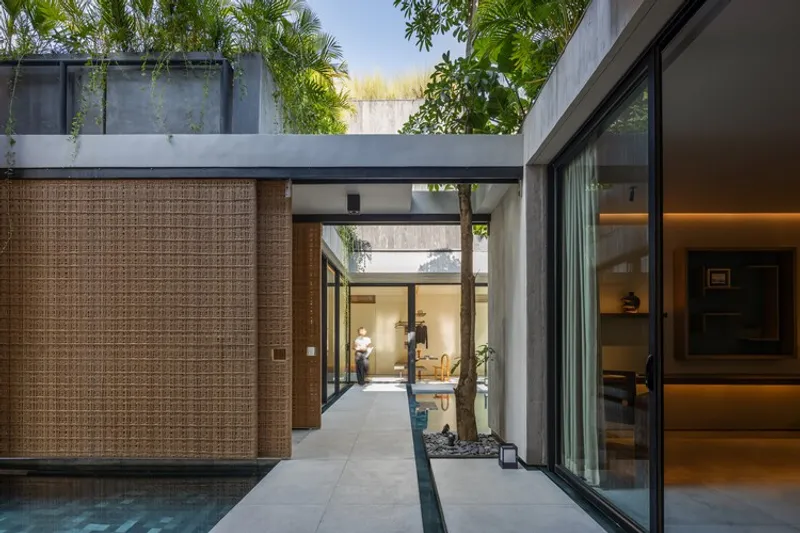
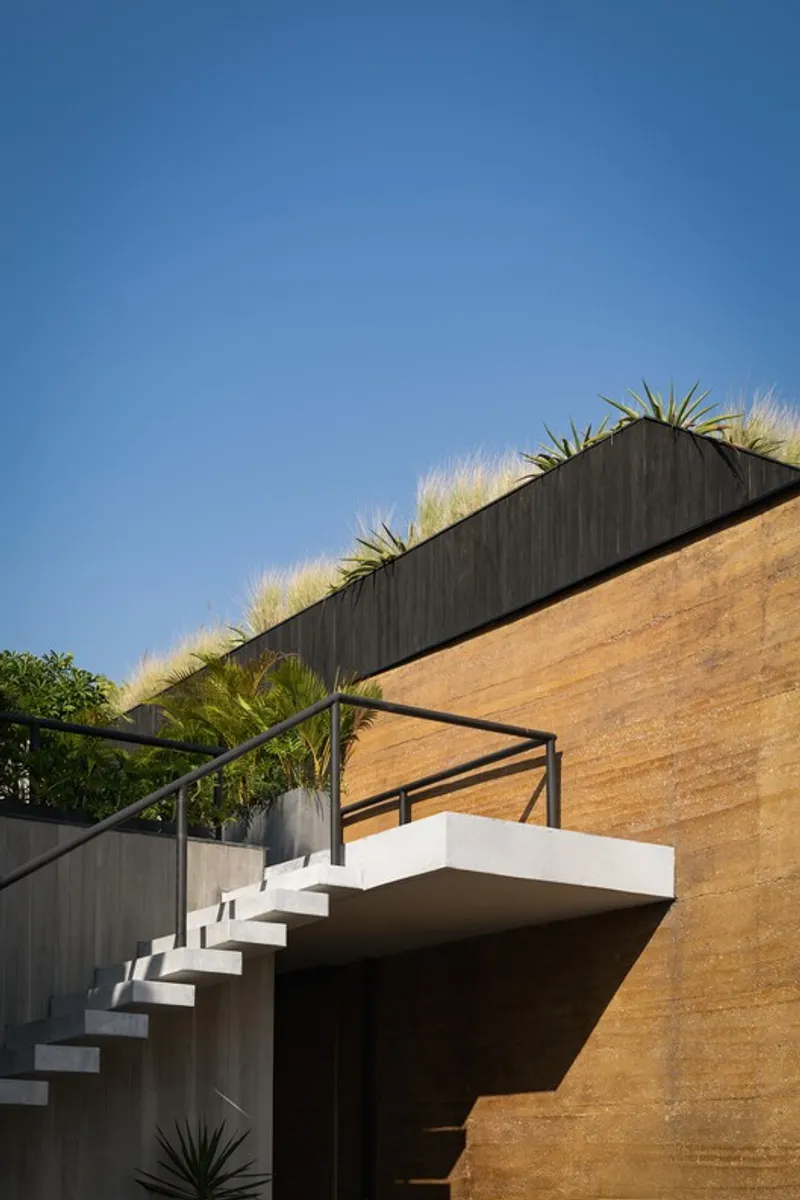
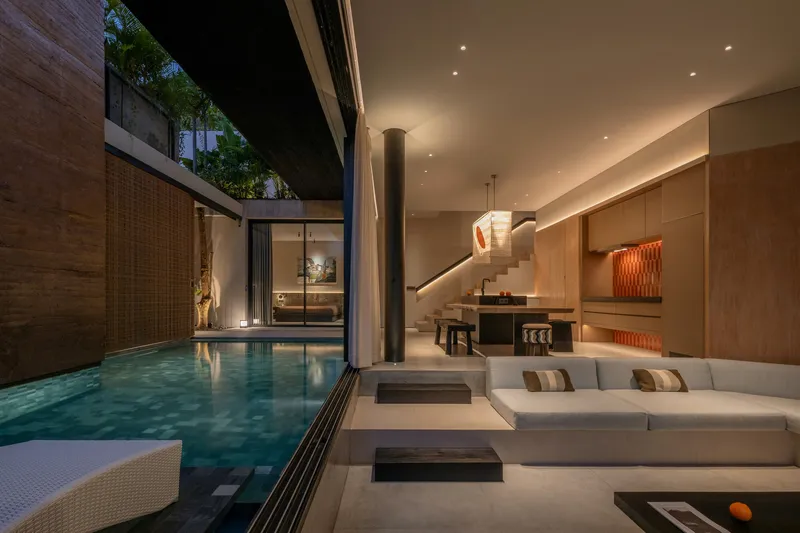
Pools are strategically inserted into the voids between volumes, transforming negative spaces into visual anchors, enhancing the villa’s tropical ambiance and providing serene water features for relaxation. The upper levels include a one-bedroom unit on the left with a private pool and an outdoor staircase leading to the reception area, while the right mass forms a duplex configuration for the three-bedroom unit.
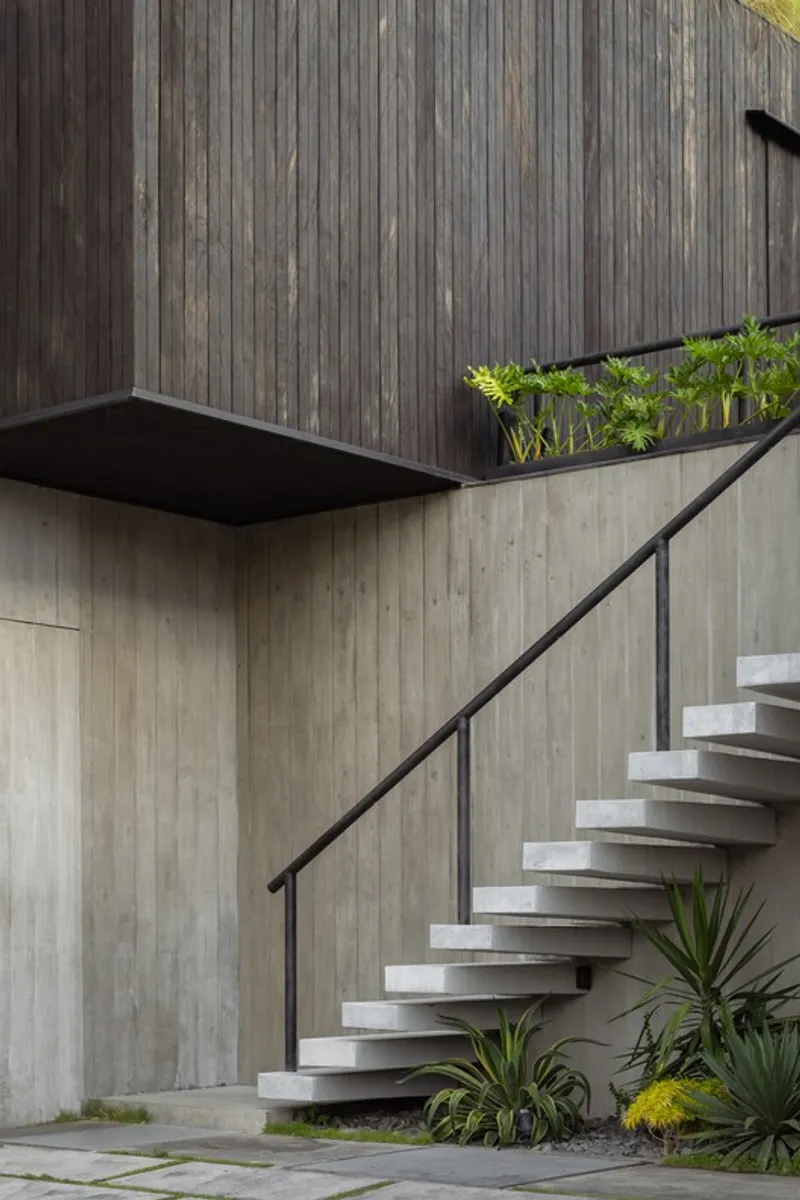
Materiality was chosen to enhance tactile and visual richness. The lower levels are cast in textured concrete reminiscent of timber grain, while the upper volumes are clad in charred wood panels, providing warmth and contrast. A rammed-earth wall at the entrance anchors the composition, offering privacy while harmonizing with Bali’s natural palette. This material selection emphasizes sustainability, durability, and sensory experience, essential for tropical hospitality design.
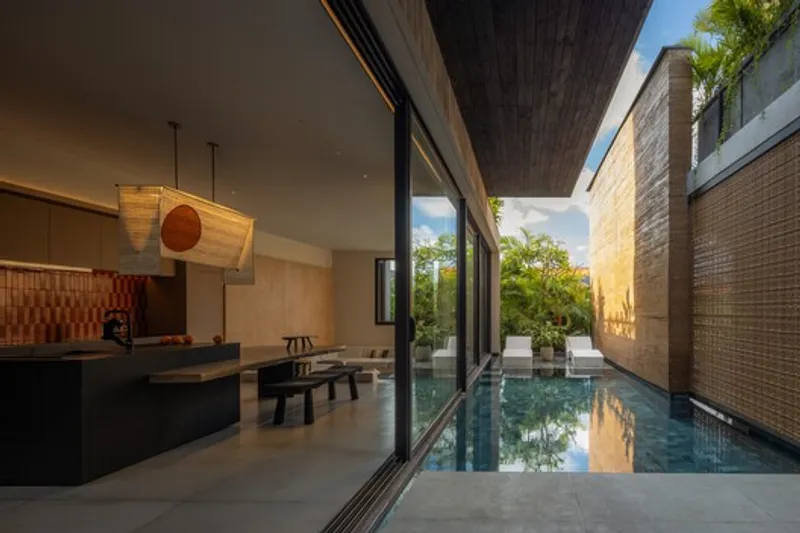
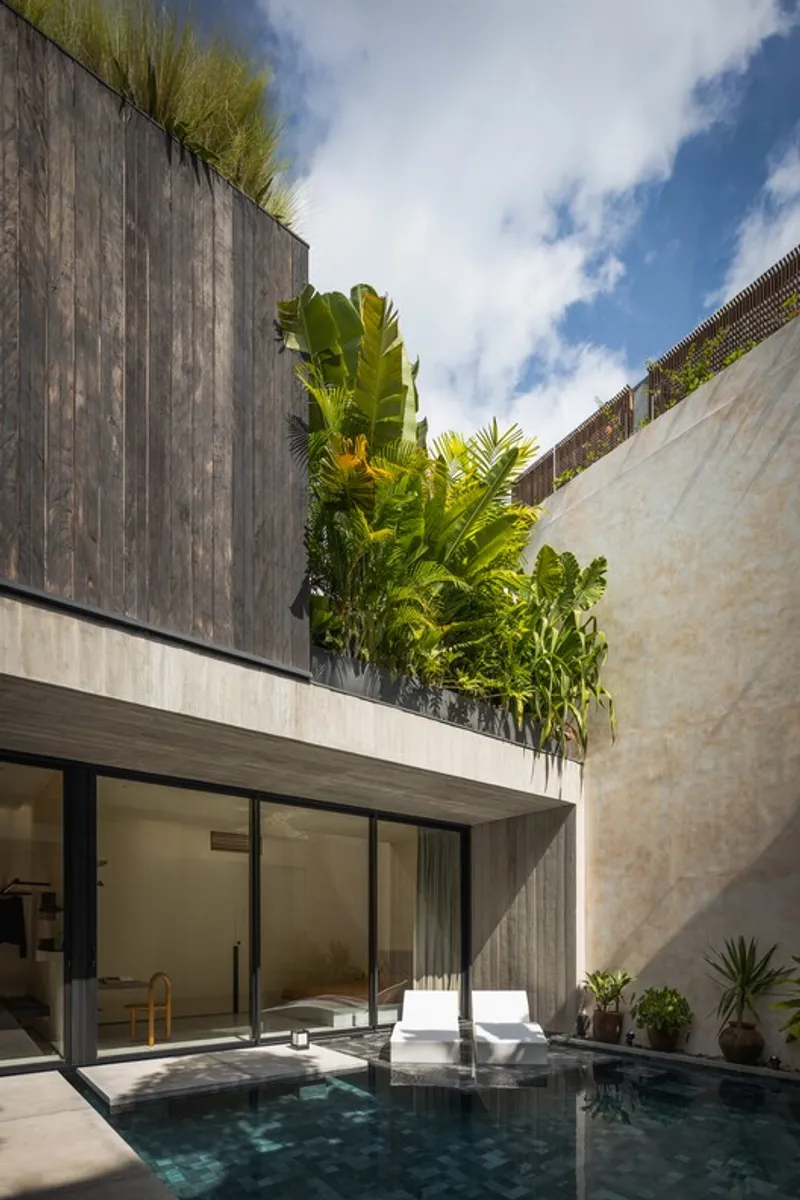
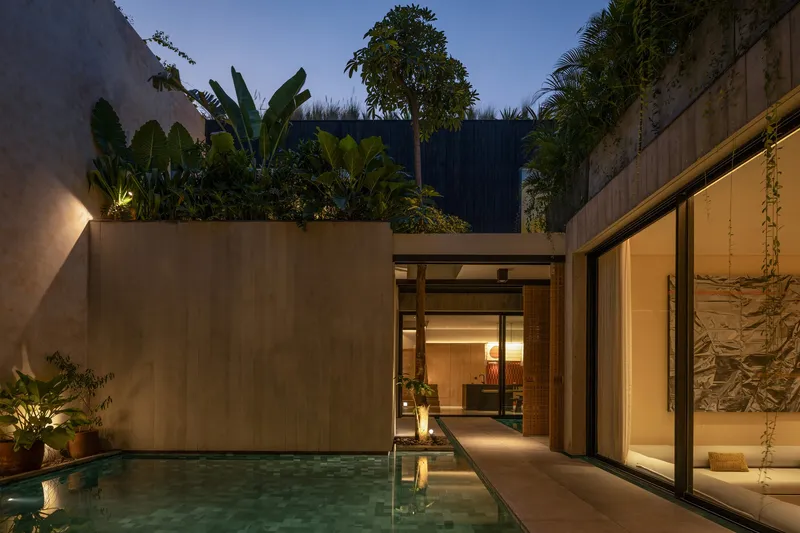
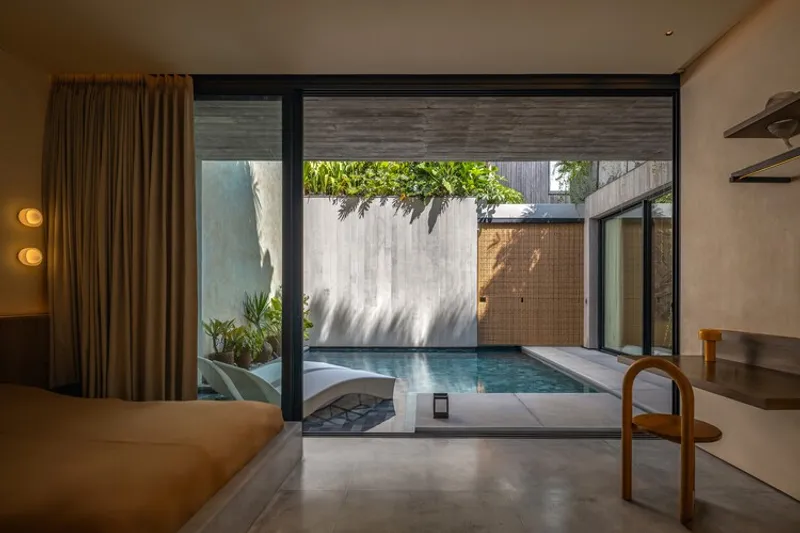
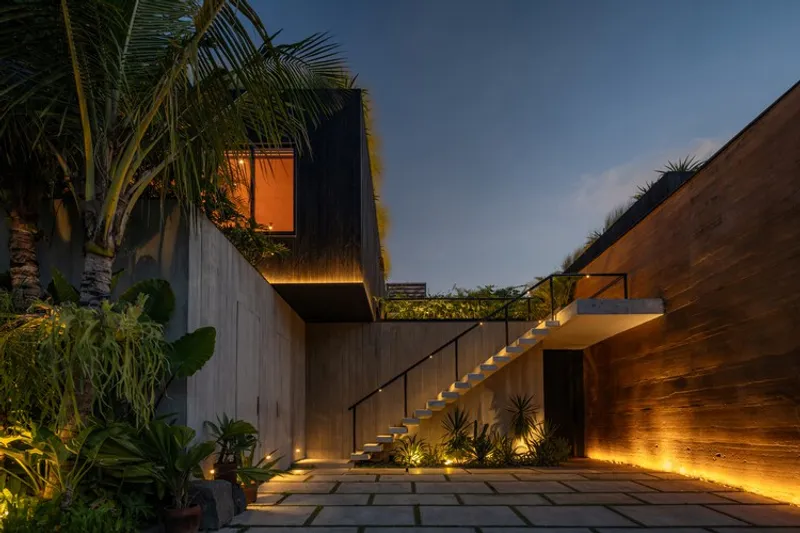
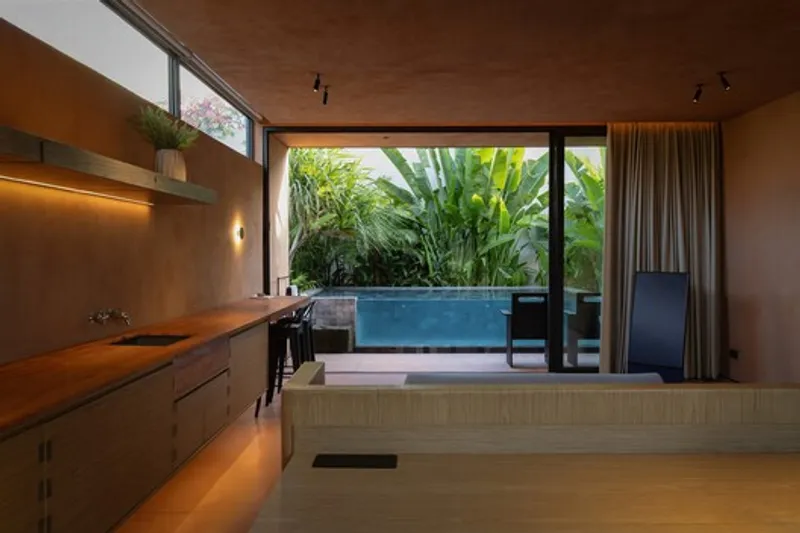
The inward-facing typology and stacked volumes of the 3+2+1 Villa translate flexibility into a serene retreat tailored for evolving modes of living and hospitality. Guests experience a seamless integration of indoor and outdoor spaces, allowing for privacy, leisure, and community engagement simultaneously. This villa reflects modern Balinese architecture, combining contemporary minimalism with vernacular inspiration to create a luxurious yet grounded environment.
3+2+1 Villa is a testament to innovative hospitality architecture, offering adaptable, sustainable, and visually striking living spaces for digital nomads and travelers in Bali. Its thoughtful design, use of local and tactile materials, and inward-facing layout provide an unmatched tropical retreat experience, balancing privacy, flexibility, and serenity.
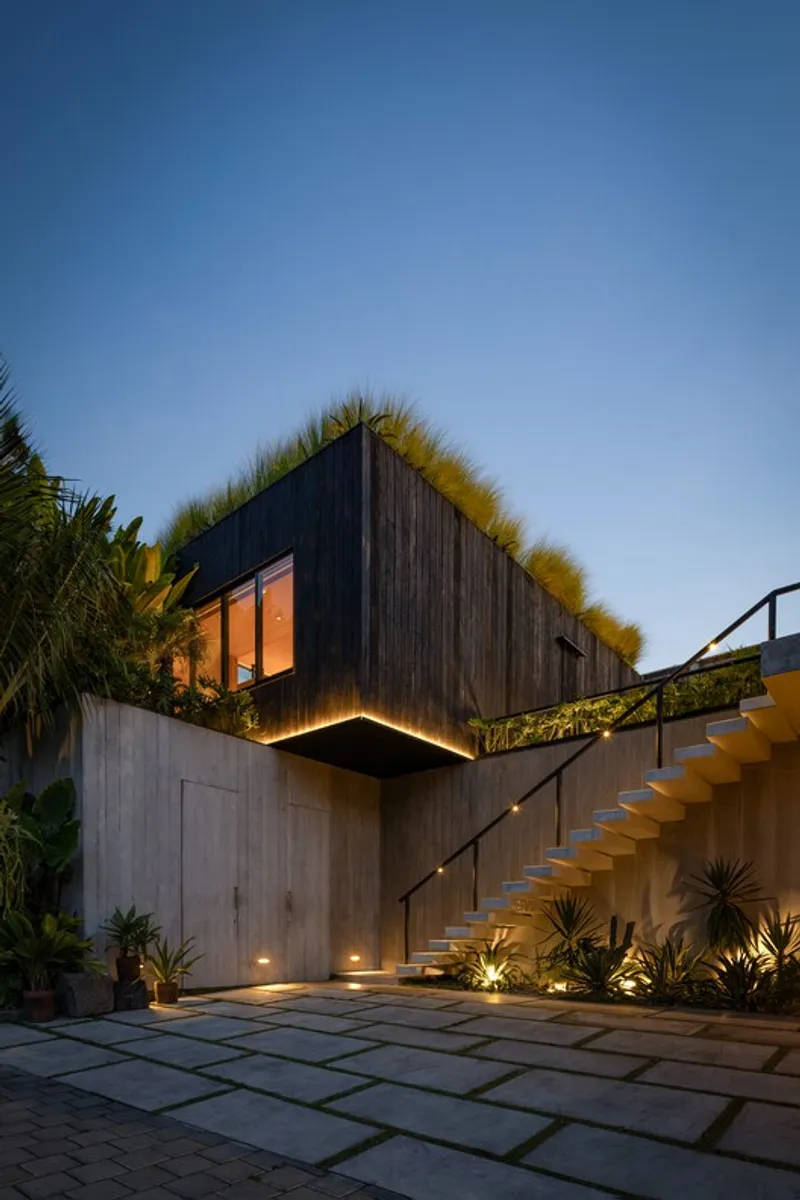
All the photographs are works of Indra Wiras


Popular Articles
Popular articles from the community

Faces of the Soviet Avant-Garde: Turning Moscow's Street Names into an Open-Air Museum
A network of sculptural installations across a Moscow residential district transforms forgotten architect names into spatial encounters with cultural memor

Singing Woman: An Opera House That Performs Before the Curtain Rises
Ovidiu Cristian Pavel's conceptual opera house translates Estonia's choral identity into a sculpted waterfront landmark facing the Baltic Sea.

Manzana Morphosis: Stretching Barcelona's Grid into a Living Landscape for 2050
A radical reworking of the Eixample manzana turns density into a tool for generous public space, vertical ecology, and environmental performance.
Extended Shell: Retrofitting Kolkata's Balconies as Living Urban Thresholds
A modular retrofit system recovers the social and environmental intelligence of Kolkata's historic verandas for contemporary Park Street residents.

Similar Reads
You might also enjoy these articles


Hodi-Mandai Geram
Project Function: Preservation and revitalization of the Intangible heritage and socio-spatial identity of the Hodi by Housing, Cultural Memory Center, Sacred Grove, landscape, local tourism economy


Olio Towers: A Mid-Rise for Performers That Fuses Housing, Rehearsal, and Stage
Located blocks from Houston's Theater District, this modular tower stacks living units around a central performance atrium.

Oasis: Modular Green Housing Carved into Dhaka's Urban Fabric
A shortlisted Plugin Housing entry reclaims unauthorized settlements in Dhaka with stepped concrete volumes, green roofs, and ventilation-driven design.

Black Hole: A Floating Megastructure for the Post-Physical Era
Emiliano Mazzarotto envisions a spherical, self-scaling arena where e-sports, digital hotels, and holographic stadiums replace traditional public space.

Explore Digital Nomad Housing Competitions
Discover active competitions in this discipline

Challenge to reimagine the Iron Throne

Photograph architecture without architects

Illustrate the lost glory of Angkor Wat - Render Challenge

Design challenge to reuse E-waste
Comments (0)
Please login or sign up to add comments
No comments yet. Be the first to comment!