
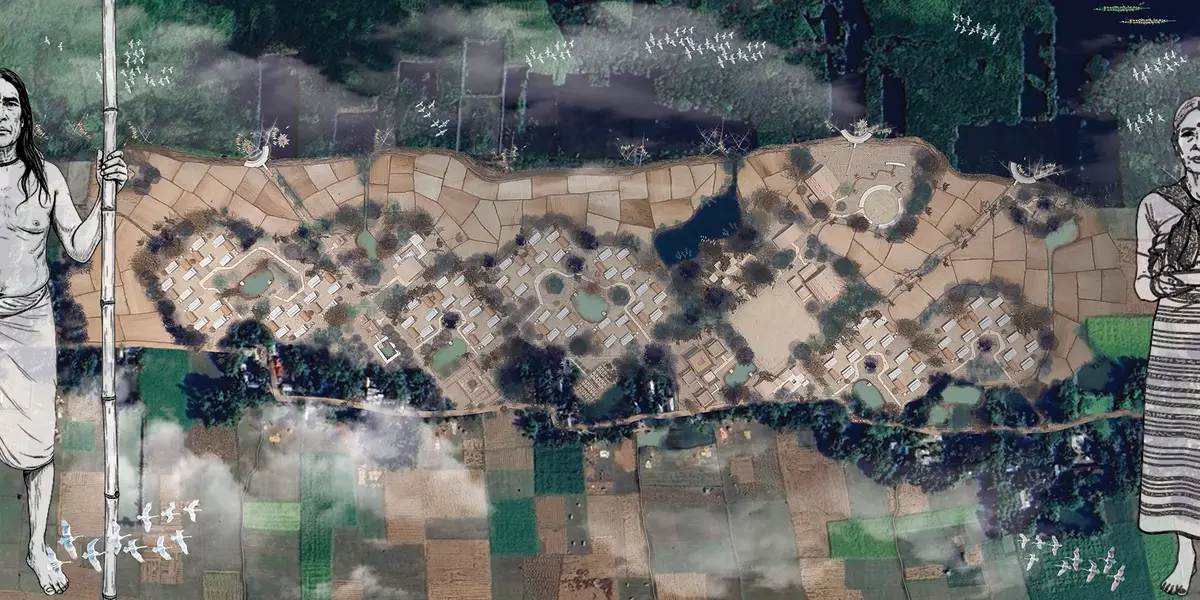
Hodi-Mandai Geram
Project Function: Preservation and revitalization of the Intangible heritage and socio-spatial identity of the Hodi by Housing, Cultural Memory Center, Sacred Grove, landscape, local tourism economy

Keywords: Reverse Contextualism, Cross-Cultural Identity, Cultural Aggression, Hodi, Indigeneity, Intergenerational Learning , Lo-Fab , Mandai Settlement , Neuro-Architectology , Tectonism.
Backdrop:
Hodis, a less well-known community of people in Bangladesh who live on the peripheries and are Indigenous culturally but without official status in state policies. Their situation is similar to pre-reconciliation era with deep spiritual attachment to the land but without cultural autonomy or ancestral domain that is legally recognized. They are called Mandai in the majority of written historical documents as well as statistics. Their identity also suits the definition of "Imagined Community" where they are all resting on the underworld of "Bhanga Kshatriya" .
Primitive Culture could not create any high diffusion or permanent realm in the Bengal Delta compared to the adjacent places for rapid urbanization, insufficient land and also for a changing landscape. It is a "Great Ethnic Melting Pot". We lack precise accurate numbers of ethnic demography since they are divided for bureaucracy and were never intended for doing community demand scale work. Even though the ethnic groups are trying their best to preserve their culture and way of life instead of mainstream assimilation and transferring it to their next generation. Fifty of them are recognized as ethnic minorities among them Hodi is one. They do possess a unique culture and rich history but vanishing.
In the contemporary context, ethnic groups of bangladesh, in fact all over the world there is a movement ongoing to revive own culture and projecting them. It's very crucial in terms of having an identity and marking them such way of society, economy, education, living and justice. However, policymakers or government have yet to address any existing need so far for them in planning. Intergenerational learning and continuity of collective memory are crucial to give life to their cultural dynamism.
The project suggests architectural interventions that support placemaking and cultural resilience for their rich intangible and tangible heritages that are battling extreme cultural aggression. This study not only examines the architectural characteristics of Hodi Mandai settlements but also unfolds the problems of the community and examines how their socio-economic and cultural processes shape and reshape their living spaces in a multidisciplinary way. Further, there are no such studies here that have been done in this comprehensive way to address ethnicity in architecture and other aspects. Nevertheless, practical implementation is necessary to find an application of this research because applied paradox differs significantly from the model in theory.
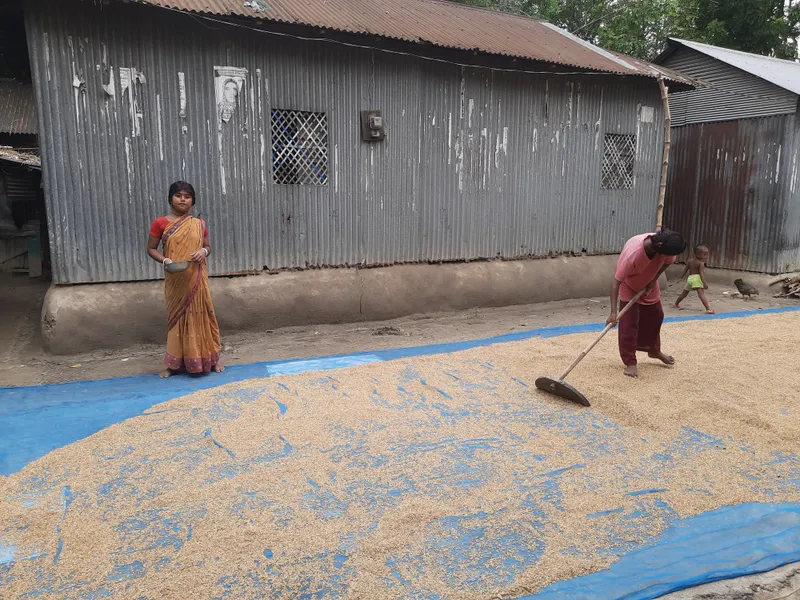

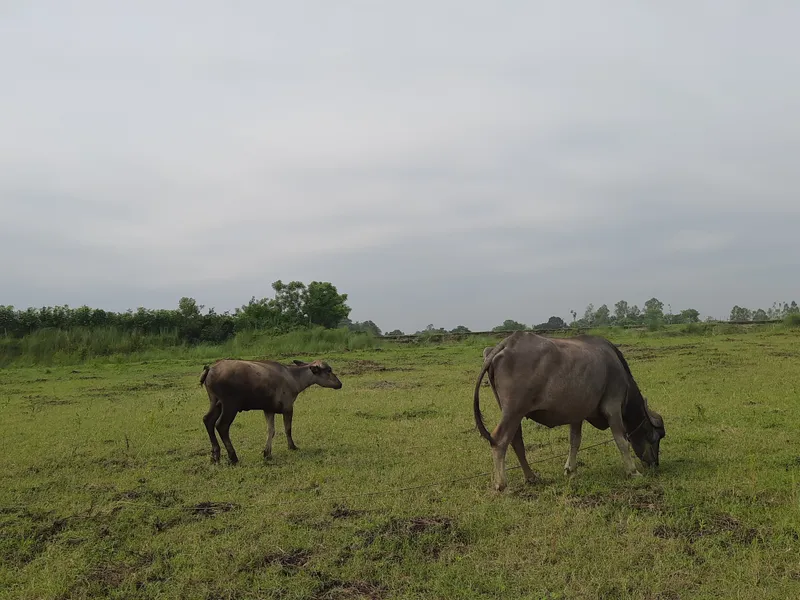

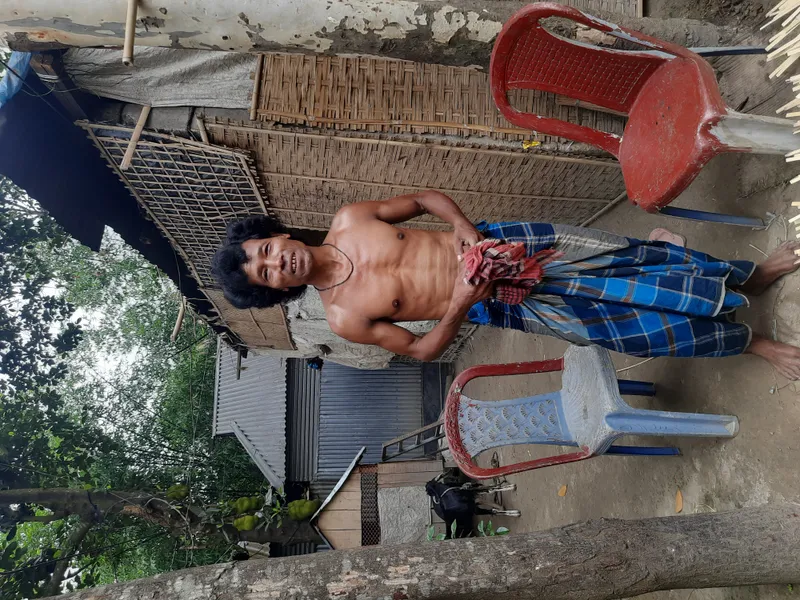
Site area : 42.5 acres
Potential Stakeholder : Government Bodies (MOCA, MOL, LG, BSCIC),
NGOs & Civil Society ( BRAC, Caritas BD etc.),
Hodi Community (Local + Migrants),
Craft development agencies
Origin and History:
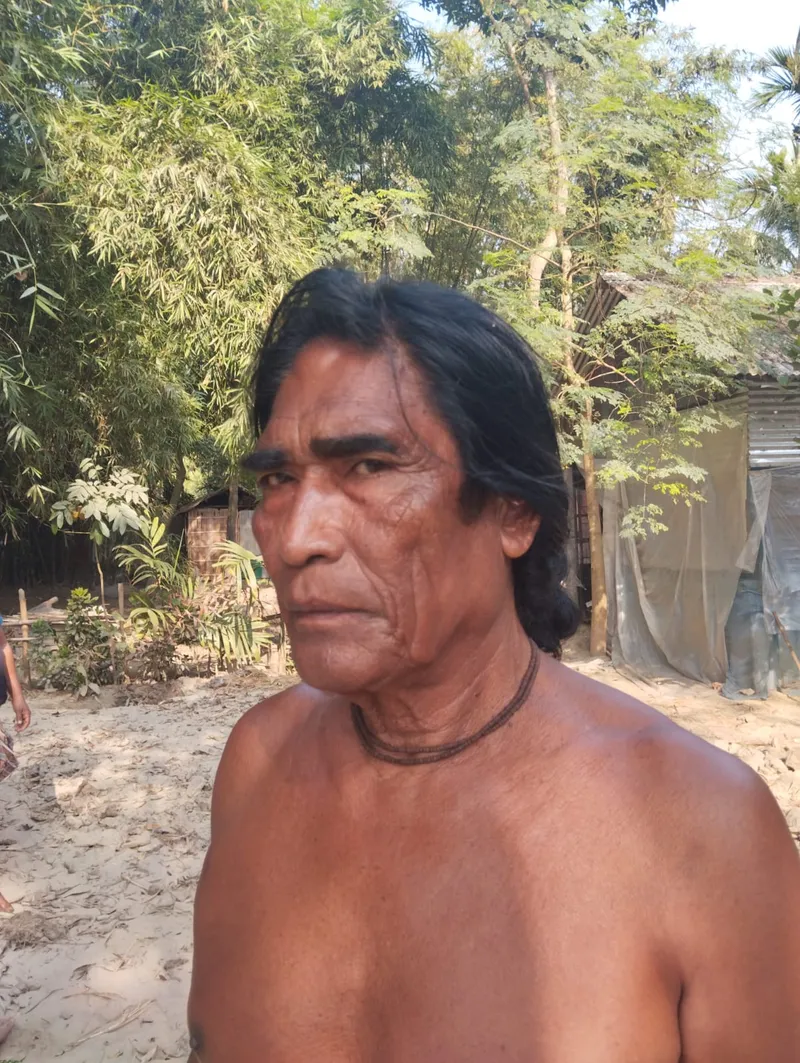
Hodi, a disappearing ethnic group with more than a thousand years of tradition in the Old Brahmaputra Valley of the Bengal Delta, is facing fast-paced cultural erosion, socio-economic hardship and displacement from their ancestral domain. Socio-economic pressure combined with limited livelihood choices and lack of political representation has pushed numerous people to sell off their land and settle on Khas lands disengaging them from their cultural geography.
The Hodi possess a history of over a thousand years and are believed to be a branch of the Assamese Bodo. The Hodi once occupied the Brahmaputra flood plains and rich flat plains and subsisted on agriculture, fishing, and bamboo-based artisanal enterprises. The area was settled by a tribe known as the Mandai (a group with Indo-Mongoloid origin and Dravidian admix) before the settling of Garos in the Mymensingh district. Over time, they intermarried and intermingled and two distinct branches of culture developed: one group, who migrated to the Madhupur forest, were known as Kochh-Mandai and the other, after absorption amongst the Garo (or Mandi), as Hodi-Mandai. Hudi Nikni (clan of Koch) and Do’al Mahari (clan of Garo) have created this Mandai branch by intermarriage.
Although the Hodi have long been outside the pale of formal Hindu caste society, they firmly consider themselves Kshatriya (warrior class), and have even organized themselves into five Gotras (clans), following the mythical sons of a Kshatriya Raja. These endogenous frameworks continue to determine their conduct in ritual, marriage customs, and social organization.
In the first half of the 20th century, the Hodi demanded official confirmation of their Kshatriya identity and agitated in 1921 Jamalpur Census, but were not recognized by colonial powers. This conflict over identity and legitimacy is an extension of the overall marginalization they have experienced—socially, economically, and politically.
Historical accounts also suggest that the Hodi played a role in the Pagalpanthi movement at Sherpur following Tipu Shah's death, indicating their involvement in larger movements of resistance and socio-political consciousness in Bengal's colonial past.
| Source | Area | Population | Year |
| A Statistical Account of Bengal | MaimansinhDistrict | 11690Mentioned as ‘Hádi-Hotrí’ | 1875 |
| Census of India | Bengal States | *Mentioned as ‘Animists and Unclassified’ | 1901 |
| Mazumder (1905) | Greater Mymensingh | Male-11192Female-11054Total-22246 | 1905 |
| Census of India | Bengal States | *Unclassified | 1911 |
| Bengal District Gazetteers | Mymensingh | *Mentioned as ‘Bad characters and Drunkards’ | 1917 |
| Census of India | Bengal States | *Unclassified | 1921 |
| Census of India | Bengal States | Male-8154Female-6180Total-14,334 *Mentioned as primitive tribe | 1931 |
| Census of India | Bengal States | Male-3946Female-3816Total-7762 | 1941 |
| Census & Household Survey | Bangladesh | Male-725Female-778Total-1503*Numbers appear lower as they do not want to identify themselves as Hodi or Tribe | 2022 |
| SEHD | Sherpur, Mymensingh, Netrokona | 2143 Household | 2016 |
| SES | Sherpur | 1915 | 2024 |
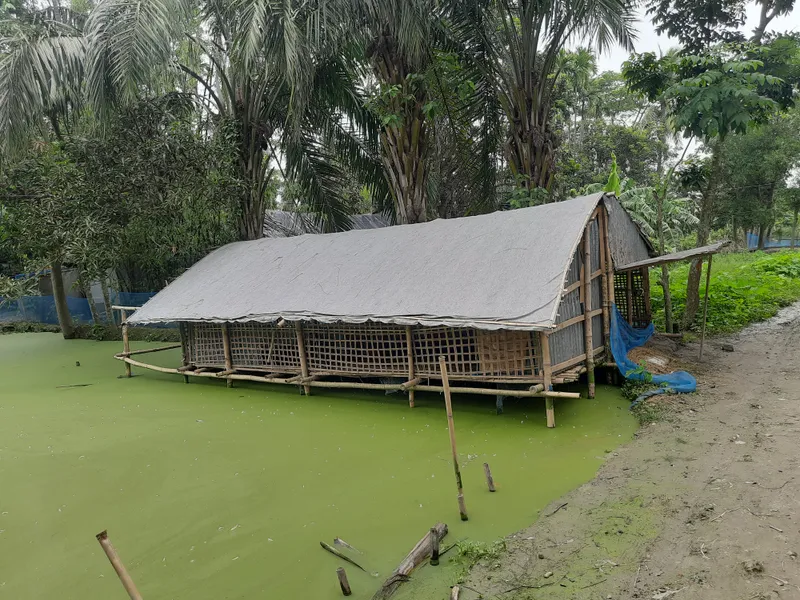
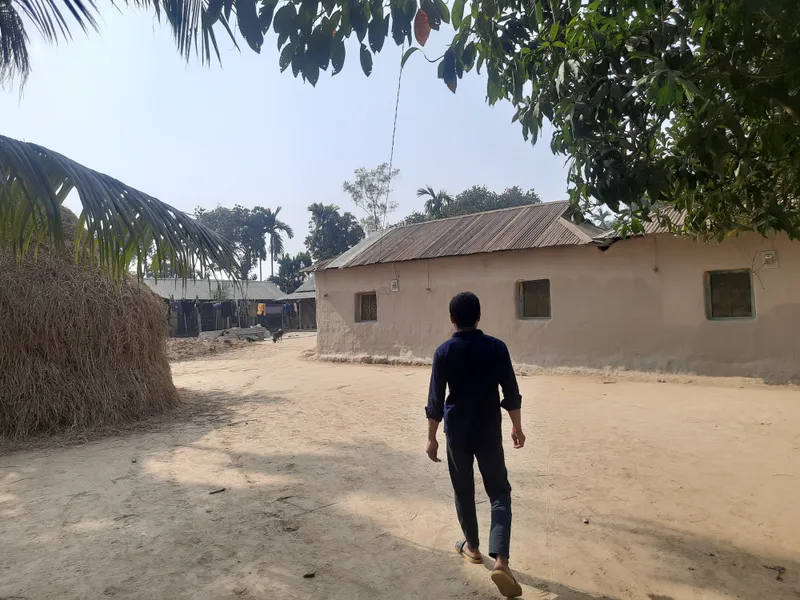
The thesis addresses Barar Char in Sherpur District of Bangladesh where some part of the Hodi community is still living along an oxbow lake. The project is hypothetical and derives its quality and depth from an Ethnographic Field Survey grounded in the oral tradition, everyday routines, and cultural practices of the Hodi people. These everyday experiences not only informed the ethnographic discourse but also were formative for the design approach throughout the thesis.
Nature of the Hodi Community
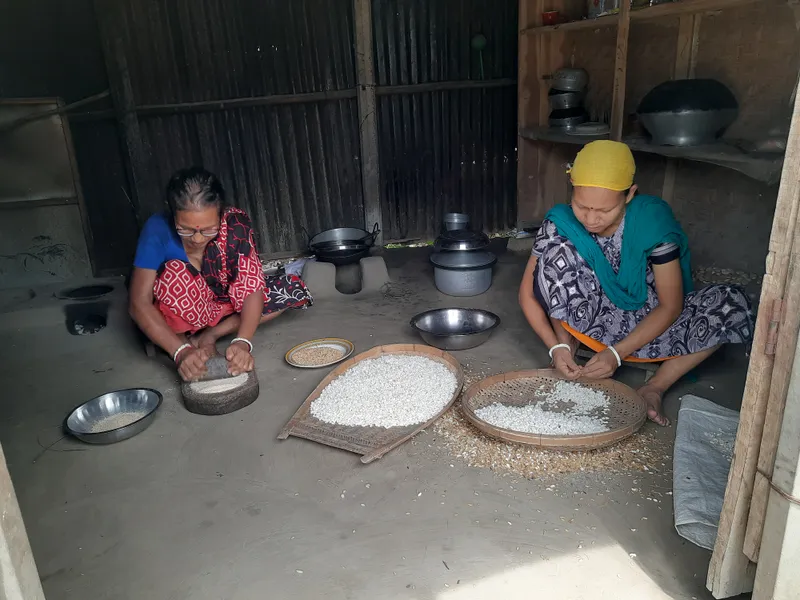
The nature of the Hodi community is gentle, communal, and uncomplicated, shaped by centuries of existence on the Bengal-Assam borderland's floodplains and forests. Their character conveys a robust sense of land, kin, and tradition in spite of marginalization and loss of culture.
a. Emotionally Receptive and Non-Confrontational
The Hodi are soft-hearted and peace-loving. They are not moved by violence or coercion but by brotherhood, respect, and emotional appeal. This is aptly illustrated by a popular local saying:
Muchi chole gaailee
Hodi chole bhaailee
‘The Cobbler moves when scolded hard,
The Hodi melts with a brotherly card!’
Their cooperation and agreement are likely to develop through mutual empathy rather than pressure or command.
b. Communal and Cooperative
Hodi's social life is based on mutual support, common practice, and seasonal labor, wherein day-to-day life is focused. With regard to marriage, agriculture, and festivals, their social life is enwoven in common responsibility and family cooperation. Their Para and Samaj system enables close support groups, which previously have replaced state rule.
c. Spiritually Rooted and Ritualistic
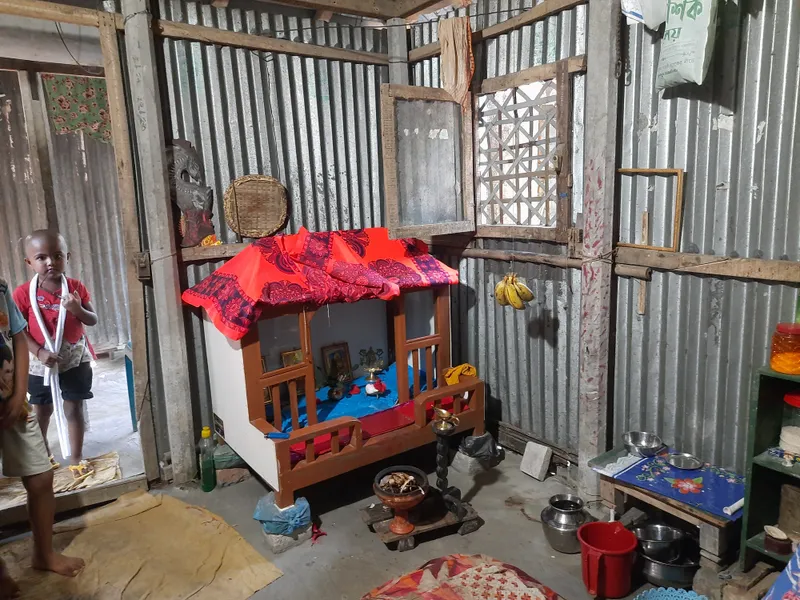
They possess a deep spiritual connection with nature and ancestral customs. Their deification of goddesses like Manasa, their reverence of tools like the Dhenki, and rituals tied to land, harvest, and marriage speak of a worldview wherein religiosity is omnipresent in everyday life. They also adhere to astrological rules like Khonar Bachan for land selection and homestead planning.
d. Environmentally Sensitive and Adaptive
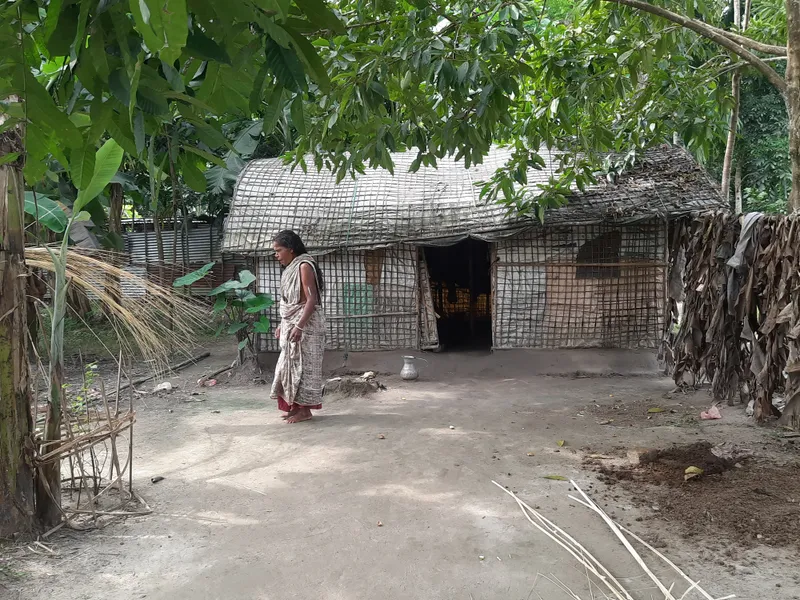
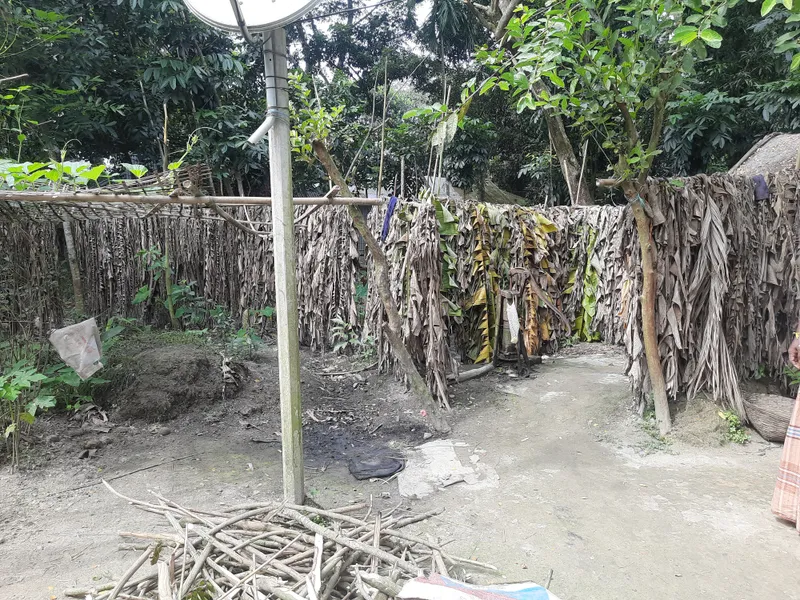
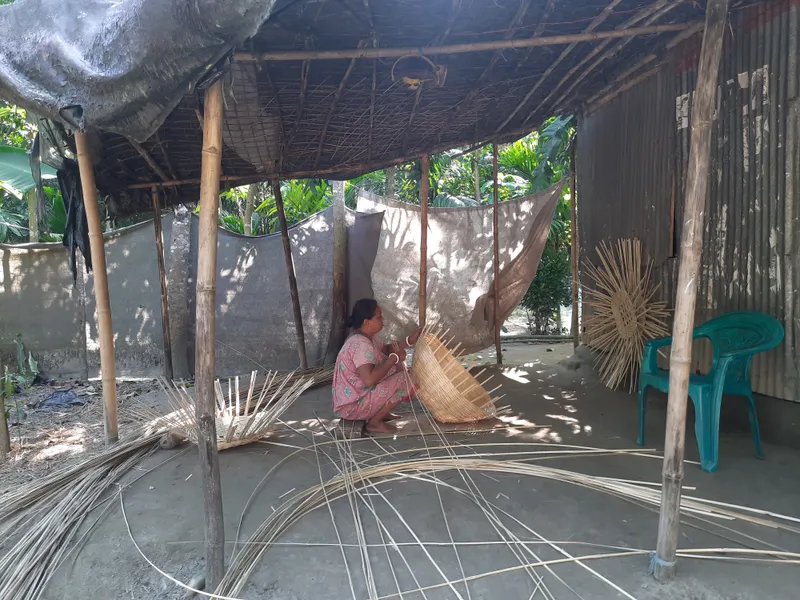
The Hodi showcase a natural ecological intelligence, which has been shaped by their proximity to rivers, wetlands, and forests. Their use of bamboo, medicinal plants, and seasonal migrations illustrates a way of life with the earth. Their traditional habitation comprises inner courtyards (Uthan), outer courtyards (Dohol), and animal enclosures (Bondo)—illustrating concern for microclimate, sanitation, and circulation of resources.
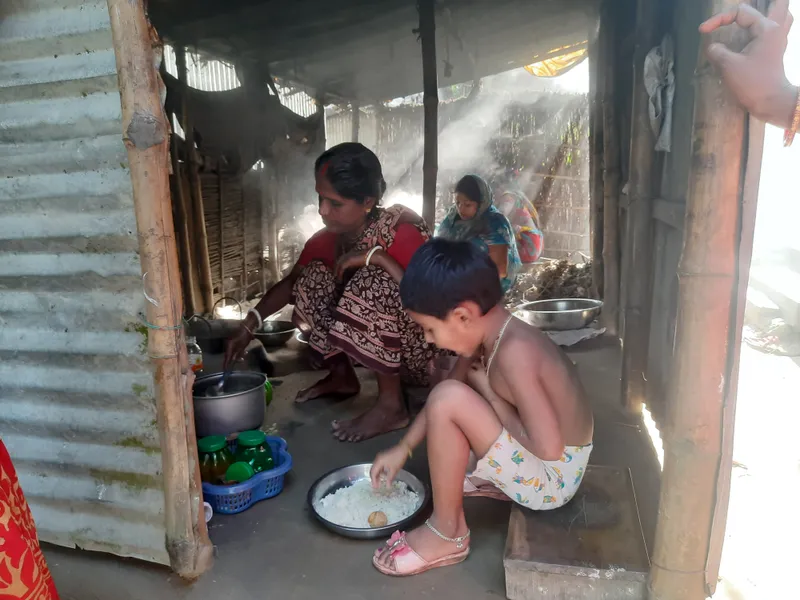
Flow of Open Space
The Hodi homestead revolves around open spaces that, apart from being functional, are also strongly identified with cultural rhythms and environmental adjustment. Uthan, Dohol, and Bondo are the spaces that structure domestic life and represent the Hodi worldview of graded thresholds and significant zoning.
a. Uthan (Inner Courtyard):
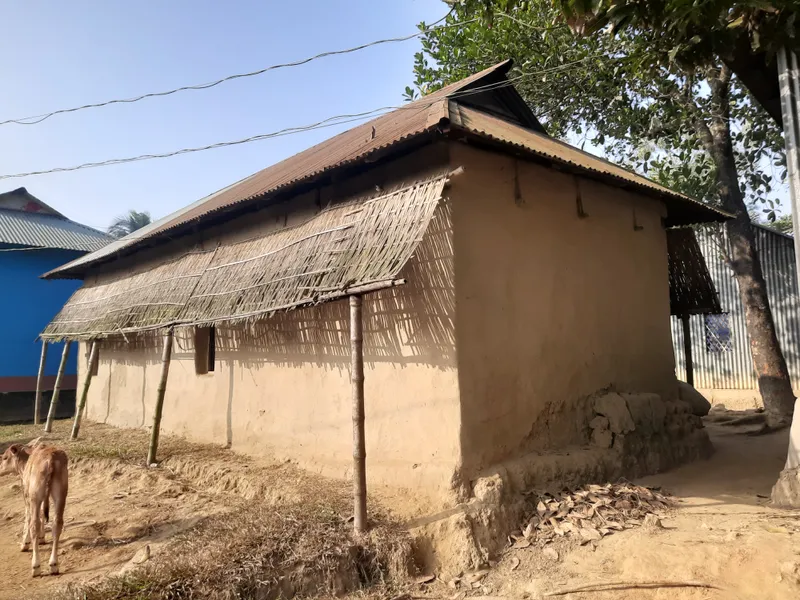
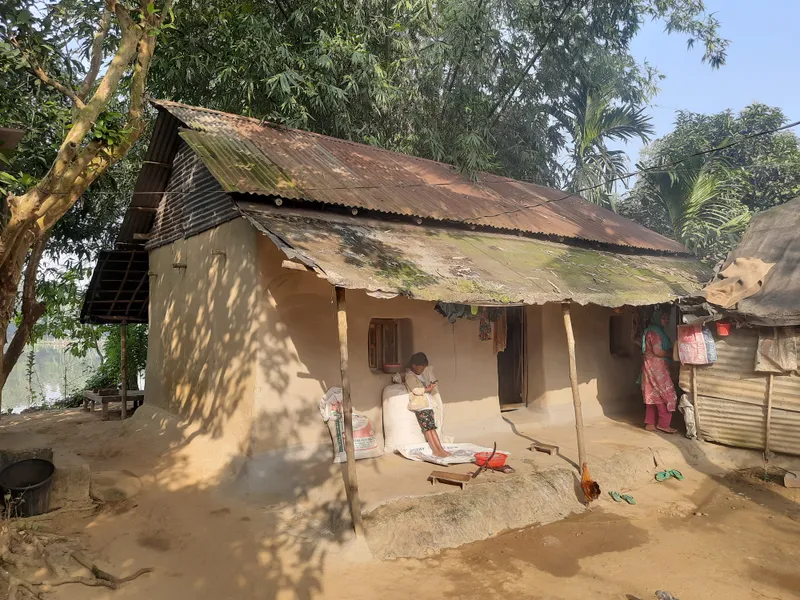
The Uthan is the most inner and intimate courtyard of the homestead, which is enclosed by living rooms, kitchens, and store huts. It is used primarily by the members of the family and is a private and sacred area.
Functions:
- Domestic functions such as pounding of rice, seed drying, weaving, and bathing
- Rituals such as marriage preparations or worship
- Socialization among women, elders, and children
- Microclimate regulator that enhances ventilation and daylight
- The Uthan is the emotional and spiritual heart of the home, a symbol of purity and domestic harmony.
Dohol (Outer Courtyard):
The outer threshold courtyard is the Dohol, which stands between the public street or pathway and the inner domestic space. It is a buffer area—semi-public in nature.
Its uses include:
- Receiving visitors or guests
- Men's gathering and informal conversation
- Working with tools, bamboo, or firewood
- Temporary workshop for craft work or repair activities
- The Dohol provides visual and social connection between the family and the broader community while maintaining privacy in the Uthan.
c. Bondo (Animal and Poultry Ground):
The Bondo is a designated open area close to the homestead as the grazing field for cattle and poultry. It is typically located at the rear or side of the house cluster.
Functions:
- Feeding and sheltering cows, goats, chickens, and ducks
- Seasonal fencing for animal husbandry
- Manure collection and composting
- Sometimes includes temporary thatch huts or bamboo sheds
The Bondo supports the household agrarian economy and food system and reflects the community's dependence on domestic animals for livelihood and ritualistic use.
Each Samaj begins with a temple and a pond in the middle which are both everyday life and ritual centers. The Samaj expands from this center into distinct households (Ghar). This spatial design reinforces the communal structure, with shared access to water, worship, and seasonal pursuits.
One of the most distinctive ecological and cultural features of Bhogairpar is the presence of a medicinal plant and bamboo forest belt that rings or interlaces through the settlement. Not only does this green belt maintain local health and traditional medicine, but it also provides for bamboo craftsmanship, one of the core livelihoods of Hodi people in the area.

Socio-Spatial Structure
The social structure of the Hodi community is characterized by a distinctive and segmented social organization grounded in kinship, culture and spatiality. This organization serves to reinforce communal identity, the regulation of social norms and the organization of everyday and ritual life.
a. Sharik (Family Unit):
A Sharik consists of 4 to 6 members of a nuclear or extended family who reside together. It is the smallest residential and everyday life unit.
b. Ghar (Homestead):
A Ghar is made up of 1 to 5 Sharik units. These households live together in a shared homestead or compound, often around a central inner courtyard. Certain common daily activities such as cooking, handicraft, and small-scale cultivation are often performed at this level on a shared basis.
c. Samaj (Community Group):
A Samaj is formed by 15 to 20 Ghar units. It is a socially bonded or kin-based group with the role of the organization of ritual, festival, and conflict resolution. A Samaj is also a common identity and collective responsibility unit.
Previously, a Samaj was formed by the members of one Dugu (clan), and nowadays it is often comprised of the members of one Gotra (lineage group). Each Samaj is internally divided into a number of Dugu, clans of common origin. People of the same Dugu observe rules of strict exogamy, i.e., they do not intermarry within the same clan. The Dugu organization perpetuates lineage identity across Paras and even between distant settlements.
The Hodi are of five Gotra, each of which is supposed to have descended from one of the five sons of a legendary Kshatriya king, according to Hindu mythology (e.g., the Mahabharata). These Gotras define deeper genealogical identity and prescribe marriage rules, shaping how Dugus are organized in the society.
d. Para (Neighborhood):
A Para is made up of 5 to 7 units of Samaj. It is a unit at the neighborhood level of the entire village. A Para typically has common infrastructure such as water bodies, religious spaces (temples or Thaan), congregation spaces, and seasonal festival spaces.
e. Geram (Village):
The Geram represents the entire village—a culturally integrated settlement made up of a number of Paras. It reflects the common identity, collective knowledge, and socio-spatial harmony of the Hodi. Despite being under migration and cultural erosion, the Geram is a site of rooted belonging and strength against a changing socio-political order
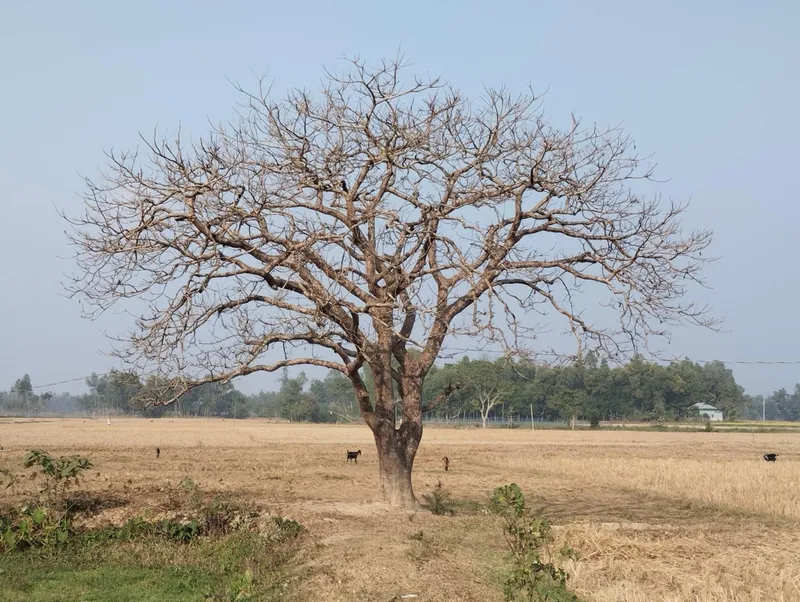
Concept of Holy Tree
Despite numerous cross-cultural changes over time, one tradition has remained constant—the ritual centered around the sacred tree.
Following religious conversion, Tulsi Puja (holy basil worship) was embraced by the Hodi community in their rituals. Differing from the majority Hindus, who typically have one Ram Tulsi or Dwito Bonotulsi and worship it, the Hodi plant and worship an entire bush of Tulsi. During their puja, they place a rock, which is already consecrated in their rituals, at the base of the Tulsi plant as a sacred object.
The Hodi have traditionally held in esteem the Seizu plant, also called the Manasa tree, as a representation of Bura (a deity who was later syncretized as Shiva). They also hold the Charak tree, often a Sal tree, in esteem as a representation of Shiva's presence within their community.
Further, Jica tree holds a special significance—it is considered important for each Samaj to possess a Jica tree where ritual worship can be offered. This adds force to community identity and determination of ancestral tradition.
Festivals, Puja & Rituals
| Bengali Months | As per Gregorian calendar | Local Name of Festivals, Puja & Rituals | Do they get places to perform these |
| 1. Boishakh (বৈশাখ) | April-May | Nava-Barsha (নববর্ষ) | No |
| 2.Joishtho(জ্যৈষ্ঠ) | May-June | Shitala (শীতলা) | Yes |
| 3.Asharh(আষাঢ়) | June-July | Amtii (আমটি)Thada Puja (ঠাডা পুজা) | Yes |
| 4. Shraban (শ্রাবণ) | July-August | Padma-Puja(পদ্মপূজা),Saraswati Puja (সরস্বতী পূজা) | Yes |
| 5. Bhadro(ভাদ্র) | August- September | Tera-bera (তেরা-বেরা) | No |
| 6. Ashwin(আশ্বিন) | September- October | Durga Puja (দূর্গাপূজা),Lakshmi Puja (লক্ষ্মীপূজা) | Yes |
| 7. Kartik(কার্তিক) | October- November | Kati Bihu (কাতি বিহু),Kartik Borto (কার্তিক বর্ত),Bhai Phota (ভাইফোঁটা)Bonotulshi Puja (বনতুলসীর পূজা) | No |
| 8.Agrahayan(অগ্রহায়ণ) | November- December | Ksheter Borto (ক্ষেতের বর্ত) | Yes |
| 9. Poush(পৌষ) | December- January | Vastu Puja (বাস্তুপূজা),Gram Puja (গেরাম পূজা) | Yes |
| 10. Magh(মাঘ) | January- February | Maghi Bihu (মাঘী বিহু) | No |
| 11. Falgun(ফাল্গুণ) | February- March | Gaon Borto/ Vasant Borto(গাঁওবর্ত/বসন্তবর্ত) | No |
| 12. Chaitro(চৈত্র) | March-April | Charak Puja (চড়ক পূজা),Hongrain (চৈত্র-সংক্রান্তি),Hutum Borto (হুতুমবর্ত) | No |
| No Specific Time | Bono-Durga Puja (বনদূর্গার পূজা),Korakori Borto/ Buraburi Puja(বুড়াবুড়ি পূজা),Kerengburi (কেরেংবুড়ি),Pathor Puja (পাথরপূজা),Dhenki Puja (ঢেঁকি পূজা),Kirtana (কীর্তন) | No |
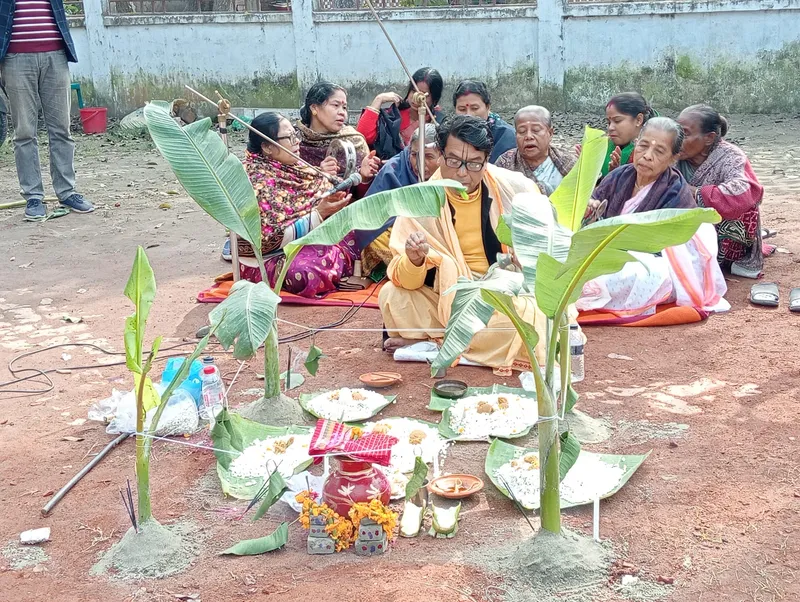
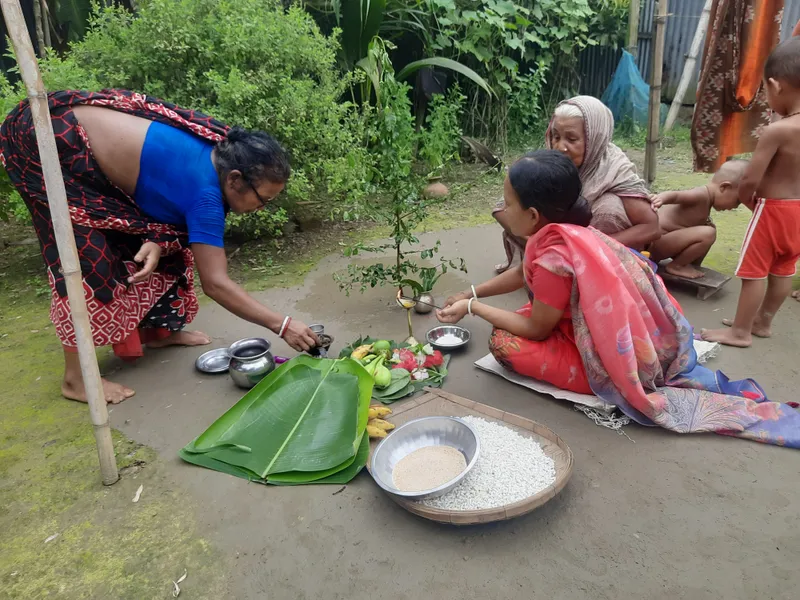
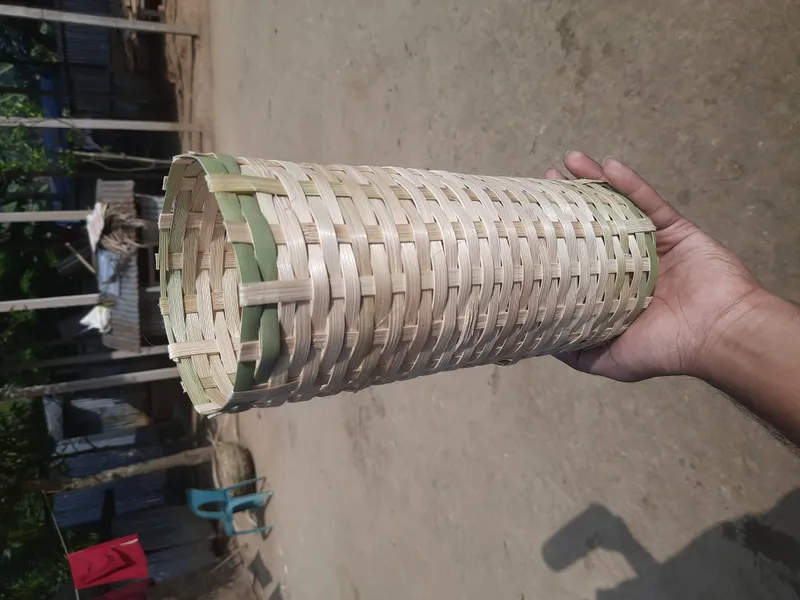
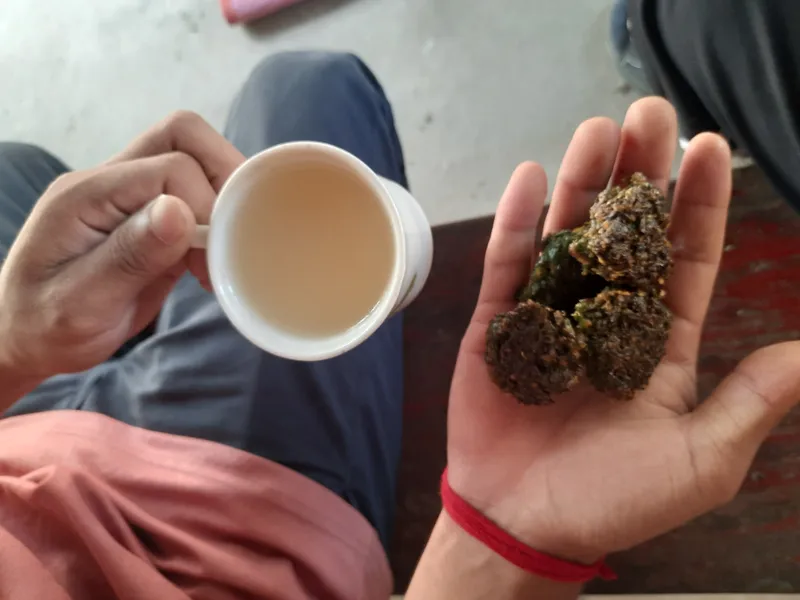
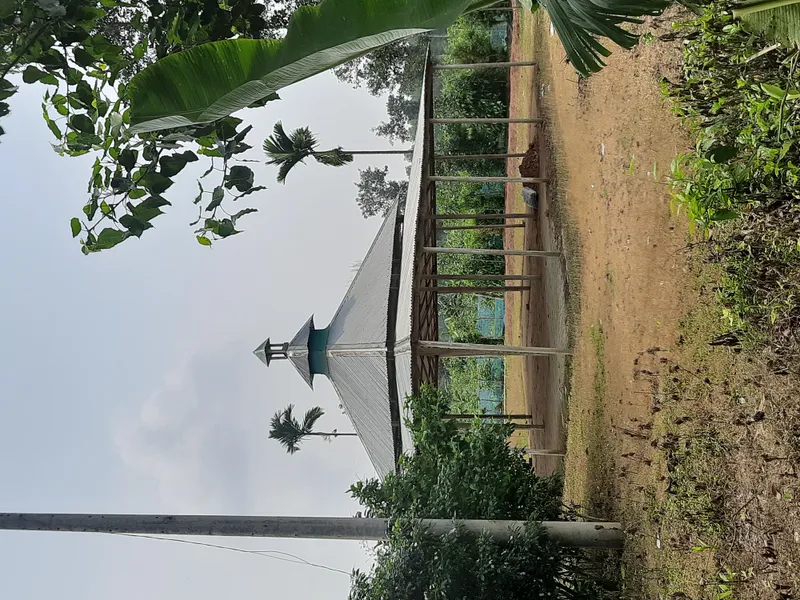
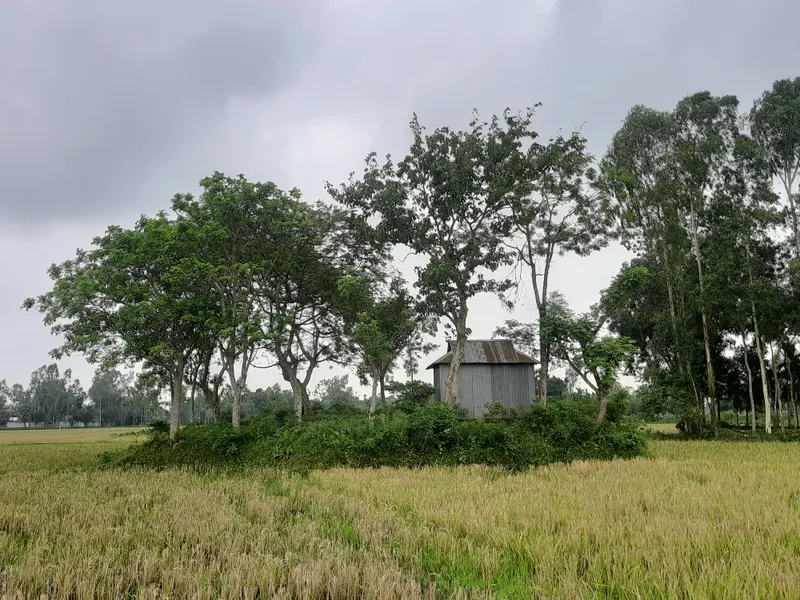

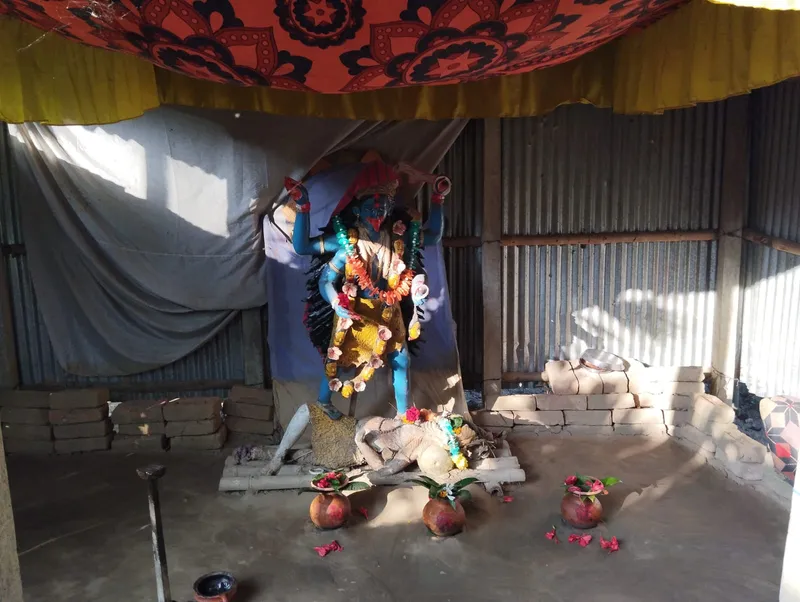
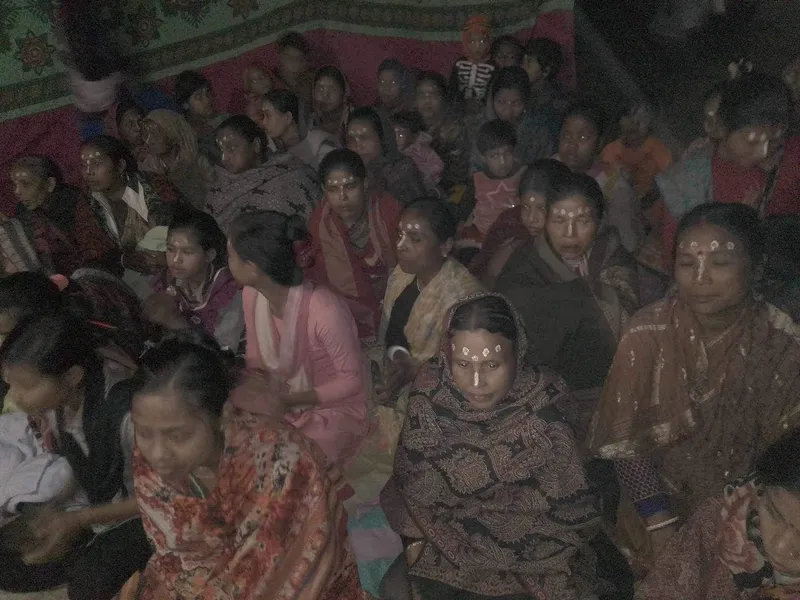

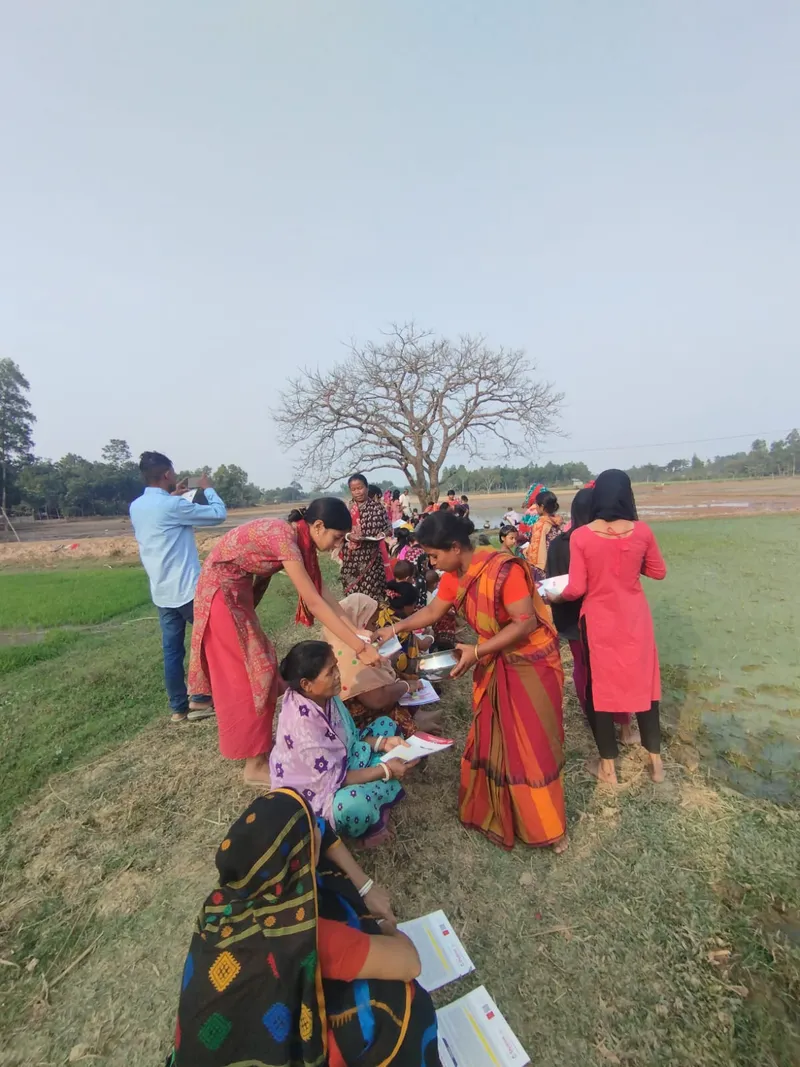
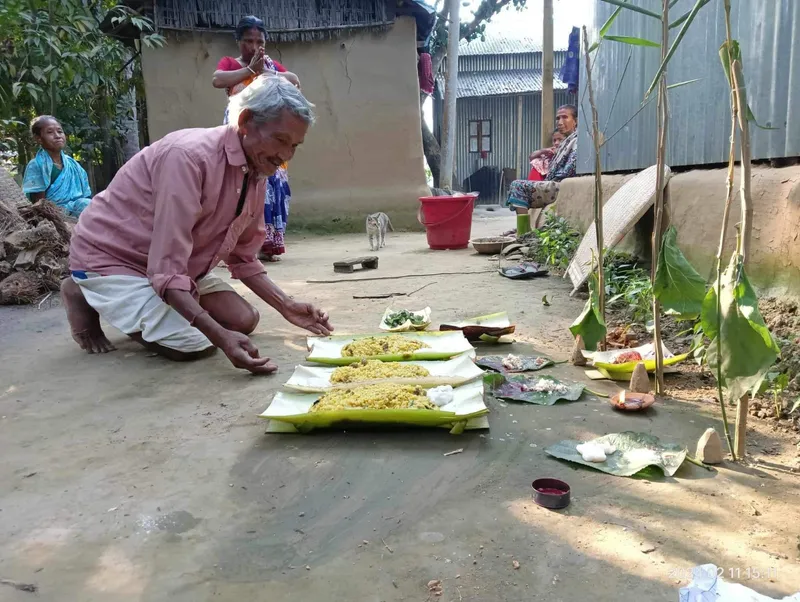

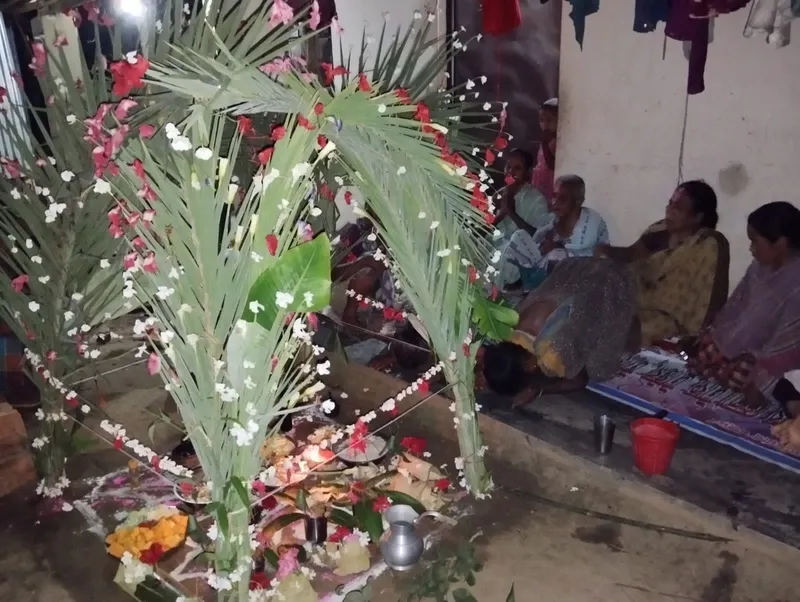
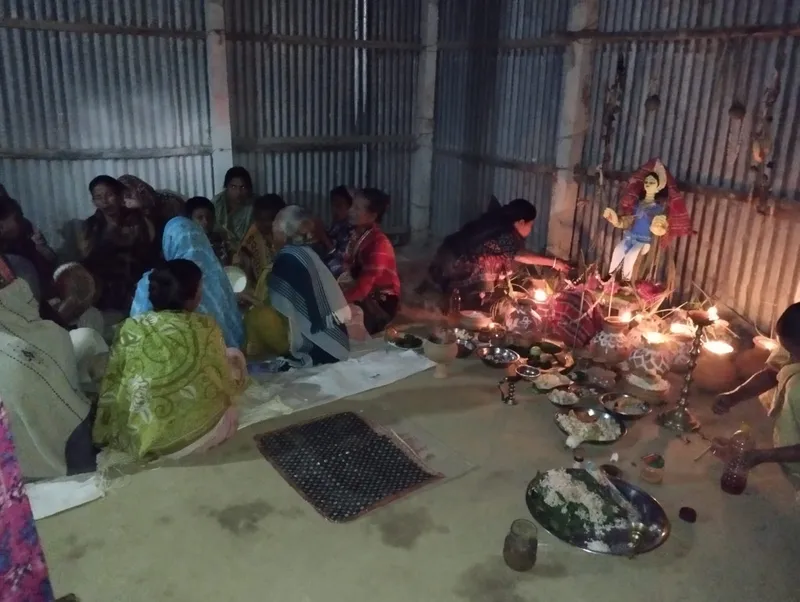
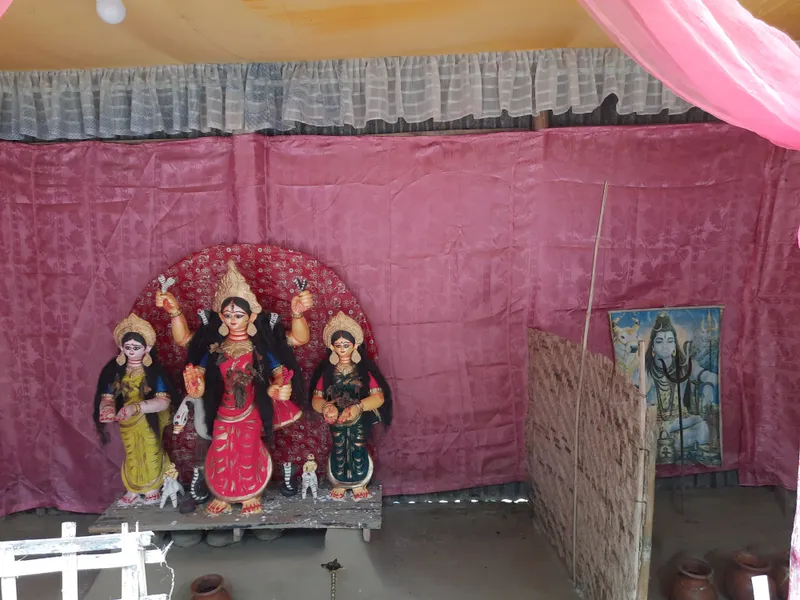
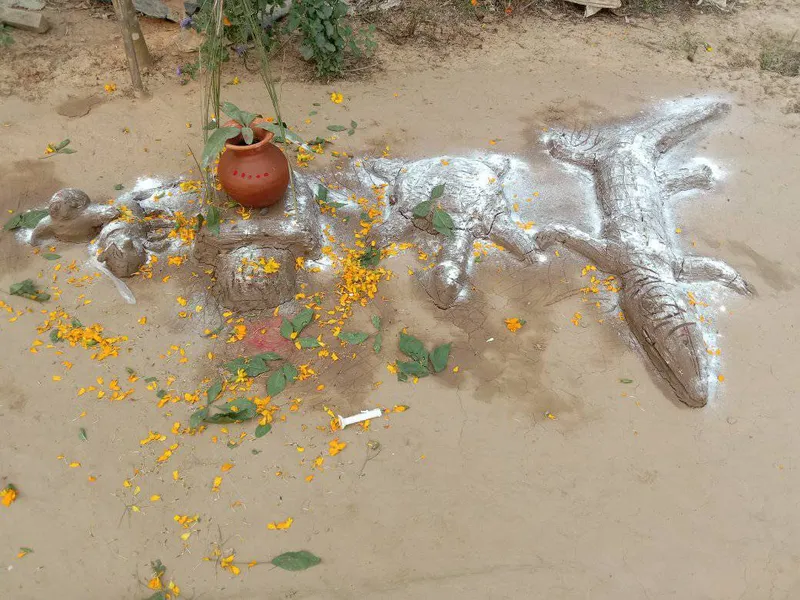
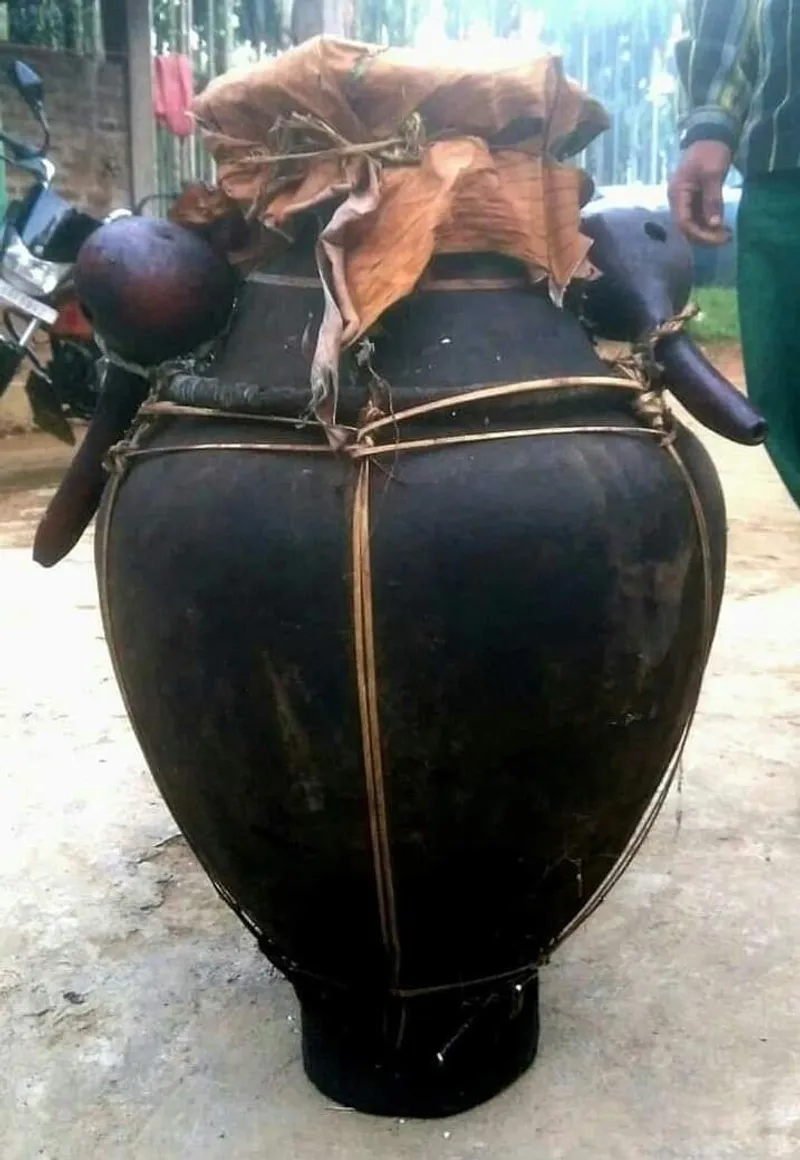
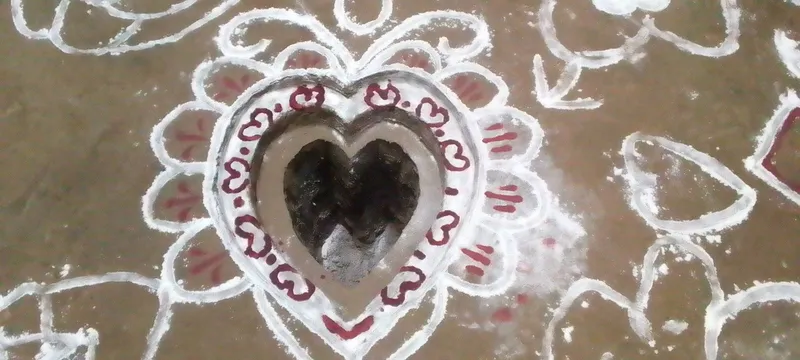
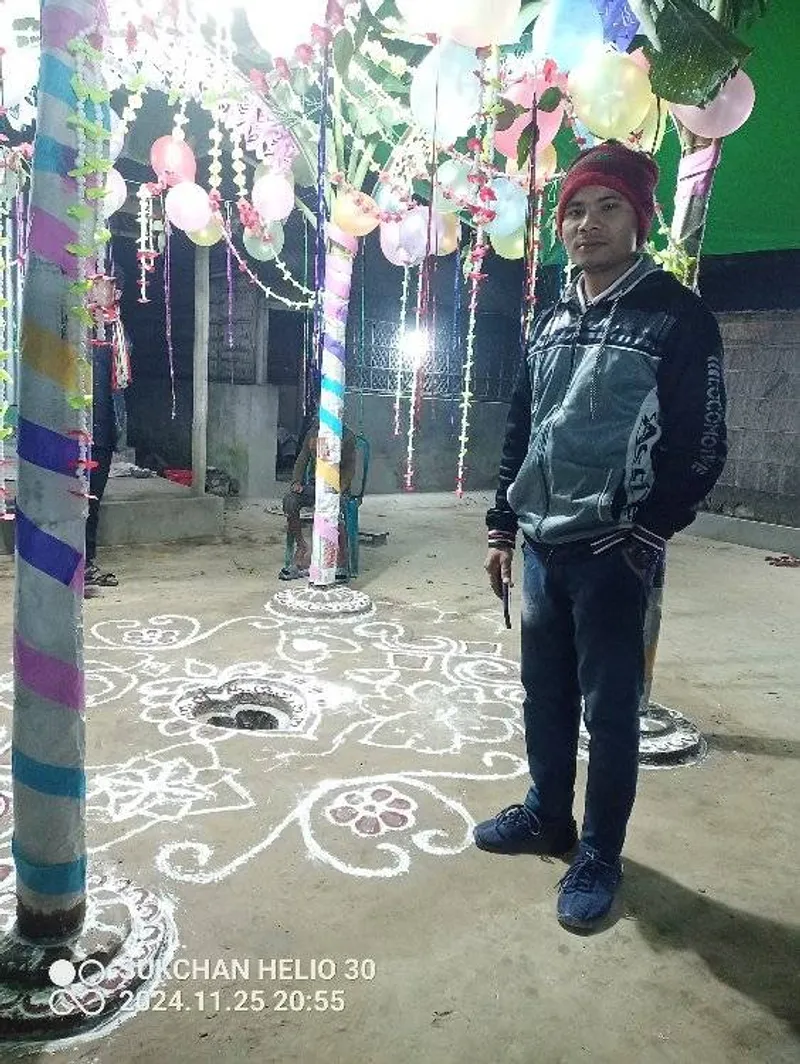
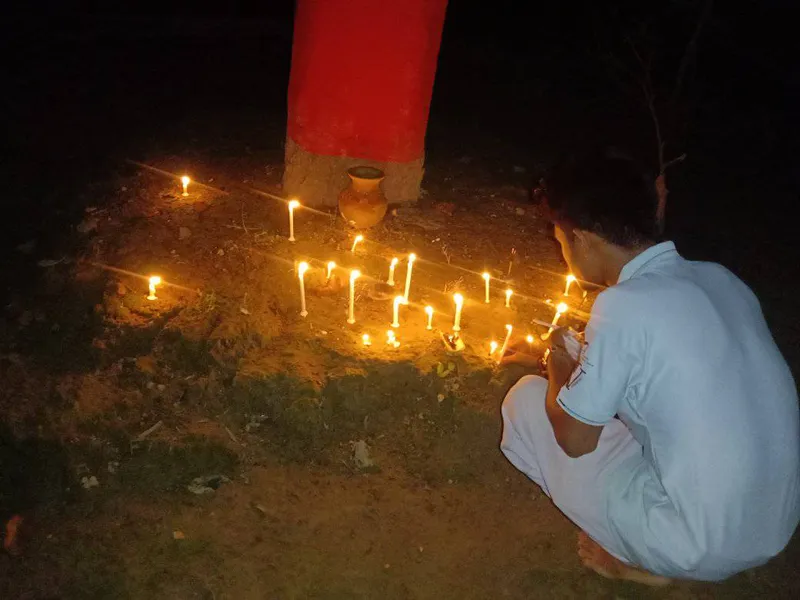
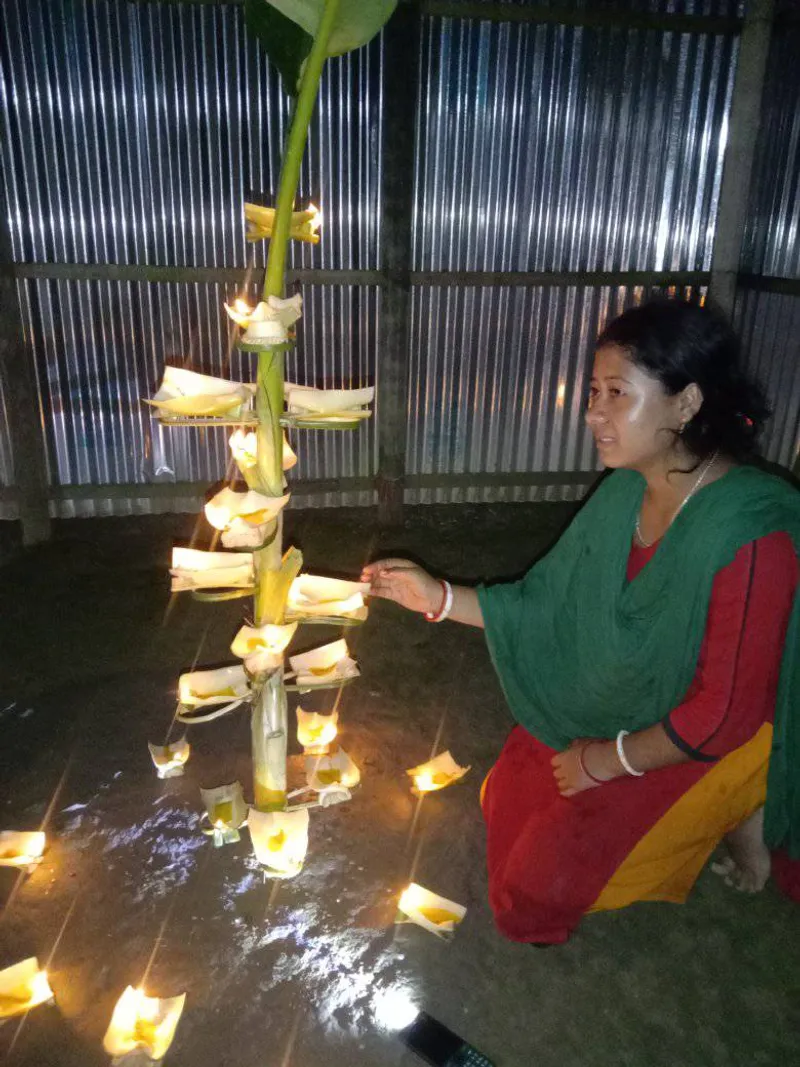
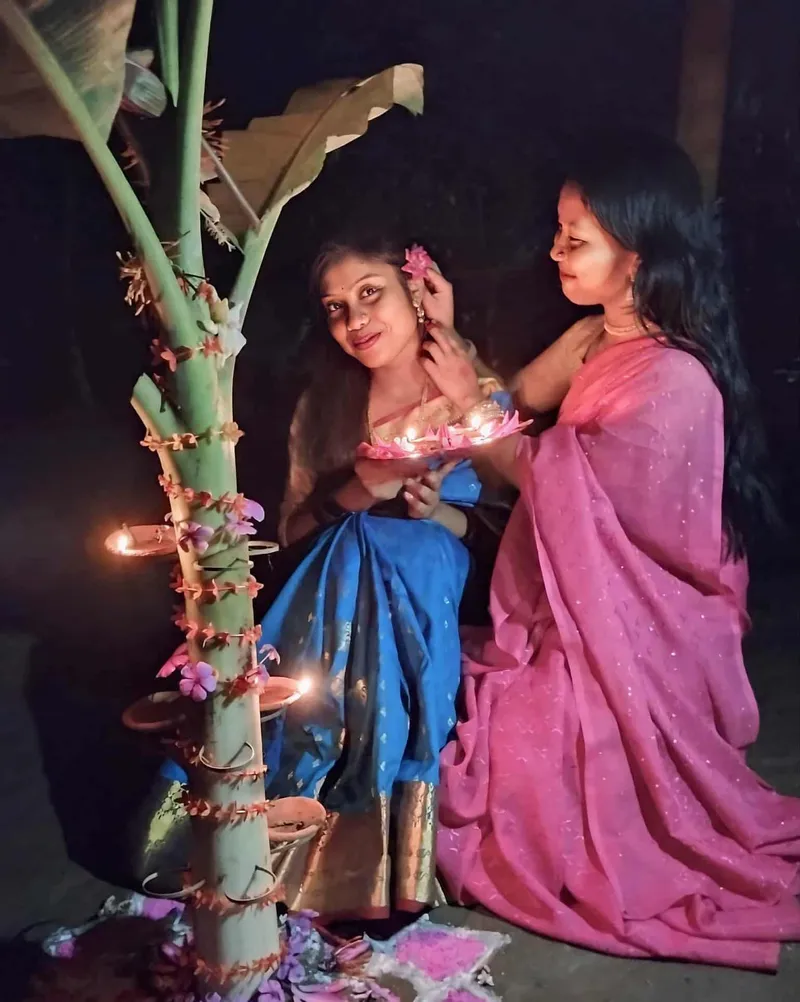

The research investigates the possibility of architectural intervention for an identity that was born and nurtured in this deltaic landscape and now faces the threat of extinction. The proposed architectural approach seeks to address the loss of their traditional values, spiritual beliefs and cultural practices which are under threat due to the pressures of modernity and displacement. By combining Neuroscientific, Anthropological, Medical, Economic, and Psychological Theories along with Participatory Community Design and Adaptive Architecture, the thesis imagines built environments that evolve with the needs of the community while considering their timeless cultural essence.
The proposed architectural plan has the intent of incorporating the Hodi's cultural heritage into the design framework, addressing both their socio-economic status and spiritual beliefs. The design also promotes intercultural communication with non-Hodi societies for social integration and shared understanding. The project seeks to sanctify the Hodi's cultural identity and create an interactive space that adapts without any cultural aggressions, placing architecture at the center of cultural continuity and social integration. It also acknowledges the ecological significance of Migratory Birds and the potential for Sensitive Waterfront Development which is a quiet but necessary requirement generated from the site's unique context.
Bamboo Species of Bangladesh:
| Local Name | Scientific Name | Primary Uses |
| Borak | Bambusa balcooa | Heavy construction, scaffolding, furniture, crafts |
| Kanta | Bambusa bambos | Fencing, construction, erosion control |
| Bish Kanta | Bambusa bambos var. spinosa | Strong fencing, structural supports |
| Mirtinga | Bambusa tulda | Paper pulp, housing, fencing, light scaffolding |
| Bethua | Bambusa cacharensis | Fencing, handicrafts, poles |
| Kanakaich | Bambusa comillensis | General household use, fencing |
| Tetua | Bambusa jaintiana | Light construction, fencing, mats |
| Choi | Bambusa multiplex | Ornamental use, hedging, handicrafts |
| Makla | Bambusa nutans | Construction, mats, craft items |
| Farua | Bambusa polymorpha | Walling, flooring, furniture, crafts |
| Korjoba | Bambusa salarkhanii | Light construction, weaving, small tools |
| Mitinga | Bambusa burmanica | Handicrafts, fencing |
| Baijja | Bambusa vulgaris | Furniture, crafts, general household items |
| Sharna | Bambusa vulgaris var. striata | Decorative use, furniture, fencing |
| Ghati | Bambusa ventricosa | Ornamental, landscaping |
| Hedge | Bambusa sp. | Hedging, fencing |
| Brandisi | Dendrocalamus brandisii | Heavy-duty construction, large crafts |
| Bhudum | Dendrocalamus giganteus | Heavy construction, bridges, building frames |
| Pecha | Dendrocalamus hamiltonii | Walling, mats, fencing |
| Ora | Dendrocalamus longispathus | Flooring, matting, general construction |
| Membra | Dendrocalamus membraceus | House building, walls, mats |
| Lathi | Dendrocalamus strictus | Agricultural tools, fencing, structural use |
| Kali | Gigantochloa andamanica | Crafts, decorative work |
| Zigzag | Gigantochloa apus | Fine handicrafts, mats |
| Kala | Gigantochloa atroviolacea | Ornamental use, polished crafts |
| Lata | Melocalamus compactiflorus | Weaving, basketry |
| Muli | Melocanna baccifera | Most common bamboo: house construction, fuel, baskets |
| Dalu | Schizostachyum dullooa | Fishing rods, weaving, musical instruments |
| Thai | Thyrsostachys siamensis | Thin walls, handicrafts, ornamental purposes |
| Rangoon | Thyrsostachys oliveri | Ornamental, light furniture |
| Talla | Bambusa longispiculata | Paper, fencing, tool handles |
| Chaina | Dendrocalamus latiflorus | Strong poles, scaffolding, fencing |
| Wappi | Thyrsostachys sp. | Ornamental, thin poles |
Migratory Birds of Sherpur District:
| Common Name | Scientific Name | Migration Type | IUCN Status (2025) | Notes |
| Chestnut-winged Cuckoo | Clamator coromandus | Summer migrant | Least Concern (LC) | Stable population |
| Plaintive Cuckoo | Cacomantis merulinus | Local/partial migrant | Least Concern (LC) | Common and widespread |
| Siberian Blue Robin | Larvivora cyane | Winter migrant | Least Concern (LC) | Stable population |
| Wood Snipe | Gallinago nemoricola | Rare winter visitor | Vulnerable (VU) | Declining due to habitat loss |
| Oriental Turtle-Dove | Streptopelia orientalis | Winter migrant | Least Concern (LC) | Widespread |
| Bluethroat | Luscinia svecica | Winter migrant | Least Concern (LC) | Stable population |
| Asian Openbill | Anastomus oscitans | Local/seasonal migrant | Least Concern (LC) | Common in South Asia |
| Tickell's Leaf Warbler | Phylloscopus affinis | Migrant warbler | Least Concern (LC) | Stable population |
| Eurasian Kestrel | Falco tinnunculus | Widespread migrant | Least Concern (LC) | Widespread and stable |
| Siberian Rubythroat | Calliope calliope | Winter migrant | Least Concern (LC) | Stable population |
| Taiga Flycatcher | Ficedula albicilla | Winter migrant | Least Concern (LC) | Stable population |
| Scaly Thrush | Zoothera dauma | Partial migrant | Least Concern (LC) | Widespread |
| Common Cuckoo | Cuculus canorus | Long-distance migrant | Least Concern (LC) | Very widespread |
| Osprey | Pandion haliaetus | Winter migrant | Least Concern (LC) | Stable population |
| Barn Swallow | Hirundo rustica | Long-distance migrant | Least Concern (LC) | Very widespread |
| Common Name | Scientific Name | Migration Type | IUCN Status (2025) | Notes |
| Yellow-browed Warbler | Phylloscopus inornatus | Winter visitor | Least Concern (LC) | Stable population |
| Dusky Warbler | Phylloscopus fuscatus | Winter visitor | Least Concern (LC) | Stable population |
| Greenish Warbler | Phylloscopus trochiloides | Winter visitor | Least Concern (LC) | Stable population |
| Knob-billed Duck | Sarkidiornis melanotos | Local/partial migrant | Least Concern (LC) | Stable population |
| Eurasian Collared-Dove | Streptopelia decaocto | Partial migrant | Least Concern (LC) | Common and expanding |
| Eurasian Moorhen | Gallinula chloropus | Resident/migratory in regions | Least Concern (LC) | Stable population |
| Gray-headed Swamphen | Porphyrio poliocephalus | Mostly resident, seasonal dispersal | Least Concern (LC) | Stable population |
| River Tern | Sterna aurantia | Seasonal migrant | Near Threatened (NT) | Habitat degradation threats |
| Black-headed Ibis | Threskiornis melanocephalus | Local migrant | Near Threatened (NT) | Local threats |
| Gray Heron | Ardea cinerea | Winter migrant | Least Concern (LC) | Widespread |
| Purple Heron | Ardea purpurea | Partial migrant | Least Concern (LC) | Stable population |
| Wire-tailed Swallow | Hirundo smithii | Partial migrant | Least Concern (LC) | Stable population |
| Gray-headed Lapwing | Vanellus cinereus | Winter migrant | Least Concern (LC) | Stable population |
| Eurasian Hoopoe | Upupa epops | Migrant | Least Concern (LC) | Widespread |
| White Wagtail | Motacilla alba | Migrant | Least Concern (LC) | Very widespread |
| Common Name | Scientific Name | Migration Type | IUCN Status (2025) | Notes |
| Olive-backed Pipit | Anthus hodgsoni | Migrant | Least Concern (LC) | Stable population |
| Whistler's Warbler | Phylloscopus whistleri | Migrant | Least Concern (LC) | Stable population |
| Cinnamon Bittern | Botaurus cinnamomeus | Migrant/visitor | Least Concern (LC) | Stable population |
| Blyth's Leaf Warbler | Phylloscopus reguloides | Migrant | Least Concern (LC) | Stable population |
| Brown Shrike | Lanius cristatus | Migrant | Least Concern (LC) | Widespread |
| Long-tailed Shrike | Lanius schach | Resident/partial migrant | Least Concern (LC) | Stable population |
| Indian Cuckoo | Cuculus micropterus | Migrant | Least Concern (LC) | Stable population |
| Ultramarine Flycatcher | Ficedula superciliaris | Migrant | Least Concern (LC) | Stable population |
| Indian Pitta | Pitta brachyura | Some populations migrate | Near Threatened (NT) | Localized declines |
| Ashy Drongo | Dicrurus leucophaeus | Migrant | Least Concern (LC) | Stable population |
| Black Drongo | Dicrurus macrocercus | Partial migrant | Least Concern (LC) | Stable population |
| Yellow-footed Green-Pigeon | Treron phoenicopterus | Local movements | Least Concern (LC) | Stable population |
| Black Kite | Milvus migrans | Migrant | Least Concern (LC) | Widespread |
| Brahminy Kite | Haliastur indus | Partial migrant | Least Concern (LC) | Stable population |
| Oriental Honey-buzzard | Pernis ptilorhynchus | Migrant | Least Concern (LC) | Stable population |
| White-eyed Buzzard | Butastur teesa | Resident/partial migrant | Least Concern (LC) | Stable population |
| Brown Crake | Zapornia akool | Migratory/winter visitor | Near Threatened (NT) | Localized wetland dependency |
Traditional Architype: Dera
The Hodi people have a distinct and traditional housing form known as the "Dera." There is a popular saying in that area that-
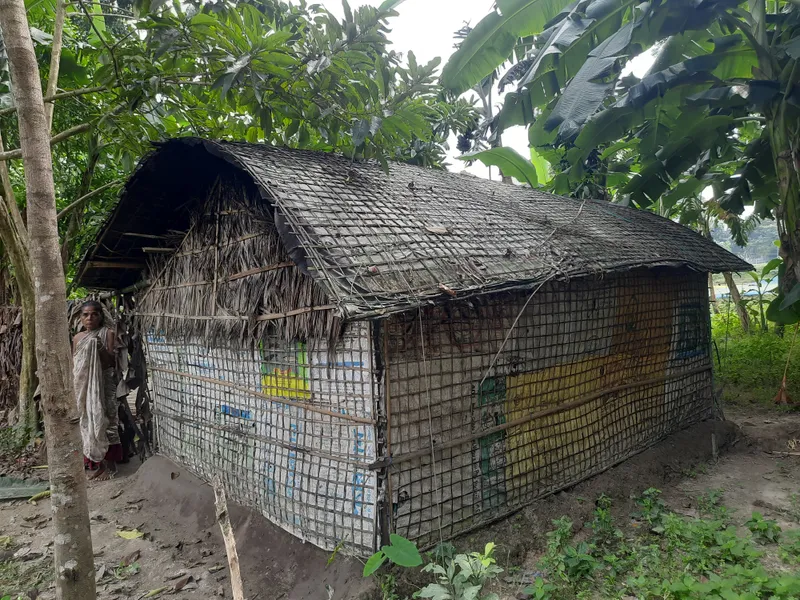
Kolapatar dera-dura
Oine achhe Hodipara.
‘Banana-leaf huts, all scattered and raw.’
There you’ll find the Hodi in awe.’
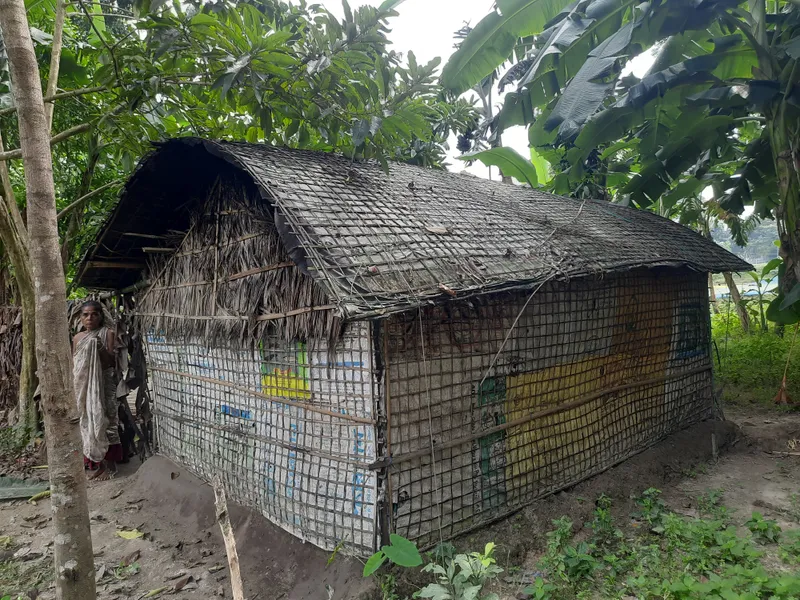
These dwellings are typically constructed using natural, locally available materials. The walls are made from banana leaves or betel nut leaves while the roof is traditionally thatched with straw or grass and the plinth is crafted from a mixture of jute fiber and mud. The structural framework is primarily composed of semicircular bamboo slit, a sustainable and flexible material.The concept came from ‘Teer-Dhonna’ (bow and arrow), which was used as a primary means of defense.
To cope with the strong riverside winds, they built their homes small and lower to the ground. Windows are either omitted entirely or designed as small openings, allowing minimal light and ventilation, to maintain the house's durability against the wind.
Maxims of Khona followed by the Hodi people:
a. The king lives in a south-facing house; the east-facing is his subject's spouse. The west-facing brings ashes and gloom, The north-facing pays no revenue or room.
(Meaning: South-facing houses are best; east is decent; west brings misfortune; north is barren or unproductive.)
b. A duck to the east, bamboo to the west, Fence to the north, open to the rest. Build your home strong and wide, with support posts joined side by side.
(Meaning: Placement of nature and structure matters—specific directions bring harmony to the house.)
c. Adulsa, Bamboo and a Brahmin near. These three will bring the homestead to fear.
(Meaning: Certain elements near the house are bad omens.)
d. If you build on a fevered land, Sickness will come by its own hand.
(Meaning: Avoid building on land that once had disease or a bad history.)
e. Dhenki (husking tool) in the south, Bael tree to the north, Goddess Lakshmi says: "I am off henceforth!"
(Meaning: These placements drive away prosperity or good fortune.)
f. The north room eats milk and rice, The south room freezes in winter’s ice, The west room eats hearty meals, The east room only has leftover peels.
(Meaning: Different room orientations bring different fates—north brings wealth, east brings poverty.)
g. A house well fenced is a life well spent.
Meaning: A boundary around the home brings order, protection, and harmony.)
h. Palm, tamarind, and madar tree, Make the house a misery.
(Meaning: These trees near a house are believed to bring negativity.)
i. Where neem and nishinda trees grow, Death is something rare to show.
(Meaning: These medicinal trees near homes promote health and longevity.)
j. A high platform and a sunken floor, That home will suffer forevermore.
(Meaning: Improper construction—raised platform with poor drainage—invites lifelong discomfort or trouble.)
But in most cases, they could not follow one important aspect: the orientation. The orientation is mostly east-west which is unusual for tropical regions but typical for riverside microclimates, where the wind flows from east to west.
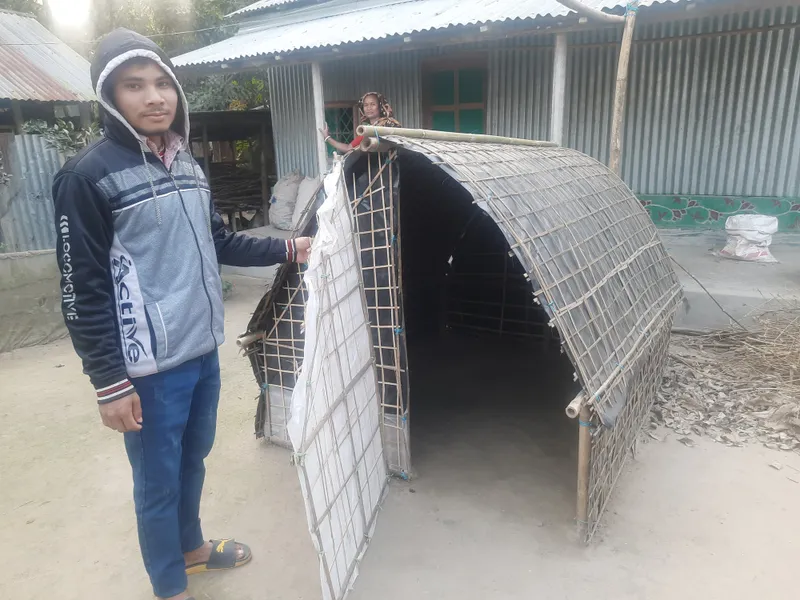
This project is worth mentioning not only for innovative design, but for introducing to the global platform the Hodi-Mandai, an endangered ethnic minority. In Bangladesh alone, a country of over 175 million, the Hodi have been marginalized over one thousand years in the Old Brahmaputra Valley. To document their otherwise unrevealed culture, I spent a year's fees and lived with the community for months to study their daily lives, ceremonies, and traditions firsthand. The project does not encage them in colonial histories and record books but as they are revealed in current media, they unveil their cultural identity before the world.
The thesis provides Reverse Contextualism as a novel theory of architecture that re-interprets rather than replicates context and uses neuro-architectology through the application of a 3×3 methodology of Hodi psychology based on surveys and fractals of Bengal Delta settlements.
The Hodi’s mastery of bamboo crafts and vernacular building techniques reflects a unique tectonism, merging contemporary architecture with deltaic traditions. Local knowledge is used to respect site topography and context. A living museum documents heritage, unifies the dispersed community, and integrates ecological awareness, including migratory birds, 95% native species.
Through participatory planning, ethnography, and ecological consciousness, the project creates cultural continuity, social cohesion, and environmental stewardship, bringing the Hodi-Mandai international publicity, recognition, and a platform to continue their tradition.
Project idea
What if architecture reveals itself as the only vessel of memory and culture for a disappearing community? Tangible heritage comes out of the intangible practices of rituals, memories, oral history, and continuity of knowledge between generations. Architecture and planning hence turn out not to be merely concerned with physical space but are mediums that allow cultural identity to pass through generations after generation. Cultures that thrive by practicing their own cultures feel a better sense of belonging, psychological satisfaction, and happiness than those devoid of culture.The Hodi-Mandai people are one of the numerous culturally distinct but marginalized ethnic groups of the Greater Mymensingh that have preserved their intangible heritage deeply influenced by the vibrant ecology of the Bengal Delta. However, despite a thousand-year-long tradition of existence, the culture of the Hodi–Mandai people has become increasingly vulnerable due to socio-economic marginalization, environmental changes, loss of territories, and homogenizing tendencies of modernity. Against this backdrop, this project attempts to bring out the characteristics of the intangible cultural heritage of the Hodi ethnic group by discussing collective memory, rituals, spatial practices, ecology-related traditions, kinship system, and dwelling culture based on architecture. Tracing their roots back to the Bodo Assamese ethnicity, Hodi identity formed in the course of integration into the Koch and Garo tribes through numerous intermarriages and co-existence in the shared territory. Considering the connection between the studied phenomenon and the idea of vanishing vernacular (loss of local cultures and knowledge under globalization and urbanization), the studies narrate the issue of the intangible cultural heritage of the Hodi people regarding its relation to spatial practice and vernacular architecture.The proposed architectural approach seeks to address the loss of their traditional values, spiritual beliefs and cultural practices which are under threat due to the pressures of modernity and displacement. By combining Neuroscientific, Anthropological, Economic, and Psychological themes along with Participatory Community Design and Adaptive Architecture, the thesis imagines built environments that evolve with the needs of the community while considering their timeless cultural essence. The design also promotes intercultural communication with non-Hodi societies for social integration and shared understanding. The project seeks to sanctify the Hodi's cultural identity and create an interactive space that adapts without any cultural aggressions, placing architecture at the center of cultural continuity and social integration. It also acknowledges the ecological significance of Migratory Birds and the potential for Sensitive Waterfront Development which is a quiet but necessary requirement generated from the site's unique context.
Project description
Functional Programs-Residential Cluster:a. 80 Housing Units – Flexible homes designed for vertical expansion and material adaptability, integrating Hodi traditions such as Uthan (inner courtyard), Dohol (outer courtyard), and Bondo (animal and poultry ground), while incorporating climate-responsive design for future generations. Grids are applied to allocate functions as per survey data.b. Shared Kitchens & Animal Sheds – Spaces for collective cooking and livestock of one Ghar, echoing community livelihood.c. Rice husking spaces for preparing rice beer and Dhenki Puja. The clusters are introverted in nature.Cultural & Social:d. Community Hall – Venue for meetings, weddings and collective decision-making.e. Samiti Bhaban (Administrative Building) – Houses offices, a handloom training center, a computer lab, and a community medicine center. Its form is modeled as a replica of the traditional Dera organization, reflecting local architectural and cultural identity.f. Cultural Memory Center – An archive and exhibition space dedicated to oral history, rituals, and craft heritage. The form of this building contrasts with the larger masterplan, creating a visual focal point. Its shape is inspired by the Aakas-Kuppa (sky torch), which the community lights for their ancestors, symbolically conveying that their culture remains alive on Earth.g. Dancing Ground & Ritual Forest (Jica Tree/Temple Belt) – Outdoor sacred spaces for puja, seasonal rituals, and performances. Occasionally, the area also serves as a Tulamuni (picnic) spot for the community. Spattered Religious Spaces strategically placed to emphasize the importance of empowering the Samaj, ensuring that each community cluster has at least one significant Hindu temple. This provides a sense of security and respects their dual cultural identity.The shape of the Dera flows from micro to macro scale - household to public spaces, inspired by the community’s belief that this form provides visual comfort and strengthens cultural identity.Education & Learning:h. Pathshala (Pre-School, Primary & Night School) – An intergenerational learning hub combining formal education with cultural transmission. It facilitates youth club activities and is nestled within the existing forest, providing a sense of protection and calmness.i. Workshop and Sales – Bamboo treatment, weaving, carpentry - sustaining the traditional craft economy.j. Bamboo Music Garden – For recreation.Livelihood & Market:k. Haat-Bazar – Marketplace for daily needs and intercultural exchange.l. Craft Development Agencies’ Hub – Training micro-enterprise support.Public Amenities:m. Rest House – Shelter for visitors, migrants or intercultural exchange programs.n. Observation Facilities / Viewing Decks – Ornithology & eco-tourism linked to the Beel landscape.o. Field- For public gathering during Charak Puja or Durga Puja, or for any fair or sports.Waterfront & Ecology:p. Ponds & Ghats – Designed for bathing, fishing, cremation rituals, and managing seasonal flooding. All water bodies are interconnected, reflecting the community’s traditional knowledge and water management practices. Mandar means cavity under a natural waterbody, generally used for making a fish trap at this locality.q. Bamboo & Medicinal Forest Belt – An ecological buffer that supports traditional crafts, community health, and biodiversity. The bamboo belt prevents soil erosion, provides habitat for heron species, and reinforces the “one village, one product” concept by sustaining local craft resources.r. Reserve Forest– Habitat for migratory and endangered bird species.s. Community Agricultural Land – According to them, there is nothing individual. Everything is communal and should be distributed equally to individuals.Although the site slopes towards the lake, land development is feasible due to the advantage of the existing government lake excavation project. The site’s layout has been derived from the contour lines along the edge of the water body. Three river offtakes around the site act as natural barrier channels, reducing flood risk and ensuring the settlement remains safe during seasonal inundation.
Technical information
The project suggests a regenerative settlement that links together ecology, culture, economy, and architecture through their interconnected systems of canals, ponds and wetlands to improve water circulation, allow for irrigation, restore fish and other aquatic species as food sources to encourage the protection of both the food security of the area as well as the area’s biodiversity. All the bridges and culverts connecting each component also maintain the ability of the inhabitants to travel within the space while still maintaining an ecological connection.The development of the settlement occurs in three phases. The first set of families consists of forty residents of Hodi already settled and eight new families, which will take place over time and at approximately double its current size (eighty families). The existing residents of Hodi rely on their traditional networks of kinship and support to assist new families as they establish their homes. As the settlement continues to grow, bamboo forests, medicinal gardens, and ecological corridors will also be developed in harmony with the growth of the community.There will be great improvement in ecological performance during the implementation of the proposed phased landscape design. The percentage of canopy cover is expected to increase from about 20% at Phase 1 to 65% at Phase 3, and the number of native species is expected to increase from 24 to 58. This will make the landscape more biodiverse and have more habitat value. There will be an increase in the area of pollinator habitats from 0.8 ha to 3.2 ha, and stormwater retention from 550 m³ to 2,250 m³ during each rainfall through the construction of wetlands and permeable landscapes. Vegetation will make it possible for there to be an increase in annual carbon sequestration from 10 to 65 tCO₂e, an increase in coverage of permeable surfaces from 62% to 82%, and a reduction in average surface temperature of up to 4°C. Indicators of performance are based on benchmark values from research and published data on landscape performance (e.g. Sustainable SITES Initiative, i-Tree Eco, CIRIA SuDS Manual, and FAO Urban Forestry).Bamboo plantations which are exclusively dedicated to the production of bamboo, serve the dual purpose of providing renewable materials, as well as functioning as carbon sinks. A Bamboo Prefabricated Factory would convert harvested bamboo within the local area into modular components that will be used to build dwellings for the community; the factory will also create jobs and positively impact the local economy. An Administration/Community Resource Center will be created to facilitate the coordination of agricultural production, bamboo fabrication, crafts, markets, and other community-based resources. For residential blocks, there will be ferro-cement flooring, and there will be a jute polycarbonate and polymer roof system to ensure longevity, daylighting, and thermal regulation. For public buildings, there will be treated bamboo columns, beams, trusses, and bamboo chatai sheets, which will create lightweight and environmentally sustainable architecture based on local building practices. The design incorporates passive ventilation systems, transition spaces, and a permeable building envelope to minimize energy consumption; however, solar photovoltaic cells have been proposed to decentralize renewable energy sources. The proposal also seeks to incorporate existing Muslim families into a cohesive society through shared public spaces, markets, and facilities. Thus, the project creates an environmental, socio-cultural, and economic sustainability model that uses renewable construction materials, restoration ecology, community production processes, and sustainable growth principles.
Survey Questionnaire:
a. Individual Household Questionnaire:
1. Name of the head of the family
2. Descent of Kshatriya-
i. Goutam , ii. Kapil
iii. Autri, iv. Angiraas
v. Kashyap
3. Number of family members
4. Age of family members
5. Major Traditions (Shakta,Vaishnav etc.)
6. Do you practice rituals of Naturalism?
7. Family profession
8. Current occupation
9. Reason of changing profession
10.How long ago you changed profession?
8. Reason of changing family profession
9. How long ago you changed profession?
11.Monthly income
12.Any other source of income
13.Educational status
14.Reason of migration
15.Are you living in their ancestral land?
16.How long have you or your family been residing on this land?
17.Did you migrate at any point in their lifetime, or did your family migrate?
18.What do you use as building materials?
19.Have you experienced or are you currently facing any natural calamities here? If yes, what type of calamities have you encountered?
20.During floods, at what level does the water rise?
21. Do you live on their own land or house, or do you reside on land or in a house provided by relatives?
22. Do you or your family members receive any economic support from the government or NGOs?
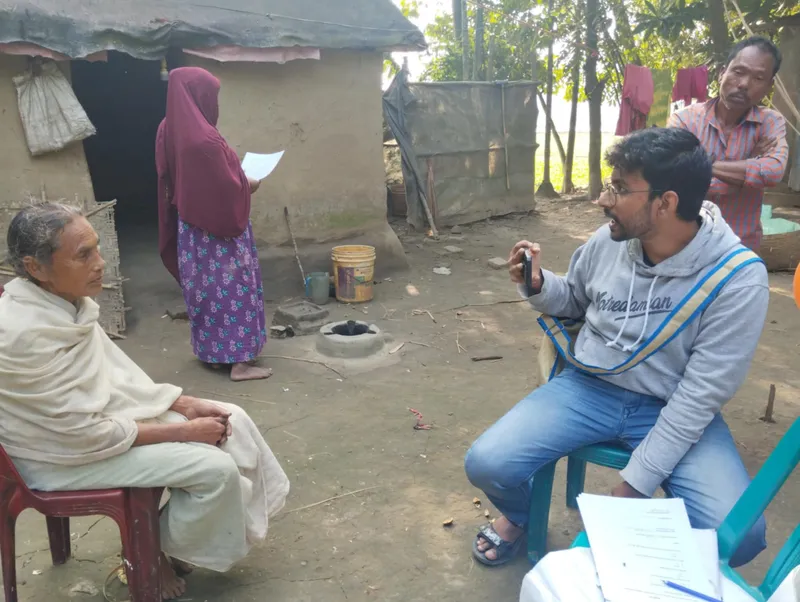
b. Observation Sheet:
1. Layout of the homestead with north sign (with location with road / entry, adjacent homestead, vegetation, drinking water source / pond etc.) :
2. Note:
Cultural Elements of Main House and Annex Buildings:
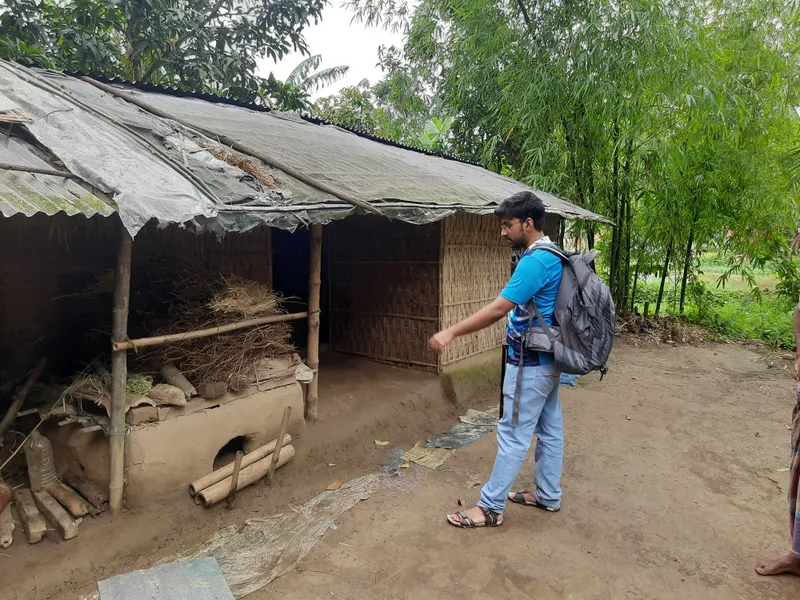
c. Focus Group Discussion & Key-Informants Interview:
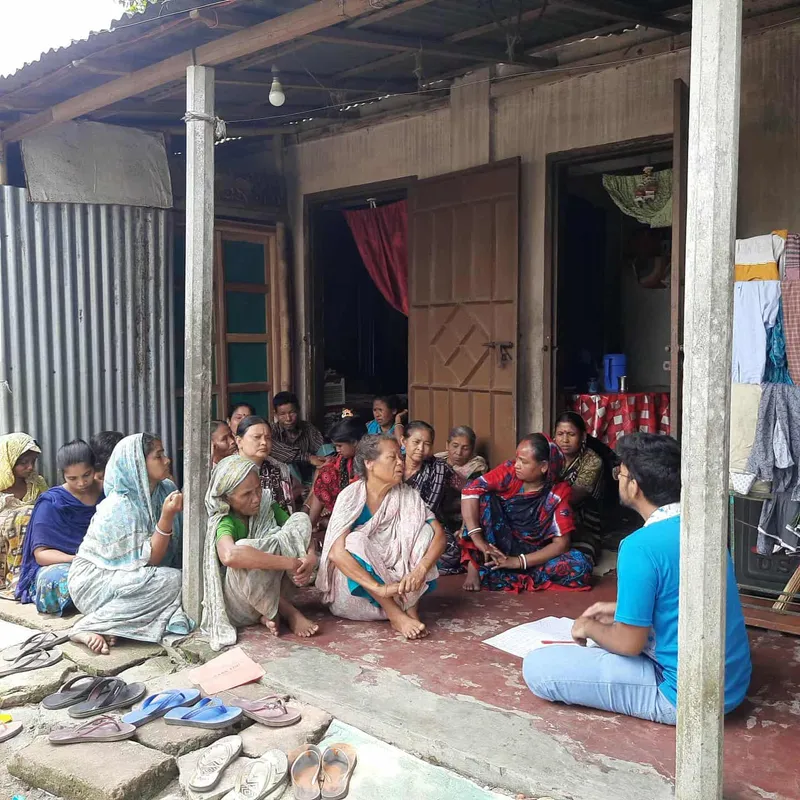
*Identical questions were used in both FGD and KII to explore diverse perspectives from activists and ordinary individuals.
Case study area: Village ………………. Upazila ………………. District ……………
No of participant: …………………………………………………………………………………………….
1. Numbers of Hodi families and locations according to their knowledge :
2. Local Festivals, Puja and rituals they performs:
3. Do they have ancestral domain? :
4. Are their current building materials suitable for them? :
5. Are they getting houses from government ? :
6. Can house functions be extended or changed if needed? :
7. Do the people ever be threatened with eviction from the land as the land they are
living on now? :
8. Are they getting their basic need properly?
Food :
Clothing :
Shelter :
Education :
Health :
Entertainment :
9. Are their houses been built to long last ? :
10. Do their vernacular houses helpful for people with disabilities? :
11. Do the types of houses follow their economic conditions ? :
12. Do homeless people double up with their relatives? :
13. Are their houses providing enough during monsoon and winter ? :
14. How is the relationship with the non-indigenous neighbours? :
15. At what age can a family member participate in family decisions? :
16. How property is divided? :
17. If they don’t have their own land, then where is the culture practiced?:
18. How are bamboo products sold? :
19. Do they help others financially or physically in building a new house? :
20. What is the growth pattern of their settlement? :
21. Where do men and women gather for informal chats? :
22. Is the community missing a designated space for gatherings like regular meetings,
annual weddings, and shared events? :
23. What types of houses Gharami (Mason) made? :
24. Do local families find that their adult children, once married, struggle to stay within the community or are required to live with their parents or move elsewhere due to limited land availability and insufficient housing solutions? :
25. What is the age range of working individuals in the community? :
REFERENCE
Ahmed and Kabir (2005), A Study of traditional Housing of “Pahari” Communities in
the Chittagong Hill Tracts (CHT).
Ali N. (2017), Maxims of Daak and Khona [in Bengali], Dhaka, Bangladesh: Afsar
Brothers.
Anderson (1983), Imagined Communities: Reflections on the Origin and Spread of
Nationalism.
Appadurai (1996), Modernity at Large: Cultural Dimensions of Globalization, Minneapolis,
University of Minnesota Press.
Asad (2021), History of the Ethnic Minorities in Bangladesh [in Bengali], pp. 71 & 218,
Dhaka, Bangladesh: Dhaka Prokashoni.
Atawula (2019), Innovational Refugee Shelter Design with Pneumatic Sandwich Structure.
Bamboo, Bangladesh National Building Code 2012, Structural Design, Part 6, Chapter 4.
Bamboo Structures- Bamboo Culms- Structural Design, ISO-22156, 2nd Ed., 2021-06
Bangladesh Delta Plan (2018), Baseline Studies on Water Resources Management, Vol. 1,
Ministry of Planning, GOB.
Bangladesh Environment Conservation Act , Act no-1, Bangladesh Gazette (1995)
Bangladesh Folk Culture Series–Mymensingh [in Bengali], Bangla Academy, 2017.
Bangladesh Folk Culture Series–Sherpur [in Bengali], Dhaka, Bangladesh : Bangla
Bangladesh Indigenous Peoples’ Rights Act (BIPRA).
Bangladesh One Health Strategic Framework 2025-2030, Ministry of Health and Family
Welfare (MOHFW), GOB.
Bangladesh Zila Gazetteer Mymensingh (2024), pp. 65-66 , Published by Statistics and
Informatics Division (SID), Ministry of Planning, GOB.
Bengal District Gazetteers - Mymensingh (1917).
Biswas, Kabir and Khan (2019), Causes of Urban Migration in Bangladesh: Evidence from
the Urban Health Survey.
Booth and Hiss (2012), Residential Landscape Architecture: Design Process for the Private
Residence, 6th Ed.
Brar-Josan (2011), Developing A Sense of Belonging During Resettlement Amongst Former
Refugee Young Adults.
Census & Household Survey 2022: Primary Report, Table 1.4, pp. 33 & 34, Ministry of
Planning, GOB.
Census of India (1901), Vol. 1, Part 1, pp. 505 & 521.
Census of India (1911), Vol. 1, Part 1.
Census of India (1921), Vol. 1, Part 2.
Census of India (1931), Vol. 1, Part 1, p. 475.
Census of India (1941), Vol. 1, Part 1, p. 110.
Coburn,Vartanian and Chatterjee (2017), Buildings, Beauty, and the Brain: A
Neuroscience of Architectural Experience, Journal of Cognitive Neuroscience
29:9, pp. 1521–1531, Massachusetts Institute of Technology
Community Profile Based on the Indigenous Navigator Framework [in Bengali], pp.
9-11, Kapaeeng Foundation, May 2024.
Das, Shankar Dev and Bhakti Movement of Assam [in Bengali], Shankar Dev Society
(Publication year not mentioned).
Dalton, Tuite (1872), Descriptive Ethnology of Bengal.
Dowsett (1987), The Vernacular Architecture of Two Ethnic Groups in Manitoba, A
Comparative Study, Society for the study of architecture in Canada, vol. 12,
no. 3, pp. 7-13.
Earth Touch (June 2014), Issue No.15, Editor- Philip Gain, SEHD.
Eberherd (2009), Applying Neuroscience to Architecture.
Ethnographic Fieldwork: An Anthropological Reader (2007), Edited by Antonius C. G.
M. Robben and Jeffrey A. Sluka.
Faruque (2018), Geometric Study of Homesteads in Bangladesh Focusing on Maxims of
“Khona”
Feasibility of Water Supply and Sanitation Options in Rural Areas under Feasibility and
Review Study on Rural Water and Sanitation (2022), Study-03, "My Village My
Town" Technical Assistance Project , LGED, GOB.
Friedman (1994), Cultural Identity and Global Process, Chapter 5.
Gain (2015), Excluded Groups and Democratization, SEHD.
Gain (2016), On the Margins: Images of Tea Workers and Ethnic Communities.
Gupta (1971),Struggle that has no End [in Bengali], Kolkata, India:Kalantor Publication.
Handbook on Design and Construction of Housing for Flood-Prone Rural Areas of
Bangladesh (2005), Asian Disaster Preparedness Center (ADPC), GOB, UNDP,
BRACU.
Hasan (1985), A Study of Traditional House Forms in Rural Bangladesh.
Haque (2002), History and Lifestyle of Tribes [in Bengali], p. 197, Dhaka, Bangladesh:
Kowshik Prokashoni.
Hillier (2007), Space is the Machine.
Hunter, W. W. (1875), A Statistical Account of Bengal: Districts of Dacca, Bákarganj, Farídpur
and Maimansinh (Vol. 5), London: Trübner & Co.
Available at Staatsbibliothek zu Berlin – Preußischer Kulturbesitz. Public Domain.
https://www.deutsche-digitale-bibliothek.de/item/ST4O2OAIZPXP2HZHAZLTOGANA5J5KGWJ
Indigenous Communities, Cultural Survey Series of Bangladesh, Vol. 5, Asiatic Society
of Bangladesh, 2007.
Isah (2016), Urban Public Housing in Northern Nigeria The Search for Indigeneity and
Cultural Practices in Design.
Islam and Shafie (2006), Anthropology on the Move: Contextualizing Culture
Studies in Bangladesh. Department of Anthropology, University of Dhaka.
Kashidasi Mahabharata [in Bengali], Kolkata, India: Akshoy Library, 1988.
Khan A. (2020), Society and Culture of Dalu, Hodi and Banai Communities [in Bengali],
pp. 43–65, Dhaka, Bangladesh: Apon Prokash.
Kottak (2011), Cultural Anthropology: Appreciating Cultural Diversity, Chapter 2 & 6.
Mackercher and Cros (2012), Cultural Tourism The Partnership Between Tourism and Cultural Heritage Management, Chapter 6.
Master Plan of Small Scale Water Resources Development in Sherpur District (2005),
Study Report by Japan International Cooperation Agency (JICA), MLGRD&C,
LGED, GOB.
Maulden (1986), Tectonics in Architecture: From the Physical to the Meta-Physical
MASS Design Group (2015), Lo-Fab, Retrieved from:
https://massdesigngroup.org/work/advocacy/lo-fab
Mazumdar (1904), An Account of Mymensingh [in Bengali], Annex C and
Mazumdar (1905), History of Mymensingh [in Bengali], Chapter 11.
*The compilation of these two books was published by Anupkumar Mahindar, Pustok Biponi, 27
Beniatola Lane, Kolkata -700009 in January 2000.
Meghalaya WaterBodies (Conservation and Protection) Guidelines (2023), Government
of Meghalaya Forest and Environment Department, Annexure-B, Part 1.
Migratory Birds in Bangladesh and East Asian-Australasian Flyway Network Sites
(2020), Bangladesh Forest Department.
Mrema, Gumbe, Chepete and Agullo (2011), Rural Structures in the Tropics Design and
Development.
Mukul (2007), Biodiversity Conservation and Sustainable Development in Bangladesh:
An overview of the present status, management problems and future prospects.
Murmu M. (2009), Search for Indigenous People [in Bengali], Dhaka, Bangladesh:
Nawroze Kitabistan.
National Industrial Policy (2016), MOI, GOB.
Nguyen, Ratnasiri, Heitmann, Tazin, Anderson, Hanif, Yeamin, Shoab, Shanta, Jahan,
Hossain, Mahmud, Jubair, Rahman, Rahman, Ercumen, Chung (2025),
Potential pathogens and antimicrobial resistance genes in household
environments: a study of soil floors and cow dung in rural Bangladesh,
ASM Journals, Applied and Environmental Microbiology, Vol. 91, No. 6.
Nodi-Bangla (October 2022), Issue No. 03, Vol. 04, Quarterly Journal of BIWTA.
One Health Theory of Change, One Health High-Level Expert Panel (OHHLEP), WHO
Oliver (2006), Built to need meets : Cultural Issues in Vernacular architecture, Oxford:
Elsevier.
Rahmatullah, Haque, Mondol, Mandal, Azad, Seraj & Jahan (2011), Medicinal Plants of
the Hodis: A Disappearing Tribe of Bangladesh, The Journal of Alternative and
Complementary Medicine Volume 17, Number 12, 2011, pp. 1103–1108.
Rapoport (1969), House Form and Culture, New Jersey: Prentice Hall Inc.
Risley (1892), The Tribes and Castes of Bengal, Vol. 1, pp. 491-500.
Ron Eglash (1999), African Fractals: Modern Computing and Indigenous Design, New
Brunswick NJ: Rutgers University Press.
Roy (2009), The ILO Convention on Indigenous and Tribal Populations, 1957 (No.107)
and the Laws of Bangladesh: A Comparative Review, PRO 169, International
Labour Standards Department, ILO Geneva and ILO Office in Dhaka.
Ruggles (2018), Beauty, Neuroscience, and Architecture: Timeless Patterns and Their
Impact on Our Well-Being.
Sherpur Ethnic Survey (2024), BBS, Ministry of Planning, GOB
SIL International Bangladesh Monthly Report (July 2022), Vol. 14, Issue 7.
SIL International Bangladesh Report (2021), My Language My Identity, Vol. 2.
Small Ethnic Groups’ Cultural Institution Act (SEGCIA), 2010
Swarnakanto (2002), History of Hodis [in Bengali], Commemorative tribute of Silver
Jubilee, Tribal Welfare Association.
Structural Design Using Bamboo — Code of Practice, IS 15912 : 2018
Survival on the Fringe Adivasis of Bangladesh, Society for Environment and Human
Development (SEHD), Lalmatia Dhaka-1207, Bangladesh, 2011.
Tabassum (2019), Identification of Archetypical Vernacular Architectural Form of
Bengal.
The East Bengal State Acquisition & Tenancy Act (1950), Part 1, Chapter 13,Section-97.
The IPF Component of the Bangladesh Transforming Secondary Education for Results
Program (2017), Tribal Peoples Planning Framework (TPPF), GOB.
Timm (1991), The Adivasis of Bangladesh, Minority Rights Group International Report,
92/1.
Updated Tribal Gazette, Bangladesh Gazette (2019), Section 2 & 19.
https://ebird.org/species/chwcuc1/L21799098
https://www.peterricharchitects.com/copy-of-river-park-housing-1


Popular Articles
Popular articles from the community


Cloaked Colonization: A Mobile Underwater Habitat That Moves Like a Fish
Micah Abaya's shortlisted EHC Pacific entry reimagines ocean settlement as a dispersed network of self-sustaining architectural organisms.
Faces of the Soviet Avant-Garde: Turning Moscow's Street Names into an Open-Air Museum
A network of sculptural installations across a Moscow residential district transforms forgotten architect names into spatial encounters with cultural memor
Opera by the Sea Estonia: Three Shells Dissolving Architecture into Tallinn's Coastline
A winning opera house proposal replaces monumental form with interconnected shells that blur the boundary between building, park and Baltic Sea.

Tsunami Convergenics: Turning Catastrophic Ocean Forces into Underwater Housing Infrastructure
A speculative underwater settlement off the coast of Onagawa, Japan, treats tsunamis and typhoons as energy sources rather than threats.

Similar Reads
You might also enjoy these articles

Shakur's House: Exposed Brick as an Interior Organiser in a 168 m² Mashhad Residence
Brick moves indoors in this Mashhad residence, where masonry walls, glass partitions and teal planes sequence a compact home without closing it off.

Day and Night Park: A Time-Based Urban Newsstand in Beijing
A temporary urban newsstand in Beijing blending travel, light, and reading through poetic colors, compact form, and community-focused design.

Modernist Patio Renovation in El Masnou, Barcelona by Oliver Segura Arquitectura + Cebrià Arquitectura
Modernist patio renovation blending tradition and innovation with a movable pool, leveled floors, and Catalan materials in El Masnou.
Alto Residencial Coop: Cooperative Housing Development in Santiago de Compostela by Carbajo Barrios Arquitectos
A linear cooperative housing complex blending white volumes and perforated metal façades, enhancing community living, natural light, privacy, and urban integration.


Comments (0)
Please login or sign up to add comments
No comments yet. Be the first to comment!