
24 7 Arquitetura Builds a Timber Pavilion as a Family's First Act on a 5,000 m² Brazilian Plot
In Jaguariúna, a prefabricated glulam house nestles among mature trees as the opening move of a larger residential masterplan.


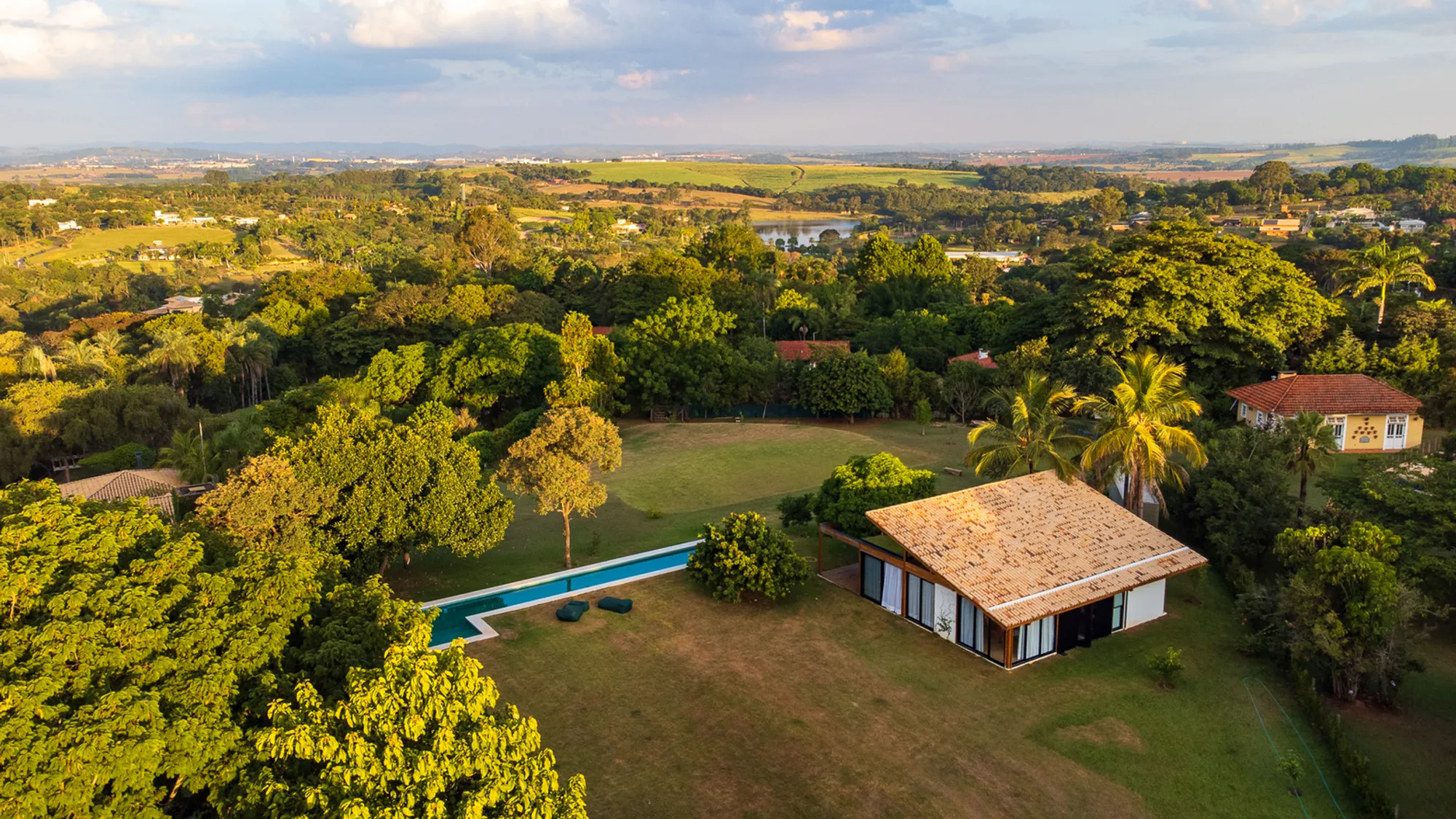
Most houses arrive as finished statements. The Muxarabi House by 24 7 Arquitetura is more like a first sentence in a longer story. Built in Jaguariúna, Brazil, on a flat, tree-rich site exceeding 5,000 m², this 123 m² timber pavilion was designed as a transitional home for a family that left São Paulo with plans to eventually build a much larger residence. The house is the opening phase of a 600 m² masterplan, and yet it carries enough architectural conviction to stand on its own, possibly outlasting its provisional role entirely.
What makes the project genuinely interesting is the tension between its modesty and its ambition. At just two suites, an open living area, kitchen, laundry, and office, the program reads like a holiday cabin. But the construction system, a prefabricated glue-laminated pine structure with ceramic tile roofing, signals a deliberate commitment to low-carbon building that goes well beyond weekend-house sentiment. The name itself, drawn from the muxarabi, a lattice screen of Arab origin carried to Brazil by the Portuguese, hints at a project deeply aware of layered cultural and environmental legacies.
Pavilion in the Canopy
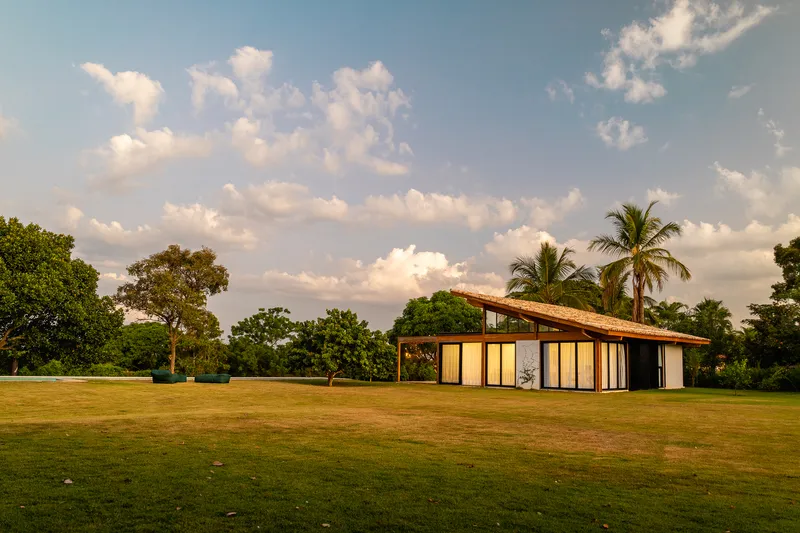
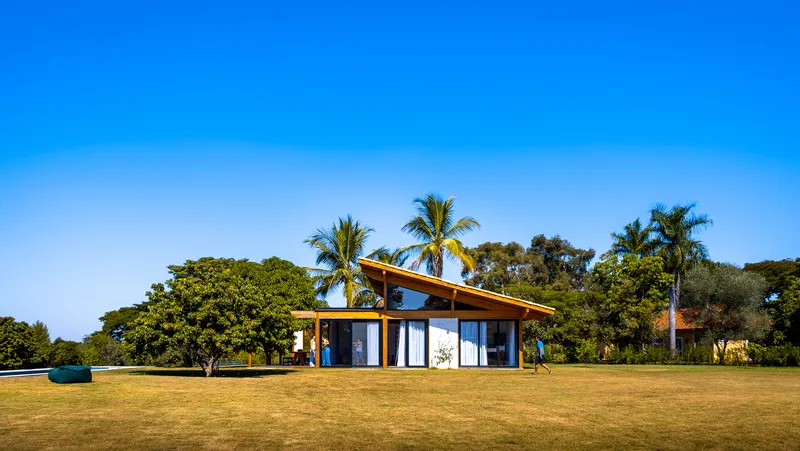
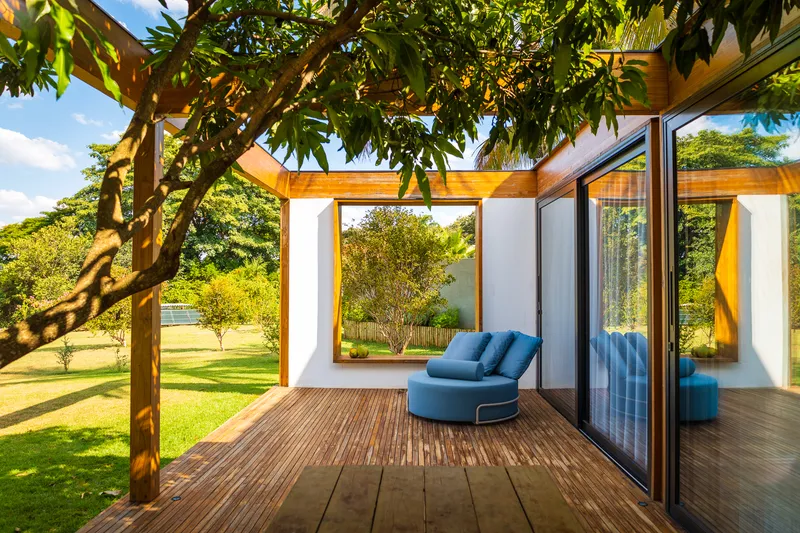
The house reads as a single-volume pavilion, its sloped roof and full-height glazing giving it a lightness that prevents it from competing with the site's mature palms and jackfruit trees. The placement was orchestrated around existing vegetation rather than against it. Trees that were already on the property provide shade, frame views, and establish a microclimate that the architecture simply plugs into. The timber deck terrace extends the living space outward beneath the tree canopy, collapsing any hard boundary between interior and garden.
From certain angles the pavilion almost disappears behind its landscape. That is the point. The architecture defers to the trees, which were here first and will likely outlast any built structure on the plot. It is a quietly radical position: the house as guest on its own land.
Engineered Timber as Climate Strategy
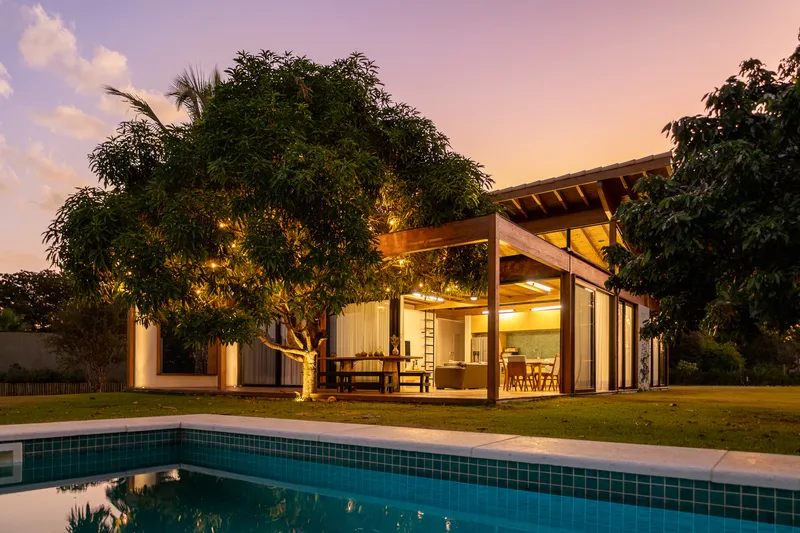
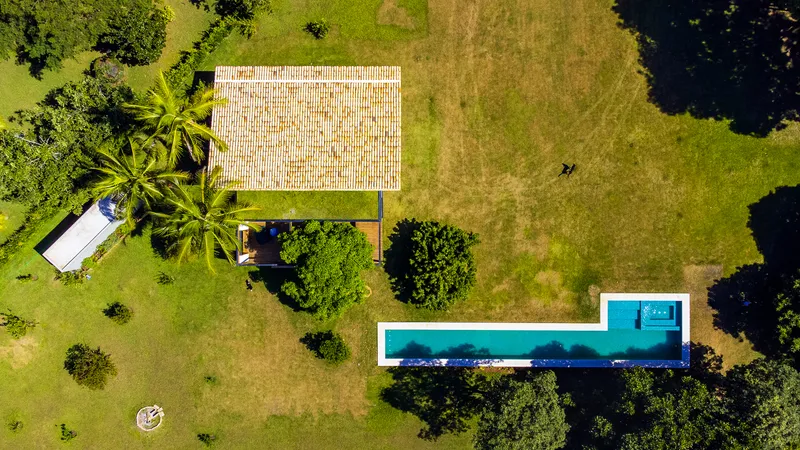
The structural system is glulam: laminated glued pine beams and pillars, prefabricated off-site and assembled quickly on the flat plot. Prefabrication here is not a stylistic choice but a practical one that reduces waste, shortens construction time, and introduces a level of industrialization that conventional site-built timber rarely achieves. The ceramic tile roof, a common element in Brazilian residential architecture, grounds the project in regional practice while keeping costs reasonable.
For a house conceived as temporary, the decision to invest in engineered wood rather than conventional concrete or steel framing says something about the studio's priorities. The carbon footprint of the structure is significantly lower than a masonry equivalent, and the material will age with warmth rather than decay. If and when the main house is built, this pavilion can shift to guesthouse, studio, or caretaker's quarters without any loss of dignity.
Open Plan, Exposed Structure
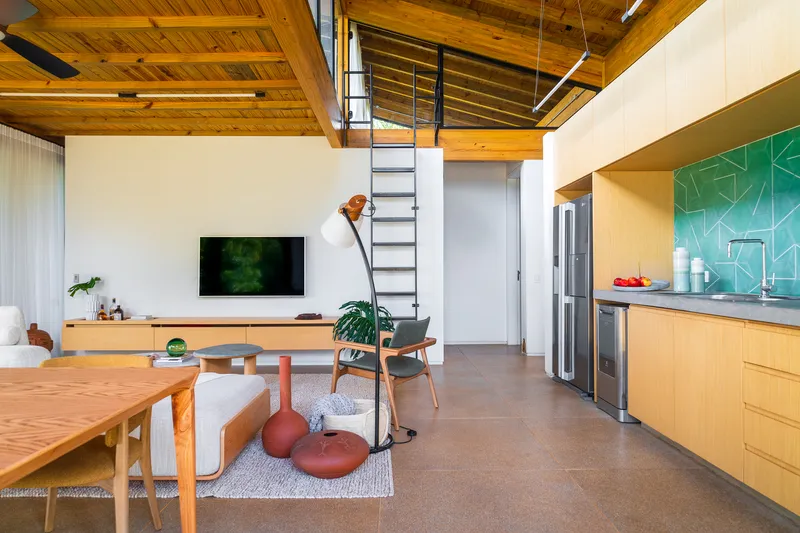
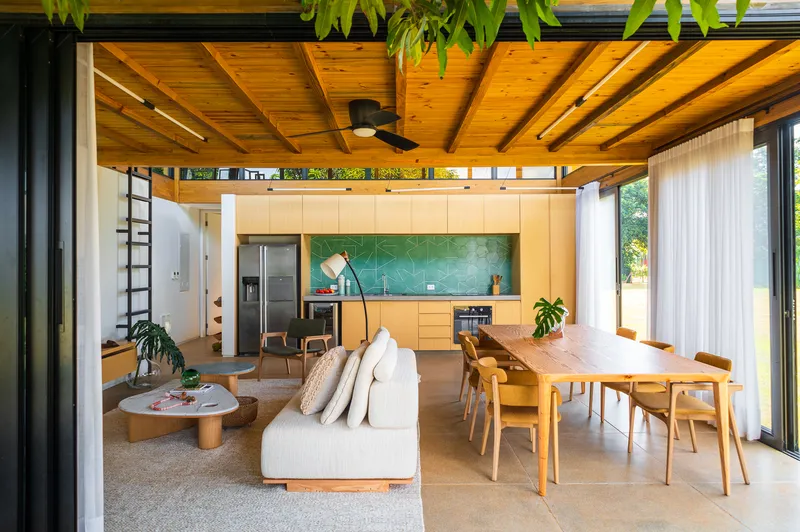
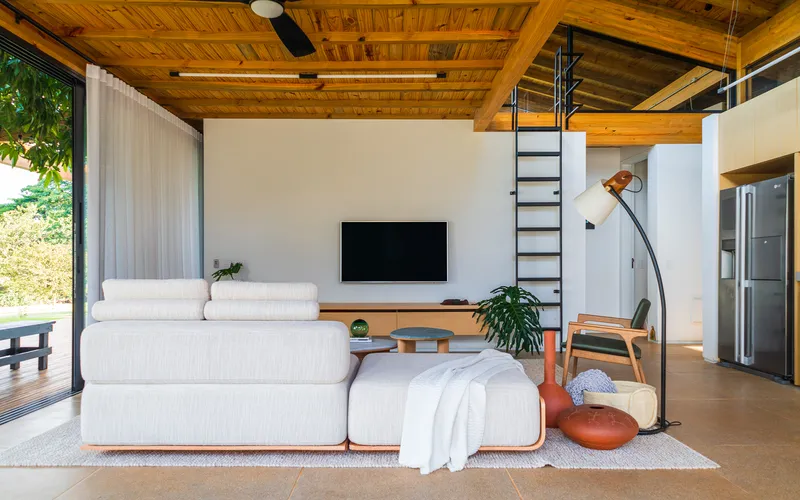
Inside, the exposed timber ceiling beams do all the heavy lifting in terms of atmosphere. The structure is the ornament: pine beams span the open-plan living, dining, and kitchen zone, their rhythmic repetition lending order to a space that could easily feel loose. A steel ladder rises to a mezzanine loft above the living room, adding a vertical dimension that stretches the perceived volume of the compact plan. The green tile kitchen backsplash provides a jolt of color against the warm wood tones, a small decision that keeps the palette from drifting into monotone coziness.
Terrazzo flooring anchors the interior with a harder, cooler surface that balances the warmth overhead. Concrete countertops in the kitchen add tactile weight. The material strategy is consistent and deliberate: every surface either works structurally, climatically, or both. Nothing is applied purely for effect.
Framing the Garden
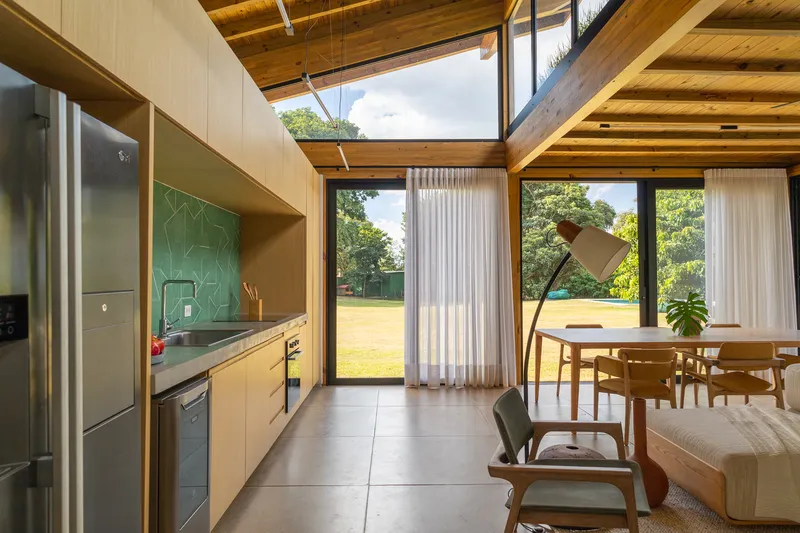
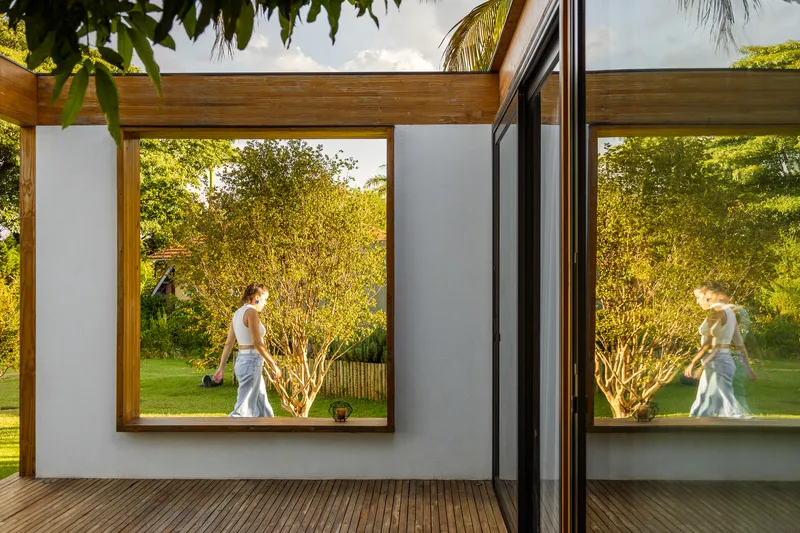
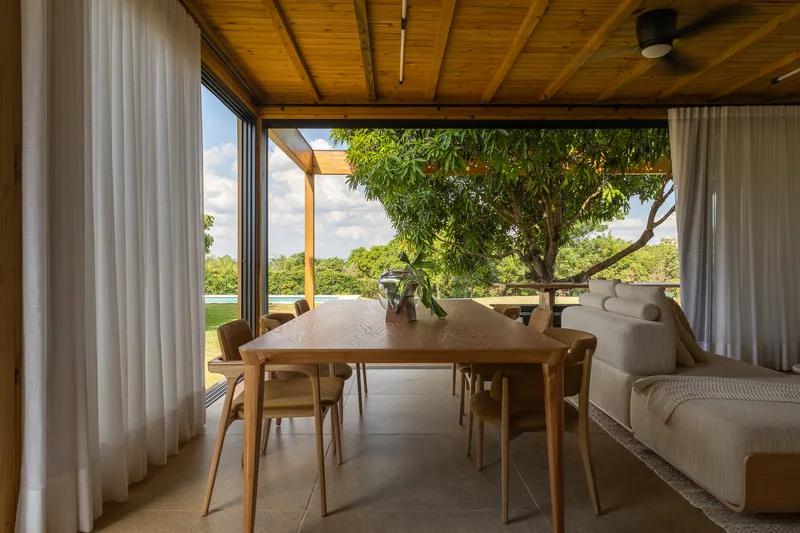
Floor-to-ceiling glazing wraps the kitchen and dining zones, turning the surrounding lawn and trees into a continuous backdrop. The window proportions are generous but not gratuitous. They are calibrated to specific views: the lawn stretching to palms, a figure walking through dappled afternoon light, a corner frame that captures tree canopy and sky in equal measure. Sheer curtains in the living area soften direct sun without blocking it entirely, maintaining visual connection to the garden even when privacy is desired.
The dining table positioned at the corner glazing is one of the house's strongest spatial moments. Two glass walls converge, dissolving the room's corner and pulling the landscape inward. Meals here are not simply near the garden; they are in it.
Indoor-Outdoor Threshold
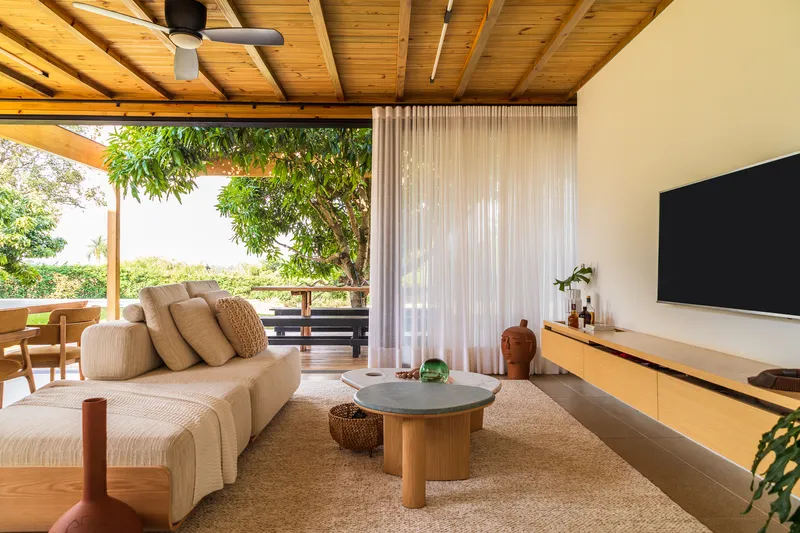
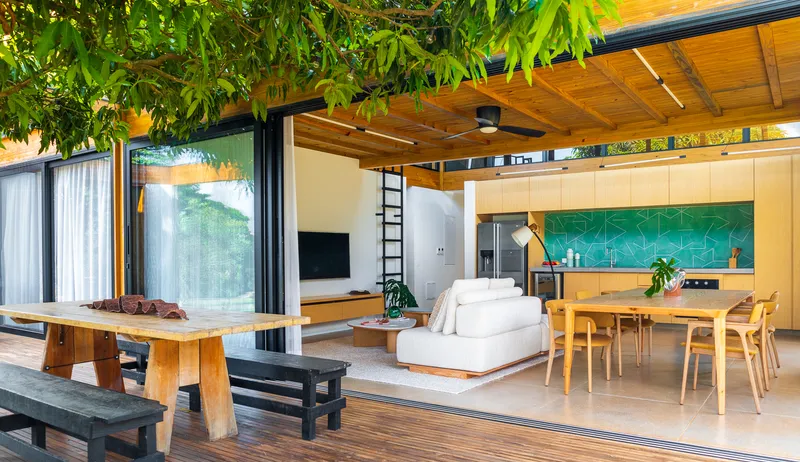
The sliding glass doors that open the living room to the timber deck create a threshold that barely exists. When open, interior and exterior share the same floor level, the same overhead canopy of tree branches, and the same afternoon breeze. The dining table on the deck sits directly beneath overhanging branches, a setup that feels entirely natural and slightly improvisational, as though the family simply moved the table outside and never brought it back.
This is the kind of architecture that rewards daily use rather than photographic spectacle. The transitions between inside and outside are soft, repeated, habitual. The house trains its occupants to live outdoors, which is precisely what a 5,000 m² site demands.
The 25-Meter Pool as Landscape Axis
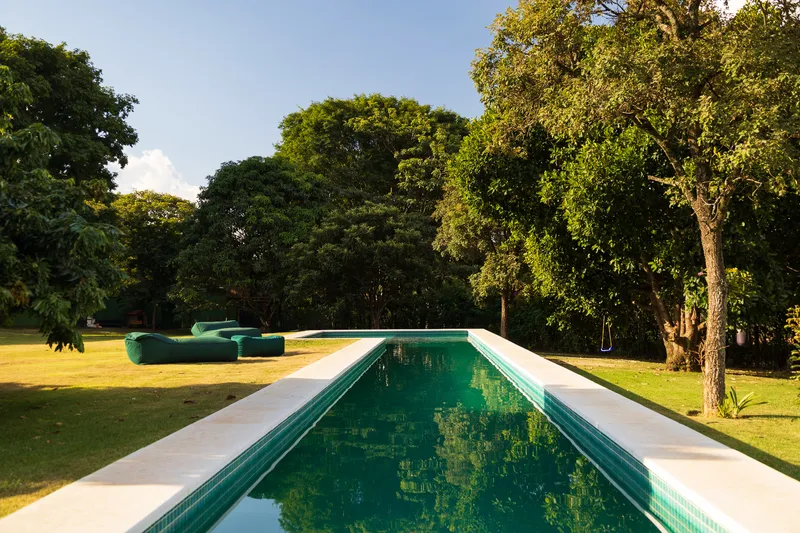
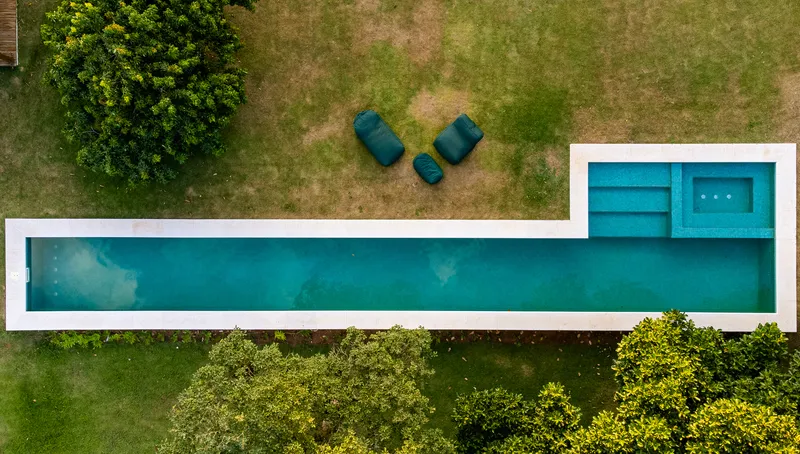
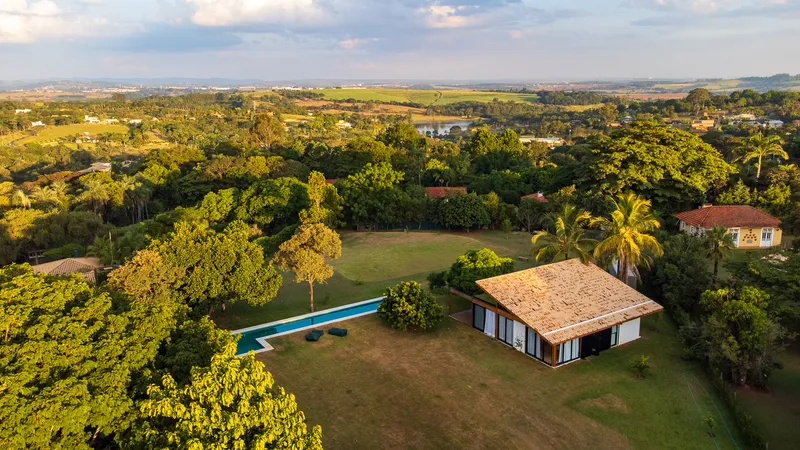
A 25-meter lap pool runs parallel to the house, its green tile and white coping drawing a precise linear element across the loose, organic landscape. Positioned beneath the canopy of a mature jackfruit tree, the pool is both functional and compositional: it establishes an axis that will eventually connect to the future main residence, linking the two phases of the masterplan across the garden. From above, the pool and pavilion together read as a composed diagram on the grass, two geometric figures among scattered tree crowns.
The integrated spa and green lounge furniture on the lawn reinforce the idea that this outdoor zone is not secondary space but a primary room of the house, simply one without walls. The aerial views reveal how much of the site remains untouched: the built footprint is a fraction of the available land, leaving room for expansion, for garden, and for the trees that define the property's character.
Why This Project Matters
The Muxarabi House is compelling because it refuses the disposability that its brief implied. Designed as a stopgap for a family in transition, the building was executed with the care, material intelligence, and environmental sensitivity of a permanent residence. The prefabricated glulam system proves that low-carbon construction does not require austerity or compromise. The house is warm, spatially generous for its size, and thoroughly integrated into its landscape.
It also offers a useful model for incremental development on large rural or suburban sites. Rather than clearing the land and building everything at once, the family established a foothold that respects existing trees, sets up future connections, and functions beautifully in the interim. Architecture does not always need to arrive as a grand gesture. Sometimes the best move is the first one, made carefully, with room to grow.
Muxarabi House by 24 7 Arquitetura. Jaguariúna, Brazil. 123 m². 2020. Photography by Adriano Pacelli.
About the Studio
Share Your Own Work on uni.xyz
If projects like this are the kind of work you want to make, uni.xyz is a place to publish your own, find collaborators, and enter design competitions.




Popular Articles
Popular articles from the community


Play: Fragments of Their World
Familiar architecture becomes modular playground design, creating safe spaces where displaced children can learn, connect, imagine and play.

Riyadh For All: Intergenerational Urban Design for Active Aging in Rabat
Riyadh For All reimagines urban design in Rabat with intergenerational co-living, adaptive courtyards, and Moroccan cultural exchange today.

Lunar Spiral: Space Architecture Shaped by the Mathematics of the Universe
Lunar Spiral reimagines space architecture through Fibonacci geometry, lunar regolith, levitating habitats, and self-sustaining Moon living.

Co-life: Sustainable Architecture for Age-Friendly Community Living
Co-life reimagines sustainable architecture for seniors through courtyards, rammed earth, shared gardens, and spaces designed for belonging.

Similar Reads
You might also enjoy these articles


Hodi-Mandai Geram
Project Function: Preservation and revitalization of the Intangible heritage and socio-spatial identity of the Hodi by Housing, Cultural Memory Center, Sacred Grove, landscape, local tourism economy


Olio Towers: A Mid-Rise for Performers That Fuses Housing, Rehearsal, and Stage
Located blocks from Houston's Theater District, this modular tower stacks living units around a central performance atrium.

Oasis: Modular Green Housing Carved into Dhaka's Urban Fabric
A shortlisted Plugin Housing entry reclaims unauthorized settlements in Dhaka with stepped concrete volumes, green roofs, and ventilation-driven design.

Black Hole: A Floating Megastructure for the Post-Physical Era
Emiliano Mazzarotto envisions a spherical, self-scaling arena where e-sports, digital hotels, and holographic stadiums replace traditional public space.


Explore Architecture Competitions
Discover active competitions in this discipline



Challenge to reimagine the Iron Throne


Photograph architecture without architects


Illustrate the lost glory of Angkor Wat - Render Challenge


Design challenge to reuse E-waste
Comments (0)
Please login or sign up to add comments
No comments yet. Be the first to comment!