
IDIN Architects Wraps a Hua Hin Hotel Around a Private Courtyard to Escape the City
Dusit D2 Hua Hin turns an urban infill site in Thailand's family vacation heartland into a self-contained resort through courtyard planning.


Beach hotels sell themselves. The ocean does the work, and architecture can afford to stay quiet. But what happens when a resort hotel in a seaside town has no beachfront at all? That is the problem IDIN Architects faced with the Dusit D2 Hua Hin, a 9,800 square meter hospitality project wedged among shophouses and condominiums in one of Thailand's most popular family holiday destinations. The site offered no view worth framing, no natural amenity to lean on. So the architects turned inward.
The strategy is courtyard planning at its most deliberate. Rather than orienting the building outward and accepting its mediocre context, IDIN arranged the hotel's massing as an enclosing perimeter around a central void, creating an interior landscape generous enough to feel like genuine outdoor space. The result is a hotel that manufactures its own environment: a private garden, a sheltered pool terrace, cascading greenery, and a controlled sightline to the sea from an elevated dining floor. Landscape by TROP: terrains + open space completes the illusion that you are somewhere other than the middle of a Thai resort town.
Arrival and the Dark Frame
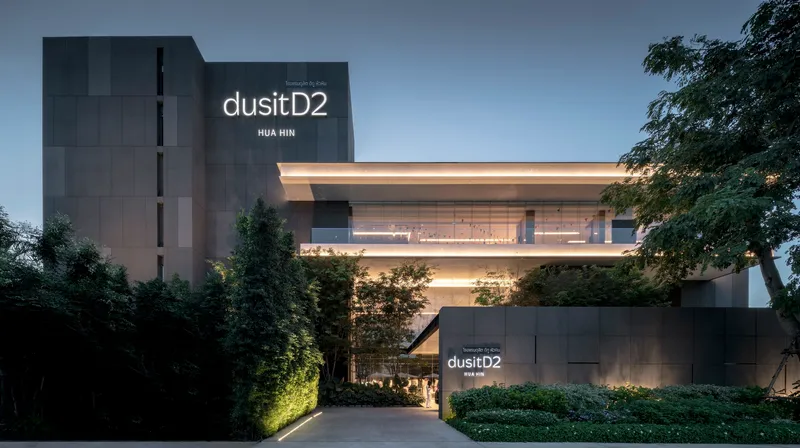
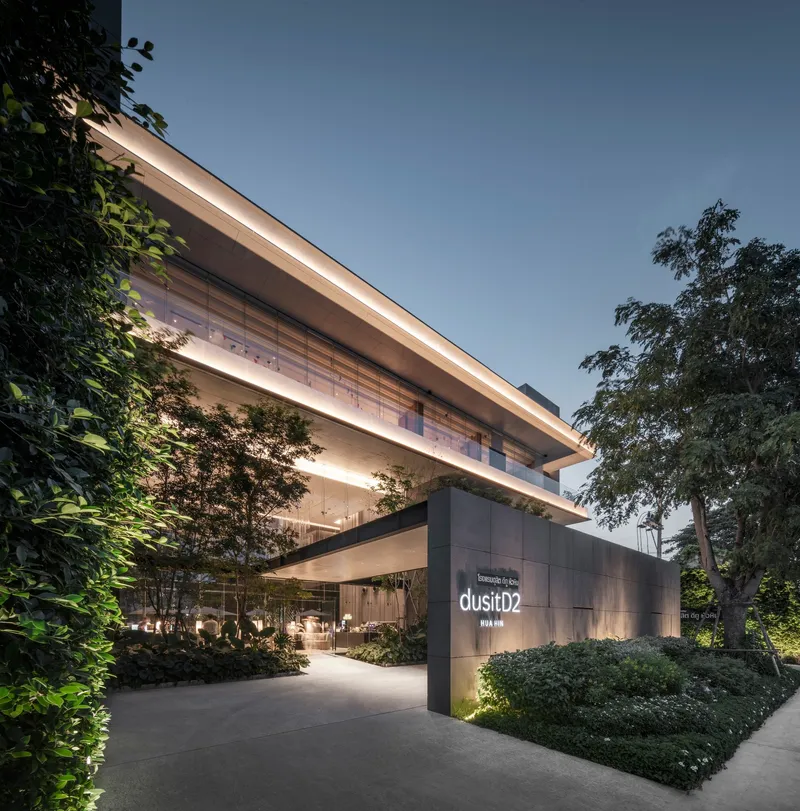
The approach sequence sets the tone. A cantilevered horizontal volume projects over the entry drive, its underside lit to pull guests forward at dusk. Behind it rises a dark vertical tower, establishing the hotel's dualistic language: low and horizontal against tall and compressed. Mature trees line the driveway, softening what is otherwise a muscular, almost monolithic composition. The palette leans heavily on dark cladding and recessed openings, giving the building a seriousness unusual for a family resort.
That seriousness is the point. With no beach panorama to compete with, the architecture needs presence. The glass-wrapped facades with cantilevered terraces read as stacked horizontal planes, and the building avoids the tropical pastiche that plagues so much Thai hospitality design. It is urban architecture adapted to a resort program, not the other way around.
The Courtyard as Core
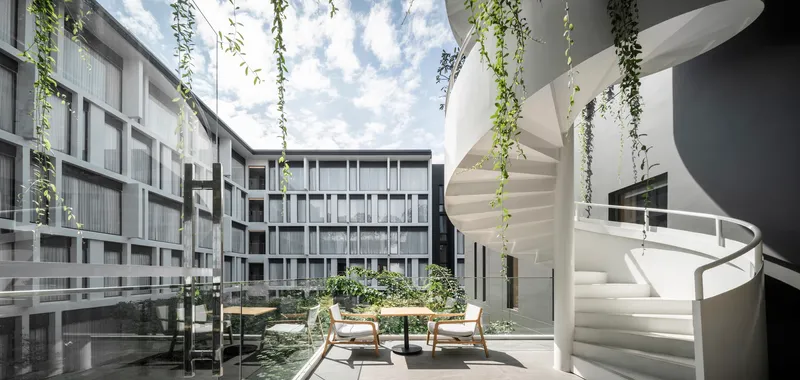
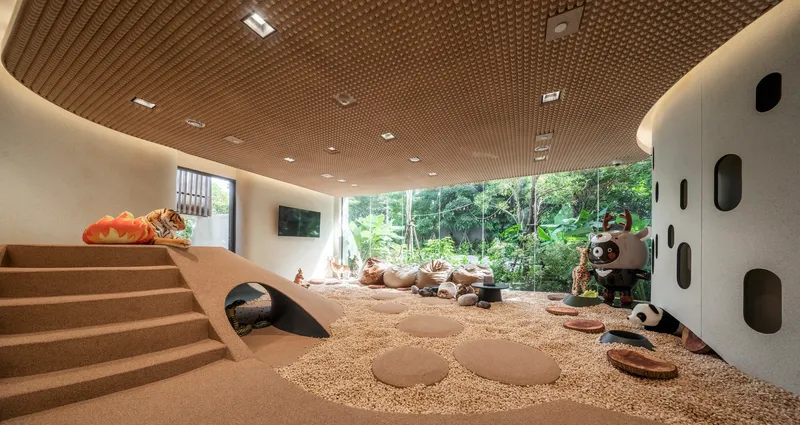
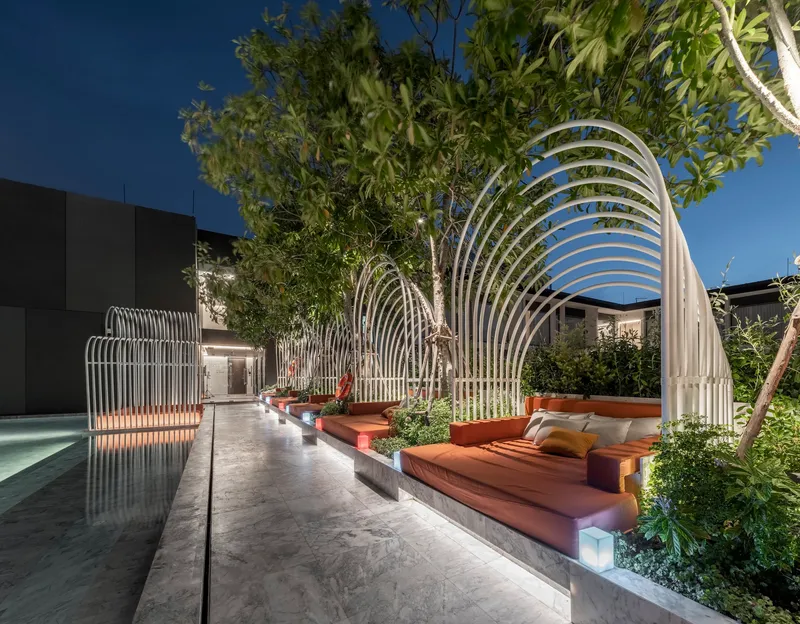
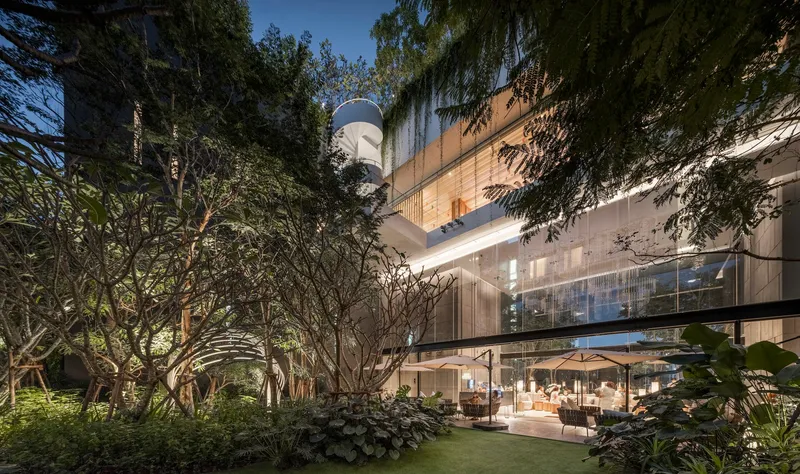
The central courtyard is the engine of the entire project. It absorbs every program that would normally face the ocean: children's play areas, garden lounging, reflecting pools, and terraced seating. A white spiral stair with cascading vines operates as the courtyard's sculptural anchor, giving vertical circulation a theatrical quality. The textured cork ceiling of the play area and gravel-floored garden spaces suggest a design team thinking carefully about tactile variety for families with young children.
At twilight, the outdoor terrace with its white metal canopy structures and built-in cushioned seating transforms into something closer to a resort beach club than an interior courtyard. IDIN and TROP clearly worked in close coordination here. The landscape is not decoration applied to an architectural void; it is a programmatic layer, planned with the same rigor as the building footprint itself.
Lobby and Vertical Drama
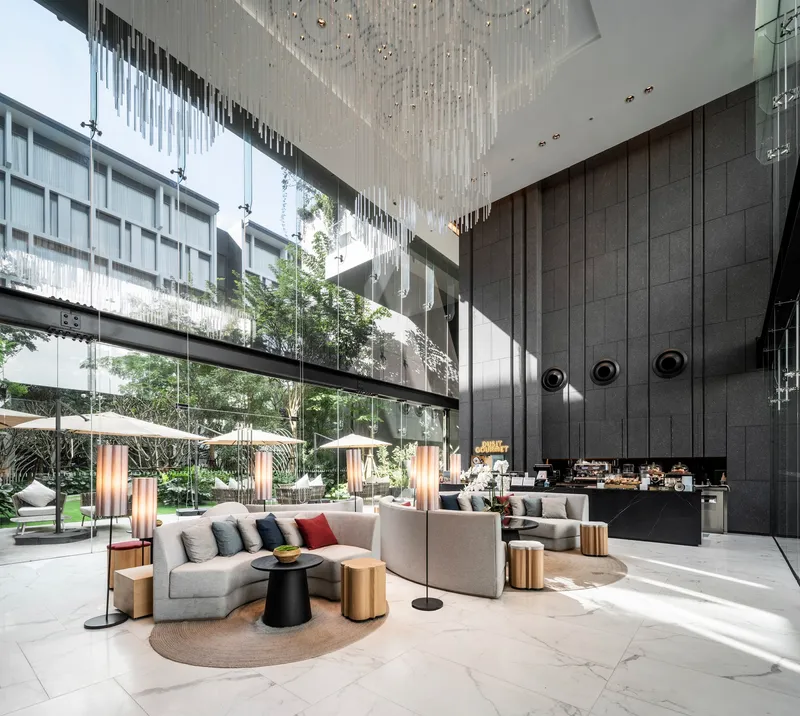
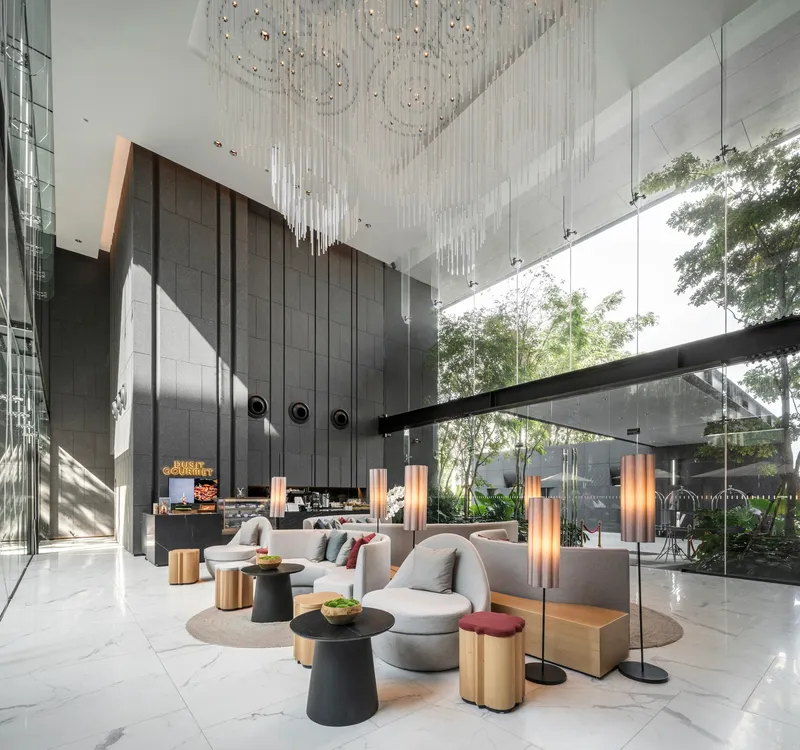
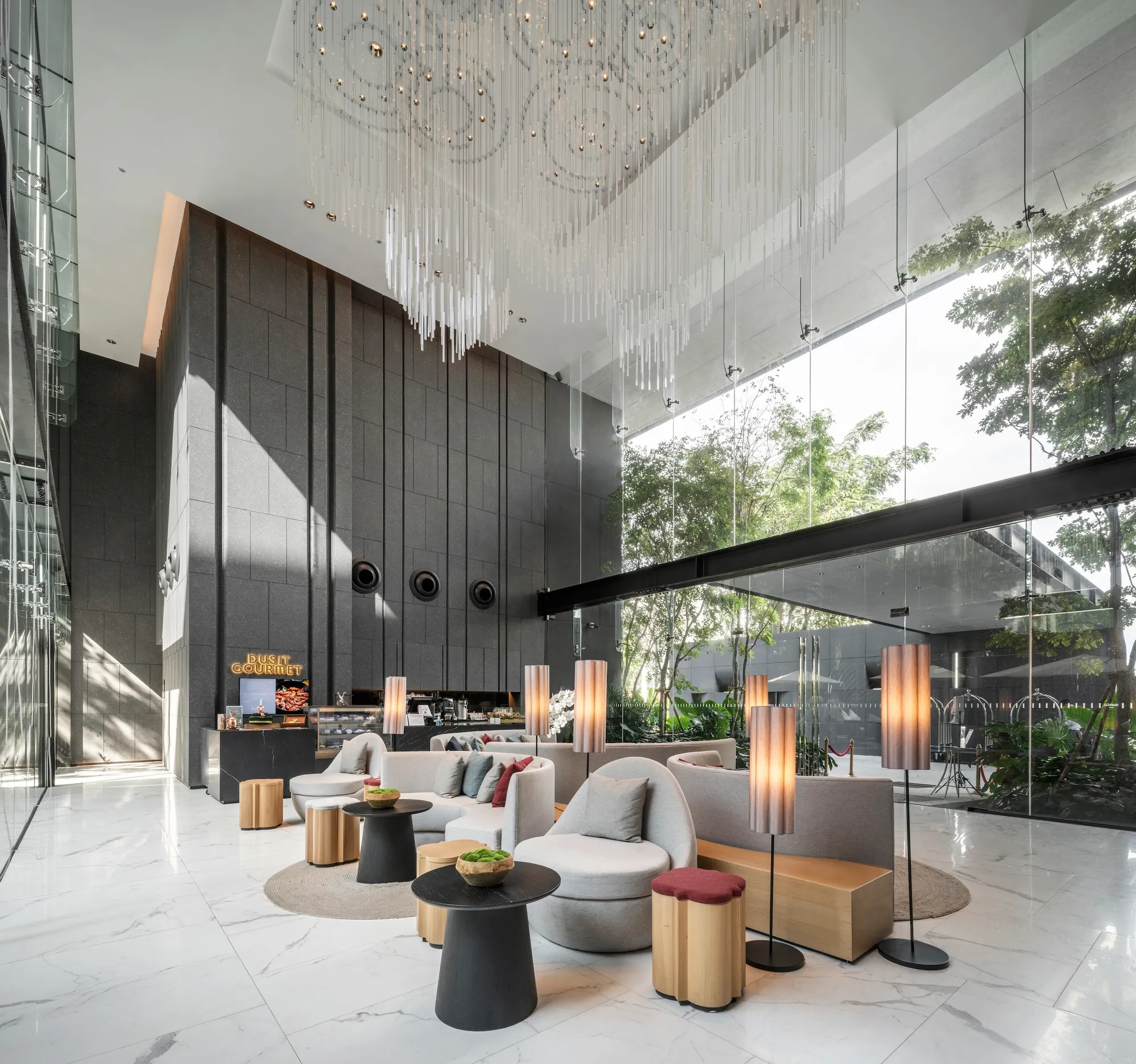
The double-height lobby deploys one of the project's strongest moves: a cascading crystal chandelier against a dark paneled wall, with floor-to-ceiling glazing opening directly onto the planted courtyard. The contrast is sharp and intentional. Dark, compressed surfaces frame a single bright aperture, pulling the eye toward greenery. It is a technique borrowed from traditional Thai courtyard houses, scaled up and stripped of ornament.
The lobby sits at the front of the site, acting as a transition zone between the urban street and the hotel's private interior world. Once past it, guests encounter the courtyard and the logic of the plan becomes legible: everything opens inward. The placement of the all-day dining restaurant and main pool on the upper floor above the lobby is a smart sectional decision, lifting communal spaces high enough to capture distant sea views that the ground level cannot access.
Dining and Communal Interiors
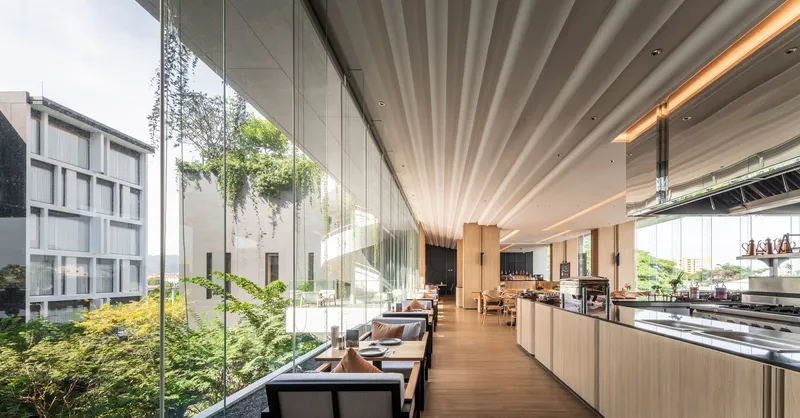
The glazed dining hall with its radial ceiling fins is one of the most resolved interiors in the project. The fins create a rhythmic overhead pattern that radiates outward from the room's center, compressing space at the perimeter and opening it in the middle. Beyond the glass, the landscaped courtyard reads as a continuous extension of the dining experience. It is a room designed to reward the seated position, which is exactly what a restaurant should do.
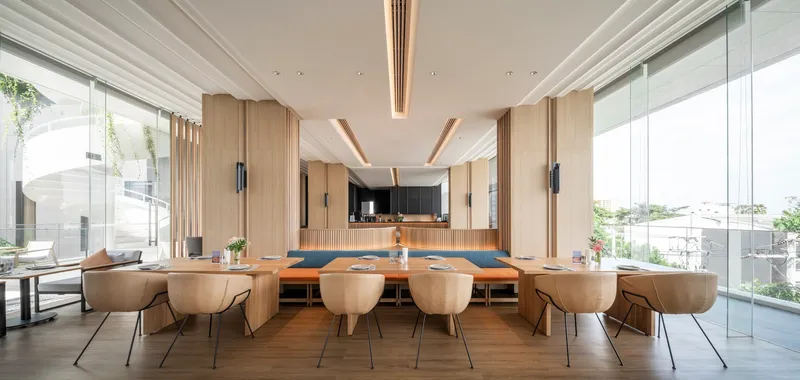
A more intimate communal dining space with a long timber table, upholstered seating, and vertical wood paneling offers a counterpoint. Where the main restaurant is transparent and expansive, this room is warm and enclosed. The kitchen is framed beyond the paneling, visible but separated. IDIN handles scale shifts well throughout the hotel, moving between generous double-height volumes and compressed, materially rich enclaves without losing coherence.
Guest Rooms and the Family Program
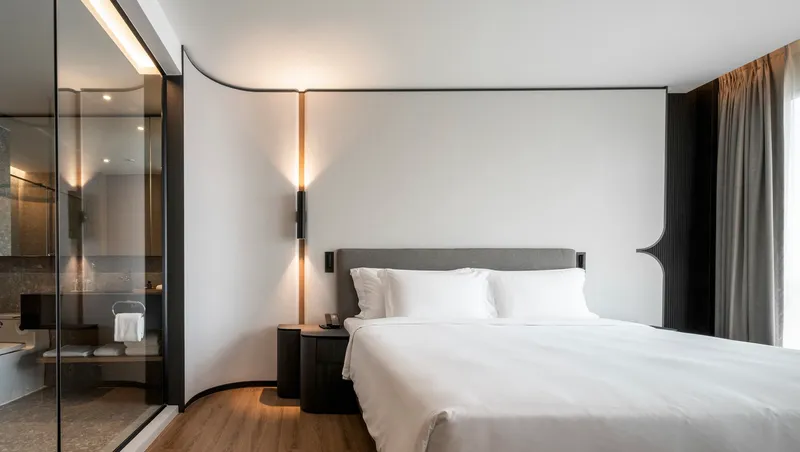
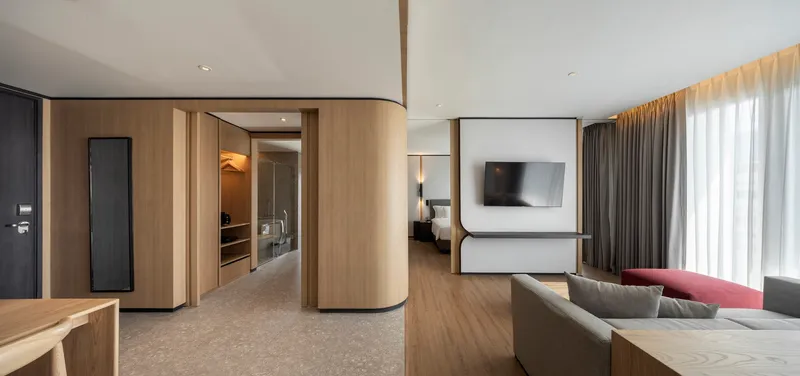
The guest rooms are clean and restrained. An upholstered headboard, bronze wall sconces, and a glass-enclosed bathroom define the standard room type, with warm tones that contrast the dark exterior palette. The suite interiors introduce curved timber veneer walls that divide sleeping areas from living spaces, a detail that softens the room's geometry and gives it a sculptural quality absent from most mid-range hotel rooms.
The project's family orientation extends into the room typology. Special family rooms incorporate bunk beds, a programmatic move that sounds simple but has real planning consequences: it changes room depth, bathroom placement, and corridor width. Hotels that genuinely design for families rather than simply adding a sofa bed are rarer than they should be. IDIN deserves credit for treating the family room as a distinct architectural type.
Rooftop and the Captured View
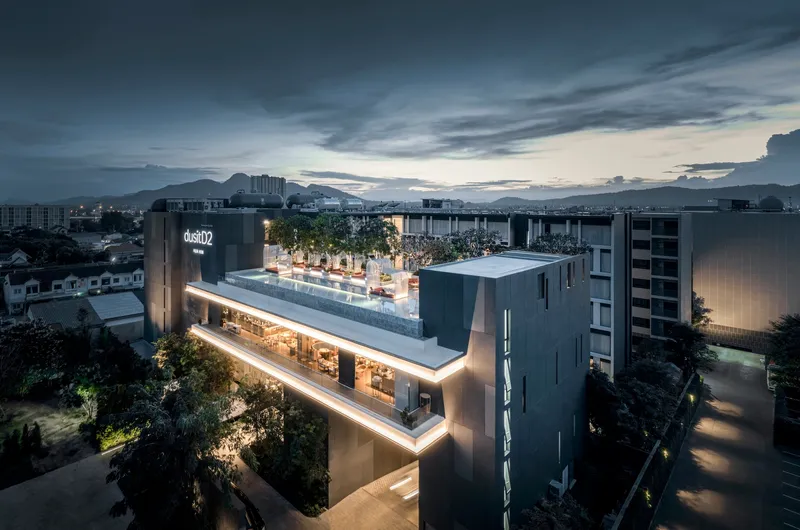
The rooftop terrace, visible in the aerial dusk shot, reveals the project's final spatial layer. A horizontal light band wraps the upper level, drawing a sharp line between the dark building mass and the sky. From here, the ocean that the ground floor never sees becomes available. The sectional strategy is clear: public amenities climb as high as possible to capture what the site denies at grade. It is a pragmatic inversion of the typical beachfront hotel, where the ground floor does all the work and upper floors are merely rooms.
Plans and Drawings
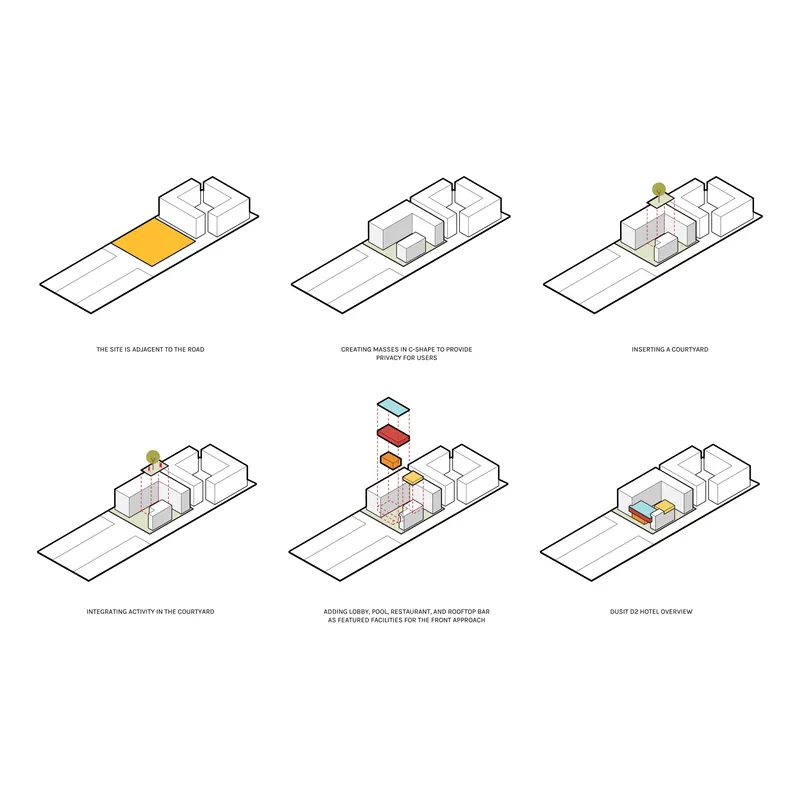
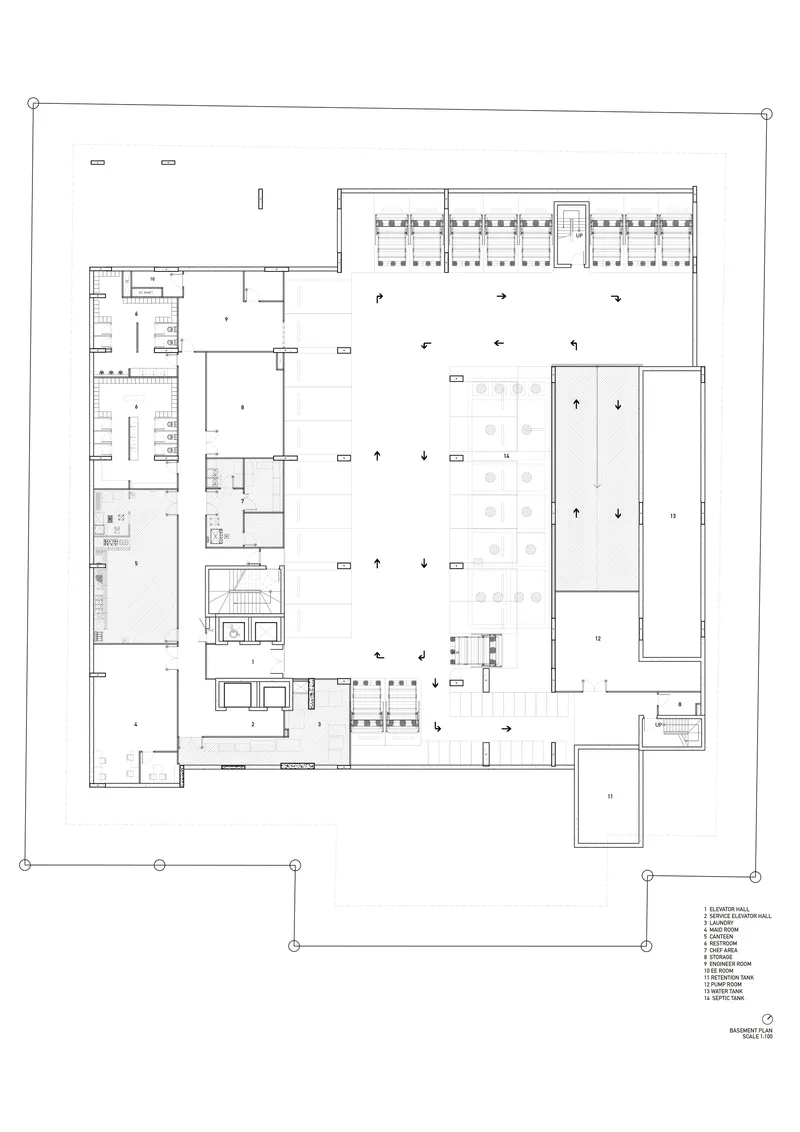
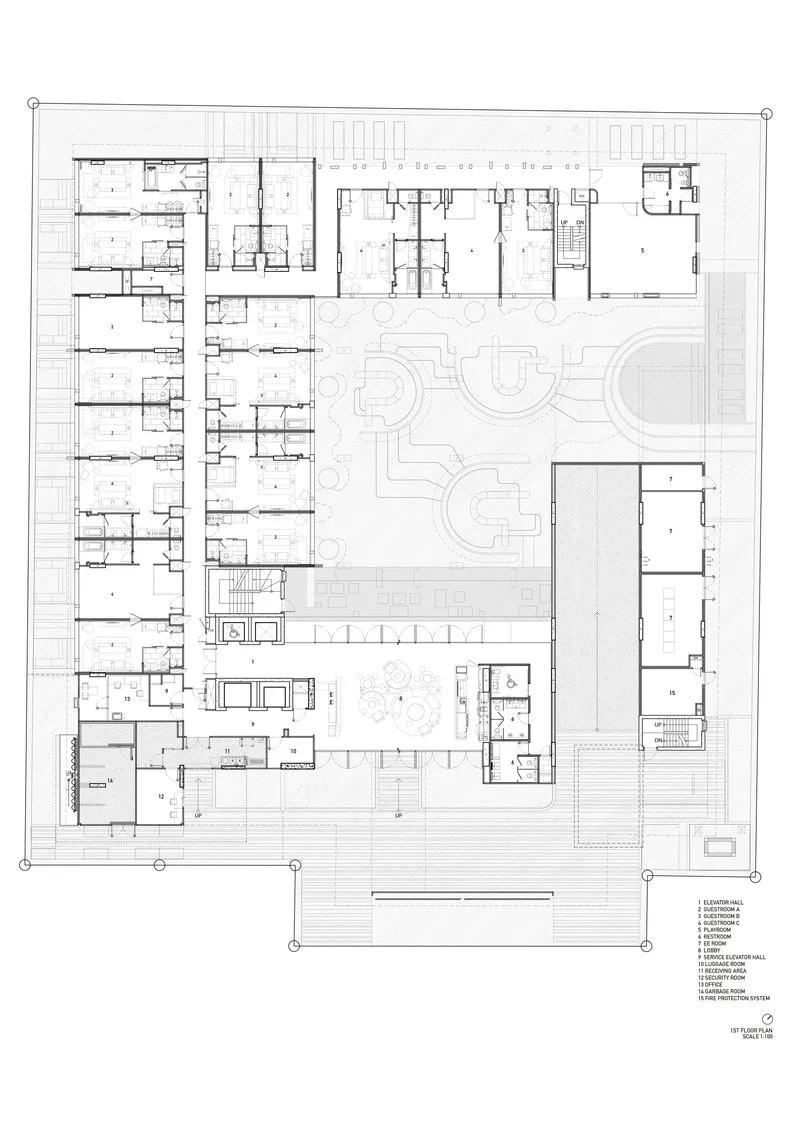
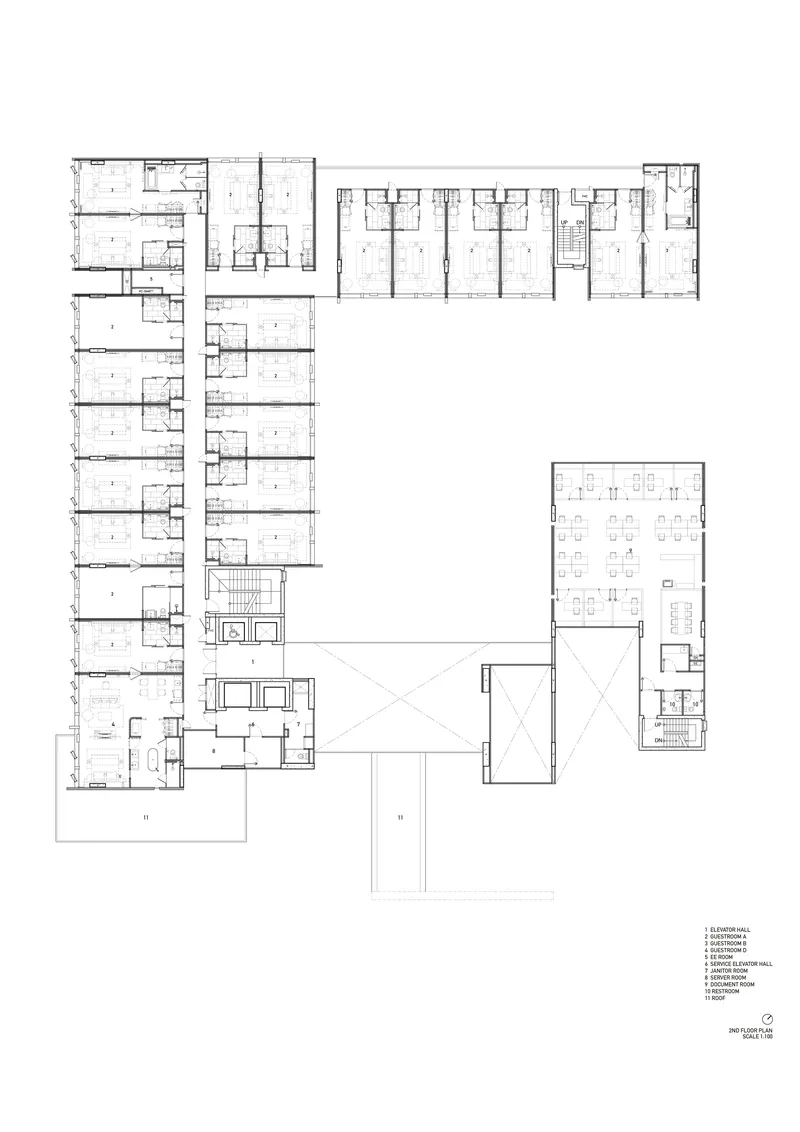
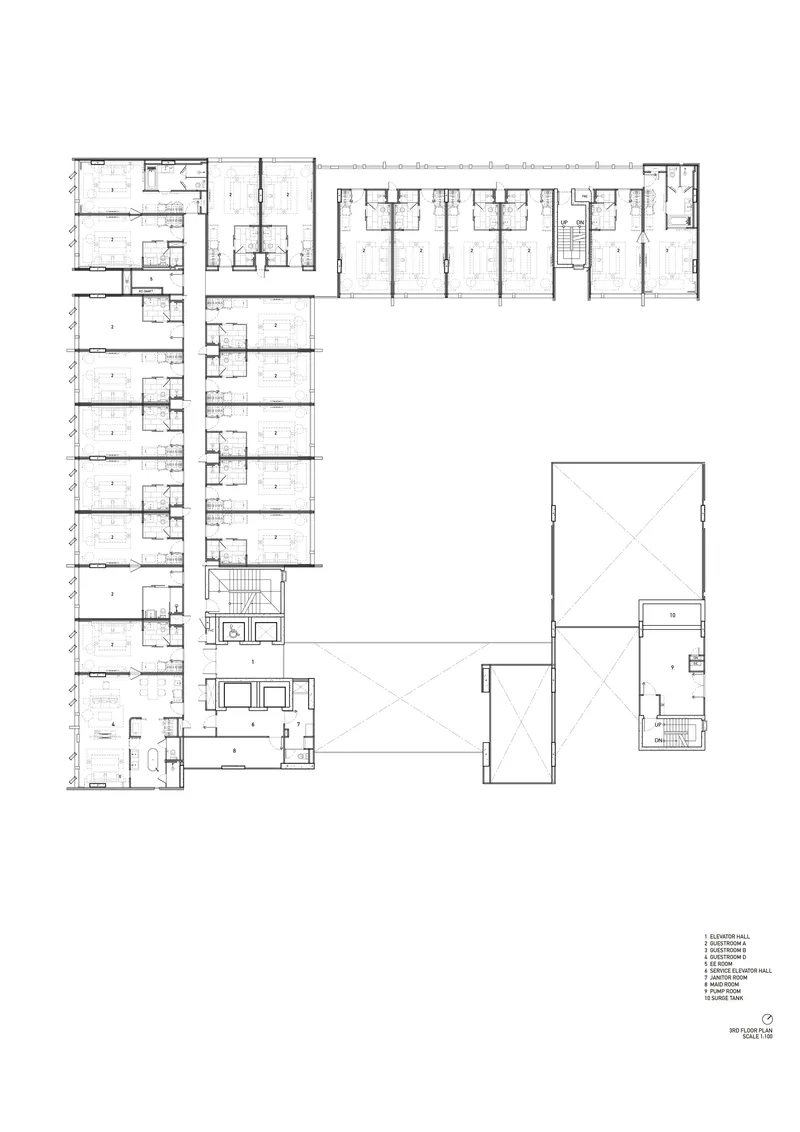
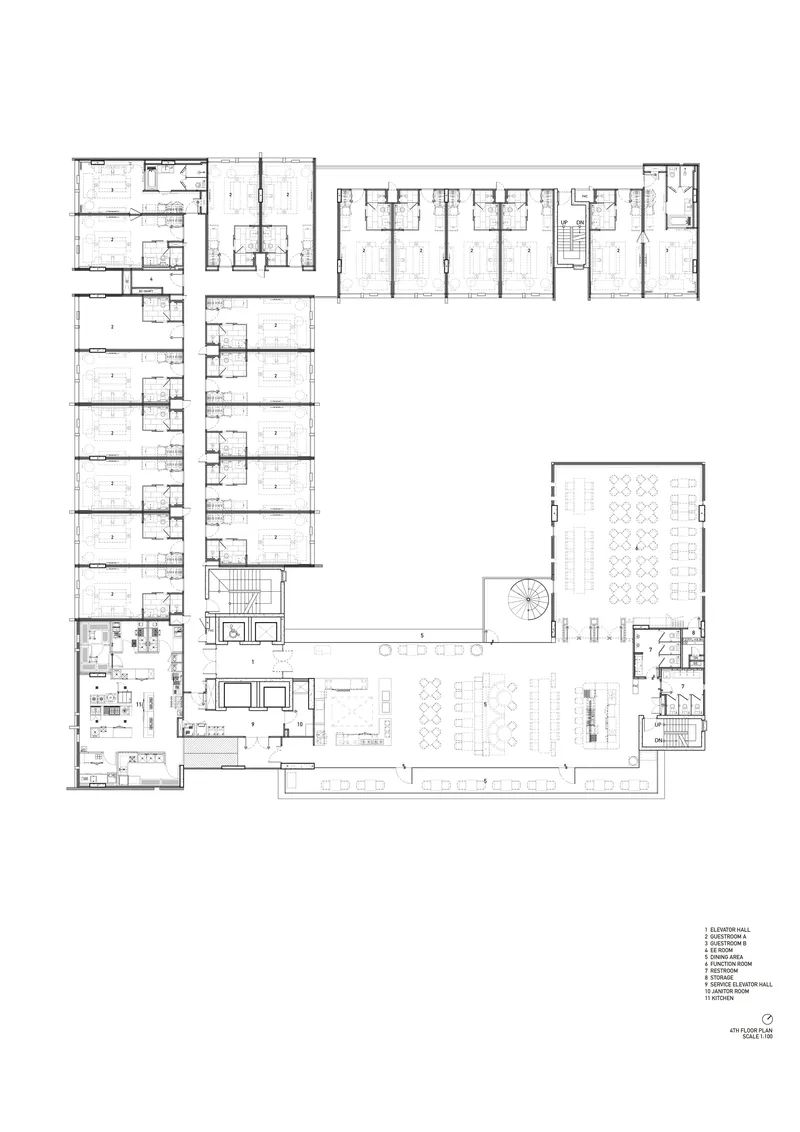
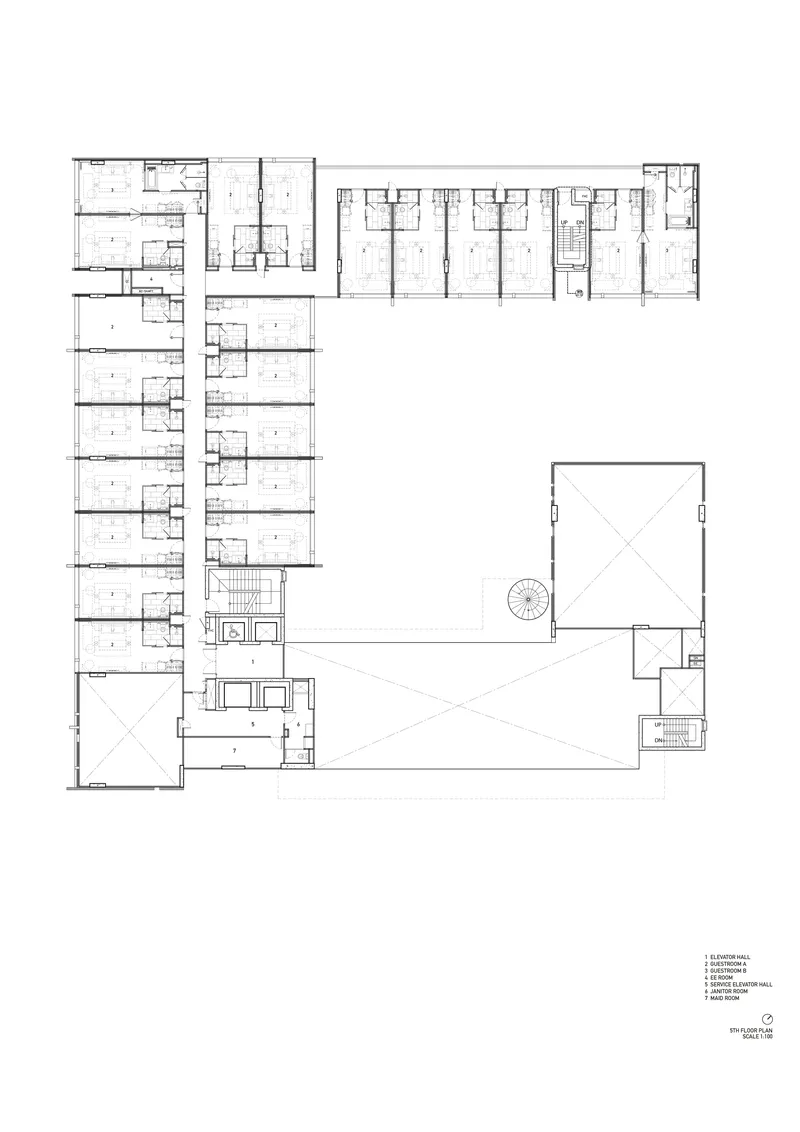
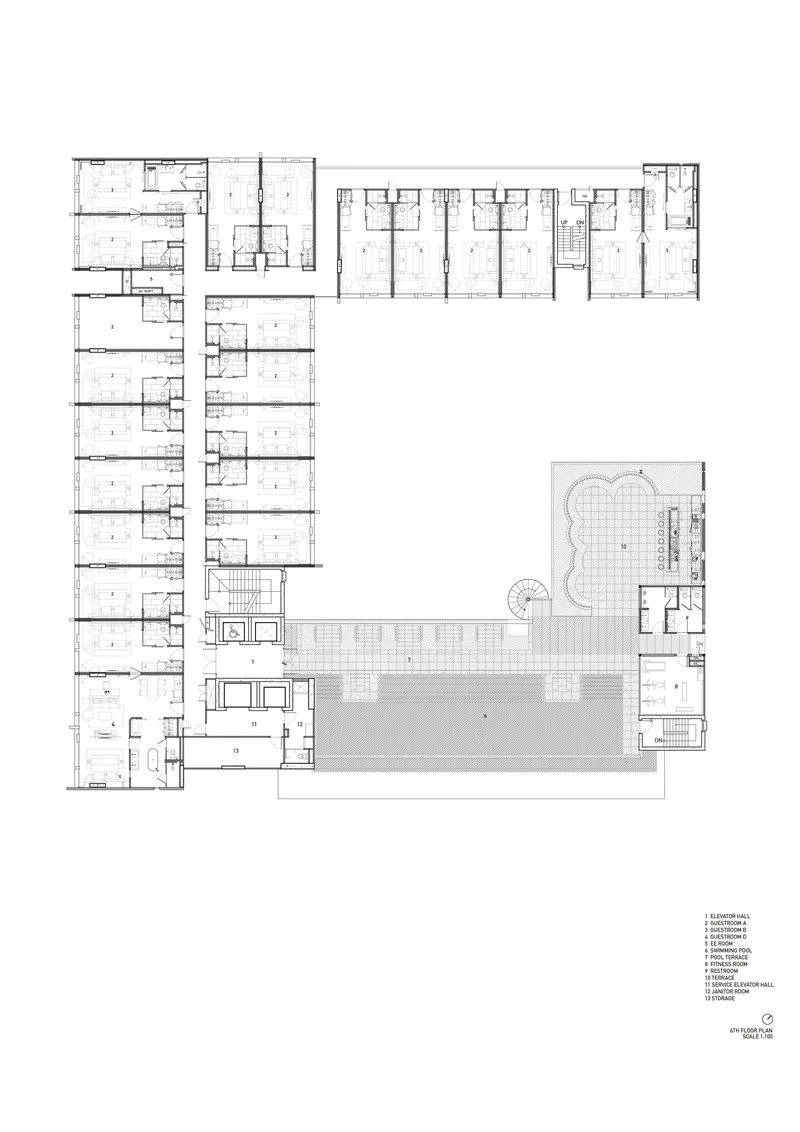
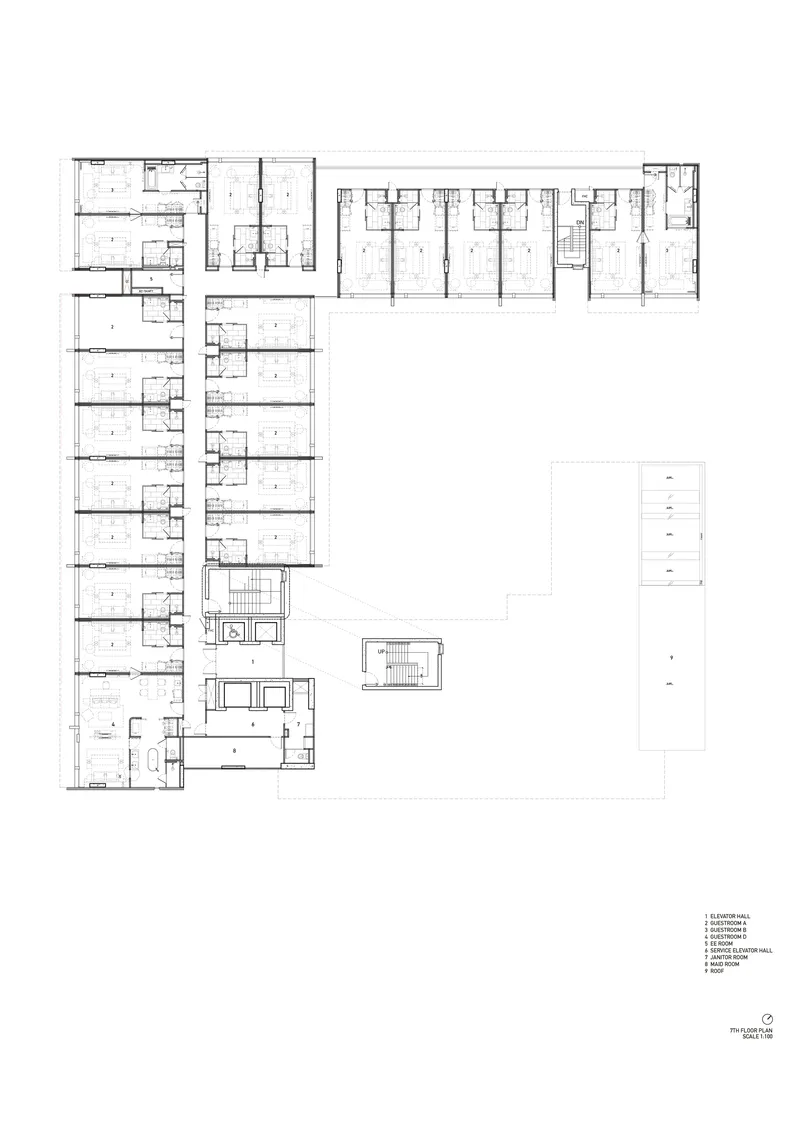
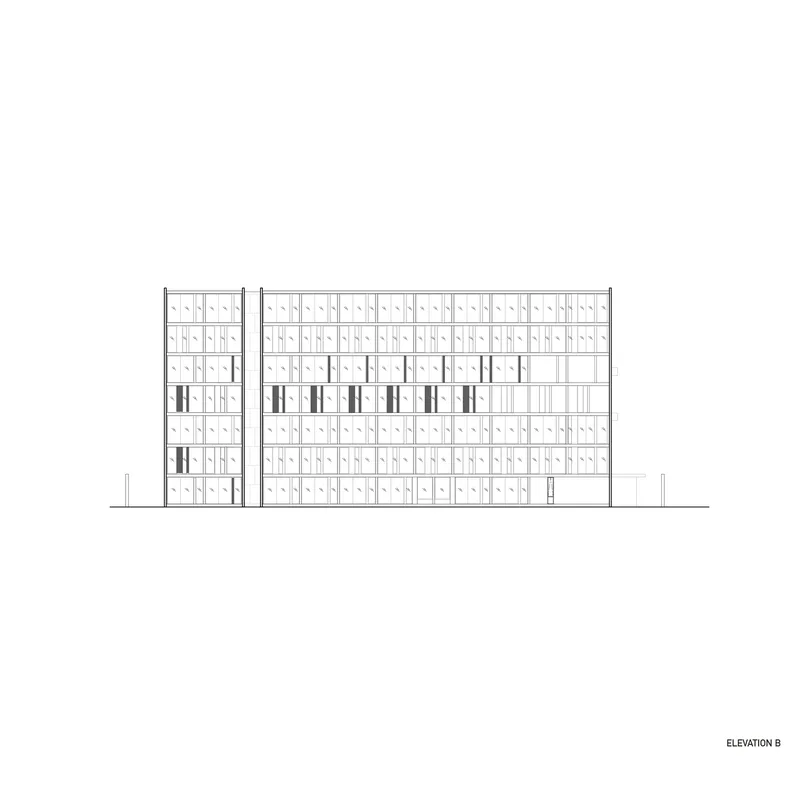
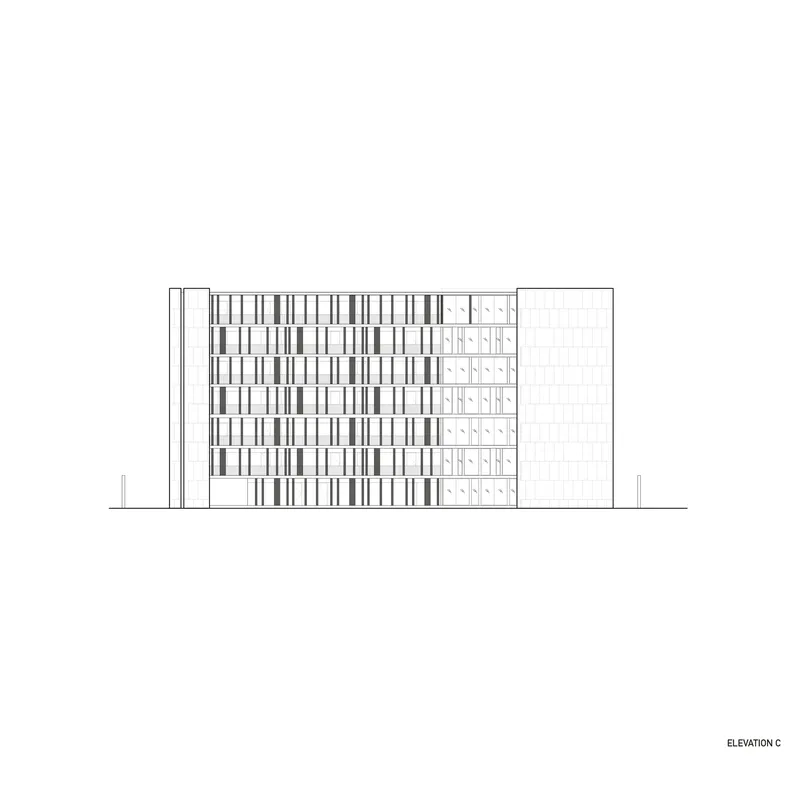
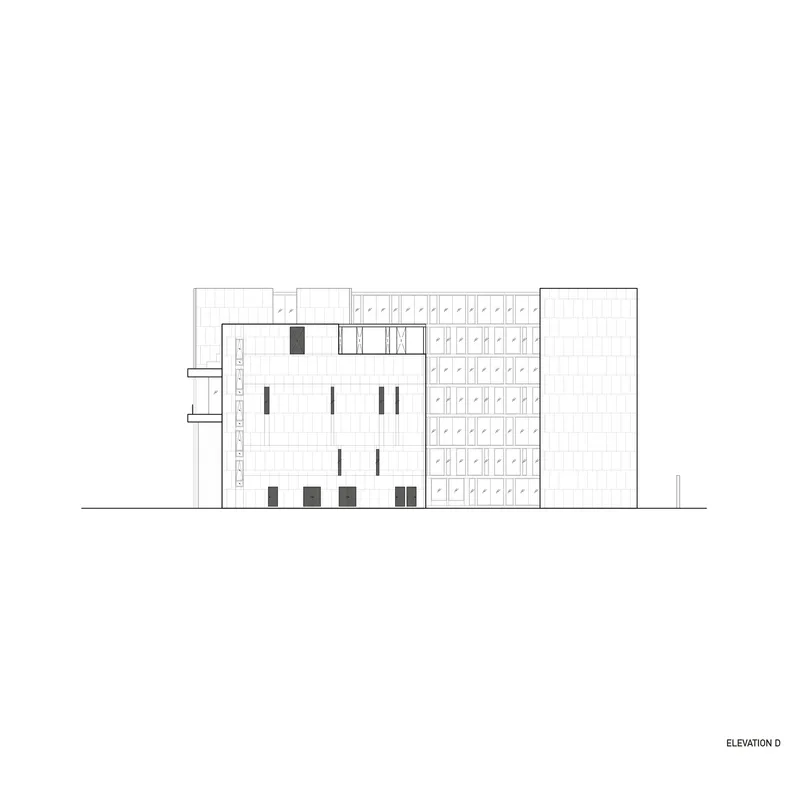
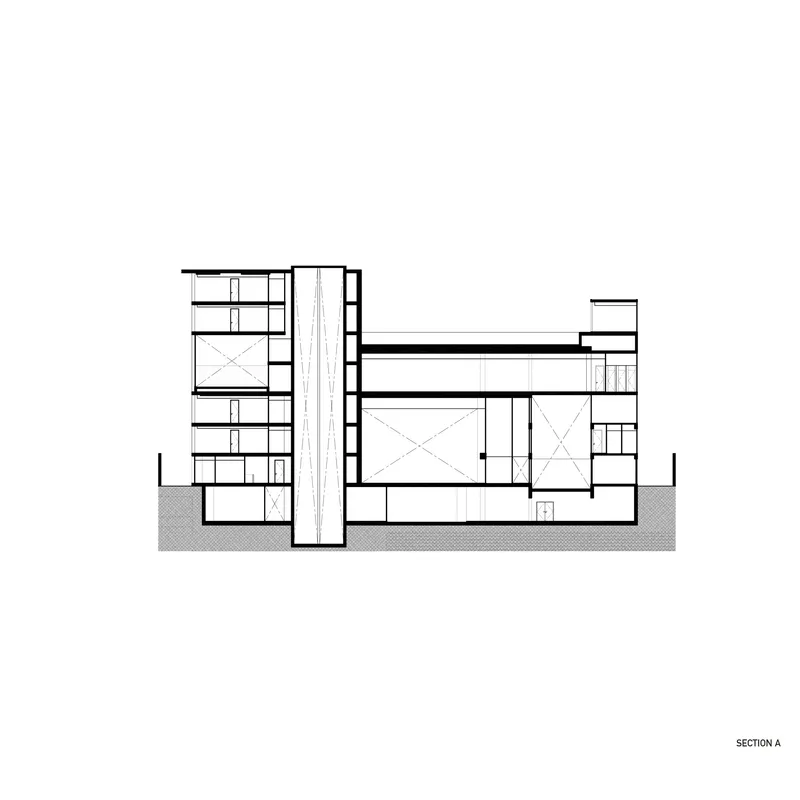
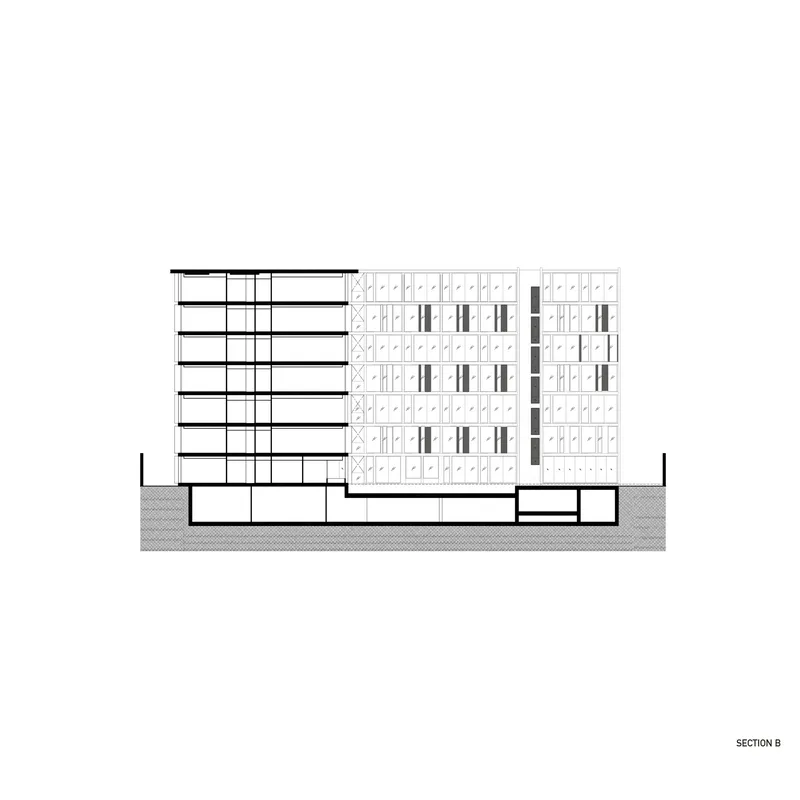
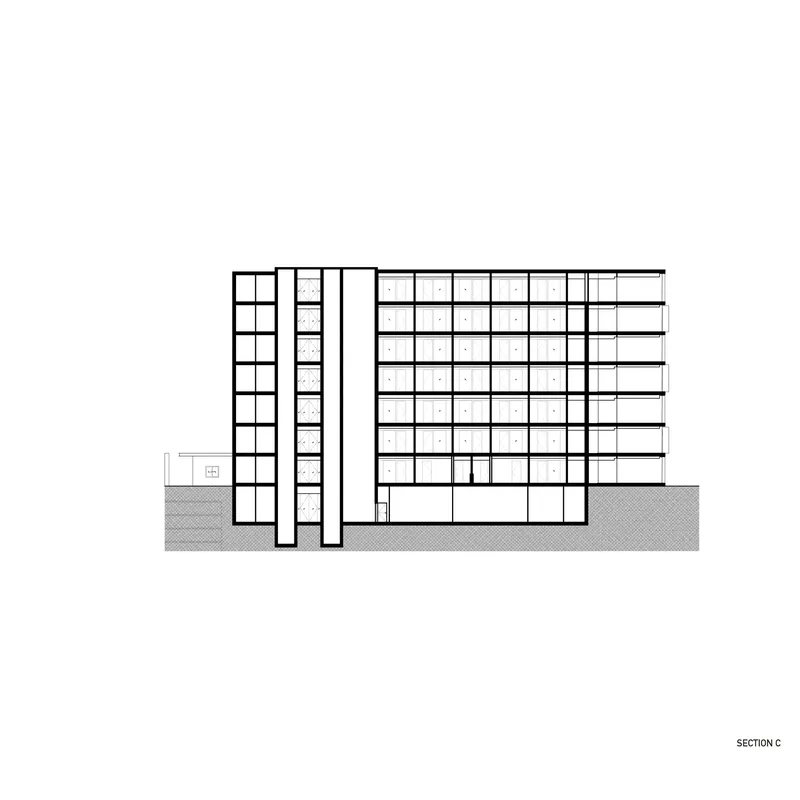
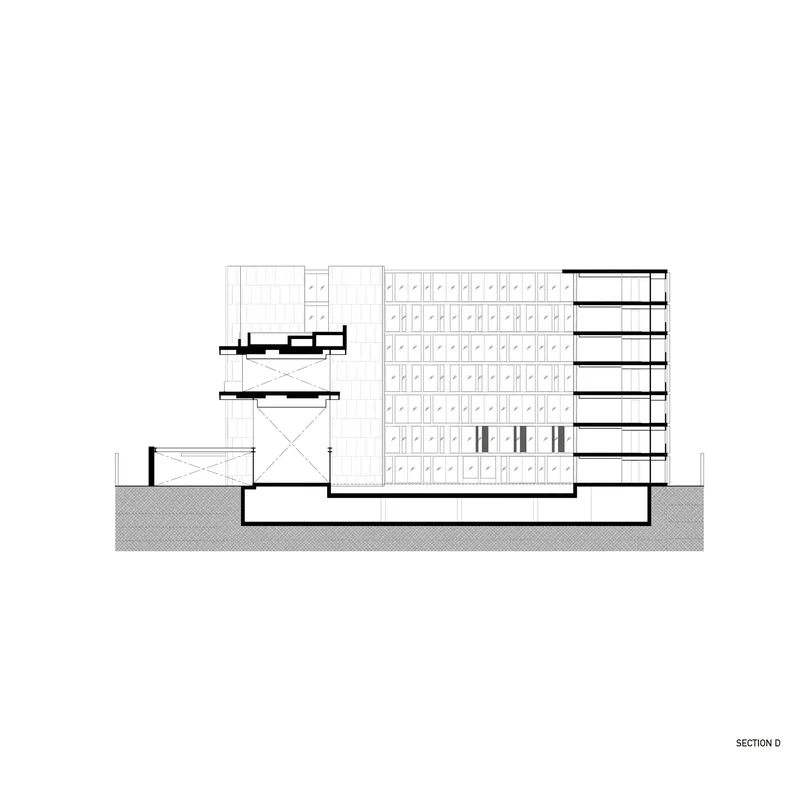
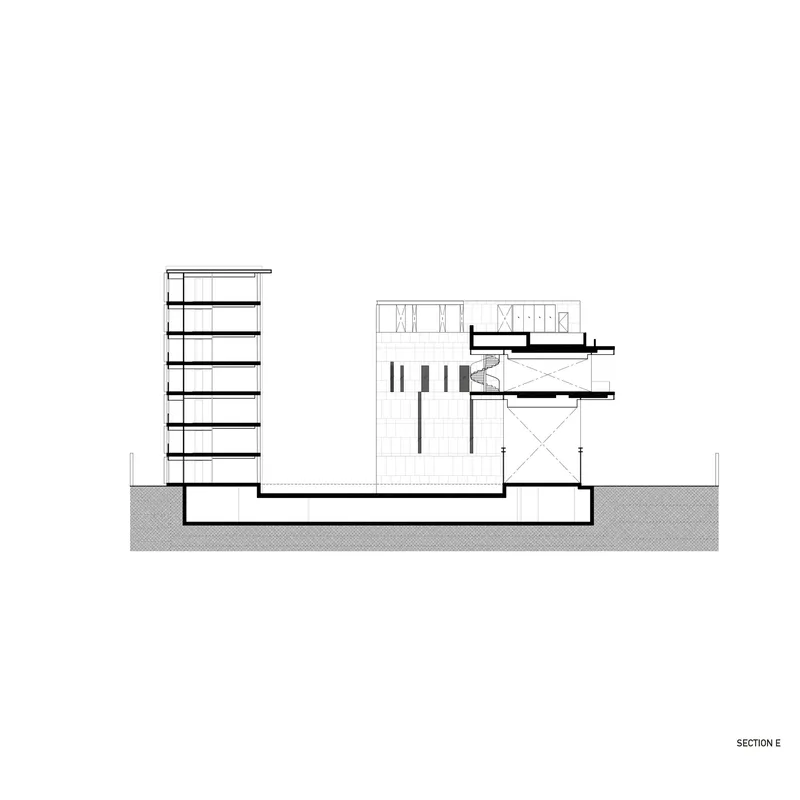
The isometric diagrams trace the design development from initial site enclosure through programmatic insertion, making the courtyard-first logic legible at a glance. The U-shaped plan wraps service and support spaces around the central void at ground level, while upper floors introduce curvilinear pool forms and residential wings that progressively reduce in footprint. The third floor pulls back to penthouse units flanking the open center, maintaining the courtyard's vertical porosity all the way up.
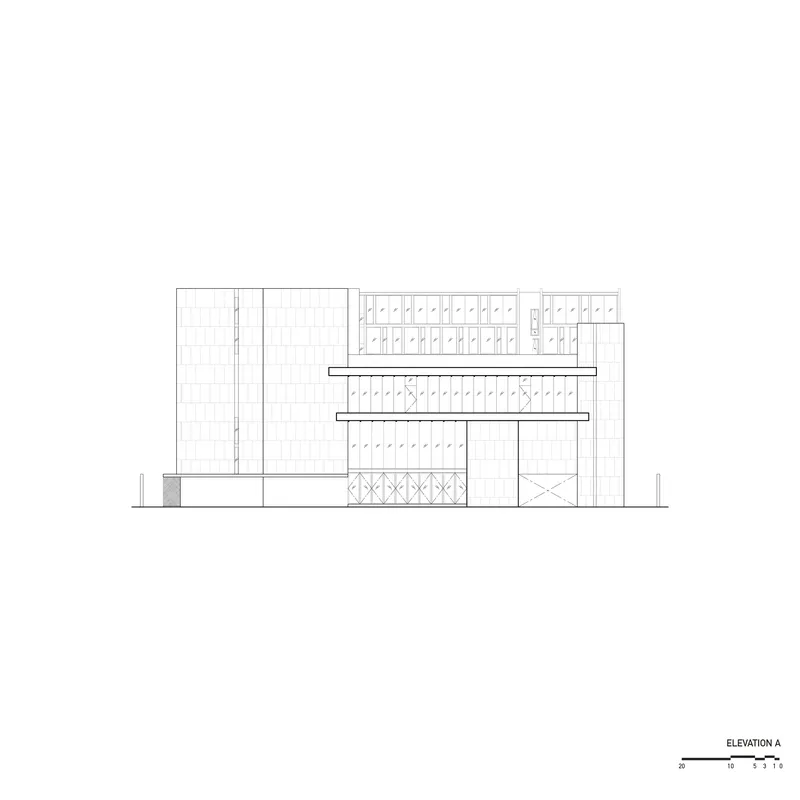
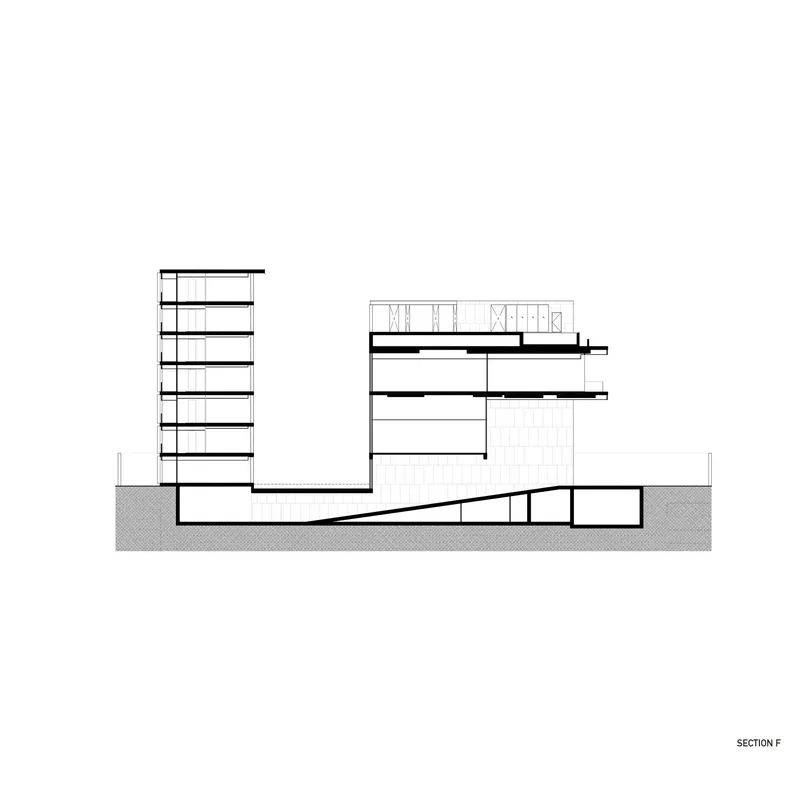
The elevations confirm the tonal discipline. Tiled facades, horizontal louvers, gridded screening, and vertical window bands create a controlled rhythm across all four sides. Patterned cladding panels and open loggias break the mass without undermining its solidity. The sections are the most revealing drawings: they show how the seven-story volume negotiates grade changes, how the sloped floor of an auditorium tucks beneath the tower, and how below-grade spaces extend the usable area. The courtyard reads in section as a carved absence, a void that structures everything around it.
Why This Project Matters
The Dusit D2 Hua Hin matters because it refuses to accept its site as a limitation. Urban infill hotel projects in resort towns typically apologize for their context, compensating with oversized pools or decorative excess. IDIN Architects chose a different path: treat the absence of a view as a design opportunity, use courtyard planning to manufacture interiority, and deploy section to recover what the plan cannot provide. The result is a hotel that feels like a resort without performing the gestures of one.
More broadly, the project offers a replicable lesson for hospitality design in Southeast Asia, where coastal tourism continues to develop sites farther and farther from the waterfront. Not every hotel can be beachside. The ones that cannot need an architectural argument for why staying there is still worthwhile. IDIN has provided one: a private world, carefully enclosed, where landscape, section, and material restraint collaborate to make a landlocked plot feel like an escape.
Dusit D2 Hua Hin Hotel by IDIN Architects. Hua Hin, Thailand. 9,800 m². Completed 2021. Landscape by TROP: terrains + open space. Structural engineering by NEXT Steps Design & Consultants Co., Ltd. Photography by DOF Sky|Ground.
About the Studio
Share Your Own Work on uni.xyz
If projects like this are the kind of work you want to make, uni.xyz is a place to publish your own, find collaborators, and enter design competitions.




Popular Articles
Popular articles from the community


Co-Life: Senior Housing Design That Reconnects Older Adults With the City
Co-Life reimagines senior housing design through healing gardens, shared streets, workshops, and a sustainable community across generations.

The Earth Pod: 3D Printed Homes for Resilient Refugee Communities
The Earth Pod reimagines refugee housing through 3D printed homes made from clay, combining resilience, self-sufficiency, and rapid shelter.

Hill & Cross Opera: Sculptural Opera House Architecture Shaped by Tallinn’s Landscape and Identity
Hill & Cross Opera reimagines opera house architecture in Tallinn through its sculptural hill, civic plaza, glass wave and a luminous cross.

The Musturak Paradise: Senior Living Architecture for a Connected Future in Temara, Morocco
The Musturak Paradise reimagines senior living architecture in Temara via private homes, social spaces, culture, community, and shared care.


Similar Reads
You might also enjoy these articles

Bao Huynh Watercolor Atelier: A Serene Art Retreat in Hội An
Bao Huynh Watercolor Atelier in Hội An blends multifunctional art spaces, sustainable design, local materials, and family-friendly living in a serene environment.

Atelier Macri Concept Store Interior Design by CASE-REAL
Atelier Macri store features a "ko" counter, walnut wood details, cork displays, blending retail, gallery, and seamless customer experiences.

Manuel Vargas Izquierdo Stadium and High-Performance Sports Center: Architectural Excellence in Jalpa de Méndez
The Manuel Vargas Izquierdo Stadium blends sustainable design, inclusive sports facilities, and cultural-inspired architecture, revitalizing Jalpa de Méndez’s public spaces.

KAKR Buluh Awar Hall: Revitalizing Community and Ecology Through Bamboo Architecture
Community built bamboo hall revitalizes Buluh Awar village, empowering youth, restoring ecology, celebrating vernacular craftsmanship through sustainable architecture and culture.
Comments (0)
Please login or sign up to add comments
No comments yet. Be the first to comment!