
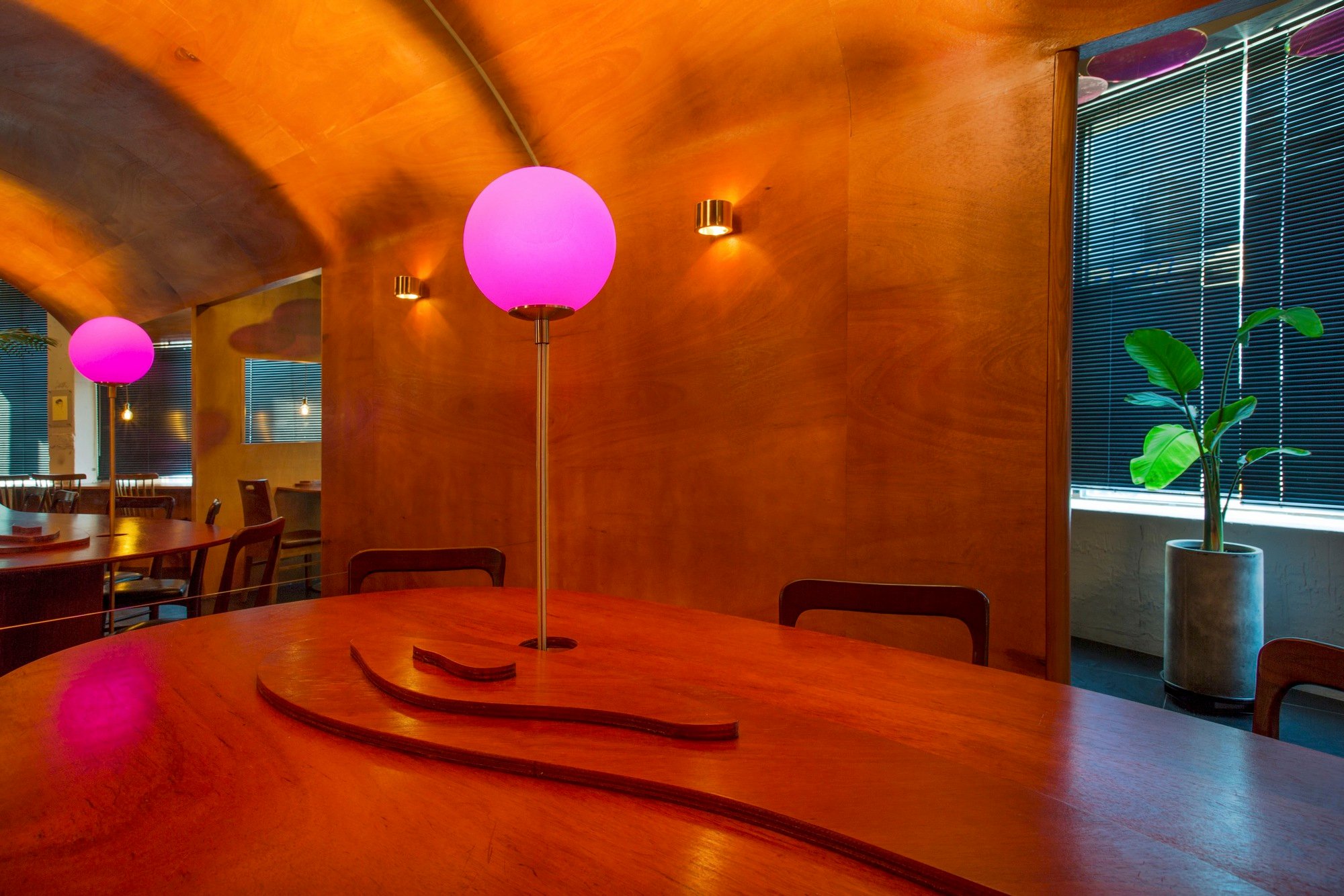
Indiesalon Carves a Plywood Cave into a Seoul Bistro's Second Floor
Munhwa Bistro's second Seongsu branch wraps diners in a laminated timber vault laced with colored light and mirror illusions.

Caves predate every other typology of human gathering space, and Indiesalon takes that premise literally. For the second branch of Munhwa Bistro, tucked onto the second floor of an existing building on Seongsuil-ro in Seoul's Seongdong-gu, lead architect Seokjoon Jang constructed an interior that reads less like a restaurant fitout and more like an excavated chamber. Laminated plywood ribs form a continuous barrel vault overhead, walls dissolve into mirrored surfaces, and colored glass discs scatter kaleidoscopic shadows across every hard edge. The effect is primal yet deliberately artificial, a grotto assembled from sheet goods and pendant bulbs.
What makes the project genuinely interesting is its refusal to treat "cave" as mere metaphor. The design decisions are spatial, not decorative. The vaulted ceiling compresses sight lines and directs attention downward toward a signature central "oasis table" that can be reconfigured in size and shape. Wood barriers segment the plan without closing it off, and a small aperture at the entrance controls your first glimpse of the room the way a cave mouth frames daylight. Everything conspires to make a compact commercial floor plate feel cavernous.
The Vault as Organizing Device
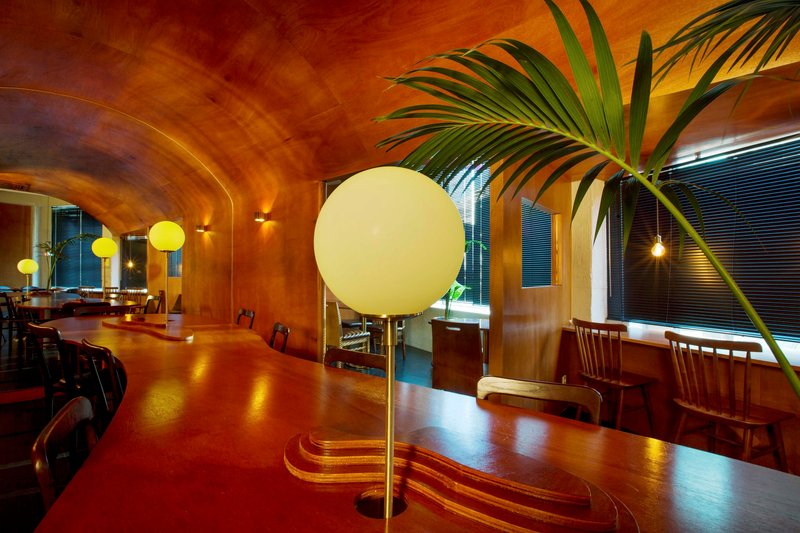
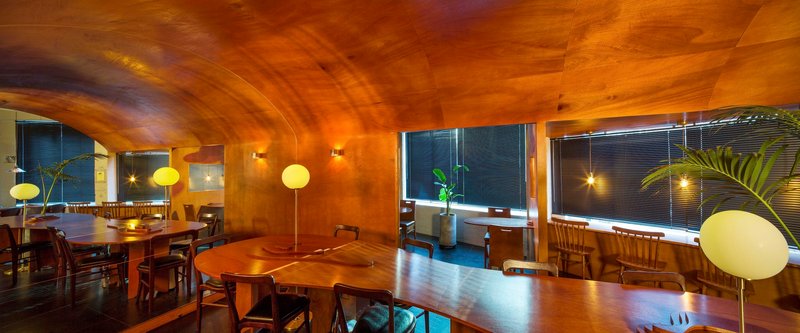
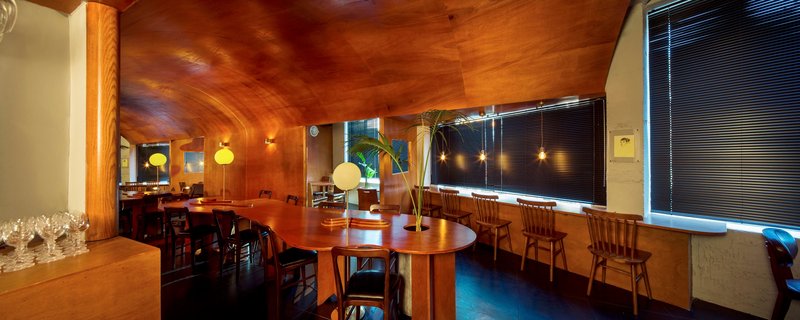
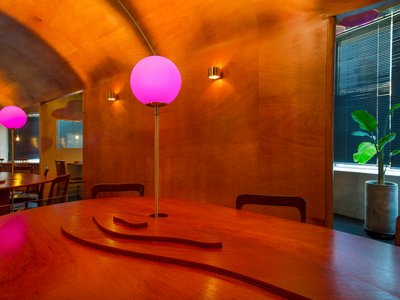
The barrel vault is the project's single strongest gesture. Built from thin laminated plywood ribs, it runs the length of the dining hall and curves smoothly into the walls, erasing the usual ceiling-to-wall junction. Spherical pendant lamps hang from the apex, their pink glow bouncing off the concave timber surface and warming the entire room. The effect at dusk, when window bays along one side admit the last natural light, is a space that seems to breathe.
Structurally, the vault does real work beyond atmosphere. It conceals services, unifies what would otherwise be a low commercial ceiling, and channels acoustics toward the tables rather than letting sound scatter upward. It also gives the room a clear longitudinal axis, which Indiesalon reinforces with the long communal tables below.
The Oasis Table and Seating Thresholds
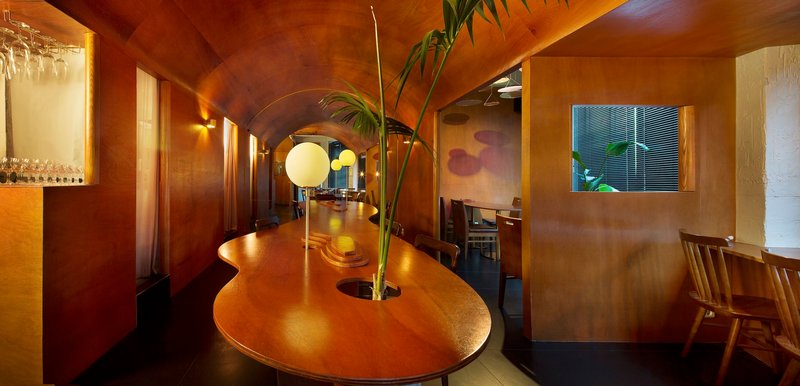
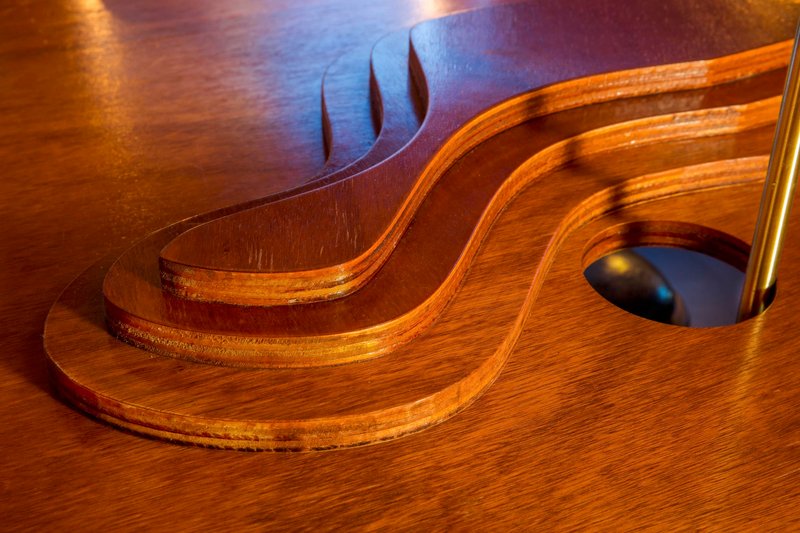
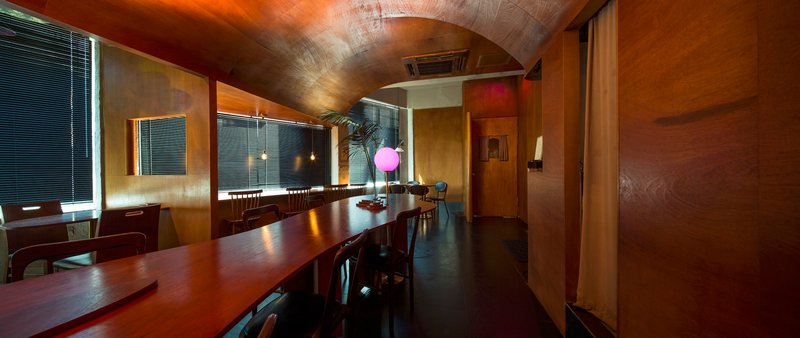
At the center of the plan sits the oasis table, a large curved piece of furniture whose plywood edge detail reveals flame-shaped cutouts and inlaid grooves. Palm fronds rise from its surface, completing the grotto illusion with a touch of the tropical. The table is designed to be convertible, capable of being rearranged into diverse sizes and configurations depending on the crowd. It is both the anchor and the most social object in the room.
Around the perimeter, seating is organized into alcoves divided by wood barriers and horizontal blinds. These thresholds create pockets of intimacy without walling off the vault's continuous volume. A curved bar counter and wooden chairs line one edge, offering a more casual posture for solo visitors or small groups. The layering of zones, from the communal center to the semi-private periphery, gives diners real choice in how they inhabit the space.
Colored Light as Material

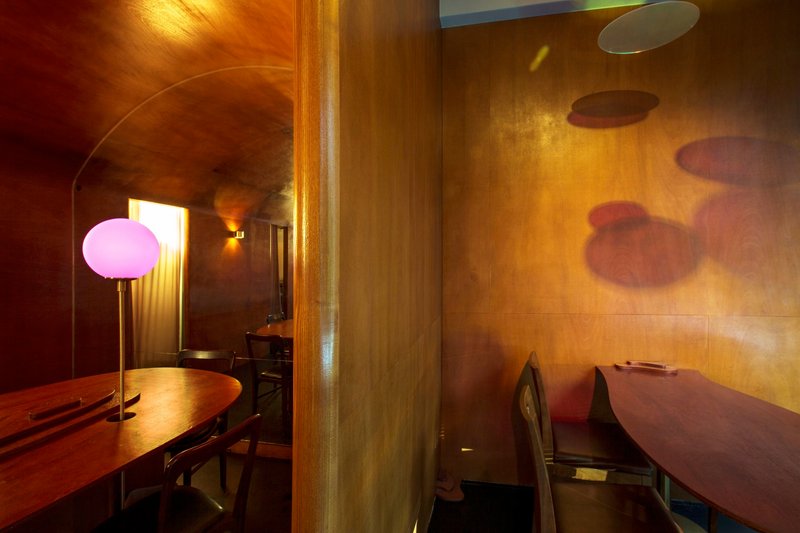
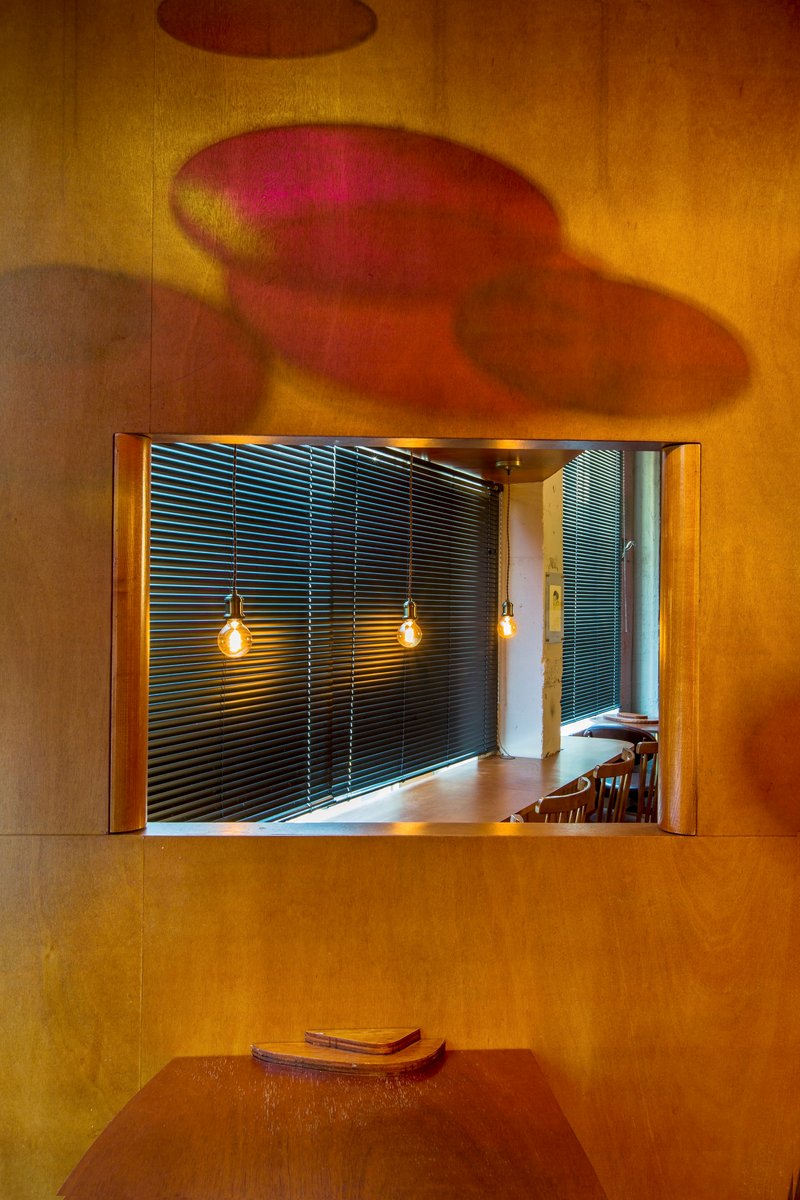
One of the most striking details in Munhwa Bistro is the installation of overlapping translucent colored glass discs, visible from a narrow stairwell and projecting layered green, purple, and amber light onto adjacent surfaces. These reflections drift across the plywood paneling as viewing angles shift, transforming a static material palette into something kinetic. Indiesalon treats colored light not as accent but as a genuine building material, one that changes the character of the room hour by hour.
The arched corridor captures this best: a pink globe lamp at its far end casts warm light forward while colored shadows from the glass discs paint the wall beside it. The result is a passage that feels lit from within, as though the plywood itself were luminous. It is a small, low-budget trick that punches far above its weight.
Apertures and Controlled Reveals
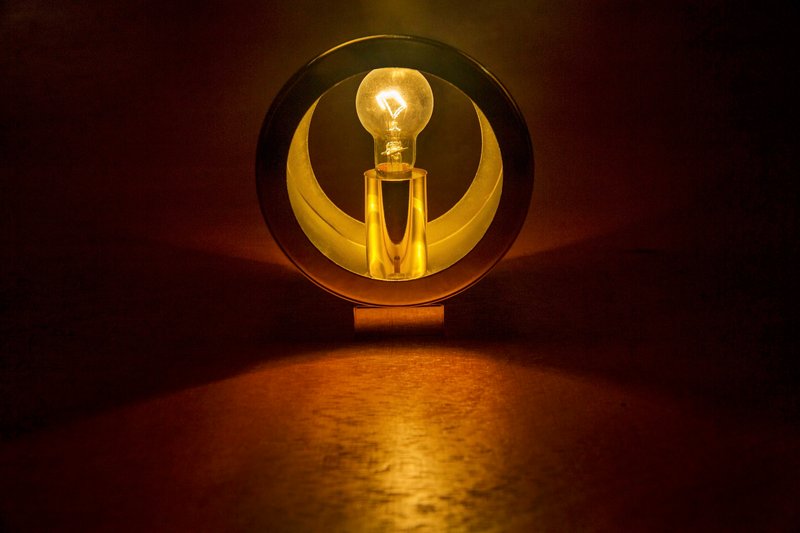
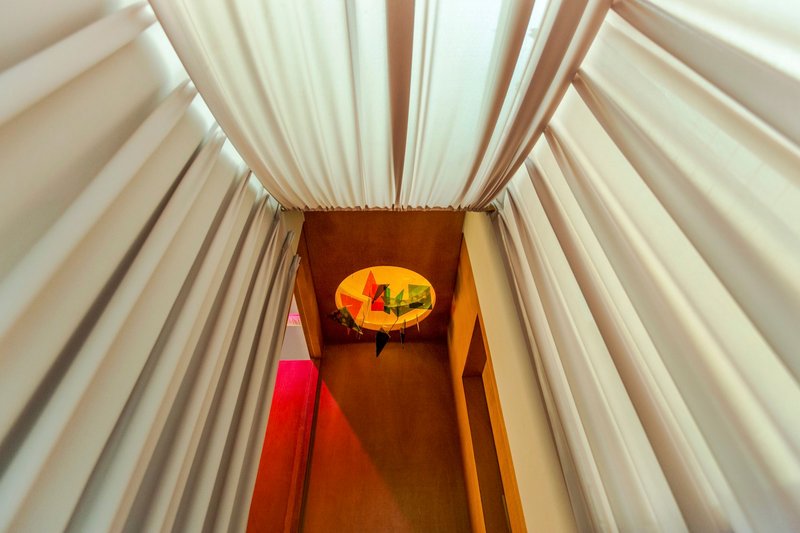
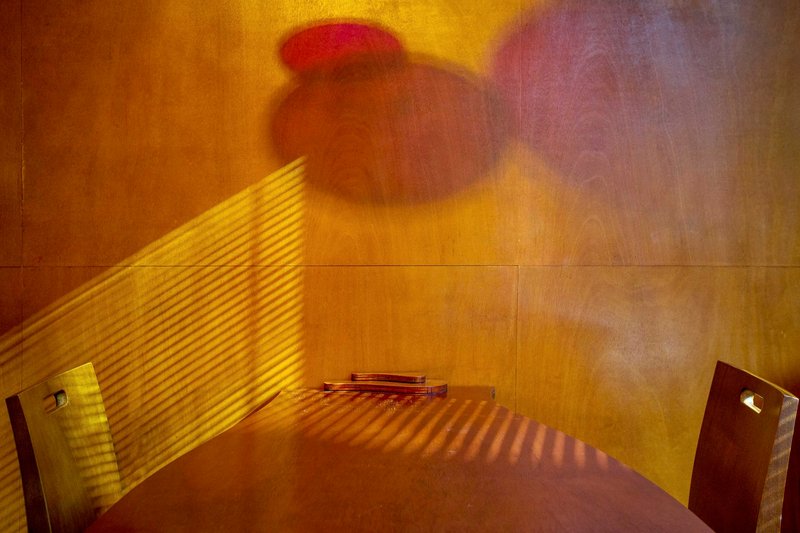
Indiesalon understands that a cave's drama lives at its openings. A circular brass portal frames a single illuminated bulb above the timber floor, reducing the entire dining experience to a peephole moment. The narrow stairwell, lined in white pleated fabric, funnels visitors past the colored glass disc installation before releasing them into the main hall. Even the alcoves play with light admission: striped afternoon sun enters through horizontal blinds and collides with colored reflections from above, producing a layered effect on the timber-paneled walls.
The small window at the entrance, noted in the design concept, is the most deliberate of these moves. Before you see the full vault, you receive a compressed, framed preview. It is the spatial equivalent of a movie trailer, and it works because the room beyond genuinely delivers on the promise.
Material Details and Surface Play
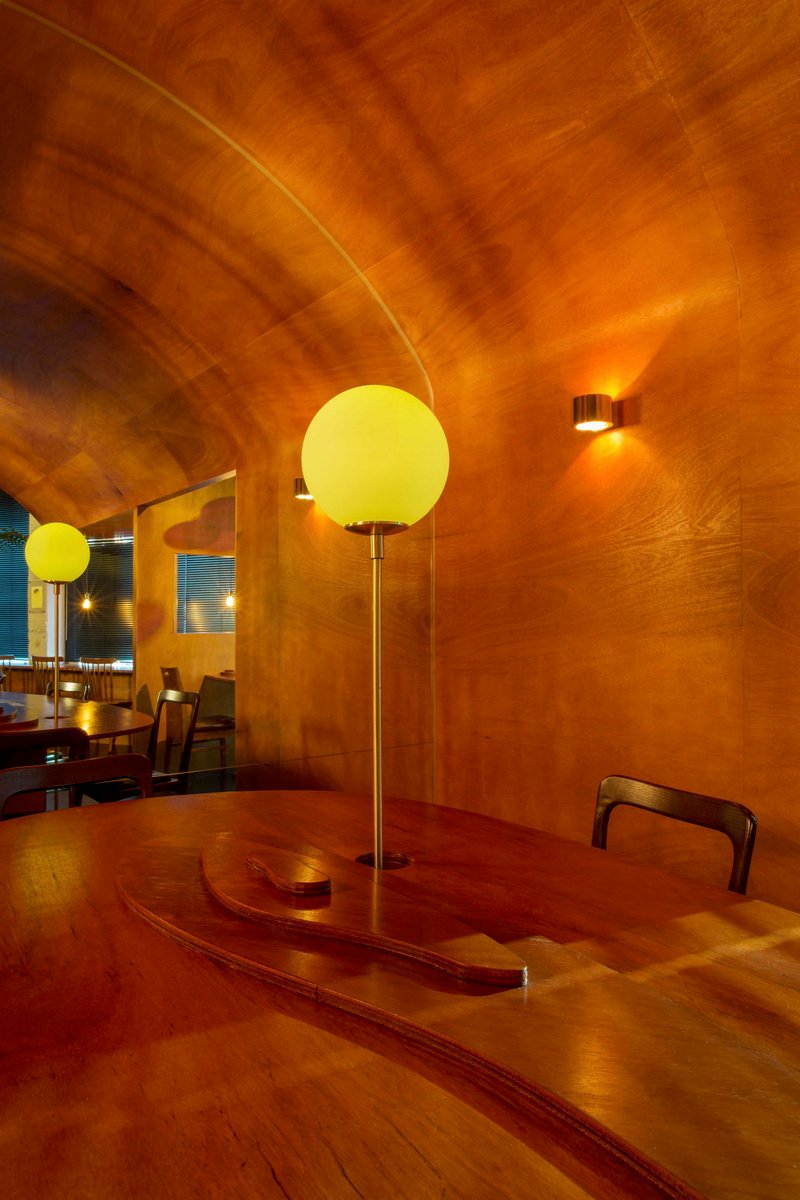
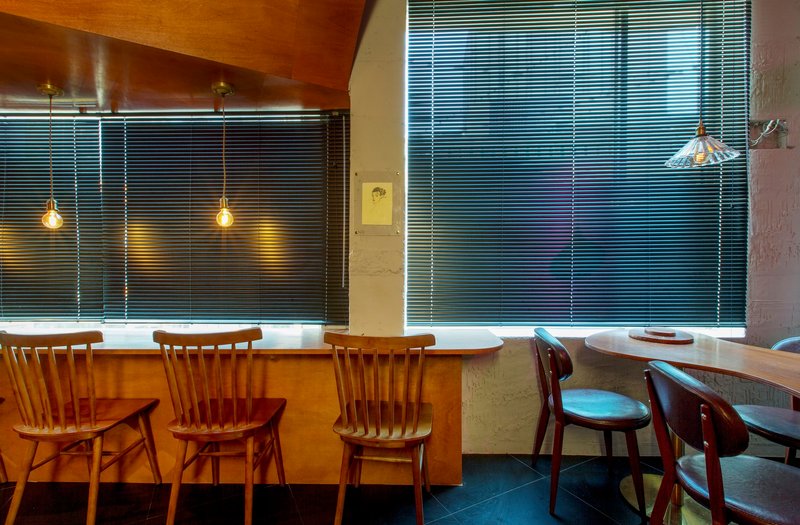
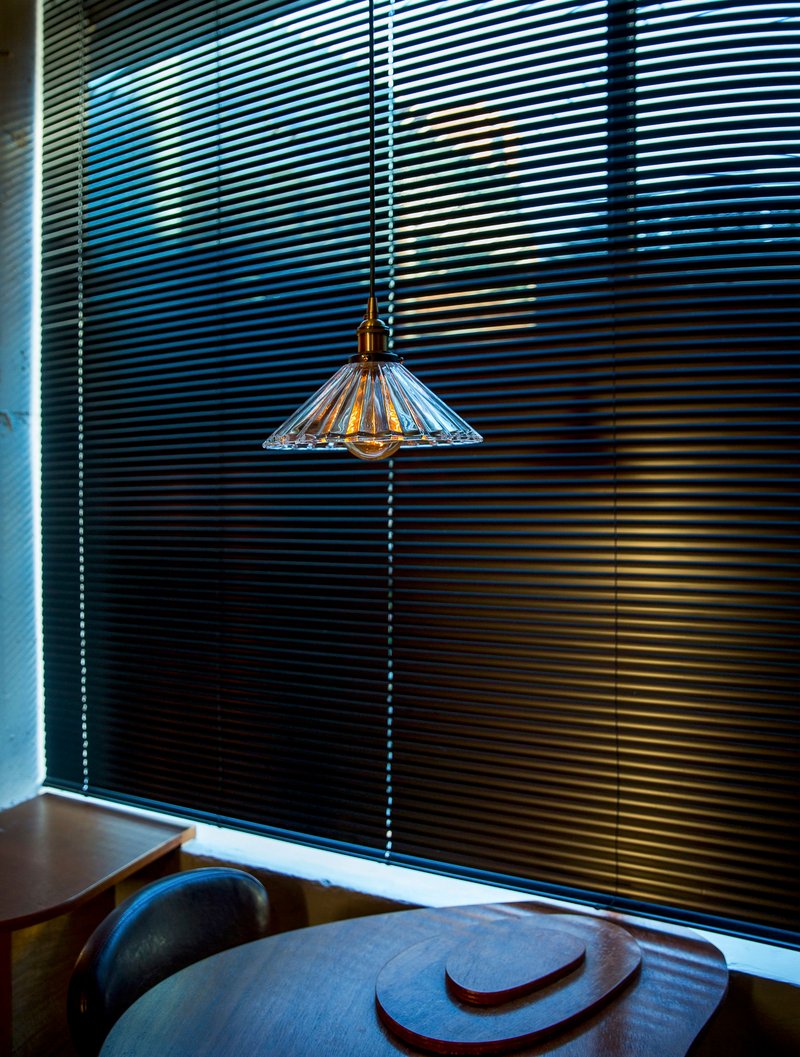
The plywood is doing most of the heavy lifting here, literally and visually. Laminated layers are left exposed at table edges and ceiling ribs, celebrating the material's cross-grain lamination rather than disguising it. A mirror wall on one side of the dining hall extends the vault optically and multiplies the pendant lights, creating spatial depth that the floor plate alone could never achieve. Ribbed glass pendants and black metal blinds introduce contrasting textures: translucent and opaque, industrial and warm.
What holds the palette together is restraint. Wood, mirror, acrylic, glass, metal: five materials, all working hard but none competing. The ceiling's acrylic lighting panels coordinate with the curved surfaces to produce an even, diffused glow that softens every junction. It is a fitout that looks expensive but is assembled from accessible, replicable components, a useful lesson for hospitality design on a budget.
Framed Encounters
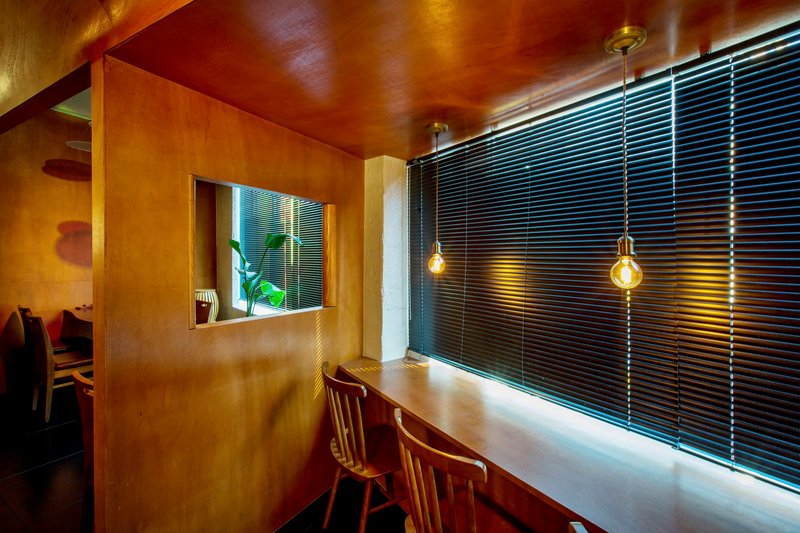
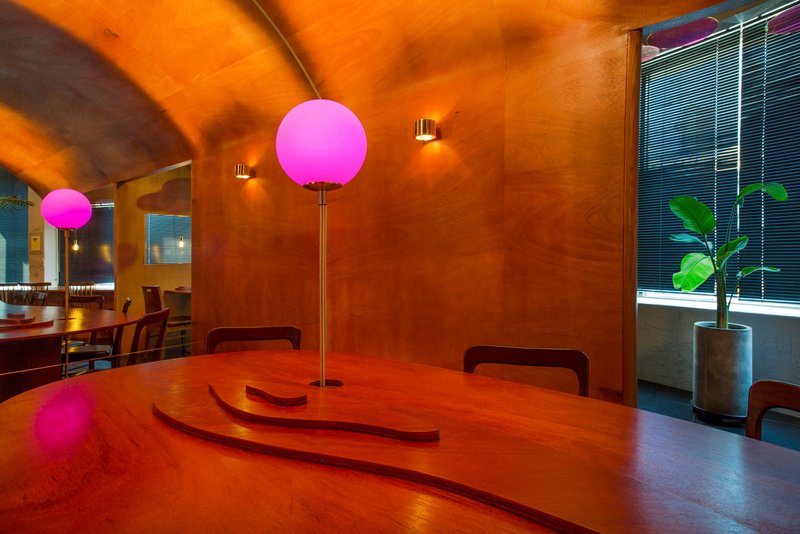
The dining counter along the window wall pairs a plywood partition with black horizontal blinds, framing each seat as its own vignette. Pendant bulbs at varied heights reinforce a sense of individual territory within the shared volume. Across the room, the curved timber table with its inlaid grooves sits under a sequence of illuminated pink globe fixtures, creating a rhythm that pulls the eye down the vault's axis. Every seating position in the bistro is composed, not just allocated.
Plans and Drawings
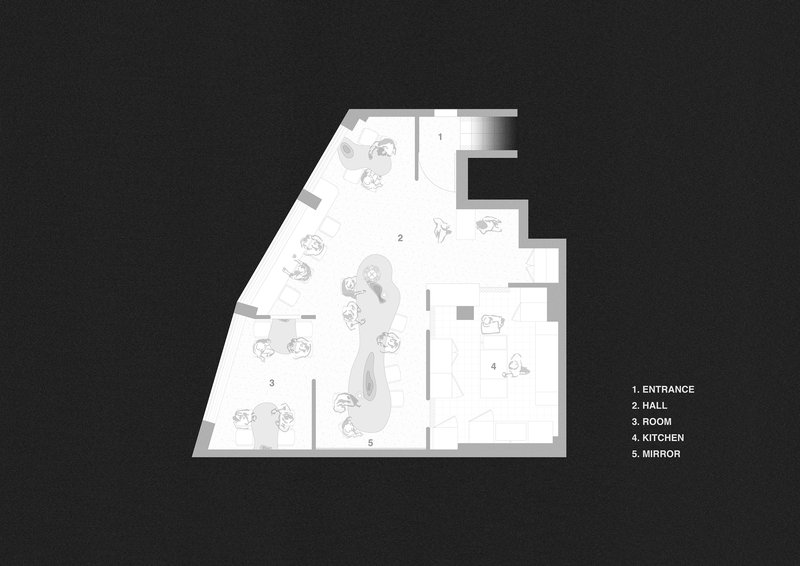
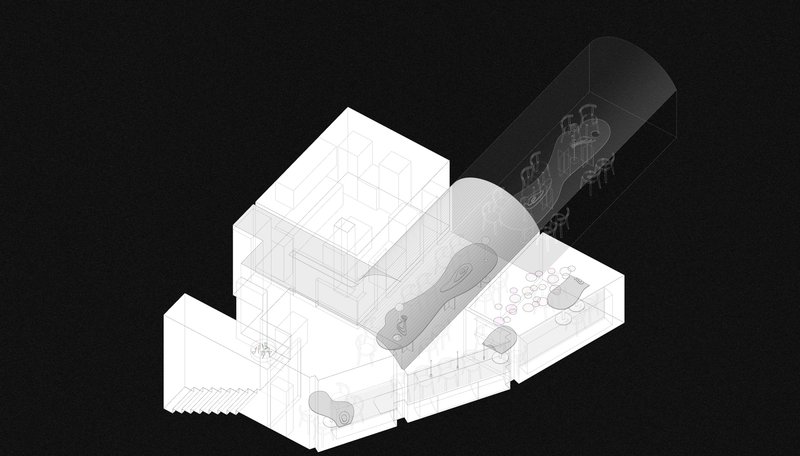
The floor plan reveals how the entrance hall compresses circulation before opening into the dining room's generous curved seating arrangement. The exploded axonometric drawing clarifies the layered interior volumes: the vault as an inserted shell within the existing building envelope, with circulation threaded around it. The drawings confirm that the cave concept is not just atmospheric but geometric, every curve is deliberate, and every threshold is calibrated to control how and when the full space reveals itself.
Why This Project Matters
Hospitality interiors in Seoul's Seongsu-dong neighborhood tend to lean on exposed concrete, industrial steel, and Instagram-ready minimalism. Munhwa Bistro goes the other way entirely, wrapping diners in warmth and enclosure and trusting that a sense of discovery will outperform the usual open-plan transparency. The cave concept, borrowed from the brand's first branch and deepened here, proves that thematic design does not have to be kitsch. When the spatial logic is rigorous, the narrative becomes experiential rather than illustrative.
Indiesalon's achievement is making a second-floor commercial lease feel primordial. With plywood, mirrors, colored glass, and carefully positioned apertures, Seokjoon Jang turned a standard Seoul floor plate into a sequence of compressed entries, expansive vaults, and chromatic surprises. It is a reminder that interior architecture, even at a modest scale, can reshape how people occupy and remember a room.
Munhwa Bistro Seong-su, designed by Indiesalon (lead architect: Seokjoon Jang), Seongdong-gu, Seoul, South Korea, completed 2018. Photography by Hongkyu Yang.
About the Studio
Share Your Own Work on uni.xyz
If projects like this are the kind of work you want to make, uni.xyz is a place to publish your own, find collaborators, and enter design competitions.




Popular Articles
Popular articles from the community

gru.a Builds a 70 m² Timber Shelter That Opens Like a Farm Door in Brazil's Valley of the Vines
In the mountainous region near Rio de Janeiro, a compact retreat uses plywood panels and deep eaves to blur the line between inside and out.
Indiesalon Carves a Plywood Cave into a Seoul Bistro's Second Floor
Munhwa Bistro's second Seongsu branch wraps diners in a laminated timber vault laced with colored light and mirror illusions.
Johnston Architects Reimagines the Methow Valley Hay Barn as a Small-Town Library in Winthrop
A 7,300-square-foot timber library channels the region's agrarian vernacular to serve a rural Washington community of 400 year-round residents.
Constanti Architects Builds a Fortress of Privacy in Nicosia with House 345
A concrete and timber residence in Cyprus reinterprets the traditional introverted courtyard house for a new urban landscape.


Similar Reads
You might also enjoy these articles

127af Flips a Tiny Bagnolet Rowhouse Upside Down with a Handcrafted Roof Extension
A 55-square-meter terraced house on the edge of Paris gains a luminous upper living floor through lightweight timber and steel.
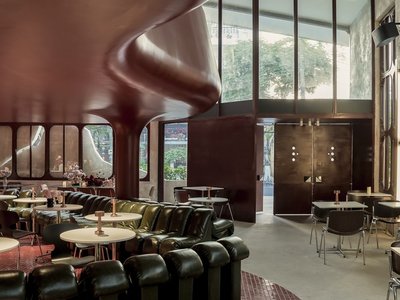
1.61 Design Workshop Wraps a 600-Square-Meter Café in Vietnam in Sculptural Burgundy Drama
Reden Café & Bistro pairs a helical staircase, mosaic floors, and deep red interiors to rethink Vietnamese hospitality space.

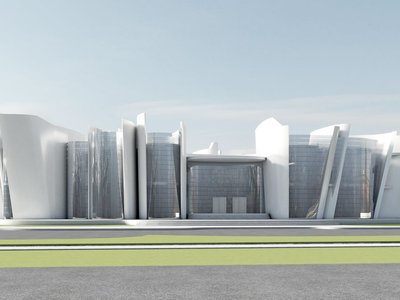
The Unbound Brain: A School Shaped by Cognitive Architecture
Cylindrical learning pods radiate like neurons from a central cortex, turning the floor plan into a spatial model of human thought.
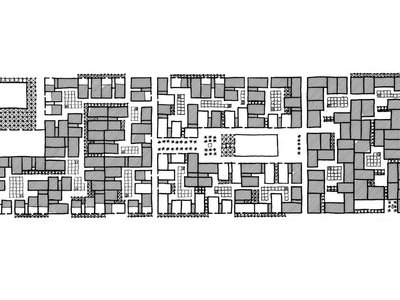
Revival Vernacular Architecture: Rammed Earth Settlements for the Sahara
A modular desert community in Mauritania that fuses passive cooling techniques with earthen construction and local craftsmanship.


Explore Commercial Buildings Competitions
Discover active competitions in this discipline




The Global Benchmark for Architecture Dissertation Awards


Challenge to design luxury tourism on rails


VR headsets Storefront design competition

Designing a staircase for a client
Comments (0)
Please login or sign up to add comments
No comments yet. Be the first to comment!