
Aaberg School by Haller Gut Architects: A Harmonious Dialogue Between Timber Architecture and Nature
Aaberg School blends timber architecture with nature, offering flexible learning spaces, landscape integration, and community-oriented outdoor environments in Aarberg.


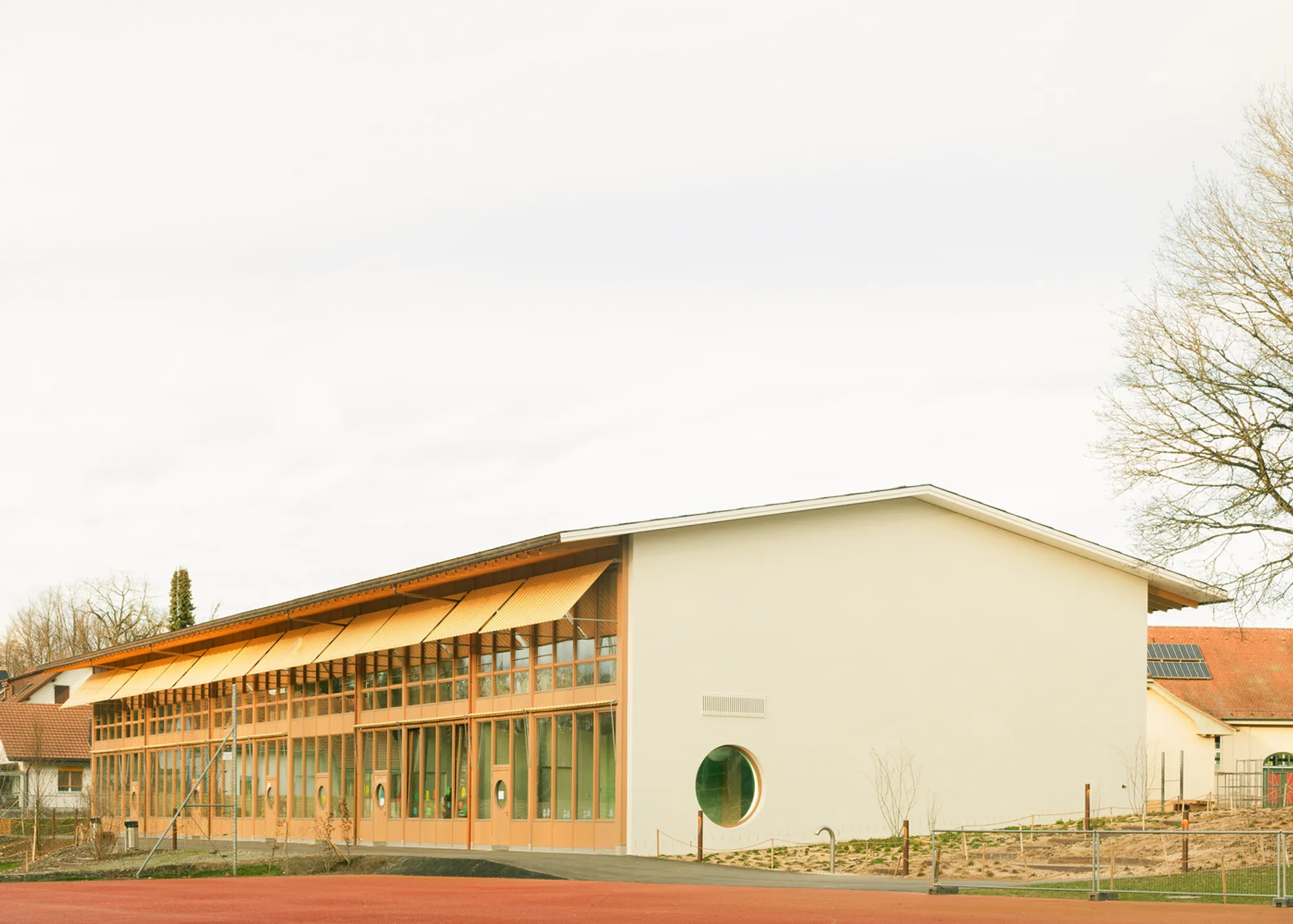
Nestled along the serene banks of the Alte Aare in Aarberg, Switzerland, the new Aaberg School by Haller Gut Architects is a compelling example of how contemporary school design can integrate seamlessly with natural landscapes. Completed in 2022, this two-story timber building thoughtfully extends the character of its surroundings, creating a learning environment where architecture, nature, and community converge.
Landscape-Driven Placement: Building Along the Tree Line
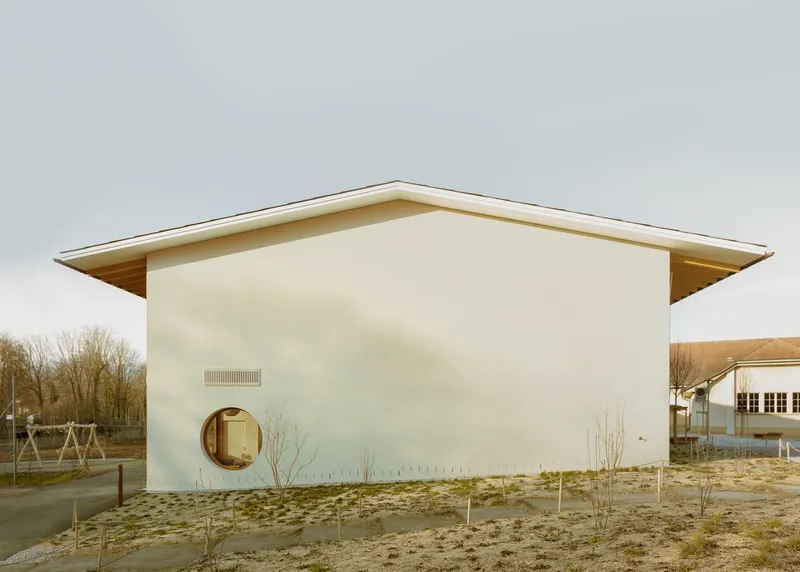
The architectural concept is deeply rooted in the linear rhythm of Aarberg’s landscape. The new school sits delicately between the tree-lined Alte Aare river and the vegetated Hans-Müller-Weg, extending the organic corridor of greenery. Rather than disrupting the terrain, the building’s narrow and elongated volume continues the natural line of trees, reinforcing the spatial clarity of the site.
Positioned as a low-impact extension to the existing campus, the school respects the open green space facing the river, preserving views and promoting a breathable environment for outdoor learning and play. This approach not only enhances the site’s ecological presence but also strengthens its spatial identity.
Bridging Terrain Through Spatial Design
Responding to the site’s natural elevation changes, the building’s split-level entrance mediates the height difference between the road and riverside. This split-level strategy facilitates smooth circulation and strengthens the spatial connection between indoor and outdoor environments. A series of generous timber canopies provide shelter while encouraging outdoor activities, blurring the boundaries between nature and built form.
Community-Centered Outdoor Spaces
More than just a school, the Aaberg campus embraces its role as a neighborhood gathering space. The lower playground, seamlessly connected to existing sports facilities, is designed to be open and inclusive. Featuring varied zones for play, exploration, and rest, the space caters to a range of age groups and is accessible beyond school hours—fostering community interaction and shared ownership.
The landscaping prioritizes native, site-specific tree species, not only for visual cohesion but also for practical use as climbing trees, seasonal variety, and natural shading. This ecological sensitivity turns the schoolyard into a dynamic learning landscape that evolves throughout the year.
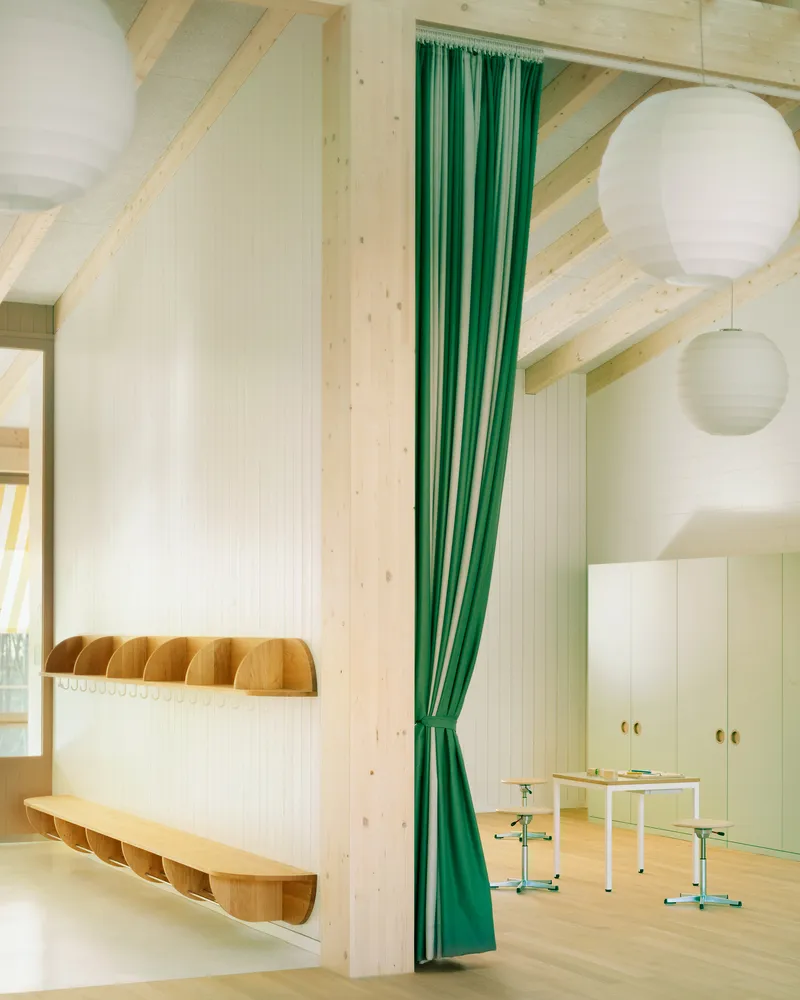
Architectural Language: Lightness and Timber Precision
The new school structure is a filigree wooden composition, modest in scale and rich in tactile warmth. Through the careful use of vertical timber elements and refined detailing, the building evokes a sense of intimacy and blends with the vegetative surroundings. Its subtle facade rhythm, generated by individual spatial units, softens its visual impact and allows the building to sit quietly among the existing campus structures.
Rather than dominate, the architecture subordinates itself to the older buildings, establishing a respectful architectural hierarchy. The wooden facade—low, calm, and transparent—helps the structure read as part of the extended green environment, enhancing the natural ambience of the riverbank.
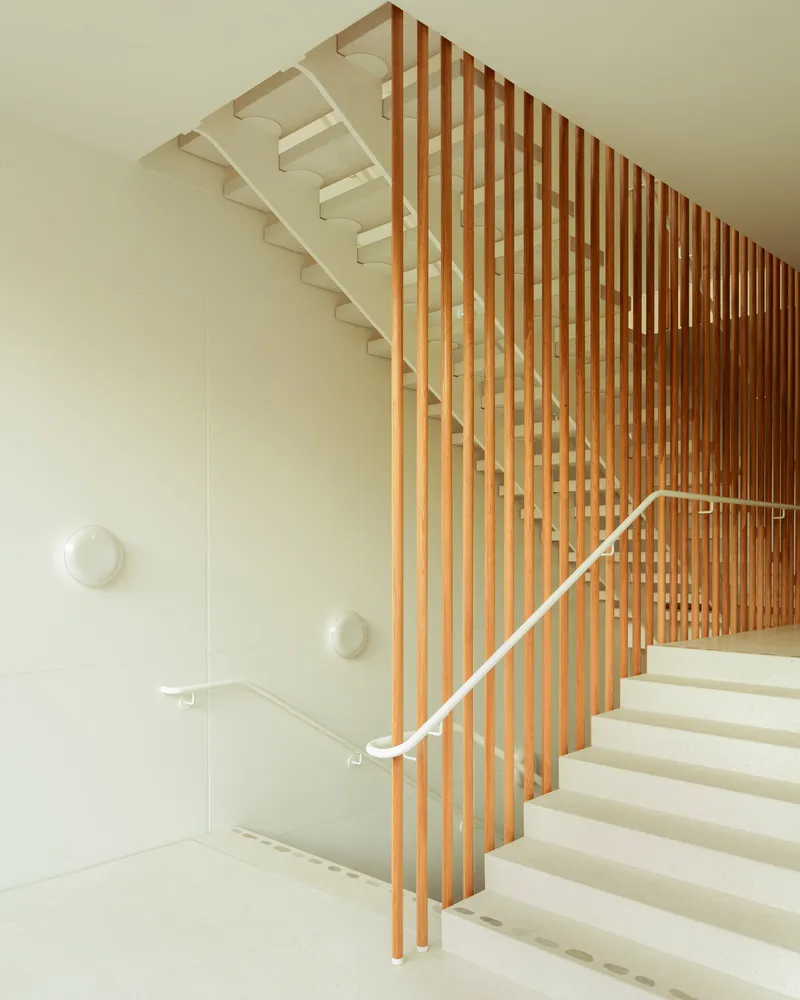
Cluster Organization: A Flexible Learning Ecosystem
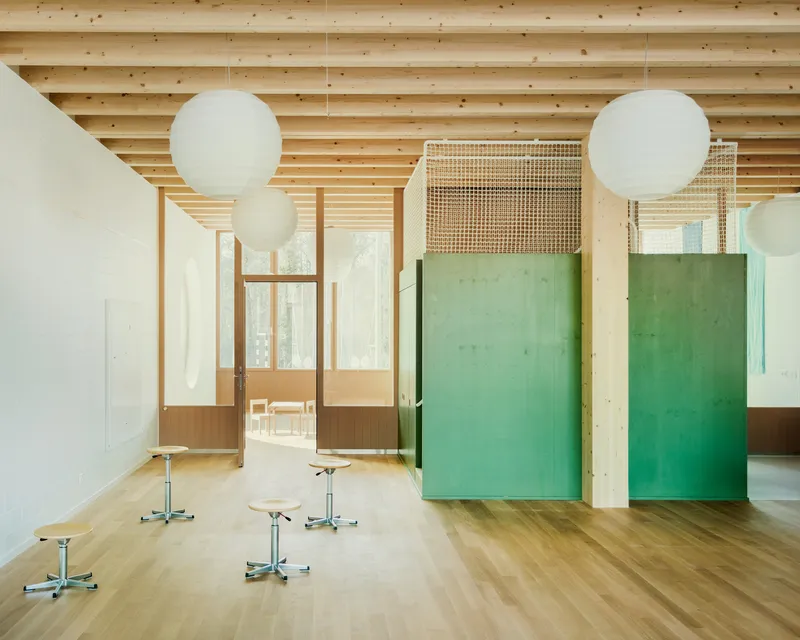
Internally, the school is organized in a cluster-based typology, offering flexibility and connectivity. Each floor houses five dual-aspect classrooms, arranged in clusters that encourage collaboration and modular learning. On the ground floor, kindergarten and day school rooms enjoy direct outdoor access, promoting independence and continuous engagement with nature.
Each cluster is linked internally through interconnecting doors, enabling larger, class-wide teaching formats. Simultaneously, the central stairwell offers a strong vertical connection from the main entrance, reinforcing spatial orientation and clear circulation between floors.
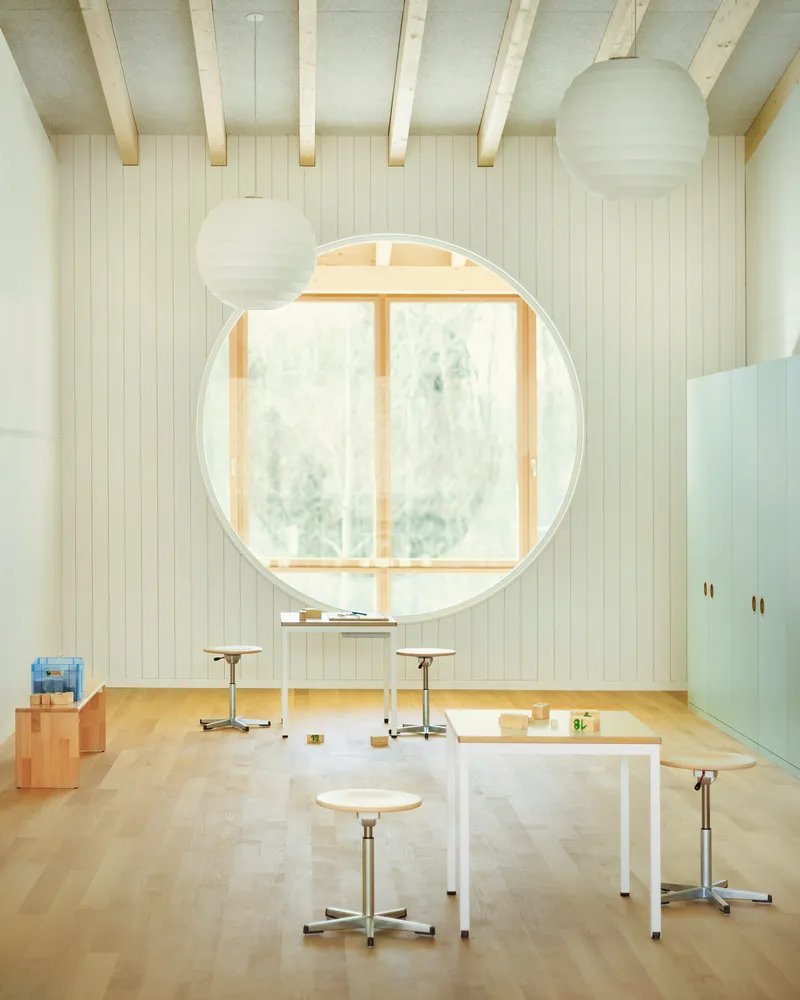
Rooms facing the quiet inner courtyard are deliberately chosen for more focused academic functions, offering a calm retreat from the more open, animated riverside. This dual-orientation strategy ensures that students experience a balanced learning atmosphere—open and exploratory on one side, concentrated and calm on the other.
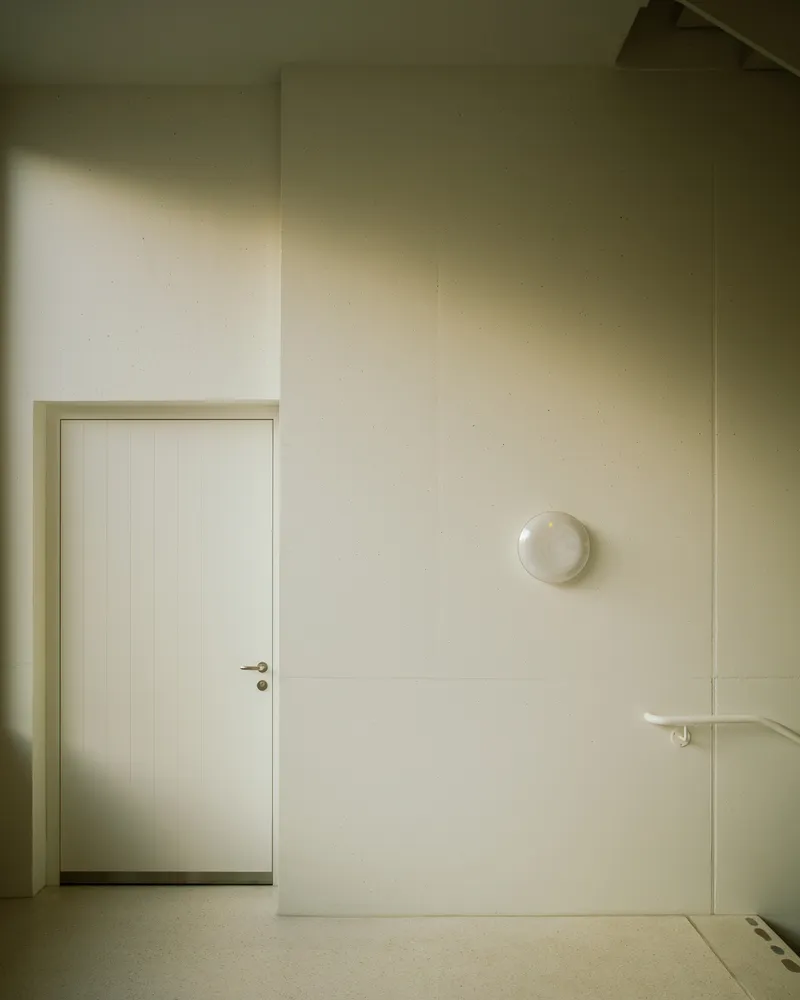
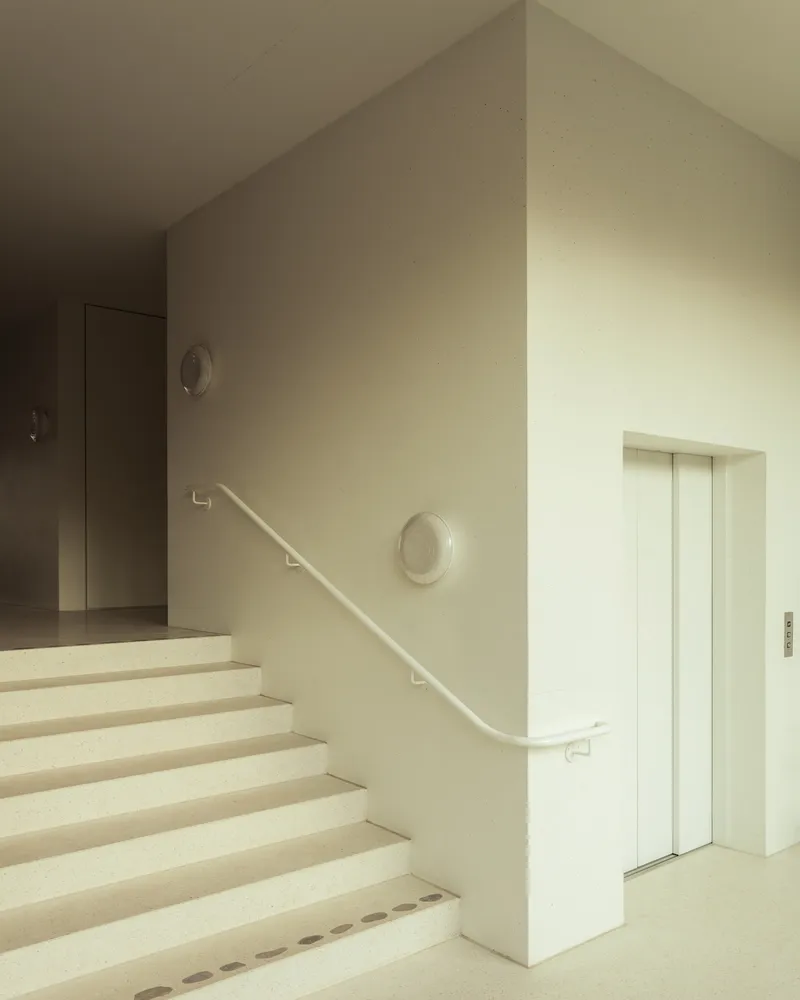
Sustainable Learning by Design
The Aaberg School is more than just an educational facility—it is a sustainable learning environment that echoes the natural rhythms of its setting. Through its low-impact timber construction, landscape-responsive design, and community-first outdoor spaces, Haller Gut Architects have created a school that not only teaches within its walls but also in the spaces around it. The building stands as a model for climate-sensitive school architecture, where design, ecology, and education come together to support future generations.
All photographs are works of Karina Castro




Popular Articles
Popular articles from the community


The Ocean Hive: Sustainable Architecture for a Self-Sufficient Civilization at Sea
The Ocean Hive imagines sustainable architecture at sea, where modular habitats, algae, wave power and ocean waste sustain a growing colony.

Conexión: Biophilic Design Reimagines High-Rise Living in Hong Kong
Conexión reimagines high-rise living in Hong Kong through biophilic design, green facades, shared spaces, daylight, water and nature within.

Hill & Cross Opera: Sculptural Opera House Architecture Shaped by Tallinn’s Landscape and Identity
Hill & Cross Opera reimagines opera house architecture in Tallinn through its sculptural hill, civic plaza, glass wave and a luminous cross.
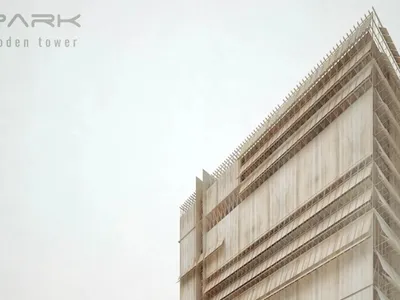
EW PARK: Sustainable Architecture Reimagines the Future of Urban Parking
EW PARK reimagines city parking as a modular wooden tower combining automation, solar energy, electric mobility, and adaptable urban design.


Similar Reads
You might also enjoy these articles


Hodi-Mandai Geram
Project Function: Preservation and revitalization of the Intangible heritage and socio-spatial identity of the Hodi by Housing, Cultural Memory Center, Sacred Grove, landscape, local tourism economy


Olio Towers: A Mid-Rise for Performers That Fuses Housing, Rehearsal, and Stage
Located blocks from Houston's Theater District, this modular tower stacks living units around a central performance atrium.

Oasis: Modular Green Housing Carved into Dhaka's Urban Fabric
A shortlisted Plugin Housing entry reclaims unauthorized settlements in Dhaka with stepped concrete volumes, green roofs, and ventilation-driven design.

Black Hole: A Floating Megastructure for the Post-Physical Era
Emiliano Mazzarotto envisions a spherical, self-scaling arena where e-sports, digital hotels, and holographic stadiums replace traditional public space.


Explore Aa Architecture School Competitions
Discover active competitions in this discipline



Challenge to design public laboratory


Challenge to reimagine the Iron Throne


Photograph architecture without architects


Illustrate the lost glory of Angkor Wat - Render Challenge
Comments (0)
Please login or sign up to add comments
No comments yet. Be the first to comment!