

Aesop Thonglor Store by Sher Maker: Reclaimed Wood, Thai Domestic Craft, and Sensory Retail Design in Bangkok
Reclaimed teak interiors, traditional Thai joinery, granite sink, and sensory fragrance room define this culturally rooted contemporary Bangkok retail space.


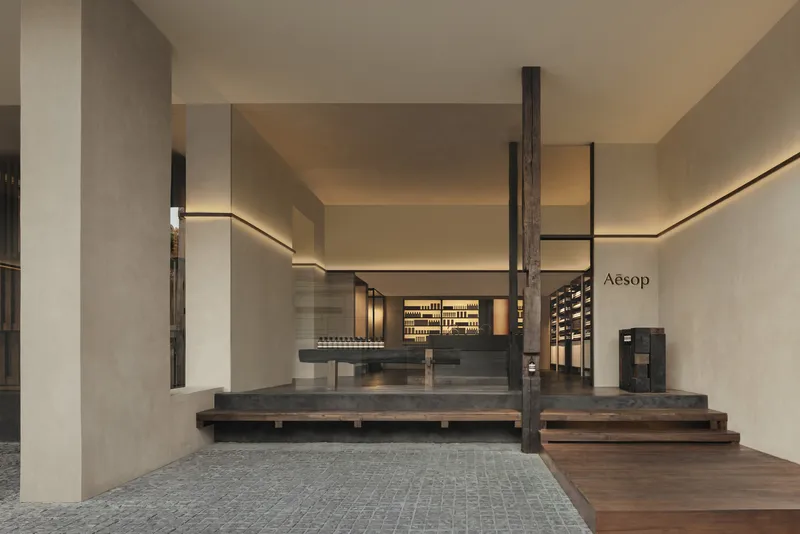
Located in Watthana, Bangkok, Aesop Thonglor Store is a thoughtfully crafted retail interior designed by Sher Maker. Completed in 2024, the 190-square-metre project reinterprets Thai domestic architecture through the lens of contemporary retail design, aligning Aesop’s global identity with deeply local material culture. Rather than treating the store as a neutral commercial shell, the architects approach it as a spatial narrative rooted in reuse, craftsmanship, and sensory experience.
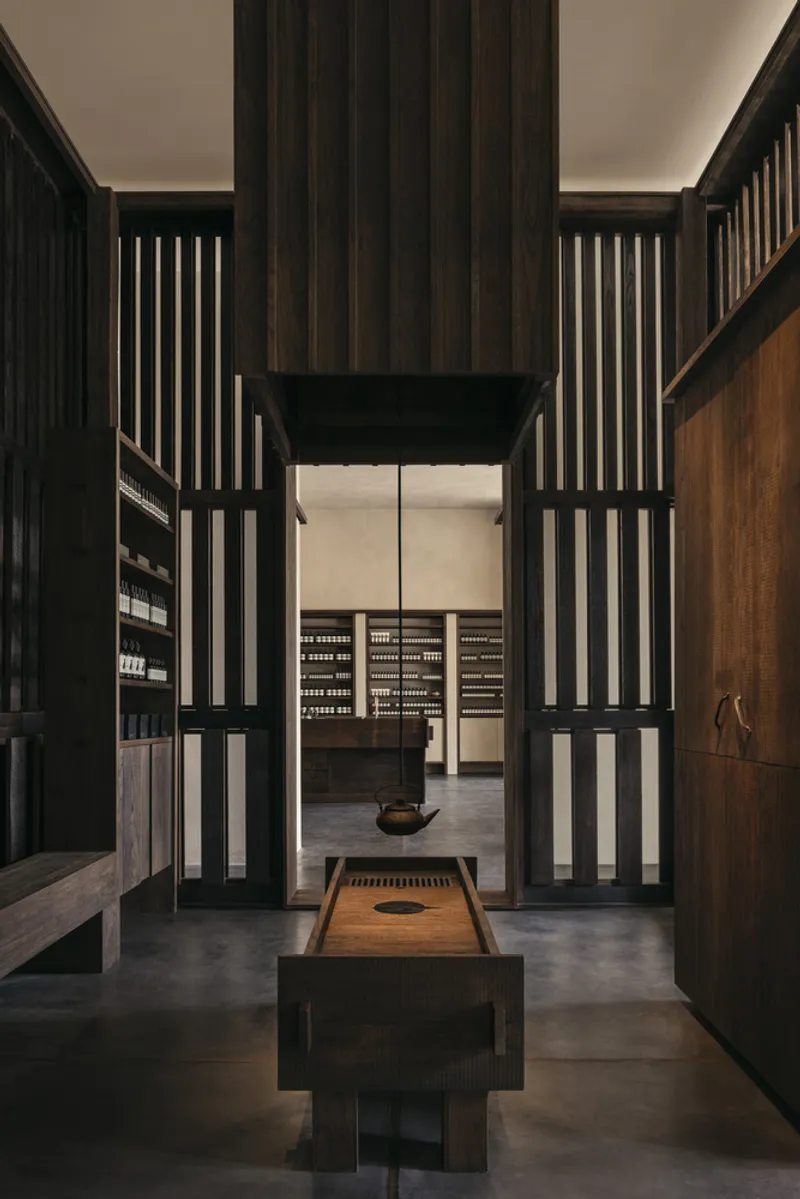
At the core of the design concept is the use of micro domestic materials, with reclaimed wood playing a central role. Timber salvaged from the original site and nearby old lumber shops is carefully reassembled, allowing traces of time, imperfection, and previous use to remain visible. This strategy reflects both sustainability principles and a respect for vernacular construction, positioning reuse as an architectural and cultural value rather than a purely technical decision.
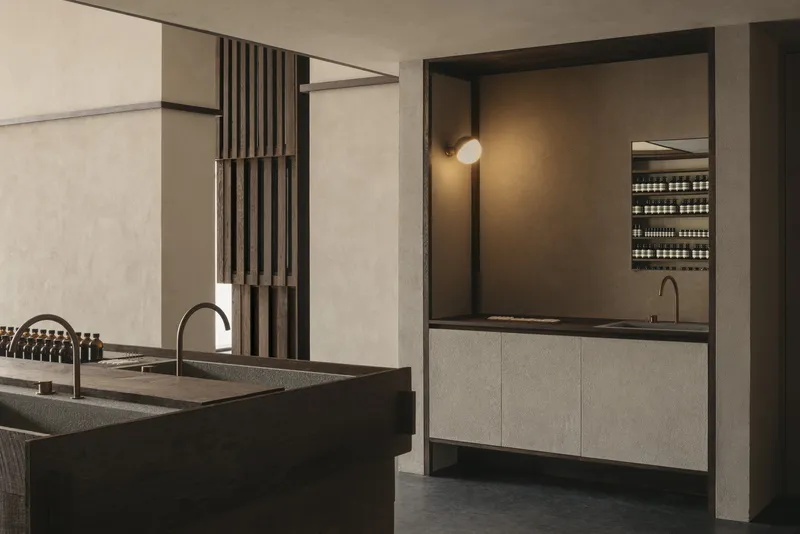
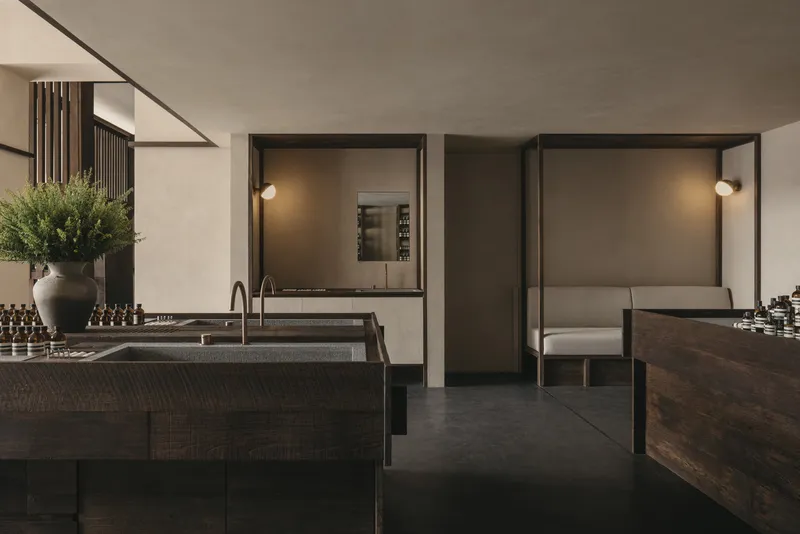
The storefront is organized into two primary spatial zones, each offering a distinct atmosphere while remaining materially connected. The main shop area accommodates the counter sink, shelving, point-of-sale elements, and product displays. Here, wood is used structurally and honestly, emphasizing its grain, joints, and natural irregularities. Traditional Thai carpentry techniques, particularly mortise-and-tenon joints commonly found in rural wooden houses, are employed throughout the furniture and built-in elements. Finishes are intentionally restrained, avoiding excessive polishing to preserve the tactile authenticity of the material.
Anchoring the shop area is a sink carved from Thai black granite, a stone traditionally used for kitchen mortars in everyday Thai households. This subtle yet powerful gesture elevates a familiar domestic material into a refined retail object, reinforcing the project’s focus on ordinary materials and daily rituals. Through this approach, the interior blurs the boundary between shop and home, transforming retail interaction into something slower, more intimate, and grounded in lived experience.
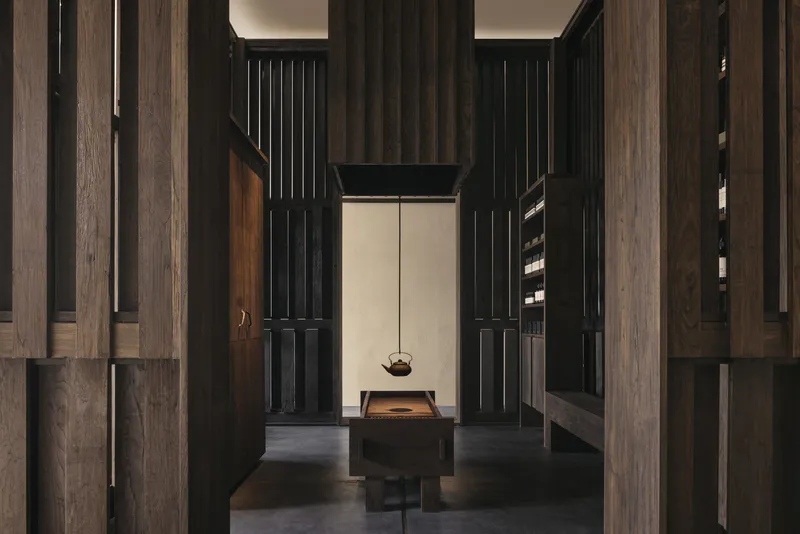
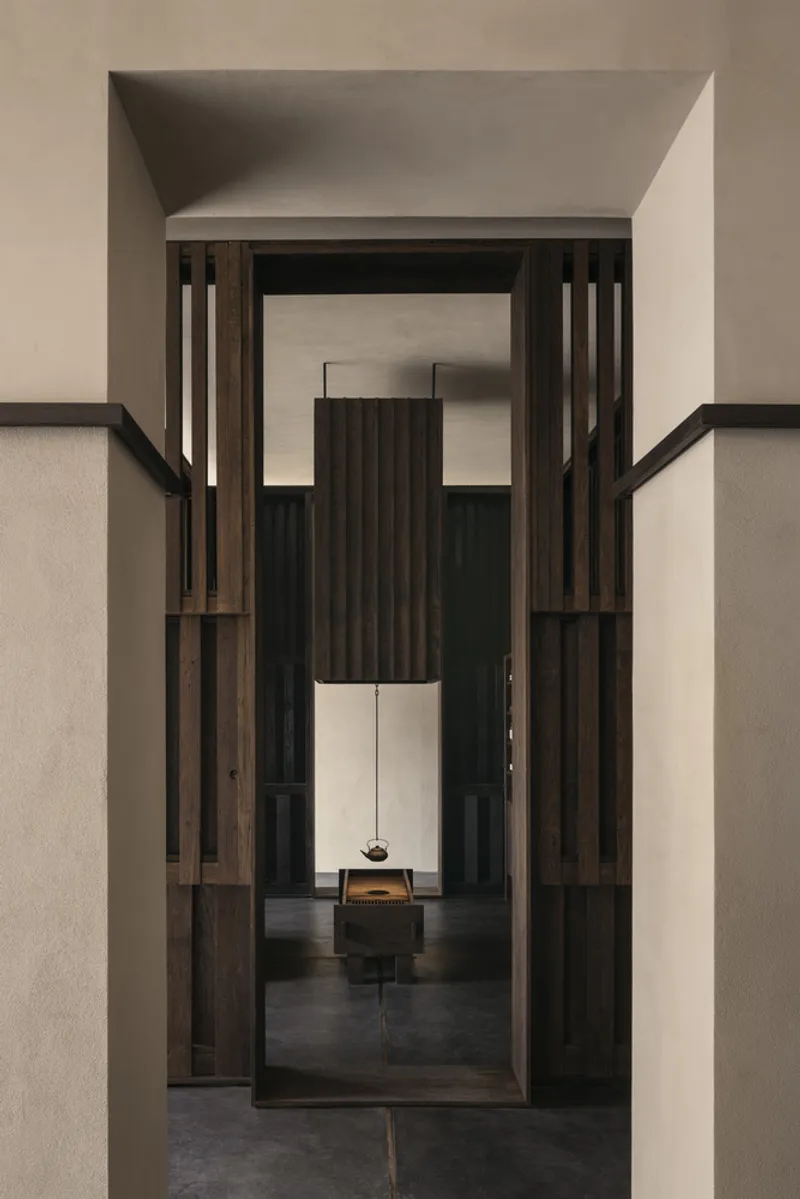
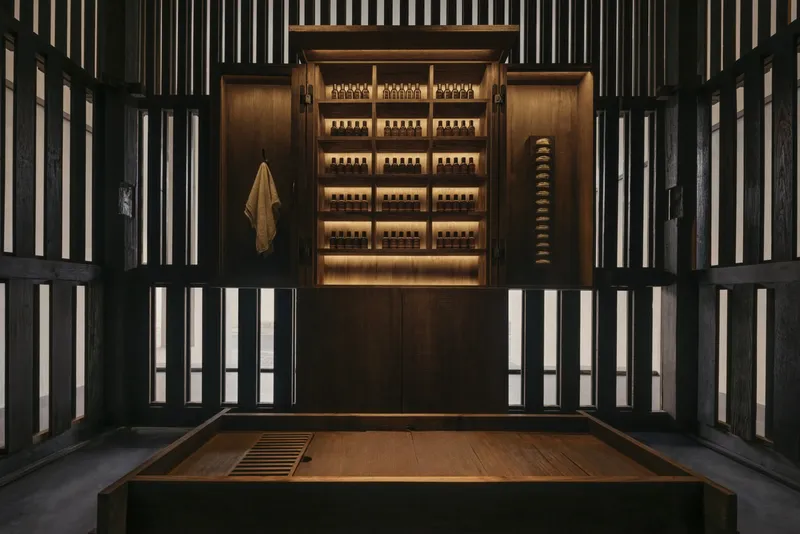
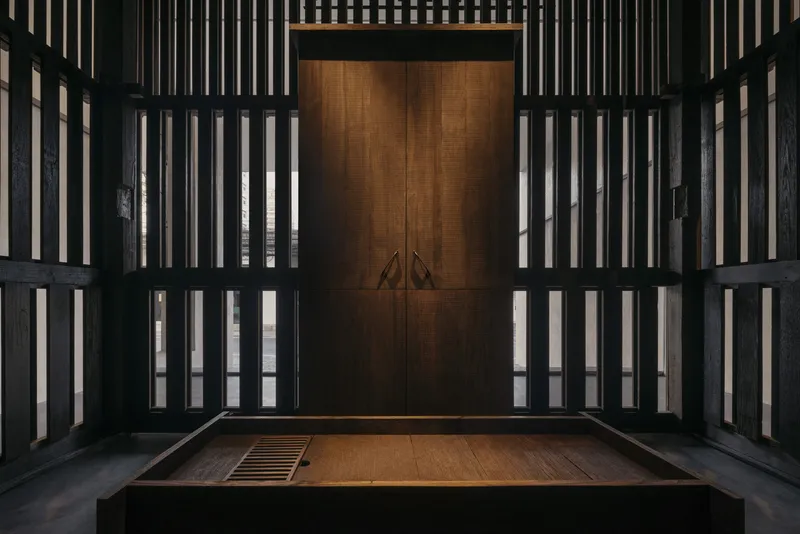
Beyond the main retail space lies the Sensorium Room, also referred to as the “fa lai” room. Designed specifically for fragrance exploration, this room shifts the sensory emphasis away from sight toward smell and atmosphere. The lighting is dimmed, acoustics are softened, and reclaimed teak walls are arranged vertically using traditional folk tectonic methods. The fa lai wall system, historically used in Thai kitchens and laundry areas for ventilation, is reinterpreted here as operable wooden panels that slide open and closed, offering privacy while maintaining airflow.
This architectural detail pays homage to the ingenuity of local carpenters, whose designs were shaped by climate, resourcefulness, and daily necessity. By reintroducing the fa lai system in a contemporary retail setting, the project celebrates vernacular intelligence while adapting it to modern use. The Sensorium Room becomes not only a space for scent discovery but also a quiet tribute to generational craftsmanship.
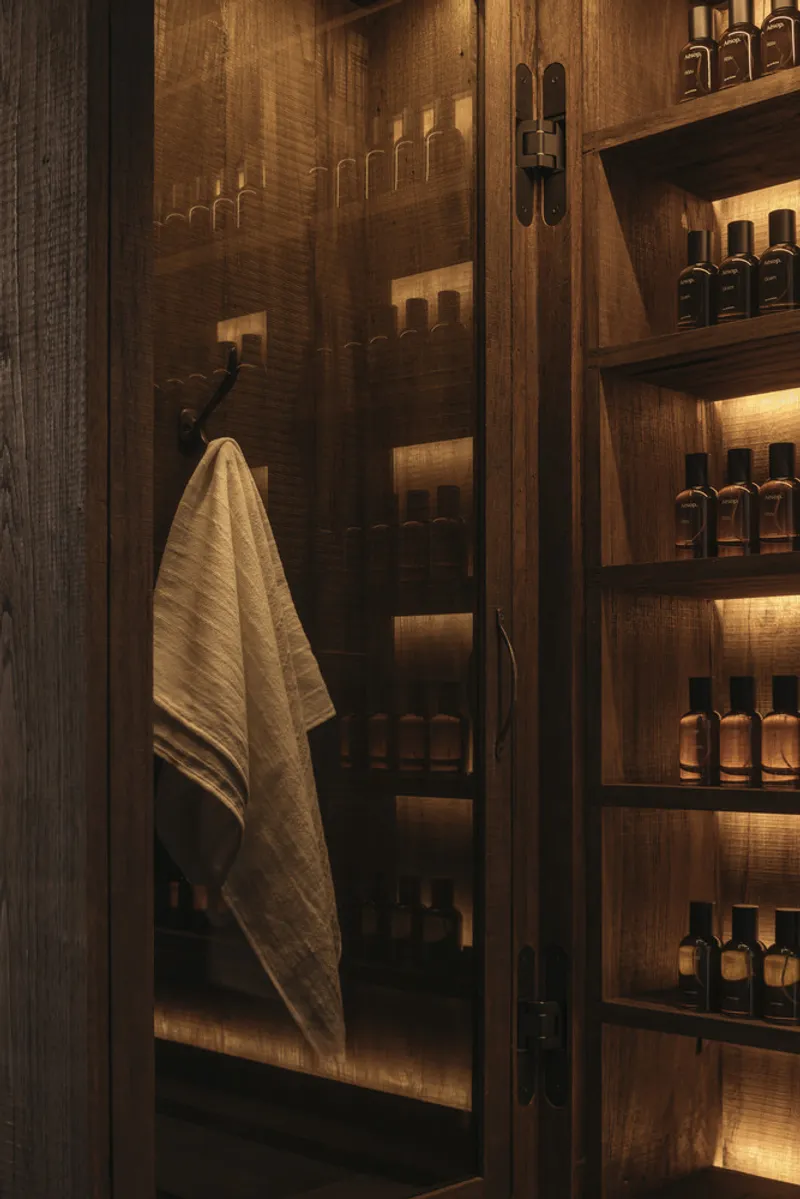
At the heart of this room sits a symbolic centerpiece: a tea-warming stove inspired by traditional earthen cooking boxes used in rural Thai kitchens. Surrounded by perfume cabinets and shelving, the stove represents warmth, gathering, and shared moments. In Thai domestic culture, such elements are associated with conversation, hospitality, and the richness of everyday life. Despite its modest scale, the stove becomes a poetic anchor within the store, reinforcing the idea that meaningful spaces are shaped as much by ritual and memory as by form and material.
Through its careful material choices, adaptive reuse strategy, and culturally embedded spatial language, Aesop Thonglor Store demonstrates how retail interiors can move beyond branding toward architectural storytelling. The project exemplifies sustainable interior architecture in Thailand, where reclaimed wood, local craftsmanship, and sensory design converge to create a calm, grounded, and deeply contextual retail environment.


Popular Articles
Popular articles from the community


ETEH Reworks the Shared Spaces of São Domingos School in Brazil Around Timber, Color and Hanging Plants
At São Domingos School in Brazil, 436 m² of hall, refectory and library are recast with timber joinery, a yellow and blue code and trailing greenery.


Aquadapt: An Underwater Habitat That Rewrites Its Rooms by the Hour
Curved modules ring the seabed while one shell shifts from breakfast room to cinema, farm and football pitch as residents' needs change.

graciastudio Turns a Viewless Tijuana Lot Inward Around a Courtyard of Concrete, Timber and Trees
In Tijuana, Jorge Gracia's GA2 House stacks a timber-clad private floor over exposed concrete and replaces a missing view with a planted interior patio.

Manzana Morphosis: Stretching Barcelona's Grid into a Living Landscape for 2050
A radical reworking of the Eixample manzana turns density into a tool for generous public space, vertical ecology, and environmental performance.

Similar Reads
You might also enjoy these articles


Bamboo Housing Challenge 2026: Design Affordable, Sustainable Homes Using Bamboo
An international design competition by Bamboo U and IBUKU inviting architects and designers to reimagine affordable housing using bamboo — with the winning design built full-scale in Bali.

Computational Design & Education: Beegraphy Design Awards Introduces 7th Category (Featuring Jiyun's Innovative Approach)
Dive into Beegraphy’s 7th Design Awards category, where computational design meets education to create immersive, interactive learning tools, inspired by Jiyun’s work.

From Parametric Lighting to Urban Furniture: Join the 2nd Workshop in Beegraphy’s Computational Design Series
Dive into Cutting-Edge Design Techniques and Practical Applications with Industry Experts

Last Call: Unleash Your Architectural Genius in SHAK's Kindergarten Design Competition
Urgent call for architects to join SHAK's kindergarten design competition before the looming deadline

Explore Architecture Competitions
Discover active competitions in this discipline

Challenge to design luxury tourism on rails

Challenge to reimagine the Iron Throne

Photograph architecture without architects

VR headsets Storefront design competition
Comments (0)
Please login or sign up to add comments
No comments yet. Be the first to comment!