

Anganwadi Childhood Care Facility: Innovative Early Childhood Care Architecture in India
Anganwadi Childhood Care Facility in Kochi showcases child-centered, sustainable architecture, transforming a small urban plot into an inspiring learning environment.


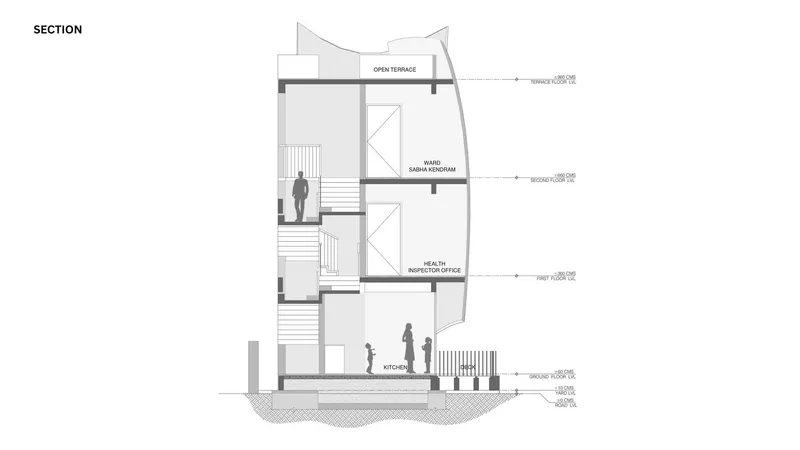
In the heart of Kochi, India, Anganwadi Childhood Care Facility by Fahed+Architects redefines early childhood care architecture in India. Built on a small, irregular urban plot, the project transforms a previously overlooked site into a sculptural, functional, and inspiring environment for children, parents, and caregivers.



Site Context and Design Approach
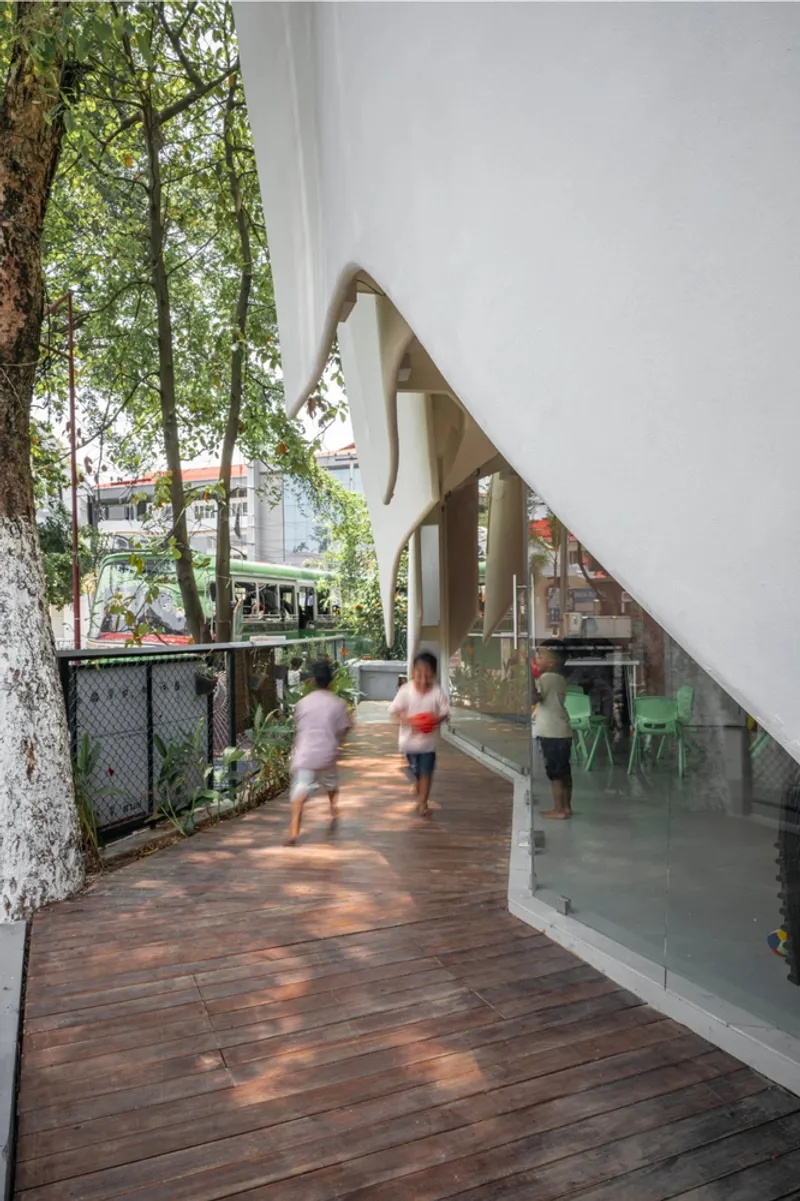
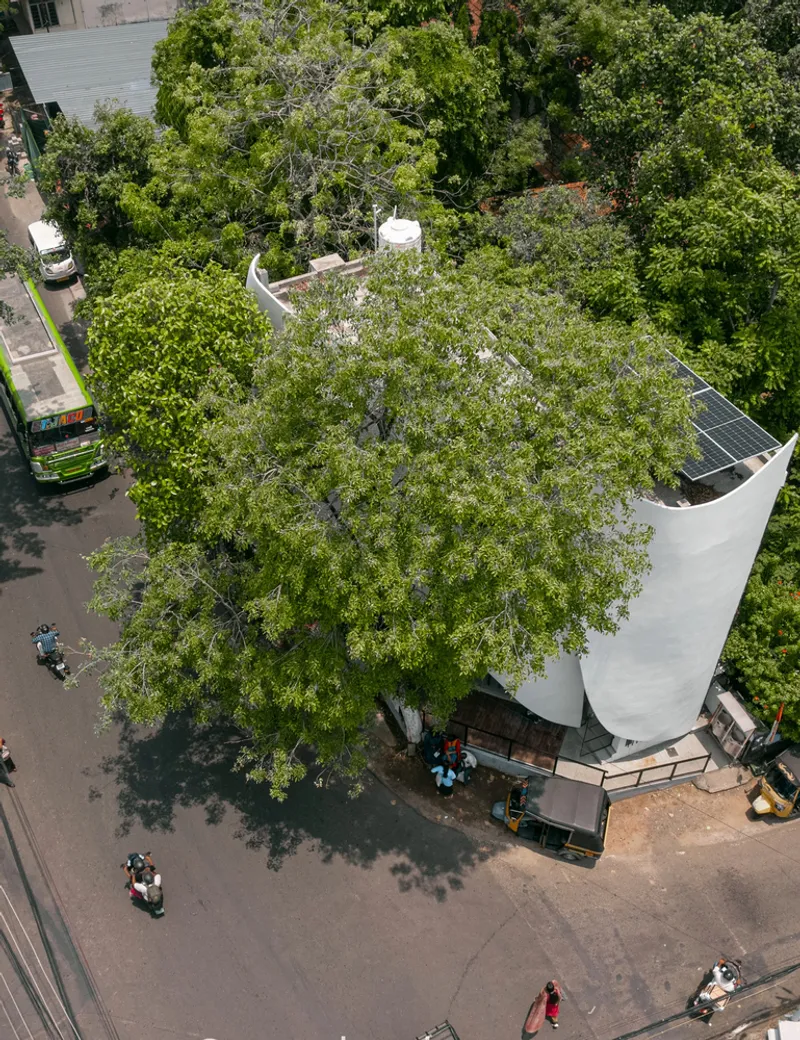
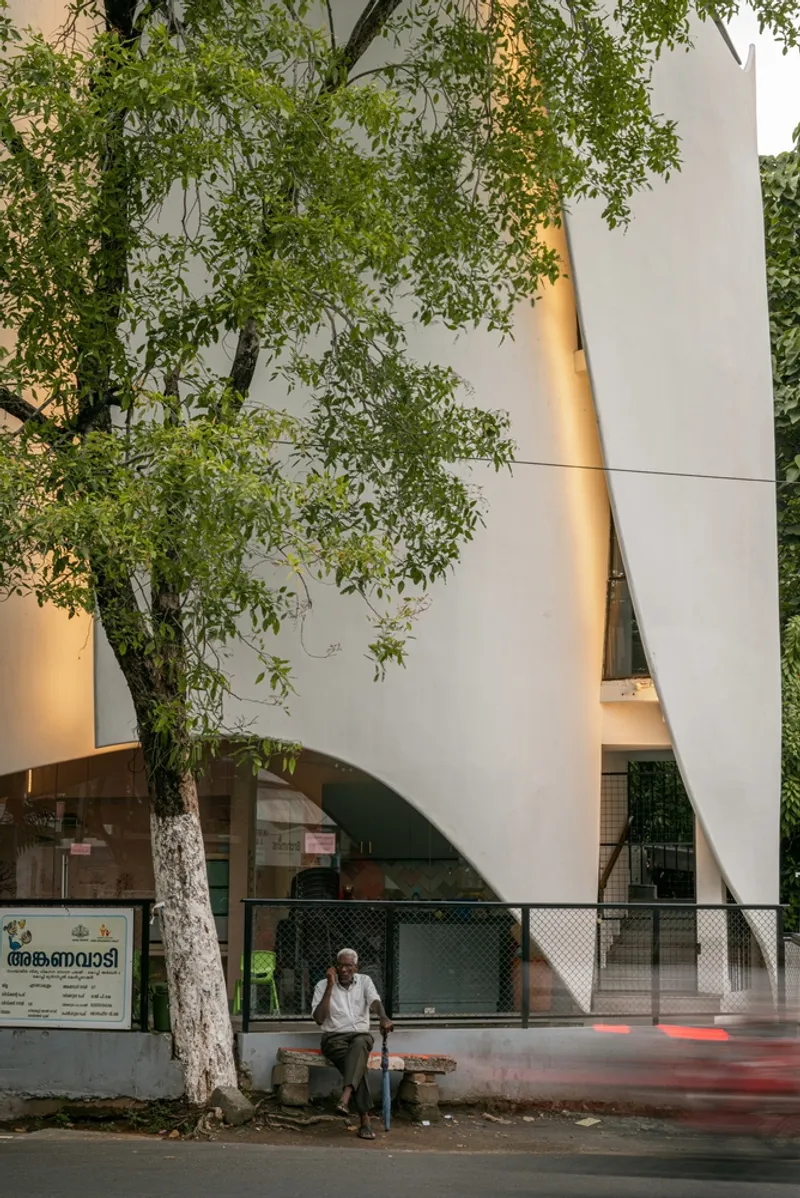
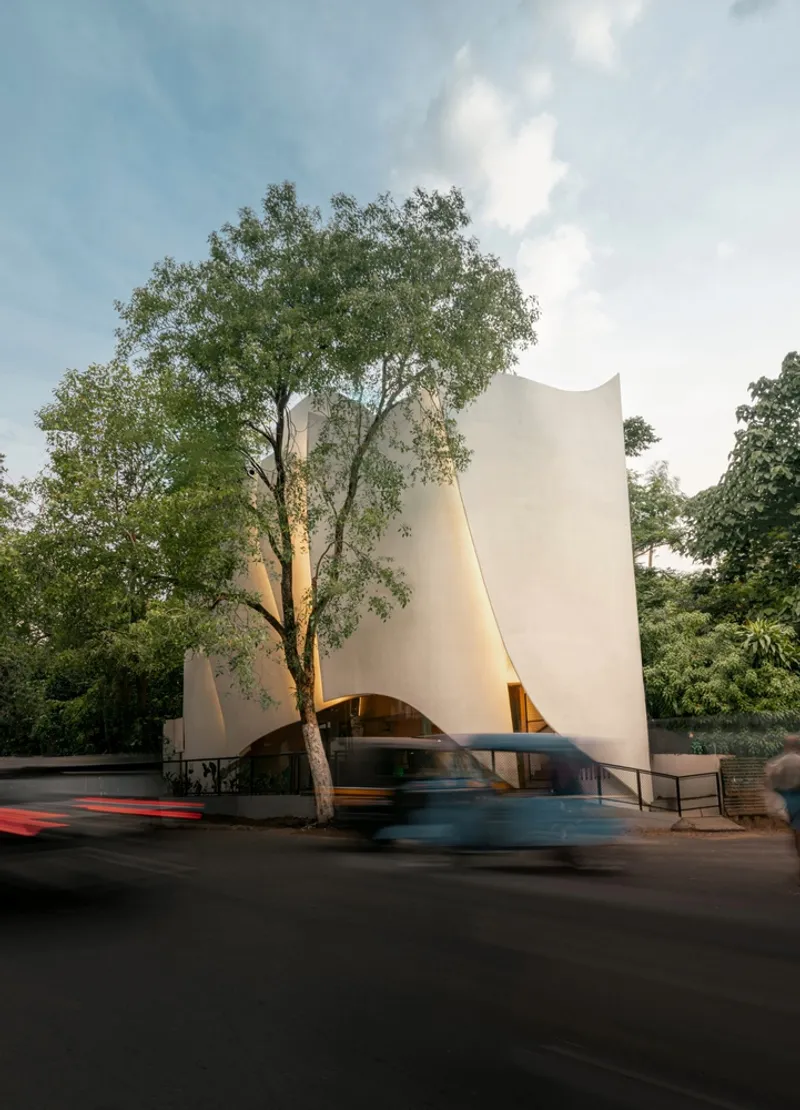
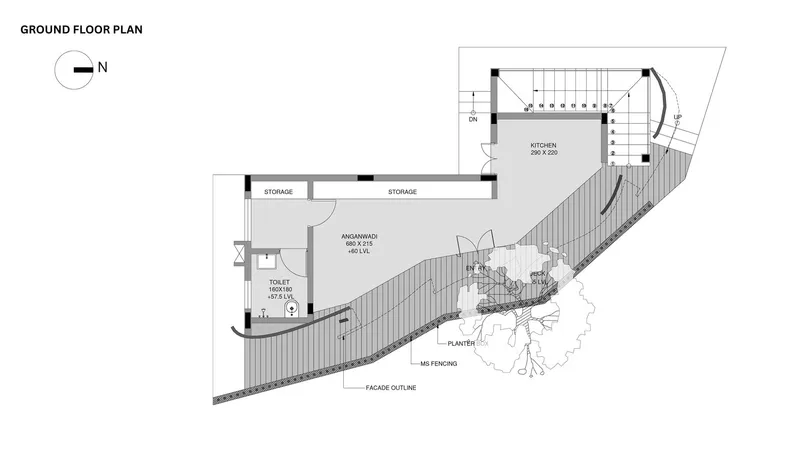
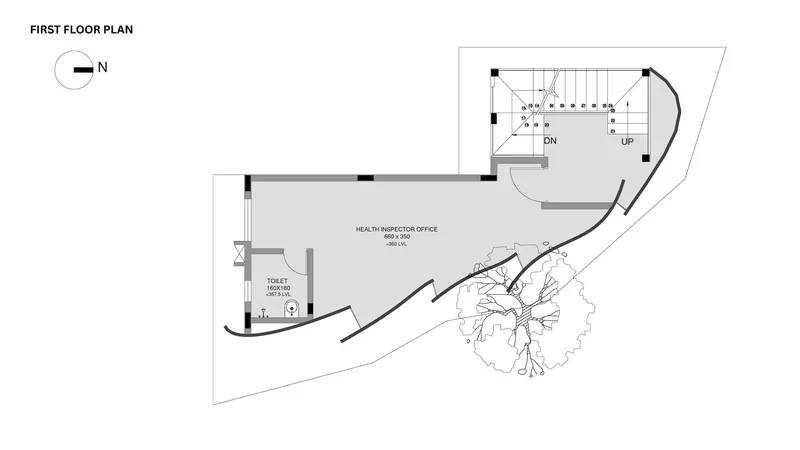
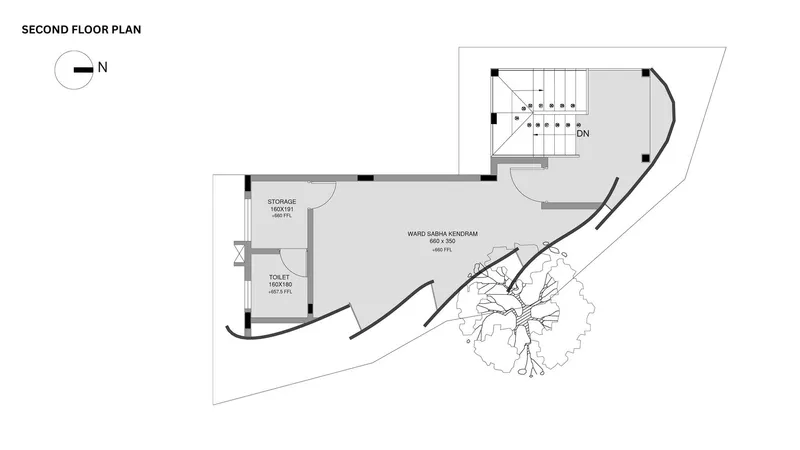
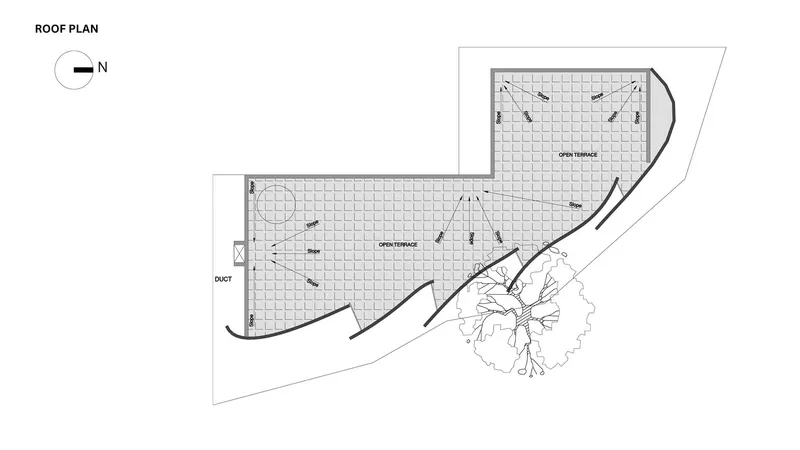
Situated at Cemetery Mukku, a chaotic urban street corner, the project embraces its constraints rather than compromising. Covering just 76.4 m², the design negotiates the fragmented plot with a curving, cast-in-place concrete shell that integrates existing trees, responds to the irregular site, and establishes a strong presence within the neighborhood.
Architectural Form and Façade Expression
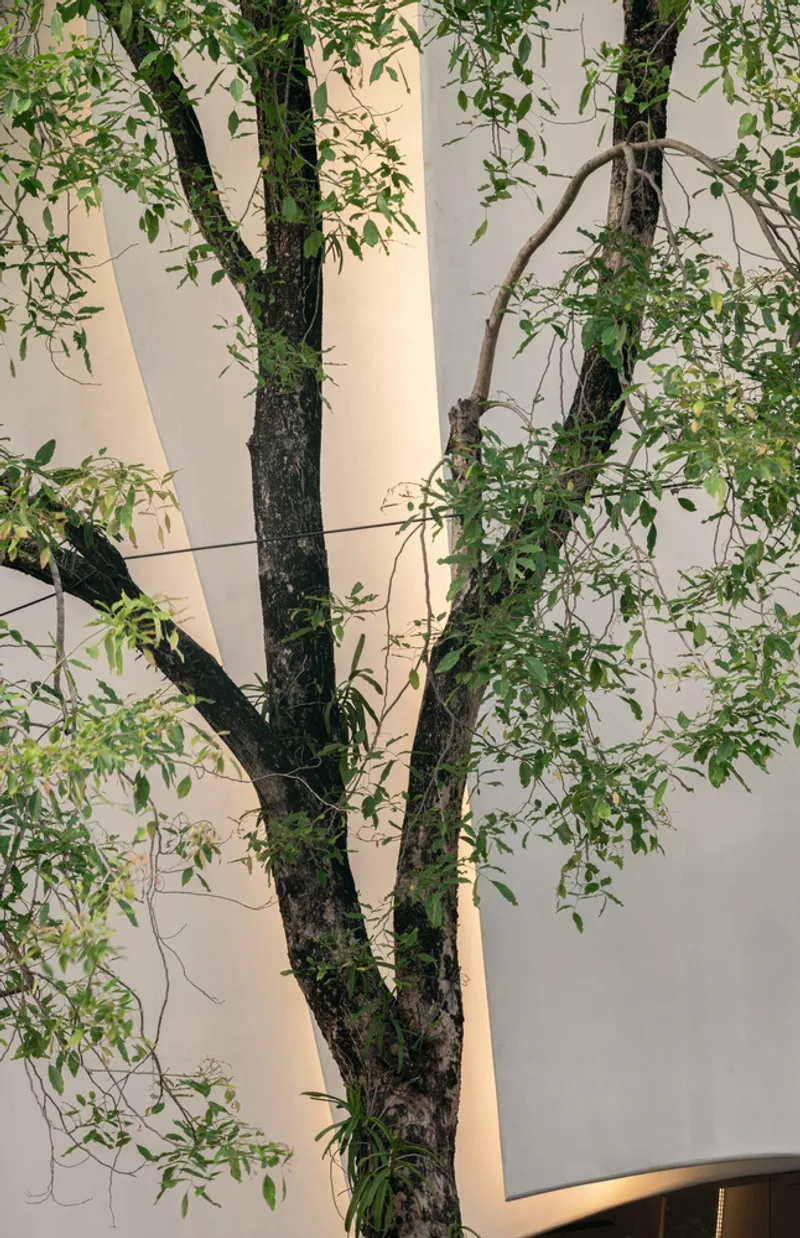
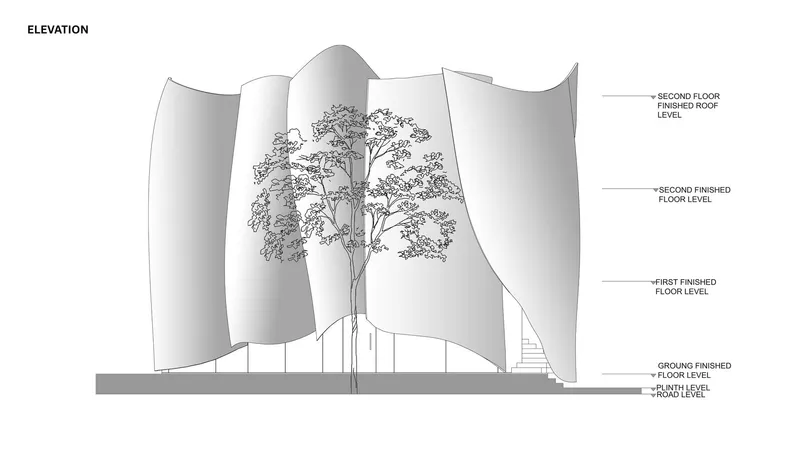
The building’s façade features white, petal-like concrete blades that act both as enclosure and visual expression. These sculptural forms soften the street interface, introduce warmth and rhythm, and provide identity to the facility. At night, embedded lighting transforms the folds into a glowing beacon, symbolizing care and nurturing in the urban fabric.


Interior Spaces and Child-Centric Design
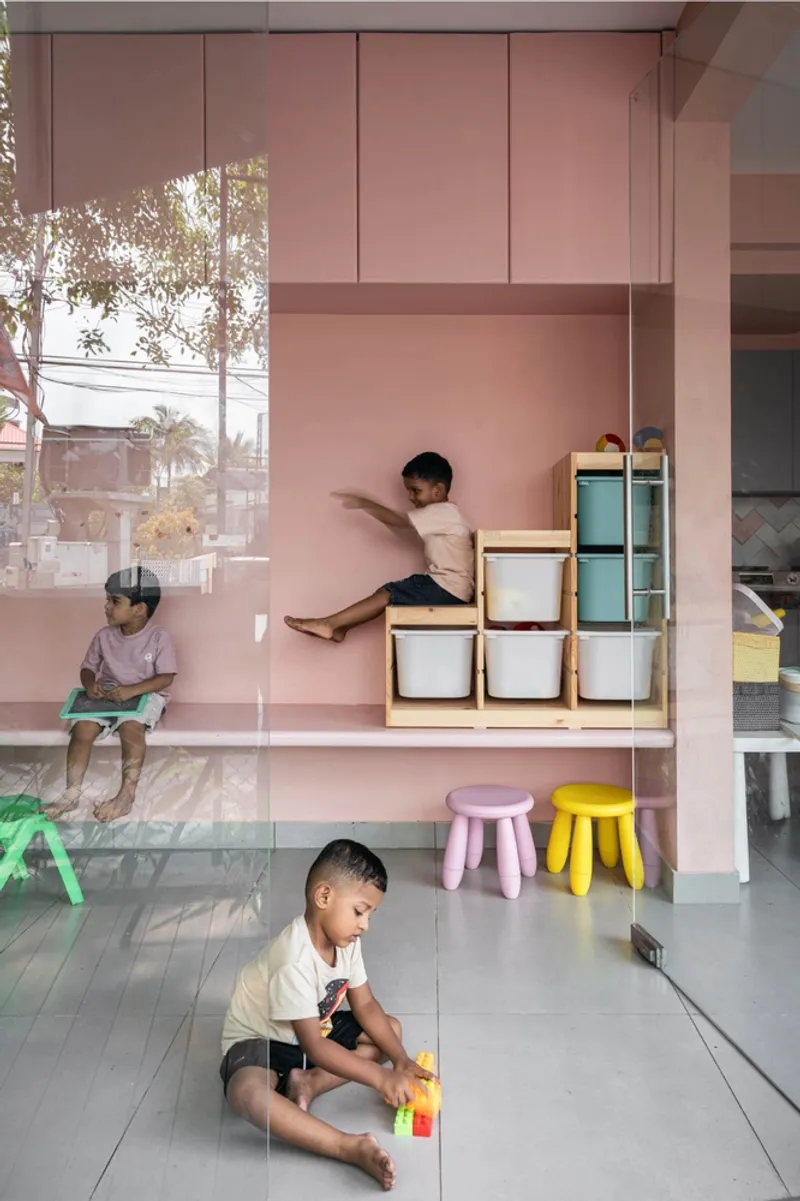
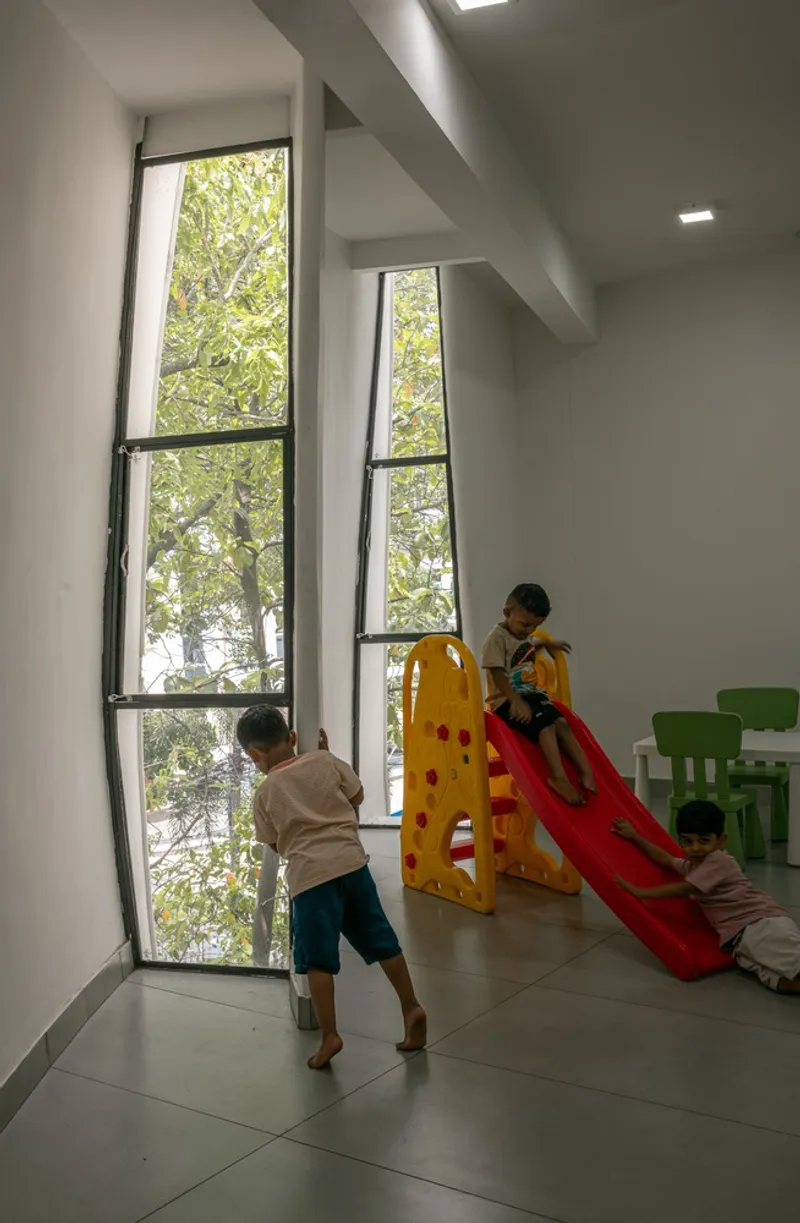
Inside, volumes are arranged for intuitive circulation and natural exploration. Full-height openings blur the boundary between indoors and outdoors, creating a transparent and inviting environment. Soft, comforting colors, scaled-down furniture, and built-in nooks enhance play, rest, and learning. Every design decision prioritizes the experience of children, encouraging imagination, comfort, and engagement.
Sustainable and Responsible Architecture
The facility incorporates passive design strategies, reducing reliance on artificial lighting and enhancing natural ventilation. Solar panels support energy needs, while locally sourced materials minimize the carbon footprint. The small footprint preserves existing trees, and thoughtful positioning optimizes daylight and cross-ventilation. The building demonstrates how small-scale public architecture can be both responsible and inspiring.
Community Impact and Cultural Significance
Beyond functional childcare, the Anganwadi serves as a model for civic architecture in India. It challenges the conventional utilitarian approach to public buildings, asserting that even modest urban plots can host meaningful, high-quality spaces. The project embodies empathy, ingenuity, and intentional design, conveying a message to the community: children matter.
Anganwadi Childhood Care Facility exemplifies early childhood care architecture in India, merging sculptural form, child-centered interiors, and sustainable strategies. Fahed+Architects prove that thoughtful design elevates public infrastructure while respecting context and nurturing future generations.
All Photographs are works of Nayan Krishna, Ram Naresh


Popular Articles
Popular articles from the community


Cube Design Draws an Ecological Corridor Between Two Shenzhen Hills with the Nankai Building
Beside Shenzhen's container docks, the Nankai Building pairs stacked balconies with a climbing green screen to connect two hillsides across its height.

graciastudio Turns a Viewless Tijuana Lot Inward Around a Courtyard of Concrete, Timber and Trees
In Tijuana, Jorge Gracia's GA2 House stacks a timber-clad private floor over exposed concrete and replaces a missing view with a planted interior patio.

Manzana Morphosis: Stretching Barcelona's Grid into a Living Landscape for 2050
A radical reworking of the Eixample manzana turns density into a tool for generous public space, vertical ecology, and environmental performance.

Singing Woman: An Opera House That Performs Before the Curtain Rises
Ovidiu Cristian Pavel's conceptual opera house translates Estonia's choral identity into a sculpted waterfront landmark facing the Baltic Sea.

Similar Reads
You might also enjoy these articles
Cube Design Draws an Ecological Corridor Between Two Shenzhen Hills with the Nankai Building
Beside Shenzhen's container docks, the Nankai Building pairs stacked balconies with a climbing green screen to connect two hillsides across its height.

Praksis A and Studio Sted Bend a Red Timber Cabin Across the Granite of Norway's Southern Coast
On the southern Norwegian coast, a 105 m² cabin follows the rock on slender posts, pairing red cladding outside with pine, brick and plywood within.

David Ortega Stacks a Two-Story Mexico City Penthouse Around a Steel Stair and a Pergola-Shaded Roof Terrace
In Colonia Roma, a 300 m² penthouse uses oak joinery, a planted steel stair and a slatted roof pergola to make a new-build apartment feel like a house.

PARALELA and LB2 Thread a Public Walkway Through the Base of a Las Condes Residential Tower
In Las Condes, Santiago, the Hamlet Building gives its fenceless ground floor to a 70-metre wooded passage linking two streets and the metro.

Explore Architecture Competitions
Discover active competitions in this discipline

Challenge to reimagine the Iron Throne

Photograph architecture without architects

Illustrate the lost glory of Angkor Wat - Render Challenge

Design challenge to reuse E-waste
Comments (0)
Please login or sign up to add comments
No comments yet. Be the first to comment!