Art Therapy Centre: A Holistic Architectural Approach to Mental Health and Community Integration
This article details the Art Therapy Centre's innovative design for enhancing mental health and community integration.


The Art Therapy Centre, designed by Daria Polanska, is the winning entry of the Live Laugh Love competition. This innovative project addresses the increasing prevalence of mental health disorders by providing a multifunctional space that blends therapeutic art and architecture to enhance the well-being of individuals and foster community integration. Situated in Edinburgh, Scotland, the centre is a testament to the transformative power of architecture in promoting mental health and social cohesion.
Project Overview
The primary purpose of the Art Therapy Centre is to support individuals dealing with deteriorating mental health, particularly those suffering from depression. Additionally, the centre serves the local community by offering integration and scientific research opportunities. The therapy program is based on experiential art and the architectural design itself, exploring their impact on emotions, senses, and overall well-being.
Site Development and Architectural Design
Location and Context
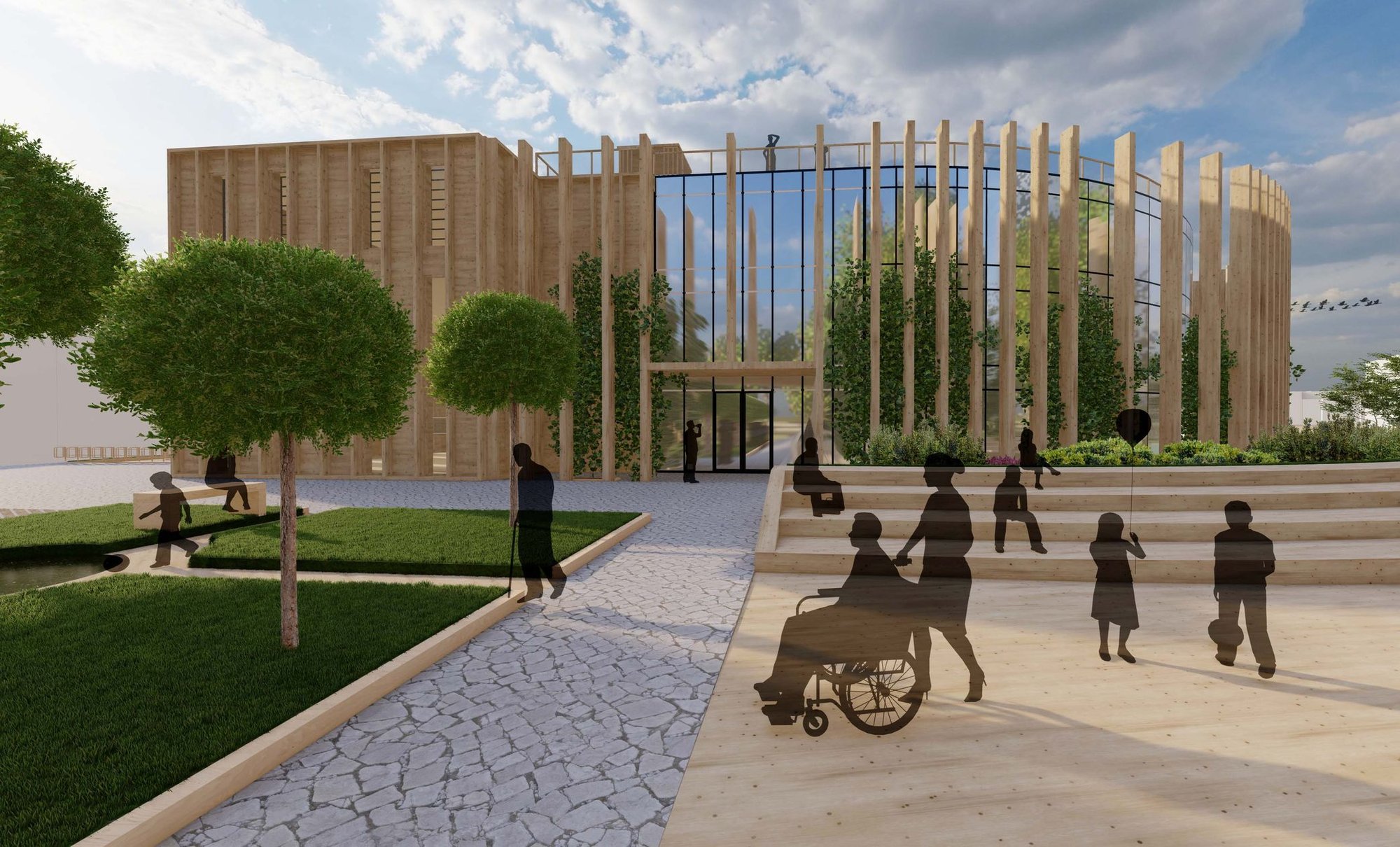
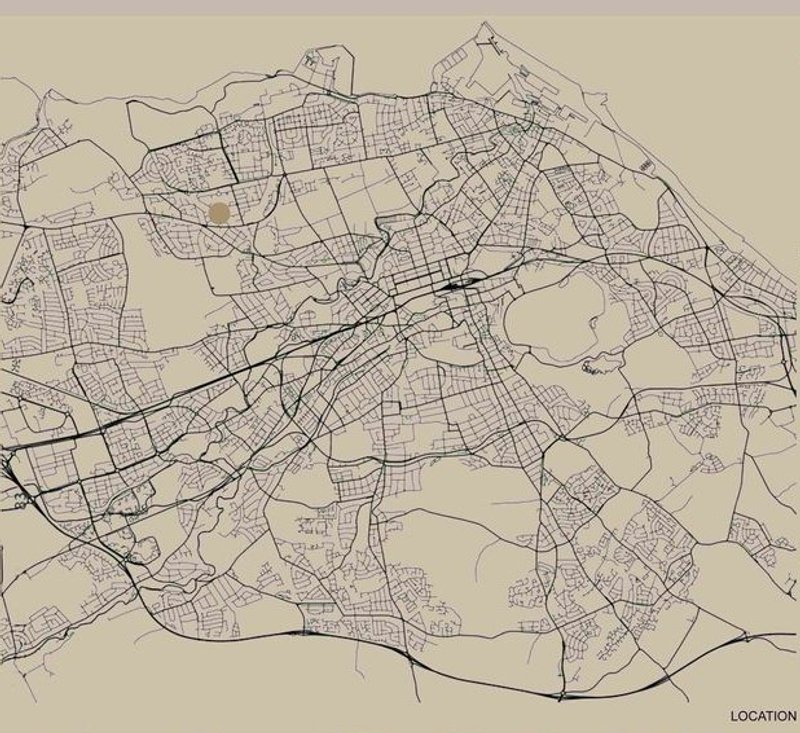
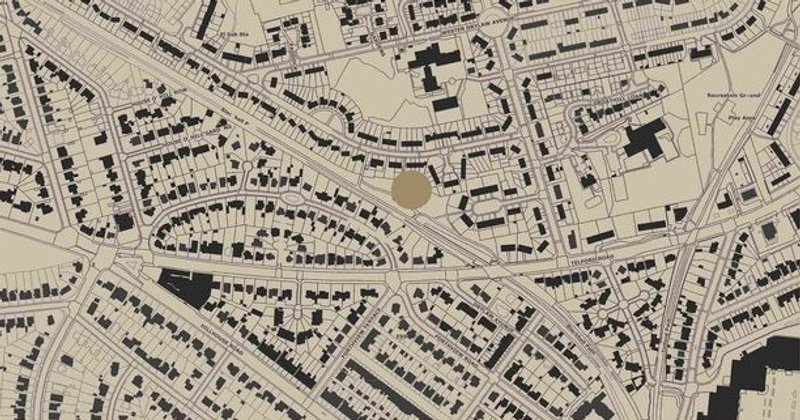
The Art Therapy Centre is located in Edinburgh, Scotland, near the Blackhall Path, a green area extending to the city harbor. This site was chosen for its proximity to existing walking and cycling routes, providing easy access for both patients and the local community. The project aims to blend seamlessly with its surroundings, enhancing the existing green space rather than depleting it.
Site Development Assumptions
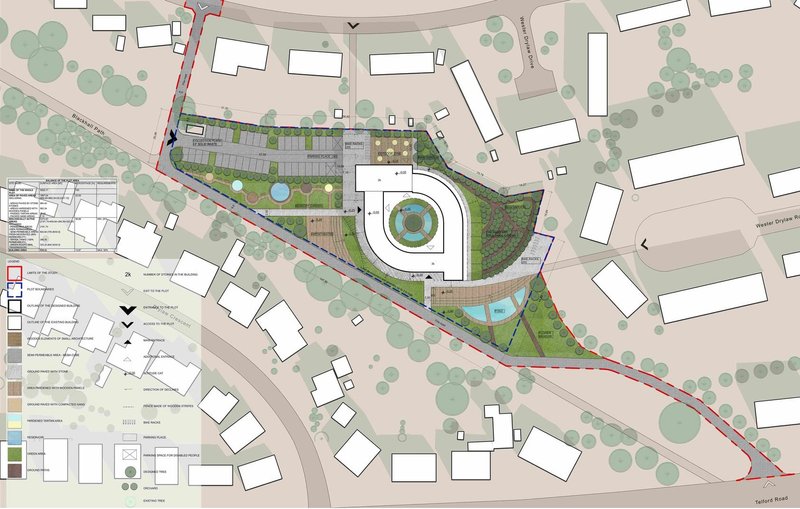
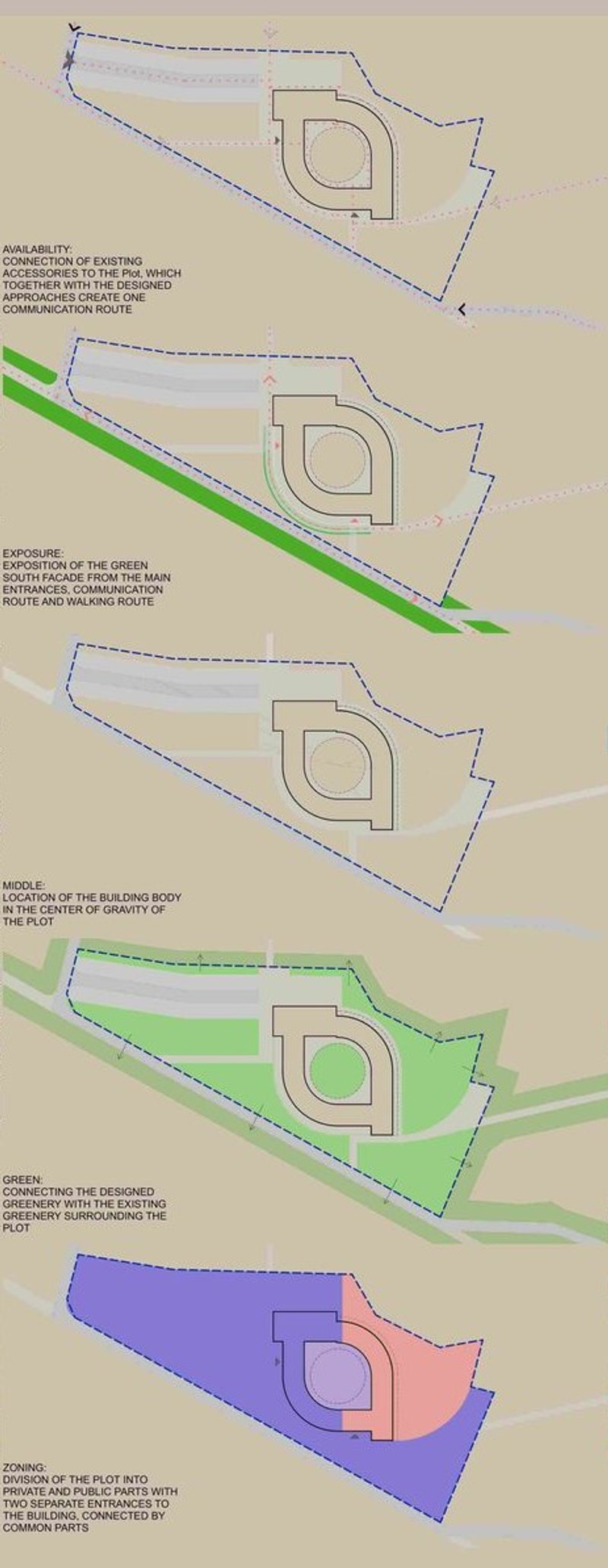
Entrance and Access: The main entrance is created from the previous entrance location, connecting to a pedestrian pathway that is transformed into a 3.6m wide access road, serving as a fire lane.
Parking and Green Pathways: Adequate parking spaces are designed, and the green pedestrian pathway is extended through the site, incorporating water reservoirs and gardens.
Zoning: The site is divided into public and private zones with two separate entrances, ensuring both accessibility and privacy.
Recreational Areas: Water reservoirs and recreational areas are introduced to extend the green space and provide therapeutic outdoor experiences.
Architectural Form and Design
Building Shape and Structure
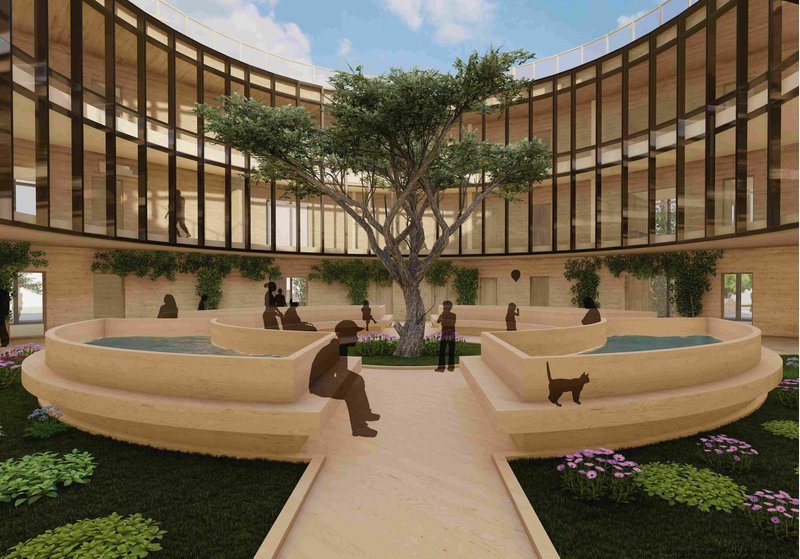
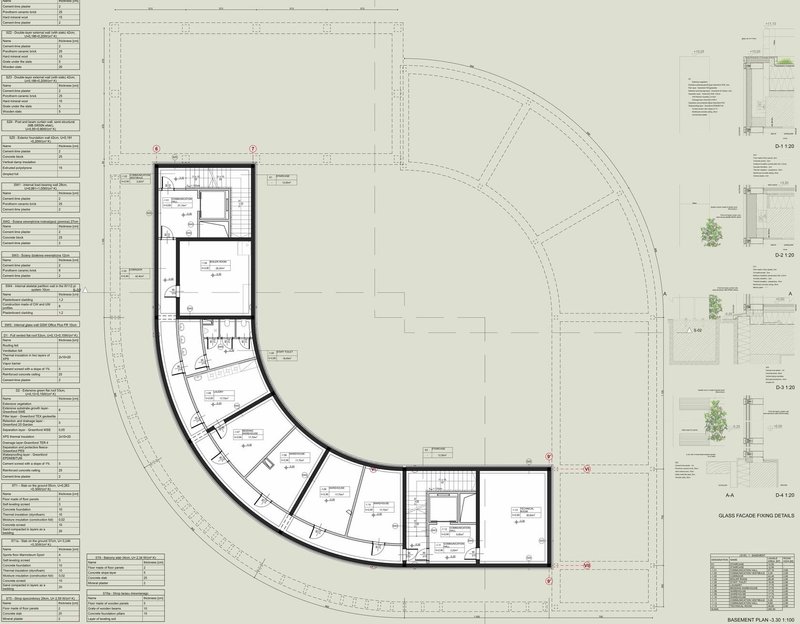
The building's initial plan is a square with a side length of 36 meters. The design evolves by rounding two opposite corners and incorporating an atrium in the center. This results in a geometric and symmetrical structure with a blend of public and private spaces connected through a common atrium. The building is three stories high, with a maximum height of 10 meters, and features a flat roof over most areas and a green roof on the southern part.
Facade Solutions
The facades are designed using Scottish oak wood with variations depending on the building's function. The main facade features a fully glazed curtain wall with reflective glass and wooden columns, creating a connection with nature. The gymnasium facade uses wooden slats with tall glass sections, while the residential section combines wooden cladding with irregularly spaced slats and balconies.
Interior Design and Functional Features
Space Allocation
The centre accommodates various functions, including therapeutic spaces, residential areas, and public zones for community integration. The building is divided into two main communication blocks:
Main Communication Block: Located on the western side, this block provides access to therapeutic and artistic functions for patients and visitors, as well as administrative areas for staff.
Private Communication Block: Positioned on the southern side, this block serves the residential areas, common and social spaces, and therapeutic rooms.
The central atrium connects these blocks, serving as a recreational and exhibition space that promotes interaction and engagement.
Accessibility and User Groups
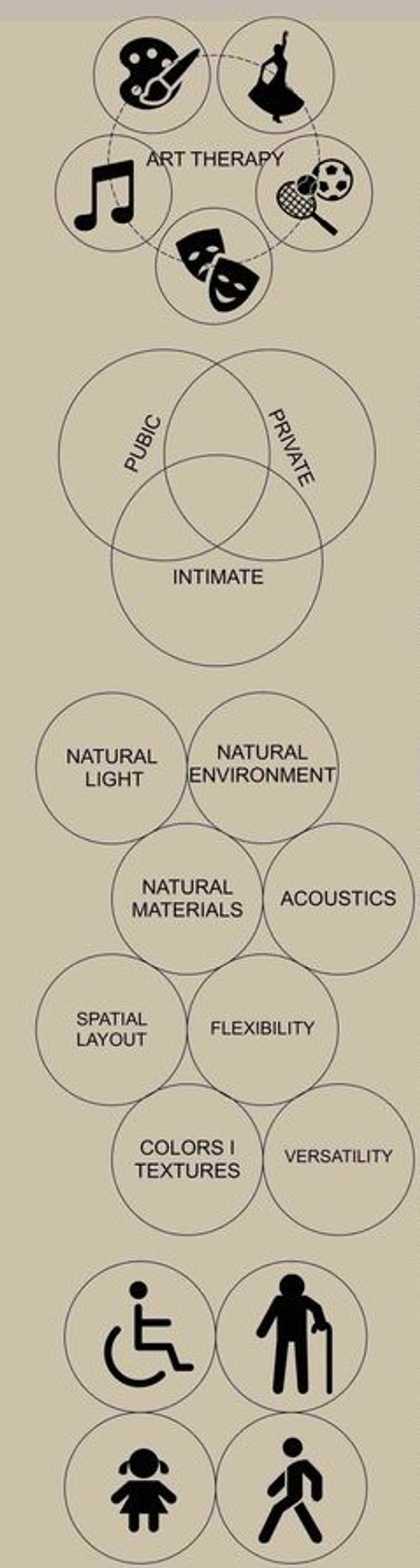
The facility is designed to be fully accessible to individuals with physical disabilities, featuring hardened pathways, suitable parking, and vertical communication through elevators. It caters to diverse age groups, including children, adults, and seniors, with therapy and activity programs tailored to their needs.
Eco-Friendly and Energy-Efficient Solutions
The Art Therapy Centre incorporates several sustainable features to minimize its environmental impact:
Photovoltaics: Solar panels and photovoltaic coatings on the building's glazing collect solar energy, which is stored and used for lighting and electricity.
Green Roofs and Facades: These features create a microclimate, dispersing sunlight and ventilating in summer while retaining heat in winter.
Rainwater Harvesting: A system for storing and purifying rainwater is used for watering vegetation and sanitary purposes.
Ventilation: The central atrium facilitates natural ventilation, enhancing indoor air quality and reducing energy consumption.
The Art Therapy Centre is a pioneering project that demonstrates the potential of architecture to improve mental health and foster community integration. By combining therapeutic art, eco-friendly design, and thoughtful site development, this centre offers a holistic approach to addressing the mental health crisis in Edinburgh. The project not only enhances the well-being of its users but also contributes to the social and environmental sustainability of the local community.