
REA Studio Wraps a Mexican Residence in Peach-Toned Courtyards and Tropical Light
Banderas House in coastal Mexico dissolves the boundary between interior rooms and planted patios through color, craft, and climate-driven design.


The best houses in warm climates don't fight the heat; they choreograph it. REA Studio's Banderas House, located in the coastal state of Nayarit, Mexico, treats the courtyard not as a decorative luxury but as the project's fundamental organizing device. Every room is tuned to an adjacent outdoor space, and the resulting plan reads less like a house and more like a village of connected volumes with gardens threaded between them.
What makes the project genuinely worth studying is the precision of its palette. A limited range of peach, ochre, and pink stucco surfaces does the heavy lifting of establishing atmosphere, while timber slats, stone floors, and tropical plantings provide textural counterpoint. The effect is calm without being minimal, warm without being saccharine. REA Studio manages color the way a good lighting designer manages lumens: as a material with measurable consequences for how a space feels.
A Plan Built Around Open Air
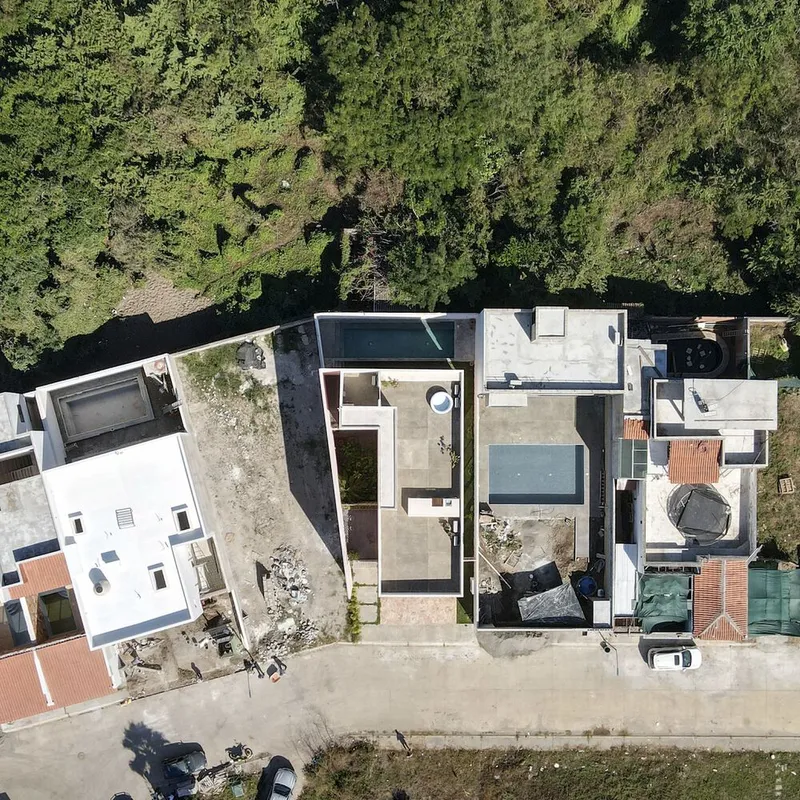
Seen from above, Banderas House reveals its strategy plainly. The residence is not a single volume but a collection of flat-roofed masses separated by courtyards, side gardens, and a lap pool. Dense vegetation surrounds the property on all sides, softening the geometric roofline and anchoring the house within its tropical site.
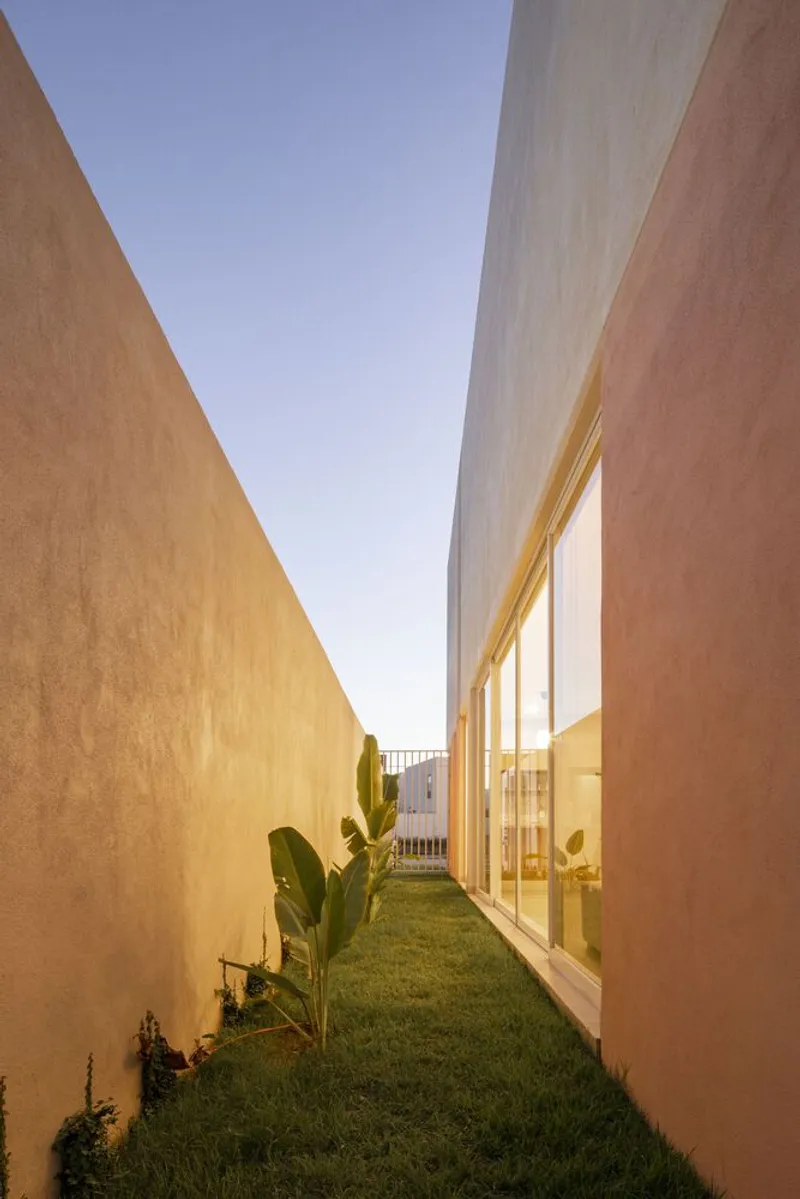
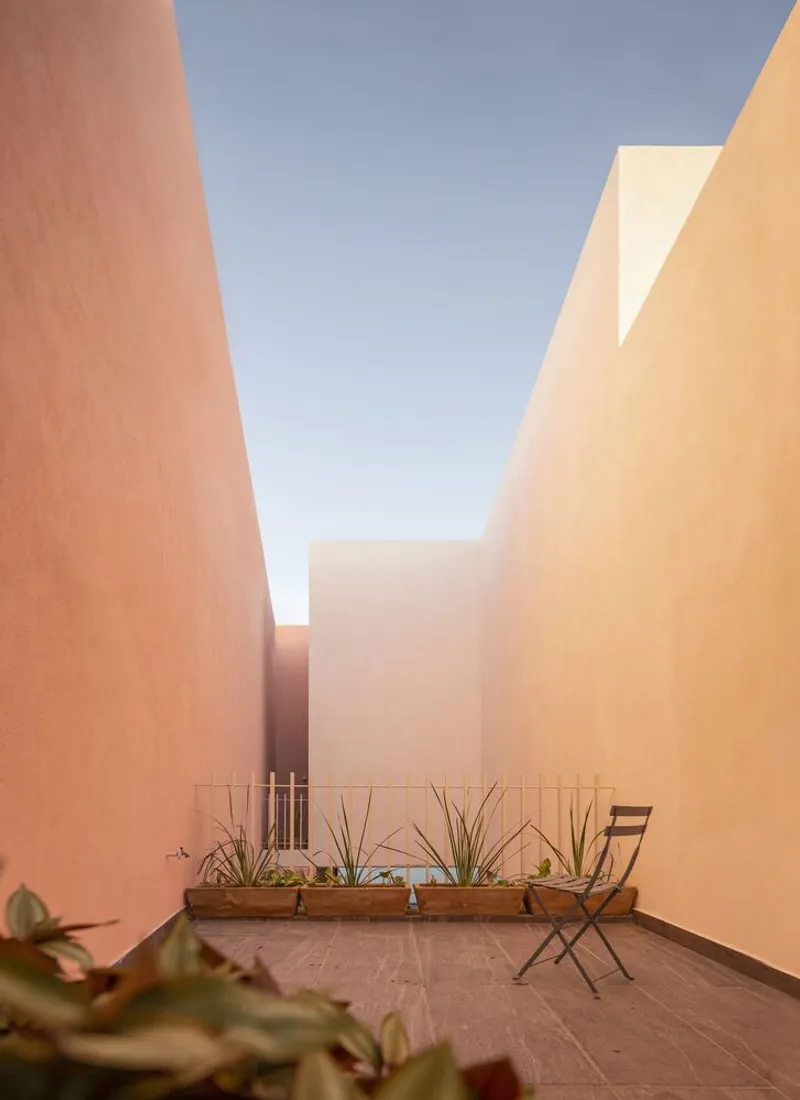
The narrow side courtyards are especially effective. Framed by ochre and peach rendered walls, these slender outdoor rooms channel breezes through the house while admitting carefully proportioned daylight. An agave in a pot, a folding chair, a strip of grass lawn: the furnishing is deliberately sparse, letting the architecture itself set the tone. The compression of these slots makes the wider courtyards and pool terrace feel genuinely expansive by contrast.
Color as Climate Strategy
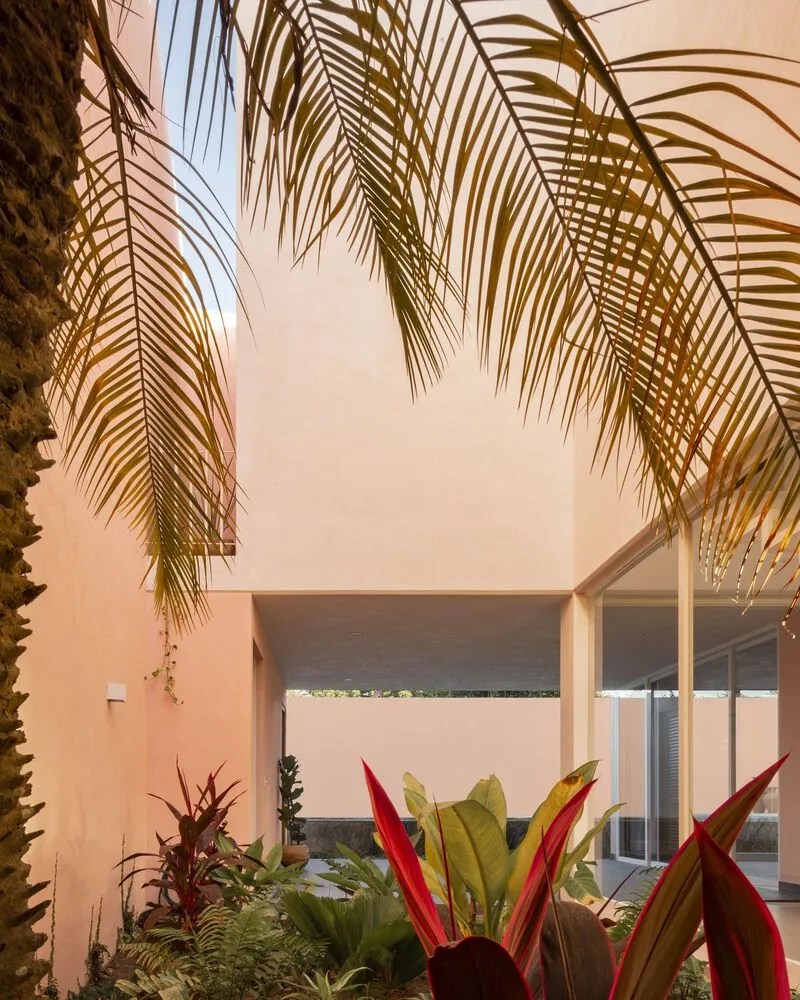
The pink and peach stucco walls are not cosmetic choices. In a region where direct sun is relentless, highly reflective warm tones bounce light deep into rooms without the glare that white surfaces produce. The interior courtyard garden, lush with tropical plantings beneath overhanging palm fronds, gains a soft ambient glow from the surrounding pink walls, turning what could be a dark well into a luminous sanctuary.
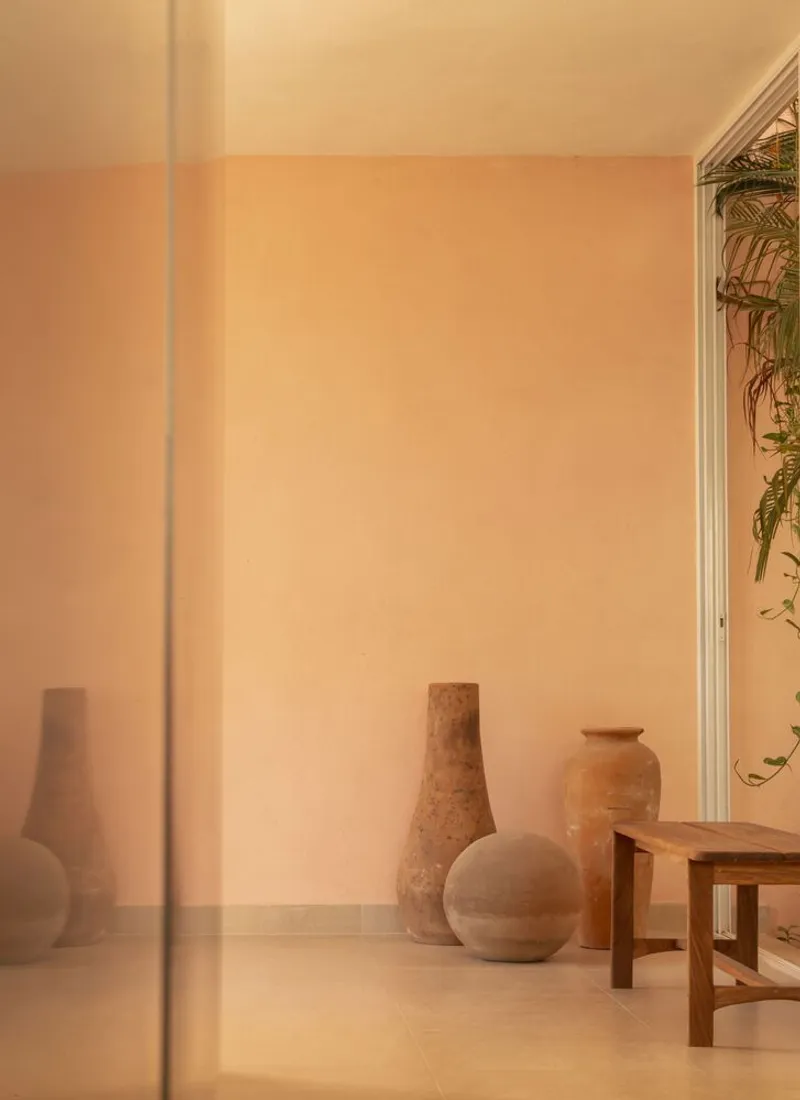
Inside, the same tonal range continues. A corner with ceramic vessels and a low wooden table beside a glazed door shows how the architects maintain continuity between interior and exterior. The threshold is almost invisible; the color carries across it, and the eye reads the paired spaces as one continuous room.
The Double-Height Core
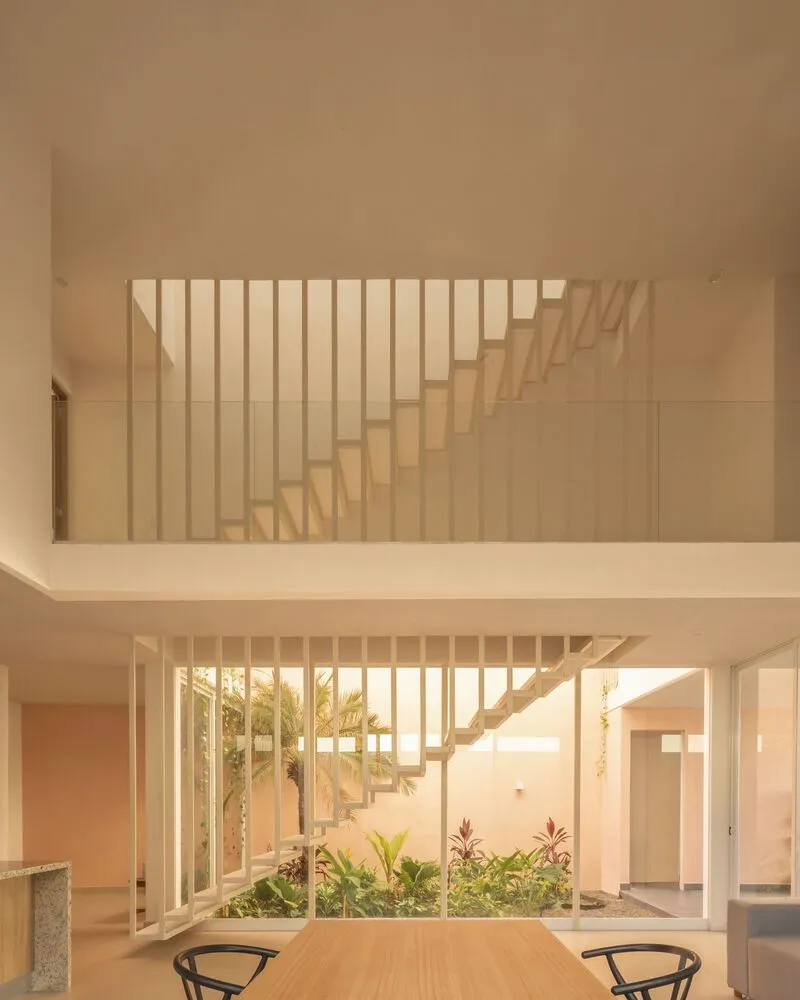
At the center of the house, a double-height dining area connects the two floors both visually and thermally. A vertical slat staircase rises alongside the space, its timber members filtering light in rhythmic bands across the pale stone floor. Floor-to-ceiling glazing opens the room directly onto a planted courtyard, establishing a diagonal view that extends from the interior through greenery to the sky.
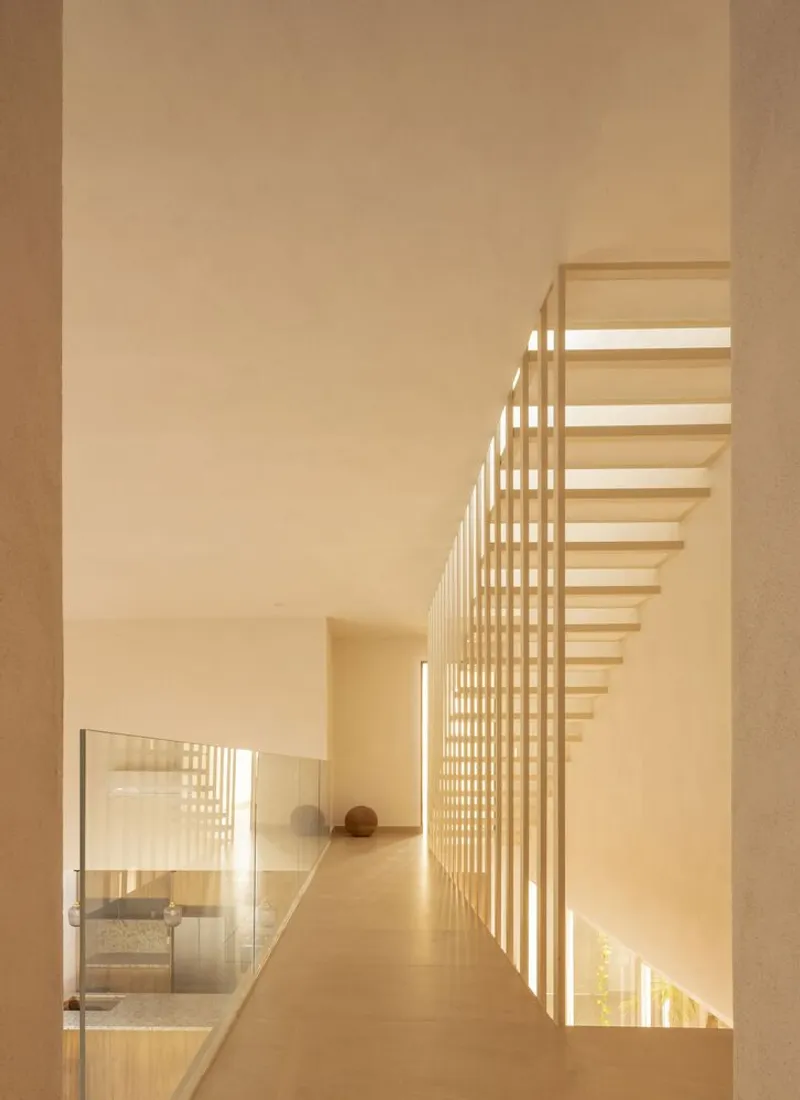
The upper corridor repeats the slat motif as a balustrade, creating a screen through which occupants can observe the life of the house below. It is a simple move, but it works because REA Studio commits to it fully: the same timber profile, the same spacing, the same relationship between solid and void at every scale. Consistency of detail is what separates a resolved house from a collection of nice moments.
Pool, Terrace, and the Edge of Evening
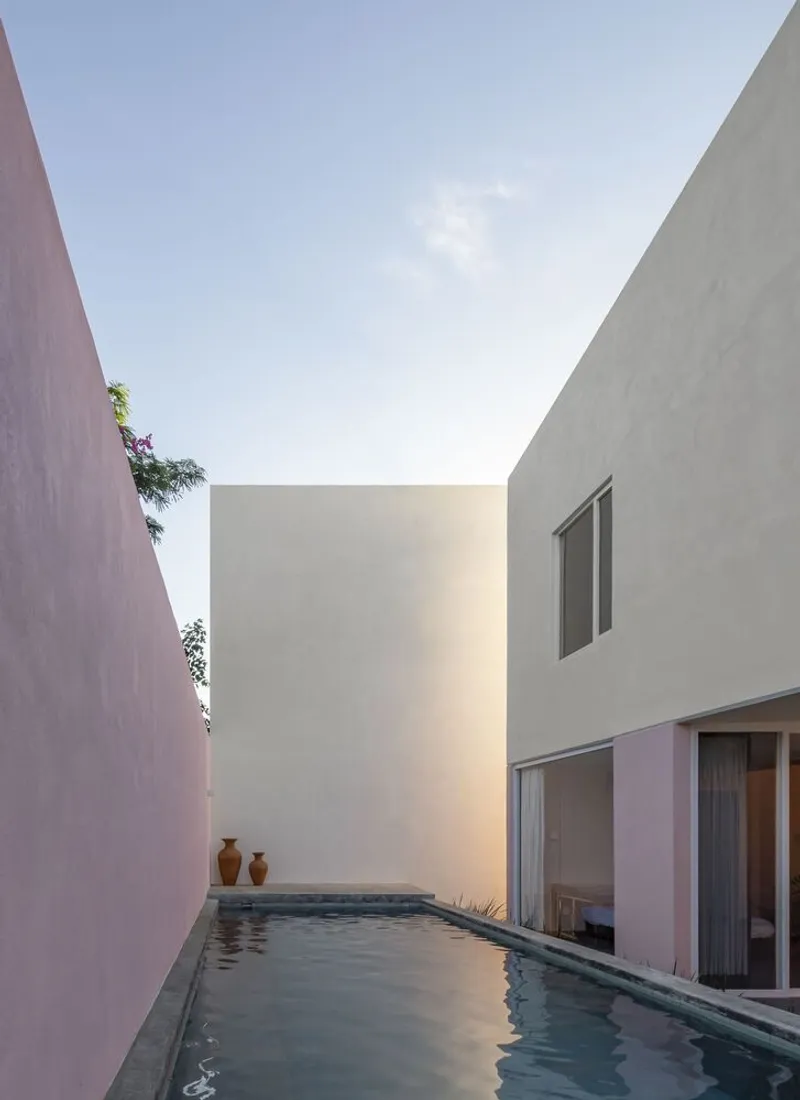
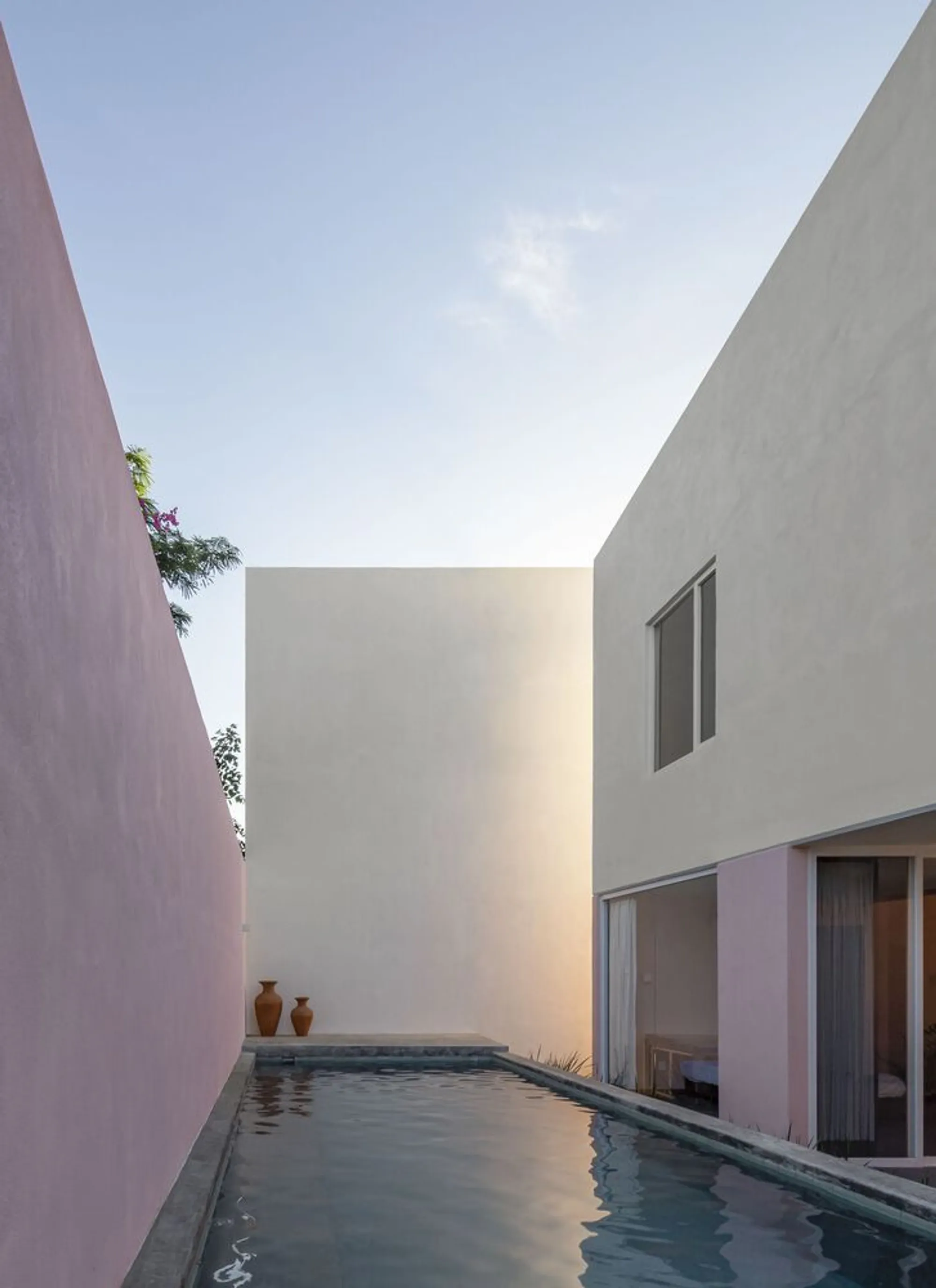
The lap pool sits between two rendered volumes, its still surface reflecting the warm tones of the walls at dusk. Two ceramic vessels at the water's edge are the only adornment, a gesture of restraint that lets the architecture, the light, and the water do the work. It is the kind of outdoor space that looks almost too composed, until you realize that the composition is entirely structural: the pool is precisely the negative space left between the building's masses.
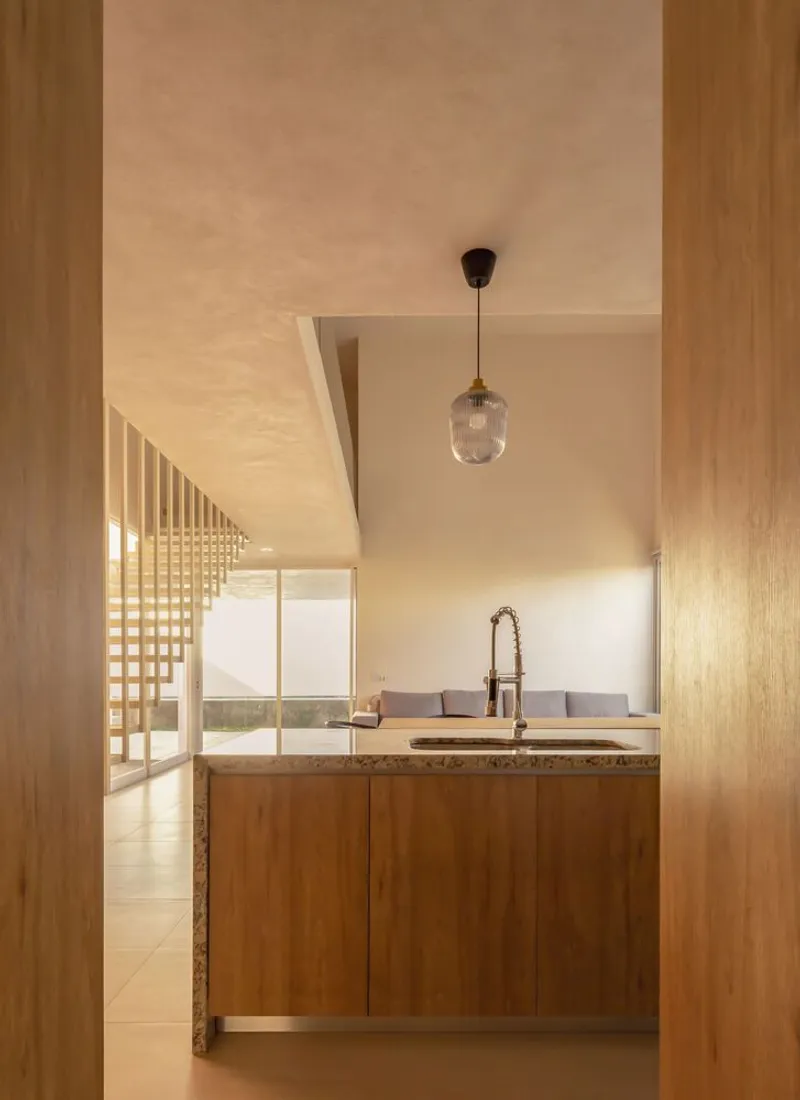
The kitchen, visible through a doorway with a pendant light above, is outfitted with timber cabinetry and a stone countertop. Its placement relative to the dining terrace and pool suggests that cooking, eating, and swimming are treated as parts of a single daily sequence rather than discrete functions tucked behind separate doors. The house breathes because its program does.
Plans and Drawings
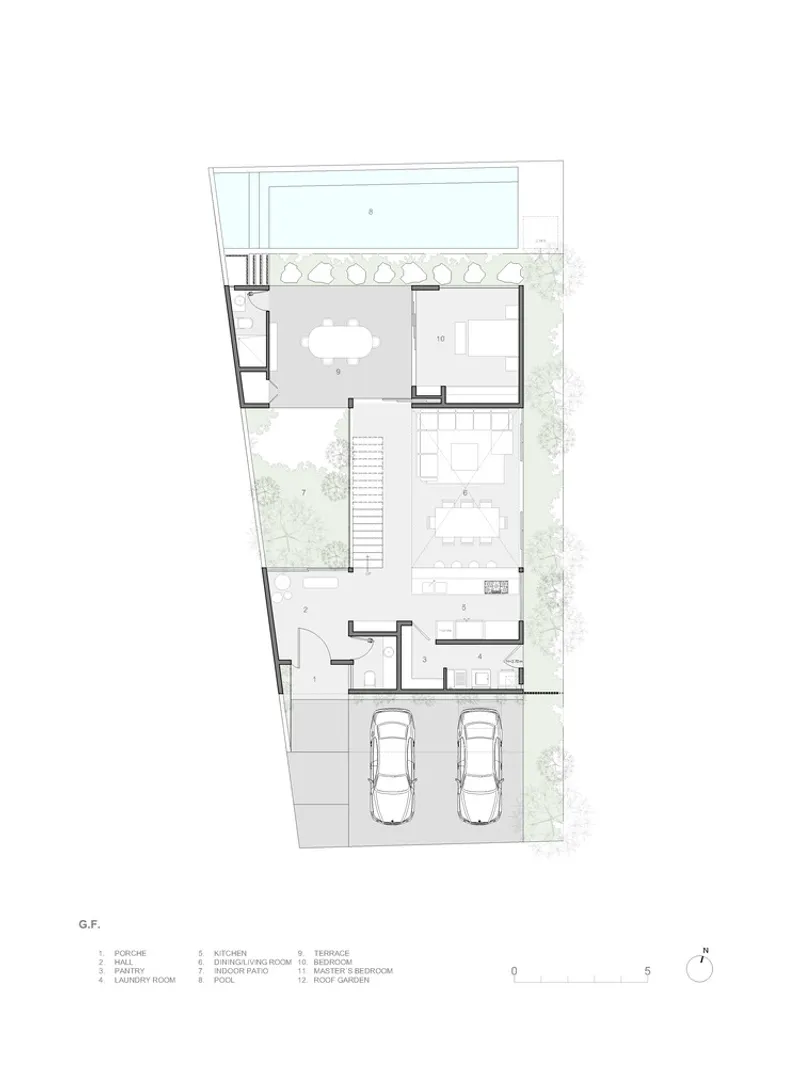
The ground floor plan confirms what the photographs suggest: the house is organized as a series of parallel volumes separated by planted strips and open courts. The pool anchors one edge, the two-car garage the other, and the living spaces occupy the center, each opening onto its own garden. The plan's clarity is its strength; there is no wasted corridor, no ambiguous threshold.
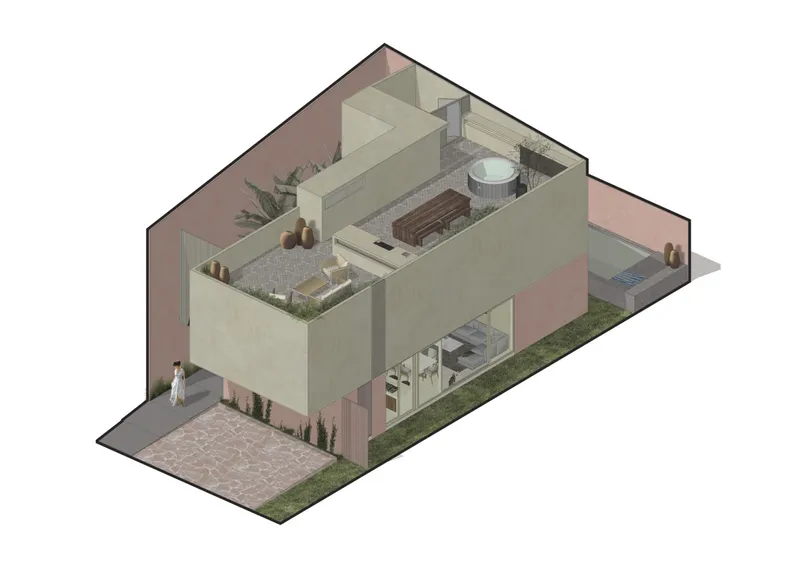
The axonometric cutaway drawing is equally revealing. It exposes the double-height voids, the roof terraces, and the way the courtyards carve through the building's mass from ground to sky. What reads in plan as a compact footprint turns out to be remarkably porous in section, a house that is more air than wall.
Why This Project Matters
Banderas House is a useful corrective to two common tendencies in contemporary residential architecture: the impulse to treat sustainability as a technical problem solved by systems, and the habit of treating color as decoration rather than performance. REA Studio does neither. The passive cooling here comes from plan organization and material selection, not from machinery, and the color palette is inseparable from the way the house manages light, heat, and mood.
More broadly, the project demonstrates that climate-responsive design in tropical settings does not require austerity. The house is generous, even sensuous, in its material richness and spatial variety. It simply refuses to waste anything: not a view, not a breeze, not a square meter of floor area. That economy, carried through with evident pleasure, is what makes Banderas House worth learning from.
Banderas House by REA Studio, Nayarit, Mexico. Photography by Rodrigo Calzada / Albers Studio.
About the Studio
Share Your Own Work on uni.xyz
If projects like this are the kind of work you want to make, uni.xyz is a place to publish your own, find collaborators, and enter design competitions.




Popular Articles
Popular articles from the community


Lunar Spiral: Space Architecture Shaped by the Mathematics of the Universe
Lunar Spiral reimagines space architecture through Fibonacci geometry, lunar regolith, levitating habitats, and self-sustaining Moon living.

Co-life: Sustainable Architecture for Age-Friendly Community Living
Co-life reimagines sustainable architecture for seniors through courtyards, rammed earth, shared gardens, and spaces designed for belonging.

Co-Life: Senior Housing Design That Reconnects Older Adults With the City
Co-Life reimagines senior housing design through healing gardens, shared streets, workshops, and a sustainable community across generations.

Play: Fragments of Their World
Familiar architecture becomes modular playground design, creating safe spaces where displaced children can learn, connect, imagine and play.


Similar Reads
You might also enjoy these articles


Hodi-Mandai Geram
Project Function: Preservation and revitalization of the Intangible heritage and socio-spatial identity of the Hodi by Housing, Cultural Memory Center, Sacred Grove, landscape, local tourism economy


Olio Towers: A Mid-Rise for Performers That Fuses Housing, Rehearsal, and Stage
Located blocks from Houston's Theater District, this modular tower stacks living units around a central performance atrium.

Oasis: Modular Green Housing Carved into Dhaka's Urban Fabric
A shortlisted Plugin Housing entry reclaims unauthorized settlements in Dhaka with stepped concrete volumes, green roofs, and ventilation-driven design.

Black Hole: A Floating Megastructure for the Post-Physical Era
Emiliano Mazzarotto envisions a spherical, self-scaling arena where e-sports, digital hotels, and holographic stadiums replace traditional public space.

Explore Architecture Competitions
Discover active competitions in this discipline



Challenge to reimagine the Iron Throne


Photograph architecture without architects


Illustrate the lost glory of Angkor Wat - Render Challenge


Design challenge to reuse E-waste
Comments (0)
Please login or sign up to add comments
No comments yet. Be the first to comment!