

Barn House Design: A Rural Retreat
Explore the Barn House design by Paul Uhlmann Architects, blending rustic charm, modern functionality, and seamless integration with nature.


Barn House Design
When thinking about a barn house design, one imagines a rustic retreat that harmonizes with its surroundings. It embodies simplicity, functionality, and an unmistakable connection to nature. The Barn House, designed by Paul Uhlmann Architects, is a perfect example of how contemporary architecture can take inspiration from traditional barns while incorporating modern amenities. Located in Pullenvale, Australia, this rural residence offers an idyllic escape from the bustle of urban life, blending sleek design elements with natural materials to create a space that feels both timeless and contemporary.
The Concept Behind the Barn House
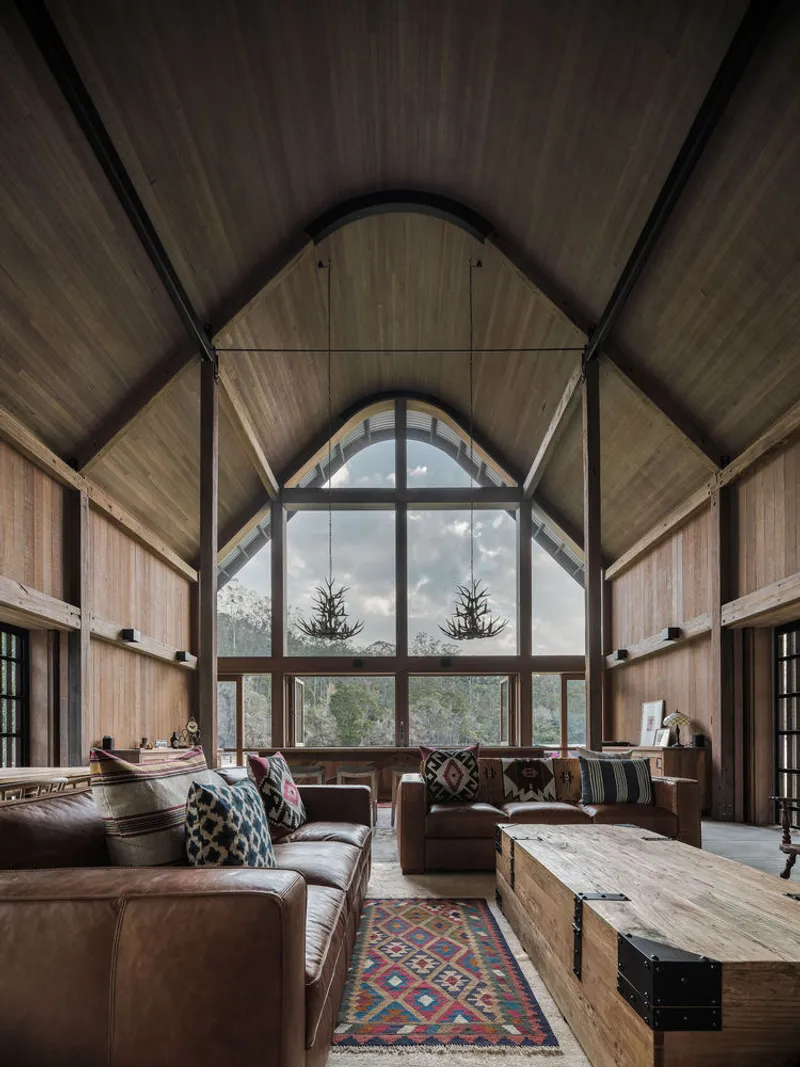
The Barn House was conceived as a weekend getaway for a busy city couple and their children. It was designed to be a place where they could unwind, enjoy the outdoors, and connect with their horses. The architects embraced the concept of a barn in both the external form and the interior spaces, creating a structure that feels deeply rooted in the rural landscape. The goal was to craft a space that promotes relaxation, interaction, and a deep connection to the surrounding environment.

Exterior Architecture: A Contemporary Take on Traditional Barns
The Building’s Form
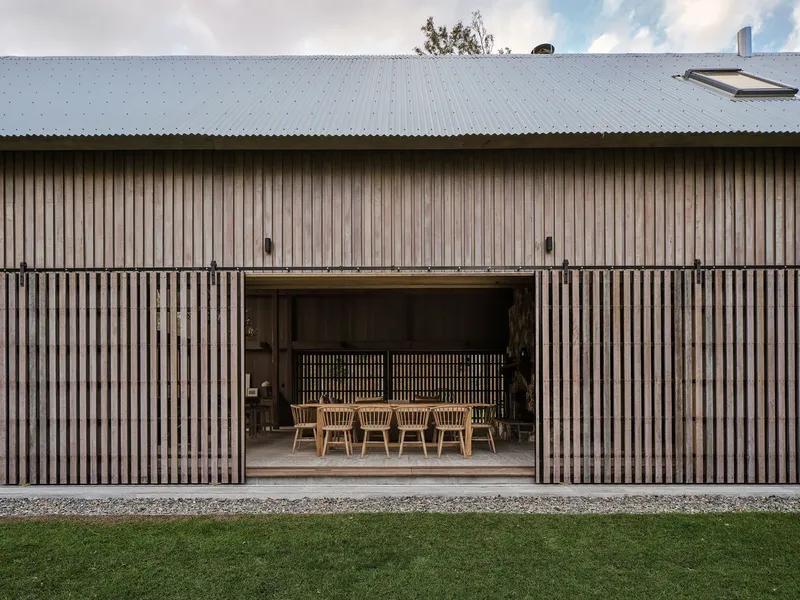
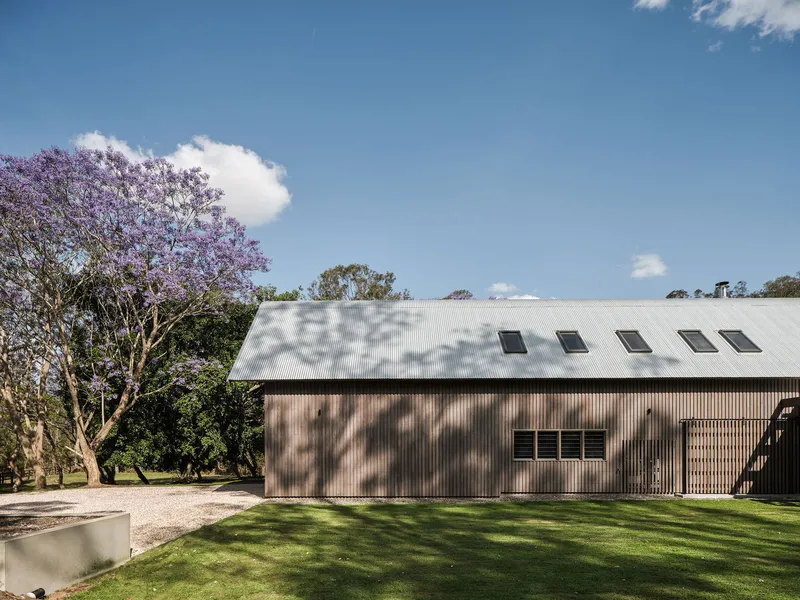
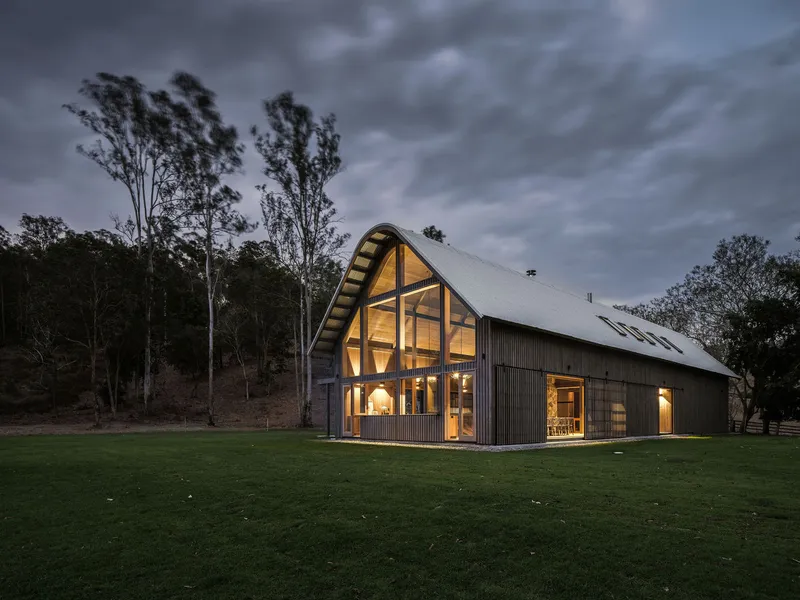
The exterior design of the Barn House pays homage to the traditional rural barns of Australia. The building’s shape features a pitched roof and a simple, sturdy structure. Clad in Australian hardwood and topped with a zincalume roof, the house creates a striking, rustic aesthetic that blends seamlessly with the farmlands and bushland surrounding it. The use of natural materials, such as wood and metal, not only enhances the barn-like appearance but also ensures durability in the region’s harsh climate.

Integration with Nature
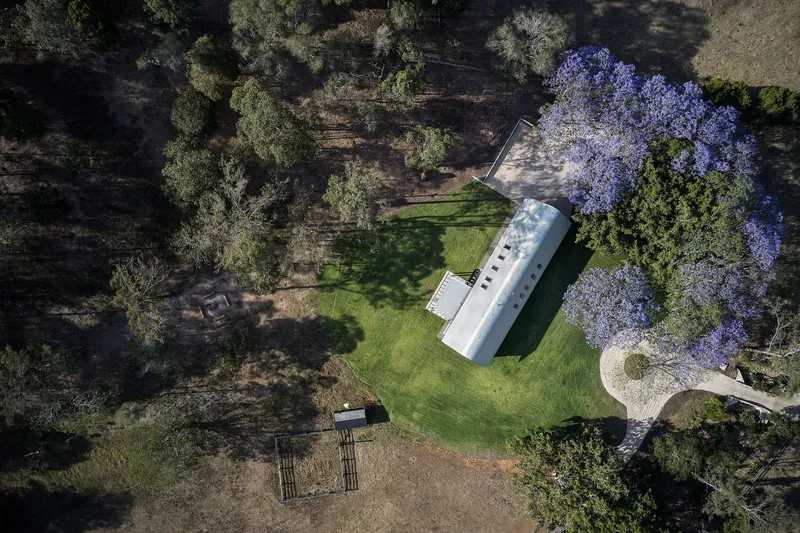
One of the standout features of the Barn House design is its seamless integration with nature. The house is situated on a sprawling property, with an existing driveway flanked by jacaranda trees leading to the residence. This pathway not only creates an inviting entrance but also establishes a strong visual connection between the house and the surrounding landscape. The large windows on the ground floor open up to breathtaking views of the paddocks and bushland, allowing residents to feel immersed in the natural beauty of the environment.

Interior Design: A Space for Family and Friends
Open-Plan Living and Cross-Ventilation
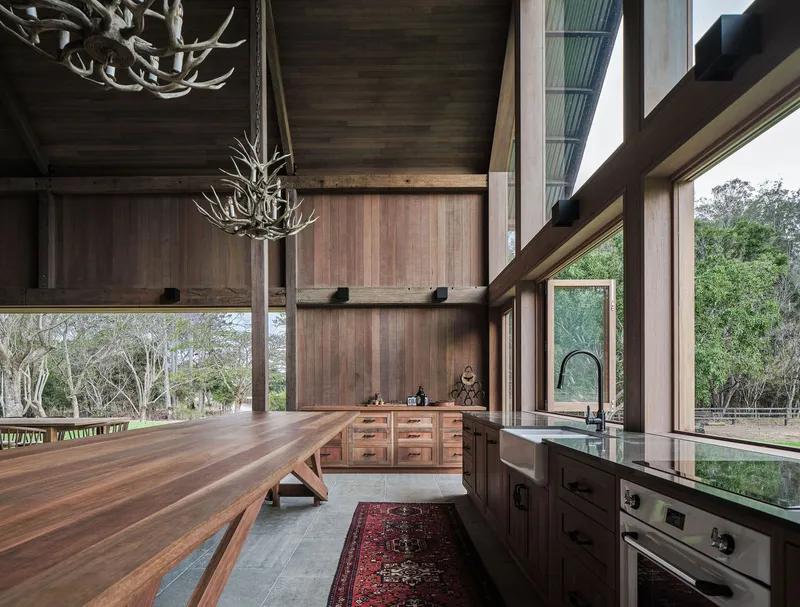
The interior of the Barn House embraces open-plan living, with the ground floor designed to completely open up to the outdoor spaces. This layout promotes cross-ventilation, ensuring that fresh air circulates freely throughout the home. The family can easily move between the interior and exterior, whether it's for relaxing on the lawn or engaging in outdoor activities. The open spaces also allow the children to come and go as they please, fostering a sense of freedom and connection to the natural world.

Cathedral-Like Ceilings and Exposed Beams
The interior spaces are characterized by cathedral-like ceilings, which elevate the feeling of openness and airiness. These ceilings are framed by exposed structural timbers, which not only serve a practical purpose but also enhance the aesthetic appeal of the space. The exposed beams draw attention to the craftsmanship of the design, providing a visual anchor that complements the rustic charm of the barn house design.
Bedrooms with Skylights for Star-Gazing
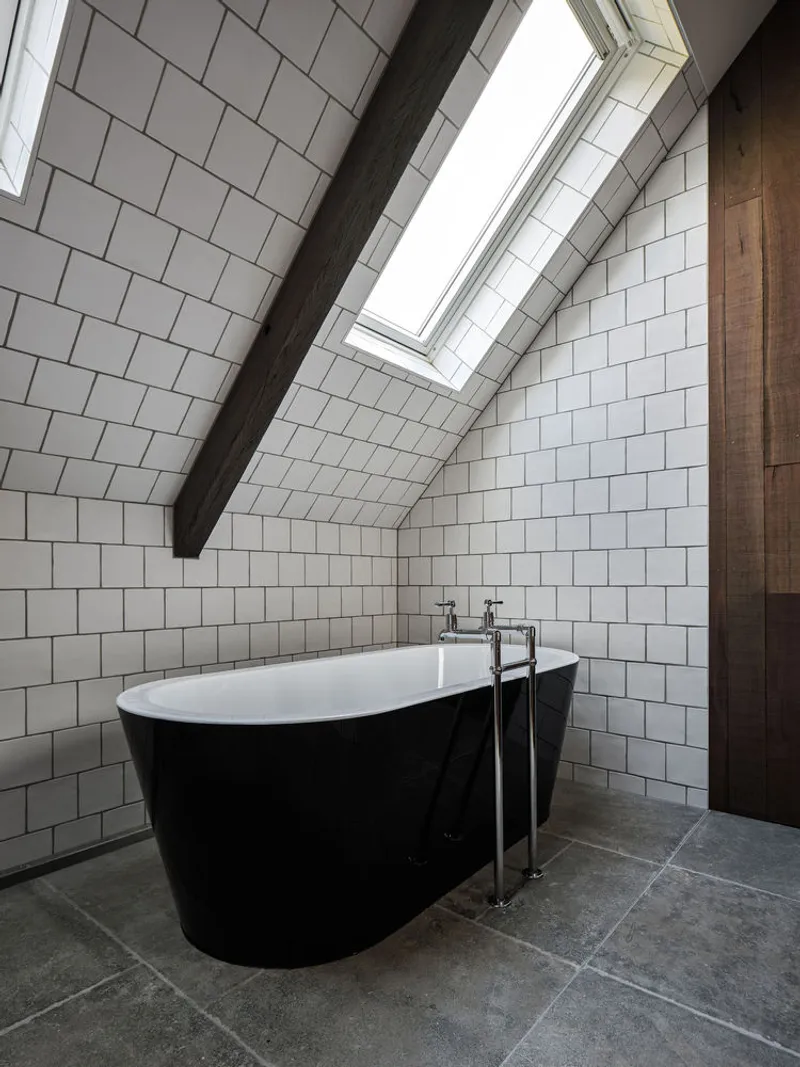
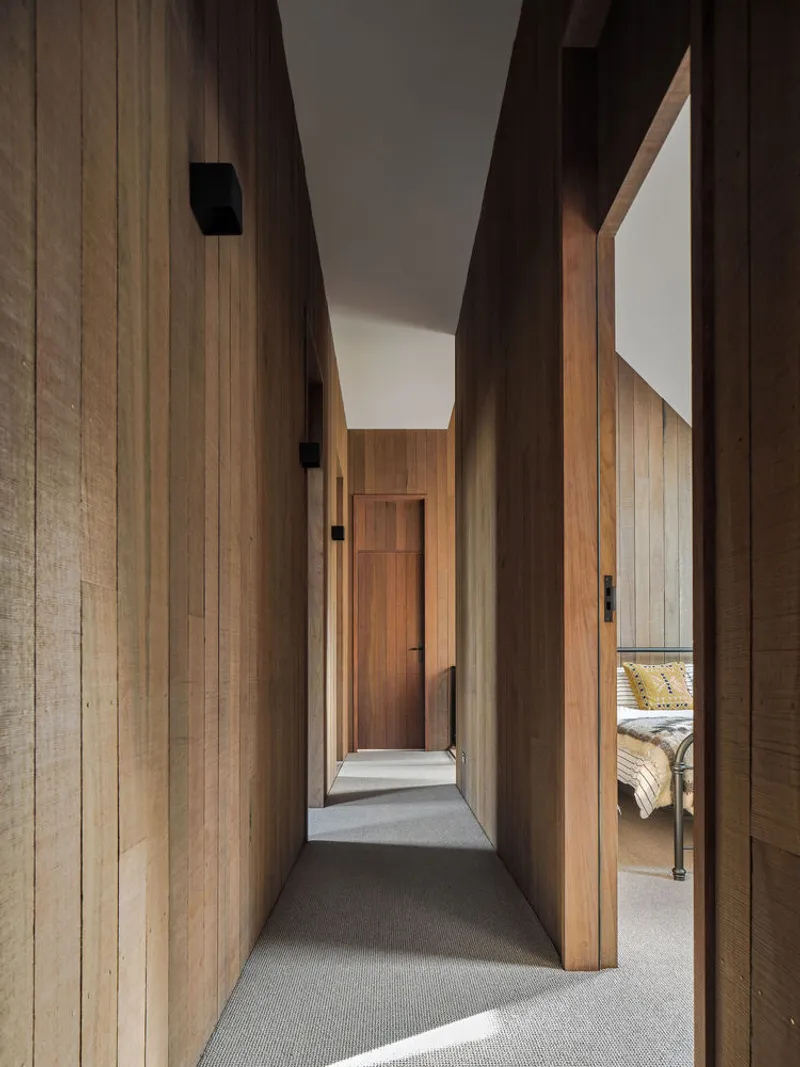
Upstairs, the bedrooms offer a more intimate retreat. Skylights above the beds allow the family to gaze at the sky during the day and enjoy starry nights. This connection to the natural world is a key element of the Barn House’s design, as it encourages residents to enjoy the simple pleasures of the outdoors from the comfort of their own home. Additionally, the upstairs area includes a bunkroom that can accommodate multiple guests, ensuring that the family can entertain friends and loved ones during weekend getaways.

Efficient Use of Space
Barn house designs are known for their efficient use of space, and this residence is no exception. The open-plan layout allows for maximum flow between the living areas, while the compact yet functional design of the bedrooms and bunkroom ensures that the house accommodates the family and their guests comfortably. The thoughtful placement of windows and skylights maximizes natural light, reducing the need for artificial lighting and contributing to the home’s overall energy efficiency.
The Charm of Barn House Design
The Barn House by Paul Uhlmann Architects exemplifies how a barn house design can blend rustic charm with modern functionality. From its traditional barn-inspired exterior to its open, airy interior spaces, the house serves as a perfect retreat for the family to relax and reconnect with nature. The careful selection of materials, the thoughtful design of the floor plan, and the integration of sustainable practices ensure that the Barn House is not only visually stunning but also practical and eco-friendly. Whether you're looking to design a weekend retreat or a permanent residence, the Barn House serves as a perfect example of how a barn house design can provide the perfect balance of form, function, and connection to the natural world.
All Photographs are work of Andy Macpherson Studio


Popular Articles
Popular articles from the community


Jaramillo Van Sluys Arquitectura and Urbanismo Turn a Demolished Registry Lot in Quito into an Orchard Plaza
In Quito's Centro Histórico, a 2,800 m² plaza exposes the San Agustín convent wall and redraws its lost Augustinian orchard in volcanic stone.

David Macias Steps a Doorless Stone and Plaster House Down a Tropical Colombian Hillside
In the humid hills of Colombia, Threshold House replaces the front door with an open void and terraces its 850 m² down the slope instead of fighting it.

U.GA Architects Wraps an Oval Rooftop Pool in Curved Board-Formed Concrete on Busan's Jeollidan-gil
In Busan's Jeonpo-dong, a 454 m² mixed-use block stacks a neighborhood facility, guest rooms and an oval rooftop pool inside spiraling concrete walls.

Juan García Correa, John González and Claudia Rueda Sink a Circular Amphitheater into a Manizales Engineering Building
On the La Nubia campus in Manizales, Colombia, the S1 Building folds labs and offices into a hillside of ramped lawns that double as a campus route.

Similar Reads
You might also enjoy these articles


Hodi-Mandai Geram
Project Function: Preservation and revitalization of the Intangible heritage and socio-spatial identity of the Hodi by Housing, Cultural Memory Center, Sacred Grove, landscape, local tourism economy


Olio Towers: A Mid-Rise for Performers That Fuses Housing, Rehearsal, and Stage
Located blocks from Houston's Theater District, this modular tower stacks living units around a central performance atrium.

Oasis: Modular Green Housing Carved into Dhaka's Urban Fabric
A shortlisted Plugin Housing entry reclaims unauthorized settlements in Dhaka with stepped concrete volumes, green roofs, and ventilation-driven design.

Black Hole: A Floating Megastructure for the Post-Physical Era
Emiliano Mazzarotto envisions a spherical, self-scaling arena where e-sports, digital hotels, and holographic stadiums replace traditional public space.

Explore Barn Conversion Competitions
Discover active competitions in this discipline

Challenge to reimagine the Iron Throne

Photograph architecture without architects

Illustrate the lost glory of Angkor Wat - Render Challenge

Design challenge to reuse E-waste
Comments (0)
Please login or sign up to add comments
No comments yet. Be the first to comment!