

Plus One Architects Renovate a Prague Gallery Building with Powdery Plaster and Sinuous Light
Boleslavova 3 transforms a turn-of-the-century courtyard apartment block in Nusle into 15 individually crafted residences.


Gallery-access apartment buildings are a defining piece of Prague's residential fabric, yet most of them survive in a state of gentle neglect, their courtyard walkways and barrel-vaulted corridors valued more as curiosities than as livable space. At Boleslavova 3, Plus One Architects took a different approach: rather than treating the building's idiosyncrasies as obstacles, they treated each one as an invitation. The result is a 15-unit renovation in Prague's Nusle district that feels genuinely specific, not only to the neighborhood but to every individual apartment inside it.
What makes the project worth studying is the precision with which the architects calibrated their interventions. The original 1930s staircase was kept intact and re-lit with a sinuous recessed LED strip. Former open-air gallery walkways became private balconies with scalloped board-formed concrete soffits. Barrel vaults on the ground floor were preserved while attic units above received generous skylights. Nothing was stripped back to a blank canvas. The building was already interesting; it just needed someone who knew where to look.
Street Presence and Courtyard Life


From the street, the building's identity is established by a series of undulating concrete balconies whose scalloped edges catch light and shadow in ways that read simultaneously contemporary and ornamental. The cashmere-toned facade, insulated on the rear, keeps the front elevation visually restrained. Autumn foliage softens the edges, and the building tucks into its quiet street above Fidlovačka Park without announcing itself too loudly.
The courtyard side tells a different story. Ground-floor apartments open onto private front gardens, their lawns interrupted by stepping-stone paths beneath the same board-formed concrete ceilings that define the upper balconies. A red bench on the grass, a potted plant on a terrace: these are small, curated moments that signal the architects' interest in how residents actually occupy outdoor space, not just how it photographs.


The Staircase as Spine


The preserved staircase is the building's vertical nervous system, and the architects made sure it feels that way. Its original curvilinear form, with rough-textured stone steps, was left untouched. What changed is the lighting: a ribbon of recessed LEDs winds through the vaulted ceiling, following the spiral of the stair from ground to attic. Developed in collaboration with Penocze studio, the light fixture transforms what could have been a dim service route into a spatial event.
The terracotta and pink plaster walls are a deliberate provocation against the safe whites and greys that dominate most renovation projects. These powdery shades, inspired by period murals found in Prague's historic buildings, give the common areas a warmth that photographs struggle to fully convey. Dark-toned paneled doors and mottled brown veneer mailboxes ground the palette, preventing it from tipping into sweetness.


Balconies and Gallery Walkways


The conversion of open-air gallery walkways into private balconies is the single most consequential spatial move in the project. Gallery-access buildings are inherently communal: everyone shares the walkway, and privacy is a polite fiction. By enclosing these walkways as individual terraces, Plus One Architects resolved a tension that has plagued this building type for a century. The arched ceilings of the galleries, adorned with chequered ceramic tiles and metal railings, remain readable from the courtyard, so the building's typological history is not erased.
The scalloped board-formed concrete soffit that defines the balcony ceilings is the project's most photogenic detail, but it also performs. Its undulating form creates a sense of enclosure without blocking light, and the board-forming technique gives the concrete a textured grain that ages well. Profiled shutters on the windows behind offer privacy and passive cooling during Prague's increasingly hot summers.
Vaults, Niches, and Ground-Floor Character


The ground-floor apartments are where the building's original character is most legible. Barrel vaults and deep wall niches were preserved, and the architects let them dictate the layout rather than fighting against them. The result is a set of rooms where ceilings have genuine shape, where light enters through vertical slots cut into thick masonry, and where you feel the building's mass around you. Blue furniture and patterned floors in some units play against the warm plaster tones, creating interiors that feel composed rather than decorated.
The arched opening framing a wrought-iron balcony overlooking Prague's rooftops is one of the project's quieter triumphs. It demonstrates the value of the building's position on the slope above Fidlovačka Park, with views across the Nusle Valley. These are not penthouse panoramas; they are framed glimpses, and they are all the more effective for it.
Attic Units and the Problem of Light


Carving four distinct apartments out of a former loft is the kind of challenge that separates competent renovation from genuinely thoughtful work. The architects avoided suspended ceilings, allowing the attic structure to remain visible and giving each unit a sense of spatial generosity despite compact footprints. Skylights were maximized, placed even above bathrooms, and rounded lightwells above doors bring daylight into the entry corridors that would otherwise be dark.
One attic room features a central skylight grid that pours light down onto a circular rug, turning a ceiling condition into a furnishing strategy. Twin dormer windows in the bedrooms frame views of neighboring rooftops, reinforcing the sense of being embedded in the city's fabric. The double-height staircase with vertical slat railing that connects the maisonette levels is handled with restraint: concrete, wood, clean geometry, no drama.
Material Specificity in the Interiors


The material palette across the 15 units is unified by a commitment to tactile surfaces. Laminate flooring with integrated electric heating keeps the floors warm and flush. Exposed concrete ceilings, a byproduct of the structural reinforcement with concrete slabs, are left unfinished in several units, their rough texture playing against the softness of linen curtains and patterned rugs. The stainless steel kitchen with red-pink glazed tiles by the Dutch brand Palet is a deliberate accent: a concentrated burst of color in an otherwise muted room.
Stone, ceramics, concrete, and wood form the core vocabulary. The coffered concrete ceiling in one living room, paired with three tall windows, gives the space an almost civic scale. Elsewhere, a cork ceiling above a dining table introduces acoustic warmth without resorting to conventional treatments. These are not interiors designed for a single aesthetic; they are designed for the building they inhabit.


Bathrooms across the building received particular attention. Beige mosaic tile walls, backlit mirrors, and serpentine radiators in red or chrome give each bathroom a distinct character. Rain showerheads, Grohe and Laufen fixtures, and circular ceiling lights keep the language contemporary. The red towel rail glimpsed through an open doorway is a small but telling detail: color is used here as a deliberate compositional choice, not an afterthought.


Plans and Drawings


The floor plans reveal the full complexity of the task. The elongated narrow layout, with a spiral stair anchoring one end and arched corridors running alongside repeating structural bays, forced each apartment into a unique configuration. No two plans are alike. Corner units wrap around angled volumes; attic units negotiate sloped rooflines; the maisonette threads between two floors with its own street entrance. Courtyard terraces with linear planting appear consistently on the garden side, integrating outdoor space into even the tightest units.
What the drawings make visible is the architects' refusal to impose a standard module. Each plan responds to the structural reality it inherits: barrel vaults, load-bearing walls with arches, gallery corridors. The diagonal circulation in several units and the irregular room shapes are not stylistic choices but structural consequences, accepted and refined.
Why This Project Matters
Boleslavova 3 matters because it demonstrates that renovation does not have to mean either preservation-as-museum or gutting-as-modernization. Plus One Architects found a third way: they kept the elements that give the building its character (barrel vaults, gallery walkways, the spiral staircase, the deep window reveals) and then introduced new layers (concrete slabs, LED lighting, skylights, scalloped balconies) that are clearly of this moment. The two registers coexist without competing.
The project also offers a useful model for dealing with gallery-access housing, a typology common across Central Europe that is frequently dismissed as outdated. By converting shared walkways to private terraces while preserving their arched ceilings and tile patterns, the architects proved that the typology's problems are solvable without destroying its spatial qualities. For anyone working on similar buildings in Prague, Vienna, Budapest, or beyond, this is a project worth visiting in person, not just scrolling through.
Boleslavova 3 by Plus One Architects, Prague, Czech Republic. Photography by BoysPlayNice.
About the Studio
Share Your Own Work on uni.xyz
If projects like this are the kind of work you want to make, uni.xyz is a place to publish your own, find collaborators, and enter design competitions.


Popular Articles
Popular articles from the community

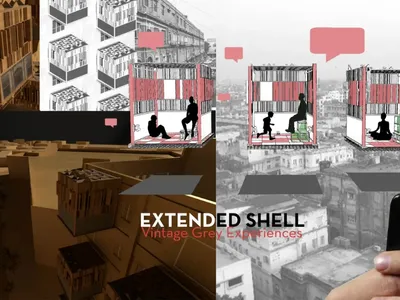
Extended Shell: Retrofitting Kolkata's Balconies as Living Urban Thresholds
A modular retrofit system recovers the social and environmental intelligence of Kolkata's historic verandas for contemporary Park Street residents.
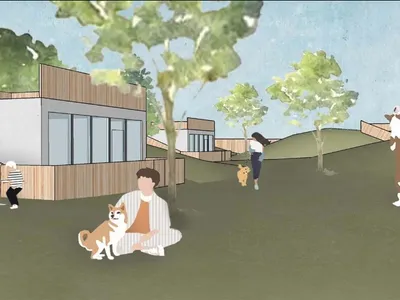
Temporary Home for Dogs: A Reversed Zoo Rethinks Animal Shelter Architecture
In Bucharest, a sinuous corridor and freed landscape flip the logic of containment, designing a shelter that works to make itself unnecessary.
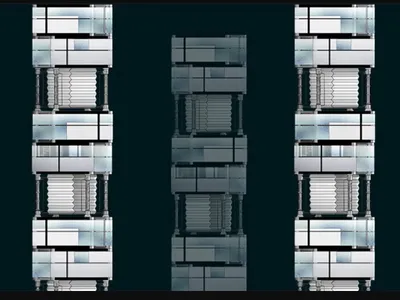
Tsunami Convergenics: Turning Catastrophic Ocean Forces into Underwater Housing Infrastructure
A speculative underwater settlement off the coast of Onagawa, Japan, treats tsunamis and typhoons as energy sources rather than threats.
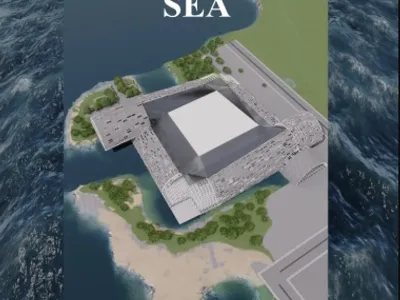
Opera on the Sea: Driftwood Logic Shapes a Timber Opera House on Estonia's Coast
Trevor Orgill's opera house translates the entangled drift of floating timber into a civic building where wood, water, and music converge.

Similar Reads
You might also enjoy these articles


Hodi-Mandai Geram
Project Function: Preservation and revitalization of the Intangible heritage and socio-spatial identity of the Hodi by Housing, Cultural Memory Center, Sacred Grove, landscape, local tourism economy

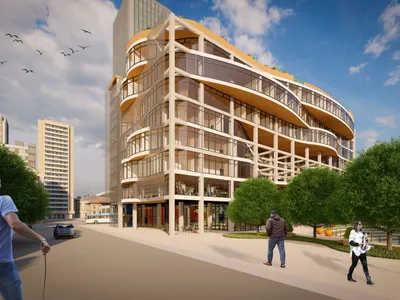
Olio Towers: A Mid-Rise for Performers That Fuses Housing, Rehearsal, and Stage
Located blocks from Houston's Theater District, this modular tower stacks living units around a central performance atrium.
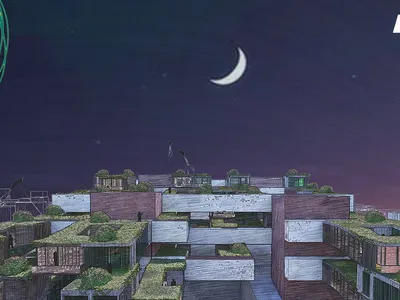
Oasis: Modular Green Housing Carved into Dhaka's Urban Fabric
A shortlisted Plugin Housing entry reclaims unauthorized settlements in Dhaka with stepped concrete volumes, green roofs, and ventilation-driven design.

Black Hole: A Floating Megastructure for the Post-Physical Era
Emiliano Mazzarotto envisions a spherical, self-scaling arena where e-sports, digital hotels, and holographic stadiums replace traditional public space.

Explore Archip Prague Competitions
Discover active competitions in this discipline

Challenge to reimagine the Iron Throne

Photograph architecture without architects

Illustrate the lost glory of Angkor Wat - Render Challenge

Design challenge to reuse E-waste
Comments (0)
Please login or sign up to add comments
No comments yet. Be the first to comment!