

Bosch Automotive Steering Customer Center by wulf architekten
Modern corporate campus by wulf architekten featuring curved facades, transparent interiors, and sustainable landscape integration in Schwäbisch Gmünd, Germany.


A Landmark of Modern Industrial Architecture in Schwäbisch Gmünd, Germany
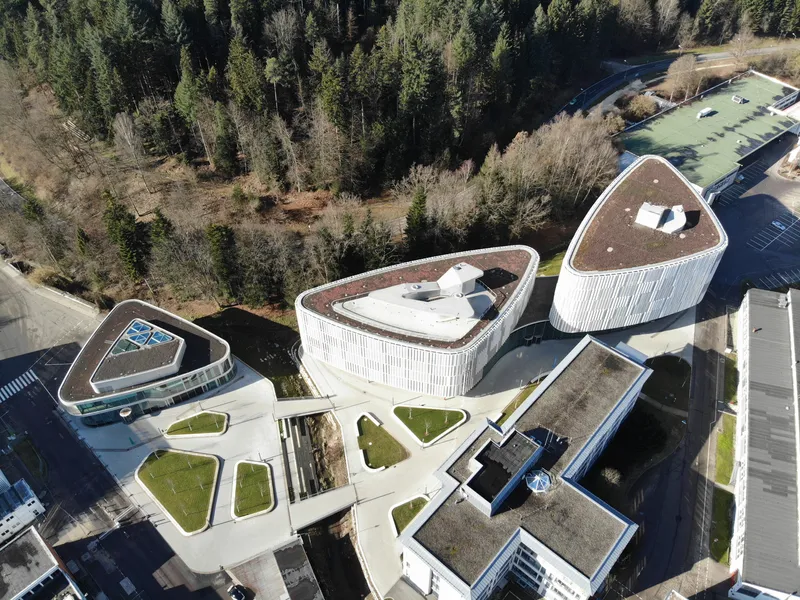
Nestled in the lush valley landscape of Schwäbisch Gmünd, Germany, the Bosch Automotive Steering Customer Center, designed by wulf architekten, exemplifies a visionary approach to corporate and industrial architecture. Completed in 2019 and spanning 32,422 square meters, this state-of-the-art facility redefines the relationship between workspaces, landscape, and infrastructure.
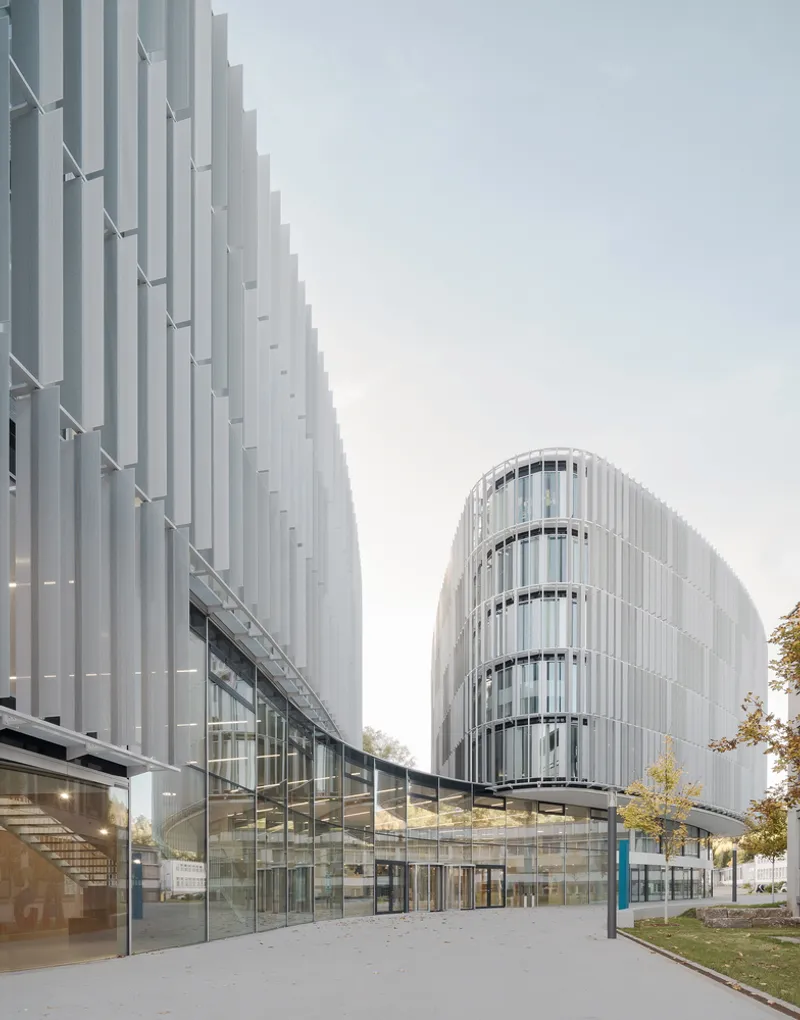

Integrated Masterplan and Environmental Renewal
The project is part of a broader site transformation aimed at revitalizing Bosch’s corporate premises. Surrounded by wooded hills and intersected by two natural streams, the campus includes three main architectural interventions:
- A new Customer Center,
- A Reception Building, and
- A multi-level Parking Garage for over 800 vehicles.
In collaboration with Jetter Landschaftsarchitekten, the architects also oversaw the renaturation of streambeds and the complete redesign of surrounding open spaces—ensuring the architecture harmonizes with the site's ecological context.
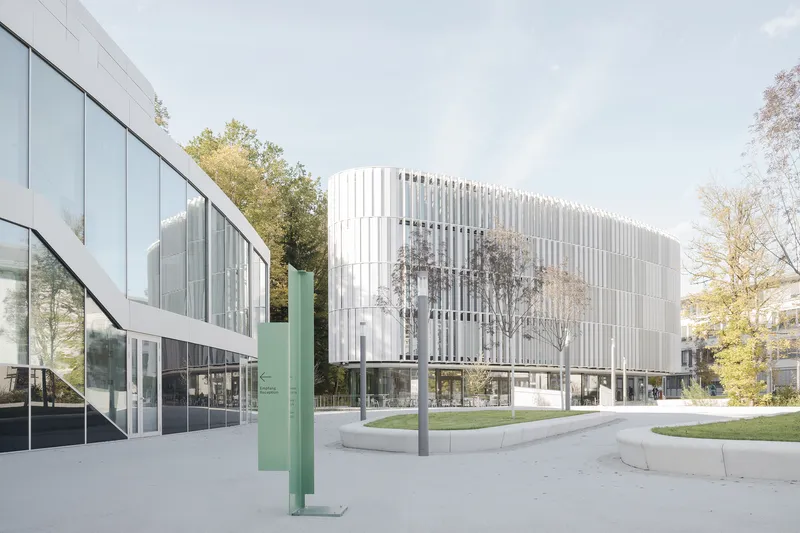
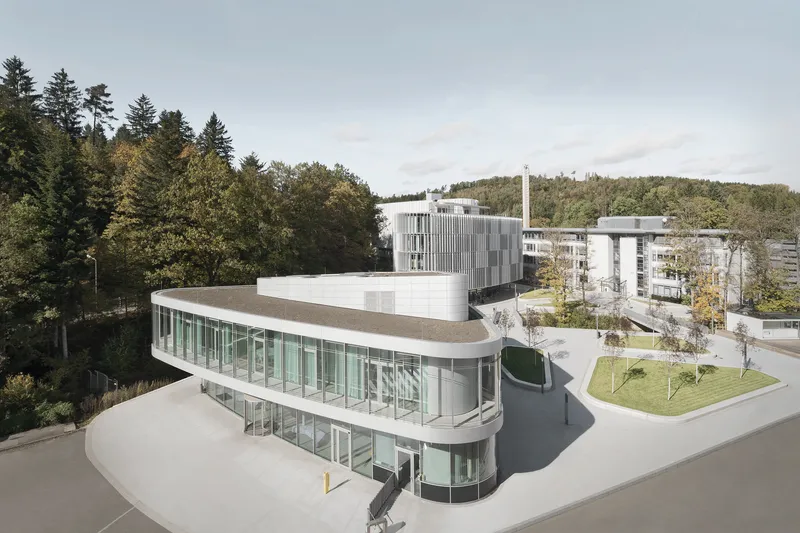
A Spatially Dynamic and Topographically Sensitive Design
The Customer Center’s façade features a slightly convex curve, not only optimizing the enclosed volume and surface area but also creating a sleek, efficient visual language. The building’s form responds to the site's natural topography with a five-story southern wing and a seven-story northern section, incorporating stepped heights that mirror the slope of the land.
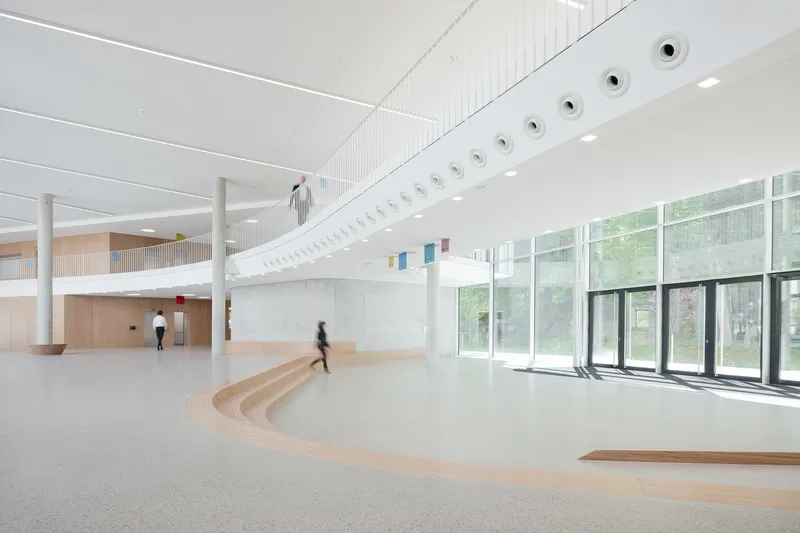
At ground level, the building opens to a shared lobby, cafeteria, and event space, forming a transparent base that fosters collaboration and interaction. Above, flexible office floors include open-plan and private spaces arranged around central cores for circulation and services, enabling optimal space planning.

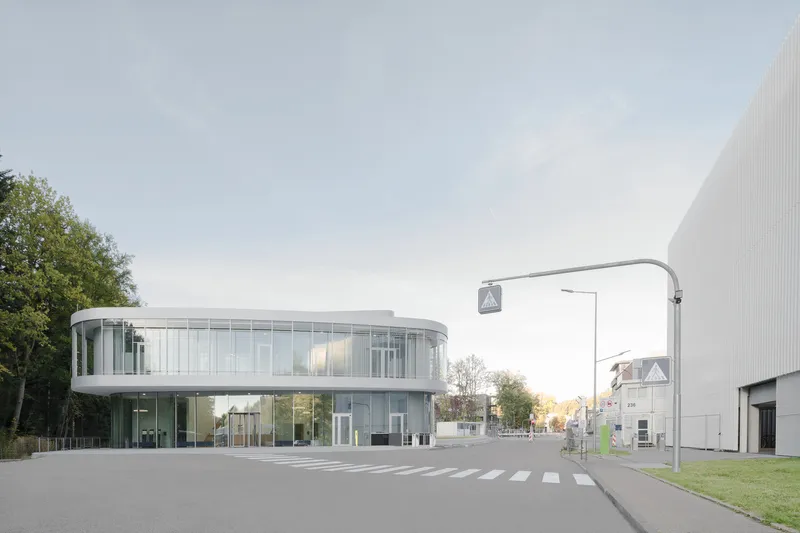
Daylight Optimization and Responsive Facade Design
One of the standout architectural elements is the high-performance glazed façade, equipped with rotatable perforated vertical slats that regulate light and maintain transparency. This feature filters natural daylight and ensures energy efficiency while maintaining visual connections to the surrounding landscape.

Reception Building: A Curved Complement
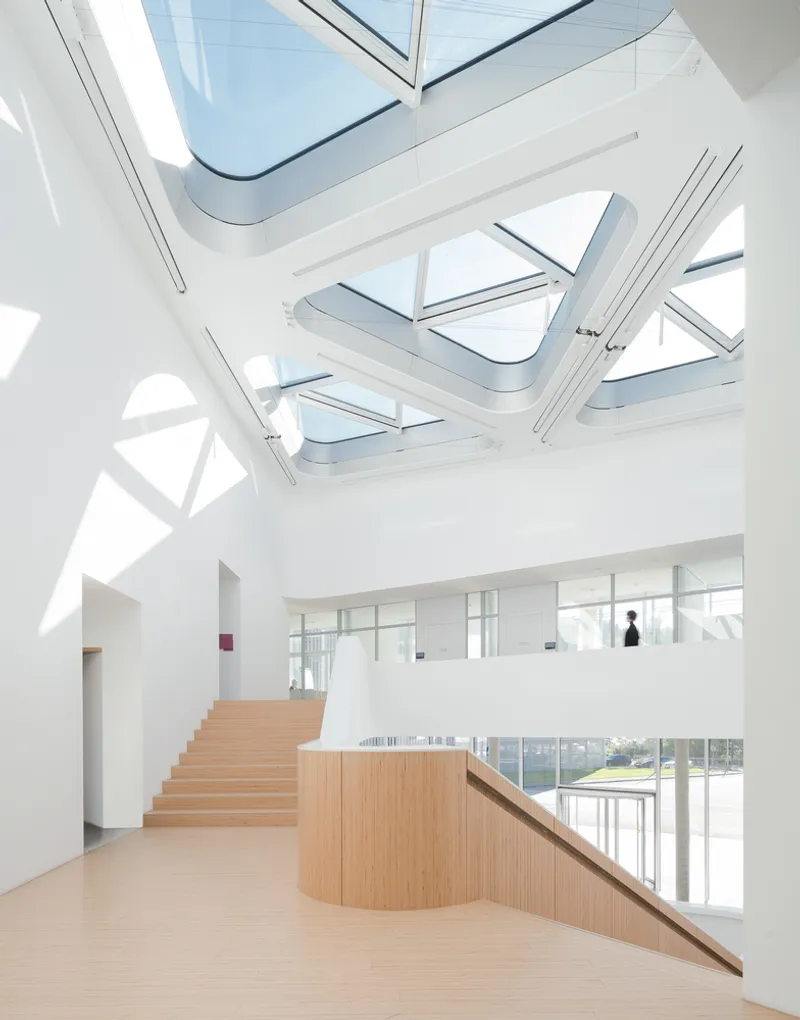
Adjacent to the customer center, the Reception Building continues the curved, organic aesthetic with a two-story volume containing seminar and meeting spaces for both internal staff and visiting partners. The architectural cohesion between the two structures enhances the identity of the Bosch Automotive Steering campus.

Signage and Wayfinding: Precision in Branding
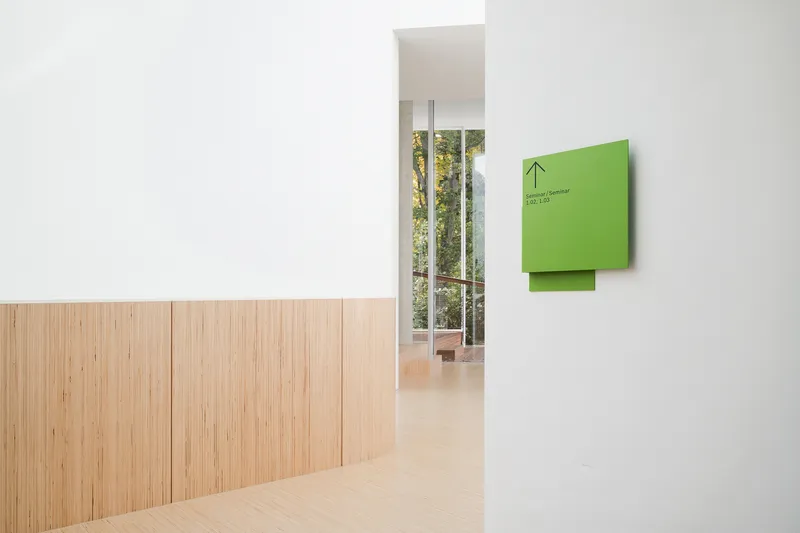
The interior and exterior wayfinding system, designed by büro uebele, integrates Bosch’s signature branding. Square forms and the iconic red-blue color palette subtly reinforce brand recognition while supporting intuitive navigation across the complex.
Architectural Vision and Modern Workplace Philosophy
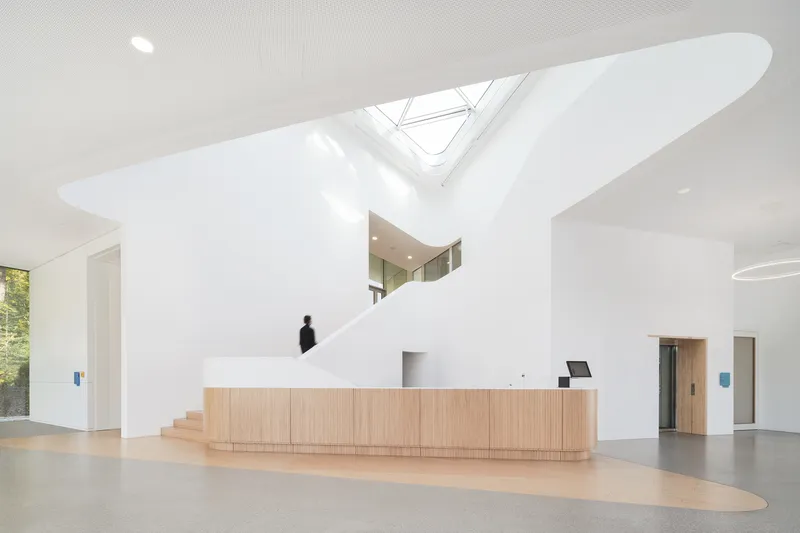
The architectural goal was clear: to create a high-quality, contemporary work environment that supports innovation, sustainability, and user well-being. Through its seamless integration of landscape, structure, and user-centric spatial planning, the Bosch Automotive Steering Customer Center stands as a model for future-forward industrial campus design.


Popular Articles
Popular articles from the community


Singing Woman: An Opera House That Performs Before the Curtain Rises
Ovidiu Cristian Pavel's conceptual opera house translates Estonia's choral identity into a sculpted waterfront landmark facing the Baltic Sea.

The Amber Palace Opera: A Geological Fiction Surfaces on Tallinn's Baltic Waterfront
Pierre Brillard reimagines a Baltic legend as a public landscape, opera house, and waterfront promenade rooted in Tallinn's coastal identity.
Temporary Home for Dogs: A Reversed Zoo Rethinks Animal Shelter Architecture
In Bucharest, a sinuous corridor and freed landscape flip the logic of containment, designing a shelter that works to make itself unnecessary.

Faces of the Soviet Avant-Garde: Turning Moscow's Street Names into an Open-Air Museum
A network of sculptural installations across a Moscow residential district transforms forgotten architect names into spatial encounters with cultural memor

Similar Reads
You might also enjoy these articles


Hodi-Mandai Geram
Project Function: Preservation and revitalization of the Intangible heritage and socio-spatial identity of the Hodi by Housing, Cultural Memory Center, Sacred Grove, landscape, local tourism economy


Olio Towers: A Mid-Rise for Performers That Fuses Housing, Rehearsal, and Stage
Located blocks from Houston's Theater District, this modular tower stacks living units around a central performance atrium.

Oasis: Modular Green Housing Carved into Dhaka's Urban Fabric
A shortlisted Plugin Housing entry reclaims unauthorized settlements in Dhaka with stepped concrete volumes, green roofs, and ventilation-driven design.

Black Hole: A Floating Megastructure for the Post-Physical Era
Emiliano Mazzarotto envisions a spherical, self-scaling arena where e-sports, digital hotels, and holographic stadiums replace traditional public space.

Explore Automobile Design Competitions
Discover active competitions in this discipline

Challenge to reimagine the Iron Throne

Photograph architecture without architects

Illustrate the lost glory of Angkor Wat - Render Challenge

Design challenge to reuse E-waste
Comments (0)
Please login or sign up to add comments
No comments yet. Be the first to comment!