
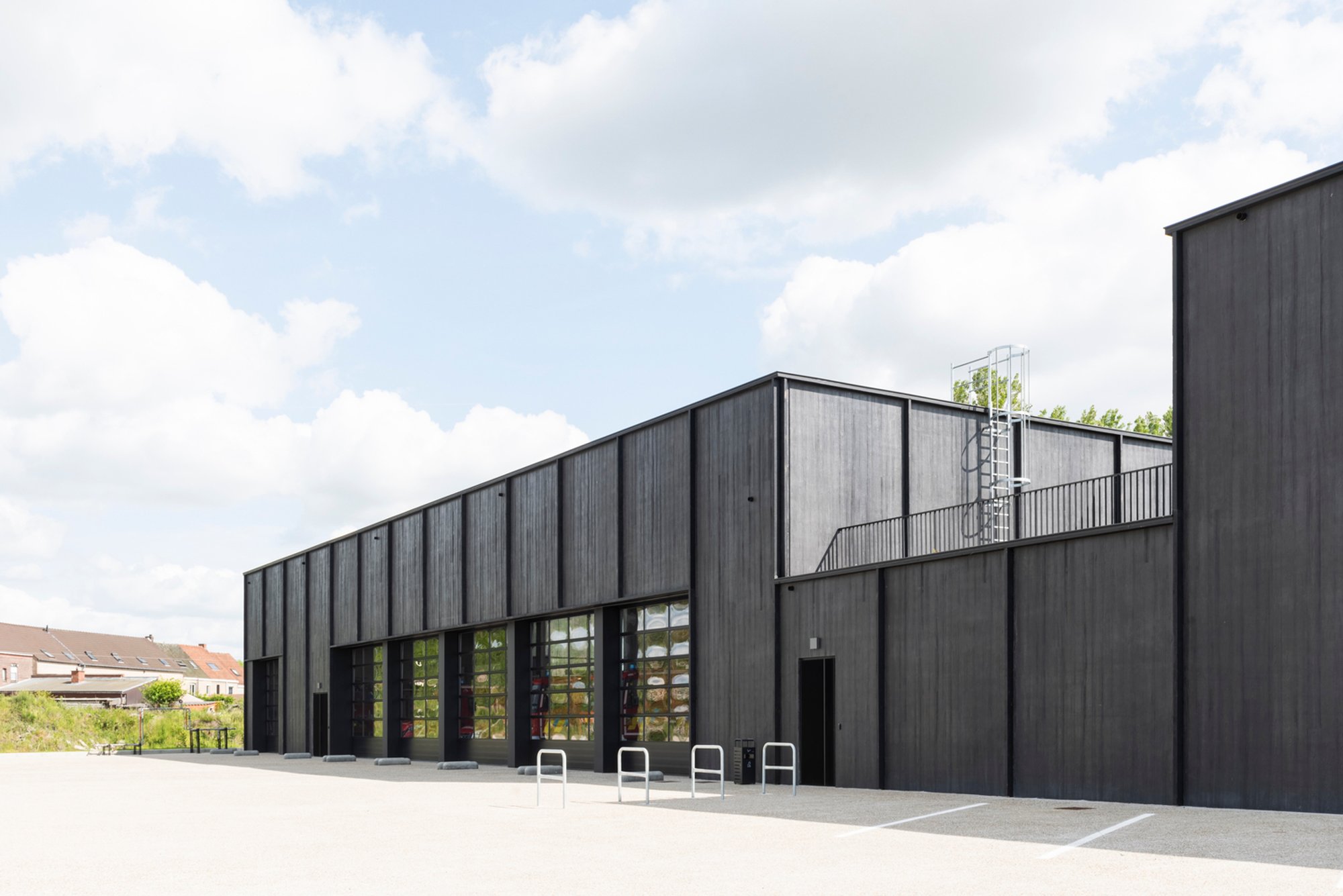
Bramier Fire Station by Bureau DBG: A Contemporary Emergency Hub Blending Nature, Functionality, and Civic Design
Contemporary fire station by Bureau DBG integrates nature, flexible structure, and civic utility with a green façade and efficient layout.

Location: Menen, Belgium Architects: Bureau DBG Lead Architect: Dries Goesaert Year of Completion: 2023 Area: 1,300 m² Manufacturers: Reynaers Aluminium, Condeco Civil Contractor: Spanbo Finishing Contractor: Holvoet Gebroeders Photography: © Klaas Verdru
Situated at the edge of the Bramier business park in Menen, Belgium, the newly completed Bramier Fire Station by Bureau DBG is more than just an operational facility—it’s a thoughtful architectural response that mediates between an industrial zone and a protected natural reserve. Designed to house the fire brigades of Lauwe and Marke, the project reflects a dual commitment to high-performance emergency services infrastructure and ecological sensitivity.
Strategic Siting and Spatial Efficiency
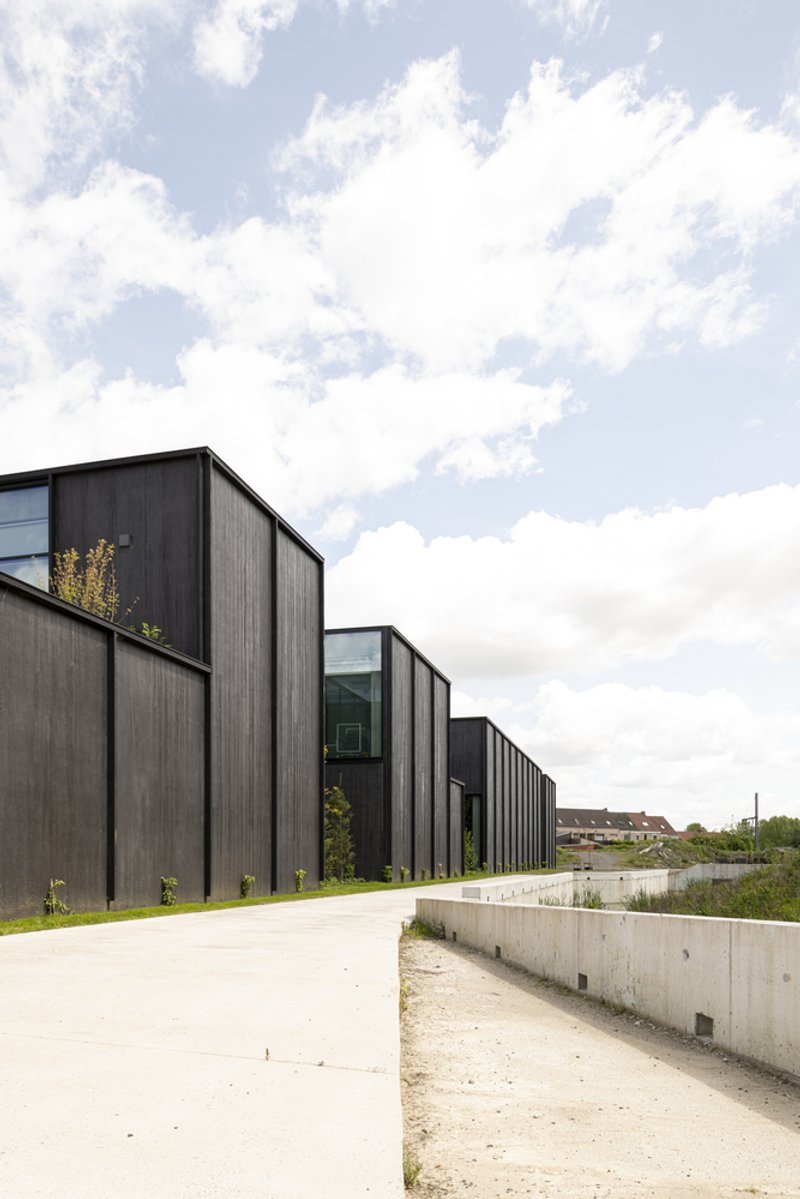
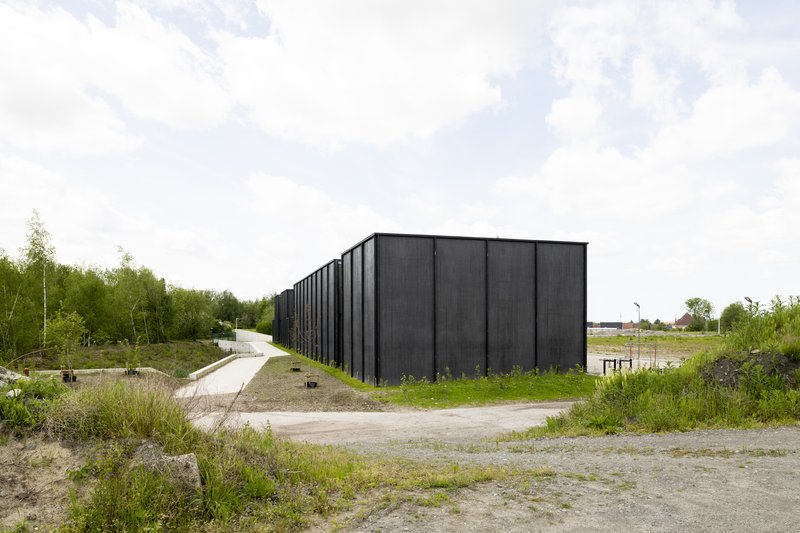
Positioned along the southern boundary of the site, the building serves as a buffer between the nature reserve and business park, creating a clear spatial logic. This placement maximizes land use, eliminating unusable residual zones, while also reinforcing a functional distinction: the northern forecourt accommodates firetruck circulation, parking, and outdoor training areas—all shielded from the reserve to preserve its tranquility.
Architecture That Responds to Its Context
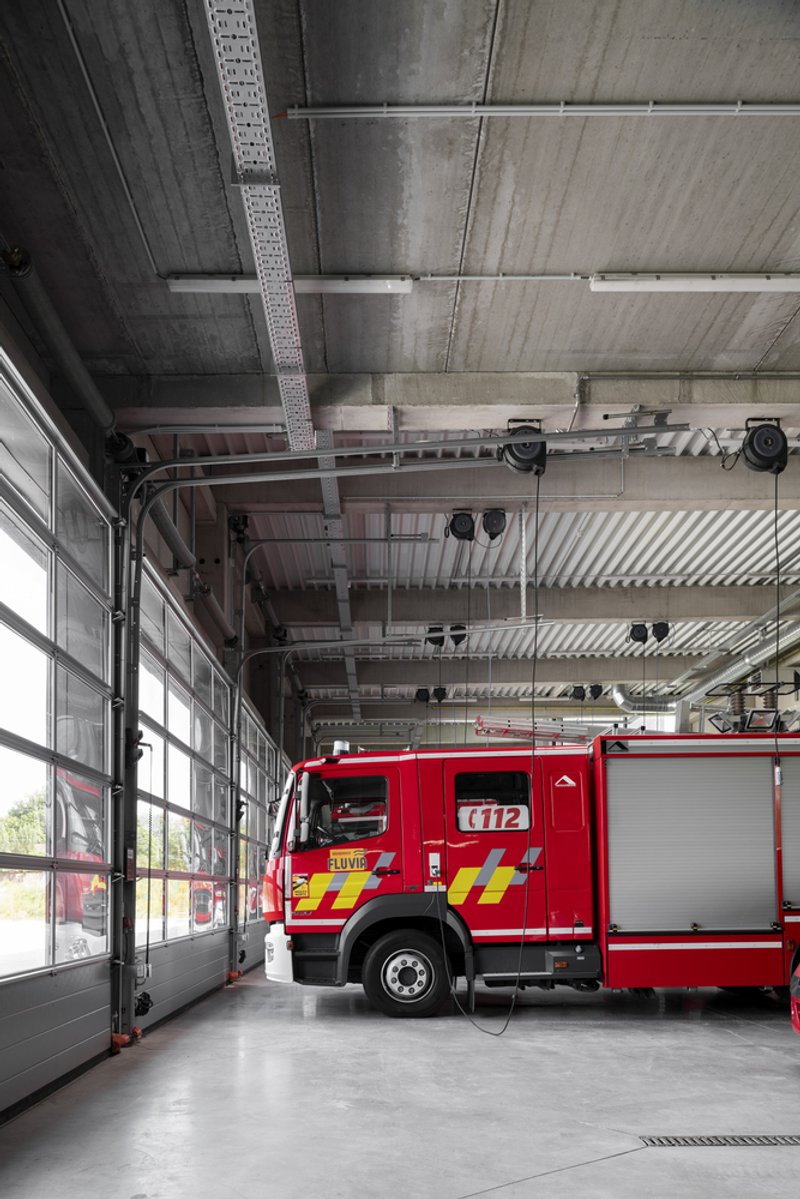
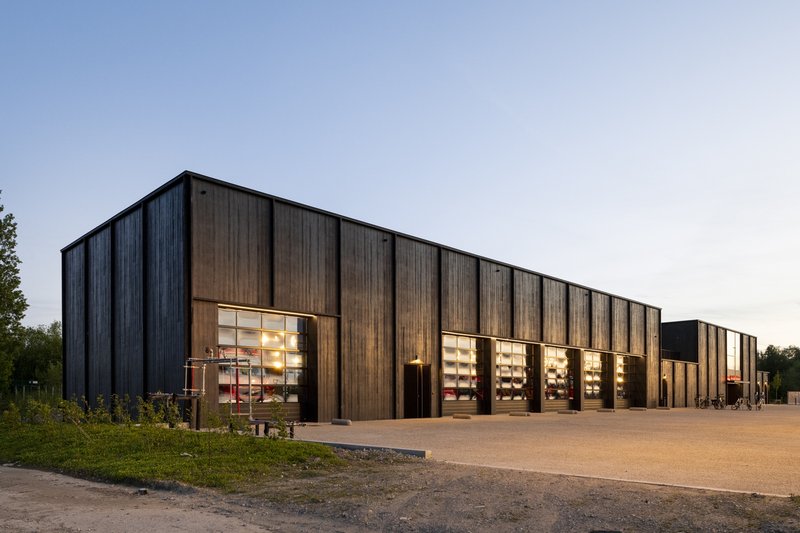
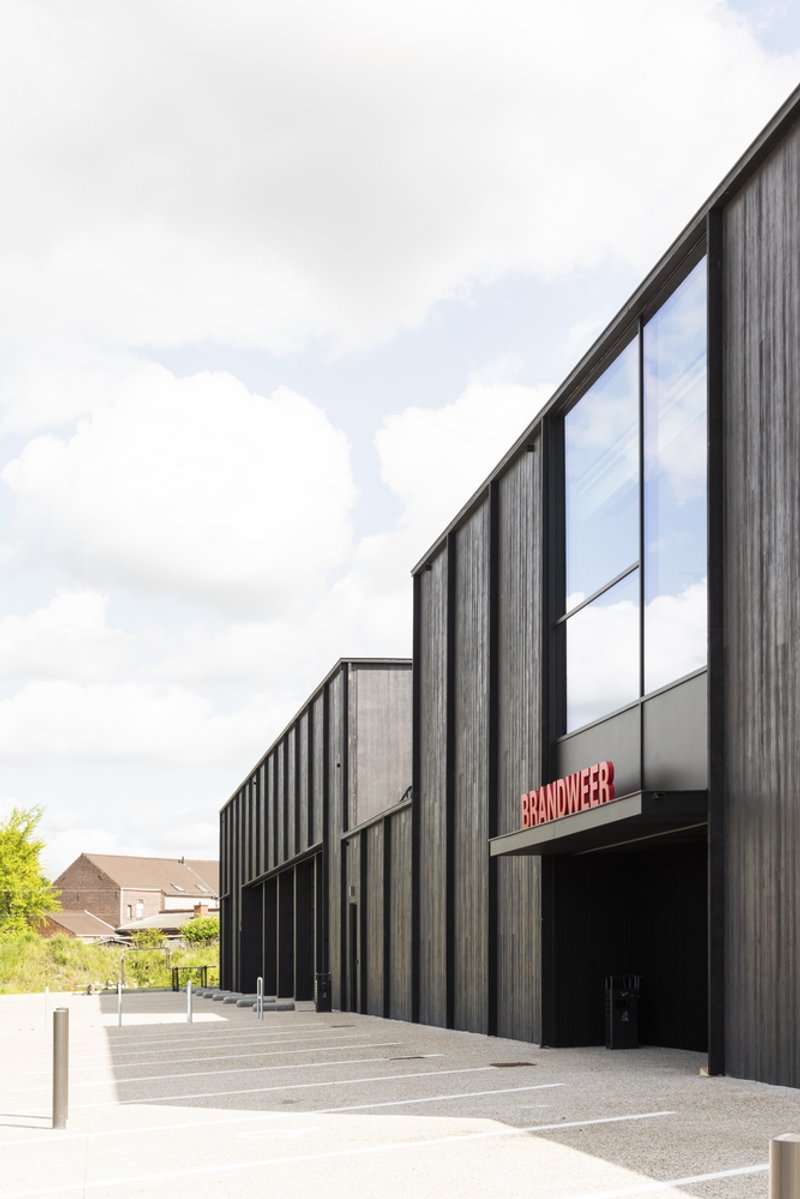
The elongated linear form ensures each fire vehicle has its own dedicated access gate, enabling immediate deployment in emergencies. This arrangement not only enhances operational readiness, but also promotes intuitive spatial organization.
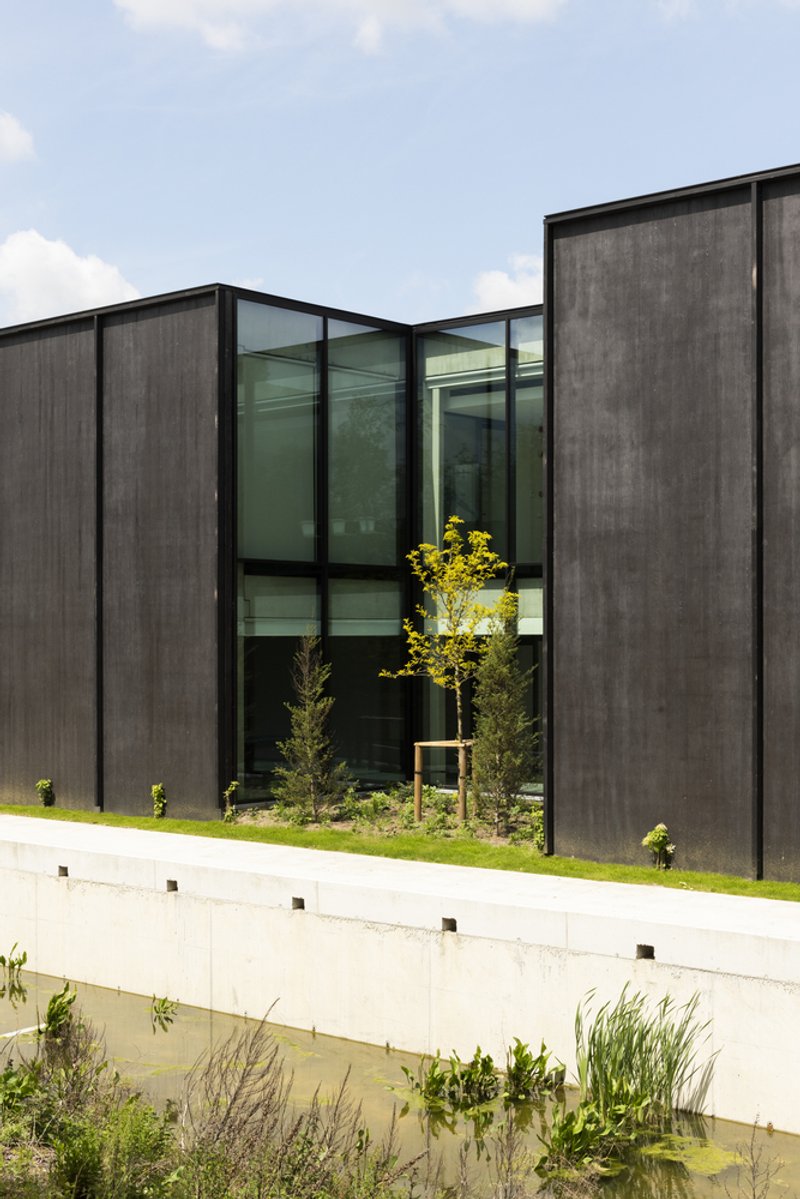
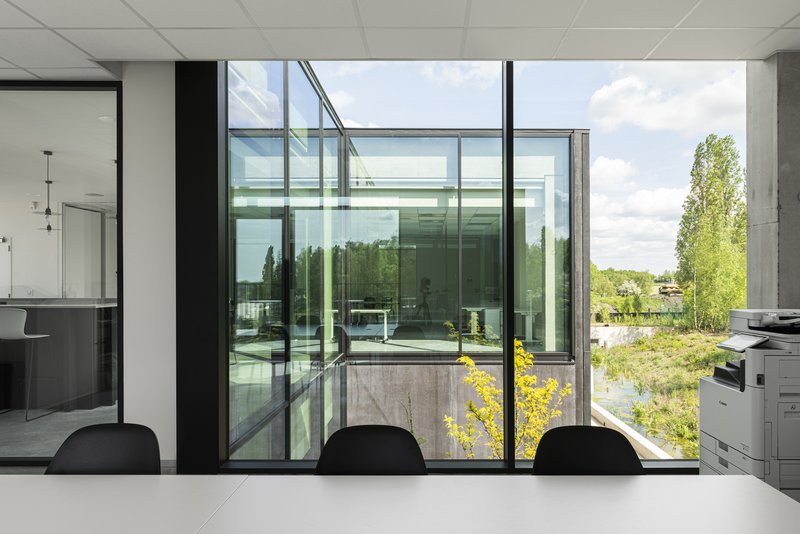
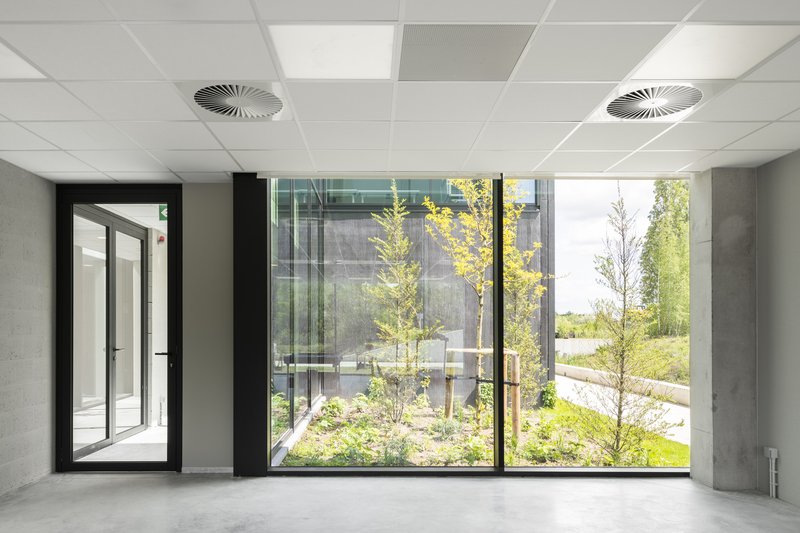
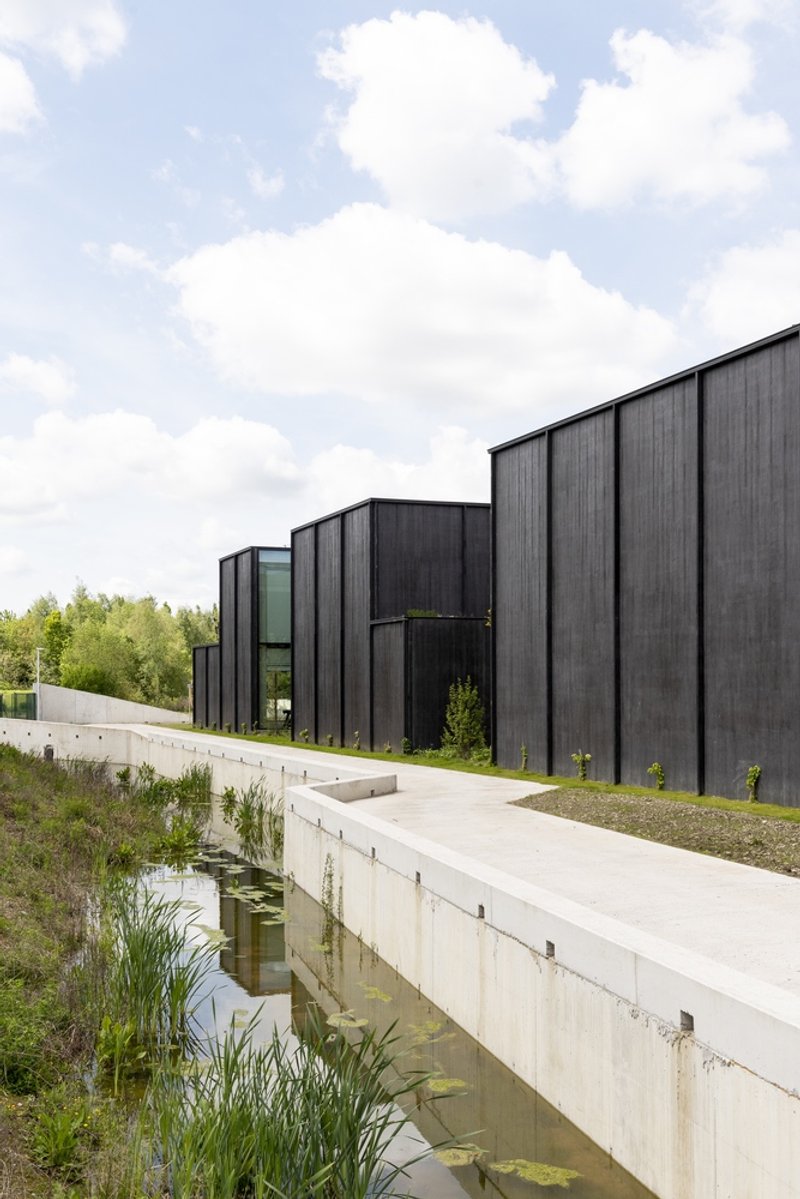
On the quieter southern façade, the station directly interfaces with the adjacent green zone. At the request of Leiedal, this façade was envisioned as a green wall, integrating a sustainable visual and environmental gesture into the architecture. Carefully placed green patios are cut into the façade to break the visual monotony and soften the building’s presence from the popular bike path that runs along the reserve. These planted voids provide natural light, a tranquil outlook from the living quarters, and a gentle transition between activity and landscape.
Material Palette and Symbolism
The building’s character is shaped by its bold yet warm material palette. The facades feature black-pigmented, board-formed concrete, layered with burnt wooden slats at the seams—a symbolic nod to the profession of firefighting and a tactile interplay that reflects the building’s civic purpose. The variation in roof height between two levels breaks up the mass, avoiding the appearance of a monolithic structure, and further humanizes the scale of the building, making it both approachable and iconic.
Open-Span Structure for Future Flexibility
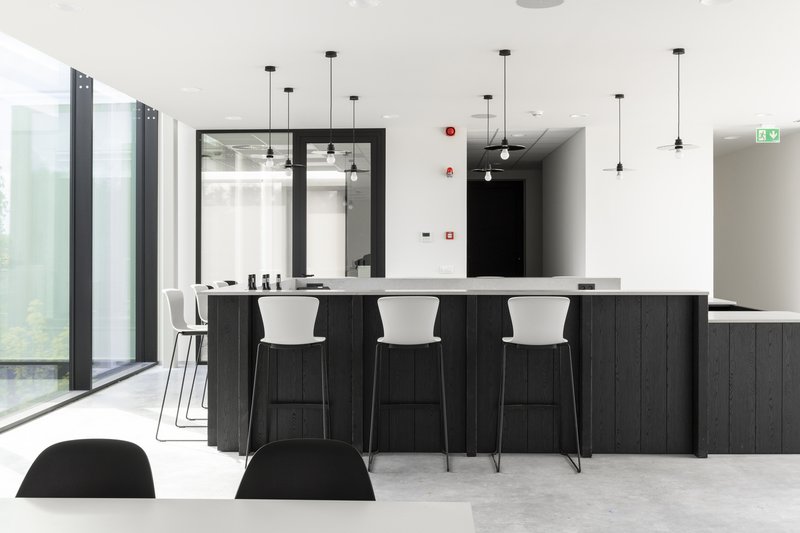
Bureau DBG opted for a structural strategy that places all load-bearing elements along the north and south walls, leaving the internal layout free from columns or structural divisions. This clear-span system grants maximum flexibility for interior program changes or future expansions. Currently, the program includes intervention bays, training rooms, and communal areas—the latter designed to operate independently and available for community rental or third-party functions, expanding the building’s civic role.
Harmonizing Emergency Infrastructure with Landscape
The Bramier Fire Station stands as a new paradigm in civic architecture: one that honors the urgency and discipline of emergency services while embracing the values of ecological integration and community accessibility. With its refined detailing, spatial clarity, and environmentally responsive façade design, this fire station becomes not just a facility—but a part of the landscape.



Popular Articles
Popular articles from the community

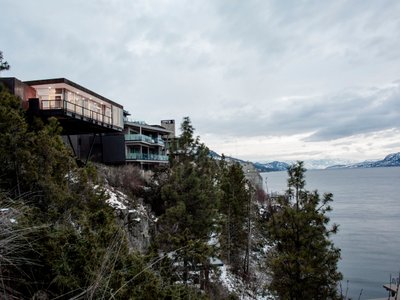
Alton Cliff House: A Harmonious Retreat by f2a Architecture in Lake Country, Canada
Alton Cliff House blends corten steel, prefabrication, and sustainable design, creating a luxurious, energy-efficient retreat perched on Canadian cliffs.
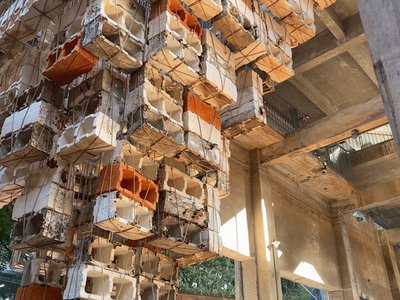
Inverted Architecture Installation by Studio Link-Arc: Exploring the Intersection of Architecture and Living Organisms
Inverted Architecture Installation by Studio Link-Arc blends mycelium, sustainability, inverted design, ecological cycles, and urban adaptive architecture in Shenzhen.
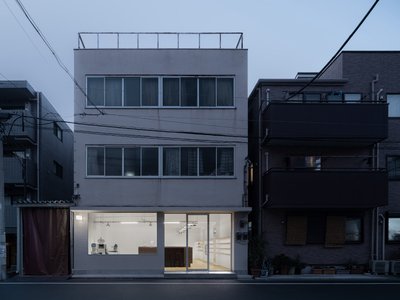
Atelier Macri Concept Store Interior Design by CASE-REAL
Atelier Macri store features a "ko" counter, walnut wood details, cork displays, blending retail, gallery, and seamless customer experiences.
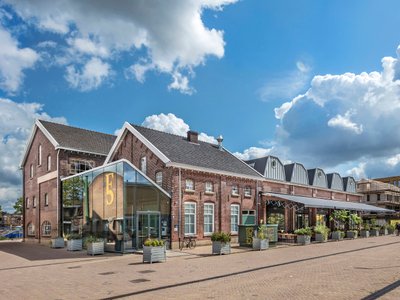
Fifth NRE Jazz Club – De Bever Architecten: Eindhoven’s Revitalized Cultural Hub
Historic gas factory transformed into Fifth NRE Jazz Club blending modern sustainability, jazz culture, dining, and heritage architecture seamlessly.


Similar Reads
You might also enjoy these articles


The Ken Roberts Memorial Delineation Competition (Krob)
As the most senior architectural drawing competition currently in operation anywhere in the world, it draws hundreds of entries each year, awarding the very best submissions in a series of medium-based categories.


Waterfront Redevelopment and Urban Revitalization in Mumbai: Forging a New Dawn for Darukhana
A transformative waterfront redevelopment project reimagining Darukhana’s shipbreaking heritage into an inclusive urban future.
OUT-OF-MAP: A Call for Postcards on Feminist Narratives of Public Space
Rhizoma Design and Research Lab invites artists, designers, architects, researchers, and students to reflect on how feminist perspectives can reshape public space. Selected works will be exhibited in Barcelona, October 2026. Submissions open until 15 April 2026.

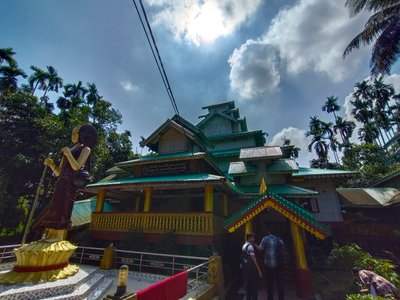
Documentation Work on Buddhist Wooden Temple
Architectural syncretism and cultural hybridity: A comparative study of the Buddhist temples in Chattogram Hill tracks
Explore Architecture Competitions
Discover active competitions in this discipline




The International Standard for Design Portfolios


The Global Benchmark for Architecture Dissertation Awards


The Global Benchmark for Graduation Excellence


Challenge to reimagine the Iron Throne
Comments (0)
Please login or sign up to add comments
No comments yet. Be the first to comment!