

Casa Renda: The Lace-Inspired Modern Brazilian Home by Fernanda Neiva, Fernanda Palmieri, and Paula Zasnicoff
Casa Renda blends modern Brazilian architecture with lace-inspired façades, open-plan living, central garden, roof terrace, concrete materials, and indoor-outdoor harmony.


Casa Renda, designed by Brazilian architects Fernanda Neiva, Fernanda Palmieri, and Paula Zasnicoff, is a striking example of modern residential architecture that seamlessly merges contemporary design with cultural inspiration. The trio, graduates of FAU-USP (School of Architecture and Urbanism, University of São Paulo), began their architectural journey together, collaborating on their final thesis and early professional projects. Life eventually led them to different regions across Brazil and the globe, but in 2019, a long-standing friendship with their client brought them back together, sparking the creation of this exceptional home. The project was meticulously developed under the guidance of Galeria Arquitetos, coordinated by Fernanda Neiva.
Design Concept and Spatial Organization
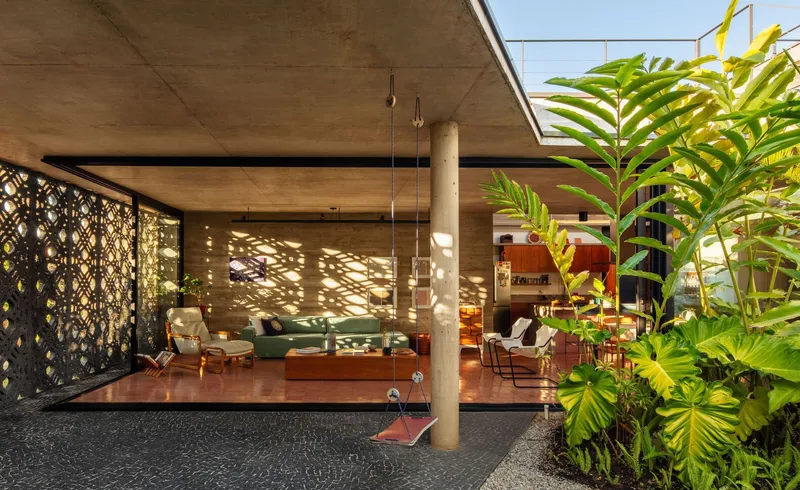
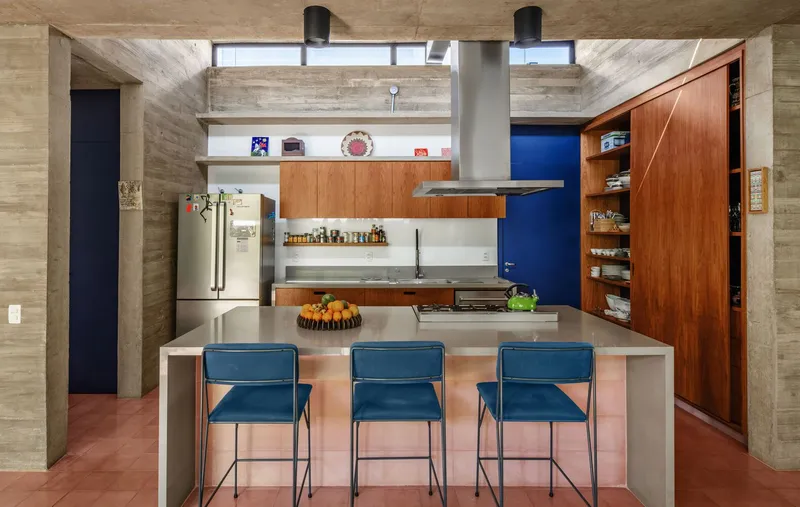
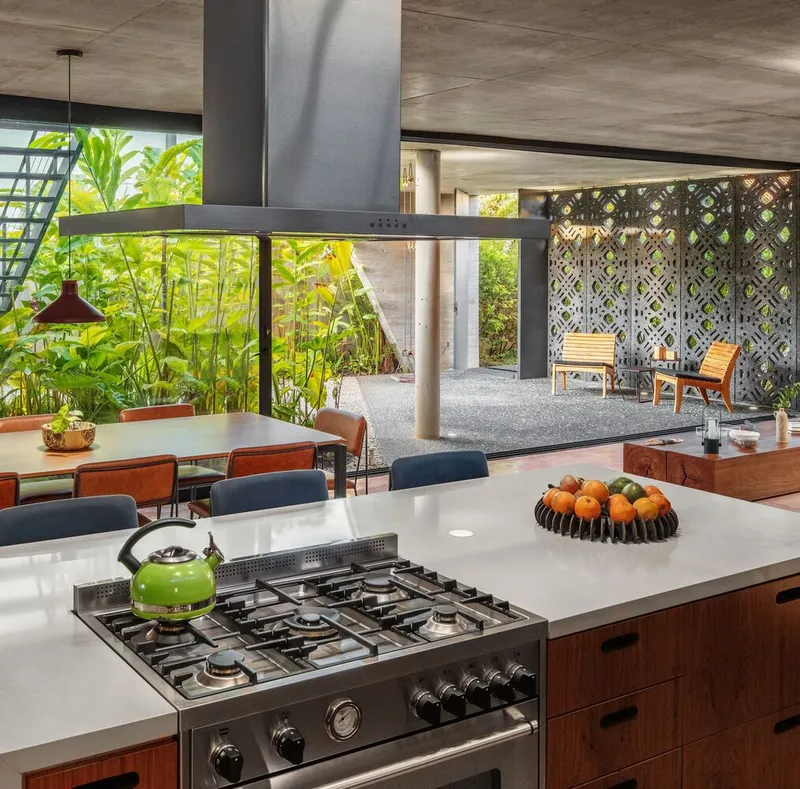
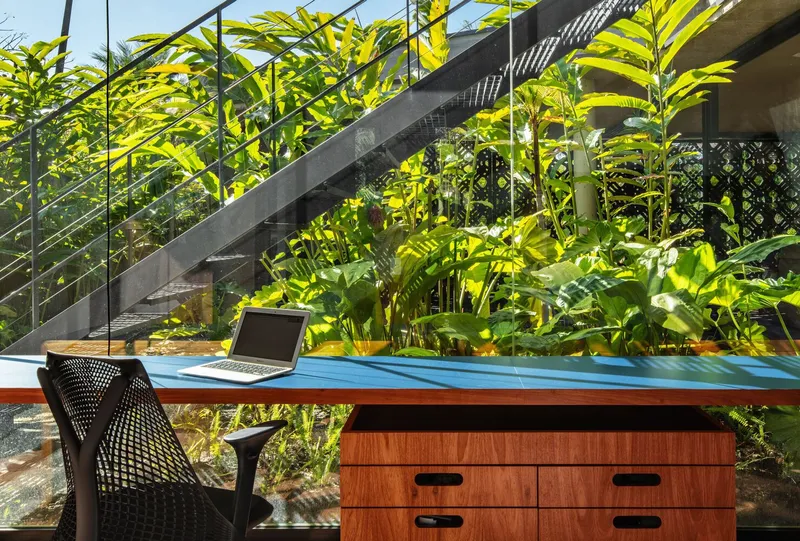
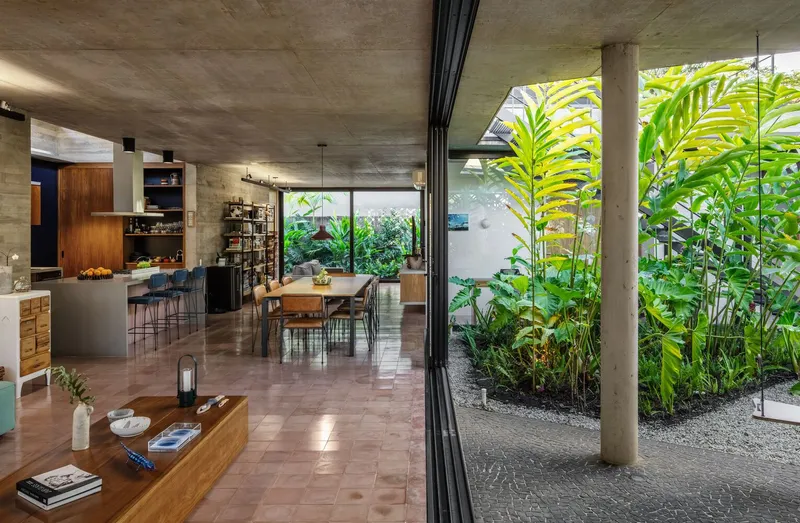
Casa Renda is conceived around the harmonious integration of indoor and outdoor living spaces, with the central garden acting as the heart of the house. Expansive floor-to-ceiling windows, perforated façade elements, and the continuity of materials create a visual and functional connection between the interior and exterior. Open-plan living areas, including the kitchen and veranda, seamlessly connect to the garden, promoting natural light, ventilation, and a sense of openness. Private spaces, such as bedrooms and utility areas, are carefully positioned along the periphery to maintain privacy and comfort.
A standout feature is the roof terrace, accessible from the central garden, designed to maximize sunlight and provide a tranquil outdoor retreat. This architectural gesture emphasizes the Brazilian lifestyle's focus on outdoor living, social interaction, and nature.
Materials and Façade Design
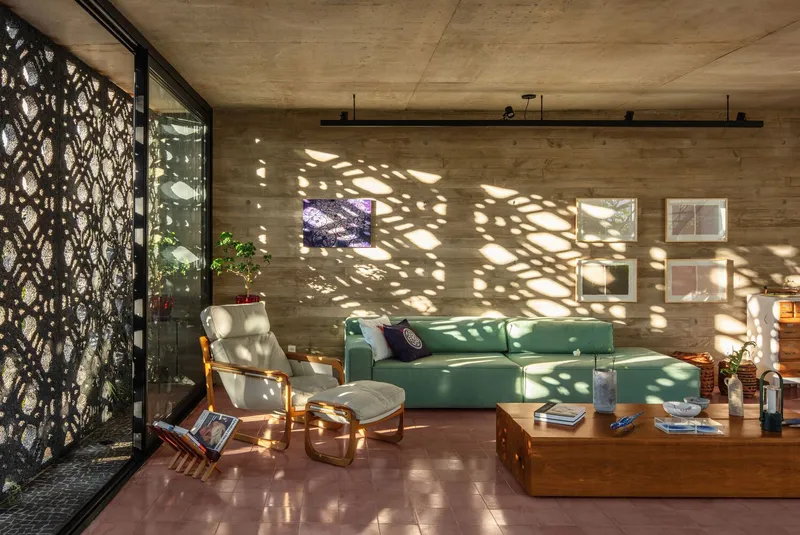
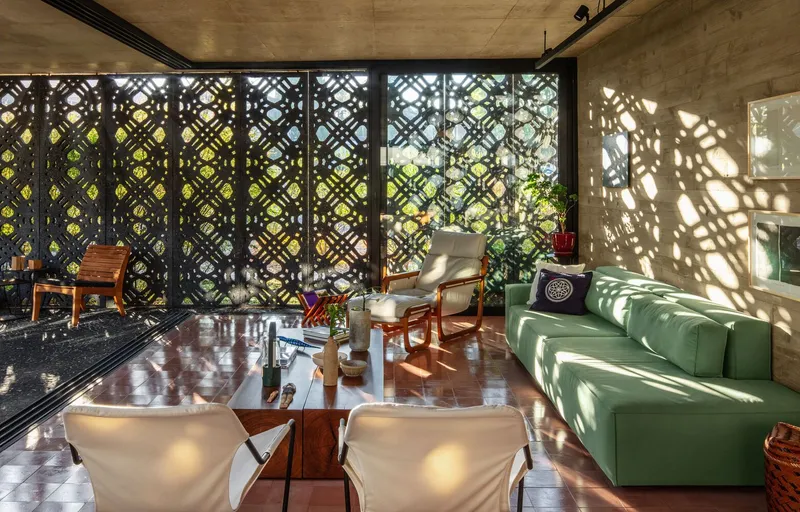
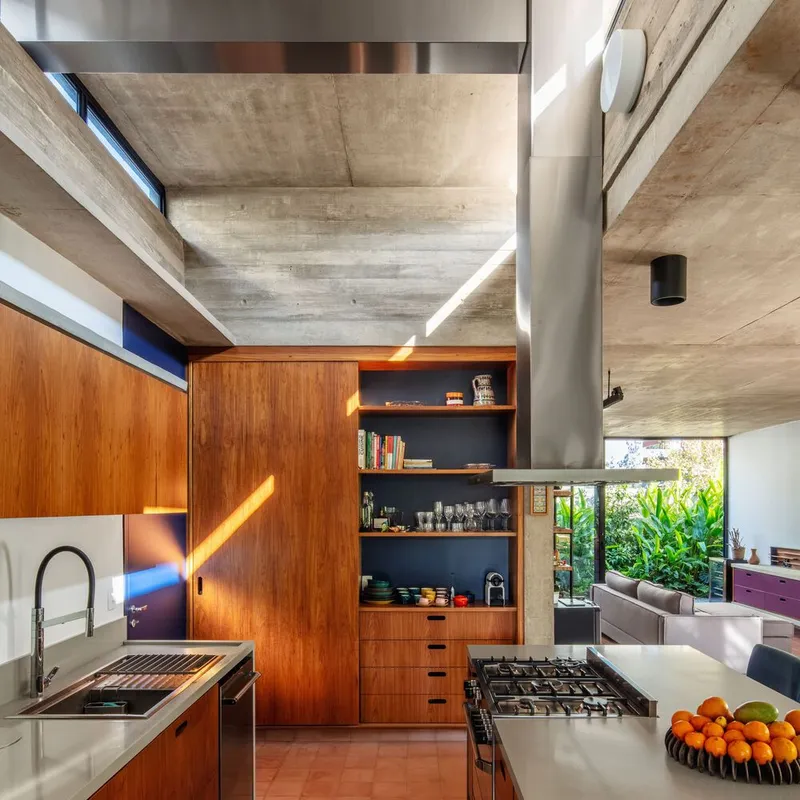
Concrete serves as the predominant material throughout Casa Renda, appearing in the exposed structural elements, hand-made cement floor tiles, kitchen worktops, and precast façade panels. The façade draws inspiration from traditional Brazilian lace patterns, translating this cultural motif into a contemporary architectural expression. The woven concrete façade presents a distinctive, textured frontage to the street, giving the home its nickname: The Lace House.
This innovative approach blends modern construction techniques with handcrafted detailing, resulting in a home that is both aesthetically striking and culturally resonant.
Highlights:
- Integration of indoor and outdoor spaces
- Central garden as the focal point of spatial organization
- Private bedroom areas for comfort and tranquility
- Roof terrace maximizing sunlight exposure
- Woven concrete façade inspired by Brazilian lace
- High-quality materials: concrete, wood, precast panels, and artisan finishes
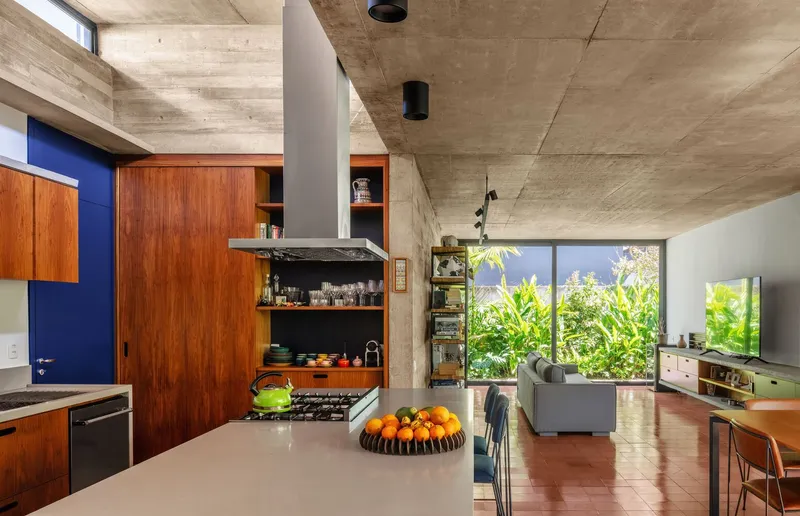

Casa Renda exemplifies how contemporary residential design can honor tradition while embracing modernity, resulting in a unique home that celebrates light, openness, and Brazilian craftsmanship.
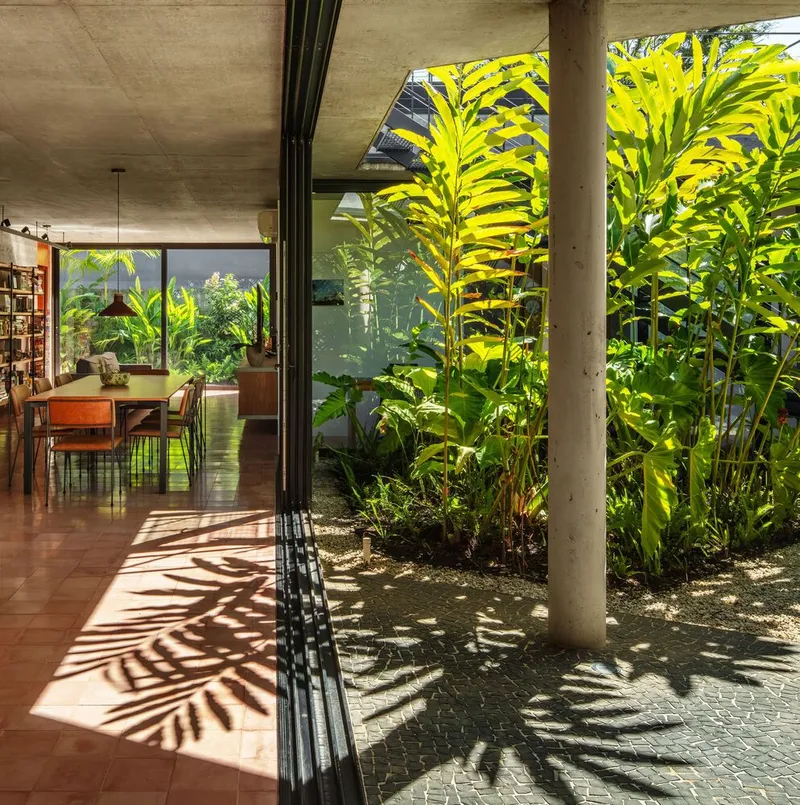
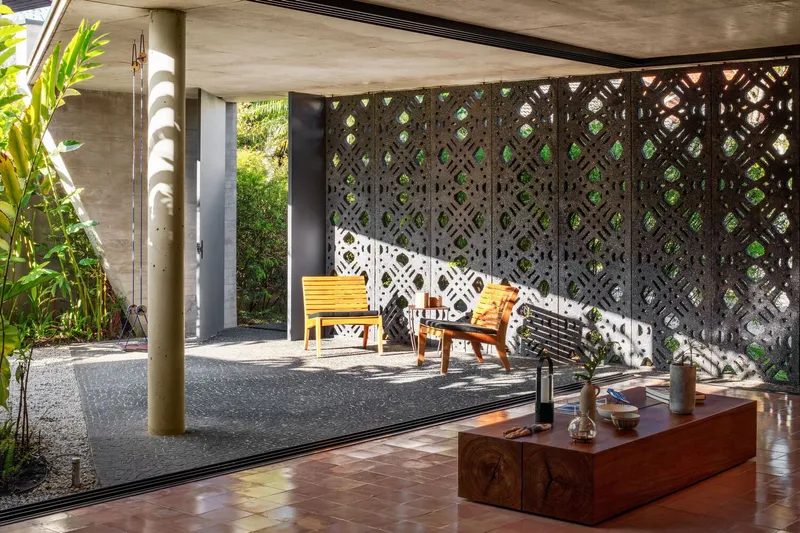
All photographs are works of Nelson Kon


Popular Articles
Popular articles from the community


ETEH Reworks the Shared Spaces of São Domingos School in Brazil Around Timber, Color and Hanging Plants
At São Domingos School in Brazil, 436 m² of hall, refectory and library are recast with timber joinery, a yellow and blue code and trailing greenery.


Manzana Morphosis: Stretching Barcelona's Grid into a Living Landscape for 2050
A radical reworking of the Eixample manzana turns density into a tool for generous public space, vertical ecology, and environmental performance.

graciastudio Turns a Viewless Tijuana Lot Inward Around a Courtyard of Concrete, Timber and Trees
In Tijuana, Jorge Gracia's GA2 House stacks a timber-clad private floor over exposed concrete and replaces a missing view with a planted interior patio.

David Ortega Stacks a Two-Story Mexico City Penthouse Around a Steel Stair and a Pergola-Shaded Roof Terrace
In Colonia Roma, a 300 m² penthouse uses oak joinery, a planted steel stair and a slatted roof pergola to make a new-build apartment feel like a house.

Similar Reads
You might also enjoy these articles


Hodi-Mandai Geram
Project Function: Preservation and revitalization of the Intangible heritage and socio-spatial identity of the Hodi by Housing, Cultural Memory Center, Sacred Grove, landscape, local tourism economy


Olio Towers: A Mid-Rise for Performers That Fuses Housing, Rehearsal, and Stage
Located blocks from Houston's Theater District, this modular tower stacks living units around a central performance atrium.

Oasis: Modular Green Housing Carved into Dhaka's Urban Fabric
A shortlisted Plugin Housing entry reclaims unauthorized settlements in Dhaka with stepped concrete volumes, green roofs, and ventilation-driven design.

Black Hole: A Floating Megastructure for the Post-Physical Era
Emiliano Mazzarotto envisions a spherical, self-scaling arena where e-sports, digital hotels, and holographic stadiums replace traditional public space.

Explore Brazilian Architecture Competitions
Discover active competitions in this discipline

Challenge to reimagine the Iron Throne

Photograph architecture without architects

Illustrate the lost glory of Angkor Wat - Render Challenge

Design challenge to reuse E-waste
Comments (0)
Please login or sign up to add comments
No comments yet. Be the first to comment!