
Commercial Bridge, Bangalore: Reimagining Urban Bridge Architecture as a Public Connector
An urban bridge architecture proposal in Bangalore that merges commerce, mobility, and public life into a continuous pedestrian-driven city spine.

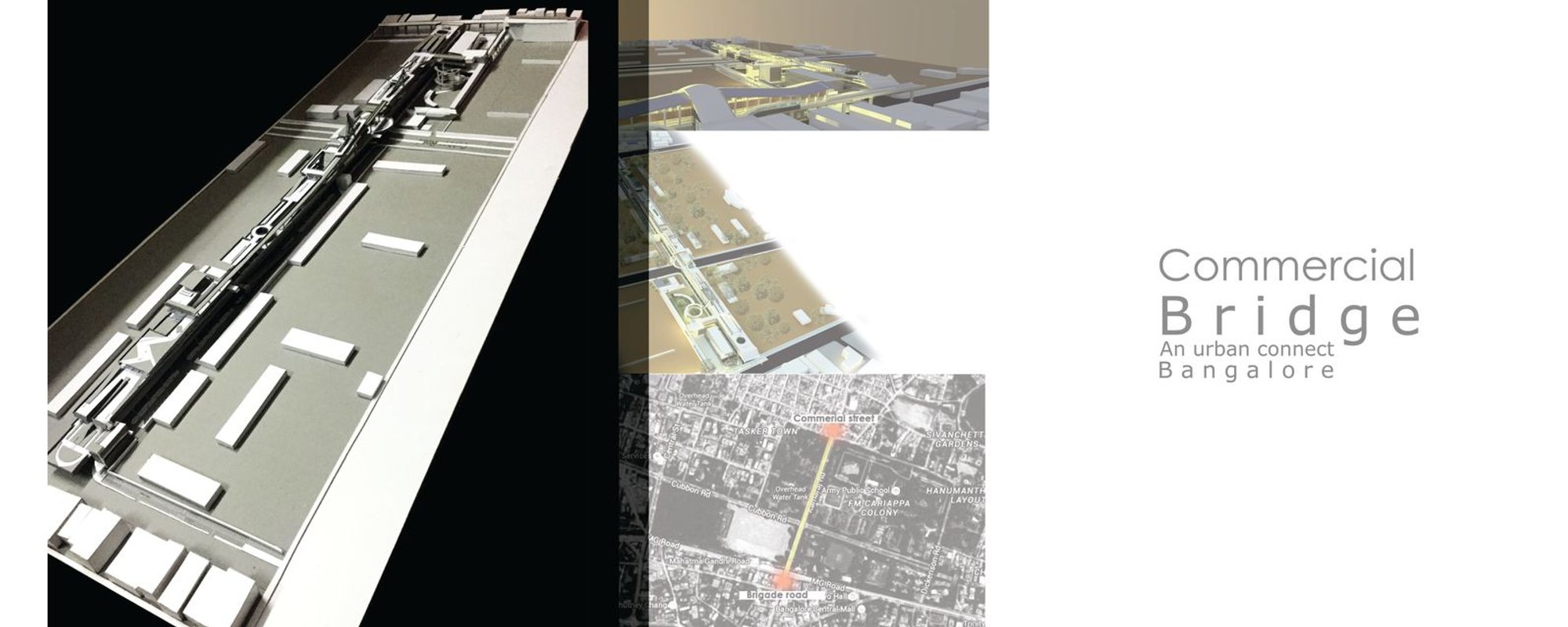
Contemporary cities increasingly struggle with fragmented urban fabrics, where infrastructure prioritizes vehicles while pedestrian life is pushed into isolated pockets. Commercial Bridge – An Urban Connect, a thesis project by Aafreen Fatima, addresses this challenge through the lens of urban bridge architecture, proposing a bridge not merely as infrastructure, but as an active, inhabitable public realm that stitches together two of Bangalore’s most vital commercial corridors—Commercial Street and Brigade Road.
Rather than functioning as a neutral connector, the bridge becomes an extension of the city itself. It absorbs retail, leisure, cultural, and civic programs, transforming a linear gap into a vibrant urban spine that encourages walking, social interaction, and economic continuity. The project positions the bridge as a prototype for future dense cities facing acute land scarcity.
Urban Context: Fragmented Commercial Hubs in Bangalore
The project emerges from a critical observation of Bangalore’s Central Business District. Although Commercial Street and Brigade Road are individually dense pedestrian destinations, the short distance between them lacks walkable continuity. This disconnect results in dispersed pedestrian activity, underutilized land parcels, and a loss of urban energy between the two hubs.
The intervention site lies within the MG Road precinct, adjacent to the Manekshaw Parade Ground and near the MG Road Metro Station—one of the city’s most accessible transit nodes. Despite its strategic location, the parade ground edges remain inactive for most of the year, except during national events. This condition creates a large urban void in the heart of Bangalore.
Through urban bridge architecture, the project reframes this void as an opportunity—one that can be activated through vertical layering, mixed-use programming, and pedestrian prioritization.
Conceptual Framework: Transformation as Design Logic
The core concept driving the project is transformation. The bridge acts as a mediator between contrasting urban conditions—low-rise development at one end and high-rise density at the other. This transformation unfolds spatially, socially, and programmatically across the length of the bridge.
Key Transformations:
- Urban Scale: From street-scale retail to mall-like spatial density
- User Groups: Integration of LIG, MIG, and HIG communities
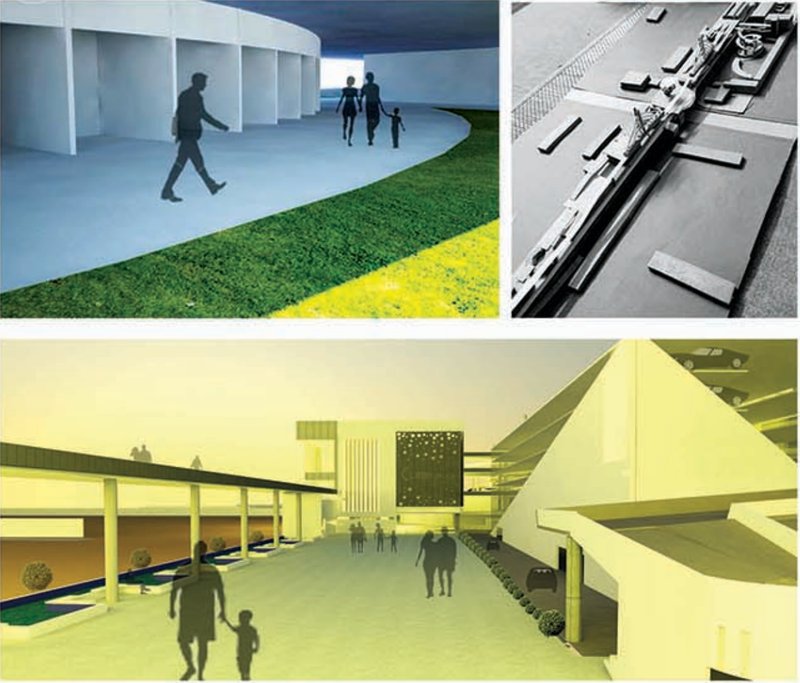
- Spatial Experience: Open-air streets transitioning into shaded, enclosed commercial environments
- Movement: Vehicular dominance replaced by pedestrian-first circulation
This layered transformation allows the bridge to adapt to multiple urban needs while maintaining a continuous architectural identity.
Street Meets Mall: Hybrid Commercial Typology
One of the project’s most compelling contributions to urban bridge architecture is its hybrid commercial model. Instead of replicating a conventional mall or open street, the bridge combines both typologies.
- At one end, shops open onto semi-open promenades, resembling traditional shopping streets.
- Gradually, the spatial enclosure increases, introducing climate-controlled retail environments.
- The transition enhances user comfort while preserving visual and physical continuity.
This strategy responds directly to Bangalore’s climate, pedestrian behavior, and evolving retail culture, creating a flexible commercial ecosystem that functions throughout the day.
Zoning Strategy: Vertical and Horizontal Integration
The bridge is organized through a clear system of horizontal and vertical zoning, ensuring legibility and ease of movement.
Horizontal Zoning:
- Commercial Zones at both ends to reinforce existing hubs
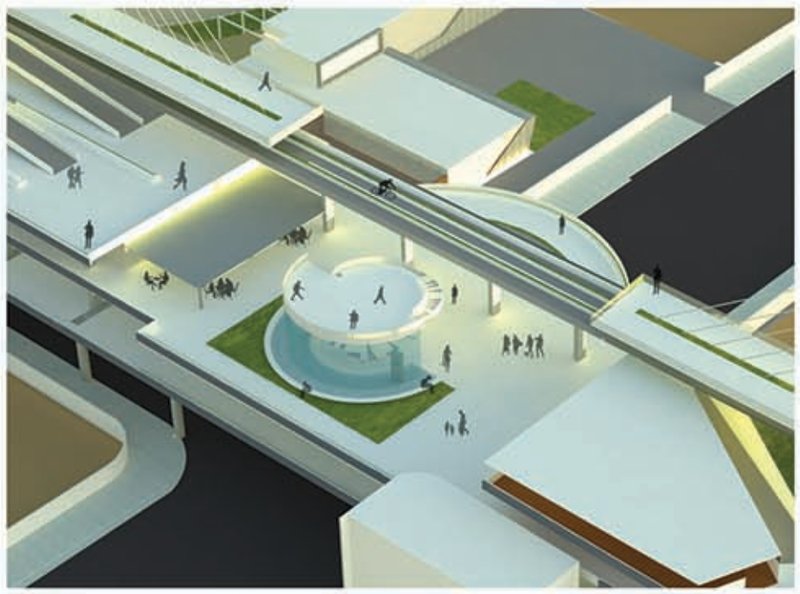
- Public and Cultural Zone at the center, acting as the social heart
- Entertainment and Recreation Spaces interspersed along the spine
Vertical Zoning:
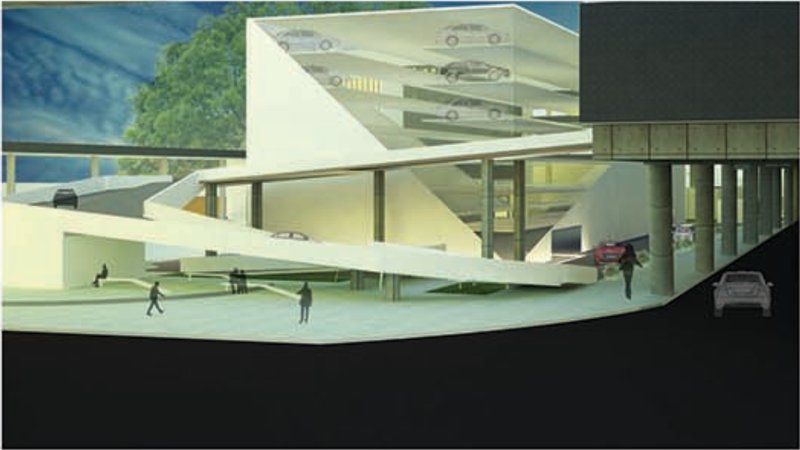
- Ground and lower levels accommodate services and controlled vehicular access
- Mid-levels prioritize pedestrians, retail, and public activities
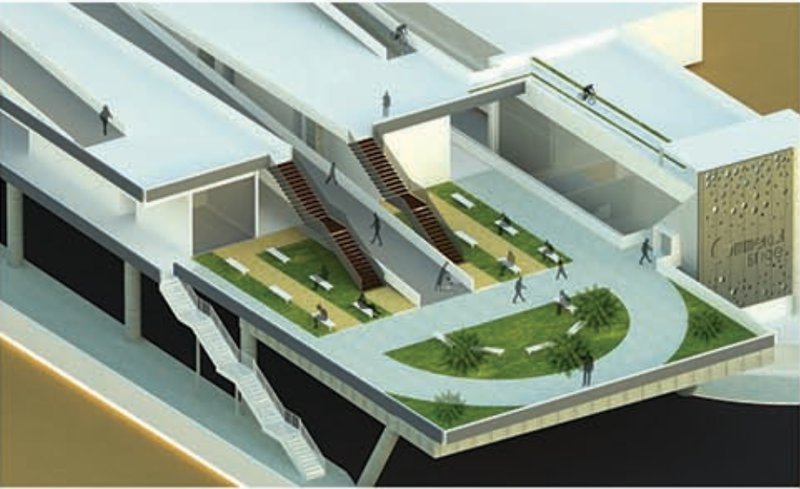
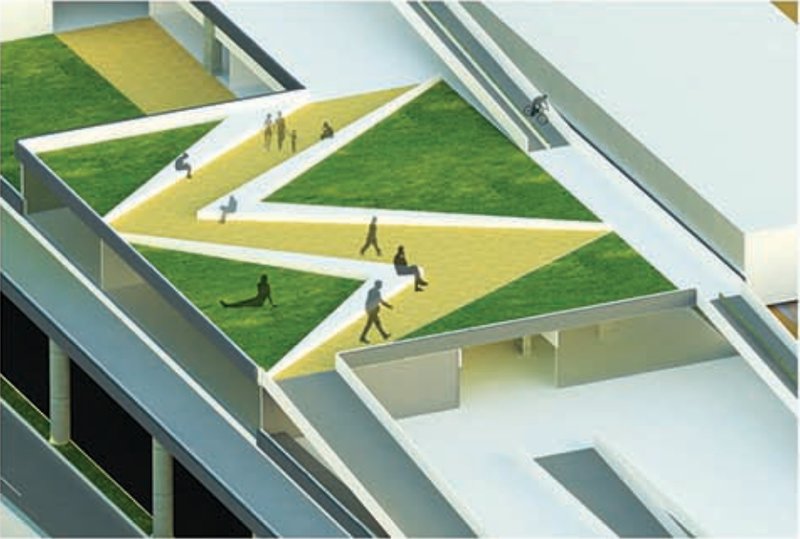
- Upper levels are reserved for cycling tracks, viewing decks, and landscaped promenades
Vehicular access is deliberately restricted to maintain pedestrian dominance, reinforcing the bridge’s identity as a civic space rather than a traffic corridor.
Public Realm and Social Infrastructure
Beyond commerce, the project integrates essential urban amenities that transform the bridge into a lived space:
- Public squares and gathering nodes
- Art galleries and exhibition areas
- Restaurants, cafés, and informal seating
- Daycare centers and public toilets
- ATM facilities and cycle-hiring stations
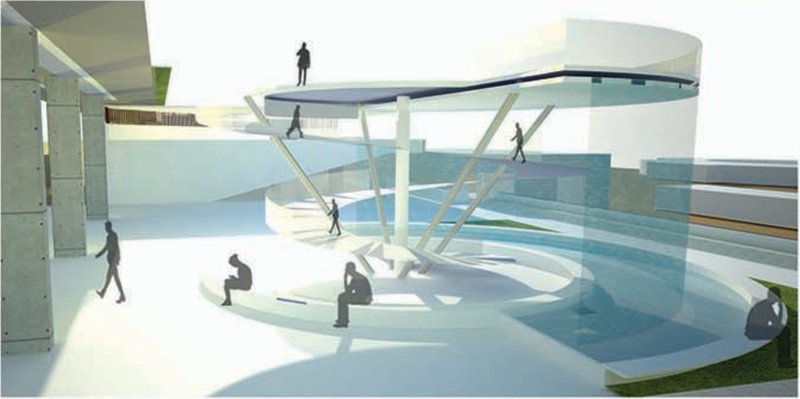
The central public square is marked by a sculptural fountain tower, acting as both a visual landmark and a social anchor. This element strengthens the bridge’s role as a recognizable urban destination within Bangalore.
Mobility, Circulation, and Accessibility
Pedestrian circulation is designed as a fluid, non-linear experience, breaking away from rigid axial planning. Diagonal pathways, ramps, and level changes introduce spatial variety while ensuring universal accessibility.
- Pedestrian and cyclist circulation is clearly separated
- Vertical service cores connect all levels efficiently
- Proximity to MG Road Metro Station enhances multimodal accessibility
By integrating transit, retail, and public life, the project exemplifies how urban bridge architecture can operate as a seamless mobility interface.
Structural and Environmental Strategy
Structurally, the bridge employs a prestressed concrete and steel system, optimized for long spans and layered programmatic loads. Columns are offset from the edges to maintain openness and visual permeability.
Environmental strategies include:
- Rainwater harvesting and greywater recycling
- Water bodies and green zones for microclimate regulation
- Shaded walkways to reduce heat gain
- Efficient service integration within structural systems
These measures position the project as a sustainable response to dense urban development.
Redefining Urban Bridge Architecture
Commercial Bridge – An Urban Connect challenges the conventional perception of bridges as purely functional infrastructure. Through thoughtful programming, pedestrian prioritization, and spatial transformation, the project demonstrates how urban bridge architecture can become a catalyst for social interaction, economic continuity, and public life.
In a future where cities face land scarcity and increasing density, such hybrid infrastructural typologies offer a compelling model—one where bridges are no longer just crossings, but destinations that actively shape urban experience.
Project Title: Commercial Bridge – An Urban Connect
Location: Bangalore, India
Project By: Aafreen Fatima



Popular Articles
Popular articles from the community

Free Architecture Competitions You Can Enter Right Now
No entry fees, real prizes. Here are the best free architecture competitions open for submissions in 2026.


The Ken Roberts Memorial Delineation Competition (Krob)
As the most senior architectural drawing competition currently in operation anywhere in the world, it draws hundreds of entries each year, awarding the very best submissions in a series of medium-based categories.

Inverted Architecture Installation by Studio Link-Arc: Exploring the Intersection of Architecture and Living Organisms
Inverted Architecture Installation by Studio Link-Arc blends mycelium, sustainability, inverted design, ecological cycles, and urban adaptive architecture in Shenzhen.
Split House: A Compact Urban Home Blending Privacy, Light, and Flexible Living in Japan
Compact Japanese home featuring DOMA space, flexible café potential, passive lighting, privacy zoning, and sustainable urban living design.


Similar Reads
You might also enjoy these articles

Architectural Competition: Create a Luxury Waterfront Community in the UAE!
Mira Developments announces an open competition for the pre-concept design of Mira Coral Bay in Ras Al Khaimah, UAE
Parametric Design: What Can You Learn from the 1st Workshop of Beegraphy?
Discover the Fundamentals and Advanced Techniques of Parametric Design
Feast of flight factory
A new ecological order with sustainable food resources-insects
Beyond Blueprints : How Architecture Presentation Boards Define The Design Narratives?
Unveiling the Art and Strategy Behind Architectural Storytelling


Explore Architecture Competitions
Discover active competitions in this discipline




The International Standard for Design Portfolios


The Global Benchmark for Architecture Dissertation Awards


The Global Benchmark for Graduation Excellence


Challenge to reimagine the Iron Throne
Comments (0)
Please login or sign up to add comments
No comments yet. Be the first to comment!