

Contemporary Architecture in India: The Maheshwari House by Anil Ranka Architects
The article explores Maheshwari House, a contemporary Indian architectural masterpiece blending sustainability, tradition, and modern design for a multi-generational family.


India is a country with a rich architectural history, blending ancient traditions with modern design sensibilities. As contemporary architecture in India continues to evolve, the Maheshwari House, designed by Anil Ranka Architects, stands out as a prime example of how modern living can coexist harmoniously with nature and history. Located in Pune, India, this stunning residential project embraces the unique challenges of a joint family home, while paying tribute to the cultural past of its inhabitants.

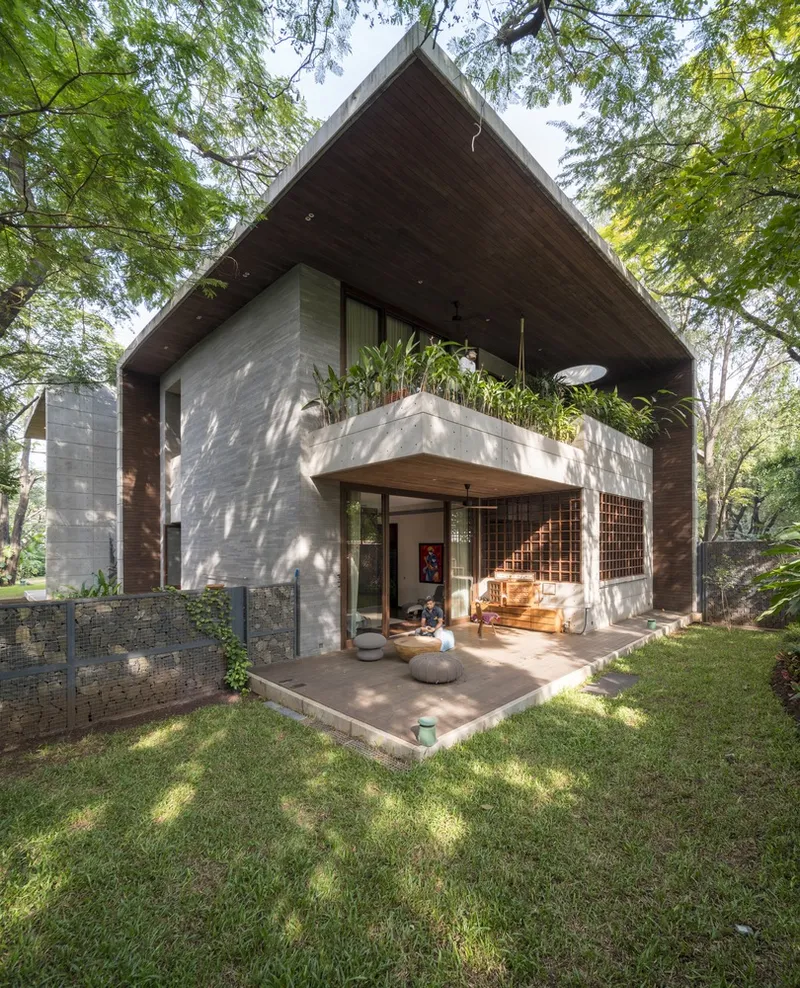
Introduction to the Maheshwari House
The Maheshwari House is a 35,000-square-foot residential project that embodies the ideals of contemporary architecture in India. Built for a large joint family, including three generations, the house aims to merge modernity with tradition. Designed to reflect the values, history, and culture of its occupants, the house creates a perfect balance of privacy, communal spaces, and artistic expression.
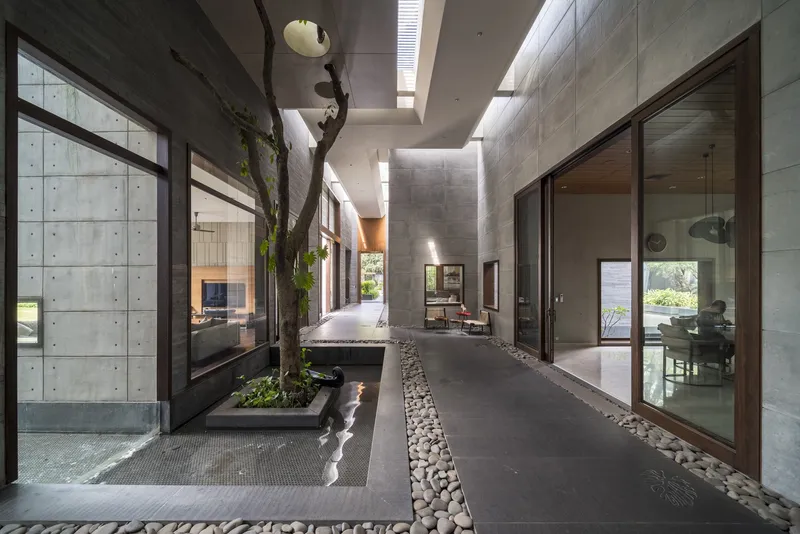
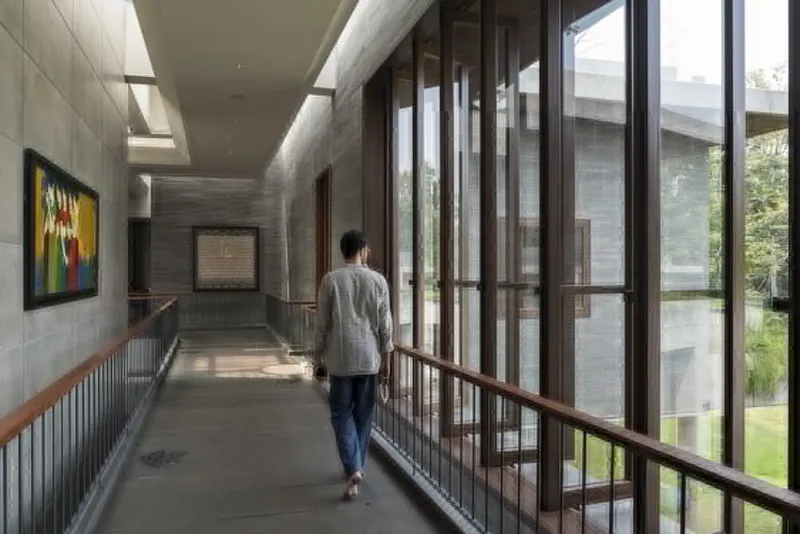
The Design Brief: Blending Generations and History
The clients’ request was clear: to create a home that would not only accommodate three generations but also serve as a visual memoir of the family’s cultural journey. The house was intended to provide the younger generation with constant reminders of their heritage through customized artwork and meaningful design elements. For the older members of the family, the design was a way to preserve the sense of socio-communal life while transitioning into a quieter, more secluded existence amidst nature.
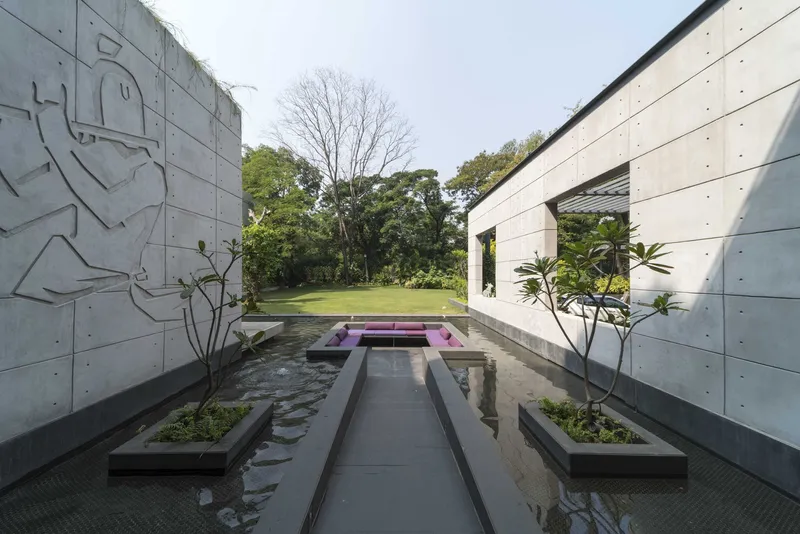
Key Elements of Contemporary Indian Architecture in the Maheshwari House
The Maheshwari House showcases key elements of contemporary Indian architecture, combining natural materials, modern design aesthetics, and sustainable features.
1. Integration with Nature
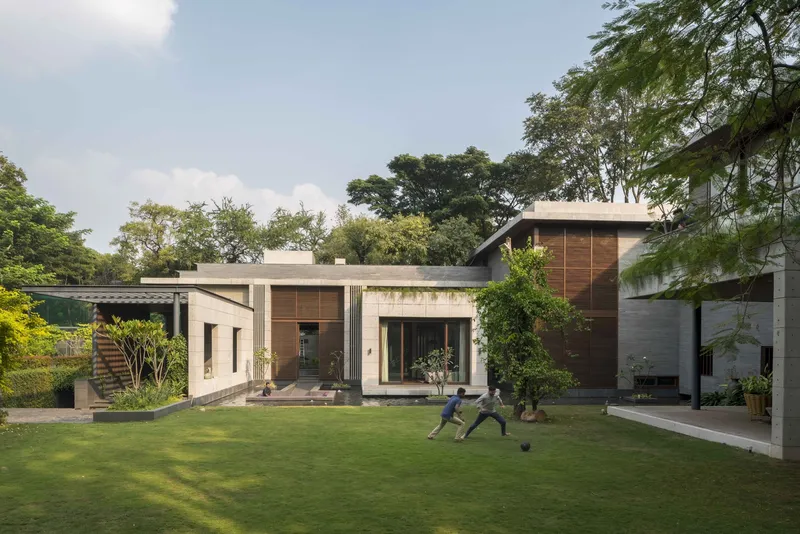
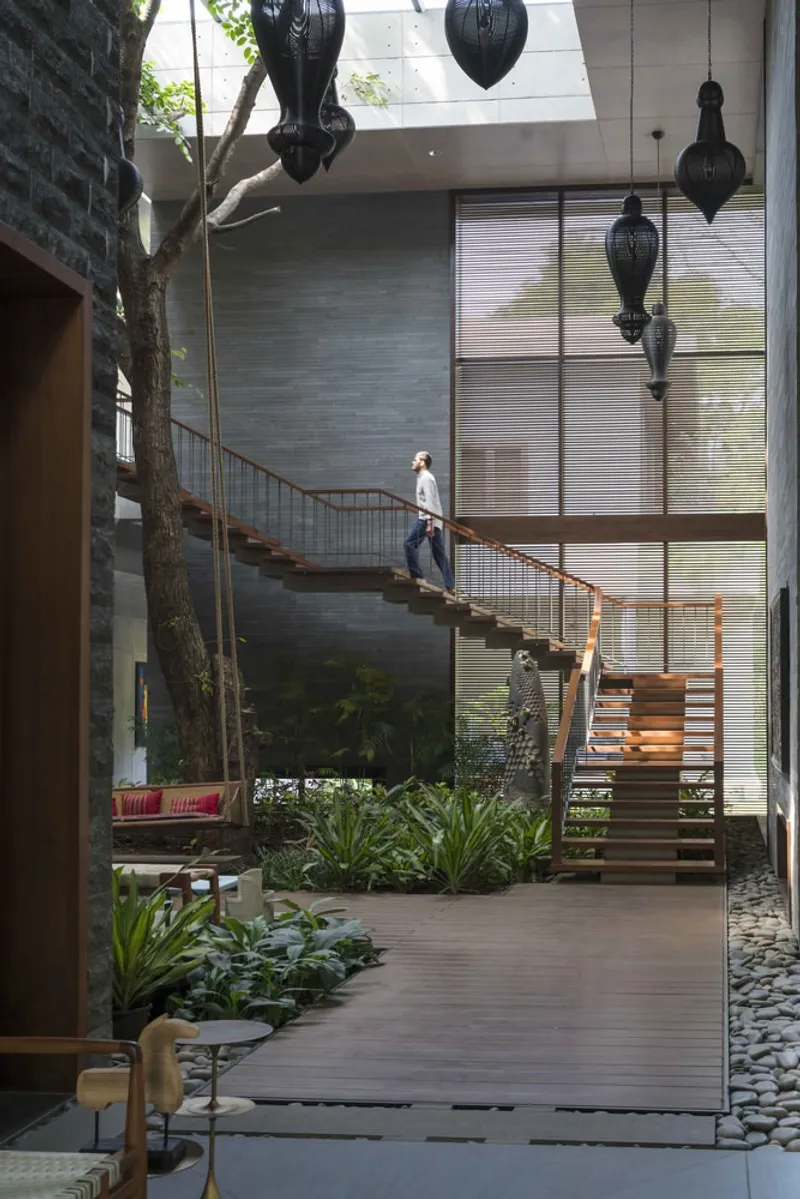
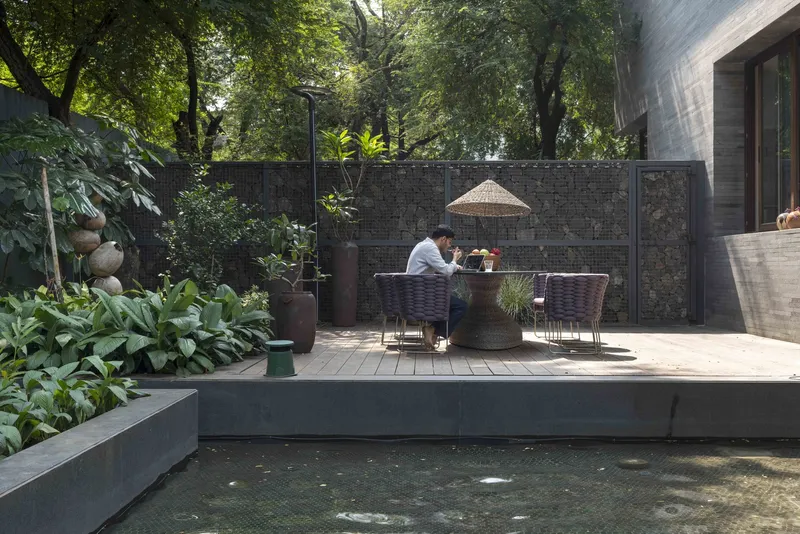
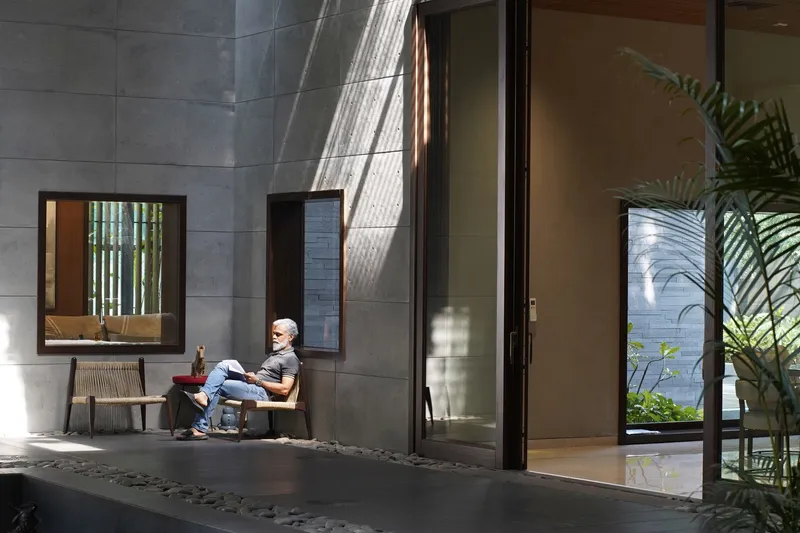
One of the standout features of this project is the seamless integration of the home with its lush green surroundings. Situated adjacent to the spiritual Osho Ashram, the site is surrounded by dense greenery, with no high-rise buildings in sight. The architects have designed the house around 102 existing trees, using courtyards to retain the natural landscape and minimize the environmental impact. This design philosophy is a hallmark of contemporary architecture in India, where sustainable practices are increasingly valued.
2. Spatial Layout and Functional Zoning
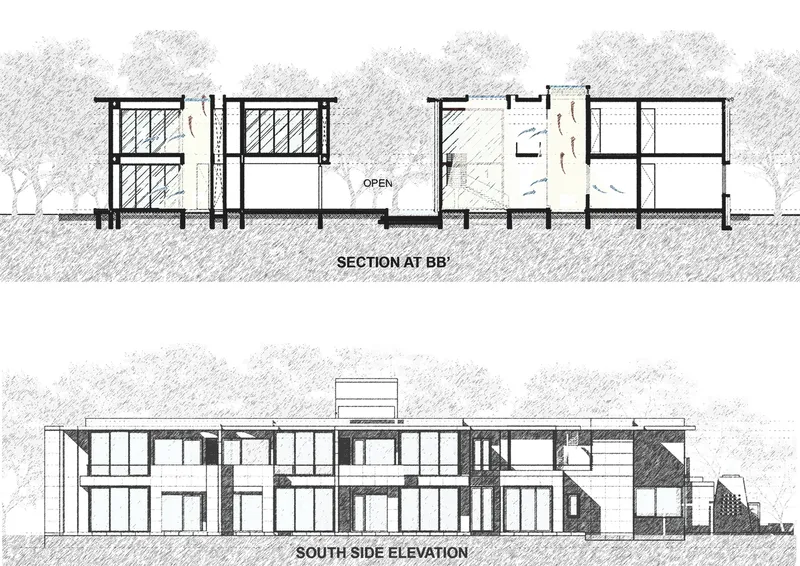
The house is divided into four key zones: recreational, public, semi-public, and private. These zones serve to maintain a high level of privacy while promoting fluid circulation between spaces. The ground and first floors are strategically arranged to ensure that every room receives ample natural light and airflow, thanks to an intelligent use of cross-ventilation and passive cooling techniques. The courtyards play a significant role in facilitating stack ventilation, helping to maintain a comfortable temperature year-round.

3. Timeless Design and Materials
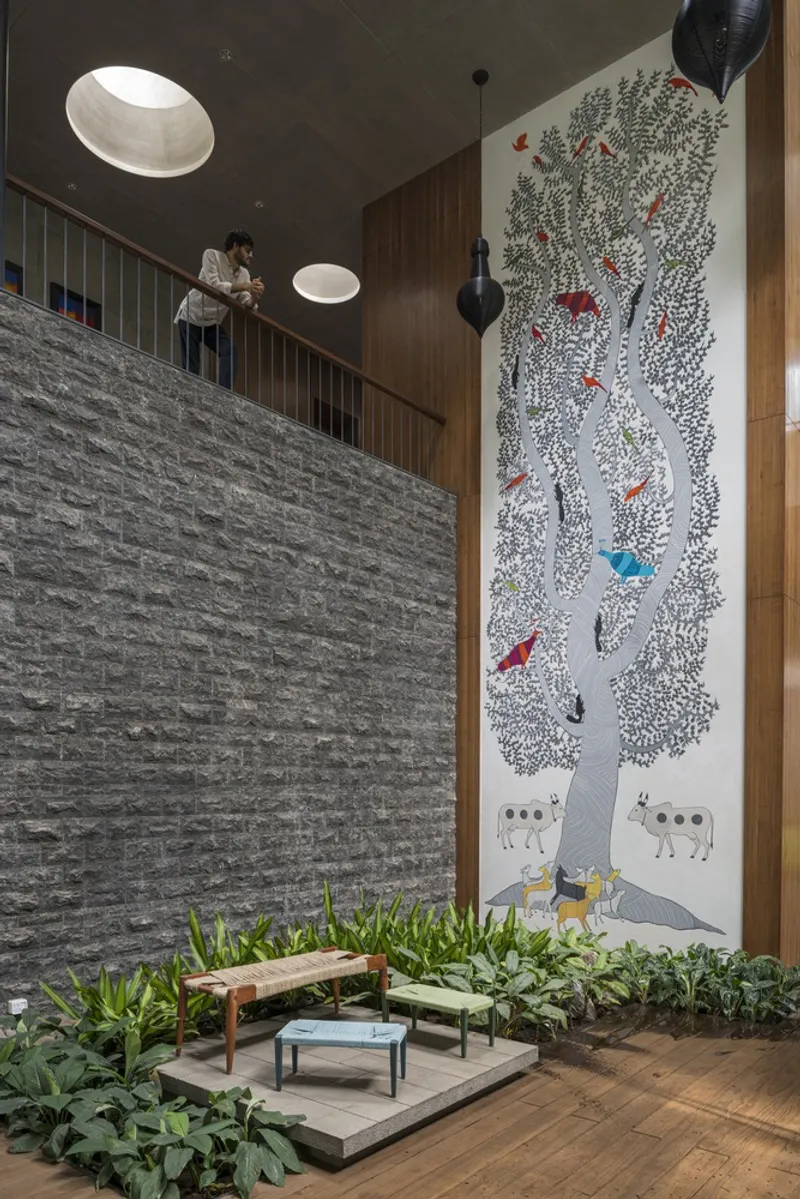
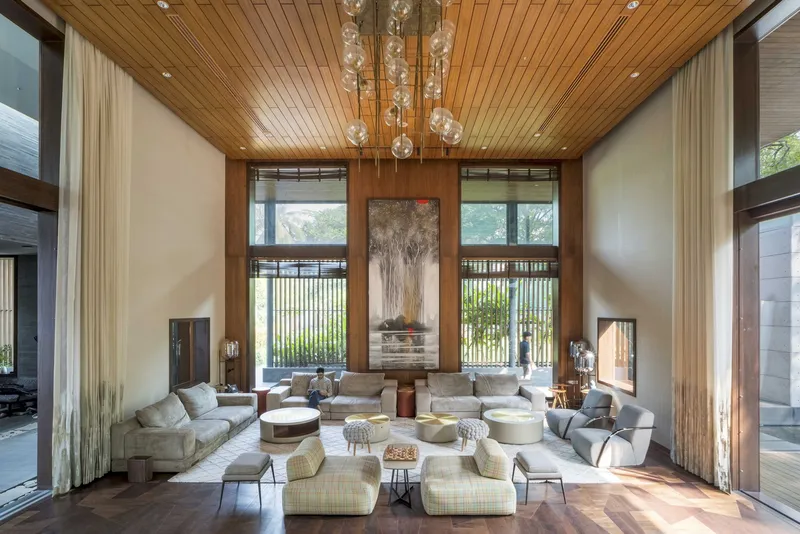
The design of Maheshwari House incorporates a timeless, earthy palette that uses natural materials such as exposed concrete and sand-blasted grey granite. These elements are complemented by warm wooden flooring, antique sculptures, and minimalistic modern furniture, creating a space that feels both contemporary and rooted in tradition. The careful selection of materials reflects the growing trend in contemporary Indian architecture of using sustainable, locally sourced materials.
4. Art as a Central Element
In today’s fast-paced world, where technology often disrupts human connection, art becomes a tool for "pause"—a moment of reflection. The Maheshwari House is rich in artistic elements that not only serve as visual anchors but also encourage mindfulness and spiritual connection. Custom artwork and sculptures are thoughtfully placed throughout the house, creating visual interest and helping to tell the family’s story. This unique integration of art into architecture is an important feature of contemporary design in India.
Innovative Design Features
1. Fluid Connectivity Between Spaces
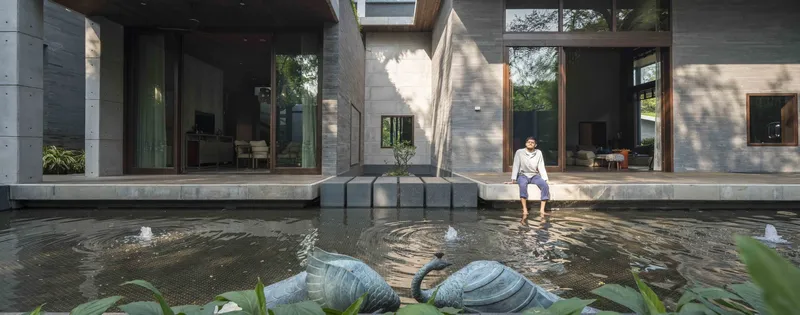
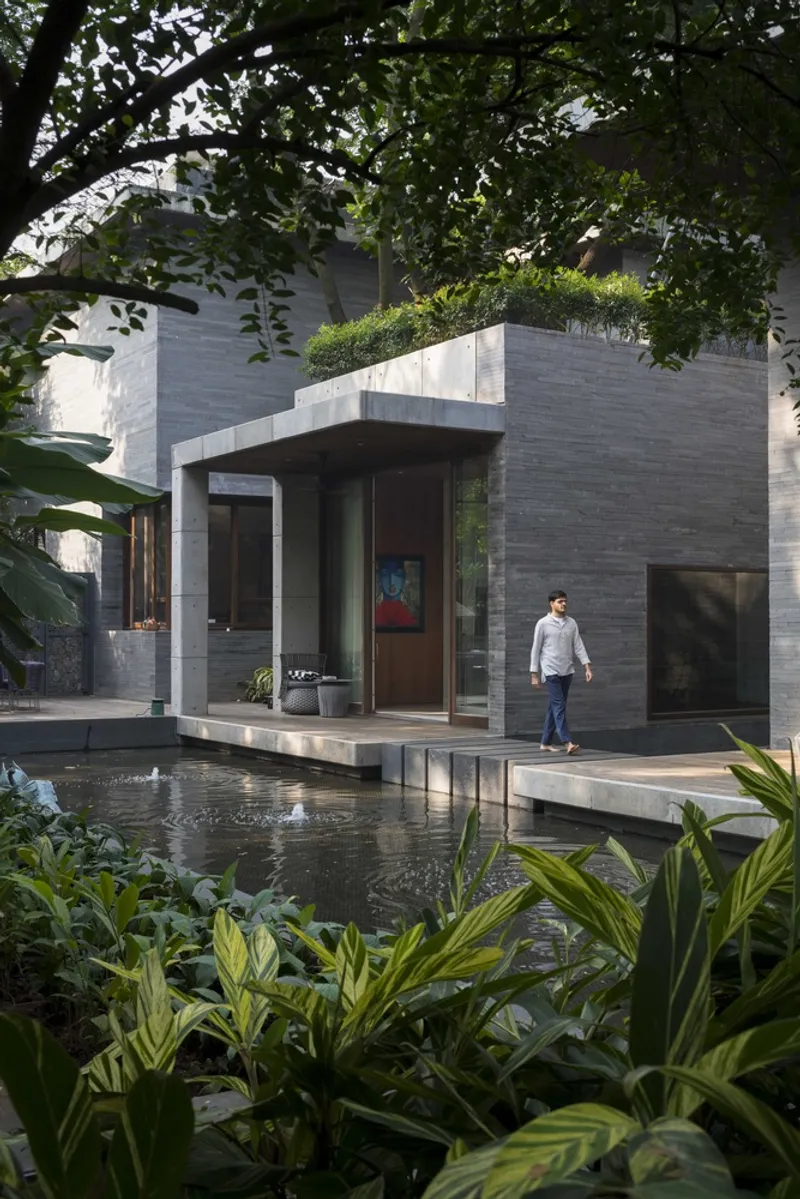
The architects have carefully crafted a sense of openness and connectivity between the indoor and outdoor spaces of the house. With expansive glass facades and deck areas, the interiors flow seamlessly into the surrounding landscape. This fluidity between the built environment and nature is a key aspect of modern Indian architecture, where the focus is on creating spaces that are both functional and restorative.
2. Sustainable Practices in Design
Sustainability is a core principle in the design of the Maheshwari House. The house’s layout, with its emphasis on natural ventilation, passive cooling, and water management, reduces its reliance on artificial systems. These elements are not only energy-efficient but also create a comfortable living environment that respects the natural ecosystem of the region.
3. Geometric Volumes and Modular Design
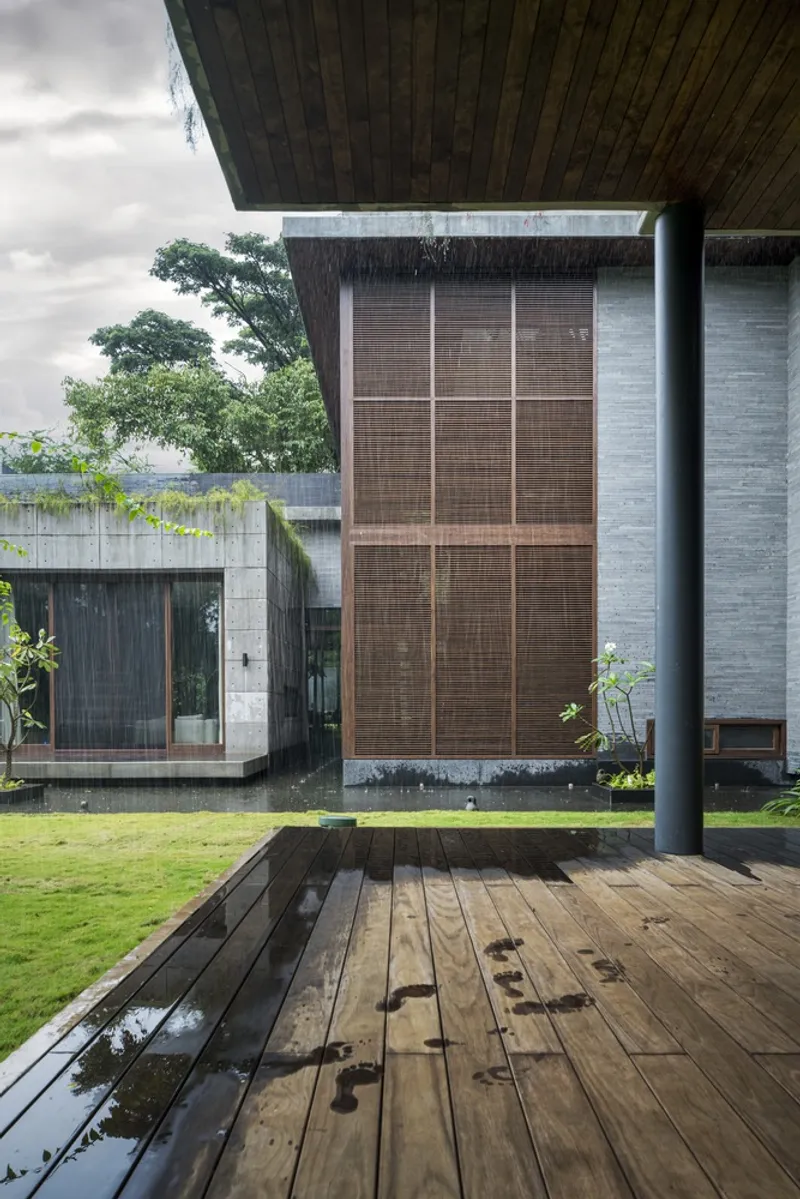
The house is organized into distinct geometric volumes, each with a specific purpose. These volumes are strategically oriented to respond to the microclimate, enhancing the building’s energy efficiency and comfort. The design incorporates an overhang that acts as a shading device for the structure, reducing solar heat gain and creating an interesting elevation. The play of color, texture, and stone cladding adds a visual depth to the building’s facades, enhancing its aesthetic appeal.

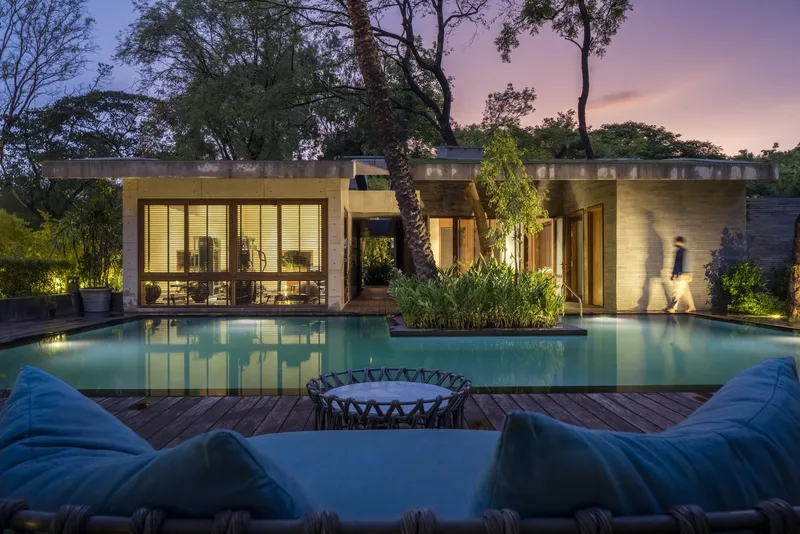
The Maheshwari House is a true representation of contemporary architecture in India, combining modern design principles with deep cultural resonance. It’s a home that speaks to the values of sustainability, functionality, and tradition while embracing the future. For anyone interested in the evolving landscape of Indian architecture, the Maheshwari House offers a compelling glimpse into the possibilities of harmonious living in the 21st century.
As architecture in India continues to progress, the Maheshwari House serves as an excellent case study of how contemporary design can respect and enhance its cultural context while meeting the needs of modern living. This project embodies the best of both worlds—offering a refined, luxurious experience for its occupants while being deeply connected to the land and history that shaped it.

All the photographs are work of Onil Shah


Popular Articles
Popular articles from the community


Architekt Andreas Gruber Scatters 23 Dark Timber Chalets Across a South Tyrolean Forest Edge
In Molini di Tures, Amonti Chalets breaks a resort into a hamlet of gabled timber houses, with parking, storage and services pushed into the slope.

GROUP A Strips a 1969 Rotterdam Harbor Headquarters to Its Frame and Wraps It in Timber Louvers
In Rotterdam's M4H harbor district, Ferro Offices reuses a 1969 frame, adds one timber storey and reaches BREEAM-NL Outstanding.

U.GA Architects Wraps an Oval Rooftop Pool in Curved Board-Formed Concrete on Busan's Jeollidan-gil
In Busan's Jeonpo-dong, a 454 m² mixed-use block stacks a neighborhood facility, guest rooms and an oval rooftop pool inside spiraling concrete walls.

Cube Design Draws an Ecological Corridor Between Two Shenzhen Hills with the Nankai Building
Beside Shenzhen's container docks, the Nankai Building pairs stacked balconies with a climbing green screen to connect two hillsides across its height.

Similar Reads
You might also enjoy these articles


Hodi-Mandai Geram
Project Function: Preservation and revitalization of the Intangible heritage and socio-spatial identity of the Hodi by Housing, Cultural Memory Center, Sacred Grove, landscape, local tourism economy


Olio Towers: A Mid-Rise for Performers That Fuses Housing, Rehearsal, and Stage
Located blocks from Houston's Theater District, this modular tower stacks living units around a central performance atrium.

Oasis: Modular Green Housing Carved into Dhaka's Urban Fabric
A shortlisted Plugin Housing entry reclaims unauthorized settlements in Dhaka with stepped concrete volumes, green roofs, and ventilation-driven design.

Black Hole: A Floating Megastructure for the Post-Physical Era
Emiliano Mazzarotto envisions a spherical, self-scaling arena where e-sports, digital hotels, and holographic stadiums replace traditional public space.

Explore Architecture Competitions
Discover active competitions in this discipline

Challenge to reimagine the Iron Throne

Photograph architecture without architects

Illustrate the lost glory of Angkor Wat - Render Challenge

Design challenge to reuse E-waste
Comments (0)
Please login or sign up to add comments
No comments yet. Be the first to comment!