
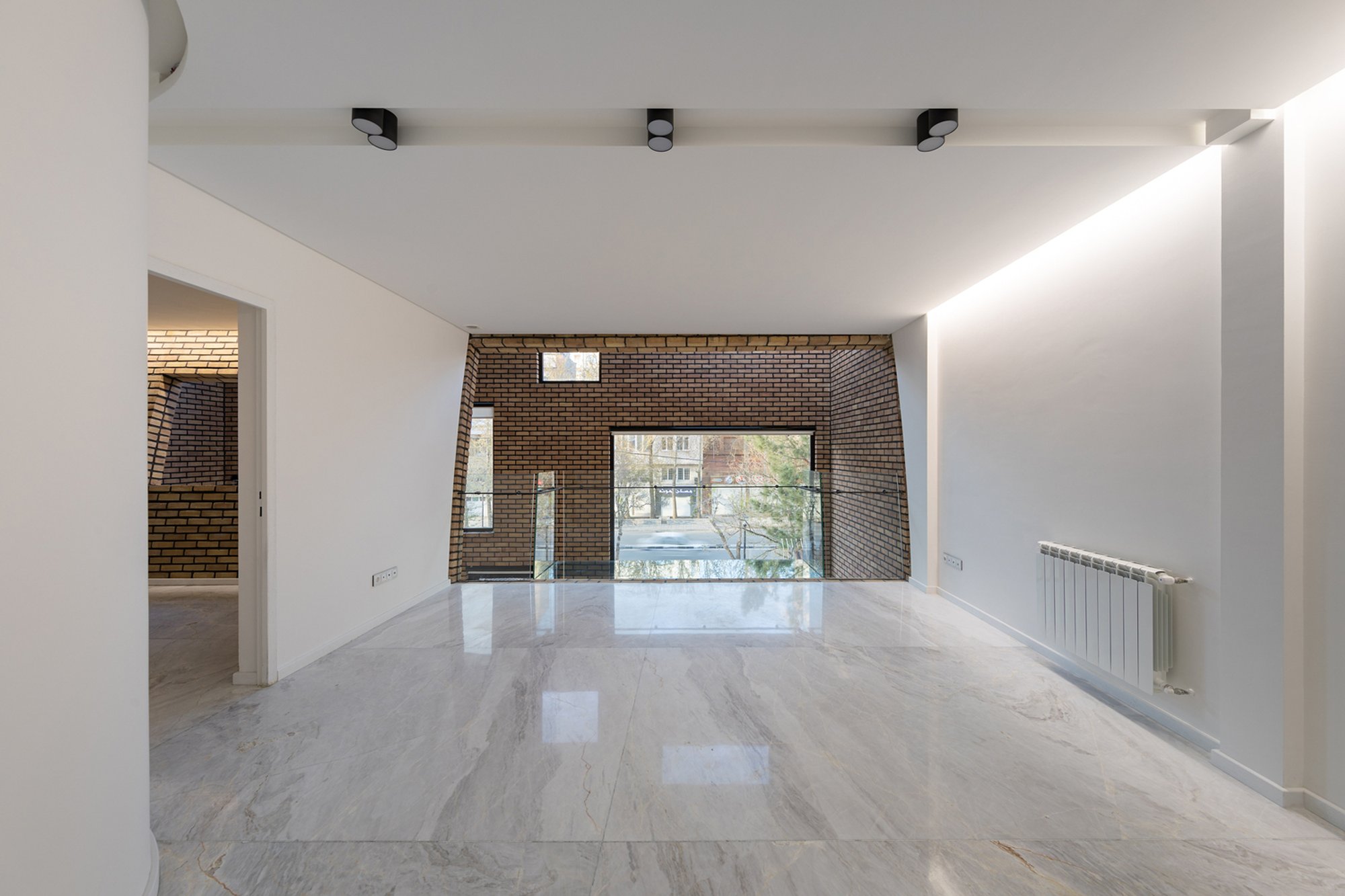
Contemporary Iranian House Design: The In-Between House by MA Office
The article explores the innovative In-Between House by MA Office, blending traditional Iranian design with modern architectural solutions.

The In-Between House by MA Office is an exemplary showcase of contemporary Iranian house design. Located in Hamedan, Iran, this project explores the dynamic relationship between urban spaces and residential areas, blending traditional concepts with modern architectural solutions. The design responds to the challenges posed by its surroundings, which include a bustling street and an 8-meter back alley, creating a unique spatial experience for its residents.
The Concept: Blurring Boundaries Between Indoors and Outdoors
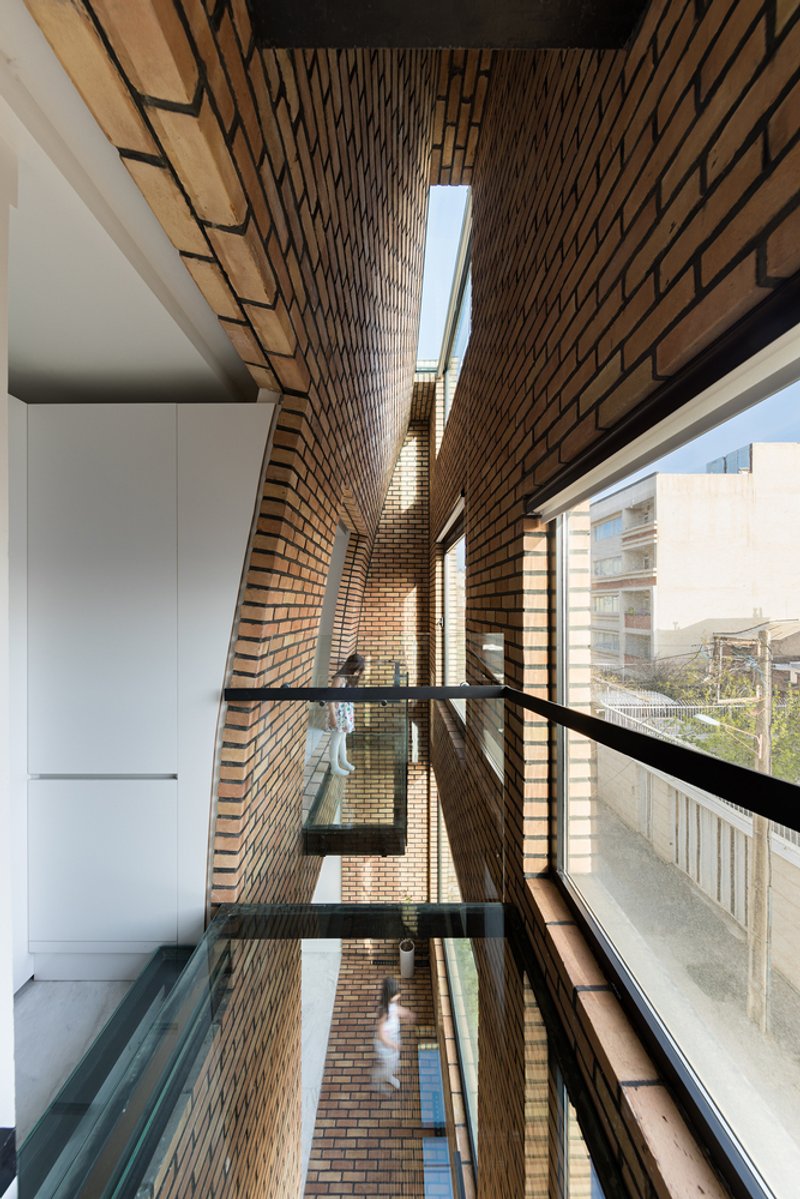
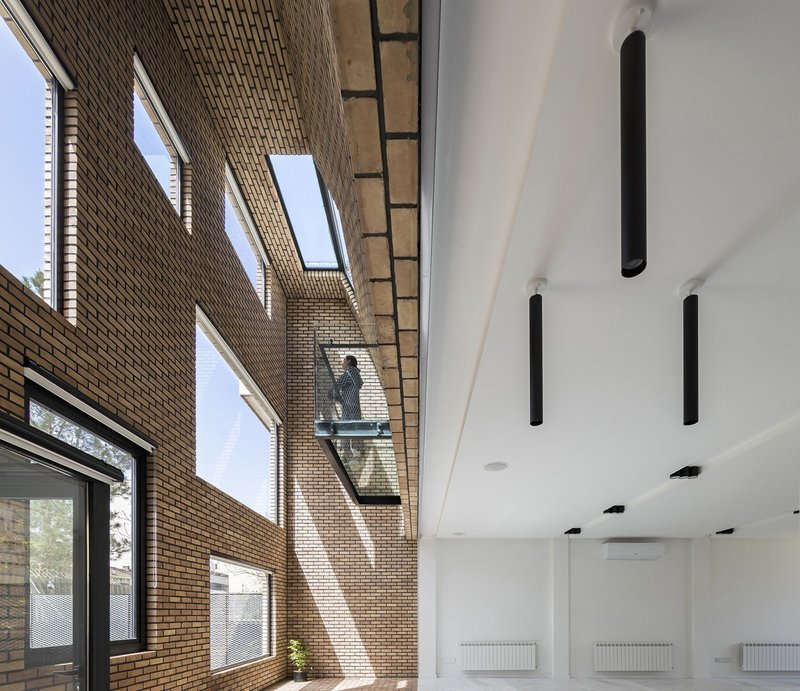
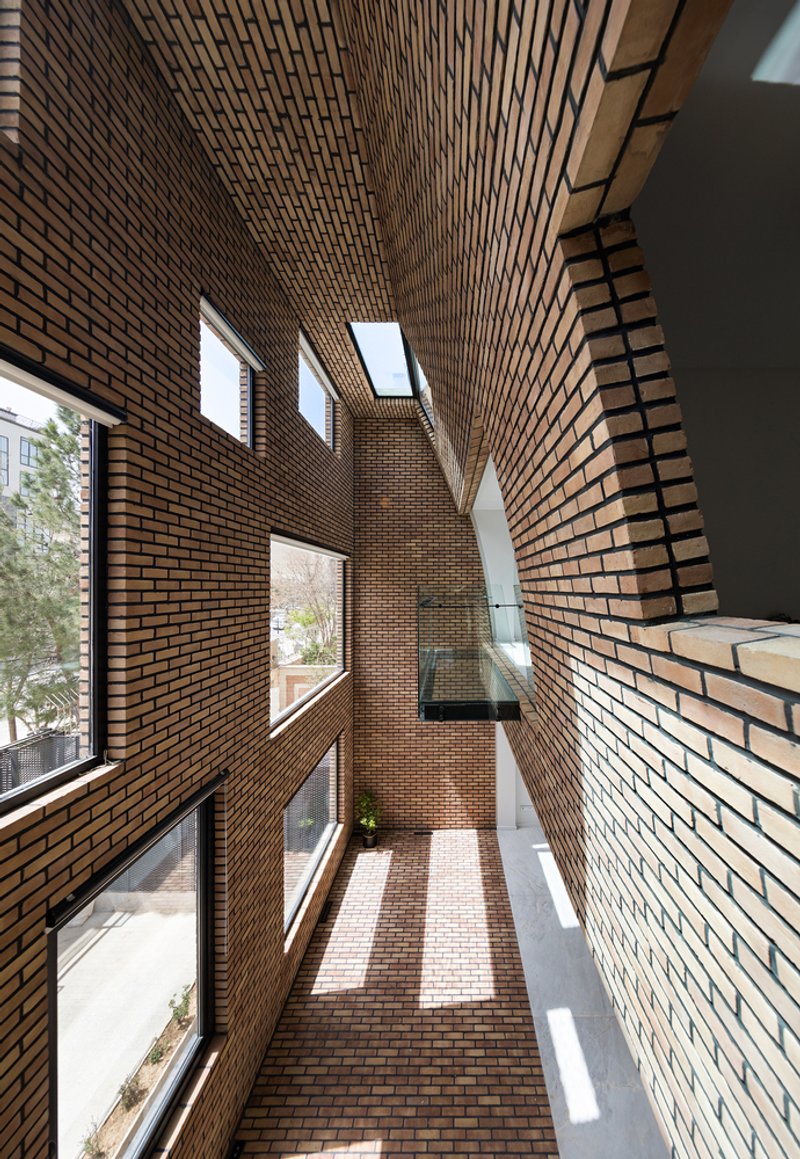
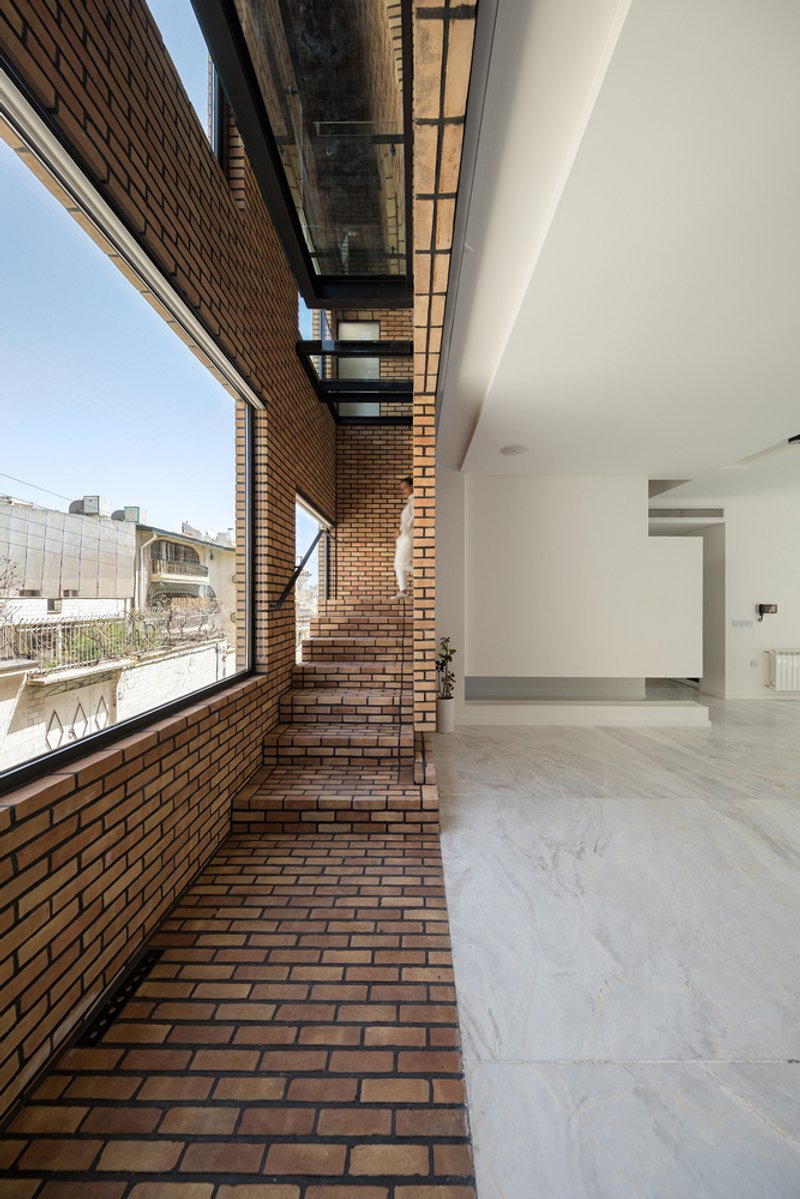
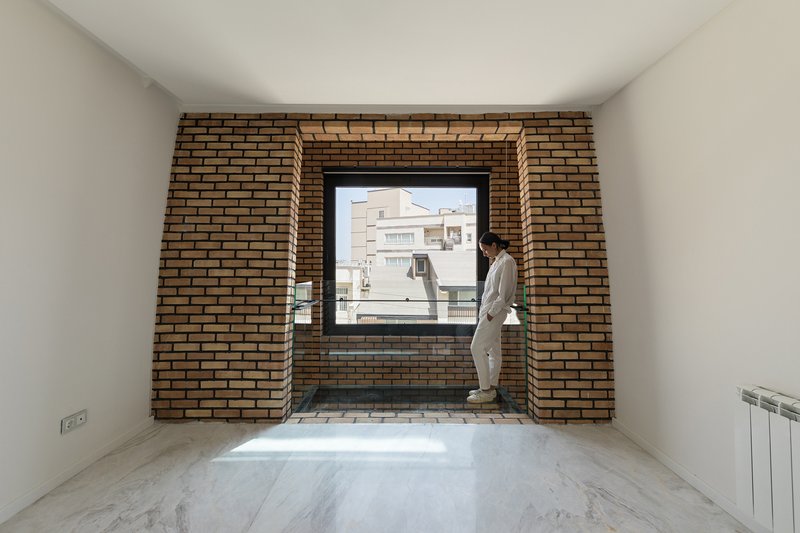
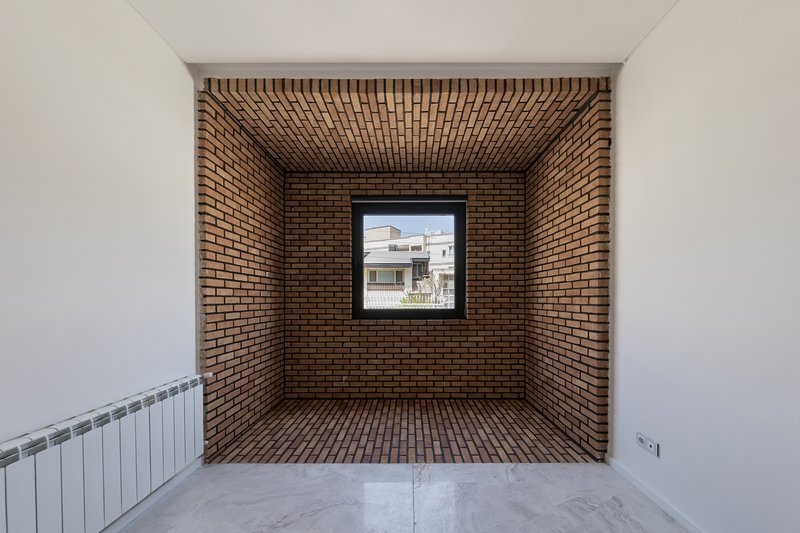
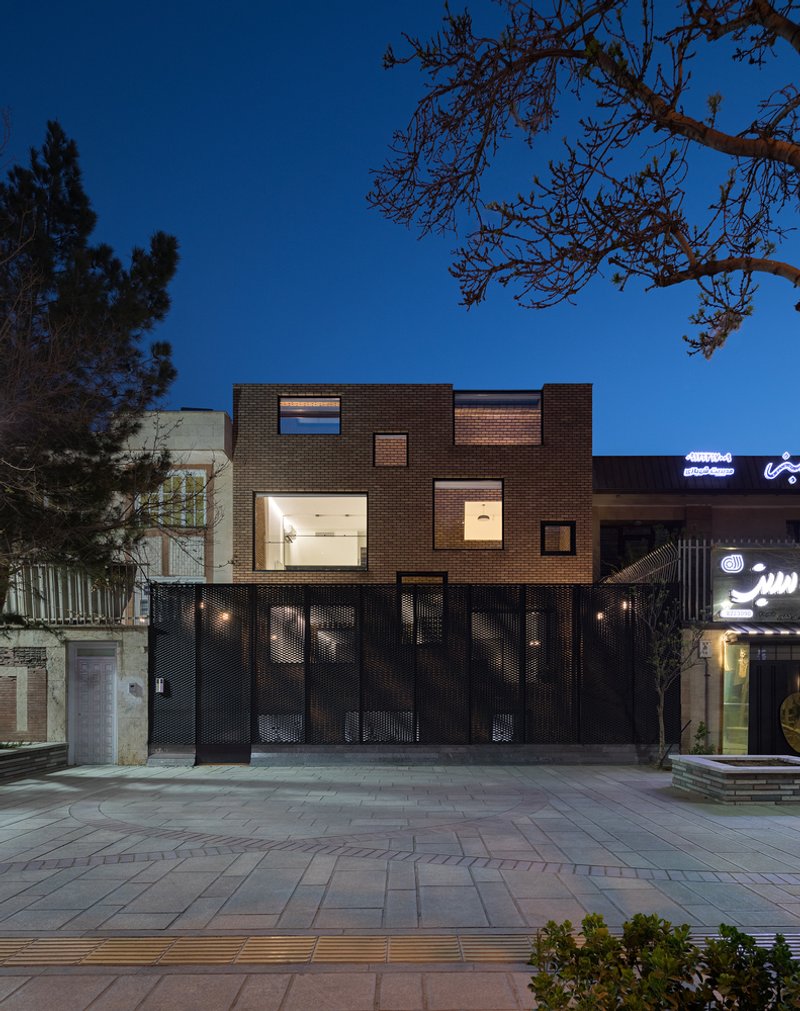
One of the most striking features of this contemporary Iranian house design is the use of semi-open spaces that blur the lines between the indoor and outdoor environments. The architects have reimagined the traditional concept of a porch, which historically served as an active living space that connects the interior of the home to the exterior. By using two brick spatial envelopes on either side of the house, the design introduces two half-open/half-closed porches—transitional spaces that foster interaction between the living areas and the city streets.
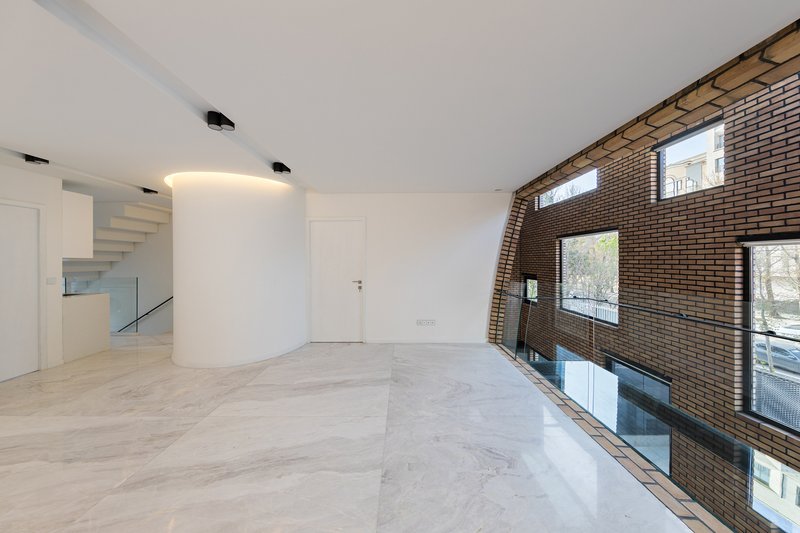
These porches, which are both intimate and public, provide a nuanced relationship between the house and its urban context, allowing the family to engage with the street and the alley. The use of glass terraces further enhances this interaction, offering residents a unique experience of living between the earth and the sky.
Spatial Layout and Design
The In-Between House spans 404 m² and is divided into three main levels:
- Ground Floor: This floor includes a garage, a small suite, and a storeroom, with spaces that connect the indoor and outdoor areas. The design cleverly integrates the threshold between the house and the city streets, creating a fluid transition between private and public spaces.
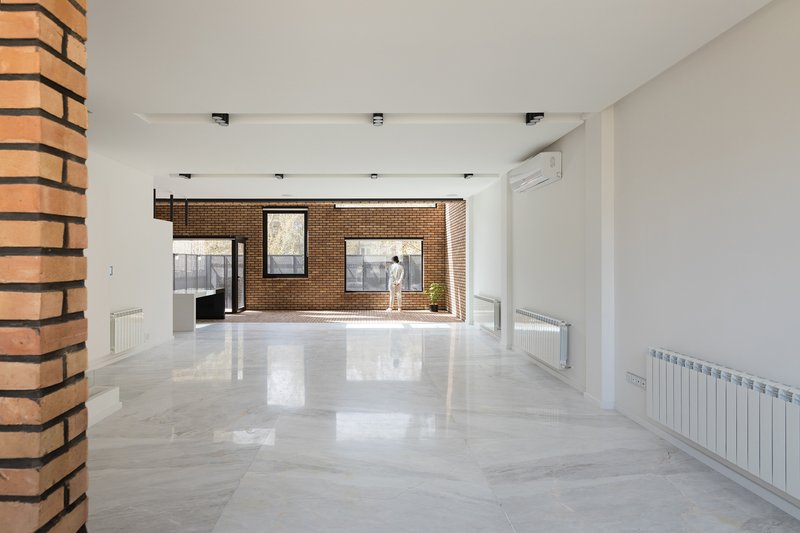
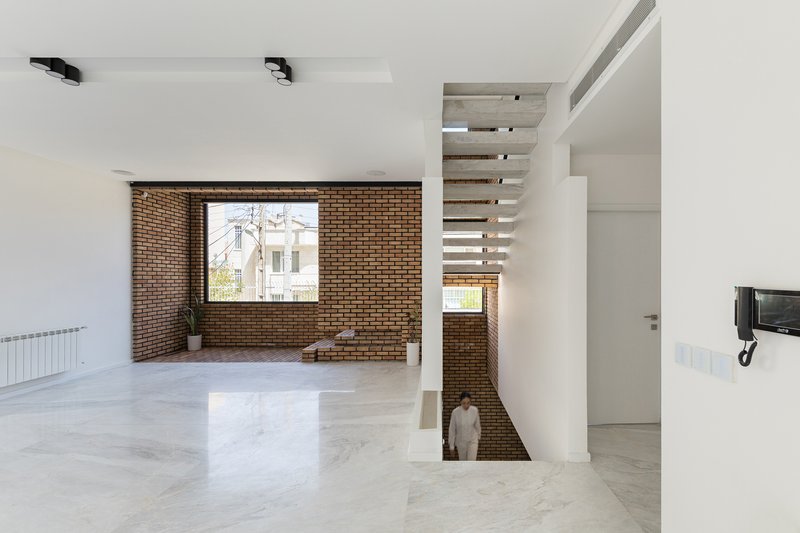
- First Floor: The first floor features the dining and living areas, a main kitchen, a bathroom, and a guest room. The open-plan layout allows for an easy flow of movement, creating a sense of spaciousness despite the compact plot size.
- Second Floor: The top floor is dedicated to the private quarters of the family, with two bedrooms for the children, one bedroom for the parents, a dining area, a small kitchen, and a bathroom.
This thoughtful layout addresses the needs of a family of four while maintaining the balance between openness and privacy, central to contemporary Iranian house design.
Materiality and Aesthetic Appeal
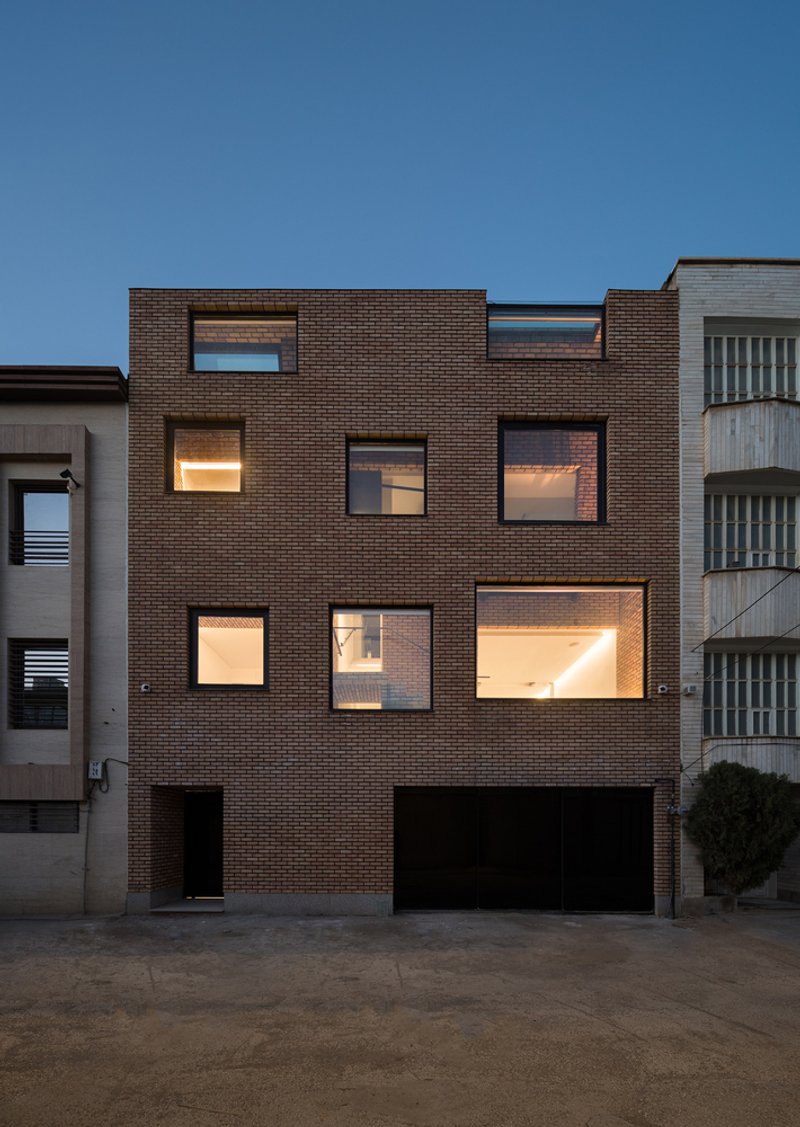
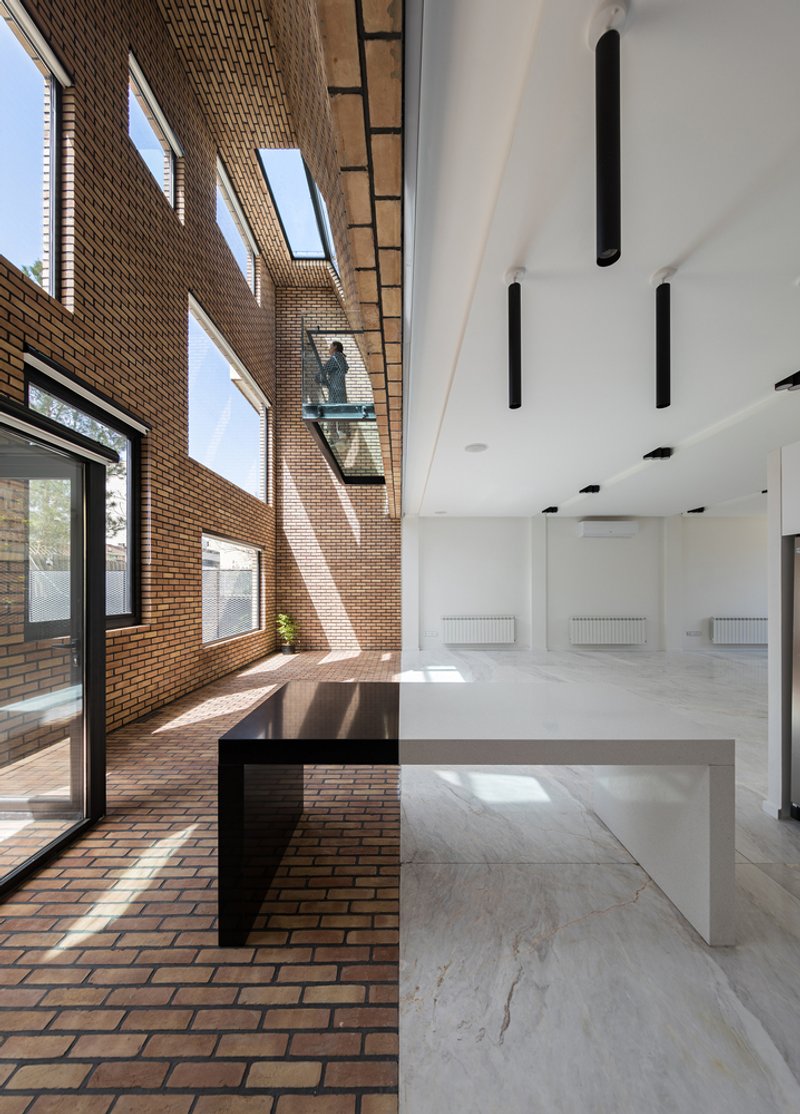
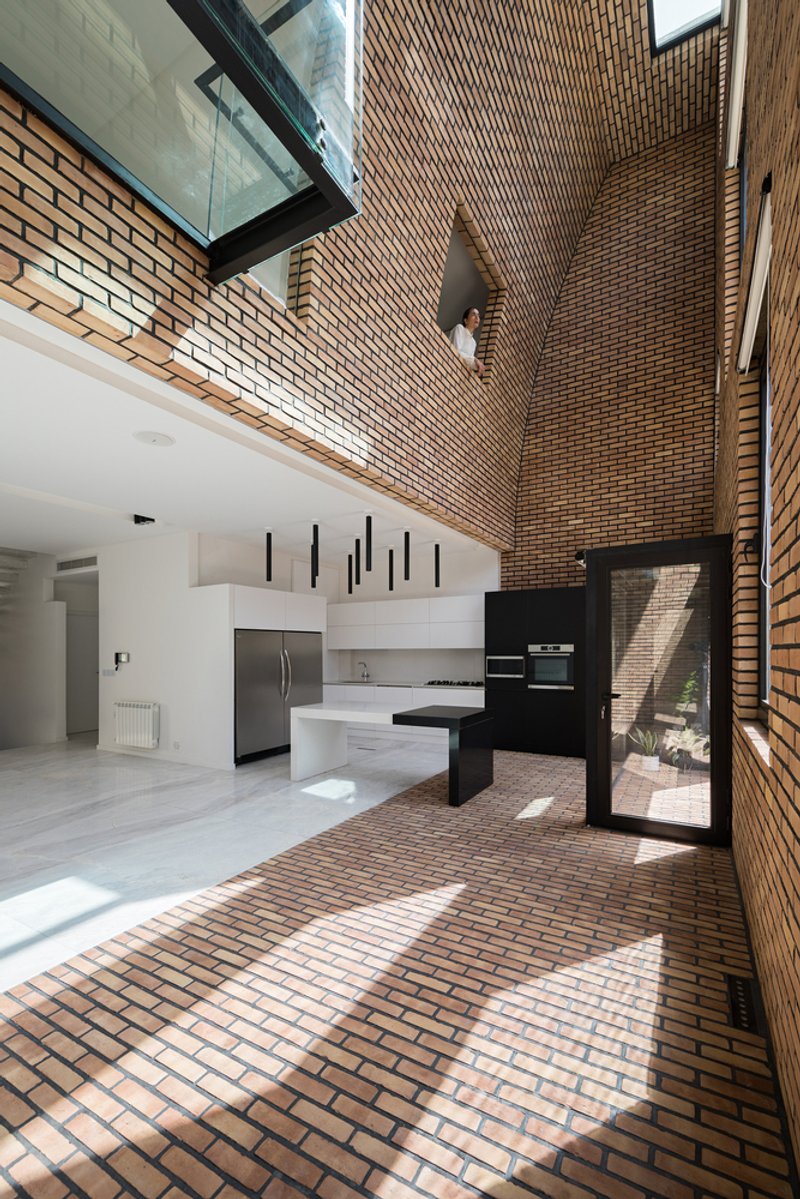
The material palette of the In-Between House speaks to the region’s architectural heritage while pushing the boundaries of modern design. The warm texture and color of the brick provide a tactile connection to traditional Iranian architecture, while the large glass windows allow for an abundant flow of natural light, creating a harmonious environment inside.
The brick facades also provide a sense of enclosure and privacy, while the open spaces within the home offer a visual and physical connection to the outdoors. This duality—of warmth and openness—creates a striking aesthetic contrast that is central to the design's appeal.
Architectural Innovation and Its Impact
This innovative approach to contemporary Iranian house design redefines the traditional relationship between the home and its surroundings. By creating livable spaces that transition between the indoors and outdoors, the In-Between House encourages a more fluid interaction between its residents and the city.
The design reflects a deep understanding of local context and culture, while also embracing modern architectural principles. Through its unique use of space, light, and materials, the project serves as a model for future residential developments in urban environments, where the boundaries between private living spaces and public streets are becoming increasingly blurred.
The In-Between House is a stunning example of contemporary Iranian house design, combining innovative spatial configurations with the rich architectural heritage of Iran. By thoughtfully integrating indoor and outdoor spaces, the project offers a new way of thinking about how homes can interact with their urban environments. MA Office’s design not only addresses practical concerns but also creates a memorable and inspiring living experience for the family.
This project demonstrates the potential of modern architecture to reinterpret traditional concepts in ways that resonate with contemporary lifestyles. It is a perfect illustration of how contemporary Iranian house design can be both innovative and deeply connected to the cultural and environmental context.
All the photographs are work of Mohammad Hassan Ettefagh



Popular Articles
Popular articles from the community

Free Architecture Competitions You Can Enter Right Now
No entry fees, real prizes. Here are the best free architecture competitions open for submissions in 2026.

Inverted Architecture Installation by Studio Link-Arc: Exploring the Intersection of Architecture and Living Organisms
Inverted Architecture Installation by Studio Link-Arc blends mycelium, sustainability, inverted design, ecological cycles, and urban adaptive architecture in Shenzhen.
Fifth NRE Jazz Club – De Bever Architecten: Eindhoven’s Revitalized Cultural Hub
Historic gas factory transformed into Fifth NRE Jazz Club blending modern sustainability, jazz culture, dining, and heritage architecture seamlessly.


Similar Reads
You might also enjoy these articles


The Ken Roberts Memorial Delineation Competition (Krob)
As the most senior architectural drawing competition currently in operation anywhere in the world, it draws hundreds of entries each year, awarding the very best submissions in a series of medium-based categories.

Waterfront Redevelopment and Urban Revitalization in Mumbai: Forging a New Dawn for Darukhana
A transformative waterfront redevelopment project reimagining Darukhana’s shipbreaking heritage into an inclusive urban future.

OUT-OF-MAP: A Call for Postcards on Feminist Narratives of Public Space
Rhizoma Design and Research Lab invites artists, designers, architects, researchers, and students to reflect on how feminist perspectives can reshape public space. Selected works will be exhibited in Barcelona, October 2026. Submissions open until 15 April 2026.

Documentation Work on Buddhist Wooden Temple
Architectural syncretism and cultural hybridity: A comparative study of the Buddhist temples in Chattogram Hill tracks

Explore Office Building Competitions
Discover active competitions in this discipline




The International Standard for Design Portfolios


The Global Benchmark for Architecture Dissertation Awards


The Global Benchmark for Graduation Excellence


Challenge to reimagine the Iron Throne
Comments (0)
Please login or sign up to add comments
No comments yet. Be the first to comment!