

Corridor House 2.0: Thrissur Residence by i2a Architects Studio
A serene courtyard house along a busy highway, using corridors, perforated walls, and light to balance privacy and openness.


Set along the energetic highway of Thrissur, Corridor House 2.0 is conceived as a deliberate counterpoint to its noisy and restless context. Designed by i2a Architects Studio, the residence transforms a challenging roadside plot into a calm, inward-looking sanctuary: one that prioritizes privacy, light, and spatial clarity without disconnecting from nature.
Framing Privacy, Breathing Light
The client, an education consultant, sought a home that felt deeply personal and protected from the chaos outside. This singular aspiration became the conceptual foundation of the project, shaping an architecture that is both defensive and poetic.
A Protective Edge as Architectural Identity
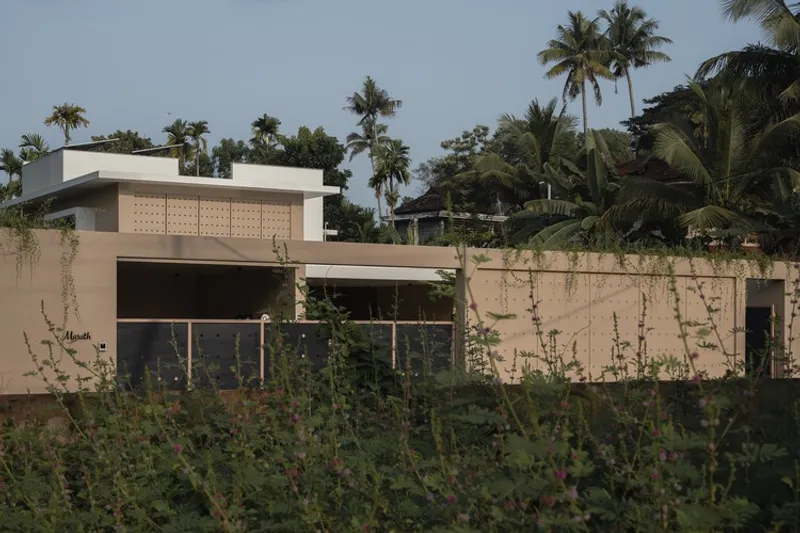
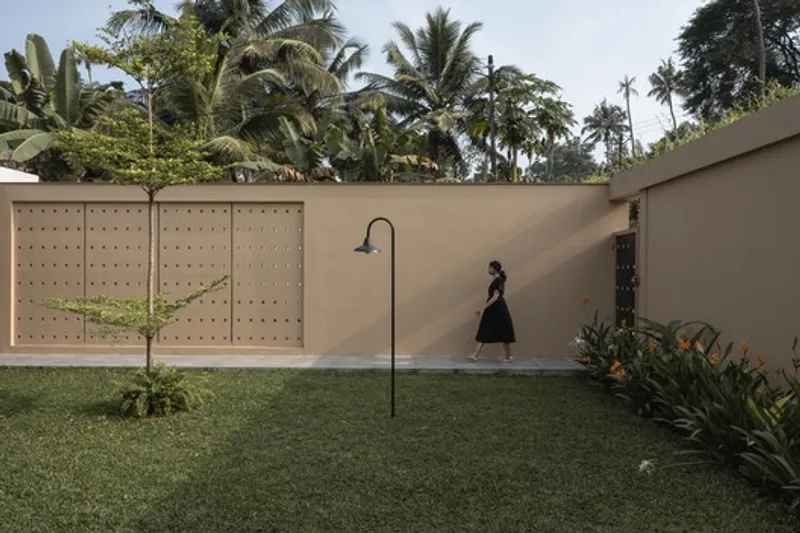
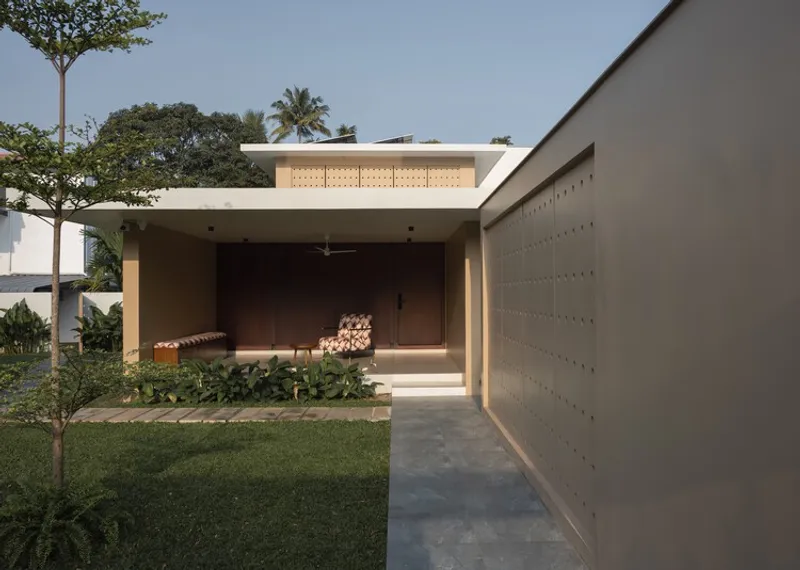
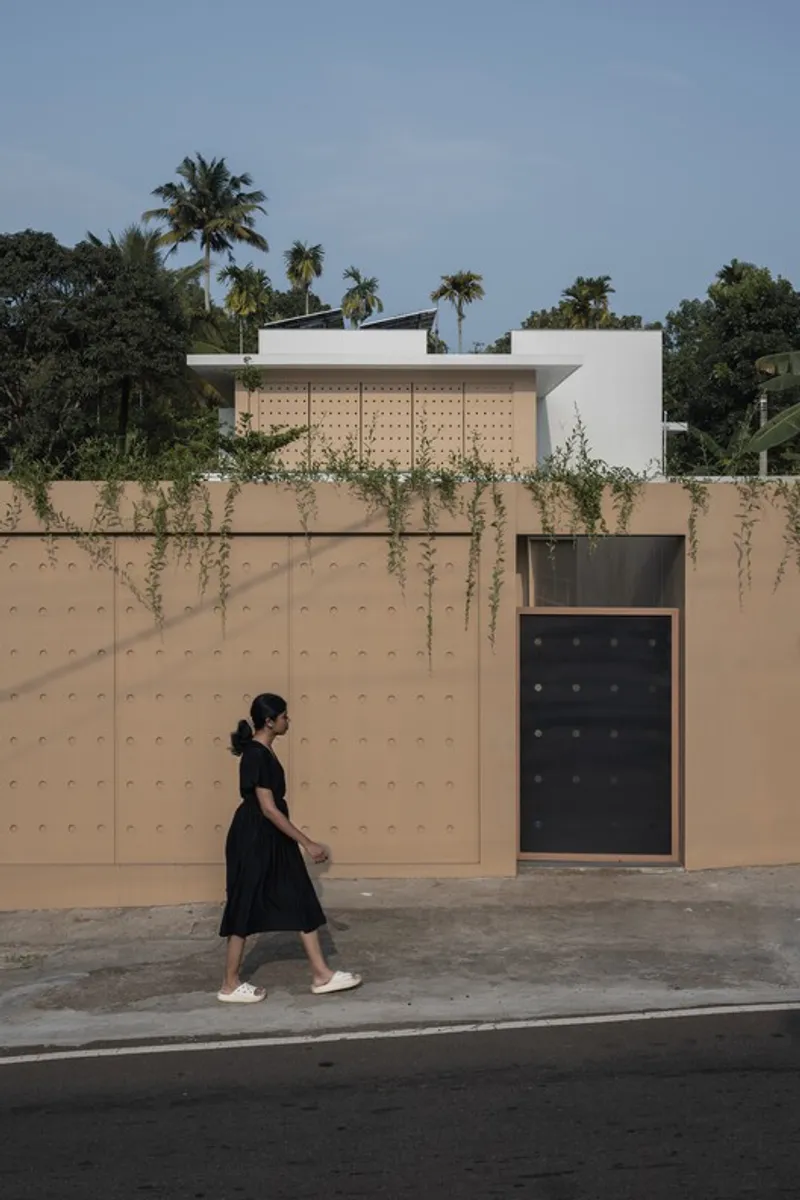
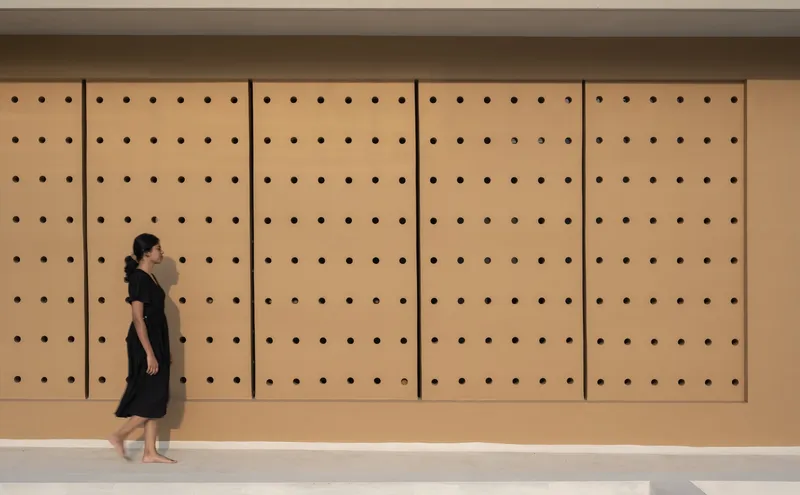
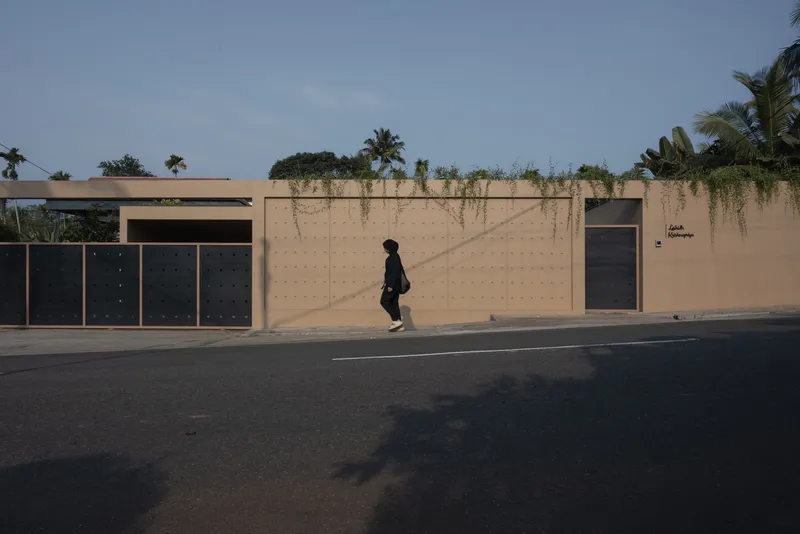
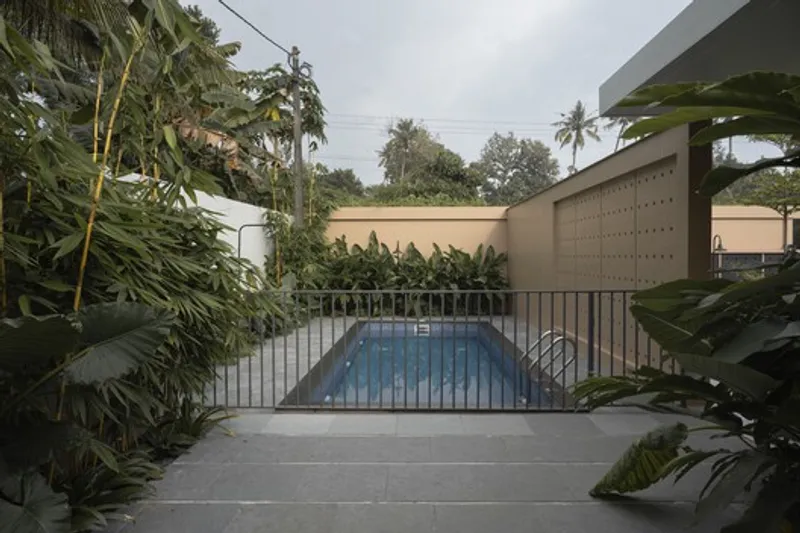
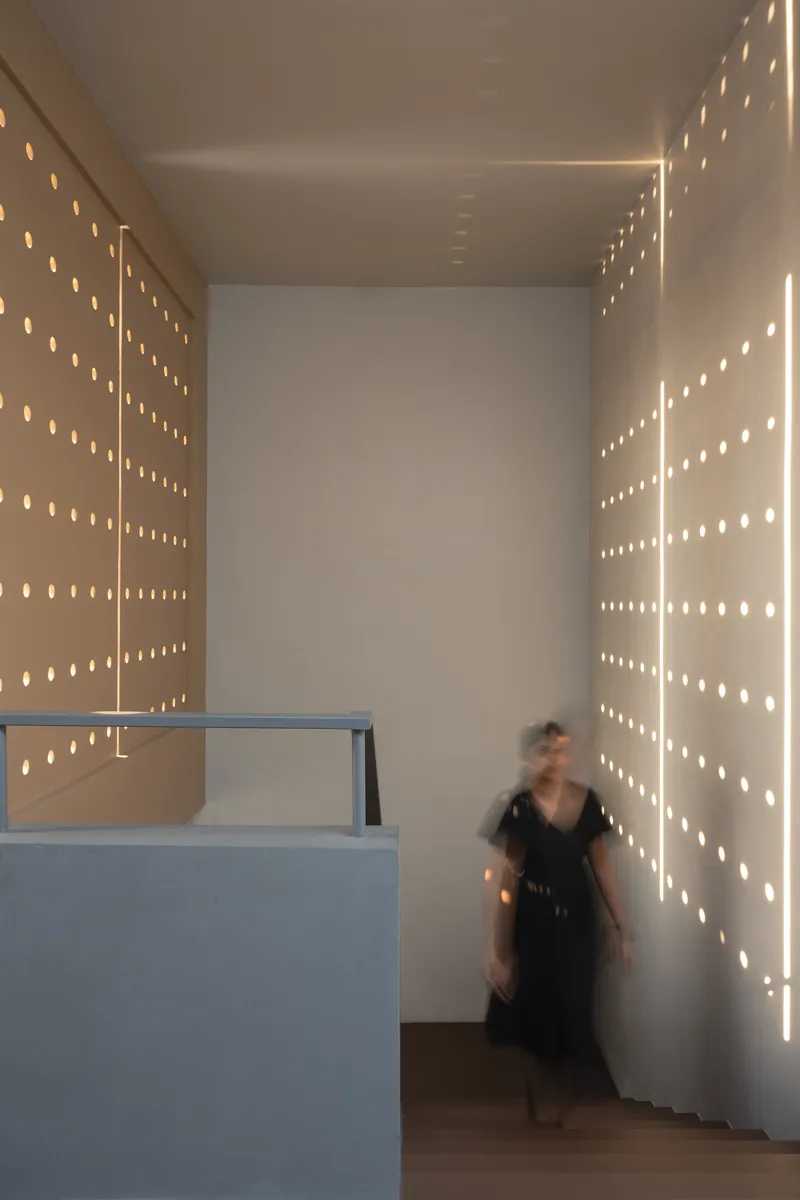
The house announces itself through a long, sculptural boundary wall running along the front edge of the site. More than a barrier, this wall acts as a filter: shielding the residence from dust, noise, and constant movement while establishing a strong architectural identity. Its warm ochre surface is punctured with a rhythmic pattern of circular voids, allowing soft daylight and air to permeate through.
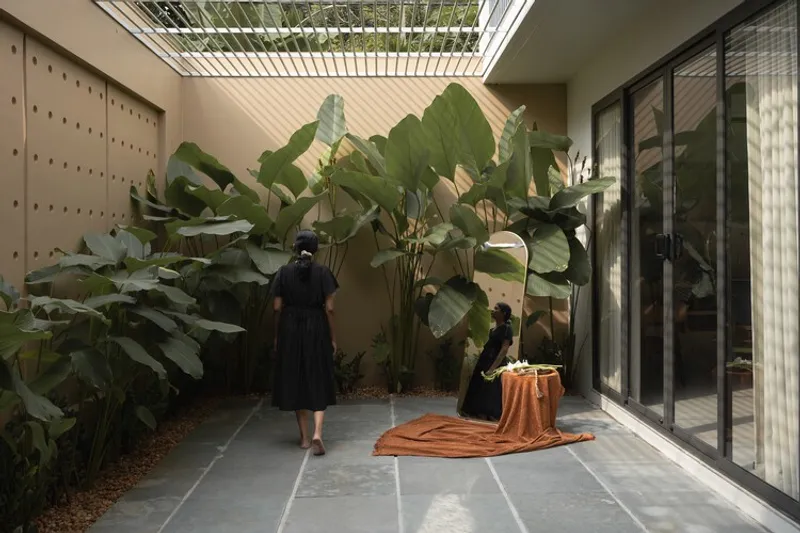
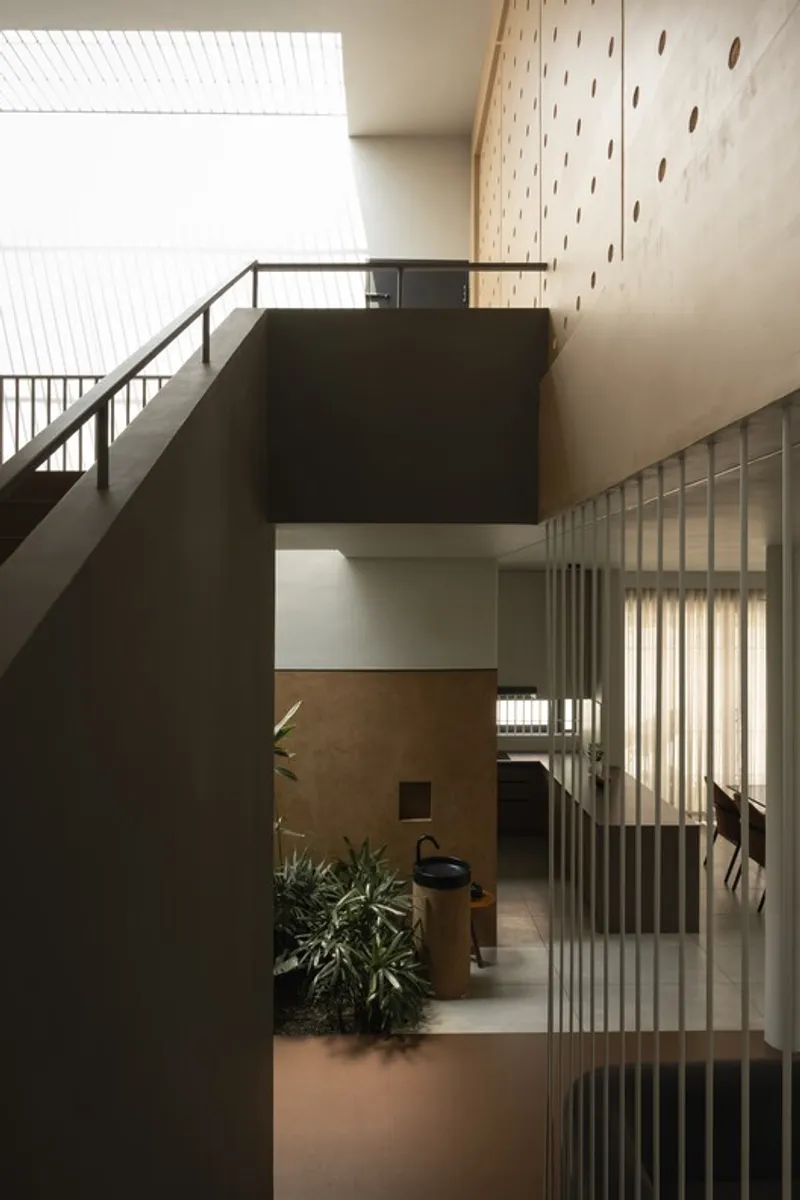
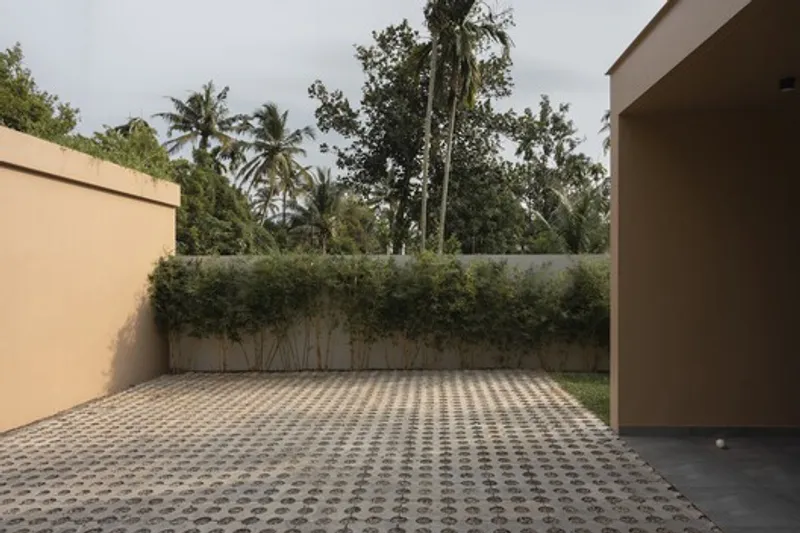
These perforations are not merely functional but form a recurring motif across the project. From façade elements and door panels to interior screens and paving patterns, the language of voids weaves a visual continuity throughout the home, animating spaces through ever-changing light and shadow.
The Corridor as Spatial Spine
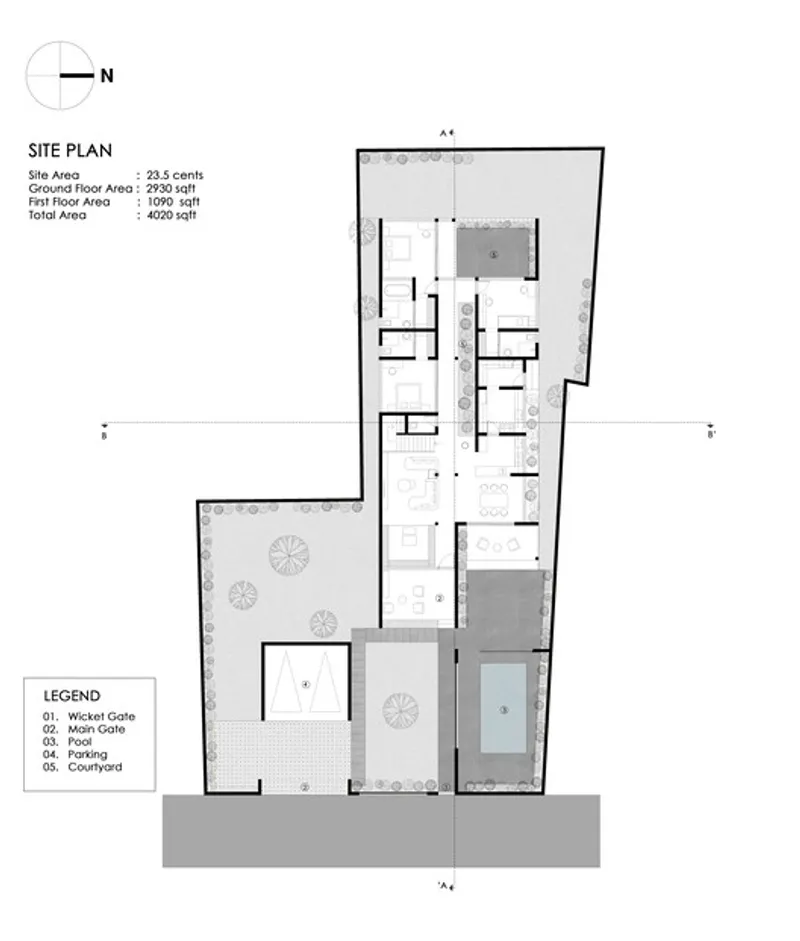
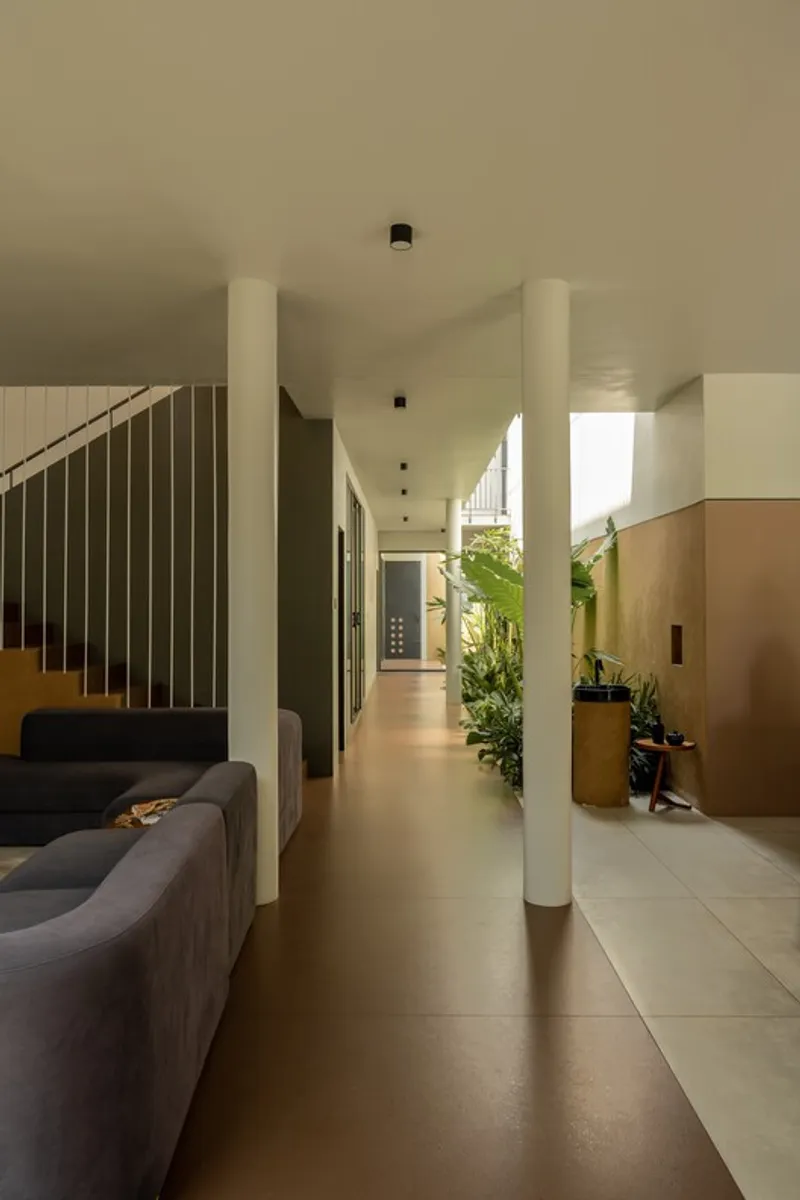
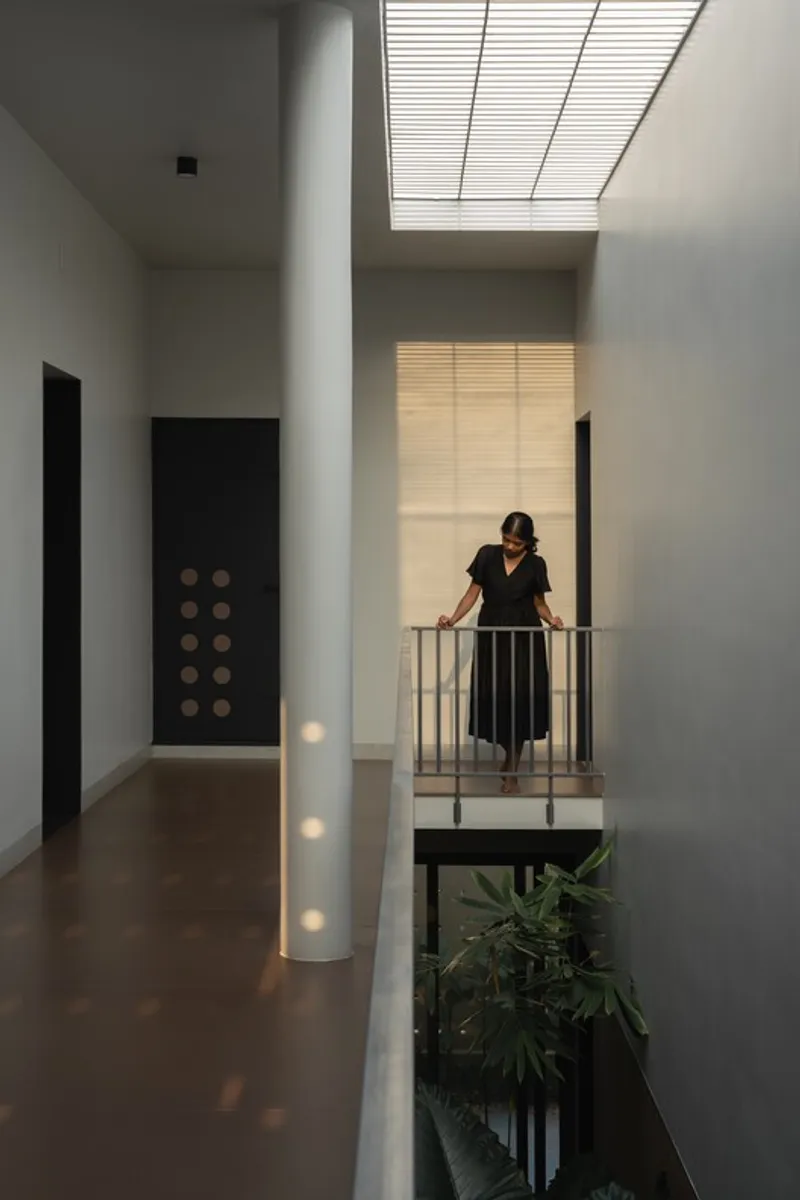
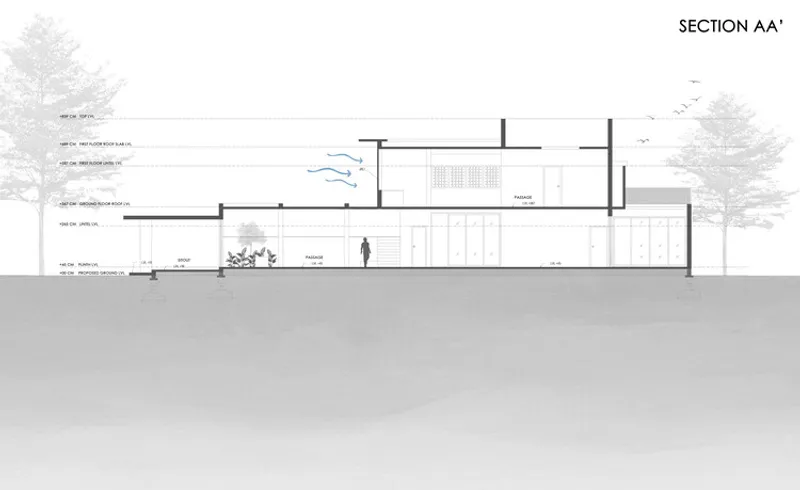
At the heart of the design lies the corridor, a linear spine that organizes the entire house. Entered directly through a modest picket gate, this corridor is not just a passageway but the experiential core of the home. It orchestrates movement, frames views, and connects all functions in a calm, sequential journey.
Living spaces, bedrooms, and recreational areas unfold along its length, each opening toward courtyards, lawns, or landscaped pockets. As one moves through the corridor, the spatial experience evolves: shifting light, textures, and glimpses of greenery create a dynamic yet meditative rhythm. The corridor gives the house both its structure and its name.
Courtyards as Breathing Pockets
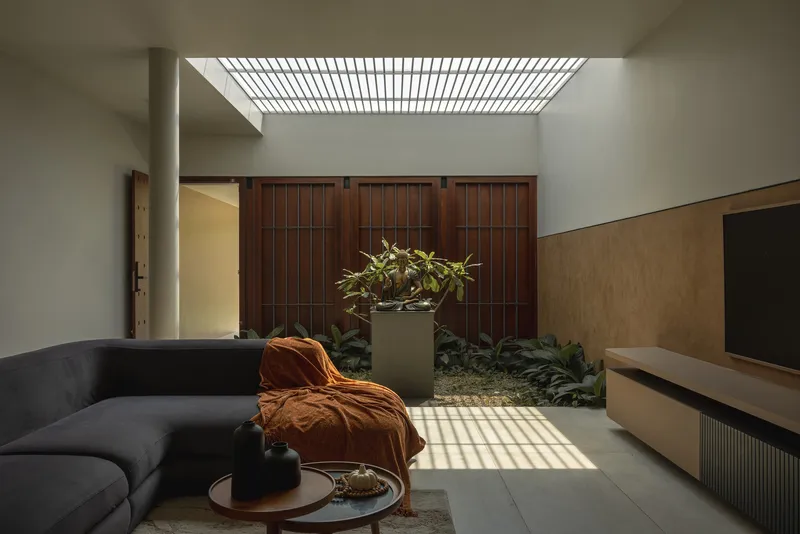
Strategically placed courtyards punctuate the plan, drawing natural light and ventilation deep into the interiors. Near the entrance, a serene courtyard accommodates a pooja space, where filtered daylight descends through a perforated pergola. Further along, additional courtyards flank the staircase and bedrooms, ensuring that even the most internal spaces remain connected to the outdoors.
These voids act as climatic moderators, enhancing passive cooling while reinforcing a strong indoor-outdoor dialogue. Rooms face inward toward these green pockets, maintaining privacy while remaining visually and environmentally open.
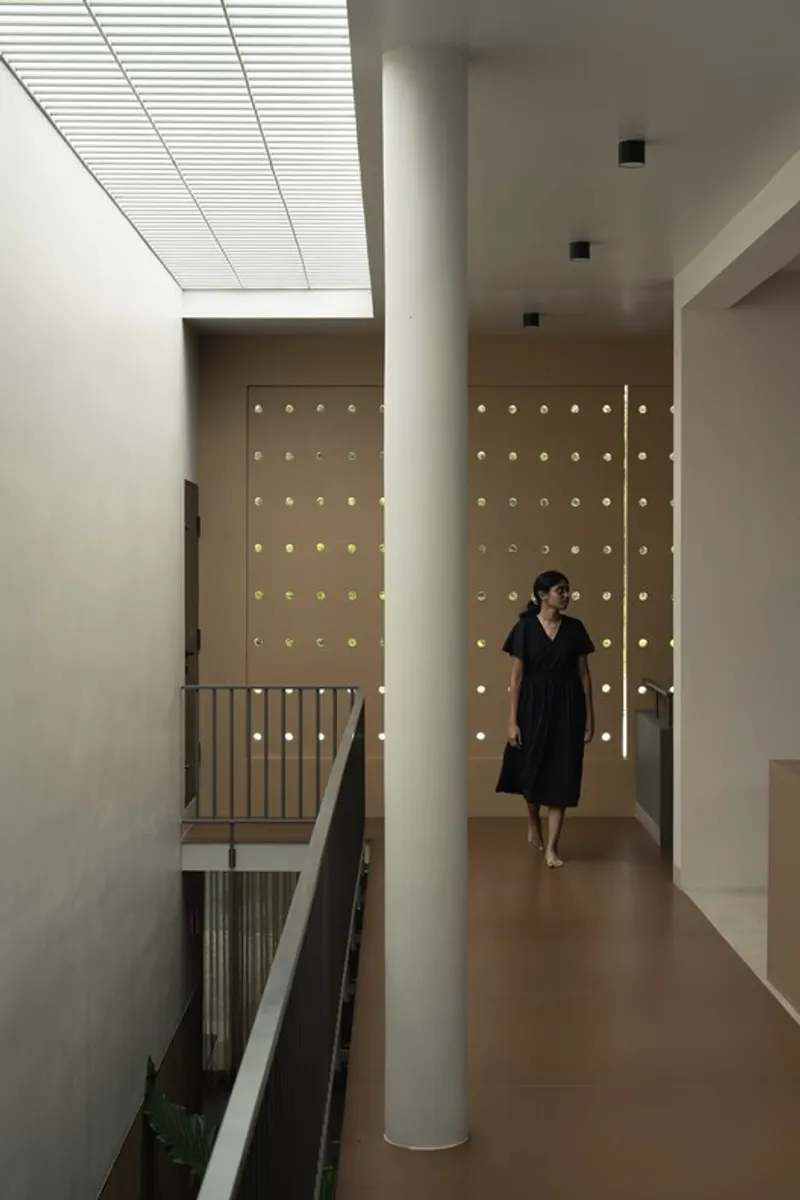
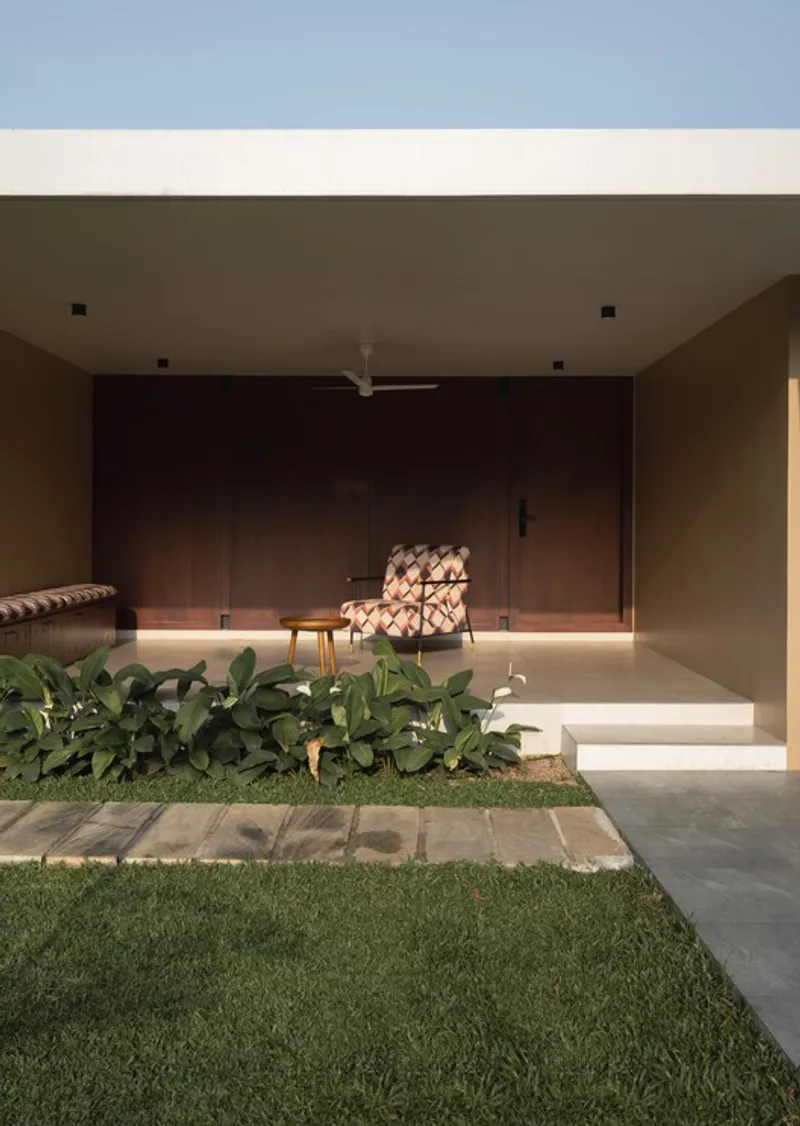
Functional Clarity and Flow
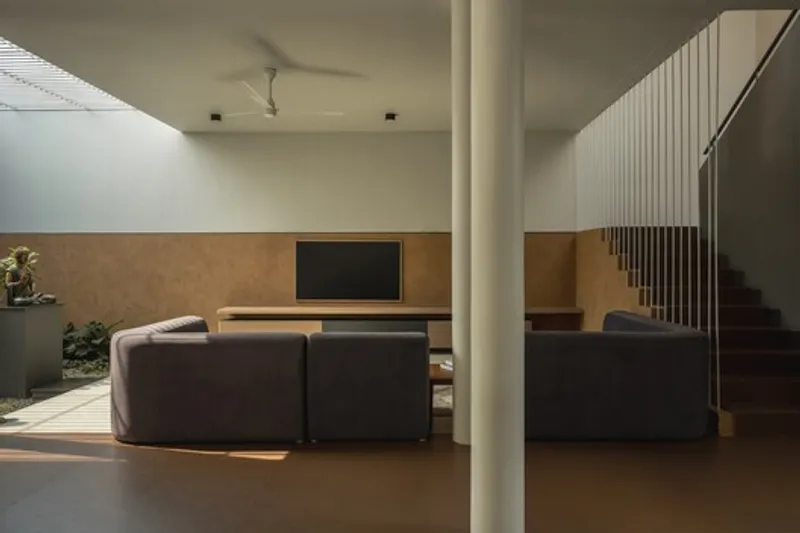
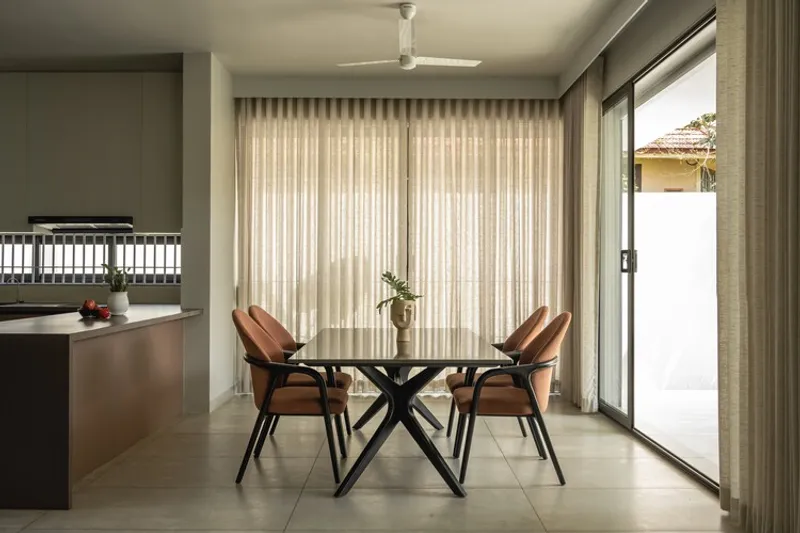
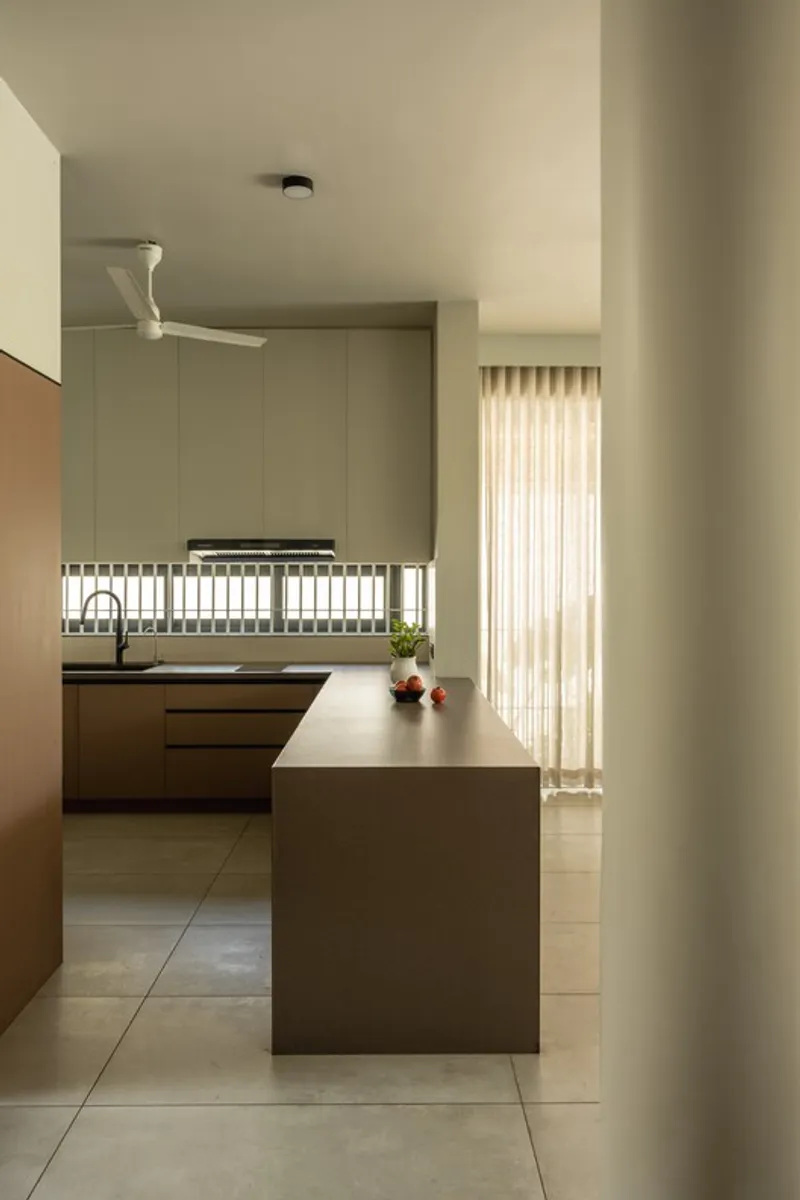
The left side of the corridor opens into the family living room, a warm and welcoming space visually linked to surrounding greenery. On the right, a cluster of functional zones: dining area, kitchen, working kitchen, and utility, are arranged for efficiency and ease of movement. The dining space extends toward landscaped edges, balancing enclosure with openness.
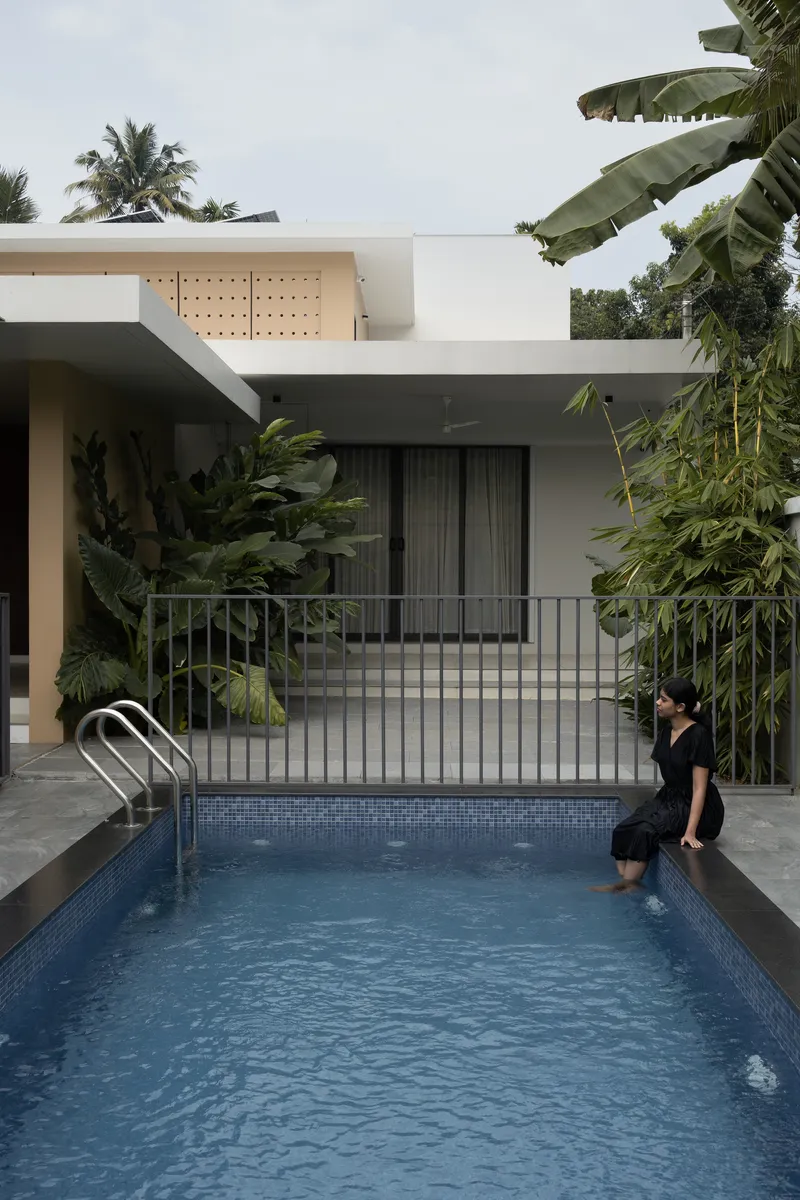
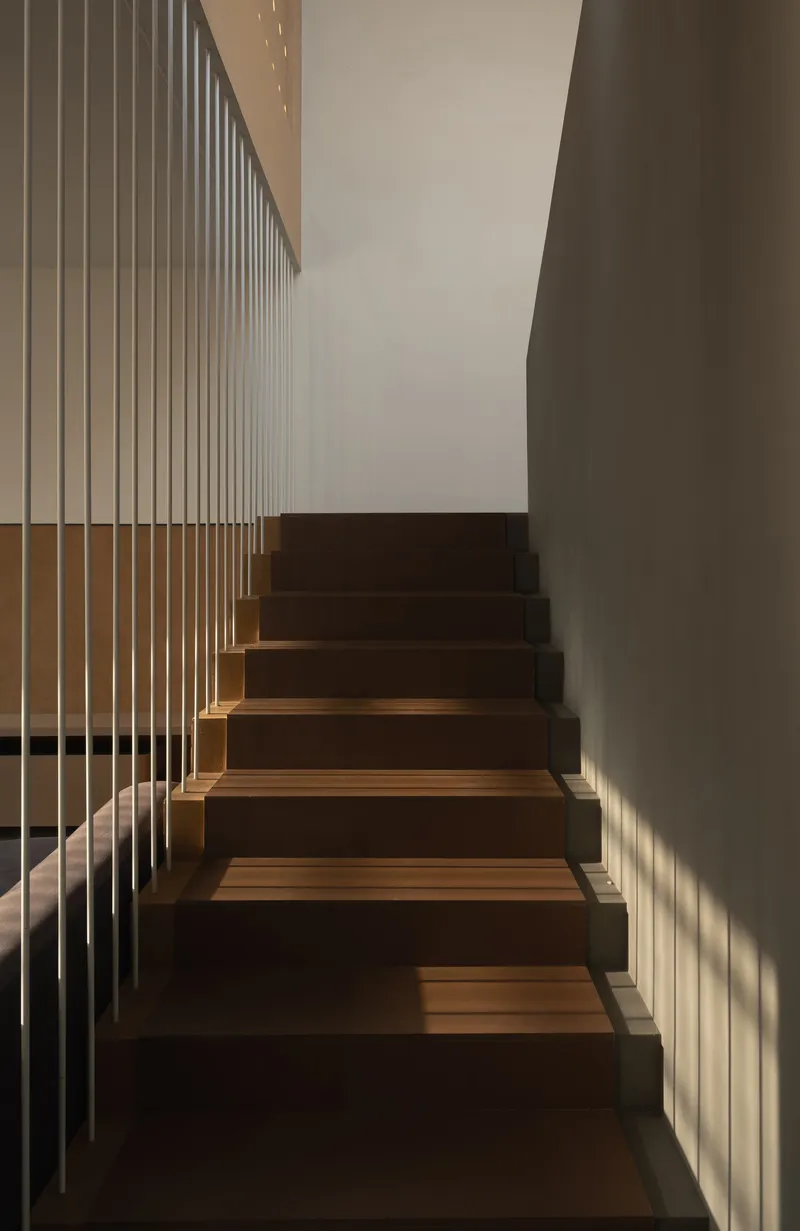
Midway through the plan, the staircase rises gently to the first floor, illuminated naturally by adjacent courtyards. Upstairs, a compact gymnasium and an additional bedroom continue the same design philosophy of openness, balance, and filtered views.
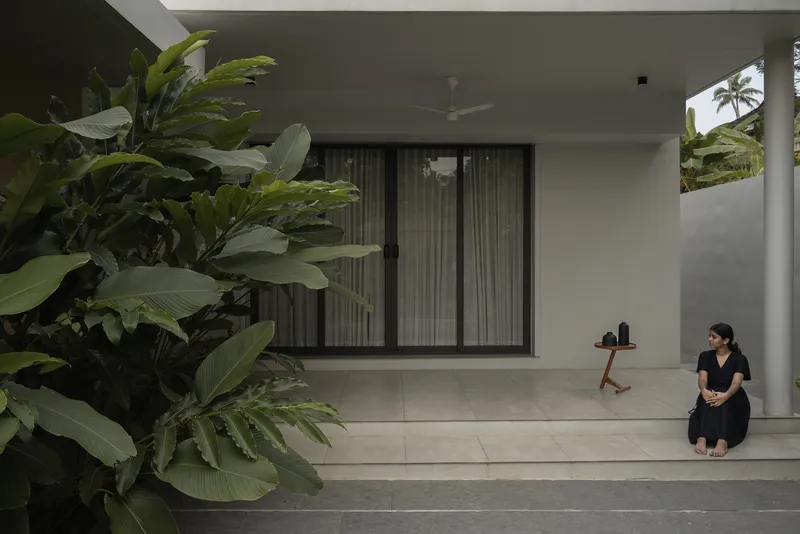
Water, Landscape, and Calm
A swimming pool positioned adjacent to the façade adds both visual and climatic relief. Its reflective surface softens the solidity of the boundary wall, while its cooling effect improves the microclimate of the adjacent spaces. Lawns and landscaped areas extend the living environment outdoors, offering spaces for leisure, play, and quiet reflection.
Material Palette and Atmosphere
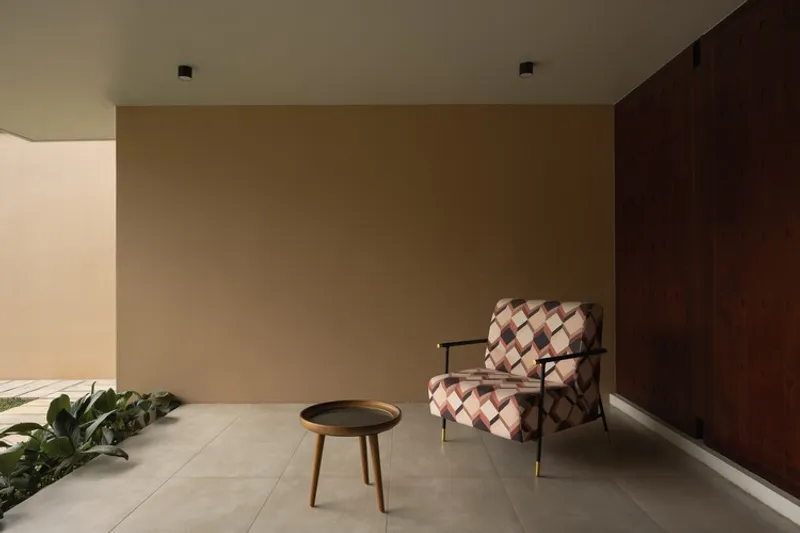
The material language of Corridor House 2.0 is restrained, earthy, and timeless. Warm ochre plastered walls form the dominant surface, contrasted by rich natural wood panels used for doors and interior accents. Large-format grey stone tiles define pathways and semi-open areas, offering a subtle counterpoint to the warmth of the walls.
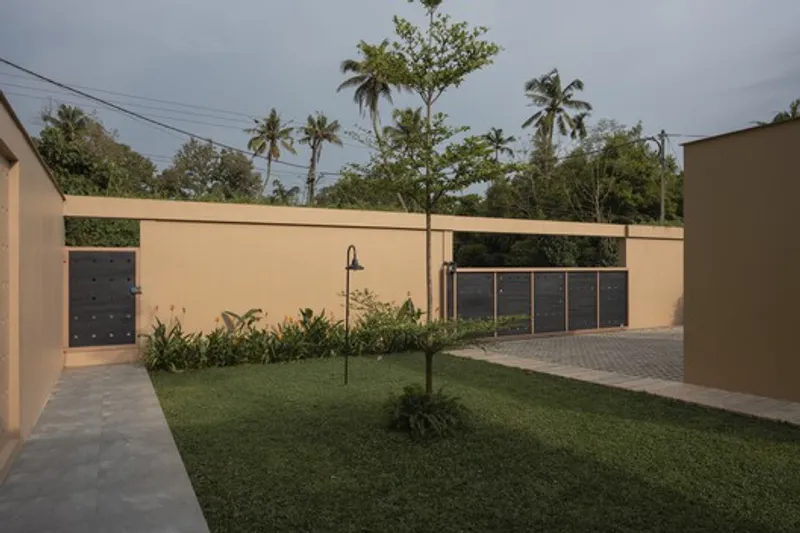
Clean white slab soffits integrated with linear warm lighting highlight architectural edges and reinforce the home’s geometry. Minimal black detailing: seen in railings, fixtures, and hardware, adds precision without visual clutter. Throughout the day, and especially at dusk, light animates the perforated walls, lending the architecture a living, breathing quality.
Architecture of Balance
Despite its strong enclosure, Corridor House 2.0 feels open, vibrant, and deeply connected to nature. The inward-facing planning ensures privacy while enabling continuous airflow, daylight penetration, and visual connections across spaces. Each zone remains distinct yet visually linked through courtyards and landscaped views.
Ultimately, the house is a study in balance: between openness and seclusion, solidity and lightness, protection and expression. What begins as a defensive wall transforms into a gentle embrace, shaping how the outside world enters the home through light, breeze, and carefully framed views.
In a world that rarely slows down, Corridor House creates its own rhythm: quiet, introspective, and profoundly humane.
All the Photographs are works of Vishnu V Nath


Popular Articles
Popular articles from the community


Opera on the Sea: Driftwood Logic Shapes a Timber Opera House on Estonia's Coast
Trevor Orgill's opera house translates the entangled drift of floating timber into a civic building where wood, water, and music converge.

Temporary Home for Dogs: A Reversed Zoo Rethinks Animal Shelter Architecture
In Bucharest, a sinuous corridor and freed landscape flip the logic of containment, designing a shelter that works to make itself unnecessary.
Extended Shell: Retrofitting Kolkata's Balconies as Living Urban Thresholds
A modular retrofit system recovers the social and environmental intelligence of Kolkata's historic verandas for contemporary Park Street residents.
Tsunami Convergenics: Turning Catastrophic Ocean Forces into Underwater Housing Infrastructure
A speculative underwater settlement off the coast of Onagawa, Japan, treats tsunamis and typhoons as energy sources rather than threats.

Similar Reads
You might also enjoy these articles


Hodi-Mandai Geram
Project Function: Preservation and revitalization of the Intangible heritage and socio-spatial identity of the Hodi by Housing, Cultural Memory Center, Sacred Grove, landscape, local tourism economy


Olio Towers: A Mid-Rise for Performers That Fuses Housing, Rehearsal, and Stage
Located blocks from Houston's Theater District, this modular tower stacks living units around a central performance atrium.

Oasis: Modular Green Housing Carved into Dhaka's Urban Fabric
A shortlisted Plugin Housing entry reclaims unauthorized settlements in Dhaka with stepped concrete volumes, green roofs, and ventilation-driven design.

Black Hole: A Floating Megastructure for the Post-Physical Era
Emiliano Mazzarotto envisions a spherical, self-scaling arena where e-sports, digital hotels, and holographic stadiums replace traditional public space.

Explore Courtyard Competitions
Discover active competitions in this discipline

Challenge to reimagine the Iron Throne

Photograph architecture without architects

Illustrate the lost glory of Angkor Wat - Render Challenge

Design challenge to reuse E-waste
Comments (0)
Please login or sign up to add comments
No comments yet. Be the first to comment!