

Corujas House by Goiva: A Warm, Multi-Level Home Redefined in Vila Madalena, São Paulo
Corujas House by Goiva reimagines a São Paulo residence with warm materials, integrated social spaces, gardens, and fluid indoor-outdoor living.


Located in the vibrant neighborhood of Vila Madalena in São Paulo, Corujas House is a thoughtful residential renovation designed by Goiva Arquitetura in 2024. Developed for a young couple with a baby, the project transforms an existing three-story residence into a warm, multifunctional family home that prioritizes social living, outdoor connections, and spatial fluidity. With a built area of 340 square meters, the house reinterprets urban living through architectural clarity, material warmth, and carefully curated transitions between private and communal spaces.


Reimagining Urban Domestic Life
After years of apartment living, the clients sought a home that could offer what high-density housing often lacks: generous social areas, a strong relationship with the outdoors, and spatial flexibility to accommodate both family life and professional needs. Beyond an integrated kitchen and expanded living spaces, the brief included a renovated master bedroom, a child’s room, a home office, and a psychology practice with independent access, an unusual yet seamlessly integrated requirement.

Goiva Arquitetura approached the renovation by optimizing the existing structure across its three levels, focusing on comfort, versatility, and continuity. Rather than expanding outward, the project carefully reorganizes circulation, light, and spatial hierarchy to unlock the house’s full potential.


Ground Floor: Social Continuity and Spatial Integration
The ground floor underwent a major transformation beginning with the repositioning of the main entrance to the center of the façade. This strategic move allowed the architects to create a continuous internal space that fluidly connects the living room and dining area. The result is an open yet intimate social core that encourages daily interaction and effortless hosting.
Within this layout, a more private TV room was subtly integrated, incorporating a compact office area without disrupting the openness of the plan. This balance between openness and retreat defines the house’s social character, allowing multiple activities to coexist comfortably.
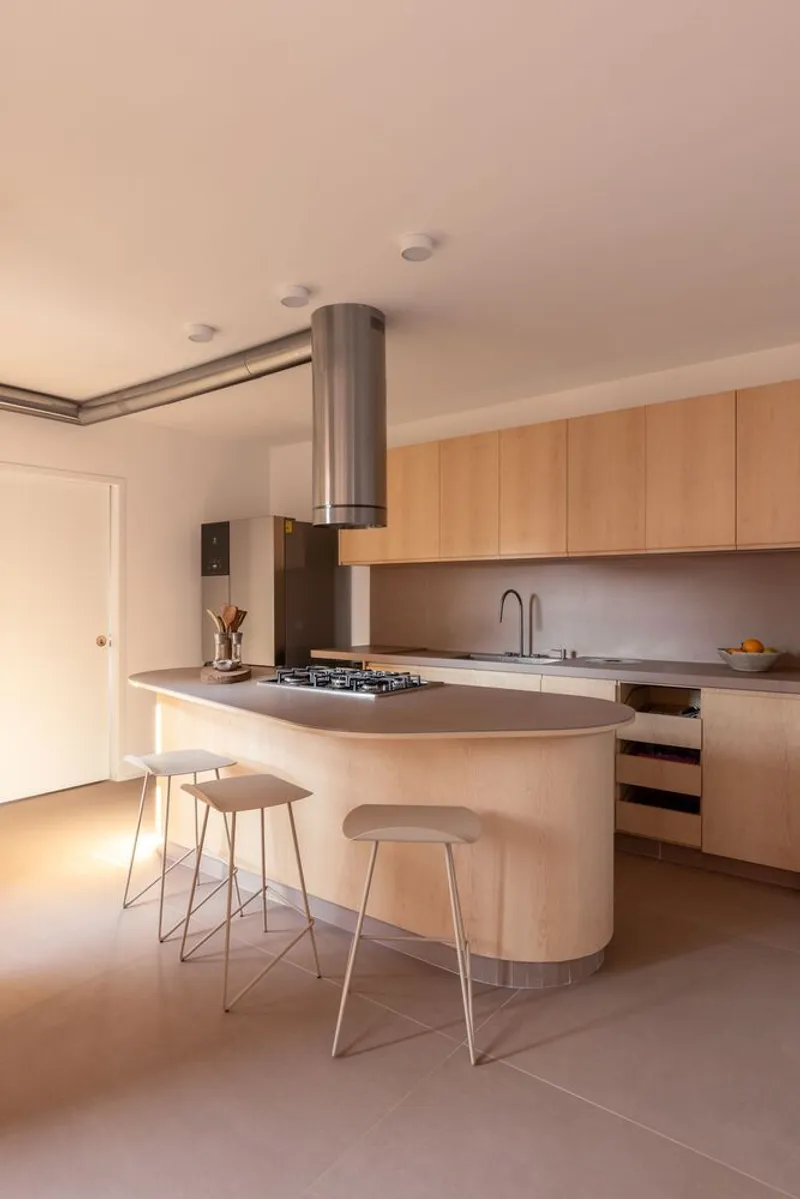
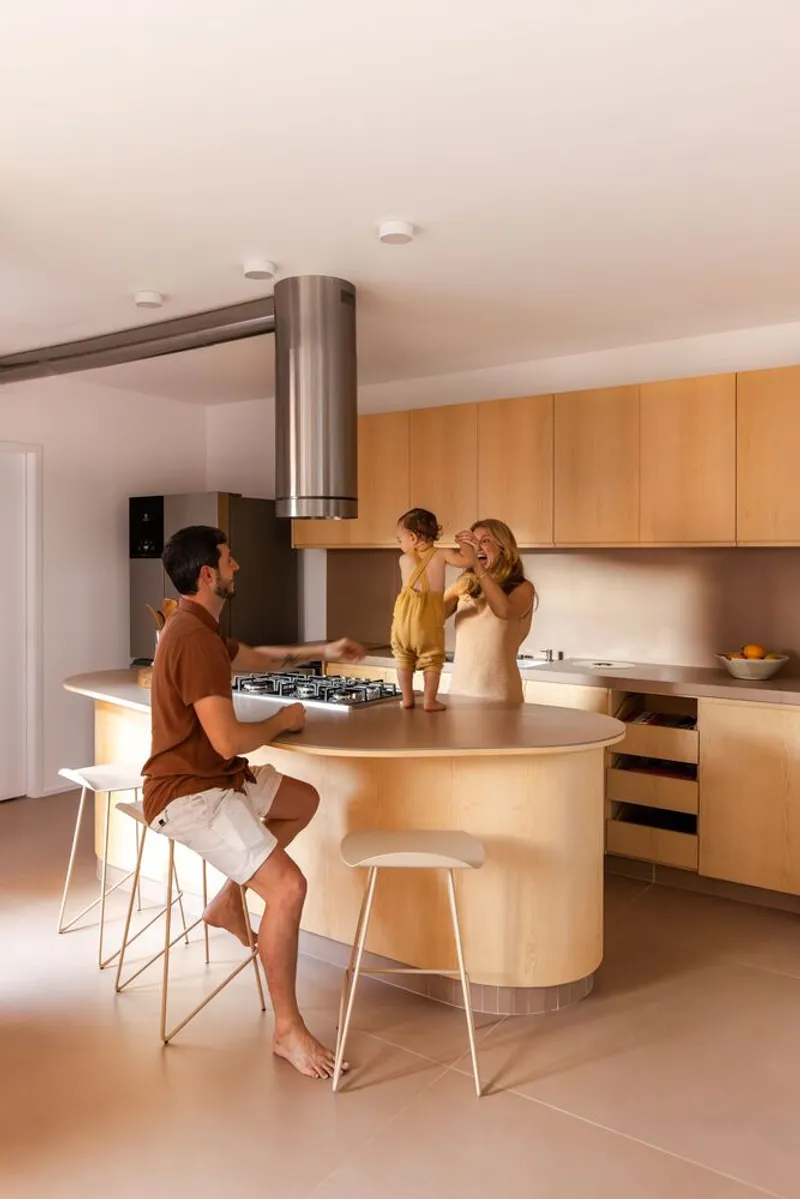
At the heart of the ground floor, the kitchen becomes a defining architectural gesture. Designed around a large, organically shaped central island, the kitchen dissolves traditional boundaries between cooking, dining, and living. Surrounded by essential support elements, it operates as both a functional workspace and a social anchor, reinforcing the home’s role as a place of gathering.

Upper Level: Leisure, Privacy, and Family Life
The upper floor extends the social experience outdoors through a generous terrace conceived as a solarium. Equipped with a barbecue area, this space functions as an extension of the interior, ideal for family gatherings and informal social events. The terrace strengthens the connection between indoor and outdoor living, a key desire expressed by the clients.
Private spaces on this level include the fully renovated master bedroom and the child’s room. Both were redesigned using earthy tones, natural wood, and soft textures that echo the material language of the rest of the house. The bathrooms were also completely updated, featuring neutral palettes, wood accents, and new surface finishes that enhance comfort while maintaining visual coherence.


Basement Level: Light, Landscape, and Circulation
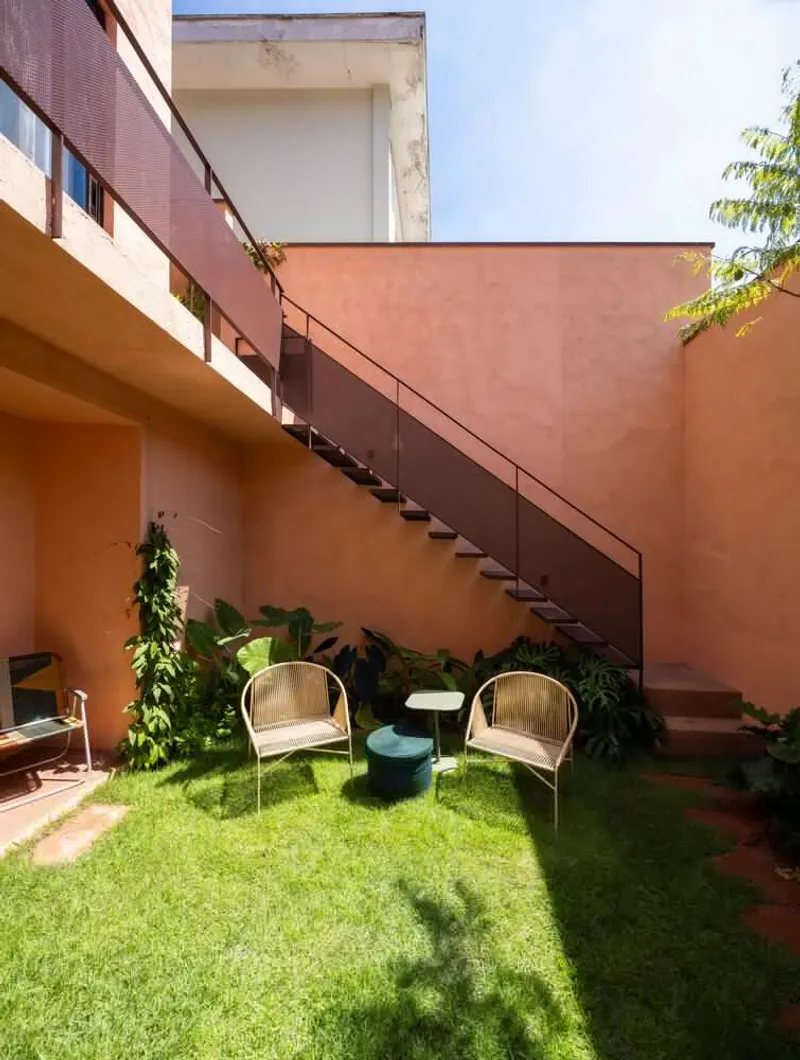
One of the project’s most impactful interventions occurs in the basement. Here, an existing built volume was removed and replaced with a garden courtyard that now serves as a primary source of natural light and ventilation for the surrounding bedrooms. This landscaped void introduces a natural backdrop to the private spaces, transforming what was once a dark, enclosed level into a serene and luminous environment.
External staircases wrap around the garden, creating an intuitive circulation route that connects the garage to the rest of the house. This interplay between architecture and landscape not only improves functionality but also reinforces the house’s spatial richness and vertical continuity.
Materiality and Architectural Identity
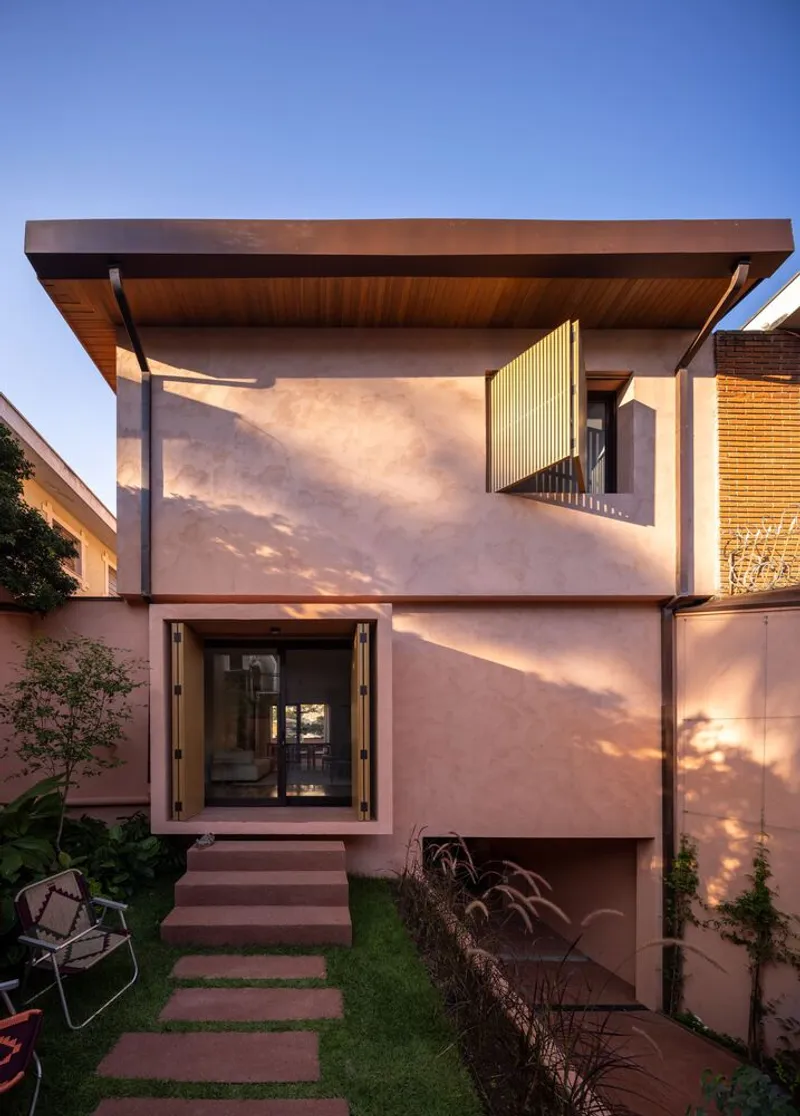
The entrance porch stands out as one of Corujas House’s defining moments. Framed by a garden and a sculptural concrete volume, it offers a tactile and inviting threshold that signals the home’s architectural intent from the street.
Material choices and the color palette draw strong inspiration from Mexican architecture, expressed through warm hues, natural textures, and robust finishes. Shades of pink define the chromatic identity of the house, harmonized with corten steel elements and custom woodwork. These materials create a sense of warmth and authenticity while aging gracefully over time, reinforcing the project’s emotional and material durability.

A Contemporary Brazilian Home Rooted in Everyday Life
Corujas House exemplifies how residential renovation can transcend functional upgrades to become a deeply human-centered architectural transformation. Through strategic spatial reorganization, thoughtful material selection, and a strong dialogue between interior and exterior spaces, Goiva Arquitetura delivers a home that responds precisely to its residents’ evolving needs.
In the dense urban fabric of São Paulo, the project stands as a refined example of contemporary Brazilian residential architecture: one that embraces warmth, adaptability, and the simple pleasures of living together.
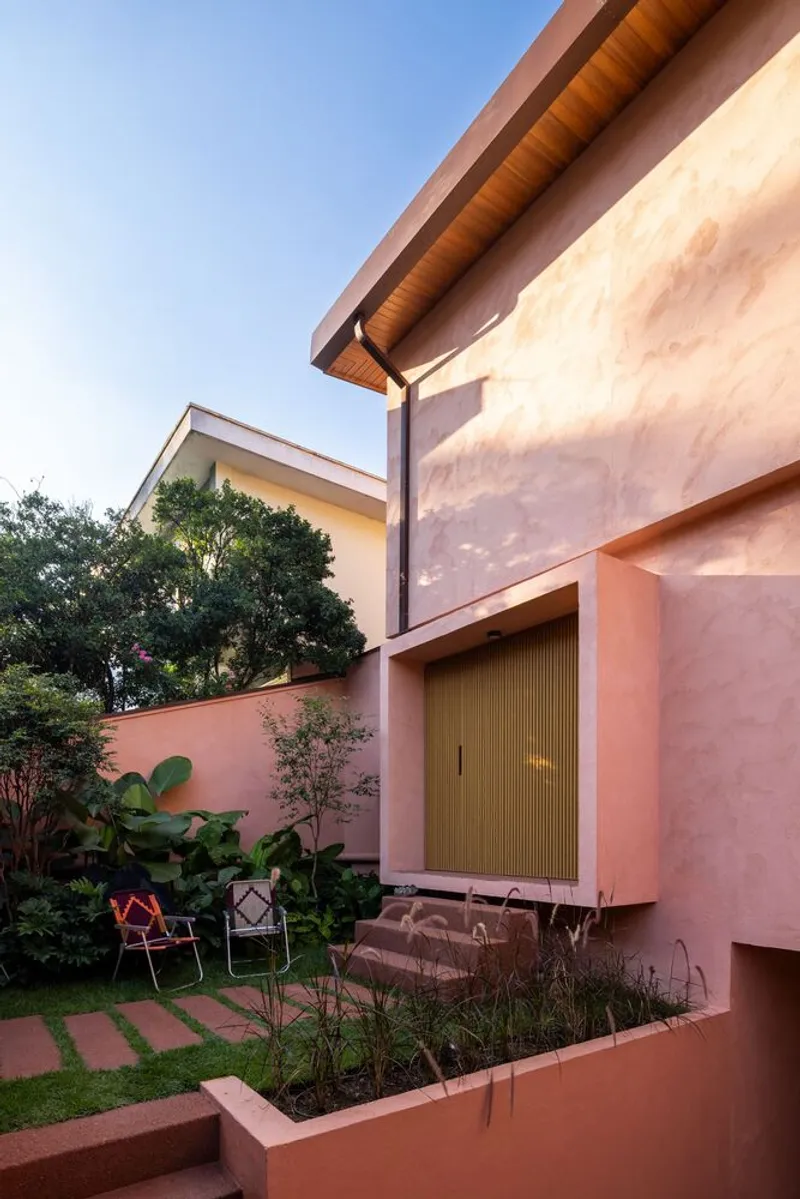
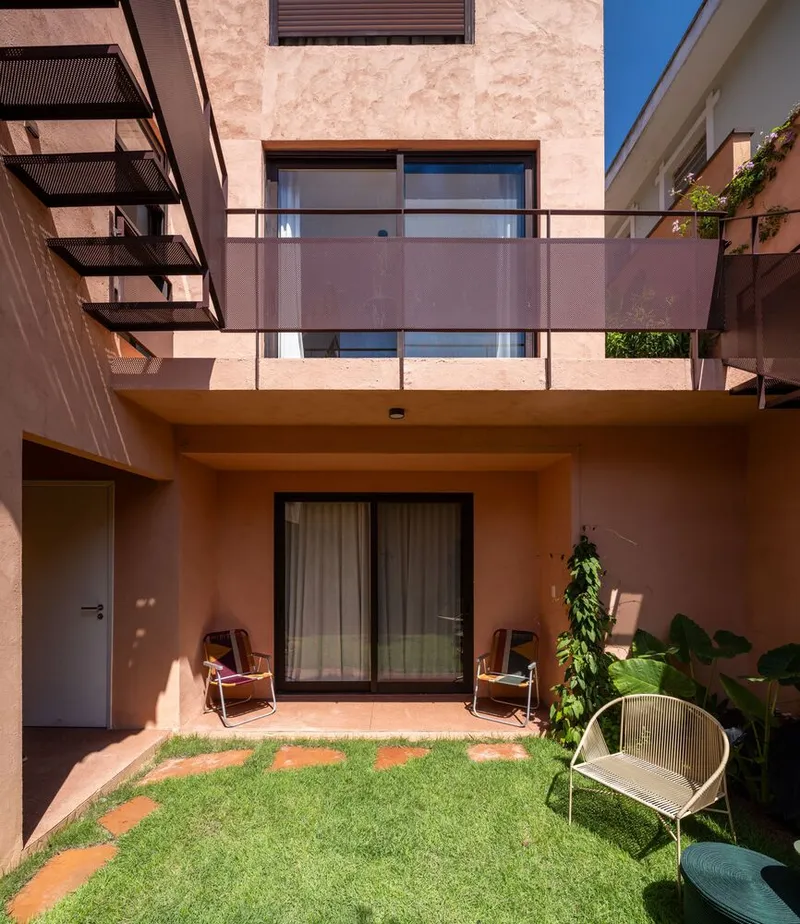
All photographs are works of Manuel Sá


Popular Articles
Popular articles from the community


GROUP A Strips a 1969 Rotterdam Harbor Headquarters to Its Frame and Wraps It in Timber Louvers
In Rotterdam's M4H harbor district, Ferro Offices reuses a 1969 frame, adds one timber storey and reaches BREEAM-NL Outstanding.

Jaramillo Van Sluys Arquitectura and Urbanismo Turn a Demolished Registry Lot in Quito into an Orchard Plaza
In Quito's Centro Histórico, a 2,800 m² plaza exposes the San Agustín convent wall and redraws its lost Augustinian orchard in volcanic stone.

longwave studio Reorganizes a 112 m² Tainan Apartment Around the Daily Routines of a Family and Two Cats
In Tainan, Taiwan, birch plywood, rust-red furniture and a freestanding plaster wall link arrival, storage, work and family life in one apartment.

U.GA Architects Wraps an Oval Rooftop Pool in Curved Board-Formed Concrete on Busan's Jeollidan-gil
In Busan's Jeonpo-dong, a 454 m² mixed-use block stacks a neighborhood facility, guest rooms and an oval rooftop pool inside spiraling concrete walls.

Similar Reads
You might also enjoy these articles


Hodi-Mandai Geram
Project Function: Preservation and revitalization of the Intangible heritage and socio-spatial identity of the Hodi by Housing, Cultural Memory Center, Sacred Grove, landscape, local tourism economy


Olio Towers: A Mid-Rise for Performers That Fuses Housing, Rehearsal, and Stage
Located blocks from Houston's Theater District, this modular tower stacks living units around a central performance atrium.

Oasis: Modular Green Housing Carved into Dhaka's Urban Fabric
A shortlisted Plugin Housing entry reclaims unauthorized settlements in Dhaka with stepped concrete volumes, green roofs, and ventilation-driven design.

Black Hole: A Floating Megastructure for the Post-Physical Era
Emiliano Mazzarotto envisions a spherical, self-scaling arena where e-sports, digital hotels, and holographic stadiums replace traditional public space.

Explore Housing Competitions
Discover active competitions in this discipline

Challenge to reimagine the Iron Throne

Photograph architecture without architects

Illustrate the lost glory of Angkor Wat - Render Challenge

Design challenge to reuse E-waste
Comments (0)
Please login or sign up to add comments
No comments yet. Be the first to comment!