
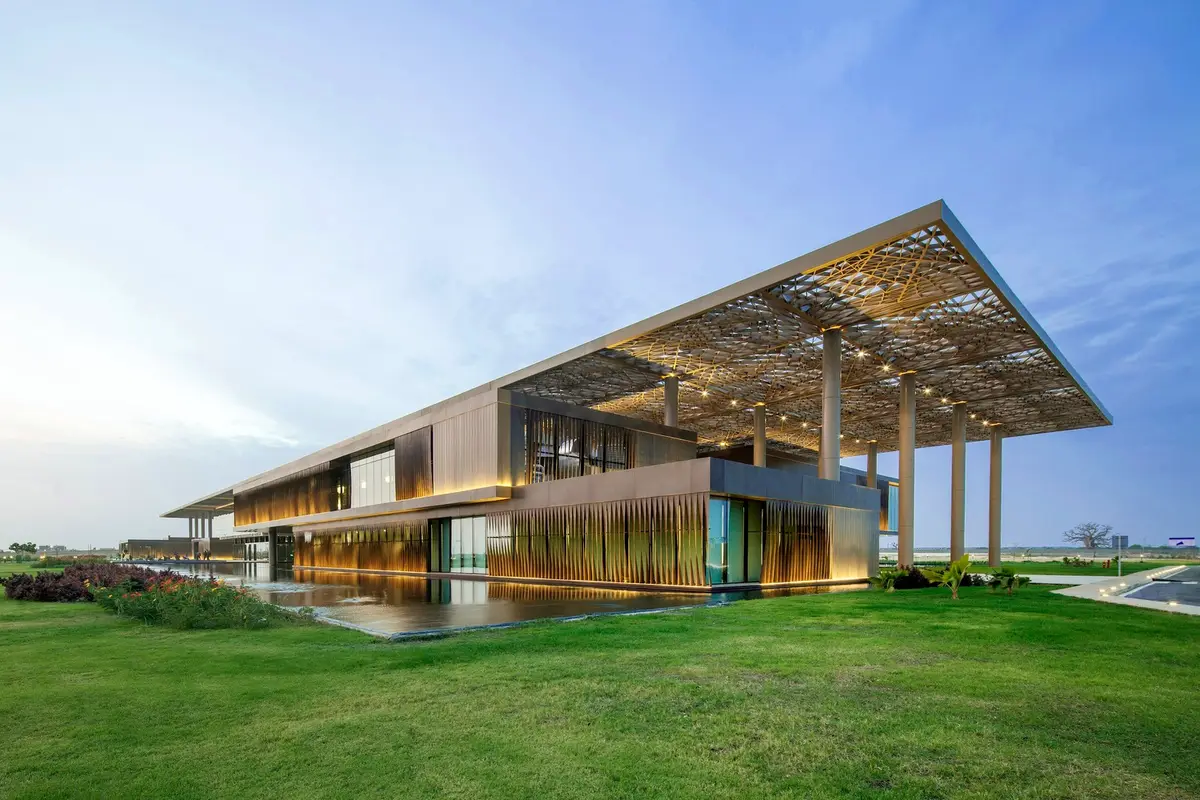
Dakar International Congress Center: A Landmark of Contemporary African Architecture by Tabanlıoğlu Architects
A contemporary congress center inspired by Senegal’s baobab trees, featuring reflective water, metal mesh façades, and unified spaces for global diplomatic gatherings.


The Dakar International Congress Center (CICAD), designed by Tabanlıoğlu Architects, stands as one of Senegal’s most significant contemporary architectural achievements. Completed in 2014 on the western tip of Dakar’s Cap-Vert peninsula, the 16,270-square-meter complex was inaugurated during the 15th Francophone Assembly, welcoming 75 world leaders. More than a venue for diplomacy, the project symbolizes Senegal’s heritage, its relationship with the land, and its aspirations for continental unity.
A Design Inspired by Senegal’s Landscape and the Baobab Tree
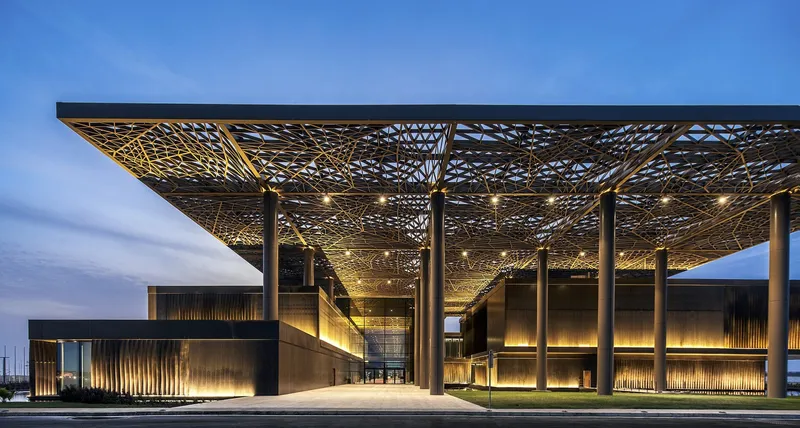
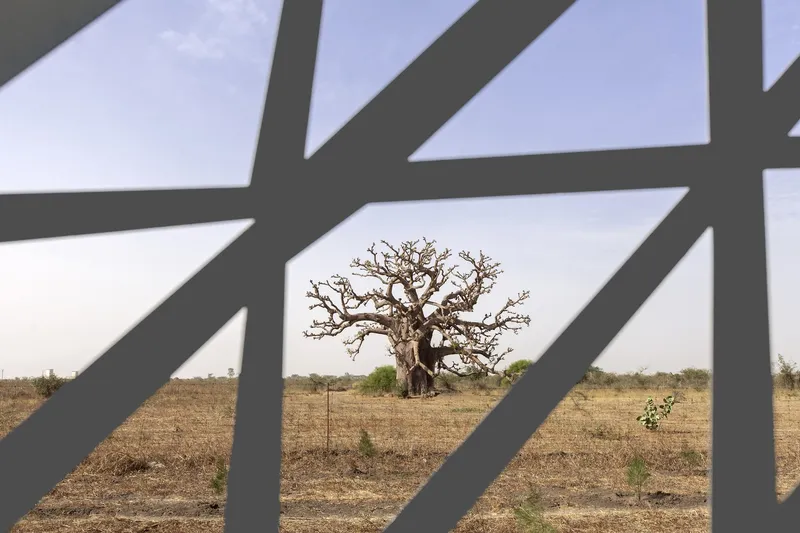
The architectural narrative draws deeply from the baobab tree, one of Senegal’s most iconic natural symbols. Known for its massive trunk: sometimes exceeding 25 meters in circumference: and for its millennia-long lifespan, the baobab represents endurance, wisdom, and communal gathering. Historically, Senegalese communities held councils, ceremonies, and key negotiations under the shade of baobabs.
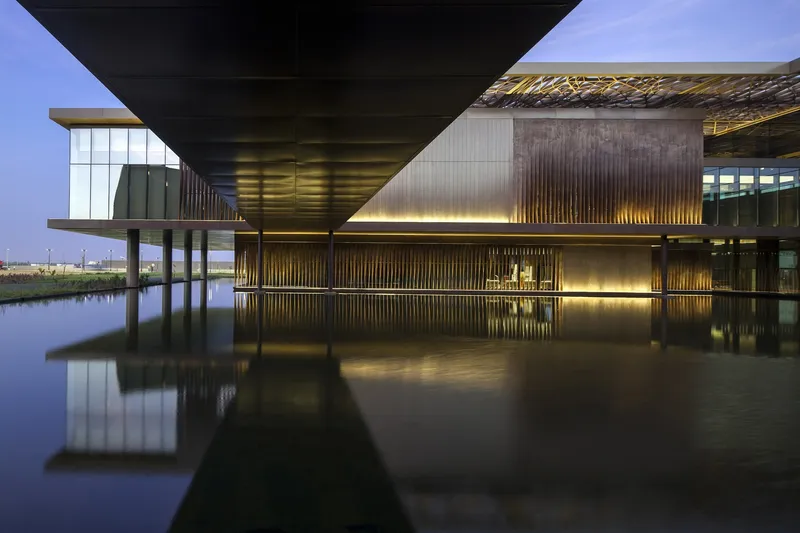
Tabanlıoğlu Architects translate this cultural memory into architecture through the building’s monolithic floating roof and collection of sheltered volumes. Like a giant canopy, the roof unifies multiple programmatic elements beneath one protective gesture, reflecting the baobab’s role as a civic anchor.
Water, Reflection, and Spatial Harmony
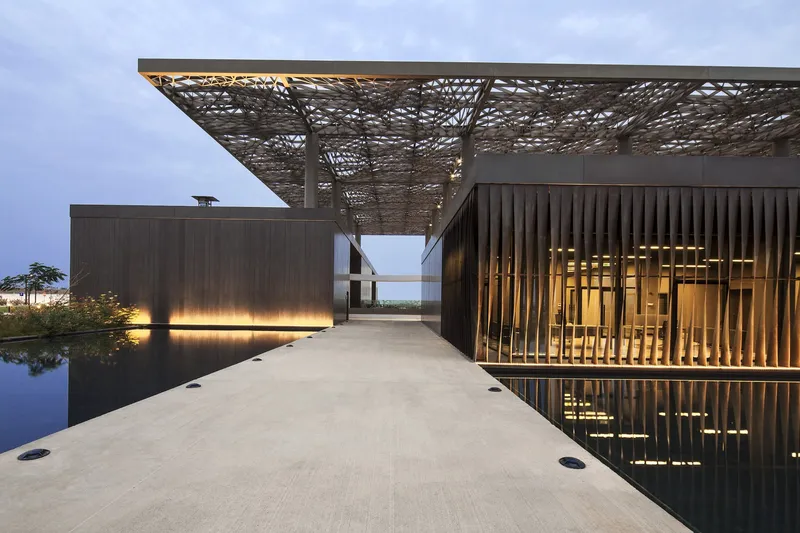
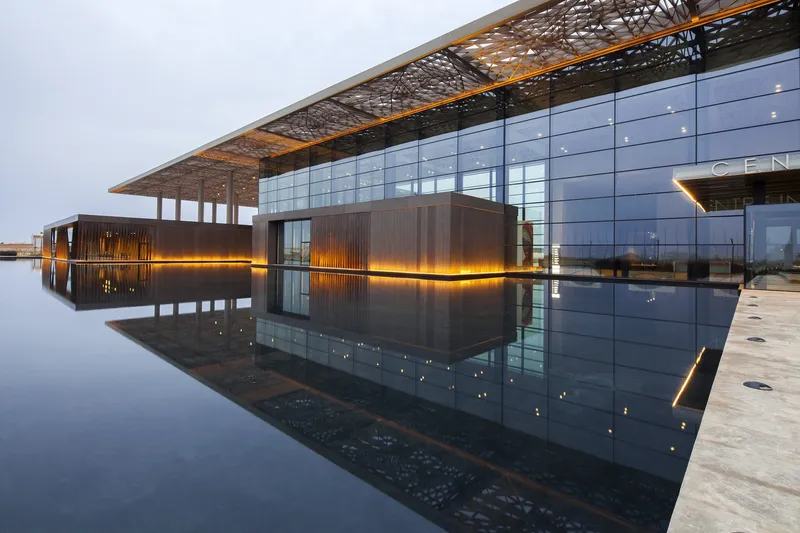
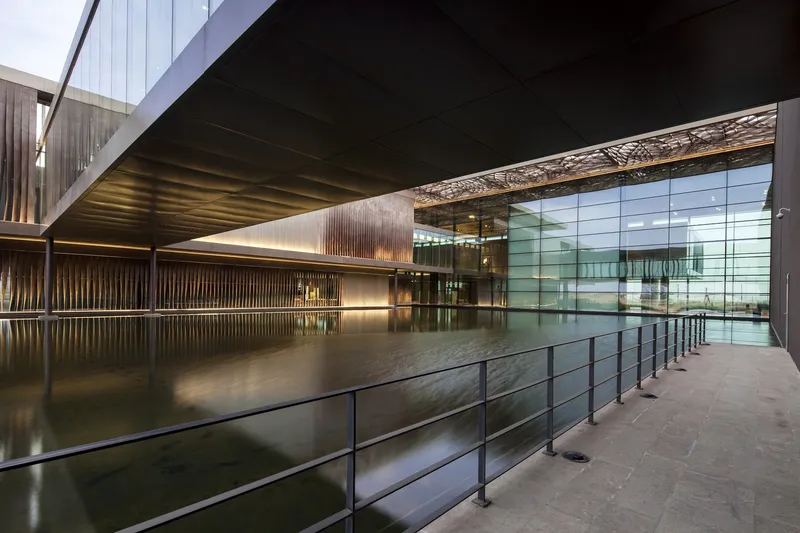
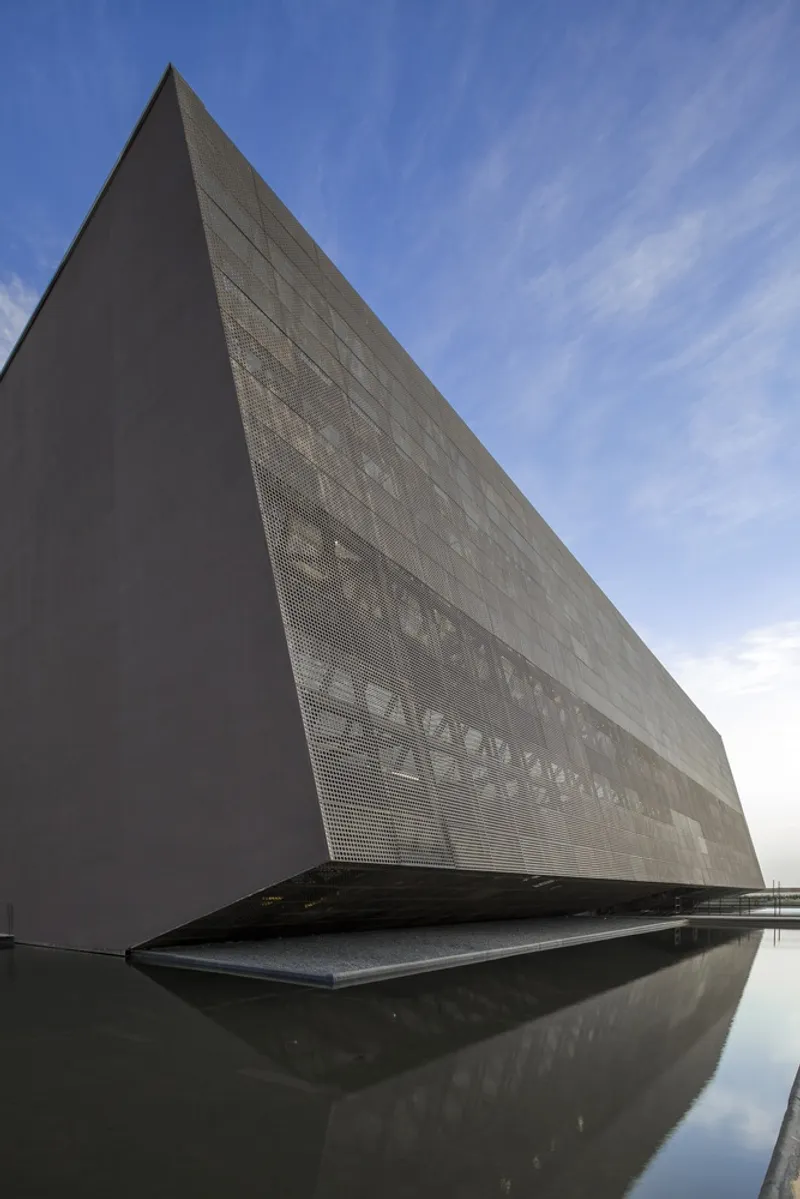
A network of still water pools surrounds the complex, creating a serene threshold and referencing the coastal identity of Dakar. These reflective surfaces act as both a security buffer and an atmospheric space that visually anchors the complex to the landscape. The presidential meeting rooms, administrative blocks, museum, and public areas are all treated as independent masses arranged along these water bodies, connected by bridges and walkways that evoke continuity, unity, and movement.
This approach mirrors the building’s political function, the gathering of diverse nations into a cohesive whole, reinforced through architectural composition.
A Protective Metal Veil: Climate Performance Through Design
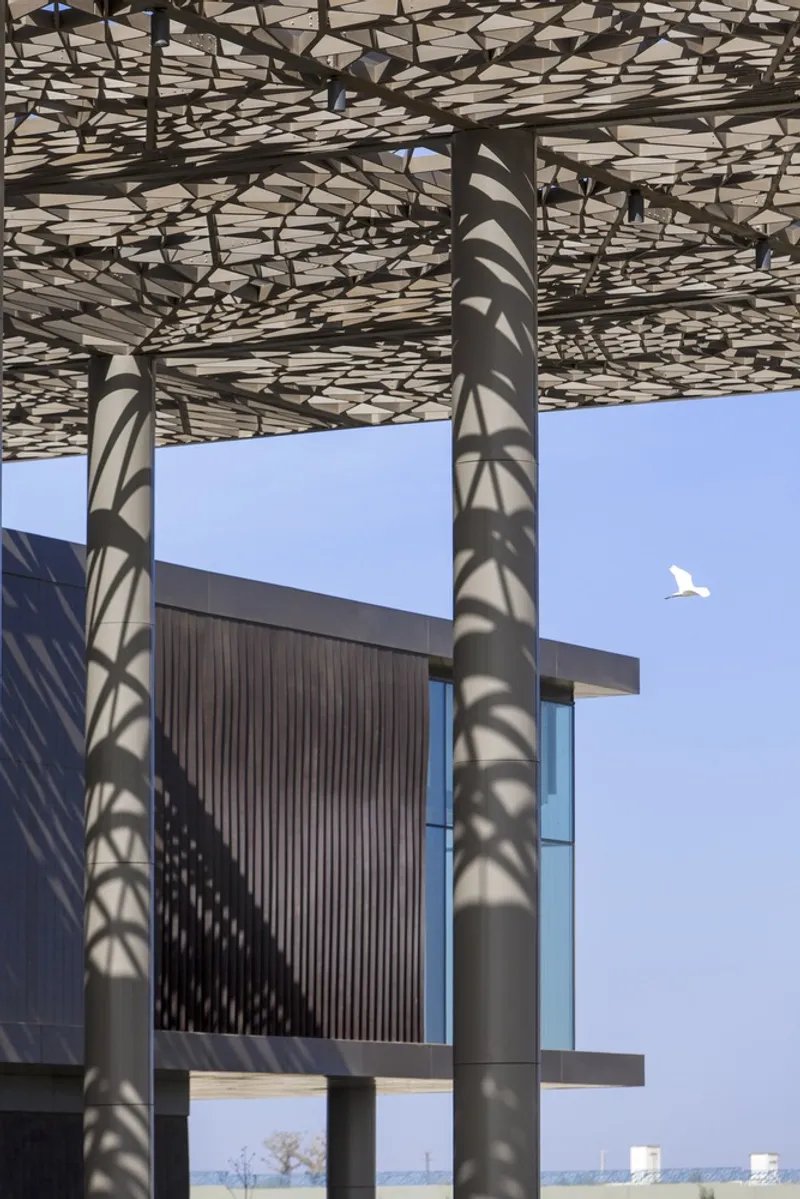
One of the building’s most striking elements is its semi-transparent perforated metal envelope, which wraps the rectilinear volumes with a shimmering, textural façade. Constructed from twisted vertical blades, the mesh performs as an advanced sun-shading system, protecting interior spaces from Dakar’s intense sunlight while preserving clear outward views.
The screen:
- Reduces heat gain and improves energy efficiency
- Filters daylight to create soft, ambient interiors
- Produces dynamic light patterns throughout the day
- Allows the building to visually merge with the surrounding water
At night, light radiating from the interior transforms the metal veil into an illuminated pattern of silhouettes and reflections, enhancing the building’s floating, ethereal presence.
Functional Organization for High-Level Diplomacy
As an international congress center designed for presidential assemblies, CICAD balances security, accessibility, and representational architecture. Multiple entrance points organize circulation clearly:
- Presidential entrance leads directly to the main conference hall
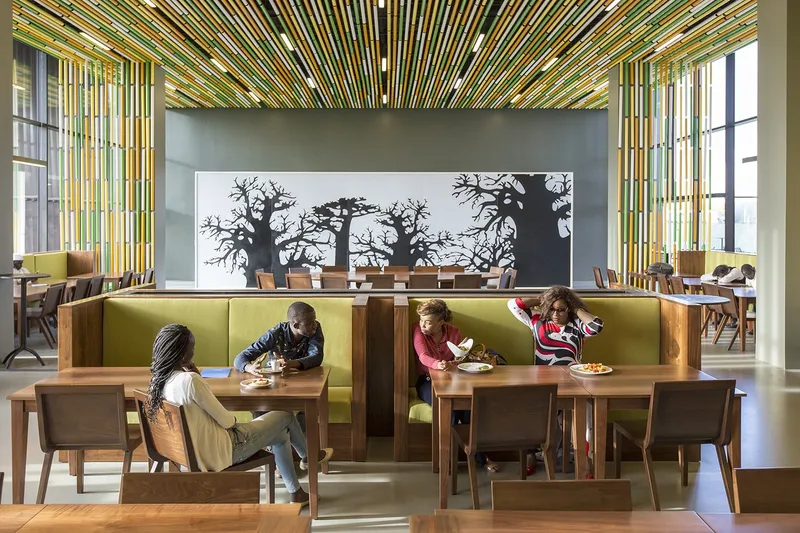
- Public access is distributed through the restaurant and adjacent fair zone
- VIP entrance connects discreetly to private lounges, a dedicated restaurant, and the museum
- Service entry is located on the north side for operational efficiency
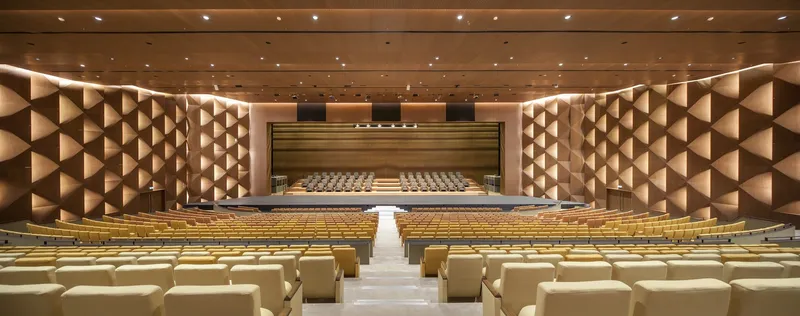
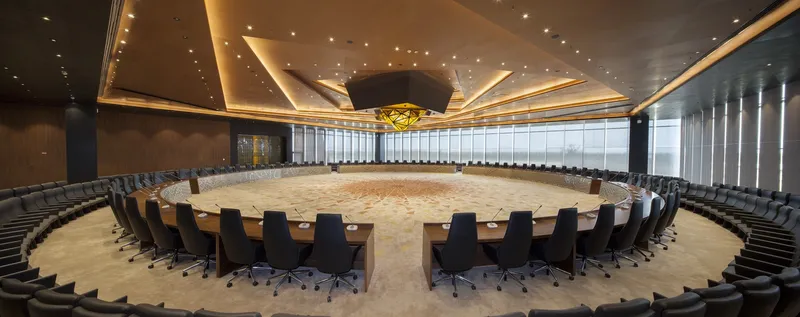
The main auditorium accommodates 1,500 delegates, with a long head table that positions presidents facing the assembly. Flanking spaces include VIP rooms, expert halls, and circulation areas designed to maintain both transparency and confidentiality, crucial for diplomatic environments.
Material Expression and Contemporary African Identity
The building’s aesthetic embodies strength, simplicity, and elegance, echoing its diplomatic purpose. While technologically advanced in structure, acoustics, and security systems, the design retains a strong sense of African modernism, using elemental materials and geometric clarity.
The metal mesh, reminiscent of woven textiles, creates a tactile, culturally anchored façade, while the water elements evoke Senegal’s coastal geography. Together, the materials celebrate African resilience, nature, and unity, aligning with Senegal’s national motto: “One People, One Goal, One Faith.”
A Landmark for Peace and Continental Dialogue
The Dakar International Congress Center is more than a building; it is a symbolic space for negotiation and cooperation, where leaders from around the world meet under a single roof. Like the ancient baobab that inspired it, the complex offers shelter, reflection, and continuity, becoming a powerful architectural statement for modern Africa.


Popular Articles
Popular articles from the community


David Ortega Stacks a Two-Story Mexico City Penthouse Around a Steel Stair and a Pergola-Shaded Roof Terrace
In Colonia Roma, a 300 m² penthouse uses oak joinery, a planted steel stair and a slatted roof pergola to make a new-build apartment feel like a house.

Architekt Andreas Gruber Scatters 23 Dark Timber Chalets Across a South Tyrolean Forest Edge
In Molini di Tures, Amonti Chalets breaks a resort into a hamlet of gabled timber houses, with parking, storage and services pushed into the slope.

GROUP A Strips a 1969 Rotterdam Harbor Headquarters to Its Frame and Wraps It in Timber Louvers
In Rotterdam's M4H harbor district, Ferro Offices reuses a 1969 frame, adds one timber storey and reaches BREEAM-NL Outstanding.

Jaramillo Van Sluys Arquitectura and Urbanismo Turn a Demolished Registry Lot in Quito into an Orchard Plaza
In Quito's Centro Histórico, a 2,800 m² plaza exposes the San Agustín convent wall and redraws its lost Augustinian orchard in volcanic stone.

Similar Reads
You might also enjoy these articles


Hodi-Mandai Geram
Project Function: Preservation and revitalization of the Intangible heritage and socio-spatial identity of the Hodi by Housing, Cultural Memory Center, Sacred Grove, landscape, local tourism economy


Olio Towers: A Mid-Rise for Performers That Fuses Housing, Rehearsal, and Stage
Located blocks from Houston's Theater District, this modular tower stacks living units around a central performance atrium.

Oasis: Modular Green Housing Carved into Dhaka's Urban Fabric
A shortlisted Plugin Housing entry reclaims unauthorized settlements in Dhaka with stepped concrete volumes, green roofs, and ventilation-driven design.

Black Hole: A Floating Megastructure for the Post-Physical Era
Emiliano Mazzarotto envisions a spherical, self-scaling arena where e-sports, digital hotels, and holographic stadiums replace traditional public space.

Explore African Architecture Competitions
Discover active competitions in this discipline

Challenge to reimagine the Iron Throne

Photograph architecture without architects

Illustrate the lost glory of Angkor Wat - Render Challenge

Bring back Drive In's
Comments (0)
Please login or sign up to add comments
No comments yet. Be the first to comment!