
Dapi Mountain Pavilion by Galaxy Arch: A Dialogue Between Nature, Heritage, and Architecture
Dapi Mountain Pavilion blends tradition and nature through rammed earth, slate, and local craftsmanship, honoring heritage near Guanyin Temple.


Architects: Galaxy Arch
Embracing a Sacred Landscape
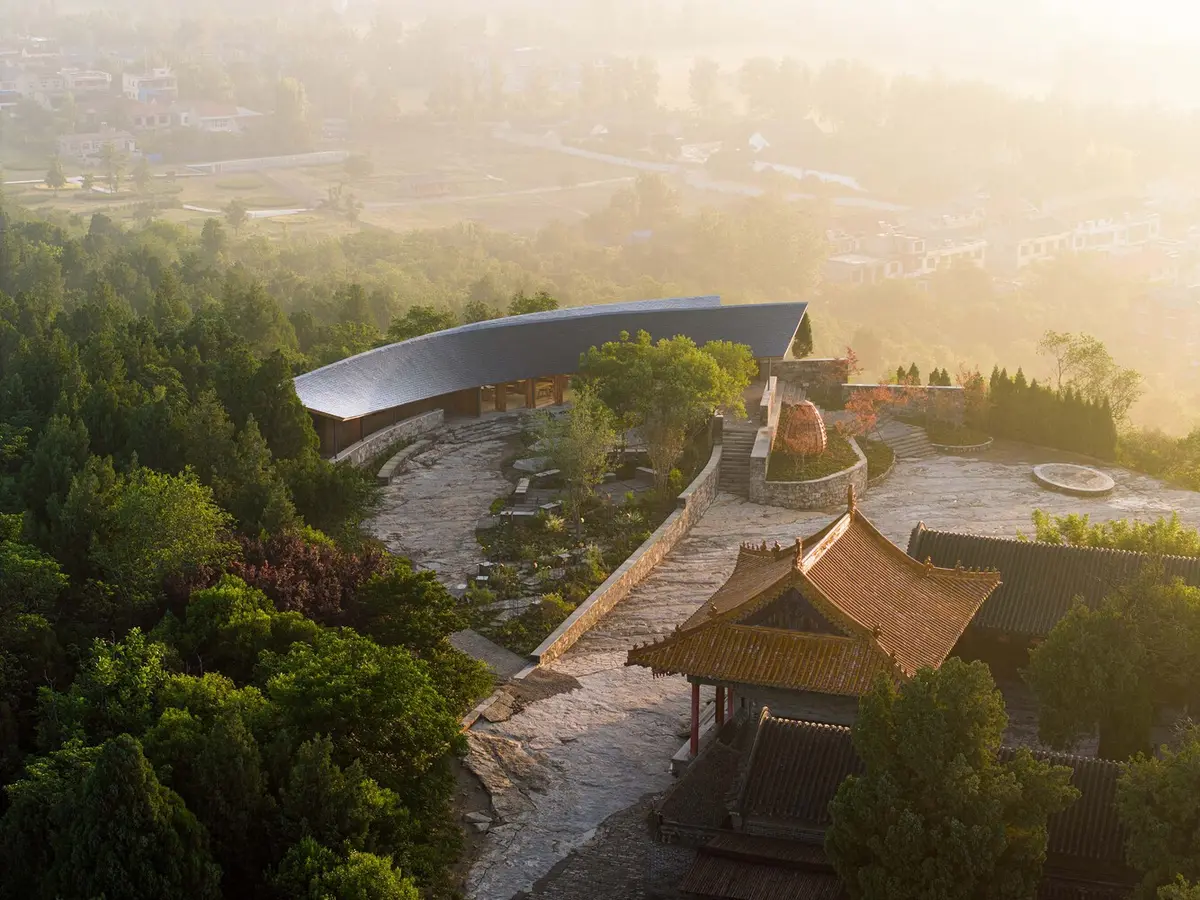
The Dapi Mountain Pavilion stands as a quiet tribute to the historical and cultural richness of Dapi Mountain, home to China's earliest and largest cliff-carved Buddha and the 700-year-old Guanyin Temple. Nestled on the northern edge of the mountain's cliff, the project replaces an abandoned bungalow with a visitor station that enhances spiritual and scenic experiences while promoting local intangible heritage.
Design Philosophy: Architecture as a Background"
Architecture must step back," says Galaxy Arch. Inspired by the site’s ancient temple cluster and meditative terrain, the design humbly integrates into the mountain's sacred context. A solitary 135-meter peak rising from flatlands, Dapi Mountain is composed of grey stone and verdant vegetation, setting a serene and spiritual atmosphere. This mood is echoed in the pavilion's material palette and spatial arrangement.
Site Integration and Spatial Strategy
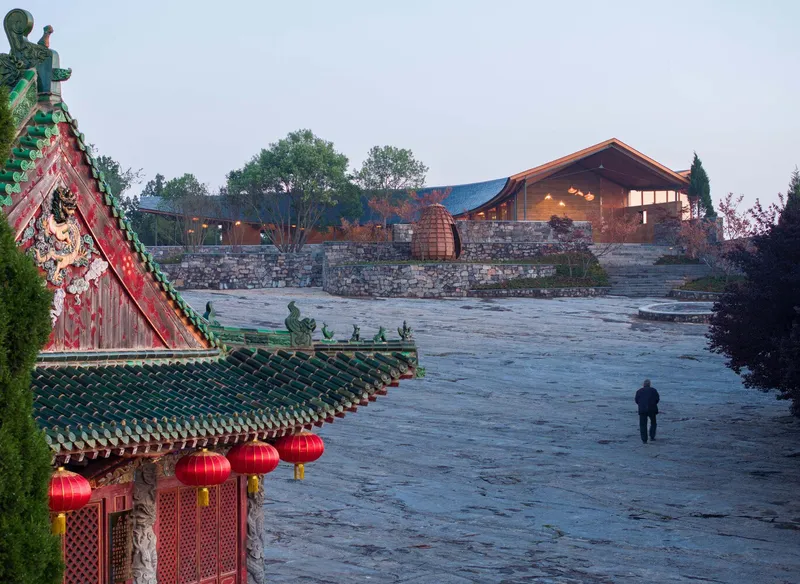
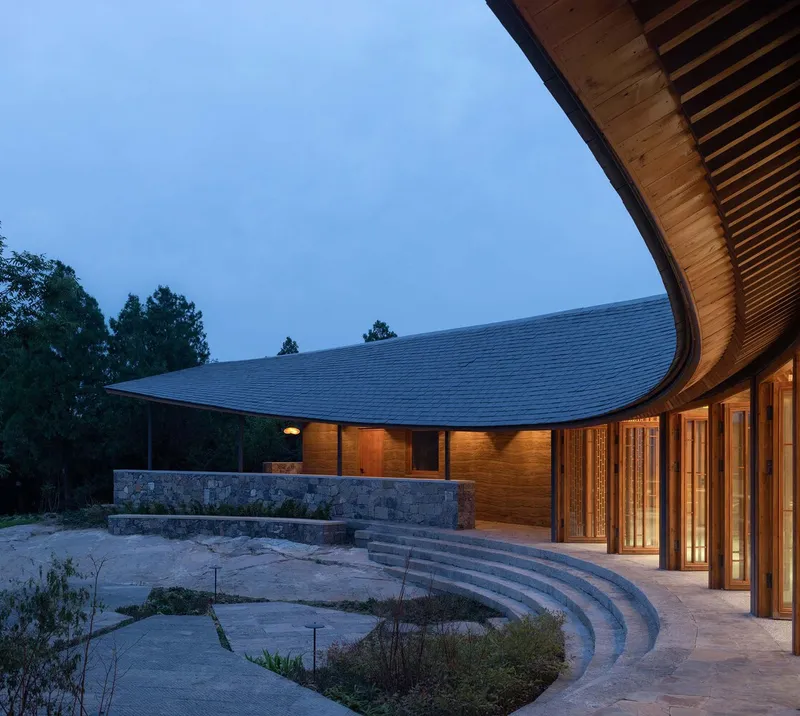
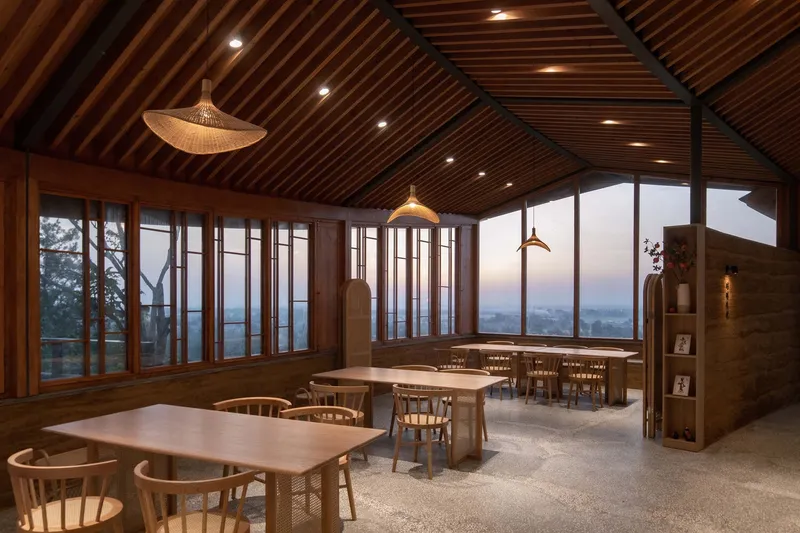
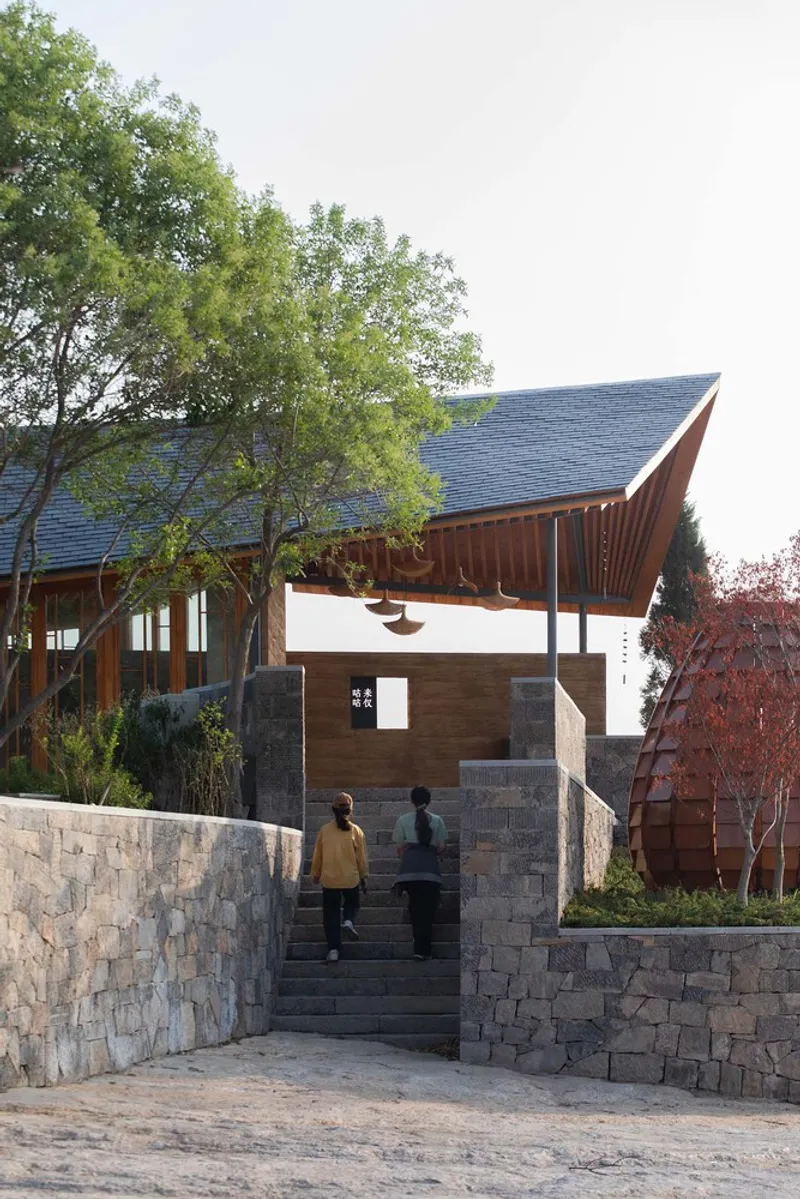
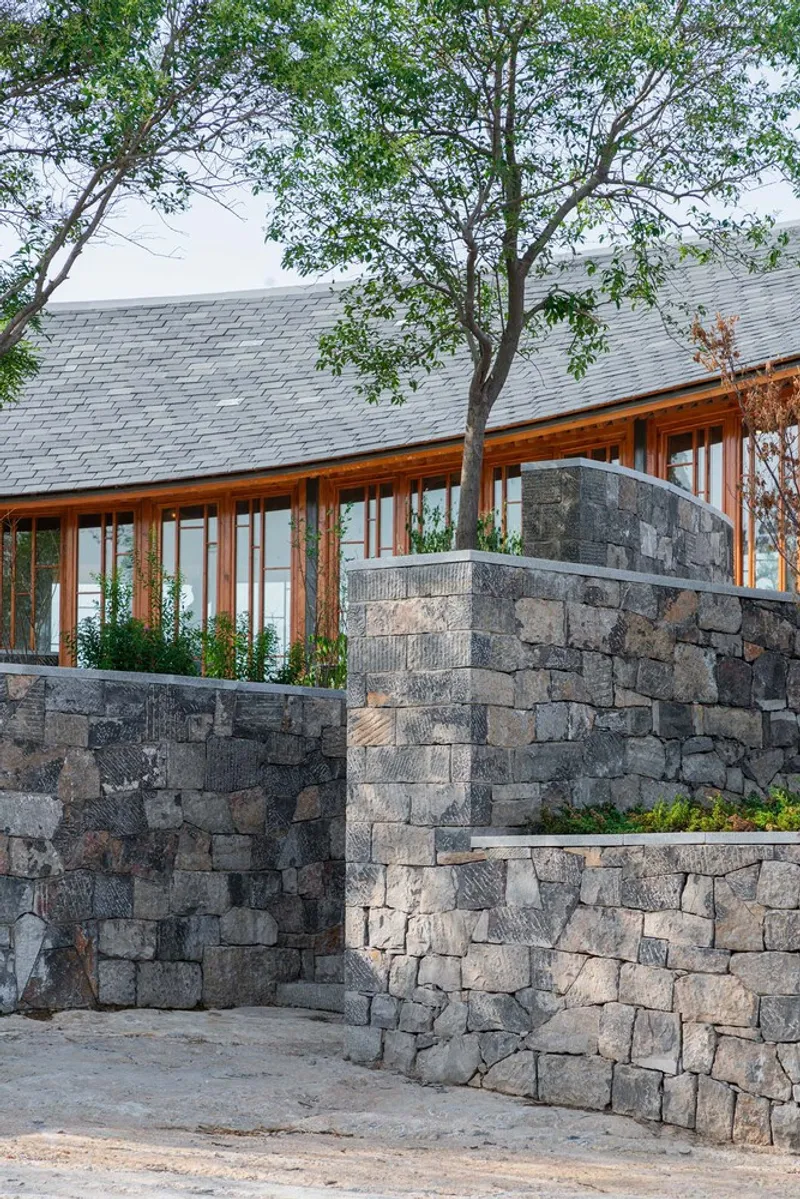
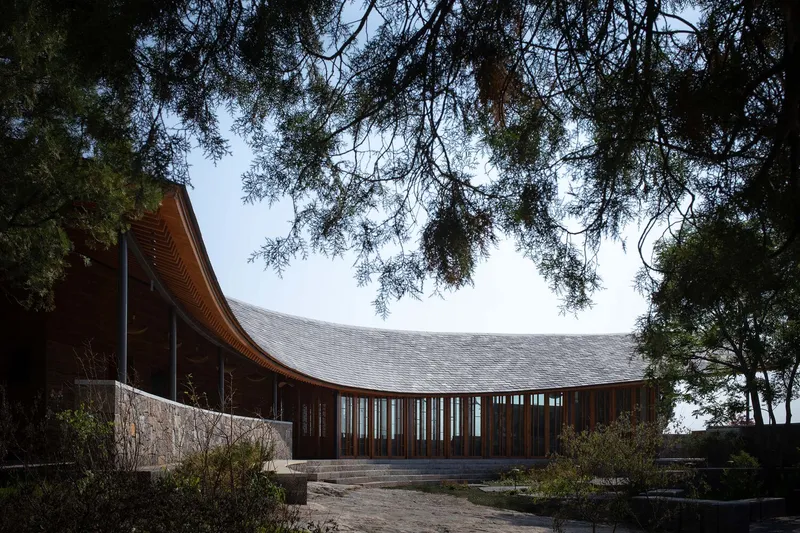
The architects reoriented the entrance from the west to the east to address a 2-meter elevation shift, offering visitors a dramatic ascent flanked by grey stone walls and red maple trees. The design preserves the original courtyard-like layout while connecting spaces through a low-slung, linear volume. An additional volume facing north maximizes views of the landscape, and the junctions of irregular roofs with intersecting ridges and valleys provide visual dynamism and functional drainage.
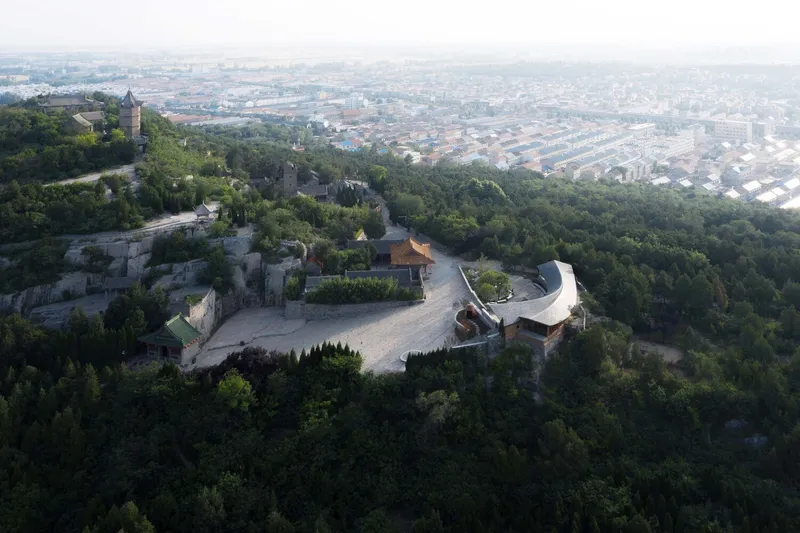
A Journey Through Space
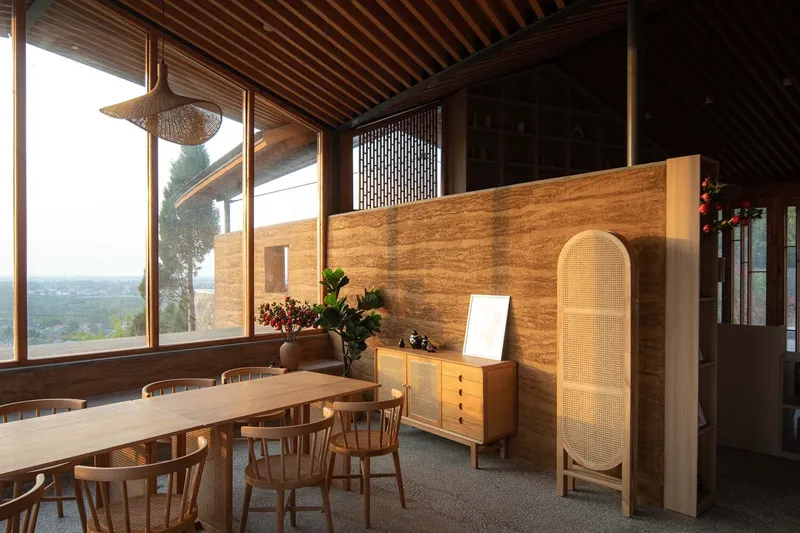
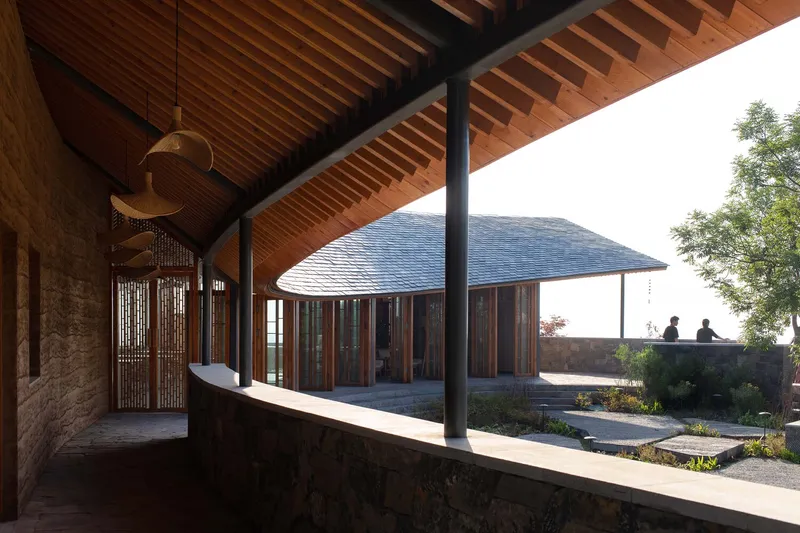
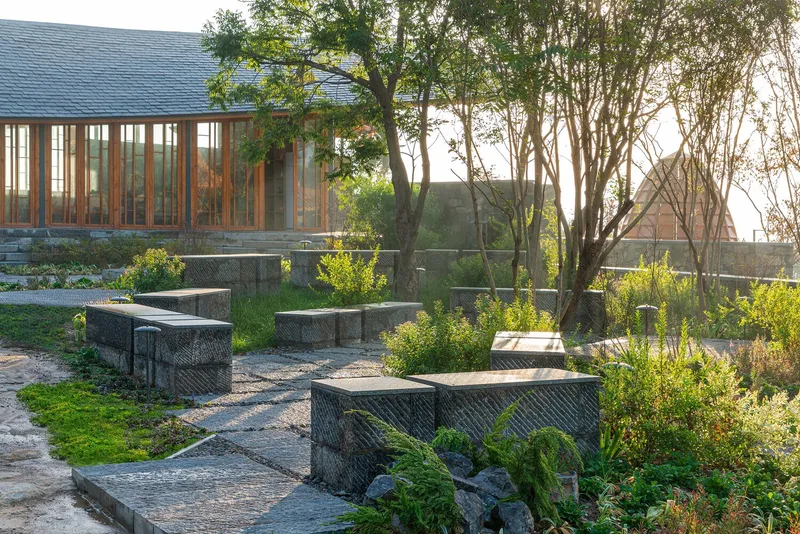
Entering from the main staircase leads visitors past a grey stone wall and into an open resting area facing a southern garden courtyard. From the northern windows, visitors can gaze upon the mountain vistas. A secondary entrance offers a different experience: a serene corridor lined with cypress trees, rammed earth walls, and textured stone elements, subtly separating the service area. Inside, furniture flows with the walls, creating a unified language through bookshelves, counters, and benches that enhance the sense of enclosure and flow.
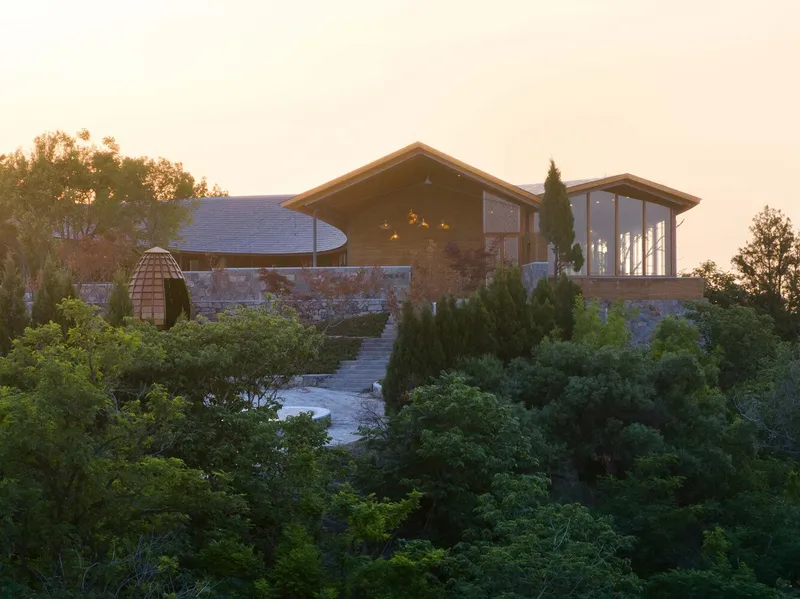
Contextual Form and Material Tactility
Respecting the architectural language of nearby heritage structures, the design features upturned eaves and a central lowered roofline. The building’s height is carefully restricted to remain below Guanyin Temple's gate. Local materials anchor the pavilion to its context: Taihang Mountain grey stone, preserved wood, rammed earth walls, and slate tiles. The slate, chosen for its feather-light appearance and weathered elegance, captures and reflects sunlight like a bird in motion.
Celebrating "Clay Gugu" Craftsmanship
A core theme of the pavilion is the traditional clay toy known as "Clay Gugu," which emits a whistling sound and is shaped like a cuckoo bird. This artifact symbolizes the region’s intangible heritage and the architectural craftsmanship. From the stone-carved Gugu at the entrance to installations in the courtyard, the project becomes an immersive exhibition of local culture. Rammed earth walls and carved elements showcase the manual skills of local artisans, harmonizing architecture with storytelling.
Building in Harmony with the Mountain
Due to restrictions on deep excavation in this geological heritage site, foundations were adapted to the terrain, ranging from 300mm to over 2m in depth. The construction process was hands-on and collaborative, involving iterative on-site adjustments to steel bending, roof tile overlap, gutter alignment, and custom joinery. Local artisans played a key role in shaping the pavilion’s authenticity, from hand-cut stone walls to custom wood windows.
Completion and Legacy
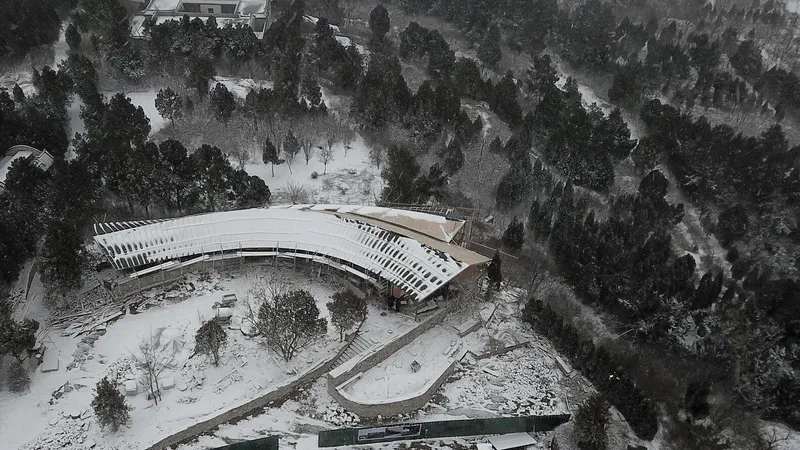
The year-long construction witnessed every season on Dapi Mountain, from lush summers to harsh winters. As spring returns, the finished pavilion emerges as a living element of the landscape—a cultural beacon rooted in tradition and renewed through design. With support from local authorities and craftspeople, Dapi Mountain Pavilion is more than architecture; it is a cultural platform for celebrating heritage, nature, and craftsmanship.
All photographs are works of
Xiaobin Lv, Arch-Exist


Popular Articles
Popular articles from the community


Hill & Cross Opera: Sculptural Opera House Architecture Shaped by Tallinn’s Landscape and Identity
Hill & Cross Opera reimagines opera house architecture in Tallinn through its sculptural hill, civic plaza, glass wave and a luminous cross.

The Musturak Paradise: Senior Living Architecture for a Connected Future in Temara, Morocco
The Musturak Paradise reimagines senior living architecture in Temara via private homes, social spaces, culture, community, and shared care.

The Ocean Hive: Sustainable Architecture for a Self-Sufficient Civilization at Sea
The Ocean Hive imagines sustainable architecture at sea, where modular habitats, algae, wave power and ocean waste sustain a growing colony.

Lunar Spiral: Space Architecture Shaped by the Mathematics of the Universe
Lunar Spiral reimagines space architecture through Fibonacci geometry, lunar regolith, levitating habitats, and self-sustaining Moon living.

Similar Reads
You might also enjoy these articles


Hodi-Mandai Geram
Project Function: Preservation and revitalization of the Intangible heritage and socio-spatial identity of the Hodi by Housing, Cultural Memory Center, Sacred Grove, landscape, local tourism economy


Olio Towers: A Mid-Rise for Performers That Fuses Housing, Rehearsal, and Stage
Located blocks from Houston's Theater District, this modular tower stacks living units around a central performance atrium.

Oasis: Modular Green Housing Carved into Dhaka's Urban Fabric
A shortlisted Plugin Housing entry reclaims unauthorized settlements in Dhaka with stepped concrete volumes, green roofs, and ventilation-driven design.

Black Hole: A Floating Megastructure for the Post-Physical Era
Emiliano Mazzarotto envisions a spherical, self-scaling arena where e-sports, digital hotels, and holographic stadiums replace traditional public space.

Explore Cultural Architecture Competitions
Discover active competitions in this discipline

Challenge to reimagine the Iron Throne

Photograph architecture without architects

Illustrate the lost glory of Angkor Wat - Render Challenge

Bring back Drive In's
Comments (0)
Please login or sign up to add comments
No comments yet. Be the first to comment!