
Dongguan Slow-Traffic System: A Modern Integration of Urban Design and Green Architecture
The article explores Dongguan's innovative Slow-Traffic System, integrating sustainable urban design, green spaces, and pedestrian-friendly infrastructure.


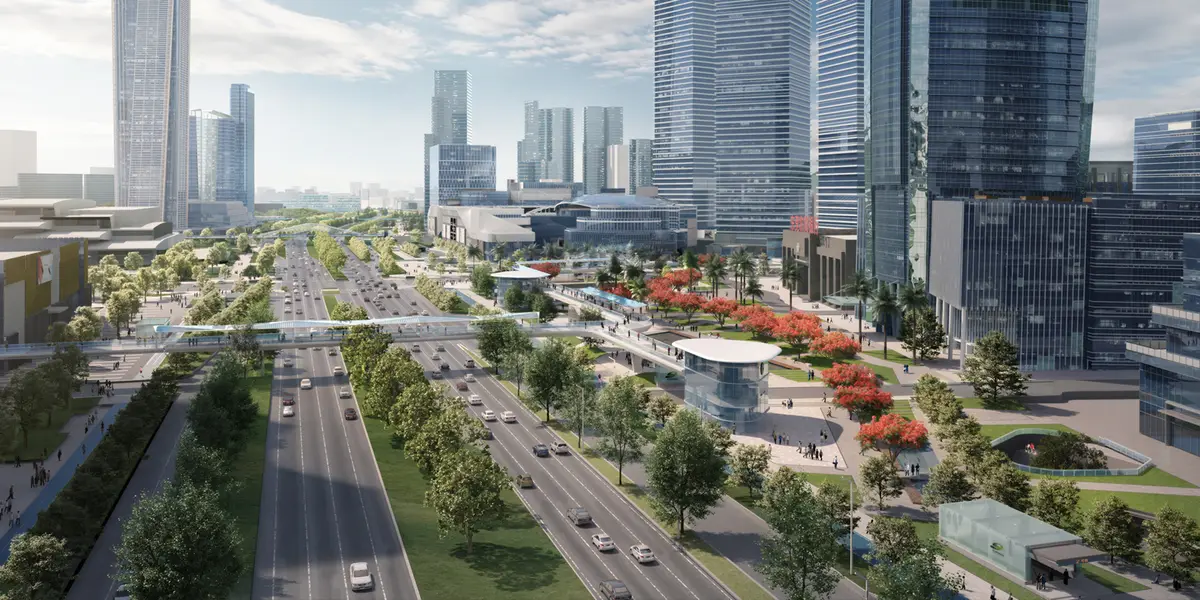
The Dongguan Slow-Traffic System, designed by eLandscript Studio, is a groundbreaking urban development project that reflects the city's commitment to sustainability, connectivity, and user-centric urban design. Situated in Dongguan, China, this ambitious project spans 2.48 million square meters and redefines public spaces with its innovative "Social Loop & Green Necklace" concept.

Project Overview
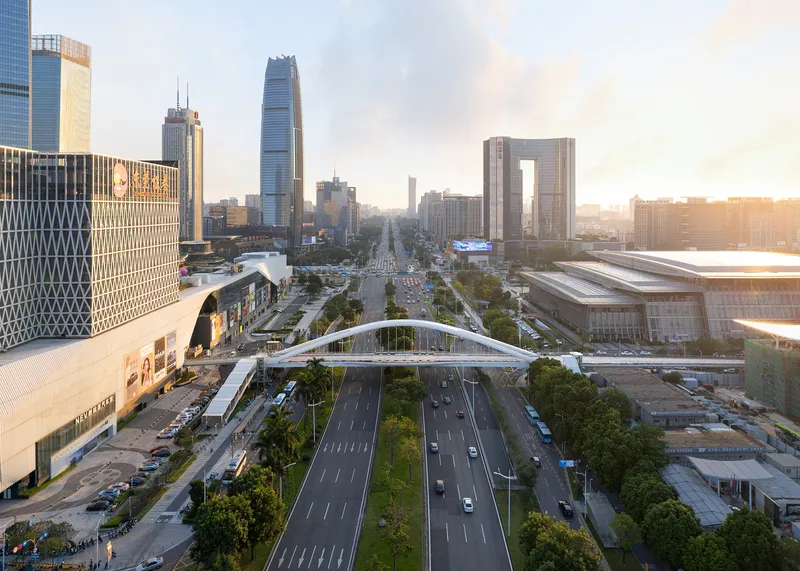
As Dongguan evolves into a manufacturing and economic powerhouse, the influx of talent and the expansion of public infrastructure have driven the need for pedestrian-friendly spaces. The Slow-Traffic System spans 3 kilometers of the central zone and is part of an 8-kilometer green corridor planned for the region.
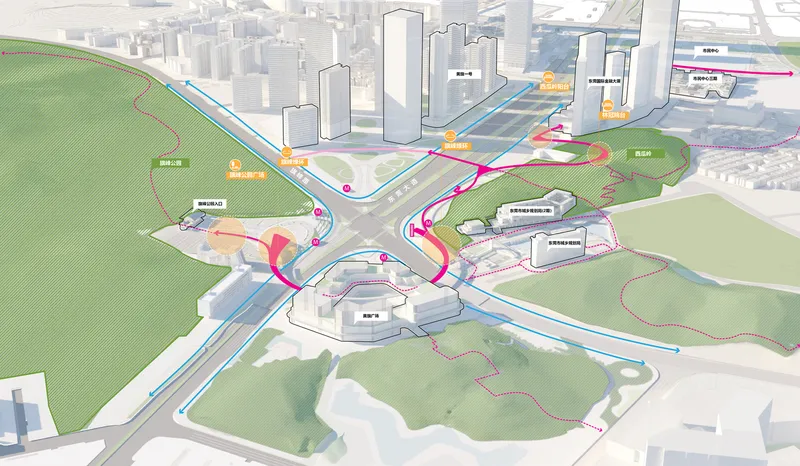
The system integrates pedestrian bridges, green spaces, and urban amenities, creating a seamless connection between key areas like Central Park, Civic Center, and Qifeng Park. It prioritizes accessibility and aesthetic appeal, with features such as vertical lift cores, viewing platforms, and integrated retail spaces.

Vision: Social Loop and Green Necklace
The design of the Dongguan Slow-Traffic System is driven by two key visions: the Social Loop and the Green Necklace.
Social Loop: Connecting the Urban Core
The Social Loop is a 1.5-kilometer pedestrian-friendly network that links high-density areas in Dongguan's city center. Highlights include:
- Bridge No. 1 (Park Section):This section blends an elevated bridge with subway entrances, sunken plazas, and green spaces. Once the subway construction is completed, it will serve as a vibrant shared space for citizens.
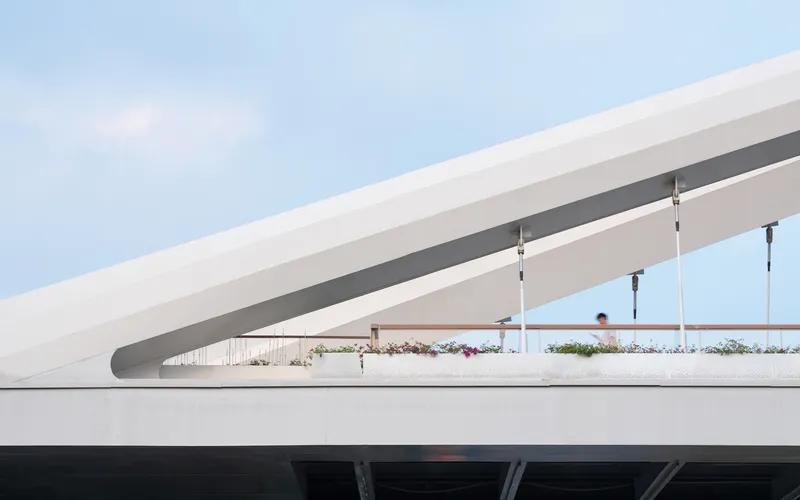
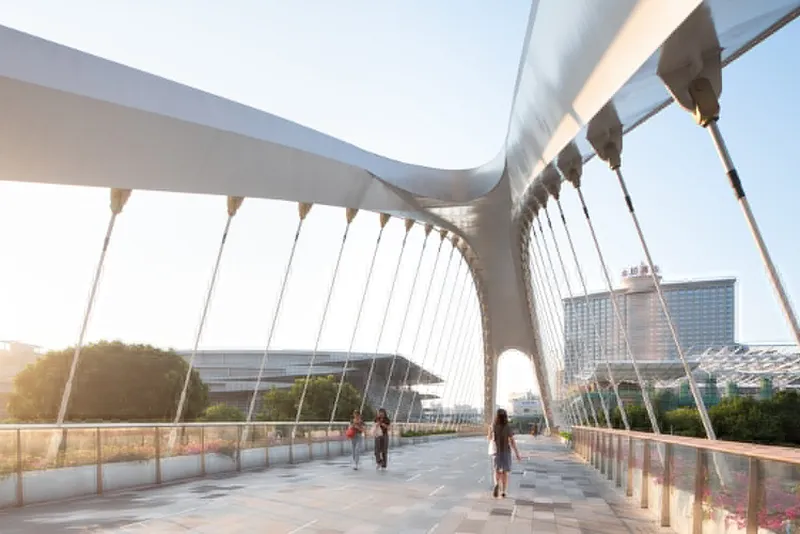
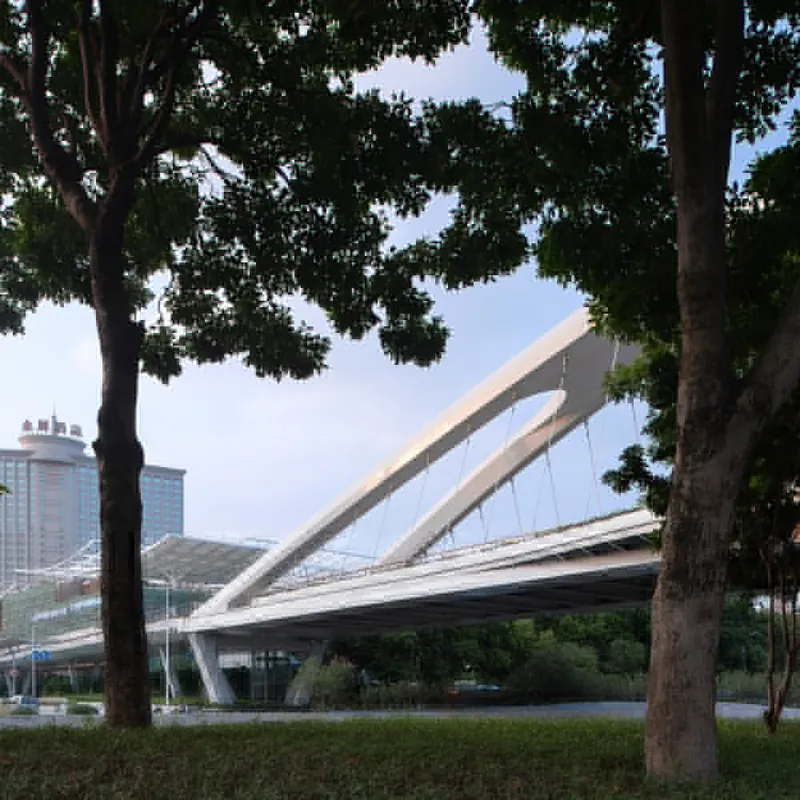
- Bridge No. 2:Featuring a continuous steel beam structure with a 103.5-meter span, this bridge is equipped with flower boxes and viewing platforms, encouraging relaxation and interaction. The design includes a 10-meter arch supported by 54 cables for structural elegance and safety.
The Social Loop effectively bridges disconnected urban parcels, enhancing mobility while adding value to the surrounding real estate.
Green Necklace: Integrating Nature and Urban Living
The Green Necklace is a tree-canopy pedestrian route that connects natural and urban landmarks, including:
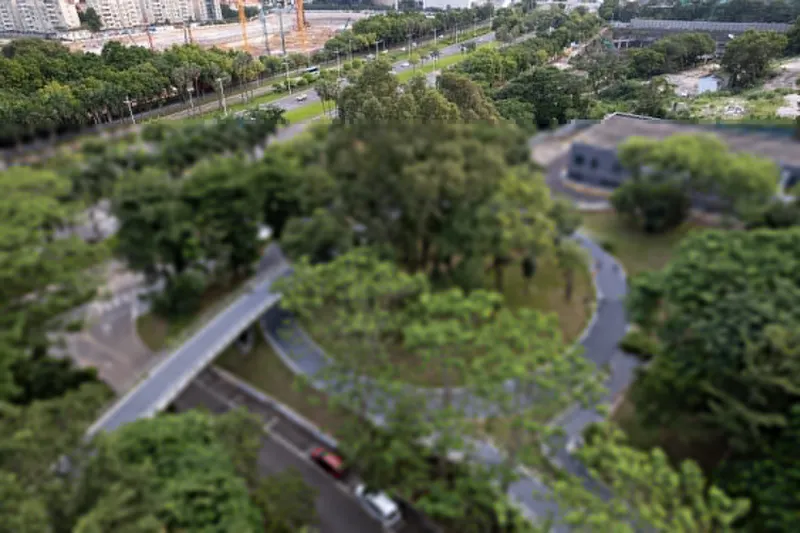
- Xigualing Area and Qifeng Park:This section ties the city core with nature, integrating features like a tree-canopy stage, pergola trellises, and accessible platforms.
- Huangqi Plaza and Hiking Trails:The route seamlessly connects Huangqi Plaza with the Qifeng Mountain hiking trails, providing opportunities for leisure and outdoor activities.
The Green Necklace emphasizes the preservation of existing trees and green corridors, ensuring harmony with the natural environment.

Innovative Features
1. Vertical Accessibility
The project integrates vertical lift cores, making it easier for pedestrians to navigate different levels while maintaining connectivity to retail spaces.
2. Sustainable Construction
By avoiding the removal of existing trees and using eco-friendly materials, the system demonstrates a strong commitment to sustainable urban development.
3. Multi-Use Public Spaces
The inclusion of sunken plazas, viewing platforms, and integrated retail transforms the system into a dynamic hub for community interaction and leisure.

Benefits to Dongguan
The Dongguan Slow-Traffic System has far-reaching implications for the city's development:
- Enhanced Mobility:The pedestrian bridges and interconnected pathways reduce reliance on vehicles, encouraging sustainable transportation.
- Community Building:The vibrant shared spaces foster a sense of community and improve the quality of life for residents.
- Economic Growth:Improved connectivity and appealing urban design increase property values and attract investments in the area.


Future Developments
The construction of key sections, such as the Qifeng Park connection and Bridge No. 1, is planned to align with ongoing subway and urban infrastructure projects. These developments will further enhance the system’s functionality and appeal.
The Dongguan Slow-Traffic System is a pioneering example of how urban planning can balance growth, sustainability, and quality of life. By prioritizing pedestrian-friendly spaces and integrating green corridors, the project serves as a model for cities worldwide striving to create smarter, greener urban environments.
For more insights into the innovative features of the Dongguan Slow-Traffic System, explore its design philosophy and contribution to modern urban living.

All the photographs are work of Tianpei Zeng


Popular Articles
Popular articles from the community


Juan García Correa, John González and Claudia Rueda Sink a Circular Amphitheater into a Manizales Engineering Building
On the La Nubia campus in Manizales, Colombia, the S1 Building folds labs and offices into a hillside of ramped lawns that double as a campus route.

U.GA Architects Wraps an Oval Rooftop Pool in Curved Board-Formed Concrete on Busan's Jeollidan-gil
In Busan's Jeonpo-dong, a 454 m² mixed-use block stacks a neighborhood facility, guest rooms and an oval rooftop pool inside spiraling concrete walls.

David Macias Steps a Doorless Stone and Plaster House Down a Tropical Colombian Hillside
In the humid hills of Colombia, Threshold House replaces the front door with an open void and terraces its 850 m² down the slope instead of fighting it.

GROUP A Strips a 1969 Rotterdam Harbor Headquarters to Its Frame and Wraps It in Timber Louvers
In Rotterdam's M4H harbor district, Ferro Offices reuses a 1969 frame, adds one timber storey and reaches BREEAM-NL Outstanding.

Similar Reads
You might also enjoy these articles


Hodi-Mandai Geram
Project Function: Preservation and revitalization of the Intangible heritage and socio-spatial identity of the Hodi by Housing, Cultural Memory Center, Sacred Grove, landscape, local tourism economy


Olio Towers: A Mid-Rise for Performers That Fuses Housing, Rehearsal, and Stage
Located blocks from Houston's Theater District, this modular tower stacks living units around a central performance atrium.

Oasis: Modular Green Housing Carved into Dhaka's Urban Fabric
A shortlisted Plugin Housing entry reclaims unauthorized settlements in Dhaka with stepped concrete volumes, green roofs, and ventilation-driven design.

Black Hole: A Floating Megastructure for the Post-Physical Era
Emiliano Mazzarotto envisions a spherical, self-scaling arena where e-sports, digital hotels, and holographic stadiums replace traditional public space.

Explore Vertical Streets Competitions
Discover active competitions in this discipline

Challenge to design locus for the upliftment of human rights

Challenge to reimagine the Iron Throne

Photograph architecture without architects

Illustrate the lost glory of Angkor Wat - Render Challenge
Comments (0)
Please login or sign up to add comments
No comments yet. Be the first to comment!