

Eco-Luxury Safari Lodge: Madwaleni River Lodge by Luxury Frontiers
An immersive eco-luxury safari lodge in South Africa unites Zulu heritage, sustainable design, and rewilded landscapes at Babanango Reserve.


A Rewilded Retreat Celebrating Zulu Heritage and Sustainable Luxury
Nestled within the vast 20,000-hectare Babanango Game Reserve in KwaZulu-Natal, South Africa, the Madwaleni River Lodge by Luxury Frontiers is a striking example of an eco-luxury safari lodge that blends sustainable design, cultural storytelling, and immersive wildlife experiences. Once home to cattle farms, the reserve is now the stage for one of Southern Africa’s largest rewilding initiatives, which reintroduced the Big Five after a 150-year absence. Against this backdrop of renewal, the lodge emerges as both a sanctuary and a celebration of the land's rich historical, tribal, and ecological legacy.


Designing with Nature: Architecture Inspired by the Zulu Shield
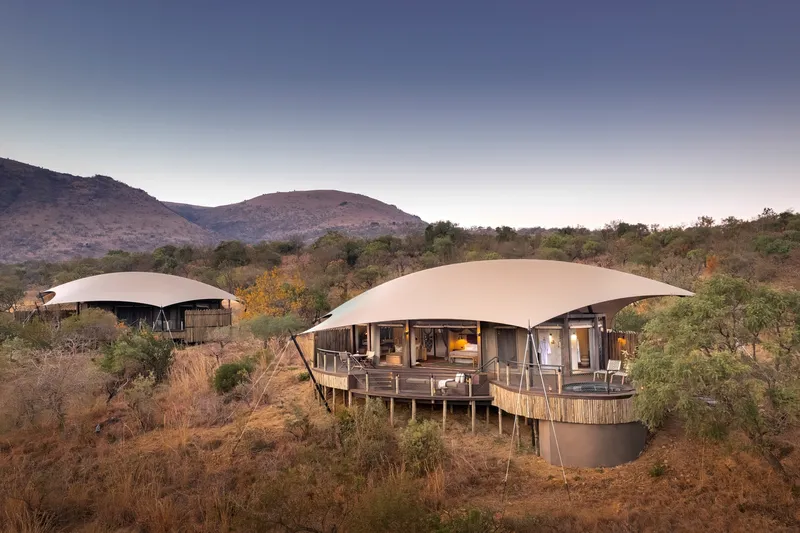
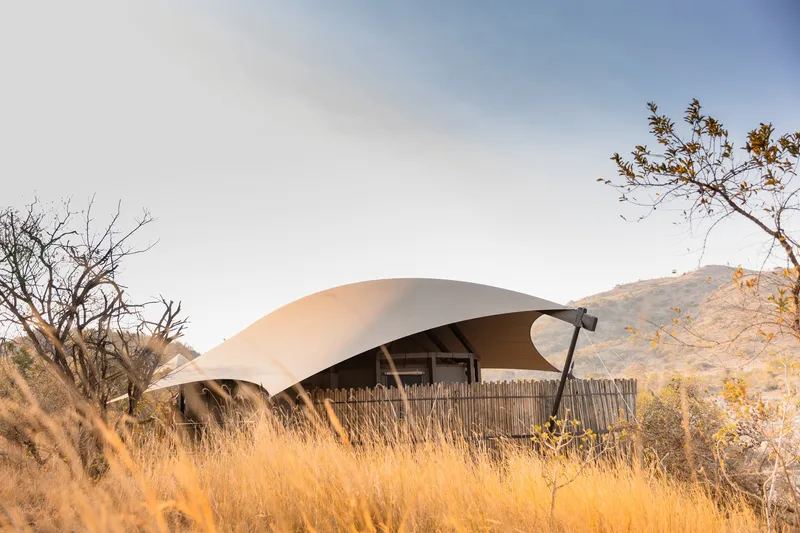
The architecture of Madwaleni River Lodge responds directly to the region’s heritage and natural context. Twelve tented suites align along the White Umfolozi River, offering uninterrupted views and seamless indoor-outdoor living. Drawing inspiration from the traditional Zulu shield, each suite is sheltered beneath a dramatic 22-meter curved timber beam supporting a stretched fabric canopy, fusing indigenous symbolism with lightweight structural innovation.


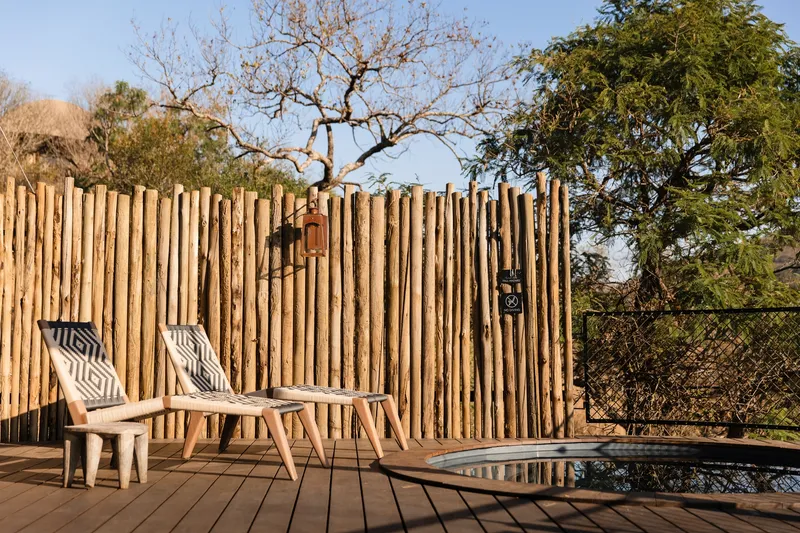
Crafted with upcycled timber poles and bamboo decking, these elevated platforms connect the luxury interiors with their surroundings while minimizing ecological impact. The open design of each suite—featuring private plunge pools, lounge areas, and generous sleeping quarters—creates a retreat that is both luxurious and deeply attuned to the rhythms of the riverine landscape.



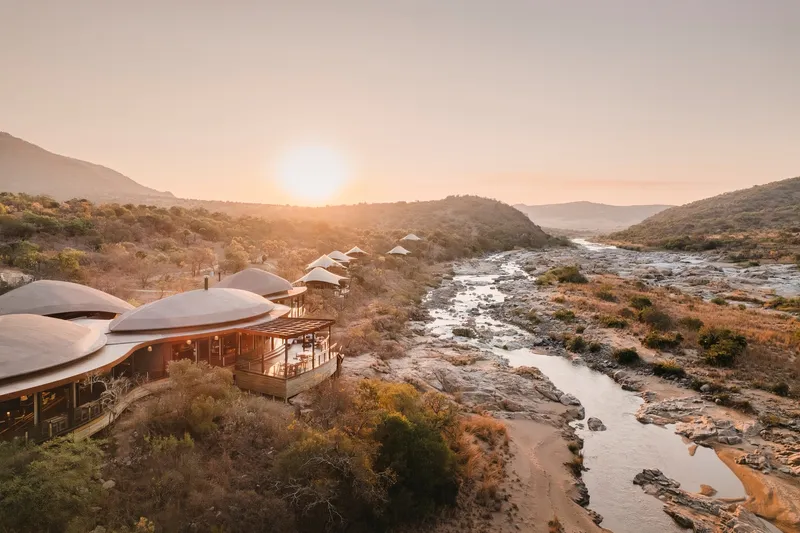
Central Spaces Shaped by Cultural Memory and Eco-Conscious Design
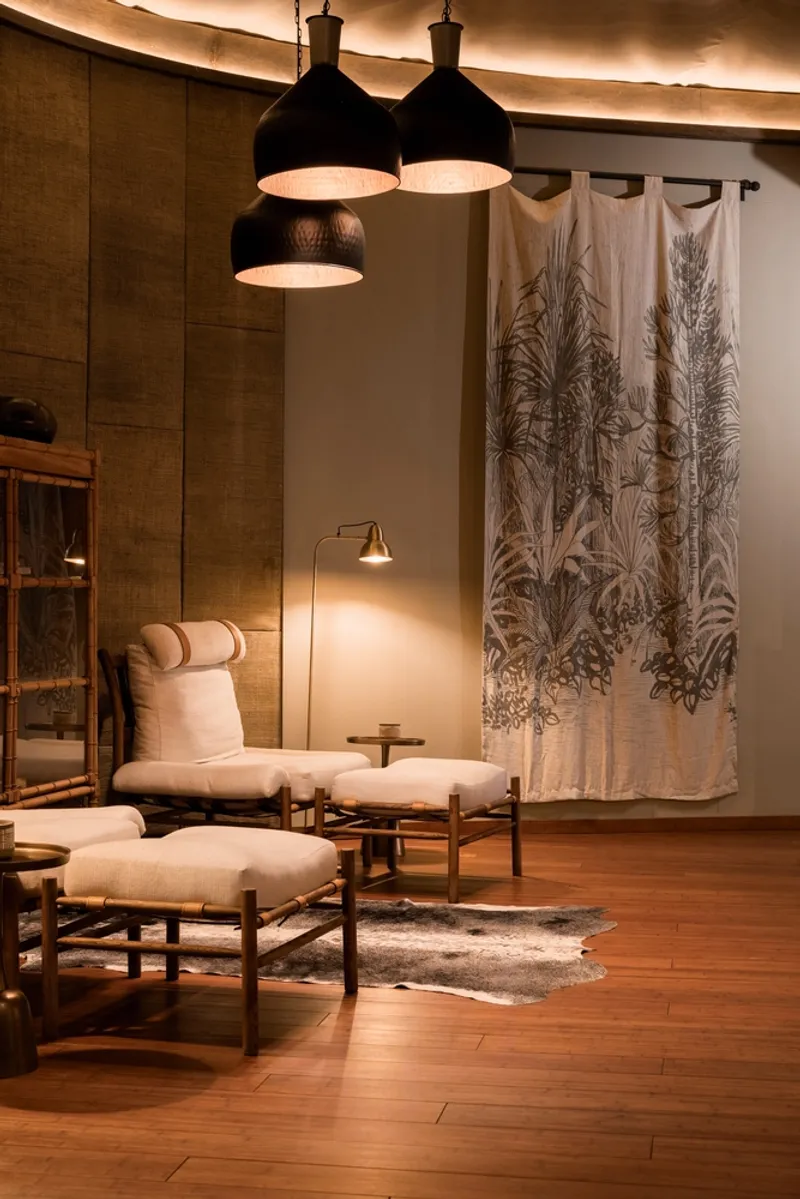
At the heart of the lodge is a 16,000-square-foot communal zone, housing a restaurant, wine cellar, library, lounge, gym, and pool. These spaces adopt the same design language as the guest units, with organically shaped concrete canvas roofs pigmented to merge with the terrain. This technique not only provides thermal efficiency but also reinforces the architectural narrative of natural harmony.


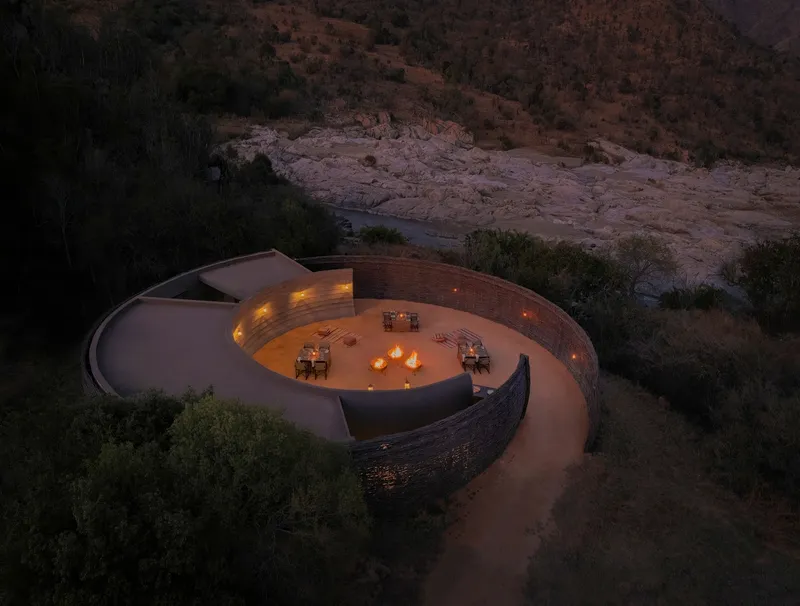
Echoes of Zulu material culture run throughout the central gathering area. Railings and screens reference intricate basket weaving patterns, while prefabricated components and low-impact construction techniques exemplify the project's environmental responsibility. By using local materials and vernacular motifs, the lodge becomes a tactile extension of the land and the people who have shaped it.


Handcrafted Sustainability: The Boma as a Cultural and Ecological Nexus
One of the lodge’s defining features is its boma—an outdoor social space inspired by the Zulu beehive hut. Constructed from invasive wattle, handwoven by local artisans, the boma is a living symbol of regenerative design. It not only controls the spread of non-native flora but also provides employment and cultural validation for surrounding communities. This holistic approach to sustainability—merging environmental stewardship with social upliftment—is the philosophical core of Madwaleni River Lodge.


From the layered texture of woven structures to the careful orchestration of views and ventilation, every detail of the lodge supports a narrative of ecological respect and cultural reverence. It is not simply a destination but a model for future developments in conservation-focused hospitality.

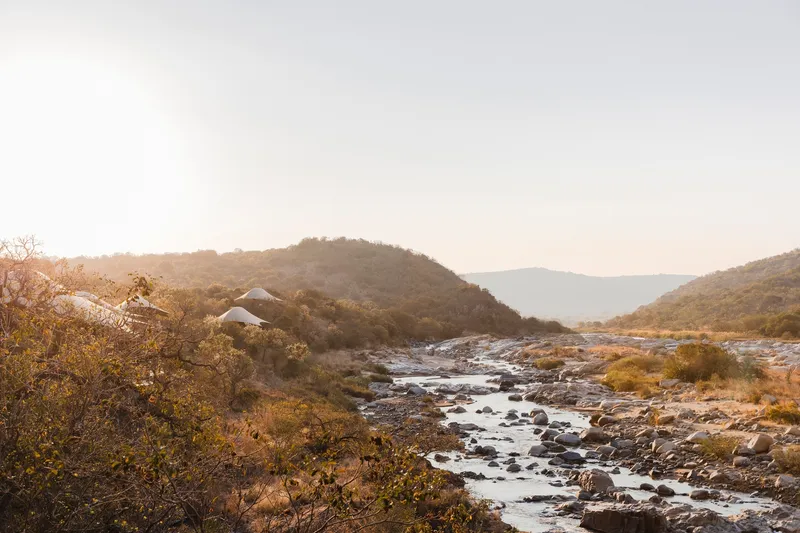
Redefining the Eco-Luxury Safari Lodge Experience
Madwaleni River Lodge sets a new benchmark for what an eco-luxury safari lodge can be. Far from replicating generic luxury, the design by Luxury Frontiers is rooted in place, tradition, and forward-thinking sustainability. It offers a richly layered experience where guests are immersed not only in the natural beauty of rewilded South Africa but also in the spirit of the Zulu nation.


This project exemplifies how luxury and sustainability need not be at odds. Through design strategies that respect the environment, celebrate local culture, and provide meaningful comfort, Madwaleni River Lodge becomes a pioneering case study in the architecture of conservation tourism.


All Photographs are works of Teagan Cunniffe


Popular Articles
Popular articles from the community

Opera on the Sea: Driftwood Logic Shapes a Timber Opera House on Estonia's Coast
Trevor Orgill's opera house translates the entangled drift of floating timber into a civic building where wood, water, and music converge.


FCC Arquitectura Expands a Portuguese Granite House with a Board-Marked Concrete Wing
In Portugal, JV House pairs a cleaned-up whitewashed and granite dwelling with a timber-shuttered concrete extension, courtyards and a garden pool.

Cube Design Draws an Ecological Corridor Between Two Shenzhen Hills with the Nankai Building
Beside Shenzhen's container docks, the Nankai Building pairs stacked balconies with a climbing green screen to connect two hillsides across its height.

ETEH Reworks the Shared Spaces of São Domingos School in Brazil Around Timber, Color and Hanging Plants
At São Domingos School in Brazil, 436 m² of hall, refectory and library are recast with timber joinery, a yellow and blue code and trailing greenery.

Similar Reads
You might also enjoy these articles


Hodi-Mandai Geram
Project Function: Preservation and revitalization of the Intangible heritage and socio-spatial identity of the Hodi by Housing, Cultural Memory Center, Sacred Grove, landscape, local tourism economy


Olio Towers: A Mid-Rise for Performers That Fuses Housing, Rehearsal, and Stage
Located blocks from Houston's Theater District, this modular tower stacks living units around a central performance atrium.

Oasis: Modular Green Housing Carved into Dhaka's Urban Fabric
A shortlisted Plugin Housing entry reclaims unauthorized settlements in Dhaka with stepped concrete volumes, green roofs, and ventilation-driven design.

Black Hole: A Floating Megastructure for the Post-Physical Era
Emiliano Mazzarotto envisions a spherical, self-scaling arena where e-sports, digital hotels, and holographic stadiums replace traditional public space.

Explore Wildlife Tourism Competitions
Discover active competitions in this discipline

Challenge to reimagine the Iron Throne

Photograph architecture without architects

Illustrate the lost glory of Angkor Wat - Render Challenge

Design challenge to reuse E-waste
Comments (0)
Please login or sign up to add comments
No comments yet. Be the first to comment!