
Element Store by atelier tao+c: A Masterpiece in Retail Store Renovation Architecture
This article explores how atelier tao+c reimagined a modest Shanghai building into a vibrant, community-integrated retail store.

Transforming a Modest Building into a Retail Landmark
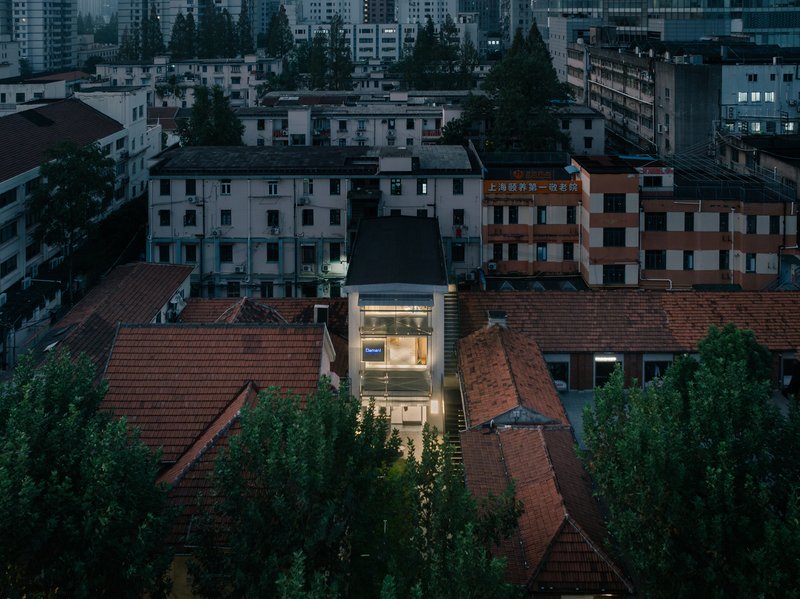
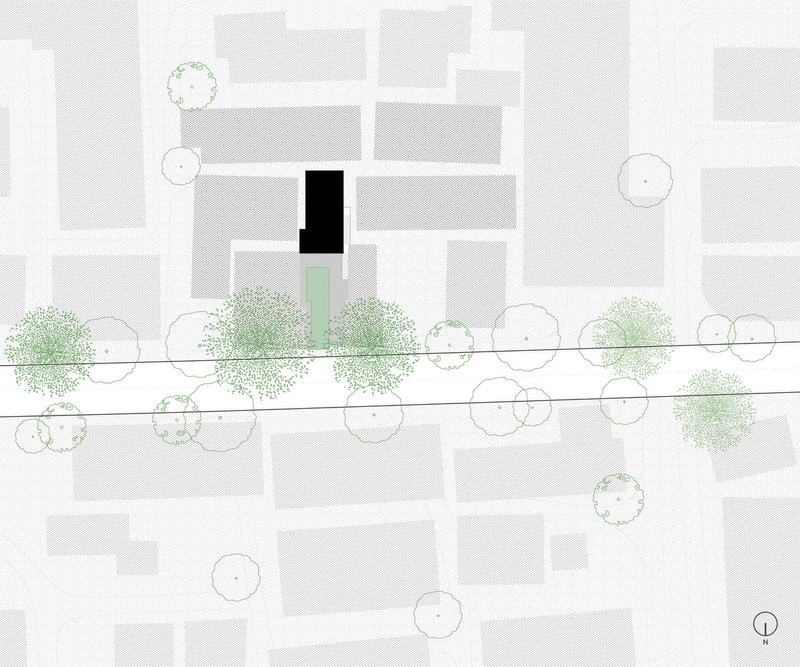
Nestled discreetly 30 meters from the busy Yuyuan Road in Shanghai, the Element Store stands as a reimagined beacon of retail store renovation architecture. Designed by atelier tao+c, the project showcases how architectural restraint and urban sensitivity can coalesce to transform a mundane structure into a vibrant, community-oriented boutique. The original three-story building, largely hidden among residential and commercial surroundings, is now reanimated with minimal structural intervention and maximum spatial intelligence.
A Thoughtful and Economic Renovation Approach
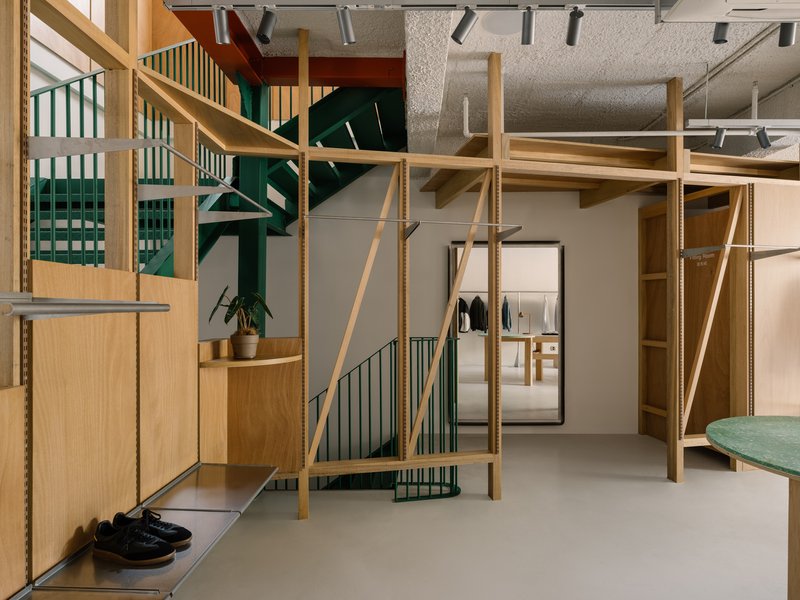
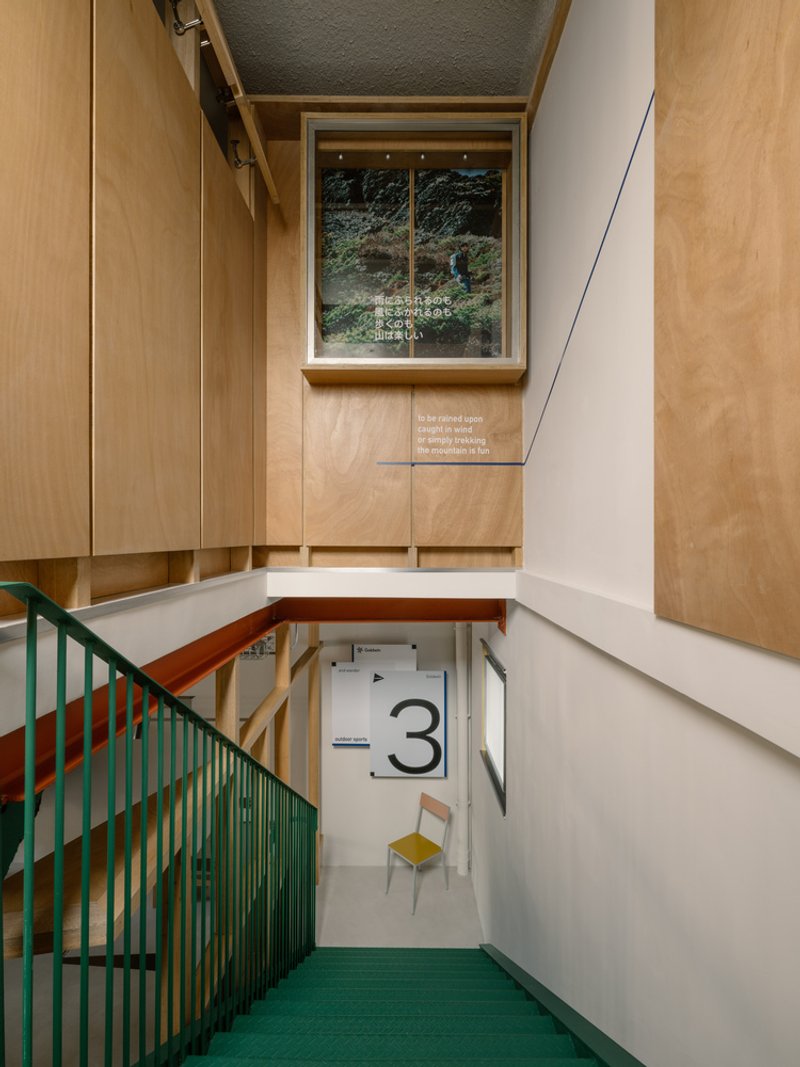
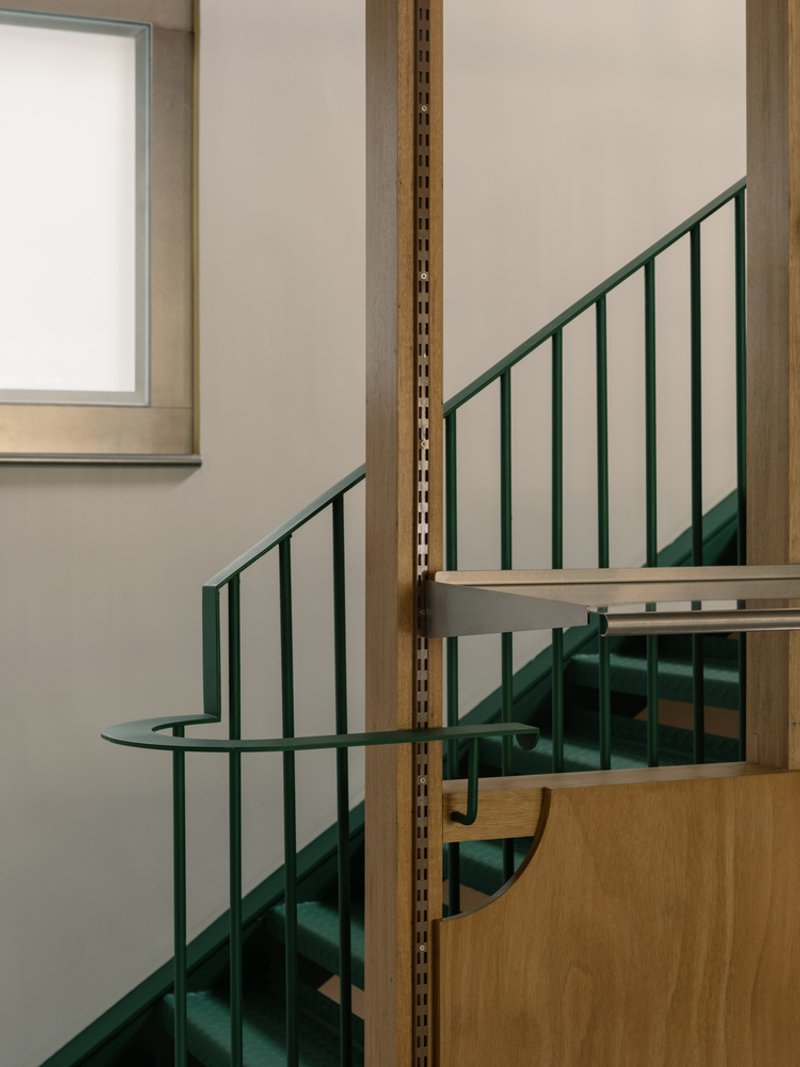
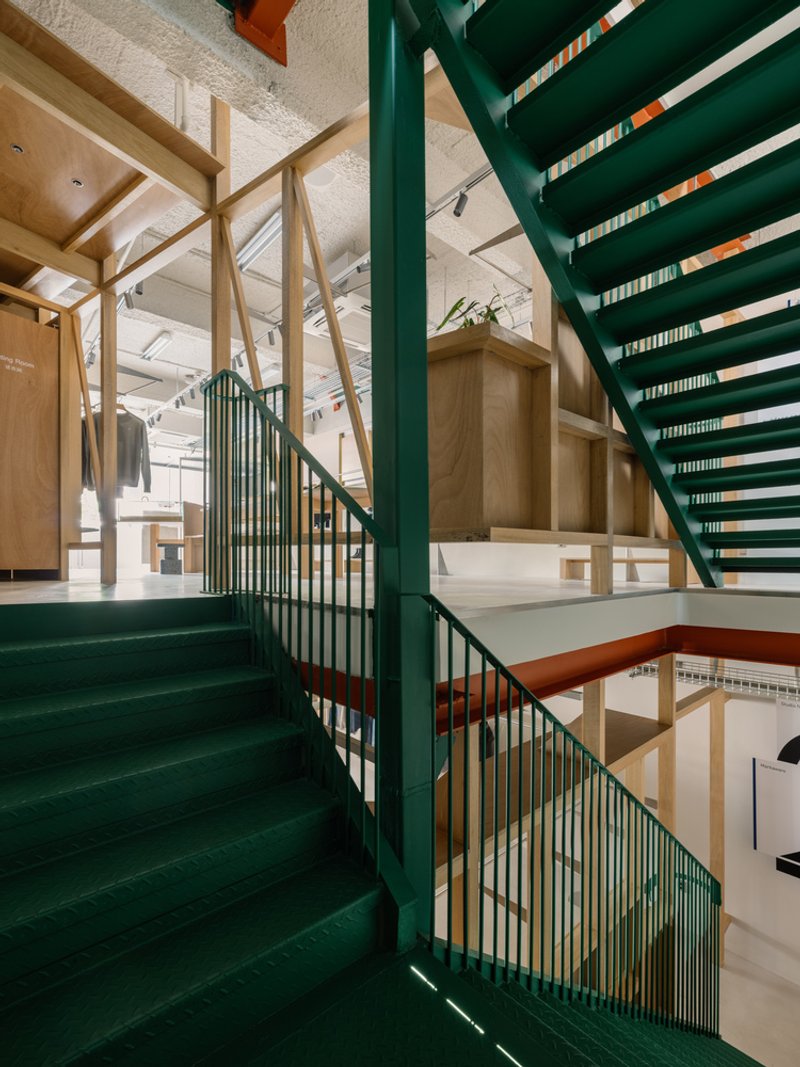
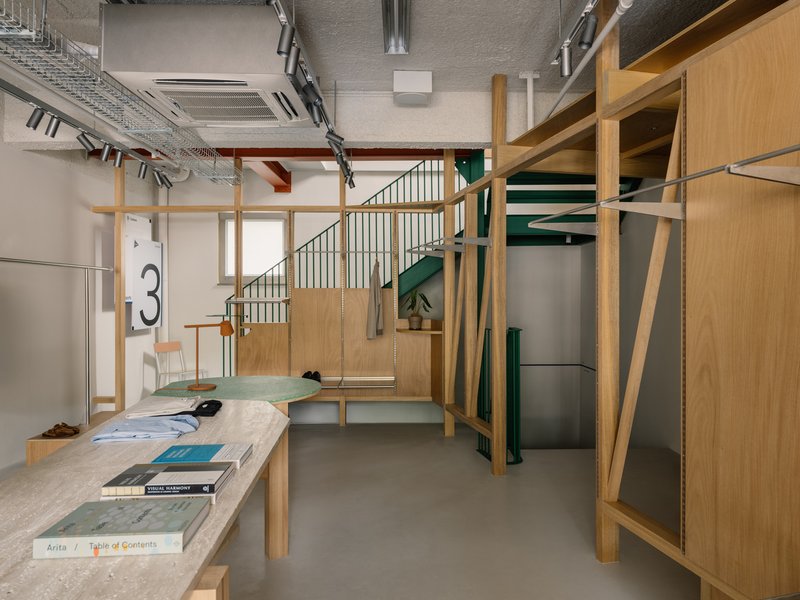
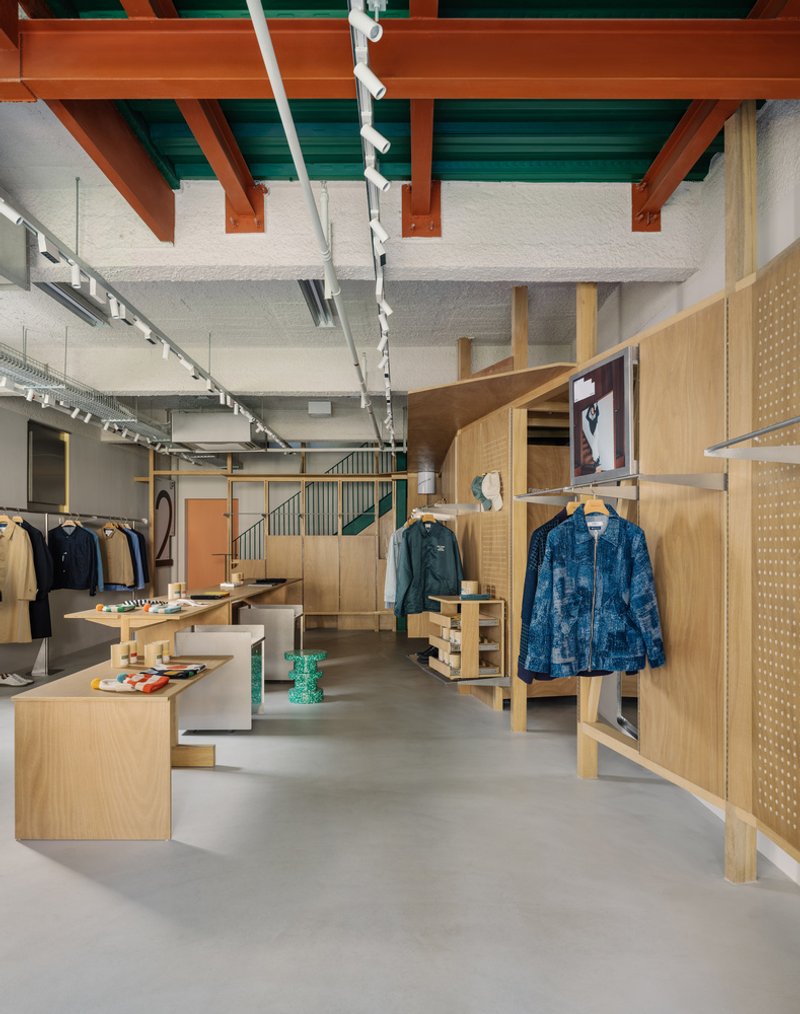
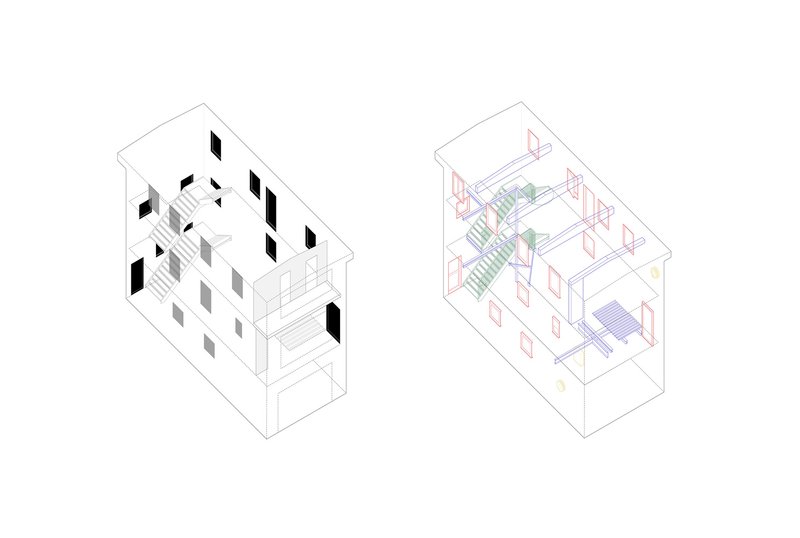
Conscious of current economic conditions, atelier tao+c chose not to radically alter the 1980s building’s utilitarian frame. Instead, the design focused on a self-renewing and budget-conscious renovation strategy. The renovation approach drew from the building’s existing elements—steel beams, fire hydrants, sealed windows—and elevated them through chromatic coding and subtle detailing. Old windows were reopened and enhanced with operable metal shutters, while the weathered steel staircase was preserved and finished in a distinctive forest green, retaining the raw beauty of its past.
Dynamic Spatial Organization and Interior Expression
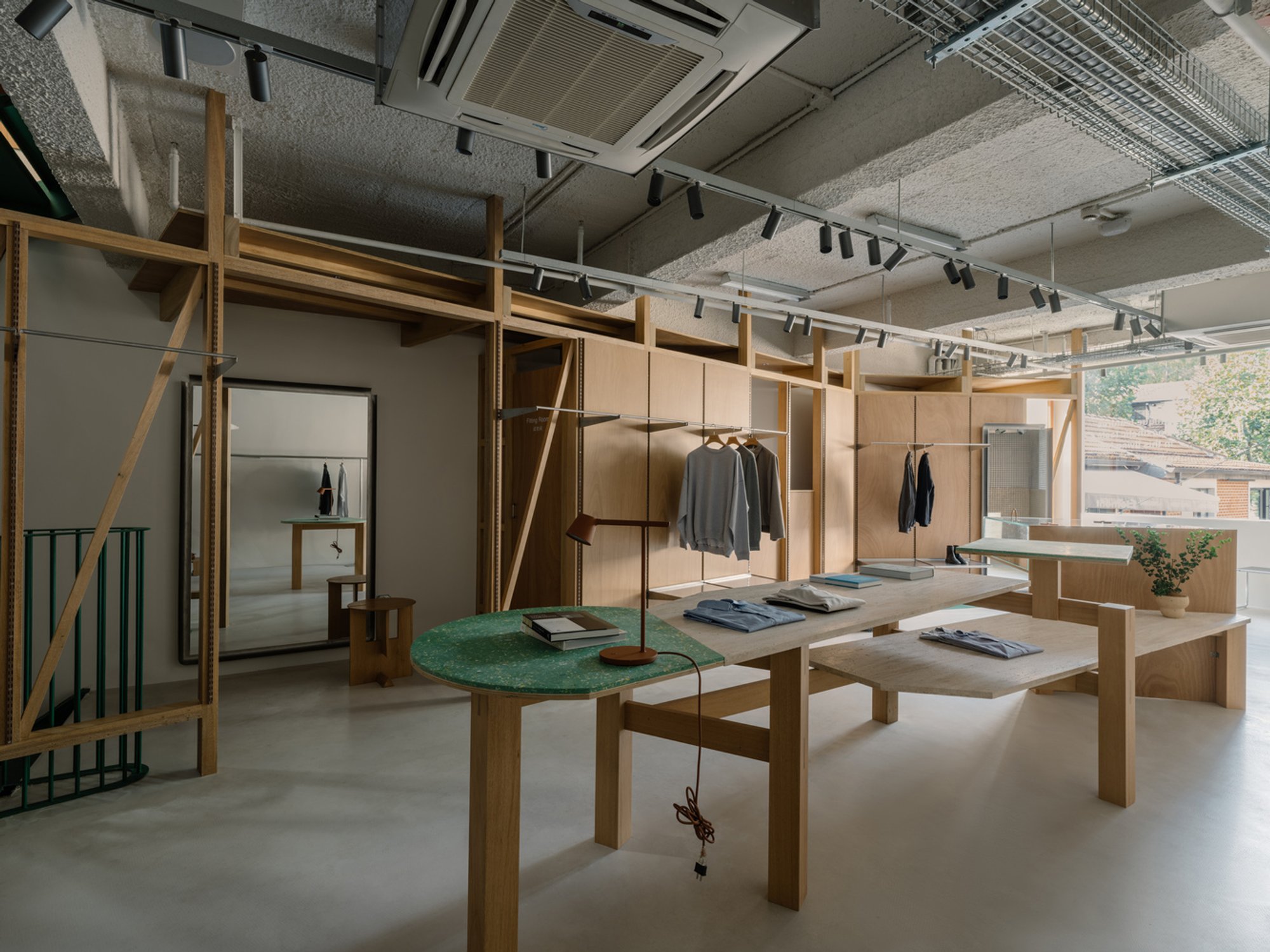
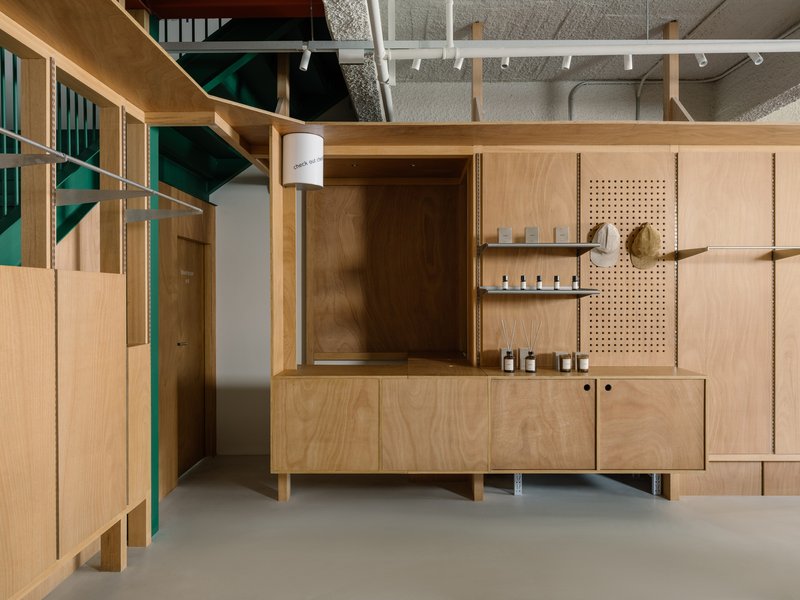
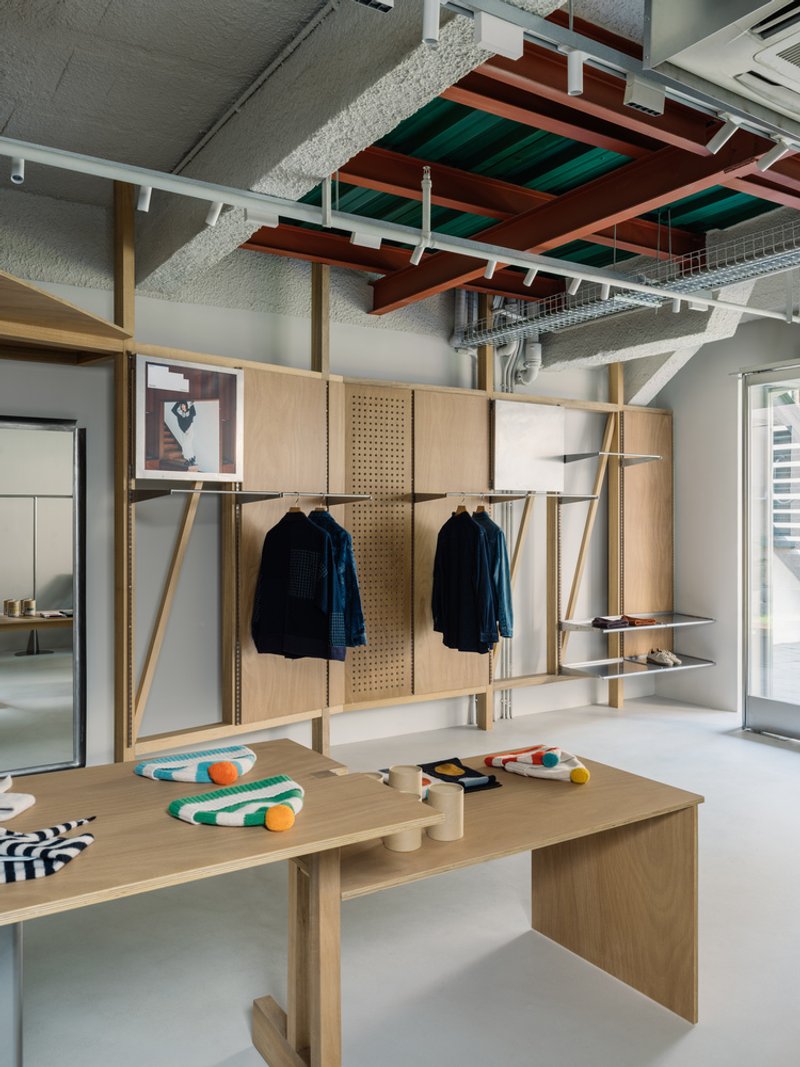
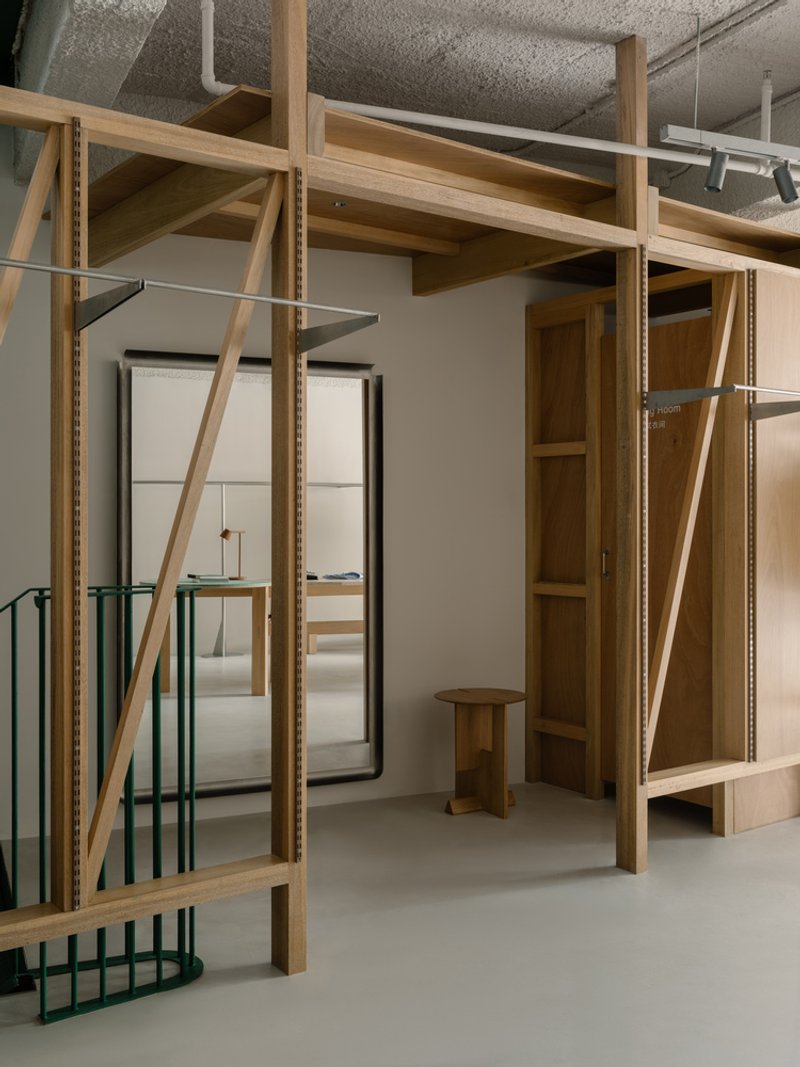
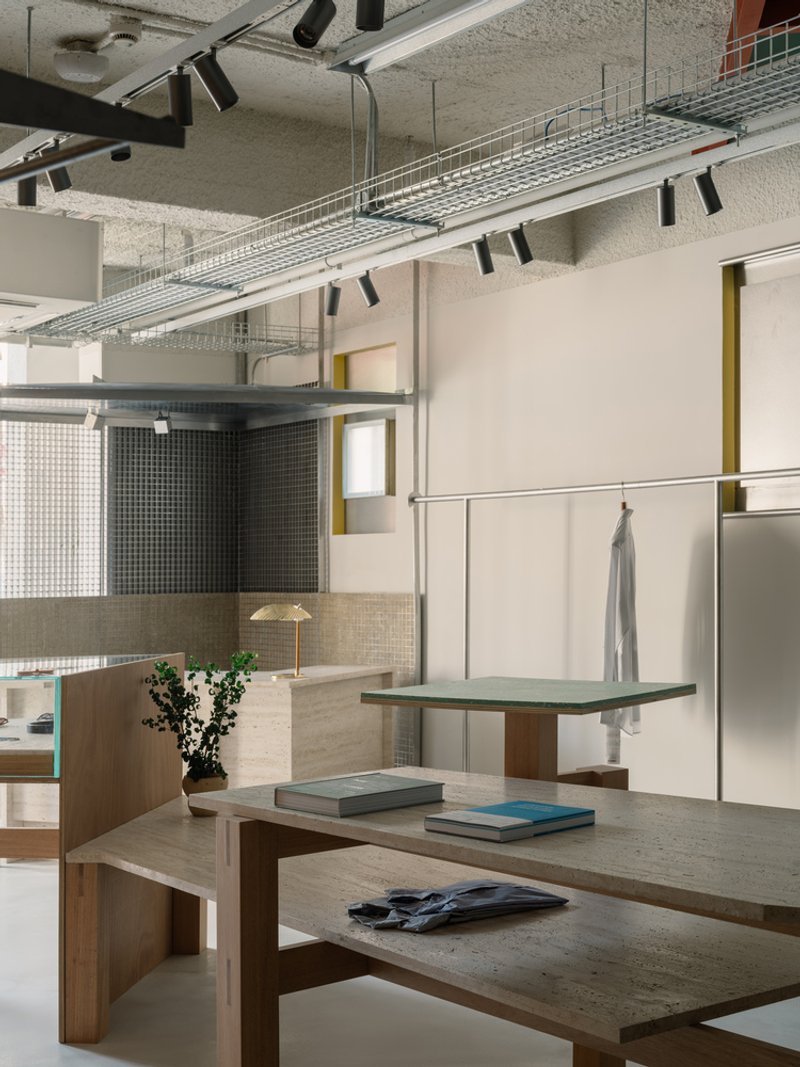
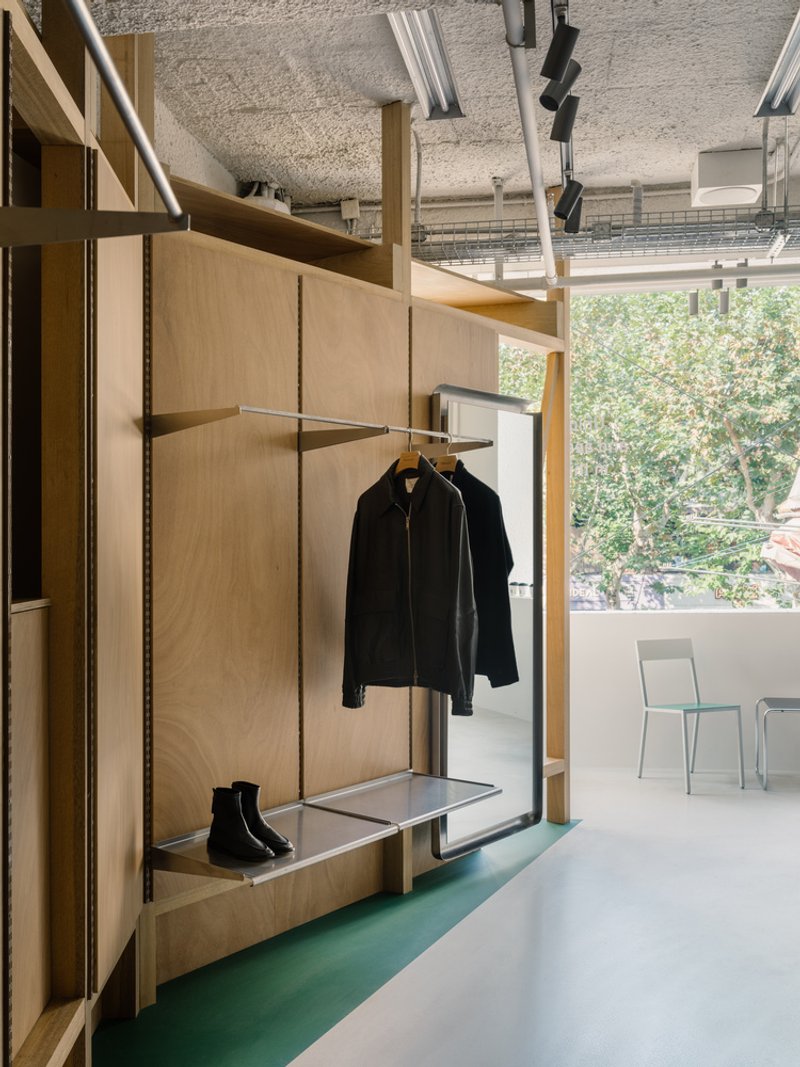
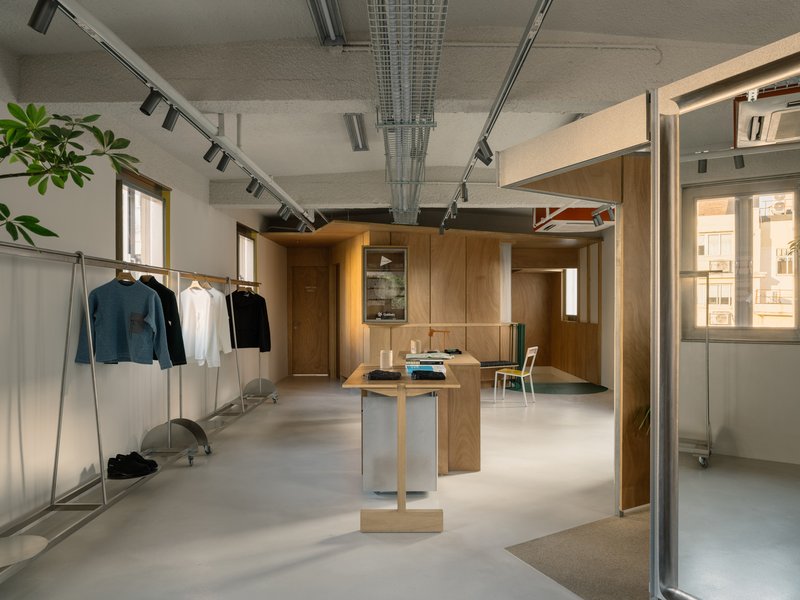
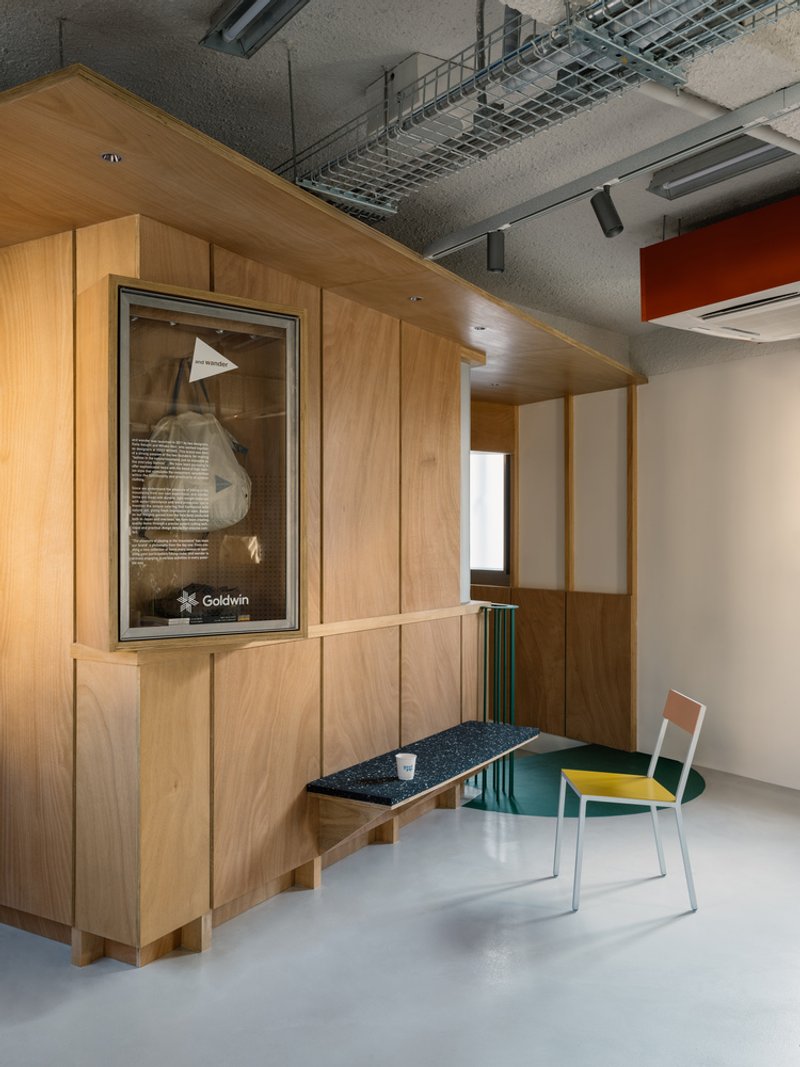
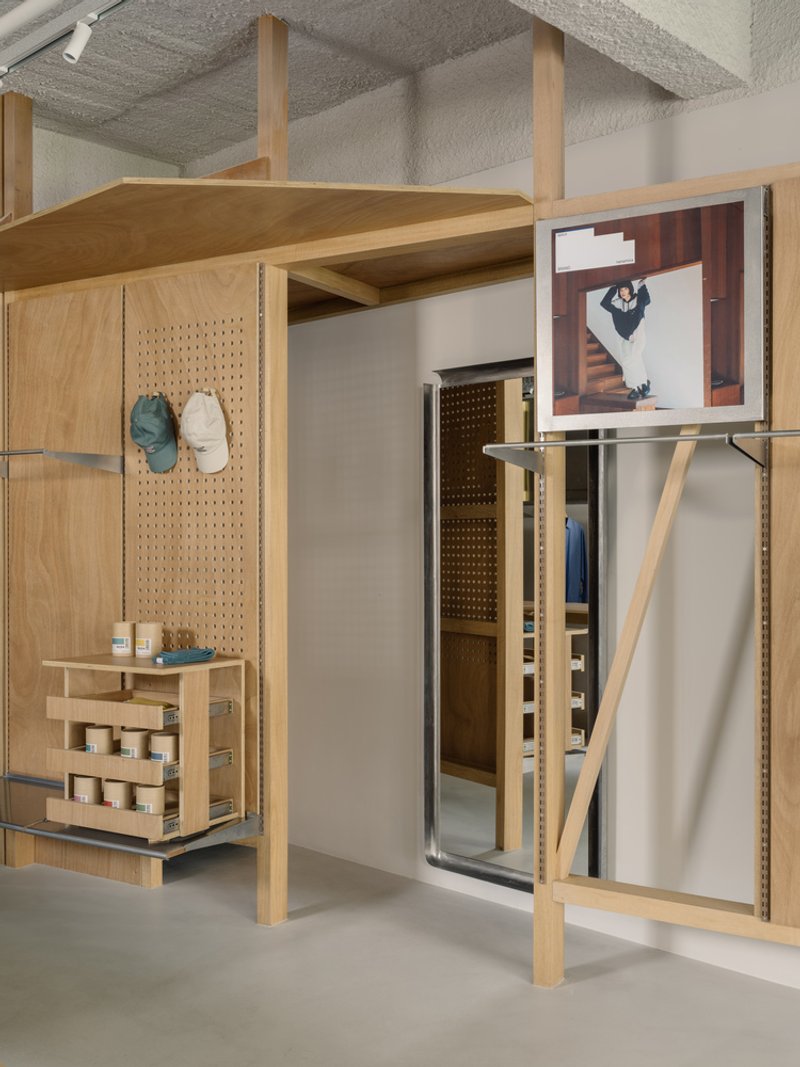
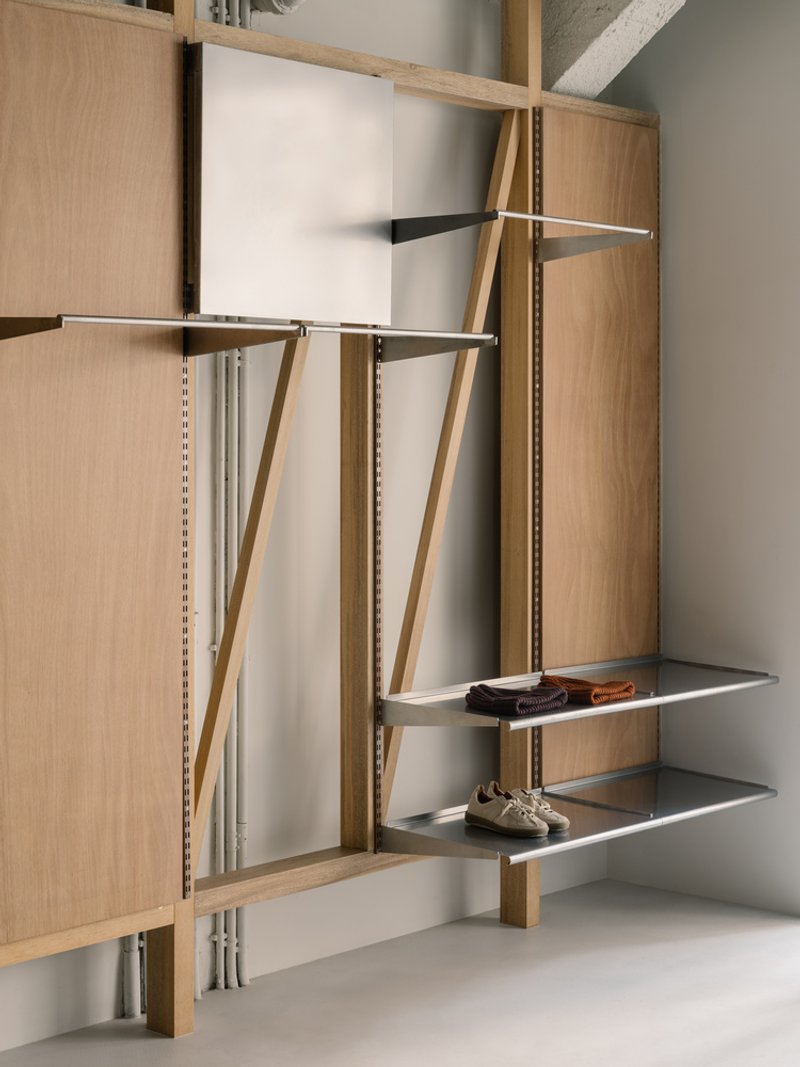
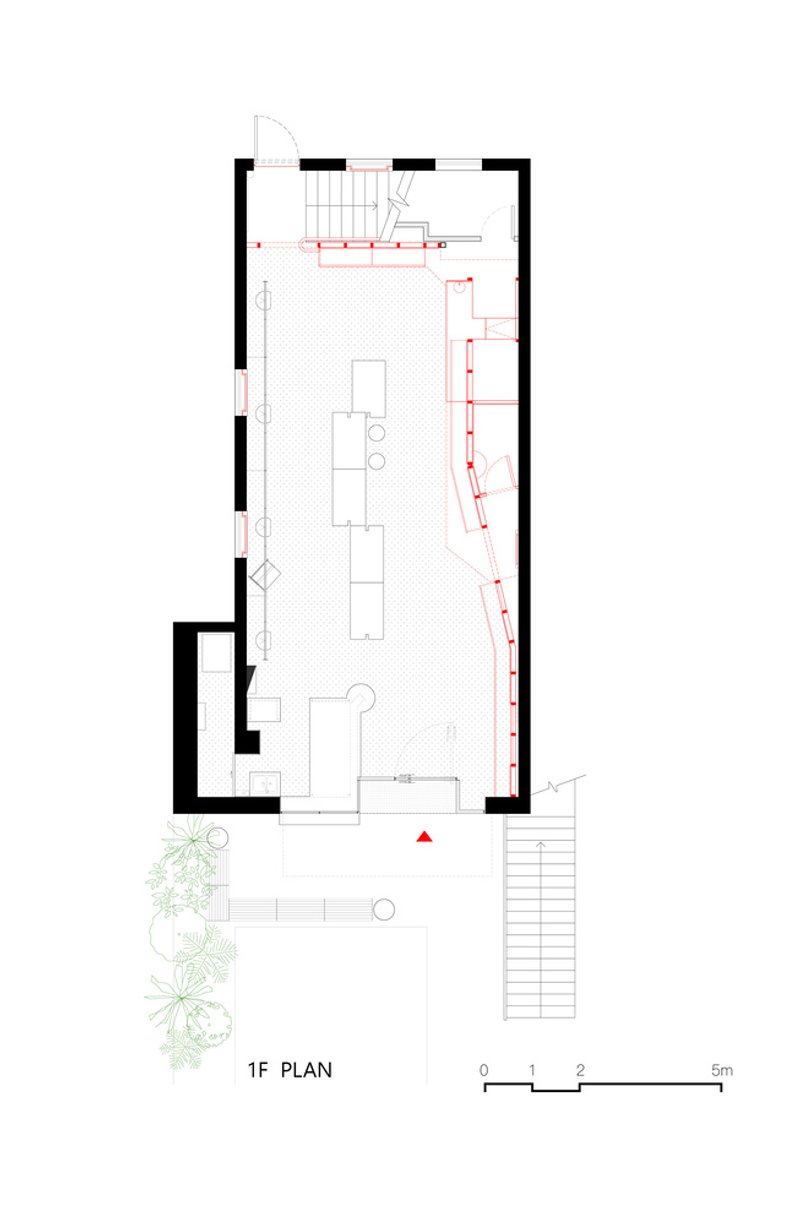
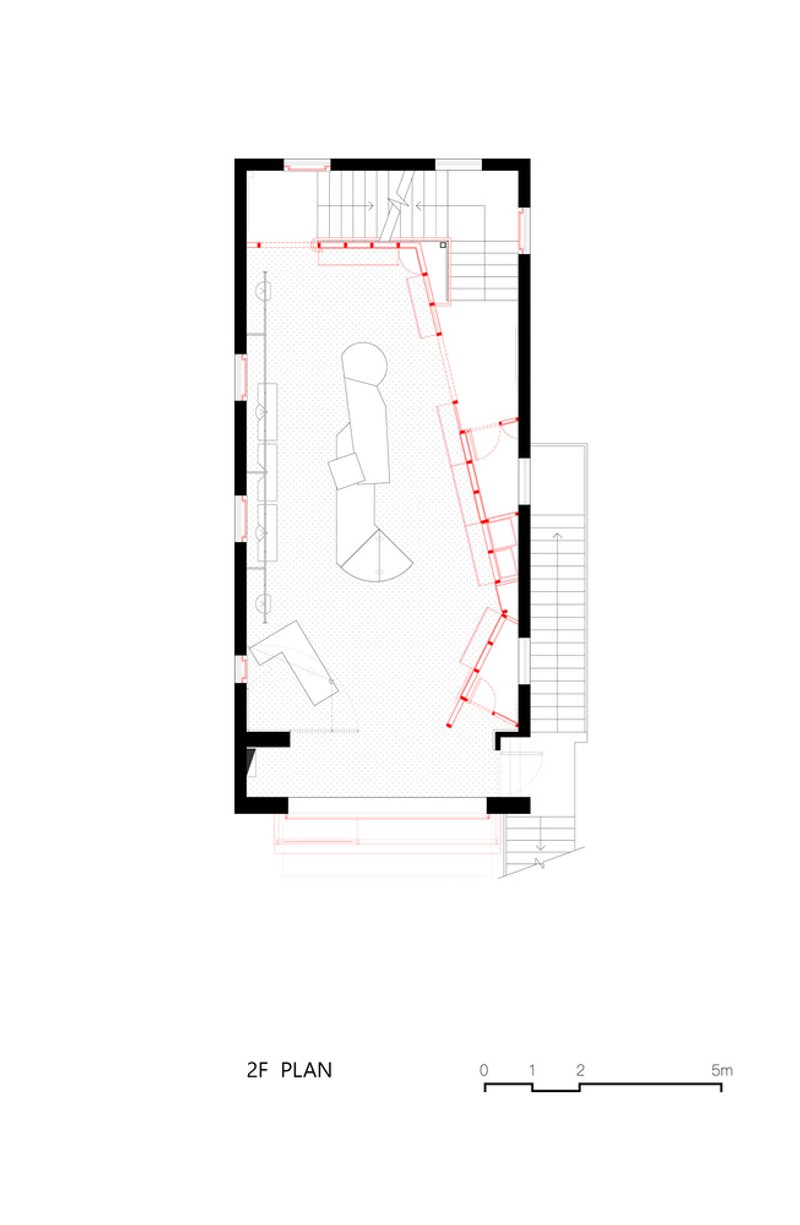
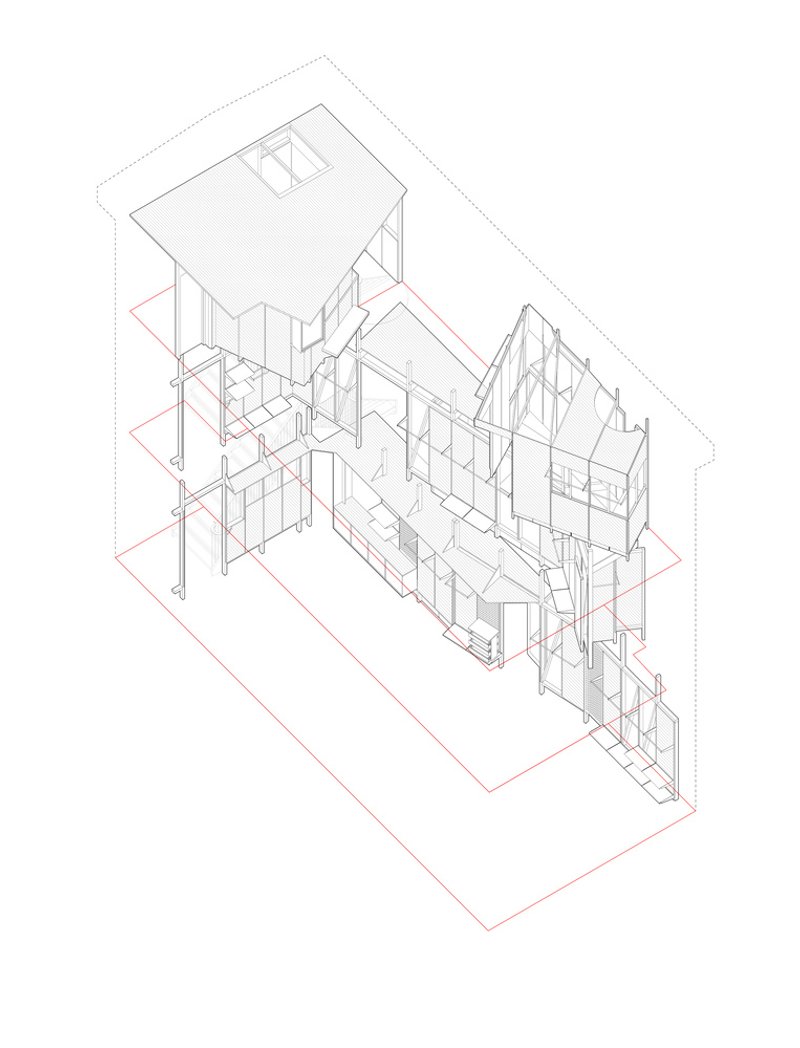
The internal architecture breaks away from the rigidity of the original shell through precisely executed diagonal insertions. Solid wood frames and lightweight metal structures redefine the spatial organization of each floor. These new interventions introduce both visual movement and functionality, dividing areas such as changing rooms, storage, and cashier zones while simultaneously hosting adaptable display systems.
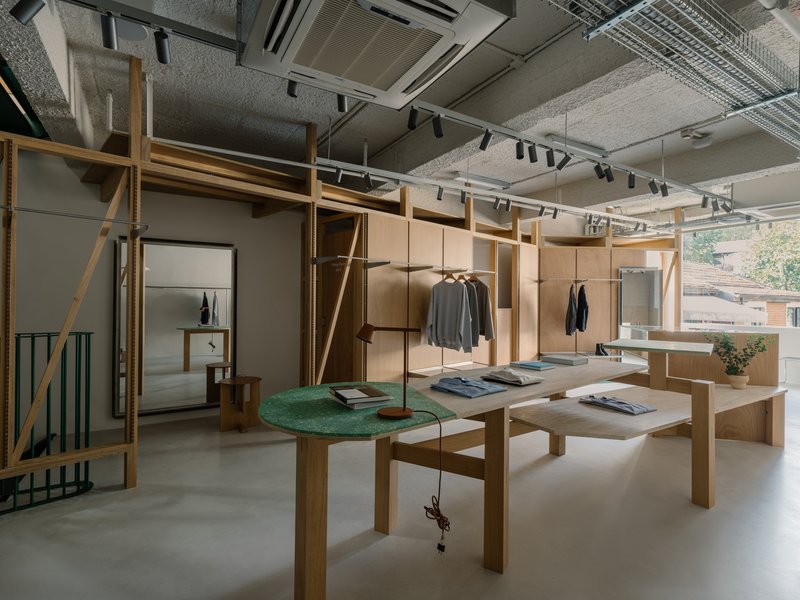
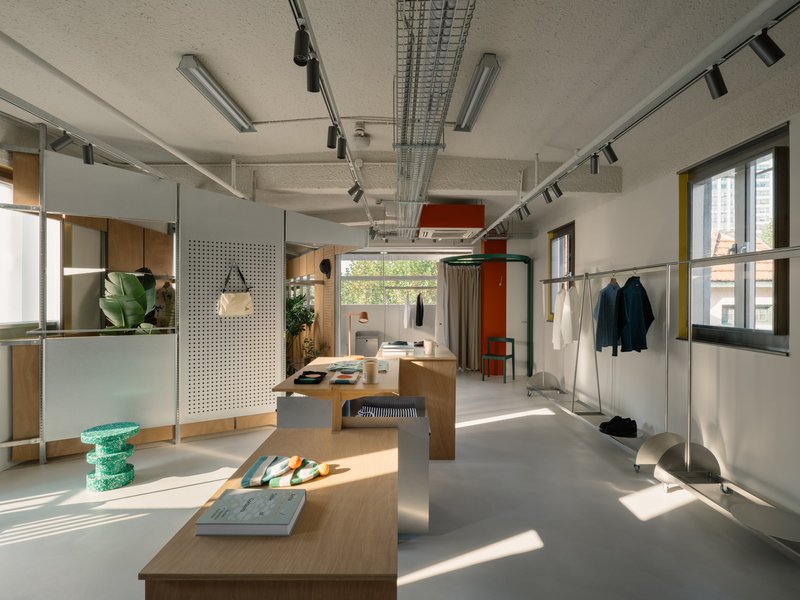
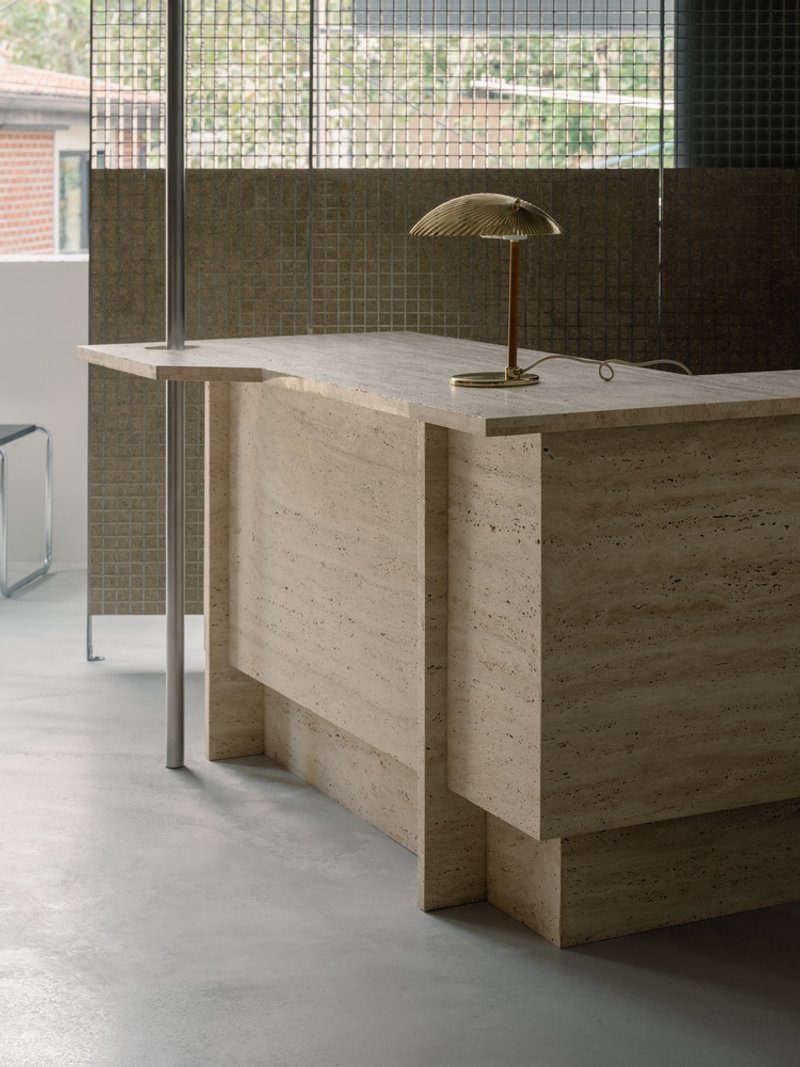
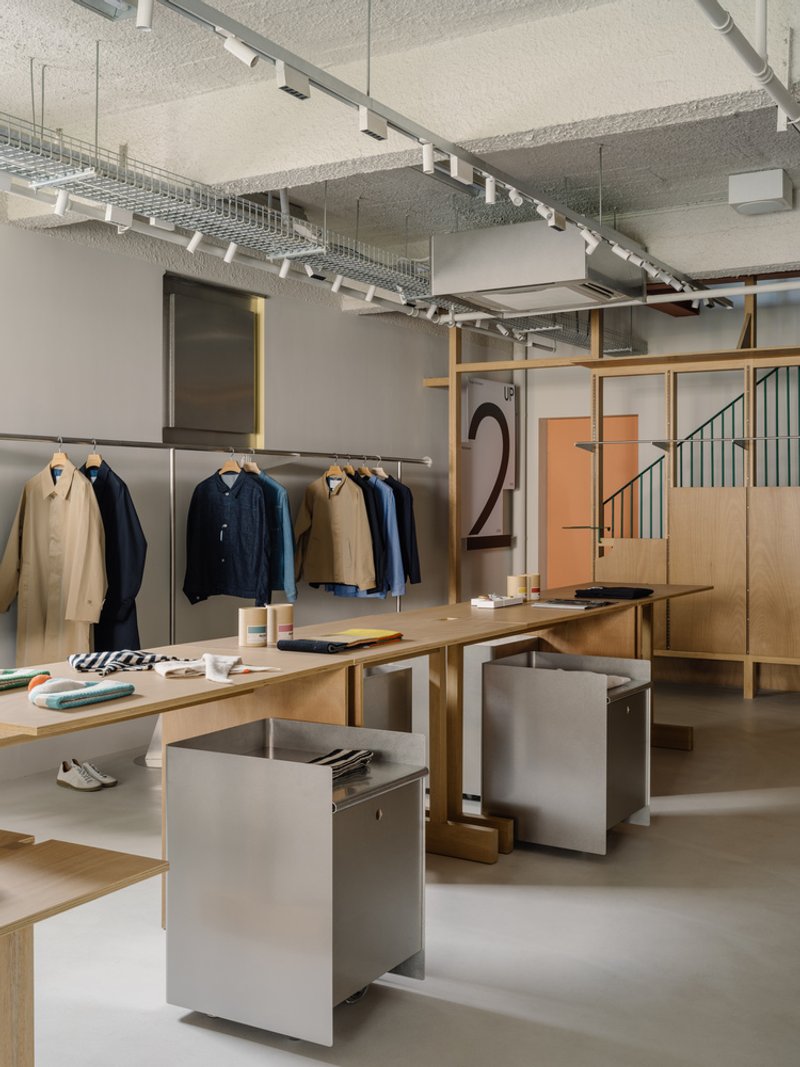
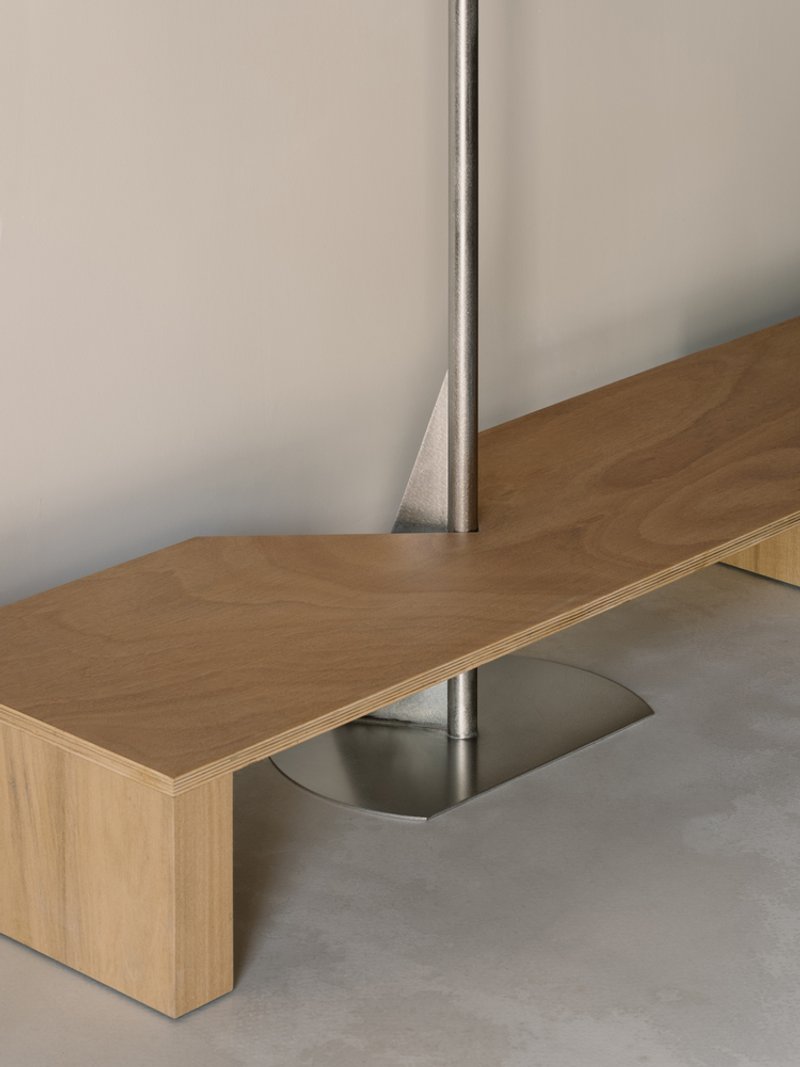
The interiors exude a balance between disorder and structure. On one side, modular racks and angled panels offer flexible merchandising layouts, while the other side presents refined, slender stainless-steel clothing rods. Vertical circulation is orchestrated around the preserved staircase, connecting levels through a series of cantilevered platforms that offer fragmented yet choreographed perspectives throughout the store.
Merging Retail Space with Urban Fabric
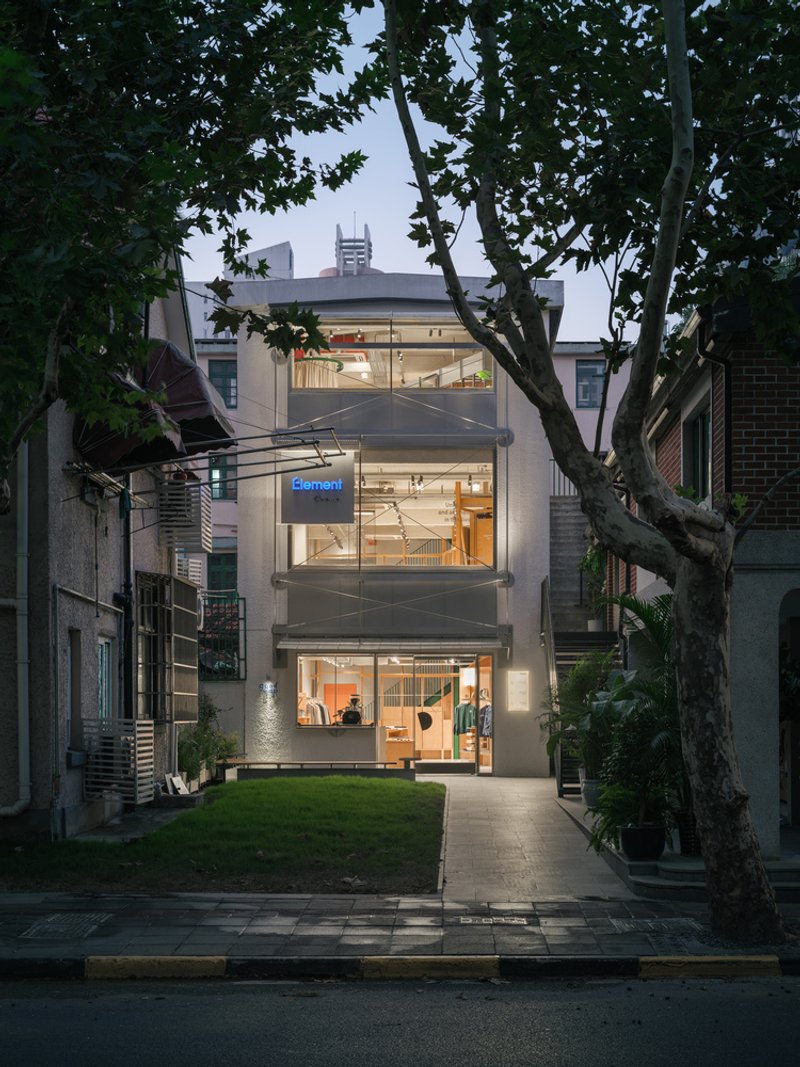
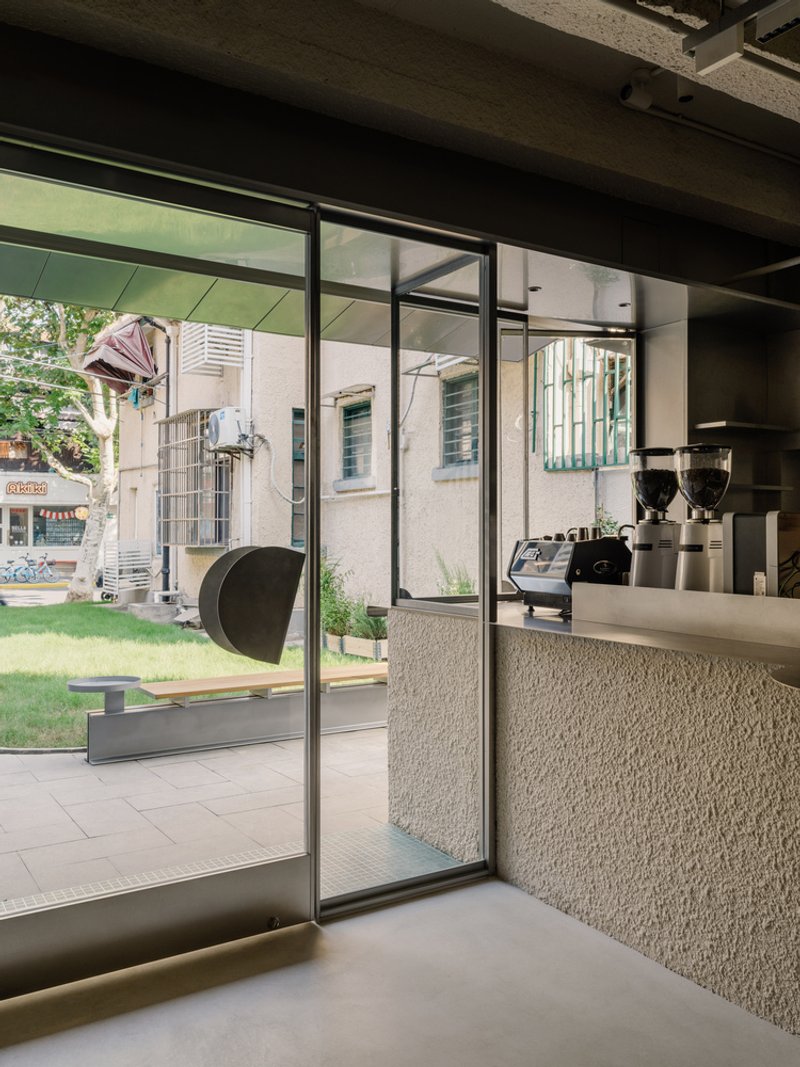
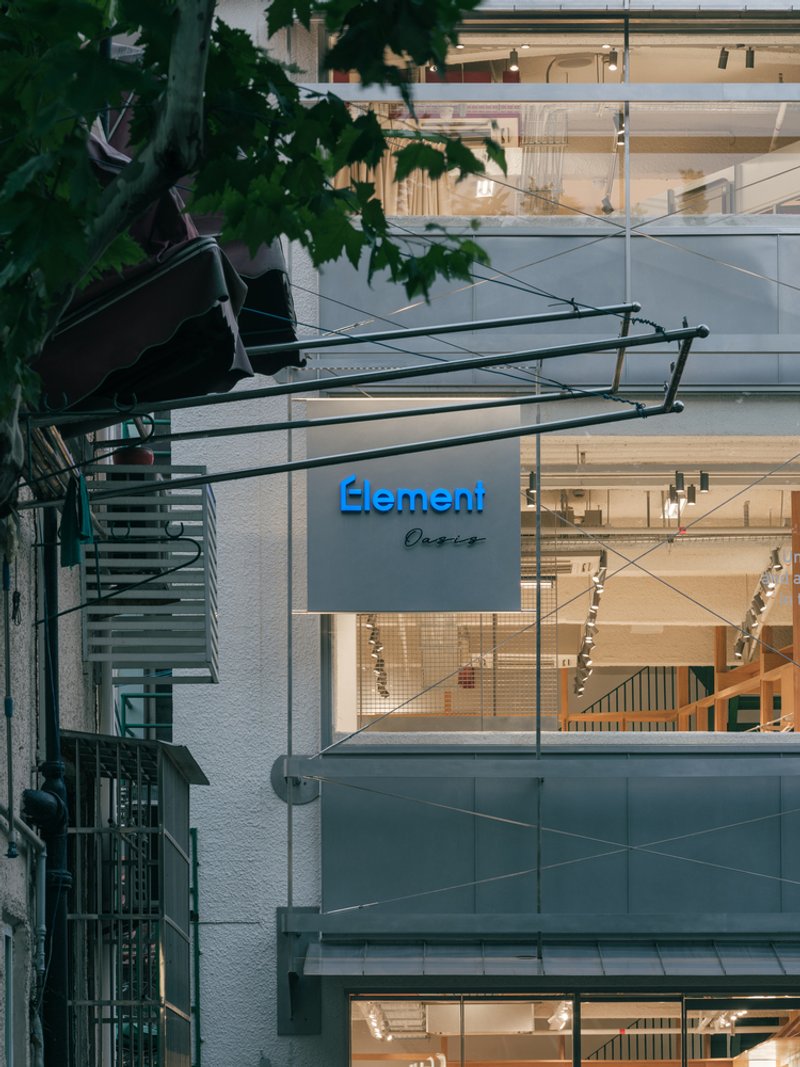
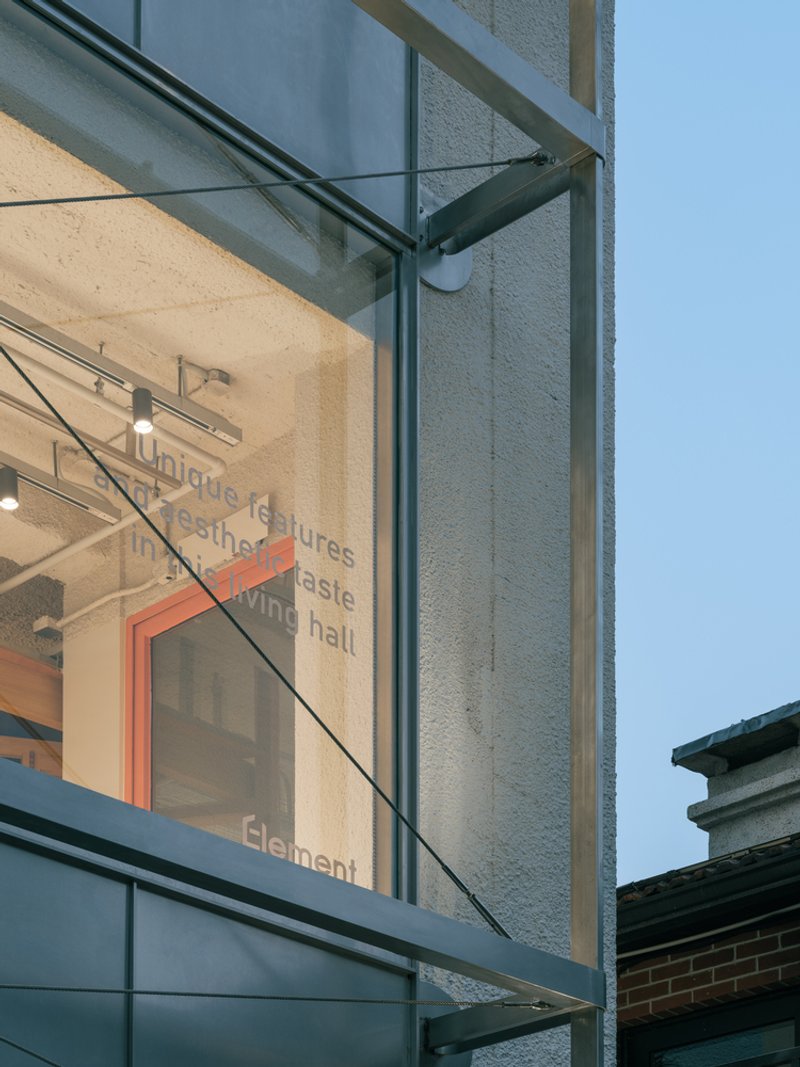
Atelier tao+c extended the architectural language beyond the building’s walls to interact with the surrounding streetscape. In a nod to Shanghai’s eclectic mix of air conditioners, awnings, and laundry poles, the façade is equipped with a custom steel exoskeleton. This vertical structure supports signage, windows, awnings, and a café counter, effectively turning the front of the building into a living, multifunctional canvas.
The steel exoskeleton doubles as a scaffold for seasonal banners and architectural accessories, lending a kinetic quality to the building’s public face. It reflects the vernacular of Shanghai’s lived-in neighborhoods while creating a strong identity for the boutique.
Activating the Threshold Between Inside and Out
The store’s programming intentionally spills outside. A café counter under the extended awning opens onto a compact lawn, offering outdoor seating and social engagement. These interstitial spaces, framed by the steel grid and warm material palette, transform the retail store into a semi-public living space. By embracing the blur between interior commerce and street-level culture, the project encourages spontaneous interaction and fosters community connections.

A Quiet Transformation with Lasting Impact
Rather than standing out with loud architectural gestures, the Element Store embraces its position within the urban fabric through subtlety and integration. The project is a reflection of how retail store renovation architecture can preserve the integrity of older structures while injecting them with new life and meaning. It demonstrates how thoughtful reuse, spatial layering, and contextual responsiveness can converge to redefine what a modern boutique can be in an ever-evolving city.
All the photographs are works of Wen Studio




Popular Articles
Popular articles from the community

Reincarnation Weaves a Three-Story Retreat into the Green Landscape of Rural Bangladesh
Ara Manor in Narsingdi dissolves the line between domestic architecture and its lush surroundings through screens, courtyards, and planted rooftops.
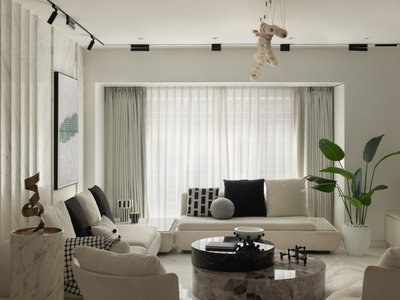
Inside a Timeless Mumbai Residence by Aether Studio
Aether Studio's 2,250 sq ft apartment in Malad, Mumbai uses marble, brass, boucle, and disciplined restraint to build a quiet retreat from the city.
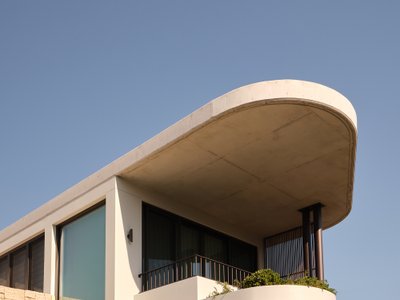
Stanton Architects Sculpts a Curving Family Home into Sydney's Inner West Fabric
Five Dock House uses cantilevers, curved concrete, and layered courtyards to carve out privacy on a tight suburban lot in Sydney.

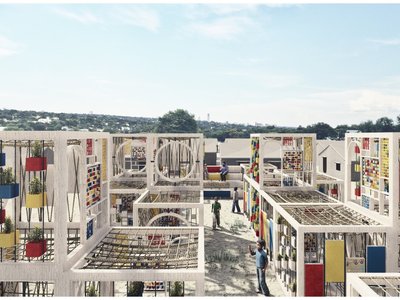
The Faith: Modular Architecture for Play, Learning, and Hope in Kutupalong Refugee Camp
A modular playground architecture project in Bangladesh where play, learning, safety, and hope rebuild childhood inside a refugee camp anew.


Similar Reads
You might also enjoy these articles
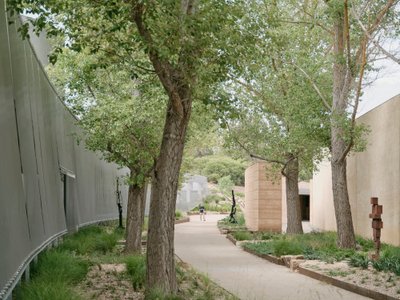
Kerstin Thompson Architects Buries a Cultural Center Beneath Its Own Car Park in the Yarra Valley
The Eva and Marc Besen Centre at TarraWarra hides 2,375 square metres of gallery and archive space under a reinstated landscape in Healesville, Australia.
Kerry Kounnapis Packs 800 Daily Coffees into a 43-Square-Metre Melbourne Laneway Bar
Palace Coffee channels Pellegrini's and European standing bars through oxide-red steel and spotted gum timber in a Ridgway Place sliver.
Nikken Sekkei Stacks a Three-Dimensional Lilong Atop Shanghai's Historic Alleyways
A 180-meter tower and restored heritage houses on Nanjing West Road reimagine communal lane life as a vertical mixed-use district.

PLATAFORMArq Folds a Concrete Roof Over the Portuguese Mountains in House #474
A 220-square-meter residence in Teixoso, Portugal, wraps board-formed concrete into an angular canopy that frames the Serra da Estrela foothills.


Explore Architecture Competitions
Discover active competitions in this discipline




The International Standard for Design Portfolios


The Global Benchmark for Architecture Dissertation Awards


The Global Benchmark for Graduation Excellence


Challenge to reimagine the Iron Throne
Comments (0)
Please login or sign up to add comments
No comments yet. Be the first to comment!